Airs Above the Ground by Mary Stewart

airs-above-the-ground This month, one of my favourite authors, Mary Stewart, would have been 100 years old and to mark the occasion I decided it was time to pick up one of the few remaining books of hers that I still hadn’t read. I chose Airs Above the Ground, a suspense novel set in Austria which was first published in 1965 – and it was a great choice because I loved it!

At the beginning of the novel, our heroine, Vanessa March, is angry and disappointed because her husband, Lewis, has insisted on going to Stockholm on a business trip just when they had been due to leave for a summer holiday in Italy. Left behind in London, Vanessa meets a friend, Carmel Lacy, for tea and is shocked when Carmel mentions that she has just seen Lewis in a newsreel about a circus fire in Austria. Convinced that there must have been some mistake, Vanessa goes to watch the news footage herself and discovers that it’s true – not only is Lewis in Austria when he’s supposed to be in Sweden, he has also been caught on film with his arm around a pretty young girl.

Conveniently, Carmel’s teenage son, Timothy, is hoping to go to Vienna to visit his father and Carmel is looking for someone to act as a chaperone. Determined to catch up with Lewis and find out what’s going on, Vanessa agrees to accompany him. On arriving in Austria, however, Tim admits that he hasn’t been completely honest about his relationship with his father and instead he ends up staying with Vanessa as she searches for Lewis. They are an unlikely pair – at seventeen, Tim doesn’t really need a chaperone, especially not one who is only twenty-four herself – but a friendship quickly forms and together the two become caught up in a mystery involving a travelling circus, a mysterious Englishman and an old piebald horse.

Airs Above the Ground is a book I’ve been looking forward to reading for a long time and I wasn’t disappointed at all. I found so many things to enjoy, first and foremost the beautifully written descriptions of the Austrian countryside, the mountains, the villages and the fictional castle of Schloss Zechstein which becomes the focus of the action for the second half of the story:

And, perched on the outermost edge of the crag, like something straight out of the fairy books of one’s childhood, was the Schloss Zechstein, a miniature castle, but a real romantic castle for all that, a place of pinnacles and turrets and curtain walls, of narrow windows and battlements and coloured shields painted on the stone. There was even a bridge; not a drawbridge, but a narrow stone bridge arching out of the forest to the castle gate, where some small torrent broke the rock-ridge and sent a thin rope of white water smoking down below the walls.

Many of Mary Stewart’s novels involve the heroine forming a bond with a lonely or neglected young boy, and while Timothy is too old to be considered a child, it was still good to watch the relationship between them develop. It’s a relationship based entirely on trust, friendship and mutual liking, with no hints of any romantic attraction at all. Of course, unlike most Stewart heroines, Vanessa is already married before the novel even begins and this does give her character a slightly different feel. Like the others, she’s a strong, intelligent and resourceful woman but she’s clearly in awe of Lewis, and although I did enjoy her interactions with her husband, it seemed that whenever he was around she tended to place too much reliance in him and lost some of that strength and resourcefulness.

I also loved Old Piebald, the horse whose master died in the circus fire and whose injured leg Vanessa treats using her veterinary skills. The scene at the end of Chapter 9 where he is grazing in a meadow with circus music playing in the distance has to be one of my favourite moments in all of Mary Stewart’s novels! Horses play an important role in the story – Tim’s real reason for coming to Austria is to get a job with Vienna’s famous Spanish Riding School and it was nice to have an opportunity to learn more about the school and its beautiful Lipizzaner stallions. The novel takes its title from the movements performed by these horses, known as the ‘airs above the ground’.

As well as all of the other things I’ve mentioned, there’s also plenty of drama, including a desperate race around the castle battlements, a car chase and a scene involving a mountain railway train. Airs Above the Ground hasn’t become one of my absolute favourite Stewart novels, but it’s definitely in my top five or six (I’ve read eleven of her suspense novels so far, plus three of her Arthurian novels). Have you read this one? And have you done anything to celebrate Mary Stewart’s centenary?
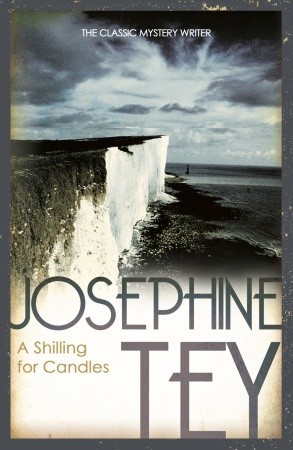
A Shilling for Candles by Josephine Tey

A Shilling for Candles My first read for this year’s RIP event is this 1936 mystery from Josephine Tey. It’s only the second book I’ve read by Tey – the other was The Daughter of Time, in which Inspector Alan Grant attempts to solve the mystery of Richard III and the disappearance of the Princes in the Tower from his hospital bed. A Shilling for Candles also features Alan Grant but this time he is investigating the murder of Christine Clay, an actress whose body is found washed up on the beach on the south coast of England.

At first it seems that the cause of Christine’s death is either suicide or a tragic accident, but when a coat button is found tangled in her hair it becomes obvious that someone else must have been involved. Suspicion immediately falls upon Robin Tisdall, a young man who has been staying with Christine in her cottage near the beach, but Grant soon has a whole list of other suspects. Could it have been Christine’s rich, aristocratic husband? The American songwriter with whom she is thought to be having an affair? What about her fellow actresses, who could be jealous of Christine’s success, or Lydia Keats, the eccentric astrologer who casts celebrity horoscopes? And then, of course, there’s Christine’s estranged brother, Herbert, who has been left “a shilling for candles” in her will.

I was intrigued by the mystery and enjoyed getting to know the characters; my favourite was Erica Burgoyne, the Chief Constable’s teenage daughter who has an encounter with one of the suspects in the middle of the novel and is inspired to do some investigating of her own. I also liked Tey’s portrayal of life as a celebrity – particularly her descriptions of the negative side of fame and the difficulties famous people can experience in trying to keep their private lives private.

However, I have to confess that I found this book disappointing overall. There just seemed to be too much going on: too many red herrings and too much time spent developing storylines that didn’t really go anywhere. I thought the plot lacked structure and the final solution of the mystery seemed to come out of nowhere – unless I missed an important clue, which is entirely possible! I’m wondering whether the problems I had with this novel could be due to the fact that it’s one of Tey’s earliest; I thought The Daughter of Time (1951) was much better than this one, so maybe her writing improved over the years. I’m sure I’ll be reading more of her books at some point, so I’ll be able to find out.

If you’ve read anything by Josephine Tey, I’d love to know which of her other books you would recommend. Also, has anyone seen Young and Innocent, the Alfred Hitchcock film based on this book?

Historical Musings #18: Castles!

Historical Musings One of my current reads is Rebellion by Livi Michael, the second in a trilogy of novels set during the Wars of the Roses. A few chapters in, I came across the sentence “My Lord of Warwick lies at the castle of Warkworth and he rides daily to all these castles to oversee the sieges”. With my interest in history, you won’t be surprised to hear that I enjoy visiting castles! Warkworth Castle is one of my ‘local’ castles (less than an hour’s drive away) and I have visited it more than once, the first time as a ten-year-old on a school trip. As someone who reads a lot of historical fiction, castles feature regularly in my reading but I haven’t been to most of them so it’s always nice to see a mention of one that I am familiar with.

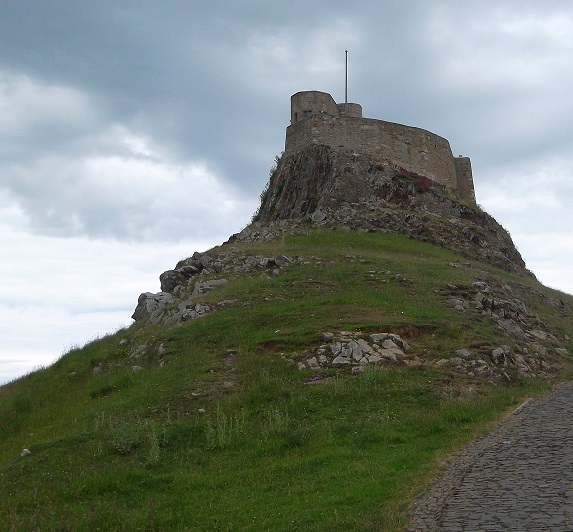
Lindisfarne Castle

Lindisfarne Castle

Like Warkworth Castle, most of the other castles I have visited are in Northumberland. Bamburgh Castle is surely the most dramatic; as you drive along the coast, you just seem to turn a corner and there it is, almost on top of you. Lindisfarne Castle is atmospheric too, due to its location perched on a hill on Holy Island. Then there’s Chillingham Castle, famous for its ghosts, and Alnwick Castle, still the home of the Dukes of Northumberland and better known to Harry Potter fans as Hogwarts. I’ve also been to Belsay Castle (for an English Heritage ‘Knights Tournament’) and to Newcastle Castle – yes, there’s a castle in Newcastle upon Tyne!

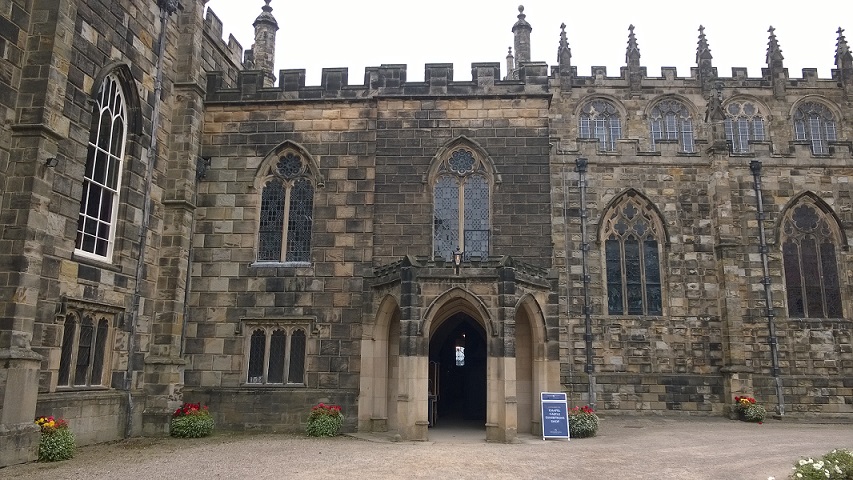
Auckland Castle

Auckland Castle

In Cumbria, I enjoyed visiting Carlisle Castle (being close to the border with Scotland it has apparently been under siege more times than any other castle in England) and Muncaster Castle in remote Ravenglass, of which my abiding memory is not so much the castle itself as the Hawk and Owl Centre and the birds of prey display in the castle grounds. In County Durham, among others, there’s Auckland Castle, which was the seat of the Bishops of Durham. I can also highly recommend Raby Castle, with its coach house, deer park and walled gardens (this is the castle I have used in my ‘Historical Musings’ image which is displayed at the top of this post).

I’ve been to Edinburgh Castle and have seen Cardiff Castle from the outside, but I sadly haven’t managed to visit any of the other castles in Scotland and Wales yet, which is something I would like to change. I’m hoping someone can tell me which ones I should put at the top of my list! There are still many, many more castles for me to see in England too, as apart from Leeds Castle in Kent and the Tower of London, most of my castle-visiting so far has been restricted to the north. And of course, there are castles all over Europe and beyond just waiting to be explored as well.

Hazlewood Castle

Hazlewood Castle

A few years ago I had the opportunity to stay for two nights at Hazlewood Castle in North Yorkshire, which is now a hotel but also has an interesting history and overlooks the site of the Battle of Towton. The bedrooms are accessed through a secret passage behind a bookcase in the library (you can see the door handle in my picture).

Visiting a castle today, as a twenty-first century tourist, it can be difficult to imagine what it would have been like to actually live or work in the castle when it was newly built. Apart from the castles like Alnwick which are still inhabited, and the ones which have been kept largely intact and furnished by private owners, many of the others have fallen into ruin and are now not much more than empty shells. Historical fiction can breathe new life into these ancient buildings and help us to picture what they were like when they were still in use.

At the beginning of Diana Gabaldon’s Outlander series, her time-travelling nurse, Claire Randall, sees a ruined castle restored to its former glory:

Castle Leoch. Well, at least now I knew where I was. When I had known it, Castle Leoch was a picturesque ruin. It was considerably more picturesque now, what with the sheep huddling under the walls of the keep and the pervasive smell of raw sewage. I was beginning to accept the impossible idea that I was, most likely, somewhere in the eighteenth century.

Leoch is a fictional castle, but there are plenty of real castles which appear in historical fiction. I have already said that Warkworth Castle is mentioned in Rebellion (and so are lots of other castles), while Raby Castle was referred to in Red Rose, White Rose by Joanna Hickson, a novel about Cicely Neville, mother of Edward IV and Richard III, known as the Rose of Raby:

Dominating the upper reaches of this fertile basin was Raby Castle, the ancestral home of the Neville family – my family. Renowned as one of England’s great northern fortresses, Raby’s nine massive towers sprawled below me like the giants of legend; they loomed over the meagre mud-plastered cotts of the village beyond its moat. I had lived most of my seventeen years within those soaring walls. To my mother it was a palace, a great haven of security and splendour demonstrating infallibly the enormous wealth and power of the Nevilles, but to me it had become a prison.

Edinburgh Castle with Nor' Loch in foreground

Edinburgh Castle with the Nor’ Loch in the foreground

In The Game of Kings, Dorothy Dunnett brings Edinburgh Castle to life in one perfect sentence:

Tonight the Castle on its pinnacle was fully lit, laying constellations on the water.

Moving away from castles I have actually visited, there are far too many other examples of castles in historical fiction to list here. Castles always feature strongly in the medieval novels of Sharon Penman and Elizabeth Chadwick, for example: I remember there were some great scenes involving trebuchets in Chadwick’s To Defy a King. Mary of Carisbrooke by Margaret Campbell Barnes is the story of Charles I’s imprisonment in Carisbrooke Castle on the Isle of Wight, and in Robyn Young’s Robert the Bruce trilogy, castles are constantly being attacked or besieged. As I’ve said, there are so many castles mentioned in historical novels that I would be here forever if I wanted to talk about all of them!

My questions this month, then, are:

Have you visited any castles? Which ones? If not, would you like to? Which books have you enjoyed that are set in castles or with memorable scenes involving castles?

I have concentrated on British castles here because they are the ones I know most about, but I would love to hear about castles in other countries too!

*All pictures used in this post are my own, apart from the painting of Edinburgh Castle which is in the public domain.

A Death at Fountains Abbey by Antonia Hodgson

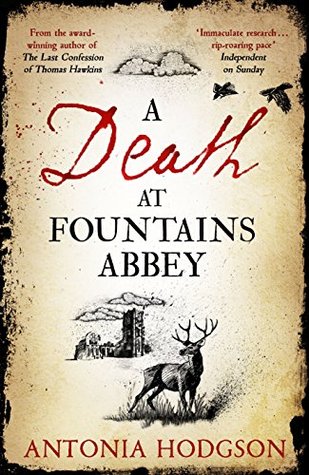
a-death-at-fountains-abbey I first met Thomas Hawkins two years ago when I read The Devil in the Marshalsea, a murder mystery set within the confines of a debtors’ prison in eighteenth century London. Last year Antonia Hodgson brought him back again for another adventure in The Last Confession of Thomas Hawkins. And now we’re off to Yorkshire for the third book in the series – A Death at Fountains Abbey. Like the first two, this one could be read as a standalone, but I would still recommend reading all three in the correct order so that you can watch the characters develop throughout the series and avoid spoiling any aspects of the previous mysteries for yourself.

The plot of this third novel is inspired by real historical events and real historical figures, including John Aislabie, the Chancellor of the Exchequer who was held responsible for the South Sea Bubble of 1720, a financial disaster in which thousands of people were ruined. It’s to Studley Royal, Aislabie’s estate in Yorkshire, that Tom Hawkins is sent on a mission for Queen Caroline (wife of George II). The Queen wants Tom to investigate some death threats received by the disgraced former Chancellor, while secretly searching for a hidden ledger which lists the names of several prominent public figures who were involved in the South Sea scandal.

On arriving at the estate, Tom immediately discovers a whole host of suspects, all of whom could have reasons for wanting Aislabie dead. To complicate things further, a young woman has recently arrived at Studley claiming that she is Aislabie’s long-lost daughter, believed to have been killed in a fire at his London home many years earlier. With the help of his lover Kitty (posing as his wife for the sake of appearances) and his young ward, Sam Fleet, Tom begins to investigate both the death threats and the whereabouts of the ledger, a search that will take him all over Studley Royal and neighbouring Fountains Abbey.

Tom Hawkins is a wonderful character; while he’s a bit of a scoundrel – and admits to being a bit of a scoundrel – he’s a decent person at heart and I can’t help liking him. His relationship with Kitty moves forward in this book and we also see a lot of Sam Fleet, the London gang leader’s son whom Tom is trying to educate and turn into a gentleman. I enjoyed the brief insights we are given into Sam’s own thoughts and feelings, showing how desperately he wants to feel valued and loved – and thankfully both Tom and Kitty are beginning to see the good in him. There are some great secondary characters in this novel too, many based on real people.

As for the mystery itself, it’s quite a good one. There were plenty of clues from the start, but it would have been difficult to put them together correctly without knowing certain facts which are withheld until much later in the novel. I certainly wasn’t able to work out what was going on before the truth was revealed.

I enjoyed this book, but it does feel slightly different from the first two Thomas Hawkins novels. The London prisons, slums and taverns which provided the setting for The Devil in the Marshalsea and The Last Confession have been replaced here by the fresh air and open spaces of the Yorkshire countryside. I have visited Studley Royal and Fountains Abbey twice (they are now National Trust properties) and this really added to the experience of reading the book as I could clearly picture the ruined abbey, the water gardens, the follies and the statues. I’m now hoping there will be a fourth book in the series and wondering where Tom’s adventures will take him next.

By the way, if you were expecting to see my monthly Historical Musings post today, I promise it will be coming soon!

The Jewelled Snuff Box by Alice Chetwynd Ley

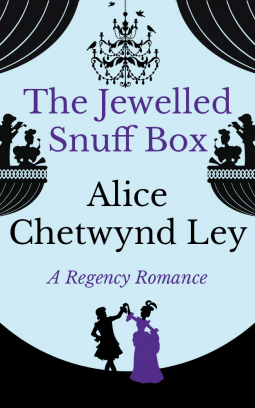
Alice Chetwynd Ley is an author whose name was completely new to me when I came across this book on NetGalley a while ago, but seeing it described as “an intriguing Regency romance, perfect for fans of Georgette Heyer and Jane Aiken Hodge” made me both curious and wary. I love Georgette Heyer and enjoyed the one Jane Aiken Hodge book I’ve read (Watch the Wall, My Darling), so I hoped the comparison would be accurate. My verdict, having now read The Jewelled Snuff Box, is that there are definitely some similarities and although Ley’s writing is not as good as Heyer’s, this is an entertaining novel in its own right.

the-jewelled-snuff-box Our heroine, Jane Spencer, is a young woman who has fallen on hard times since her beloved father’s death and, determined not to be a burden on her relatives, she has decided to find work and support herself. She is on her way to London to take up a new position as a lady’s companion when her coach is forced to stop during a snowstorm. Getting out to walk, Jane discovers a man unconscious in the snow and believing him to be the victim of an attack, she and her fellow passengers take him to the nearest inn to recover.

When he regains consciousness, the stranger claims to be suffering from amnesia and can’t remember who he is, the only clue to his identity being an ornate snuff box covered in jewels which had been found next to his body. After the weather improves and they can resume their journey, Jane, who is beginning to form a bond with the mysterious stranger, offers to see her lawyer in London on his behalf in the hope that he will be able to help. Once they reach London, however, Jane is disappointed to find that her new friend has disappeared, leaving her in possession of the snuff box – which contains a compromising letter from a lady hidden in a secret compartment.

Sorry that her relationship with the unknown gentleman has come to an end, Jane leaves the box with her lawyer and continues to the home of her new employer, the Earl of Bordesley, where another shock awaits her: the Earl’s young wife, for whom she will be working as a companion, is none other than Celia Walbrook, a girl Jane knew at school. Jane remembers Celia as a snob and a bully and it seems that nothing has changed. It’s through Celia, though, that the stranger comes back into Jane’s life – but not in the way that she would have hoped!

With a plot based heavily on misunderstandings, the reader is always one step ahead of the characters. I never doubted how the book was going to end – the question was not so much whether our hero and heroine would get together, as when they would get together and how. And as with most older romantic novels (The Jewelled Snuff Box was published in 1959) there’s an air of innocence surrounding Jane’s relationship with her mystery man – nothing graphic or explicit!

The pages of The Jewelled Snuff Box are filled with men with quizzing glasses and (obviously) snuff boxes, people riding in carriages, mentions of the Bow Street Runners and Beau Brummell, but on the whole I didn’t find the recreation of the time period quite as convincing as I do when I read a Heyer novel. The dialogue lacks the sparkling wit and humour of Heyer’s too, but the plot and characters feel similar – Francis, the Earl of Bordesley, made me think of some of some of Heyer’s ‘older husbands with younger wives’ such as Rule from The Convenient Marriage and Cardross from April Lady. Jane, however, is more like a Mary Stewart heroine: sensible, intelligent, brave and resourceful – and used to making her own way in the world.

The Jewelled Snuff Box was a short, quick read, written in a style I found very comforting and easy to read. It’s the sort of novel which sweeps you away into its world without requiring too much concentration or effort from the reader. It’s not a particularly deep or insightful novel and not a particularly original one, but not all books need to be, do they? I enjoyed it anyway and would definitely consider reading more of Alice Chetwynd Ley’s books.

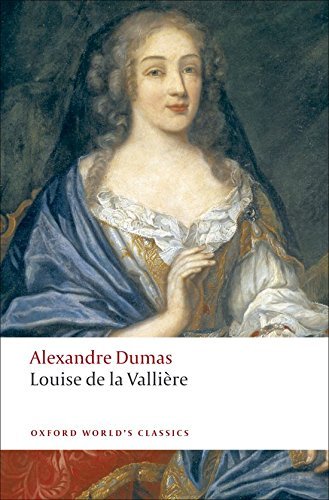
Louise de la Vallière by Alexandre Dumas

Louise de la Valliere Louise de la Vallière is the fourth book (or in some cases, the fifth – more on that later) in the series of d’Artagnan novels which began with The Three Musketeers. Looking at other readers’ reviews, this seems to be one of the least popular books in the series and I can understand why, even though I did enjoy it.

In Louise de la Vallière, the story is picked up directly where the previous book, The Vicomte de Bragelonne, ended and follows all the romance and intrigue of the court of Louis XIV. As the novel opens, the king’s brother, Philippe (known as Monsieur), has just married Charles II’s sister, Henrietta of England (Madame). An instant attraction has formed between the king and his new sister-in-law, so to avert suspicion they decide that Louis will pretend to turn his attentions to Louise de la Vallière, Madame’s young lady-in-waiting. Things don’t go exactly according to plan, however, and the king and Louise end up really falling in love with each other, breaking the heart of poor Raoul, the Vicomte of Bragelonne, who was hoping to marry Louise.

Apart from a few brief scenes here and there, there’s an almost total absence in Louise de la Vallière of the swashbuckling action and adventure which formed such a large part of the earlier volumes of the series. This could be disappointing if you’re expecting more of the same, but I do think the antics of Louis’ court are fun to read too. It’s amusing to watch the king’s desperate attempts to steal some time alone with Louise – passing letters hidden in handkerchiefs, climbing ladders to reach her window and installing secret staircases in her room!

What does all of this have to do with d’Artagnan, you may be asking? Well, the answer is – very little. He does appear from time to time, but this is not really his story. We don’t see much of Athos or Porthos either, although what we do see assures us that they are still the same characters we know and love: Athos is still noble and honourable, while Porthos is still the gentle giant, as good-natured and trusting as ever. I didn’t care for Aramis in this book, though – he’s preoccupied with a mysterious prisoner in the Bastille and when we do see him, he’s plotting and scheming, reluctant to confide in his fellow musketeers. His storyline ends on a cliffhanger which has left me wanting to start The Man in the Iron Mask as soon as possible!

Now, a note on the structure of this series. The first two books are The Three Musketeers and Twenty Years After, which I have written about in previous posts. The third book was originally intended to be one very long novel, but most publishers now split it into three: The Vicomte de Bragelonne, then Louise de la Vallière and finally The Man in the Iron Mask. Some versions (such as the free Project Gutenberg ebooks – see the notes here), split the chapters differently, including an extra volume, Ten Years Later, between The Vicomte and Louise. Be sure to check the editions you’re reading or you could miss part of the story.

This may not have been my favourite Musketeer novel, then, but I did still find a lot to like about it and can’t wait to finish the series with The Man in the Iron Mask.

Dora Greenwell McChesney’s Civil War

Rupert by the Grace of God I have not just one book but two to tell you about today. Dora Greenwell McChesney is an author from the late 19th/early 20th century whose work I discovered a few months ago when I read her Richard III novel from 1913, The Confession of Richard Plantagenet. I love reading about Richard III, but I also enjoy reading about the English Civil War, so when I spotted reissues of two of her Civil War novels on NetGalley recently I was curious to see what they were like.

Rupert, by the Grace of God, originally published in 1899, was the first one I read. I was attracted to this book by the title; it refers, of course, to Prince Rupert of the Rhine, nephew of Charles I and commander of the Royalist cavalry. When I read a biography of Rupert earlier in the year, I said that I was interested in reading more about him (and was given a few suggestions in the comments, which I will get around to reading eventually – I promise!) so that was definitely part of the appeal of this particular novel for me.

The story is narrated by Will Fortescue, a young man who has defied his father to join the Royalist army. Taking refuge in a church to hide from enemy soldiers one day, Will finds an unusual golden coin on the floor and picks it up, unaware that in doing so he is changing the whole course of his life. The coin is recognised by Cosmas, an elderly man whom some say is a wizard, and Will finds himself drawn into a secret plot to put Rupert on the throne in place of Charles. Rupert himself, however, is loyal to his king and wants no part in such a treacherous scheme!

There were parts of this novel that I enjoyed, but it wasn’t really what I’d been expecting. Being part historical adventure novel and part gothic melodrama, it was entertaining at times, but I have to admit, I can see why it was allowed to go out of print for so long. I was interested in Will Fortescue’s personal story and in his involvement in the battles and key moments of the Civil War, but there was too much focus on secret conspiracies and black magic rituals for my taste and after a few chapters I felt my attention starting to wander.

Cornet Strong of Iretons Horse The second McChesney novel I read was Cornet Strong of Ireton’s Horse, published several years later in 1903. This is a different sort of story, concentrating on the relationship between two soldiers within the Parliamentarian army: Nathan Standish, a young captain, and Reuben Strong, who is promoted to the rank of cornet after capturing Prince Rupert’s banner. Throughout the novel, Strong and Standish cross paths on several occasions with a young Irish Cavalier, Roy O’Neil, and his sister, Eileen.

Strong is a dedicated, inflexible person who believes very strongly in carrying out God’s work. When another character tells him “we are all somewhat more than mere engines of soldiership,” Strong answers “I am no more! I am a sword, a sword tempered to this work and to no other use.” Standish is a more likeable character and plays such a prominent part in the story, I wondered, at least for a while, why the author had chosen to put Strong’s name in the title.

Of these two books, I preferred Cornet Strong. Although it was still quite reliant on coincidences, chance encounters and last-minute escapes, it felt like a more ‘serious’ historical novel, telling a more straightforward story. Instead of the magic and mystery of Rupert, by the Grace of God, this one deals with battles, military campaigns and army life. Again, though, I never really felt fully absorbed – not until near the end, when something was revealed which made me think differently about everything I’d read up to that point.

Dora Greenwell McChesney’s writing style won’t appeal to everyone – the language used in her dialogue is archaic and her prose in general feels old-fashioned, even for books published in 1899 and 1903. These two novels haven’t won a place on my list of favourite Civil War books, but they were interesting in parts and were fairly quick reads, particularly the shorter Cornet Strong, so I did find them worth reading.