Mary Anne by Daphne du Maurier

Mary Anne I fell in love with Daphne du Maurier’s writing as a teenager when I read Rebecca for the first time, quickly followed by Jamaica Inn, and since then, I have been (very slowly) working through the rest of her novels, short stories and non-fiction. I have thoroughly enjoyed most of her books, with only a few exceptions – and sadly this one, Mary Anne, was one of the exceptions. I wouldn’t say that I didn’t enjoy it at all – there were still a lot of things that I liked – but I didn’t think it was as strong as most of the other du Maurier novels I’ve read.

Du Maurier often draws on her own family history as an inspiration for her work; The Glass-Blowers is the story of her ancestors who lived in France during the Revolution, while The Parasites also has autobiographical elements and the houses in both Rebecca and The King’s General are based on her own home, Menabilly. Mary Anne is a fictional account of the life of Mary Anne Clarke, du Maurier’s great-great-grandmother, best known for being a mistress of Prince Frederick, Duke of York.

I loved the first few chapters of the book which follow Mary Anne throughout her childhood and teenage years. Born into a poor London family in 1776, Mary Anne Thompson grows up on Chancery Lane with her mother, younger brother and stepfather, who works as a copy editor. When her stepfather becomes ill and is unable to go to work, the thirteen-year-old Mary Anne secretly collects his copy from the printer and corrects it herself – and from this moment I knew she was going to be a great character: strong, clever and resourceful from an early age.

Mary Anne is also an ambitious person but she makes a big mistake when, in 1791, she elopes with Joseph Clarke, a stonemason. The marriage is an unhappy one; Joseph is an alcoholic who drinks and gambles away most of his money, leaving Mary Anne desperate to escape and build a new life for herself and her children. The breakdown of her marriage proves to be a turning point and it’s not long before Mary Anne comes to the attention of Frederick, Duke of York.
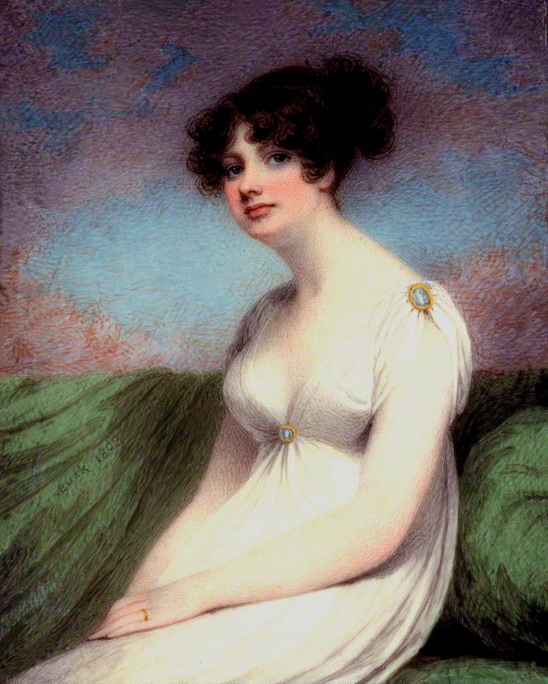
Portrait of Mary Anne Clarke by Adam Buck, 1803

Portrait of Mary Anne Clarke by Adam Buck, 1803

As the Duke’s mistress, Mary Anne enjoys the comfort and luxury that comes with her new status, but she quickly discovers that the money he provides her with is not sufficient to pay for the lifestyle she wants. Taking advantage of Frederick’s position as Commander-in-Chief of the Army, she decides to add to her income by secretly accepting payments in exchange for using her influence with the Duke to obtain army commissions. Mary Anne is sure nothing will go wrong, but to the reader it’s obvious that she is playing a dangerous game and that if her relationship with the Duke should ever come to an end, her life could begin to fall apart.

As I’ve said, I thought the first part of the book was wonderful and I enjoyed watching Mary Anne use her wits and her charm to rise from her humble beginnings to a position of power. She’s a real social-climber and reminded me of characters like Becky Sharp from Vanity Fair and Amber St Clare from Forever Amber. Remembering that du Maurier was writing about her own ancestor, I think her interest in and affection for Mary Anne come across strongly, while at the same time she is open about Mary Anne’s faults and flaws.

The second half of the novel is devoted to several court cases and scandals in which Mary Anne becomes involved, and this is where I started to get bored. The court proceedings are described in great detail, with page after page of witness statements, letters, testimonies and dialogue, which I just didn’t find very interesting to read. I can appreciate that du Maurier was trying to stay true to history here and incorporate her research into the story, but I don’t think she got the balance quite right between fact and fiction.

I’m glad I’ve had the chance to meet and get to know Mary Anne Clarke but this book left me slightly disappointed. I’m hoping for better luck with the remaining du Maurier books I still need to read (Frenchman’s Creek, Castle Dor and some of the non-fiction and short story collections).

Classics Spin – The Result

On Friday I mentioned that I was taking part in the latest Classics Spin. The idea of the Spin was to list twenty books from my Classics Club list, number them 1 to 20, and the number announced today (Monday) represents the book I have to read before 1st August 2016.

The number that has been selected by the Classics Club this time is #15, which means the book I’ll be reading is:

Prince of Foxes

Prince of Foxes by Samuel Shellabarger

This is what the book is about:

Prince of Foxes, set in Renaissance Italy, is the fast-paced, suspenseful story of Andrea Orsini, a peasant boy who rises far and becomes a secret agent for the cunning and powerful Cesare Borgia, who entrusts him with the most delicate political, military and romantic missions. It is a classic of American popular fiction. When first published in the mid-twentieth century, it became an instant best-seller and was turned into a hit movie with Orson Welles cast as Borgia and Tyrone Power as Orsini.

One of the things I like about the Classics Club is that each individual member can decide how they want to define a classic. As well as conventional classics, my own list also includes modern classics, ‘forgotten’ classics, and books like this one, which are classic historical fiction. I’m very pleased that the spin has chosen Prince of Foxes for me as I’ve had a copy on my shelf for a long time and have just never managed to get round to reading it. I’ll do my best to read and review it sometime in June or July, but I want to finish Kristin Lavransdatter, my book from the previous spin, first!

Have you read this book? If you took part in the classics spin too, are you happy with your result?

Classics Spin #13: My list

The Classics Club

The Classics Club have just announced another of their Classics Spins. It’s hard to believe this will be the thirteenth! I probably shouldn’t be taking part in this one as I haven’t even finished my book from the last Spin yet (although I think I have a good excuse, considering it was Kristin Lavransdatter) but as usual I couldn’t resist joining in.

Here is a reminder of the Spin rules:

* List any twenty books you have left to read from your Classics Club list.
* Number them from 1 to 20.
* On Monday the Classics Club will announce a number.
* This is the book you need to read by 1st August 2016

And here is my list:

1. Wuthering Heights by Emily Bronte (re-read)
2. Crime and Punishment by Fyodor Dostoevsky
3. Louise de la Valliere by Alexandre Dumas
4. Frenchman’s Creek by Daphne du Maurier
5. The Mill on the Floss by George Eliot
6. Howards End by EM Forster
7. I, Claudius by Robert Graves
8. Wives and Daughters by Elizabeth Gaskell
9. The Count of Monte Cristo by Alexandre Dumas (re-read)
10. The Woodlanders by Thomas Hardy
11. Excellent Women by Barbara Pym
12. The Red House Mystery by AA Milne
13. East of Eden by John Steinbeck
14. The Day of the Triffids by John Wyndham
15. Prince of Foxes by Samuel Shellabarger
16. The Leopard by Giuseppe Tomasi di Lampedusa
17. The Romance of the Forest by Ann Radcliffe
18. Lost Horizon by James Hilton
19. Rebecca by Daphne du Maurier (re-read)
20. Louise de la Valliere by Alexandre Dumas

I have exactly twenty books left to read for the Classics Club, so this list was very easy to put together. However, I haven’t included The Man in the Iron Mask as it comes after Louise de la Valliere in the d’Artagnan series and I don’t want to read them out of order. I’ve listed Louise twice instead.

I don’t really mind which book I get at this stage as I’ll be reading them all soon anyway. I’m always happy with Dumas or du Maurier, though, and I would also love to get The Leopard this time.

Are you taking part in the Classics Spin? Which books from my list do you think I should be hoping for?

A review for Shiny New Books: The Sun King Conspiracy

This is just a quick post to let you know that Issue 10 of Shiny New Books is out today!

SNB

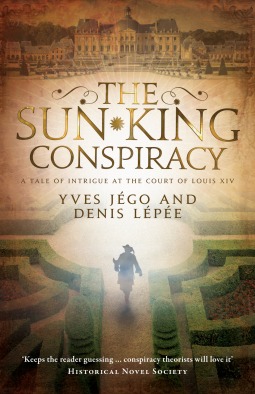
If you haven’t come across it yet, Shiny New Books is an online recommendations magazine for book lovers and is packed with reviews and other features. I was happy to provide a review of The Sun King Conspiracy by Yves Jégo and Denis Lépée for this edition.

This is what the book is about:

The Sun King Conspiracy “This fascinating and complex historical thriller is set in 1661 at the court of France’s Sun King, Louis XIV. As the novel opens, Cardinal Mazarin, Chief Minister to the young king, is dying. Having effectively ruled France alongside Anne of Austria throughout Louis’ early years, the balance of power is set to change with his death. When a fire breaks out in Mazarin’s palace, some incriminating coded documents are stolen from the dying Cardinal – documents which must be prevented from falling into the wrong hands. The theft sparks a power struggle among rival factions, with political figures as prominent as Nicolas Fouquet and Jean-Baptiste Colbert drawn into a race to find the mysterious papers.

Also drawn into this dangerous game – much against his will – is Gabriel de Pontbriand, an aspiring young actor who has come to Paris to pursue his dream of a career in the theatre. Mazarin’s stolen documents unexpectedly come into Gabriel’s possession and, to his horror, he recognises the signature at the bottom of one of the papers. Caught between the schemes of unscrupulous politicians on one side and a secretive religious brotherhood on the other, Gabriel finds himself at the heart of a conspiracy which has the potential to change the future of France and its monarchy forever…”

You can read the rest of my review here – and don’t forget to explore the rest of the new issue!

My commonplace book: May 2016

A summary of this month’s reading, in words and pictures.

commonplace book
Definition:
noun
a notebook in which quotations, poems, remarks, etc, that catch the owner’s attention are entered

Collins English Dictionary

~

He could put the young king aside as some nameless bastard; he could take England into his hand to shape to what greatness he would. In that moment, he never questioned his power. It was his to claim kingship or forgo it. On the strains of the dirge drifted to him a sound of King Edward’s voice: “Richard hath failed me never; him I do well to trust!”

The Confession of Richard Plantagenet by Dora Greenwell McChesney (1913)

~

Vaux le Vicomte

The scaffolding had disappeared, flowers and shrubs were gradually covering the bare earth, bringing the flowerbeds to life, and Vaux was slowly taking shape, little by little revealing its full majesty.

The Sun King Conspiracy by Yves Jégo and Denis Lépée (2016)

~

Thus at two on a Sunday morning, on the second day of September, in the year of our Lord, also the year of the Beast, 1666, London begins to burn.

Fire by C.C. Humphreys (2016)

~

Phileas Fogg

The mansion in Savile Row, though not sumptuous, was exceedingly comfortable. The habits of its occupant were such as to demand but little from the sole domestic, but Phileas Fogg required him to be almost superhumanly prompt and regular. On this very 2nd of October he had dismissed James Forster, because that luckless youth had brought him shaving-water at eighty-four degrees Fahrenheit instead of eighty-six.

Around the World in Eighty Days by Jules Verne (1873)

~

Even after all this time, grief threatens to overwhelm me when I think about my family…so powerful, so vigorous, yet all destroyed in a few short years. But still, we left our mark on history; never again will the world see our equal.

The Sons of Godwine by Mercedes Rochelle (2016)

~

Mary Anne Clarke

This was what they remembered in after years. The rest was forgotten. Forgotten the lies, the deceit, the sudden bursts of temper. Forgotten the wild extravagance, the absurd generosity, the vitriolic tongue. Only the warmth remained, and the love of living.

Mary Anne by Daphne du Maurier (1954)

~

“The worst of it is, I’ll have to tell him so myself. He’ll never dare to mention the subject again, after what I said to him that night he proposed last. I wish I hadn’t been so dreadful emphatic. Now I’ve got to say it myself if it is ever said. But I’ll not begin by quoting poetry, that’s one thing sure!”

Love and Other Happy Endings edited by M.R. Nelson (2016)

~

She could not even recall his features properly nor remember the colour of his eyes, but she could recall how her heart had leaped when he looked at her. She could remember the sound of his voice but not the words he had spoken, as one remembers the perfume of a flower long after it has been pressed out of shape between the pages of a book.

The Queenmaker by Maureen Peters (1975)

~

Pembroke_Table_by_Chippendale

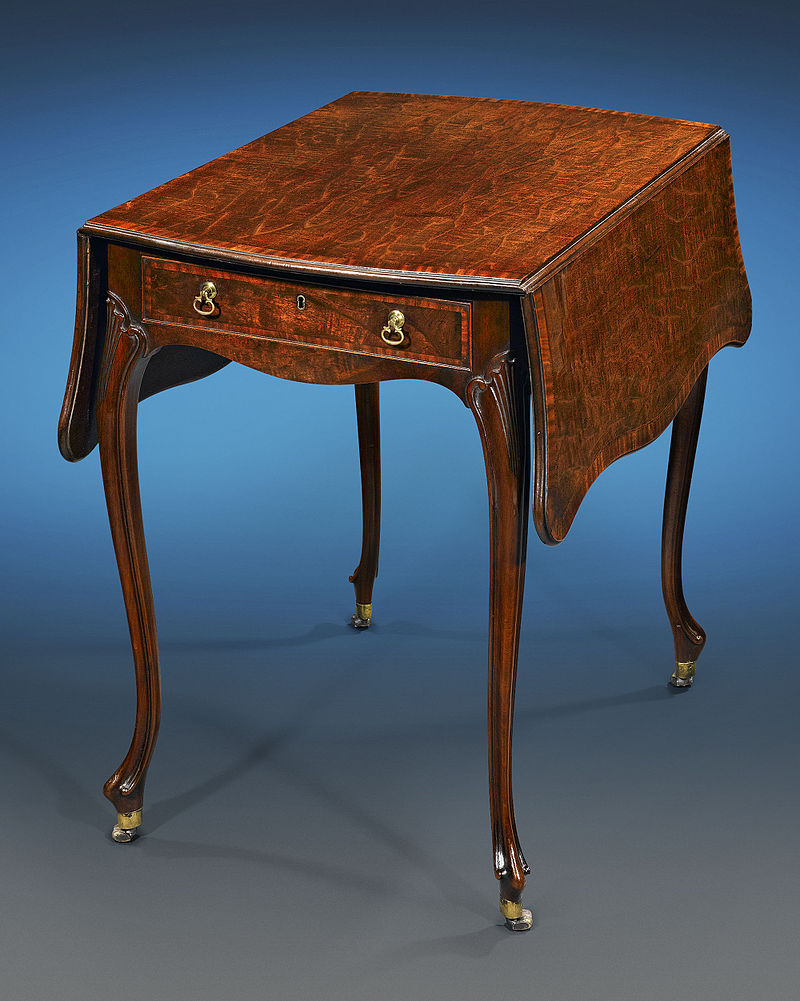
Sometimes the apprentice fainted with exertion and had to be revived with a cup of water dashed in his face. Thomas often thought, when a veneered surface had been subsequently polished to a satin-like shine, that it was doubtful if the future owner of the piece would ever have the least idea what sweaty, strength-wrenching effort went into the making of it. Hell held no fears for him. It could be no worse than a veneering shop.

Gilded Splendour by Rosalind Laker (1982)

~

“Jack, Jack,” cried Stephen, running in. “I have been sadly remiss. You are promoted, I find. You are a great man – you are virtually an admiral! Give you joy, my dear, with all my heart. The young man in black clothes tells me you are the greatest man on the station, after the Commander-in-chief.”

The Mauritius Command by Patrick O’Brian (1977)

~

Favourite book this month: Around the World in Eighty Days

A resolution revisited

Sorry about the unannounced disappearance over the last week or so. I had a stressful day at work last Friday trying to deal with a difficult colleague and it left me feeling very down for a few days and not very interested in blogging. I was struggling to concentrate on any of the books I was in the middle of reading and found myself reaching instead for The Disorderly Knights by Dorothy Dunnett to re-read a favourite scene…and of course I ended up re-reading the rest of the book! As anyone who has read it will know, it finishes on such a cliffhanger that it’s almost impossible not to want to pick up the next book in the series as soon as possible, so naturally I have had to move straight on to a re-read of Pawn in Frankincense as well.

oscar-wilde-dramatist-if-one-cannot-enjoy-reading-a-book-over-and Having been reminded of how much I used to enjoy returning to my favourite books again and again, I remembered the list of reading resolutions I posted at the beginning of the year. My top resolution was to spend more time on re-reads…and until now, not a single one of my 2016 reads has been a re-read! This is something I really want to change as there are so many books I keep saying I would love to re-read and it makes me feel frustrated and sad that I just never seem to get round to doing it.

So, for the rest of the year I’m determined that I’m going to stick to my resolution and do a lot of re-reading! I’m not going to set any targets in terms of numbers, as I don’t cope very well with targets where reading is concerned…or with lists. I know that if I mentioned any specific titles here I would immediately feel under pressure and lose my enthusiasm for re-reading them, so I’m afraid you’ll have to wait and see which books I choose to re-read!

Do you enjoy re-reading too or do you prefer to discover new books?

Which are your favourite books to read over and over again?

The Royal Succession by Maurice Druon

The Royal Succession The Royal Succession is an English translation of Maurice Druon’s 1957 French novel La Loi des mâles, the fourth volume of his Accursed Kings series which began with The Iron King. Described by George R.R. Martin as “the original Game of Thrones”, the seven books in this series tell the story of Philip IV the Fair of France and the kings who follow him, said to have been cursed “to the thirteenth generation” by the vengeful Grand Master of the Knights Templar.

Books two and three – The Strangled Queen and The Poisoned Crown – described the troubled reign of Philip’s son, Louis X. As The Royal Succession opens in the year 1316, Louis is dead, leaving no clear heir to the throne. There is some doubt over the parentage of Jeanne, his five-year-old daughter from his first marriage, so all eyes are on Queen Clémence, his pregnant second wife.

While France looks forward to the birth of Clémence’s child, a regent is needed; the obvious choices are Louis’ younger brother, Philippe of Poitiers, and his uncle, Charles of Valois. At this crucial moment, Philippe is away in Lyon awaiting the election of a new pope, but by resorting to some underhand methods he is able to turn the situation to his advantage and becomes regent on his return to Paris. However, his mother-in-law, Mahaut, Countess of Artois, is even more ambitious and vows to clear the path to the throne for Philippe.

Nobody is safe from Mahuat’s plotting, and when Clémence gives birth to Louis’ posthumous child, the sickly Jean I, the baby king finds himself at the centre of one of her schemes. Meanwhile, Philippe searches for a way to deal with the claim of his little niece, Jeanne, and finds a possible solution in the Salic Law, which excludes females from the line of succession.

I hope I haven’t made all of this sound too complicated! Some concentration is needed, but Druon does explain everything clearly and the plot is easy enough to follow, especially if you have also read the previous three books (something I would highly recommend). The period covered in this particular novel is fascinating and I found this a much more gripping and entertaining read than The Poisoned Crown.

The Accursed Kings series is based closely on historical fact, but there is one part of The Royal Succession which feels more like fiction – and that is the storyline surrounding the fate of little Jean I. However, having looked this up, it seems that Druon has developed this storyline out of a theory which has never been proved or disproved. It’s unlikely, but not impossible, and other books have been written on the subject. It also explained for me the role in the series of Guccio Baglioni and Marie de Cressay, something I’ve been wondering about since the first book as their story had previously seemed so disconnected from the central history.

There are three books left in the series and I’m looking forward to continuing with the next one, The She-Wolf.