Historical Musings #7: Exploring Africa

Historical Musings It’s very easy to find historical fiction set in Europe or America. If you’re looking for a book on the wives of Henry VIII, the Italian Renaissance, the US Civil War or the French court, there are literally hundreds of novels to choose from – but historical fiction set in other parts of the world is not as well represented.

I’m participating in A More Diverse Universe at BookLust this month and will have two books to tell you about soon: the first is Kamila Shamsie’s A God in Every Stone, set partly in 1930s Peshawar, and the other is Flood of Fire, the final part of Amitav Ghosh’s Ibis Trilogy set in India and China during the First Opium War. Last year, for the same event, I read The Garden of Evening Mists by Tan Twan Eng, set in Malaya in the 1940s and 1950s, and The Twentieth Wife by Indu Sundaresan, a story of Mughal India. It seems, then, that when I do choose to read more diversely within the historical fiction genre, I tend to pick up books set in Asia (particularly in India and China) rather than in other areas of the world.
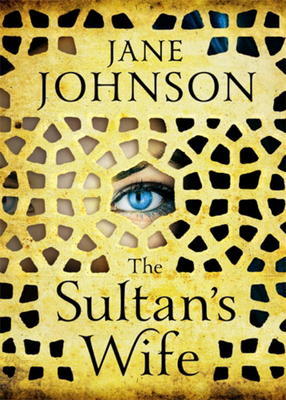
The Sultans Wife A quick look through my blog archives has shown me that I have read a very small number of historical novels set in Africa over the last few years – and even fewer that were actually written by African authors. Several of Dorothy Dunnett’s novels are set partly in Africa (the journey to Timbuktu in Scales of Gold is particularly fascinating), Wendy Wallace’s The Sacred River is set in 19th century Egypt – and of course, there’s Elizabeth Peters’ Amelia Peabody series which is set in Egypt too. I can also recommend three novels set partly or entirely in Morocco: Linda Holeman’s The Saffron Gate (1930s), Jane Johnson’s The Sultan’s Wife (17th century) and Laila Lalami’s The Moor’s Account (16th century).

half of a yellow sun If we can include the 1960s as historical fiction, then I have also read The Memory of Love by Aminatta Forna (Sierra Leone) and Half of a Yellow Sun by Chimamanda Ngozi Adichie (Nigeria) – and Cutting for Stone by Abraham Verghese, which covers the history of Ethiopia from around 1950-1980. I do prefer to stick to Walter Scott’s definition of historical fiction, though, which would rule out anything set less than sixty years before publication! Before I started blogging, I read Roots by Alex Haley and the Ramses series by Christian Jacq, but beyond these I’m struggling to think of anything else.

Can you recommend some good historical fiction novels set in Africa? Which are your favourites?

The Moor’s Account – and a Shiny New Books Q and A

Just a quick post to let you know that Issue 7 of Shiny New Books is out today!

SNB

Shiny New Books is an online magazine for book lovers and is packed with book reviews, news and other features. In this issue, I have provided a Q & A with author Laila Lalami. Below you can read my review of her Man Booker longlisted novel The Moor’s Account.

The Moors Account In 1527, the Spanish conquistador Pánfilo de Narváez embarks on an expedition to the New World. With five ships and six hundred men, there’s every reason to hope that the voyage will be a success and will result in the area now known as the Gulf Coast of the United States being claimed for Spain. Within a year, however, most of the men have succumbed to disease, lack of food, extreme weather and encounters with Native American tribes. Eventually, only four of the original party remain: the treasurer of the expedition, Álvar Núñez Cabeza de Vaca; the nobleman Alonso del Castillo Maldonado; Andrés Dorantes de Carranza, an explorer; and finally, Estebanico, a Moroccan slave in the service of Dorantes.

The story of the disastrous Narváez expedition is told in a chronicle written by Cabeza de Vaca, yet Estebanico – one of de Vaca’s three fellow survivors – is only very briefly mentioned. Laila Lalami’s The Moor’s Account gives Estebanico a voice of his own and an opportunity to tell his side of the story, including details which were omitted from the ‘official’ records.

As well as his account of the expedition, Estebanico also tells us about his early life in Azemmour, Morocco, and how his fortunes rose and fell. Born Mustafa ibn Muhammad ibn Abdussalam al-Zamori, he was once a trader, selling men into slavery – before, ironically, becoming a slave himself. The two threads of Estebanico’s narrative are told in alternating chapters and I found that as I learned more about his background I gained a deeper understanding of the sort of person he was and of the qualities which helped him to survive when so many others did not.

Unlike most of his fellow explorers, Estebanico has not come to the New World in search of fame or fortune; all he wants is to be given his freedom and a chance to return to Azemmour. He is in a unique position, being part of the Castilian party yet not fully accepted as ‘one of them’ – at least until his intelligence and his gift for learning languages make him indispensable to the group and the barriers between slave and master begin to break down. His status as slave means that he offers a different perspective on events and also a more sympathetic view of the tribes of indigenous people they encounter.

Lalami very successfully conveys the strangeness and newness of the world in which Estebanico has found himself; the landscape, the plants and animals, the native tribes and their customs – all of these are described through the eyes of someone to whom everything is fascinating and unfamiliar. It would have been interesting to have been able to trace the progress of the journey on a map. On the other hand, this is a journey into the unknown and Estebanico and his companions only have a very vague idea of where they are headed, so I was happy to wait until I’d finished the novel before looking up more details of the expedition online.

Although Estebanico’s account does not really exist and Lalami is simply imagining how he may have chosen to tell the story, the novel is written in such a way that I could easily believe everything in the book happened exactly as described. I appreciated the author’s efforts to make the novel feel like an authentic sixteenth century manuscript – while it isn’t entirely convincing, it never feels inappropriately modern either and strikes a good balance between readability and historical accuracy. I also liked the names the Spaniards have for the places they pass through: for example, the Land of the Indians, the Ocean of Fog and Darkness, the Island of Misfortune and the Bay of Oysters. A strange reptile discovered near the beginning of the expedition is given the name El Lagarto because it looks like a giant lizard. Names, of course, are very important to Estebanico, having had his own name – and with it part of his identity – taken from him.

Another major theme of the novel is the power of storytelling and the right we all have to tell our own story and make sure our voice is heard. It’s fortunate, then, that Laila Lalami is such a talented storyteller herself. The Moor’s Account is an educational read (unless you’ve read about the Narváez expedition before, you should find, as I did, that there’s something new to learn on almost every page) but it’s also a fascinating travelogue and a gripping adventure novel which kept me turning the pages wondering where Estebanico’s journey would take him next.

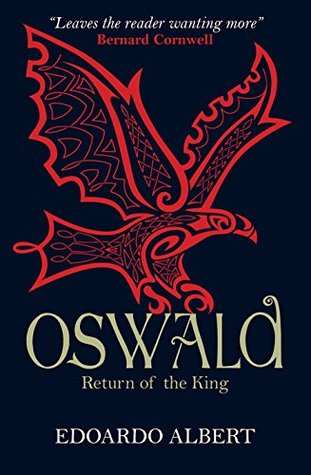
Oswald: Return of the King by Edoardo Albert

Oswald One of my favourite reads from the first half of this year was Edwin: High King of Britain, the first in Edoardo Albert’s Northumbrian Thrones trilogy which tells the stories of three seventh century kings. On a visit to the library a few weeks ago I was pleased to find a copy of the second book, Oswald: Return of the King – and I was delighted to discover that it was just as good as the first.

It’s not necessary to have read Edwin: High King of Britain before starting this book – the key events of the previous book are given in a summary at the beginning of this one – but those of you who did read Edwin may remember Oswald as the young boy who fled into exile with his family after his father, Æthelfrith, King of Northumbria, was killed in battle.

During the years of Edwin’s reign, Oswald remains in the northern kingdom of Dal Riata, living amongst the monks on the island of Iona, where he is converted to Christianity. When news of Edwin’s death reaches the island, Oswald is reluctant to take action; he has no real desire to claim the throne for himself and would prefer to stay on Iona and enter the monastery. Abbot Ségéne, however, has other ideas – he wants Oswald to become king so that he can spread the new religion to his people – and a sequence of events follows which will leave Oswald with little choice other than to return to Northumbria and regain his father’s throne.

Oswald’s story is as exciting and engrossing as Edwin’s was. If the title, Return of the King, has made you think of Tolkien’s Lord of the Rings, that’s not a coincidence: Tolkien is thought to have taken the historical Oswald as the inspiration for his fictional character, Aragorn. Edoardo Albert lists Tolkien as a favourite author and there is a definite influence here, though it would be difficult to say how much. This tale of treachery and betrayal, stolen thrones and warring kingdoms does sometimes feel like fantasy – but of course, it isn’t; Oswald was a real person and Albert’s novel is based on historical fact (except where some imagination was clearly needed to fill in the gaps).

Oswald himself is a fascinating character and I thought his internal struggle between his desire to become a monk and his duty to become king was very well written. I also loved the portrayal of his relationship with his younger brother, Oswiu, who is going to be the subject of the third book in the trilogy. The brothers have very different temperaments, and while the loyalty and love they have for each other is plain to see, there’s also a tension which is always there below the surface.

Other characters include friends such as the monk, Aidan, who brings Christianity to the island of Lindisfarne, and enemies such as Cadwallon, King of Gwynedd, and Penda, King of Mercia – and I was pleased to see the return of Coifi, the pagan priest whom we first met in Edwin: High King of Britain, now a lost and lonely character having had his faith in the old gods shaken. I should also mention Oswald’s wonderful pet raven, Bran, who seems to have a personality all of his own (I wasn’t aware until after finishing the book that there are stories associating the real Oswald with a raven).

Before reading this book I had very little knowledge of Oswald or this period of history, so I found it a very informative novel as well as an entertaining one. Albert includes a lot of useful additional material: there’s a map showing the various kingdoms that made up Britain in the year 635, a character list, a glossary of unfamiliar words and a pronunciation guide – which was very helpful as I would otherwise have had no idea how to pronounce a name like Rhieienmelth!

I’m now looking forward to the third book in the trilogy – and while I await its publication I think I would like to read The King in the North by Max Adams for a non-fiction view of Oswald.

Upcoming reading events

A More Diverse Universe 2015

Beginning today, Aarti of BookLust is hosting A More Diverse Universe, her annual reading event designed to encourage people to read more diversely. There’s still plenty of time to join in – the sign-up post is here and you’ll find lots of suggestions and recommendations on Aarti’s blog.

I’m currently reading A God in Every Stone by Kamila Shamsie, which I chose because it was also on the shortlist for the Walter Scott Prize this year (I am slowly working my way through all of the shortlisted titles since the prize began). Two other books I’ve been considering reading are Flood of Fire by Amitav Ghosh and The Japanese Lover by Isabel Allende. I haven’t read anything by Allende before but received a review copy of The Japanese Lover through NetGalley and am looking forward to trying it. Flood of Fire is the third book in Ghosh’s Ibis Trilogy and I enjoyed the previous two when I read them earlier this year.

1924-club

The 1924 Club is being hosted by Karen of Kaggsy’s Bookish Ramblings and Simon of Stuck in a Book and the idea is for everyone to read and review books originally published in 1924. I was sure I must have something on my shelves from that year, so I had a look and found two books: Precious Bane by Mary Webb and Beau Geste by P.C. Wren. I’m going to try to read both of those for the club – I think I’ll probably enjoy Beau Geste and I’m curious about Precious Bane, having seen very mixed opinions of it!

Simon and Karen (and others) have provided plenty of other suggestions: it seems that a lot of great books were published in 1924 and I’ll look forward to seeing what everyone chooses to read.

Witch Week

From October 31 to November 6, Lory of The Emerald City Book Review will be celebrating Witch Week. Her theme this year is New Tales from Old, which involves reading fiction based on fairy tales, folklore, myths and legends – not necessarily including witches! I’m thinking of reading The Last Enchantment, the third of Mary Stewart’s Arthurian novels. Lory will also be hosting a readalong of The Bloody Chamber by Angela Carter, though I won’t be taking part as I’ve already read it.

German Literature Month

November is also German Literature Month at Beauty is a Sleeping Cat and Lizzy’s Literary Life. This event is now in its fifth year but it will be the first time I’ve participated. I haven’t decided what to read yet, but I do have two Hans Fallada books on my TBR (Wolf Among Wolves and Once a Jailbird) as well as Death in Venice by Thomas Mann. There will also be some themed weeks and readalongs throughout the month of November.

Will you be taking part in any of these events?  Do you know what you’ll be reading?

The Heart of Midlothian by Sir Walter Scott

The Heart of Midlothian In 2012 I read my first Walter Scott novel, Ivanhoe, and was surprised by how much I enjoyed it. Having found Scott less difficult to read than I’d expected, I decided to add another of his books to my Classics Club list and something drew me to this one – possibly memories of the Scottish football results being announced on the television on a Saturday afternoon (Heart of Midlothian is the name of an Edinburgh team).

The novel – which predates the football team, being published in 1818 – takes its title from the Old Tolbooth Prison in Edinburgh, which was in the heart of the county of Midlothian. Scott based his plot on two real historical events: the Porteous Riots of 1736 and the story of a young woman who walked all the way to London to obtain a royal pardon for her sister who had been wrongly charged with infanticide. In Scott’s version, the young woman’s name is Jeanie Deans and she lives on a dairy farm at St Leonard’s Crags with her father, Davie, a strict Cameronian (a Presbyterian faction).

Jeanie’s younger sister, Euphemia – known as Effie – is in the Tolbooth facing the death penalty, having been accused of giving birth in secret and murdering her newborn child. Jeanie is sure Effie is innocent, but with no witnesses to the pregnancy or the birth and no way to prove what happened to the baby, she is guilty in the eyes of the law. If Jeanie would only tell the court that she had known her sister was pregnant, Effie could be freed, but she is unwilling to tell a lie and instead she decides to go to London to ask Queen Caroline for a pardon. Armed with a letter of introduction to the Duke of Argyll and some money borrowed from an admirer, the Laird of Dumbiedikes, Jeanie sets off on foot to save her sister’s life.

The first half of the novel sets the scene, describing a riot that breaks out in Edinburgh during a protest over the hanging of two smugglers. When Captain John Porteous orders the city guard to fire into the crowd, causing the deaths of several people, he himself is imprisoned in the Tolbooth. The prison is then stormed by a mob and Porteous is lynched and killed. These events become entwined with Effie’s story and provide the historical backdrop for the novel. The second half of the book concentrates on Jeanie’s journey to London, which includes encounters with some characters we previously met in Scotland: George Robertson, the father of Effie’s child; and Meg Murdockson and her mentally ill daughter, Madge Wildfire, two women who could hold the key to the mystery of the missing baby.

Well, The Heart of Midlothian was not the relatively easy read that Ivanhoe was! I found it much more challenging, for several reasons. First, as the novel is set mainly in Scotland, the dialogue is written almost entirely in Scots. I wouldn’t normally have a problem with this, but added to the fact that the book was written in the early 1800s, it did slow down the pace of my reading quite a lot. I find that whenever a book uses a large amount of dialect – even one you’re familiar with – a little more effort is required to read it and that was definitely the case here. If you think you might struggle with the dialect, I would recommend choosing an edition of the book with a good glossary!

Also, unlike Ivanhoe, which is a medieval adventure story packed with sword fights, sieges, villainous knights and feuding noblemen, this is a very different type of novel. While Jeanie’s personal story was gripping, I have to admit I had very little interest in the long passages describing the religious situation in eighteenth century Scotland and the discussions between Jeanie’s father, Davie Deans, and his neighbours on their different moral beliefs. I also thought the plot relied too heavily on coincidence, with Jeanie meeting people from her own small community in Scotland hundreds of miles away in England – and I felt that the final few chapters of the book were unnecessary as the story had already reached a more natural ending point.

I did enjoy parts of The Heart of Midlothian, though. Jeanie is a strong heroine who behaves with honesty and integrity throughout the novel, and although some of her choices were frustrating, I did like her. There is a romantic interest for Jeanie too – the schoolmaster, Reuben Butler – but this only forms a small part of the story. I was also interested in the descriptions of eighteenth century life and the relationship between Scotland and England in the years following the union of 1707. And there are plenty of memorable scenes, from the storming of the Tolbooth near the beginning to Jeanie’s meeting with Queen Caroline, wife of George II, towards the end.

I certainly didn’t love this book the way I loved Ivanhoe, but I’ll still read more of Scott’s novels and will hope that the next one I pick up is more to my taste than this one was!

Looking back, looking forward: September 2015

September has been a good month for me in terms of reading (I’ve read eleven books and enjoyed most of them) but less productive where blogging is concerned. I’ve only written about five of those eleven books and hope I can catch up in October before I get too far behind. I have a week off work coming up so that should help. September was also a lucky month – I won a new Kobo Glo HD in a NetGalley Prize Draw which I couldn’t even remember entering. I don’t usually win anything so that was a nice surprise!

Let’s look back at September before looking forward to October…

Favourite books this month:

Oswald

Oswald: Return of the King by Edoardo Albert

This is the second book in Edoardo Albert’s Northumbrian Thrones trilogy and I loved it as much as the first. I don’t want to say too much about it here as I’m hoping I’ll be ready to post my thoughts very soon!

The Last Queen

The Last Queen by C.W. Gortner

I didn’t know what to expect from this book as I’ve never read any of C.W. Gortner’s historical fiction before, but I was very impressed by this moving story of Juana of Castile. Again, further thoughts will follow soon.

Read and reviewed this month:

Glorious Apollo by E. Barrington
April Lady by Georgette Heyer
Nelly Dean by Alison Case
What Angels Fear by C.S. Harris
The Return of the Native by Thomas Hardy

Also read this month but not yet reviewed:

The Taming of the Queen by Philippa Gregory
The Heart of Midlothian by Sir Walter Scott
The Queen’s Man by Sharon Penman
The Moor’s Account by Laila Lalami – review will appear in the next issue of Shiny New Books

Looking forward to October:

As the nights continue to get darker and Halloween approaches, I’m looking forward to reading more books for this year’s RIP challenge. I’ve only read two so far (What Angels Fear and The Queen’s Man, both mentioned above) but I’m in the middle of a third – Footsteps in the Dark by Georgette Heyer.

I’m taking part in A More Diverse Universe, which is hosted by Aarti of Booklust and begins this Sunday. I’m still trying to decide what to read, but some possibilities are A God in Every Stone by Kamila Shamsie, The Japanese Lover by Isabel Allende and Flood of Fire by Amitav Ghosh.

I also still need to read my Classics Spin book, The Glass-Blowers by Daphne du Maurier. I have just over three weeks left to read it if I’m going to meet the deadline!

How was your September reading? Do you have any plans for October?

The Return of the Native by Thomas Hardy

The Return of the Native Egdon Heath, part of Hardy’s fictional Wessex, is a wild and haunting place, steeped in history and superstition. Many of the people who live and work there love the heath and appreciate its beauty, but there are some – including Eustacia Vye – who find the loneliness oppressive. Eustacia, who lives with her grandfather in an isolated cottage on the heath, is desperately looking for a way to escape and believes she has found it in Clym Yeobright.

Clym is the returning native of the title, home for Christmas from Paris where he has been working as a diamond merchant. Clym, who dislikes the diamond trade, is planning to stay at home and become a schoolmaster, but Eustacia sets her sights on marrying him in the hope that she can persuade him to take her back to Paris. After all, there is nothing to keep her on Egdon Heath now that her former lover, the innkeeper Damon Wildeve, has married Clym’s cousin, Thomasin.

Clym’s mother, Mrs Yeobright, is opposed to the idea of both marriages – her son’s with Eustacia and her niece’s with Wildeve – but although she reluctantly accepts Thomasin’s decision, a series of misunderstandings and disagreements damages her relationship with Clym and this will have tragic consequences.

I have mentioned five of the novel’s six main characters so far: the sixth is Diggory Venn, a reddleman (a seller of red ochre, which farmers use to mark their sheep). Diggory is in love with Thomasin and remains quietly devoted to her even after she marries Wildeve. The lives of these six people will draw closer together, with the actions of each one impacting on all of the others. For some, there will be a happy ending, but for others there will be only unhappiness and tragedy.

The Return of the Native was Thomas Hardy’s sixth published novel and first appeared as a serial in 1878. I’ve read almost half of his novels now and always enjoy my visits to Wessex and my glimpses of rural life in the 19th century. This book has a very memorable and atmospheric setting, with the heath itself being at the centre of the story. The way in which the lives of the characters are shaped by the heath is one of the driving forces of the plot, particularly as Clym and Eustacia have such different feelings about it:

Take all the varying hates felt by Eustacia Vye towards the heath, and translate them into loves, and you have the heart of Clym.

A common theme in Hardy’s novels is the progress of the industrial revolution and nostalgia for a way of life that, even in Hardy’s day, was rapidly disappearing. An example of this in The Return of the Native is the character of Diggory Venn, the reddleman, whose skin and clothes are stained with the red dye that he sells.

The traveller with the cart was a reddleman — a person whose vocation it was to supply farmers with redding for their sheep. He was one of a class rapidly becoming extinct in Wessex, filling at present in the rural world the place which, during the last century, the dodo occupied in the world of animals. He is a curious, interesting, and nearly perished link between obsolete forms of life and those which generally prevail.

We also meet some of the local people who live on Egdon Heath – many of whom work as furze (gorse) cutters. These characters provide some moments of comedy and also allow Hardy to explore some of the superstitions, customs and traditions of the region (one of the most memorable scenes occurs near the beginning of the book when dozens of bonfires are lit all around the heath).

As I mentioned above, not all of the characters in the novel are rewarded with a happy ending – but this is something you have to be prepared for with Hardy. The story does finish on a more positive note, although it was interesting to read the footnote at the end explaining that the ending was originally going to be slightly less positive and was changed during the serialisation of the novel.

I loved The Return of the Native, though not as much as some of the other Hardy novels I’ve read. I have one more to read on my Classics Club listThe Woodlanders – which I’m looking forward to reading.