Kit by Marina Fiorato

Kit Marina Fiorato’s latest novel, Kit, tells the story of Kit Kavanagh, a young woman from Ireland who disguises herself as a man and follows her husband to war. Those of you who have never heard of Kit Kavanagh (and I hadn’t until I read this book) may be surprised to know that she was a real person and that this novel is loosely based on a true story.

Kit’s adventures begin one evening in a Dublin inn when her husband, Richard Walsh, is pressed into the British army and disappears overnight. Having only been married for a few weeks, Kit is devastated and can’t stop thinking of her beloved father who was killed in battle several years earlier. Determined to save Richard from the same fate, she decides to dress as a man and enlist in the army herself. Soon Kit finds herself on a ship heading for Italy where she will serve with the Scots Grey Dragoons under the command of the handsome Captain Ross.

It’s 1702 and the death of the last Habsburg king of Spain has sparked conflict across Europe. The heir to the throne is the grandson of King Louis XIV of France, meaning that both Spain and France could potentially be ruled by the same monarch. In an attempt to prevent one man from gaining so much power, England and Scotland have formed an alliance with the Holy Roman Empire and the Dutch Republic in support of a rival claimant, Leopold I. The two opposing armies are battling for control of the north of Italy as Kit arrives in Genova to begin her search for Richard Walsh.

The first half of the novel follows Kit as she fights alongside the men of her regiment, hoping that her luck will hold out and her true identity won’t be revealed before she catches up with her husband. To complicate things further, she finds herself falling in love with Captain Ross – but as he believes her to be a man, she is unsure how he really feels about her. The second half of the novel is where Fiorato moves away from reality and further into the realms of fiction, creating a storyline in which Kit is recruited by the scheming Duke of Ormonde to spy on the French.

Kit is the third book I’ve read by Marina Fiorato (the other two are The Glassblower of Murano and Beatrice and Benedick) and this is my favourite so far. I loved Kit as a character and was completely gripped by her story. This is the first time I’ve ever read about the War of the Spanish Succession, but as Kit also knows nothing about it, we have the opportunity to learn along with her. Battle strategies and political intrigue are clearly explained and we meet important historical figures of the period such as the Duke of Marlborough and Prince Eugene of Savoy.

I particularly loved the first part of the book – The Sword – which concentrates on Kit’s time in the army, the beginning of her relationship with Captain Ross, her friendships with the other dragoons (whose names Fiorato chose from her local war memorial), and her clashes with the villainous Sergeant Taylor and the sinister army surgeon Atticus Lambe. I was very impressed by the amount of detail Fiorato goes into in showing how thoroughly Kit prepares herself for life as a man, not only by changing the way she dresses, but also by adjusting her speech, her mannerisms and her whole persona. Knowing that the character is based on a woman who really existed just makes Kit’s story even more fascinating!

The second part of the novel – The Fan – in which Kit falls into the hands of the Duke of Ormonde, has a different feel and I didn’t like it as much as the first part, although I did enjoy watching the development of Kit’s friendship with the Italian castrato singer, Lucio Mezzanotte. The various threads of the story came together nicely at the end, and while I didn’t really think the epilogue was necessary it did mean that all the loose ends were tied up.

In Kit I found the combination of history, adventure and romance that I love in historical fiction and I’m now looking forward to reading the rest of Marina Fiorato’s novels. The Madonna of the Almonds, The Botticelli Secret and The Venetian Contract all sound appealing, but I should probably start with Daughter of Siena, which I already have on my shelf.
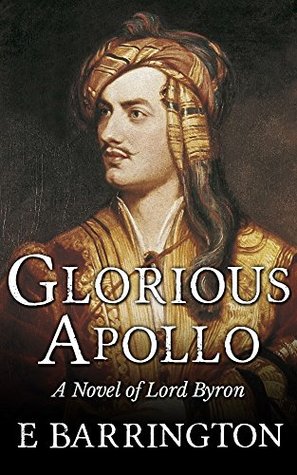
Glorious Apollo by E. Barrington

Glorious Apollo Endeavour Press have been publishing some very intriguing titles recently, including reissues of some older or out-of-print historical fiction novels. I had never heard of the author E. Barrington (a pseudonym of Elizabeth Louisa Moresby, who also wrote under the name Lily Adams Beck) but when I saw Glorious Apollo available on NetGalley I thought I would give it a try.

A bestseller in the 1920s, Glorious Apollo is a fictional biography of the Romantic poet, Lord Byron. Beginning as he prepares to takes his seat in the House of Lords in 1809, the novel takes us through Byron’s entire life and career right up to his death in Greece at the age of thirty-six.

The main focus of the novel is on the women in Byron’s life, particularly Lady Caroline Lamb, Augusta Leigh and Anne Isabella (Annabella) Milbanke. Caroline had an affair with Byron while married to William Lamb, Lord Melbourne, and is the woman who famously described him as “mad, bad and dangerous to know”; Augusta, Byron’s half-sister, was believed to be involved in an incestuous relationship with the poet; Anne was his wife and the mother of his daughter, Ada, but her marriage to Byron was not a happy one. While other aspects of his life and career are also covered in the novel – such as several of his male friendships, his health and weight problems, and the inspiration behind some of his poetry – none of these other things are given as much attention as his relationships with these three women.

This is a novel, so it can’t be assumed that everything in the book happened exactly as Barrington writes it, but it does seem to me that she has closely followed historical fact. At times the book reads more like a work of non-fiction, particularly at the beginning when we are given a lot of biographical information to help us understand Byron’s family background, but she has clearly used some imagination to fill in the gaps, to recreate conversations and to convey the thoughts and emotions of the characters. However, I would have liked to have had the opportunity to get inside Byron’s head more often and to see more of the story from his own perspective rather than from the perspectives of the people around him. The author’s sympathies do seem to be mainly with Anne and the overall impression the book gives of Byron himself is not a very flattering one.

Throughout the novel Barrington also draws on letters, diaries and other primary sources, sometimes quoting from them directly, and she also incorporates extracts from poems, some by Byron and some by other poets. Many of Byron’s major works are briefly discussed, including Childe Harold’s Pilgrimage, Manfred, English Bards and Scotch Reviewers, and So We’ll Go No More A-Roving, and their significance in the context of Byron’s personal life is explored.

Although I did enjoy some parts of the story – and there’s no doubt that Byron is a fascinating subject – Glorious Apollo didn’t quite work for me as a novel. I found Barrington’s writing slightly dry and I couldn’t help feeling that the book would have worked better as non-fiction rather than fiction. It was an interesting read, though, and worth considering if you would like to learn more about Byron and his poetry. I’m still curious about Barrington’s other novels, which include books on Anne Boleyn and Marie Antoinette, so if anyone has read them I would love to know what you thought!

Thanks to the publisher for providing a review copy via NetGalley.

The Old Man’s Birthday by Richmal Crompton

The Old Mans Birthday Richmal Crompton is best known for her Just William stories for children, but she has also written a large number of books for adults. I read one of them – Family Roundabout – last year and enjoyed it, so I was pleased to see that Bello have been republishing several more of her adult novels, including this one, The Old Man’s Birthday.

Matthew Royston, the old man of the title, is preparing to celebrate his ninety-fifth birthday with a family party to which he has invited all of his children, grandchildren and great-grandchildren. Nobody has been left out – not even Matthew’s grandson, Stephen, who has become estranged from the rest of the family because he is living with a woman who is not his wife. Not a problem in modern society, of course, but scandalous in the 1930s! Matthew is determined that Stephen’s partner, Beatrice, will be made to feel welcome, so in the hours leading up to the party he takes her from house to house to introduce her to the Roystons.

The whole novel takes place over the course of that one day, beginning with Matthew waking up on the morning he turns ninety-five and finishing with his birthday meal. In between, we meet each member of the Royston family – and as Matthew has five children and some of those have children and grandchildren of their own, there are a lot of characters to get to know! My advice to anyone planning to read this book is to draw a family tree as each person is introduced; it didn’t occur to me to do that until I was halfway through the novel, but it definitely would have made things much easier.

This is not a book with a lot of plot, but I hadn’t expected that it would be. The strength of the novel is in the characterisation; Crompton gives so much depth to every family member that on reaching the end of the book I was disappointed that I had to leave them all behind. I would like to tell you about all of them, but as I don’t want to spoil too much of the story for future readers I’ll just highlight two or three that I found particularly memorable. First there’s Enid, Matthew’s unmarried granddaughter, who runs the village hockey team. She’s probably not a person I would like in real life (despite the hero worship she inspires among the younger women at the hockey club) but she’s one of the strongest characters in the novel and I eventually found that behind her loud, overbearing exterior lies a shy and insecure woman whom she doesn’t want anyone to see.

Secondly, there’s Matthew’s son Richard, an elderly bachelor who has spent years running away from responsibilities and burying himself in his books. An unexpected friendship formed with one of his nieces on the day of the old man’s party could change Richard’s life for the better. And finally, there’s Pippa, one of Matthew’s great-granddaughters. Sixteen-year-old Pippa has always felt like a poor relation compared to her cousins, Pen and Daphne, so when she is given the opportunity to fulfil an ambition she’s determined to make the family proud of her. These three characters – and all of the others – are well-drawn and convincing, and considering that the novel only covers one day in their lives, we also see a surprising amount of character development.

I loved The Old Man’s Birthday, if I haven’t already made that clear! One slight criticism would be that I found the ending very easy to predict – but having said that, it was the perfect way to end the story, so I didn’t mind the predictability too much. I enjoyed celebrating Matthew’s special day with the Royston family and now I’m looking forward to reading more of Richmal Crompton’s books.

I received a copy of this book for review via NetGalley.

August Reading Summary

August I still haven’t come up with a better format for my monthly round-up posts but hopefully I’ll have thought of something different by the end of September. For now, I’m posting my usual summary of the month’s reading.

I started August with 1066: What Fates Impose by G.K. Holloway, a novel which, as you can probably guess, follows the events leading up to the Battle of Hastings and the Norman Conquest of 1066. This is a fascinating period of history and, later in the month, I had the pleasure of reading Gildenford, the first in Valerie Anand’s Norman trilogy. I have now read enough books set in this period to be able to compile a list of Pre-Conquest England and House of Normandy suggestions in the Journey Through Time section of my blog. Please feel free to comment on that list with any more recommendations.

George Gissing - The Odd WomenI didn’t make much progress with my Classics Club list in August, only reading one classic – The Odd Women by George Gissing – but that one counted towards my Ten from the TBR Project too, so I’m pleased with that! Another book read for the TBR Project was The Thief of Time by John Boyne. I do love Boyne, but this particular book isn’t one of his best and I was slightly disappointed by it. I also found The Raven’s Head by Karen Maitland a bit disappointing – after a wonderful start the story just didn’t hold my attention. I will read more by both Boyne and Maitland, though, and will hope for better luck with my next choices.

The other three novels I read last month were excellent and certainly didn’t disappoint me at all! The first of these was The Last Confession of Thomas Hawkins, Antonia Hodgson’s sequel to The Devil in the Marshalsea, an entertaining mystery novel set in Georgian London. The other two, Kit by Marina Fiorato, and The Old Man’s Birthday by Richmal Crompton, have not been reviewed here yet so I won’t say any more about them. Finally, I read one work of non-fiction: She-Wolves by Helen Castor, which looks at the lives of Empress Matilda, Eleanor of Aquitaine, Isabella of France and Margaret of Anjou. I don’t read non-fiction very often but I did enjoy this book.

Looking ahead to September…

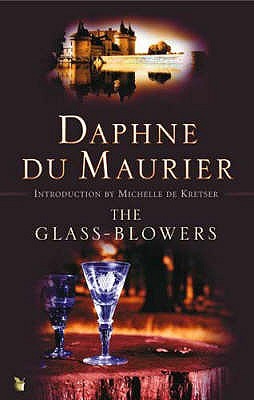
The Glass-BlowersAs September begins, I am in the middle of three books – The Heart of Mid-Lothian by Sir Walter Scott, Glorious Apollo by E. Barrington and April Lady by Georgette Heyer. After I finish those, I will be reading my Classics Spin book, The Glass-Blowers by Daphne du Maurier and I would also like to read a few books in September for the R.I.P Challenge. I posted a list of possible R.I.P. reads yesterday and am already being tempted by other books not on my list!

How was your August? Do you have any plans for September?

It’s time for R.I.P. X

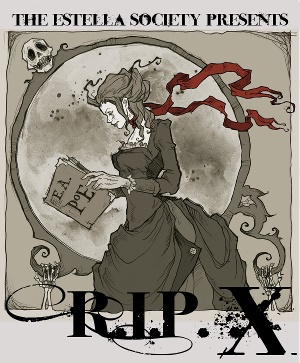
rip10300Banner by Abigail Larson

R.I.P. (R.eaders I.mbibing P.eril) is one of my favourite reading events. I have taken part in it every year since 2010, with varying levels of success, and it’s now something I automatically associate with the beginning of September and the shortening of the days. The challenge has previously been hosted by Carl of Stainless Steel Droppings but this year (the 10th anniversary) it is being hosted by someone else: Andi and Heather of The Estella Society.

As usual, the idea of R.I.P. is that during the months of September and October we will be reading books that fit one or more of the following categories:

Mystery
Suspense
Thriller
Dark Fantasy
Gothic
Horror
Supernatural

There are different levels of participation to choose from, but I am signing up for this one:

ripnineperilfirst

Peril the First: Read four books, any length, that you feel fit (the very broad definitions) of R.I.P. literature. It could be King or Conan Doyle, Penny or Poe, Chandler or Collins, Lovecraft or Leroux…or anyone in between.

Part of the fun of R.I.P. is making a list of books you could read. I don’t expect to read all of these – and I usually find that once I’ve made a list I end up wanting to read something else entirely – but here are a few possibilities.

From my Classics Club list:
The Romance of the Forest by Ann Radcliffe

For my TBR Project:
The Bones of Avalon by Phil Rickman

Next in a series:
The Mummy Case by Elizabeth Peters
Sovereign by CJ Sansom
The Lady of Sorrows by Anne Zouroudi
The Dead in their Vaulted Arches by Alan Bradley

First in a series:
What Angels Fear by CS Harris
The Queen’s Man by Sharon Penman

Books left over from previous R.I.P. lists:
Blood Harvest by Sharon Bolton
Bleeding Heart Square by Andrew Taylor
Ten Second Staircase by Christopher Fowler
Savage Magic by Lloyd Shepherd

~

Are you taking part in R.I.P. this year? What will you be reading?

Gildenford by Valerie Anand

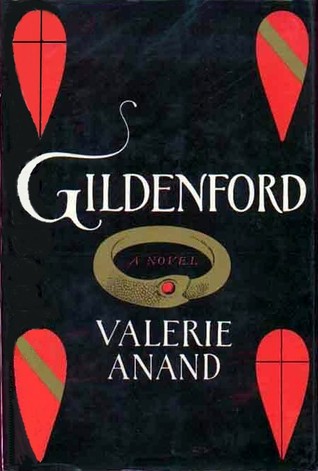
Gildenford In 1036 the exiled Alfred Atheling, son of the late King Ethelred and his wife, Emma of Normandy, is invited to return to England to visit his mother. While lodging with Godwin, Earl of Wessex, in the town of Gildenford (now known as Guildford), Alfred and his men are betrayed and captured on the orders of King Harold Harefoot. The Atheling dies after being brutally tortured and blinded.

Several years later, Alfred’s brother, Edward the Confessor, succeeds to the throne of England but the truth of what happened in Gildenford remains shrouded in mystery. Was Harefoot acting alone or with Godwin’s help? Worse still, was it a plot of Emma’s to have her own son murdered? Edward can’t be sure, but one man thinks he knows. His name is Brand Woodcutter, a servant of Godwin’s who has been part of the Earl’s household for many years and is considered to be a friend of the family. Brand’s battle with his conscience as he tries to decide what to do with his knowledge of Gildenford is at the heart of this novel as we move through some of the key events leading up to the Norman Conquest of 1066.

I’ve been reading a lot of fiction set in this period recently and more than one person has recommended Valerie Anand’s Norman trilogy to me. I’m glad they did because I really enjoyed it – this is definitely my type of book! It does exactly what a good historical novel should do…brings a bygone age back to life, entertains as well as educating, and reminds us that the people who lived in those distant times were human beings like ourselves, not just names we might have seen in a school textbook.

Most of the characters in Gildenford are real historical figures and they are all so well-drawn and convincing that at first I wasn’t sure it was really necessary to incorporate fictional characters such as Brand into the story as well. I did soon warm to Brand, however, and enjoyed the scenes written from his perspective as he observes the actions of others, struggles with conflicting loyalties and agonises over some very difficult decisions. I was impressed by the way Anand manages to weave his personal storyline together with the historical facts, particularly the abduction of the Abbess of Leominster and the uprising in Dover during the visit of Count Eustace of Bologne.

Gildenford was published in 1977 and like most of Valerie Anand’s books is currently out of print. I managed to obtain an ebook version from Open Library but unfortunately they don’t have the second one, The Norman Pretender. Judging from the prices being asked for used copies they must be quite rare, but I’ll watch out for a reasonably priced one and hopefully it won’t be too long before I can continue with the series.

The Raven’s Head by Karen Maitland

The Raven’s Head is a dark tale of magic and alchemy, murder and blackmail, set in the early thirteenth century. Earlier this year I read my first Karen Maitland novel, The Vanishing Witch, and loved the combination of history, mystery and the supernatural. This book includes the same elements but the supernatural one is particularly strong, making this a darker and more atmospheric read.

The Ravens Head The story revolves around three young people who are drawn into an alchemist’s search for power. Beginning in France in 1224, we meet seventeen-year-old Vincent, apprentice to a scribe in the service of Philippe, the Comte de Lingones. Bored with life in Philippe’s chateau, Vincent tries to blackmail the Comte, but when his attempt fails he finds himself on the run in possession of a silver raven’s head which seems to have a mind of its own.

In England, meanwhile, a young woman called Gisa is working as an assistant to her uncle, an apothecary, when she comes to the attention of the sinister Lord Sylvain who enlists her help with his secret experiments. Nearby, a group of white-robed priests known as the White Canons are running a small and exclusive school for young boys. One of these boys is five-year-old Wilky, taken from his parents as payment of a debt, and renamed Regulus. When Wilky’s friends start disappearing from their beds in the middle of the night never to return, the boys begin to wonder what is really going on.

I loved the first half of this book and was intrigued by the circumstances of each of our three main characters. I found Vincent’s story particularly gripping, possibly because his chapters were narrated in the first person and this made it easier for me to connect with him. The other two storylines were written in third person present tense and although I’m not really sure why this was necessary, it did help to distinguish Gisa’s and Wilky’s sections from Vincent’s. I was curious to see how the story would develop for each character and how their separate threads of the novel would eventually be woven together.

The book failed to hold my interest right to the end, unfortunately. Somewhere in the second half, I thought the plot started to lose its way and descend into a string of action sequences, alchemical experiments and gruesome secret rituals. I’m sure other readers will enjoy all of this more than I did; I do like historical fiction with a touch of the supernatural, but I prefer it to be more subtle than it is here. After so much build-up and so much care taken in setting the scene and introducing the characters, I was left slightly disappointed at the end.

This is a wonderfully atmospheric and eerie novel, though. The parts of the story told from Wilky’s perspective are particularly effective in that respect – seen through the eyes of a little boy who has no idea what is happening, the world of the White Canons is both bewildering and terrifying. The Gisa and Vincent storylines also have undercurrents of darkness and danger – and Lord Sylvain is a great villain!

Having now read Karen Maitland’s two most recent novels I’m looking forward to going back and reading her earlier ones.

I received a copy of this book for review from NetGalley.