Isabella by Colin Falconer

Isabella Isabella is only twelve years old when she comes to England as the wife of King Edward II. As the daughter of Philip IV of France, Isabella is no stranger to life at court and with her father’s parting words still fresh in her mind (“You will love this man. Do you understand? You will love him, serve him, and obey him in all things. This is your duty to me and to France…”) she knows what is expected of her. Nothing could have prepared her, however, for marriage to a man who cares more for his beloved friend, Piers Gaveston, than he does for his young wife, his reputation and his country.

As Isabella grows older she begins to fall in love with Edward, but when Gaveston is executed in 1312 and another favourite, Hugh Despenser, takes his place in the king’s life, she is forced to accept that her love will never be returned. Despenser repeatedly comes between Isabella and her husband, and eventually she finds herself with a choice to make: should she remain loyal to Edward or should she join forces with one of his noblemen, Roger Mortimer, in an attempt to remove him from his throne?

This fictional account of Isabella’s life is the first book I’ve read by Colin Falconer. I was vaguely aware of his name but knew nothing about any of his books or what I could expect from them, so I was pleased to find Isabella available on NetGalley. I have read about Isabella before (in the Edward II section of The Plantagenets by Dan Jones and in fictional form in Maurice Druon’s Accursed Kings series) and she seemed a fascinating woman, so I was looking forward to reading more.

I have to admit, I wasn’t very impressed with this book at the beginning. The combination of third person present tense, simple sentence structure and very short chapters wasn’t very appealing at all. I kept reading, though, and after a while either the writing improved or I got used to the style – I’m not sure which – and the story did start to become more gripping.

With the novel being written from Isabella’s perspective, she is the character we naturally sympathise with. While we can see that Edward truly loves Piers Gaveston, we can also share Isabella’s humiliation at the lack of respect he shows his wife and her frustration at his inability to rule the country effectively while Piers is around. Things become worse for Isabella when Hugh Despenser takes Gaveston’s place and she eventually begins an affair with Roger Mortimer. I was not convinced by Falconer’s portrayal of Isabella and Mortimer’s relationship, however; there was no chemistry between the two characters and Mortimer himself never came to life on the page.

Isabella is a very quick read and a light one, although not quite as light as I thought it would be at first. It would probably be a good introduction to Isabella’s life if you’ve never read anything about her before, as it does seem to follow the historical facts very closely; it was only the style of the writing that I had a problem with. I was sorry, though, that the novel doesn’t span the whole of Isabella’s life – only her marriage to Edward and the Mortimer rebellion are covered, with nothing of her later years or the reign of her son, Edward III. I was left wanting to know more about some of the people and events mentioned in the novel and am now reading She-Wolves by Helen Castor, a non-fiction book which explores the lives of several medieval queens, including Isabella.

I received a copy of Isabella for review via NetGalley.

The Vicomte de Bragelonne by Alexandre Dumas

The Vicomte de Bragelonne This is the third Dumas novel to feature d’Artagnan and his three friends, Athos, Porthos and Aramis. Originally published in serial form as part of a much longer book, it is now usually split into three volumes of which The Vicomte de Bragelonne is the first and Louise de la Vallière and The Man in the Iron Mask are the others. As Dumas is one of my favourite authors I was fully expecting to love this book – and I did, although it was not quite as satisfying as the first two d’Artagnan novels – The Three Musketeers and Twenty Years After.

The first thing to say about The Vicomte de Bragelonne is that it is not really about the Vicomte de Bragelonne! He does appear near the beginning and again near the end, but his role in the story is not really any more significant than any number of other characters. The next thing I should say is that any reader hoping to find the four friends working together again in the spirit of “all for one and one for all” will be disappointed; we do see quite a lot of Athos, but Porthos and Aramis only come into the story very briefly towards the end.

So, what is this book about, then? Well, possibly because this is only one section of a longer work, it’s difficult to give a summary of the plot. The first half of the novel concentrates mainly on d’Artagnan and Athos who are working on two separate schemes both designed to restore Charles II to the throne of England. History tells us that the restoration would be accomplished – though not quite in the way described in this book, which is much more fun than what actually happened!

Later in the book we learn that Aramis and Porthos seem to be helping the Superintendent of Finances, Monsieur Fouquet, to build fortifications on the island of Belle-Île. We don’t find out exactly what they are up to, however, and this part of the story is left shrouded in mystery, presumably to be developed in the next two novels. Finally, there’s the storyline involving the title character, Raoul (the Vicomte), and his love for Louise de la Vallière.

The gaps between these three subplots are filled with lots of chapters detailing the political situation in France in the 1660s (particularly the death of Cardinal Mazarin and the rivalry between Fouquet and Louis XIV’s new Minister of Finance, Colbert) and the romantic intrigues of the French court (revolving around the King’s marriage and also his brother’s marriage to Charles II’s sister, Henrietta). All of this makes The Vicomte de Bragelonne a heavier, slower read than the previous two novels, but I didn’t find it boring at all – I love the way Dumas writes and I love French history, so I didn’t really mind the fact that there was less swashbuckling action and that we don’t see as much of d’Artagnan’s friends.

Of course, where history (or even geography) is concerned it can’t always be assumed that everything in a Dumas novel is completely accurate. I was amazed to find that in Dumas’ world the city of Newcastle had suddenly been transported from the River Tyne to the banks of the River Tweed sixty miles to the north! Dumas also tends to change dates or rearrange the sequence of events whenever the story calls for it as well, though I’m sure I wouldn’t have even noticed most of these alterations if I hadn’t been referring to the notes at the back of the book. I’m pleased to say, by the way, that the notes in the Oxford World’s Classics edition didn’t spoil any of the story – although I avoided the introduction just in case.

As The Vicomte de Bragelonne doesn’t stand alone as a complete novel and wasn’t originally intended to, there are a lot of things left unresolved at the end of the book, as you would expect. I’m looking forward to continuing the story soon with Louise de la Vallière!

July Reading Summary

pretty-july These end-of-month posts seem to come round so quickly! I have to admit, I often find them difficult to write – although in theory they should be very easy – and I almost didn’t post one at all today. I will be experimenting with some different formats in future months to see if I can make them more interesting for me to write and for you to read.

Looking back at July, I have read ten books and have reviewed eight of them. As usual, I’ve been reading a mixture of historical fiction, classics and ‘older’ books, so I thought it would be fun to see exactly where and when my reading has taken me this month.

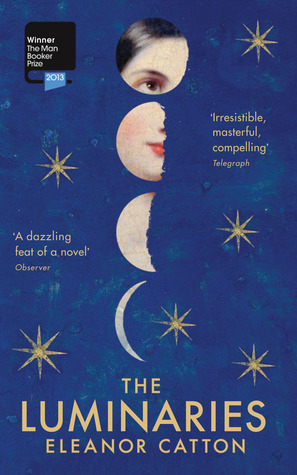
The Luminaries In July I have visited:

18th century Portugal – The Devil on her Tongue by Linda Holeman

Arthurian England – The Hollow Hills by Mary Stewart

New Zealand during the Gold Rush – The Luminaries by Eleanor Catton

16th century Scotland – Dacre’s War by Rosemary Goring

Tudor London – The Lady of Misrule by Suzannah Dunn

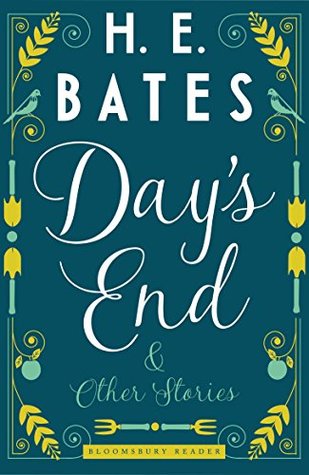
Days End Rural England in the early 20th century – Day’s End & Other Stories by H.E. Bates

19th century Paris – Cousin Bette by Honoré de Balzac

Ancient Rome – Imperium by Robert Harris

17th century France and England – The Vicomte de Bragelonne by Alexandre Dumas

14th century England and France – Isabella by Colin Falconer

(My thoughts on the final two books above will follow soon.)

I enjoyed most of these books; the only ones that disappointed me slightly were Day’s End, Isabella and The Lady of Misrule and I have explained why – or will explain why – in my reviews of those books. My favourite reads this month were The Hollow Hills, Imperium and The Vicomte de Bragelonne – luckily for me, all three of those books are part of a trilogy or series so I can look forward to continuing with The Last Enchantment, Lustrum and Louise de la Vallière respectively.

At the moment I’m in the middle of two books: The Odd Women by George Gissing and 1066: What Fates Impose by G.K. Holloway. When I finish those I would like to read my copy of the new Antonia Hodgson book, The Last Confession of Thomas Hawkins, as I had hoped to read it in July but didn’t have time. Beyond that, I don’t want to make any definite plans for August; choosing books depending on my mood works much better for me!

Have you read any of the books I’ve mentioned above? What have you been reading in July?

Imperium by Robert Harris

“To be ignorant of what occurred before you were born is to remain always a child. For what is the worth of human life, unless it is woven into the life of our ancestors by the records of history?”

These are the words of the Roman statesman, orator, philosopher and lawyer Marcus Tullius Cicero, a man who lived many centuries before I was born and of whom, thanks to Robert Harris, I am no longer ignorant. I had heard of Cicero, of course, but knew very little about his work and nothing at all about his personal life. Now that I’ve read Imperium, the first in a trilogy of novels narrated by Cicero’s slave and secretary, Tiro, I know much more about both.

Imperium Tiro, like Cicero, really existed and is thought to have written a biography of his master which was unfortunately lost during the fall of the Roman Empire. Imperium is a fictional recreation of the first part of Tiro’s biography and follows Cicero from his humble beginnings as he progresses up the ladder of Roman politics and pursues his ambition of becoming one of Rome’s two Consuls.

As a ‘new man’ – in other words, the first in his family to be elected to the Roman Senate – Cicero’s incredible rise to power is a result of hard work, intelligence and natural ability. He is able to put these skills to good use in his position as lawyer, as we see in the first half of the book when he agrees to prosecute Gaius Verres, the governor of Sicily, who has the support of Rome’s aristocracy despite being accused of corruption. The court case is a victory for Cicero but the drawback of this is that he has made enemies of the aristocrats, who will do whatever they can to prevent him rising any further…

As I’ve mentioned before, Ancient Rome has never been one of my favourite periods to read about, so a few months ago I compiled a list of books that I hoped would change the way I feel about Roman history. Imperium is the first novel I’ve selected from that list and it was a fantastic choice. I’d had high hopes for it anyway, because another book by Robert Harris, An Officer and a Spy, was one of my favourite reads of last year, but I enjoyed this one even more than I’d hoped! A book about Roman politics may sound boring, but I can assure you it’s not. Harris is an author of thrillers as well as historical fiction and this is an exciting, entertaining read, not just an educational one. The trial of Verres is as gripping as anything I’ve read and there are more tense moments later in the book, such as when Cicero sends Tiro to spy on a secret meeting of rival senators.

The characterisation of Cicero is wonderful. Seen through the eyes of Tiro, I felt that there was a slight distance between Cicero and the reader at first, but as the story went on I started to like and admire him more and more, especially during his investigations of Verres, when he conducted himself with so much honesty and integrity. It’s not long before some flaws start to appear – as he sets his sights on the positions of aedile, praetor and finally consul, we see him beginning to sacrifice some of his principles for the sake of ambition – but this just makes him more human. Tiro himself is the perfect choice of narrator – someone who is happy to get on with telling the story without intruding into it too much. As the inventor of one of the earliest forms of shorthand he becomes indispensable to Cicero so it’s quite believable that he accompanies Cicero almost everywhere, taking notes and recording conversations.

Cicero was known as a great orator and Harris really captures the power of some of his speeches in the senate and the court. Many of his letters, writings and transcripts of speeches are still available which means Harris would have been able to draw on those to put words into the fictional Cicero’s mouth. While I don’t have enough knowledge to be able to comment on the historical accuracy of the novel, there’s nothing that feels noticeably inaccurate – as he says in his author’s note, the things in this story either really happened, could have happened, or didn’t definitely not happen.

There’s still so much I would like to say about Imperium, but this post is already becoming very long so I will just quickly mention a few other things I liked: the portrayal of other famous Roman figures of the time, particularly Julius Caesar and Pompey the Great; the details of Cicero’s family life and his relationship with his wife, Terentia; the descriptions of how the Roman legal and political systems worked, especially the complex voting methods that led to high levels of corruption during elections; and the exploration of class differences in Ancient Rome.

Having loved this book so much I’m now looking forward to reading the other two in the trilogy. My copy of Lustrum awaits!

Cousin Bette by Honoré de Balzac

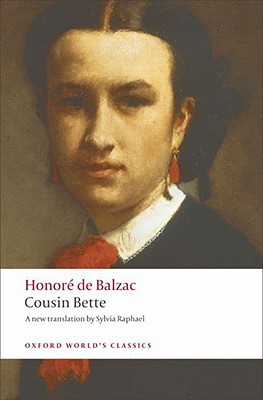
Cousin Bette Balzac is an author I have wanted to try for years but have kept putting off, partly because I thought he sounded intimidating and difficult to read and partly because he wrote so many books it was hard to know where to start! Then, last month I chose ten books at random from my Goodreads “to-read” shelf – and one of them was Cousin Bette, a novel I couldn’t even remember adding to my shelf in the first place, but which sounded very appealing. I obviously couldn’t put off reading Balzac any longer!

Cousin Bette (originally La Cousine Bette and sometimes translated as Cousin Betty) was published in 1846 and is set in 19th century Paris. The title character is Lisbeth – Bette – Fischer, a relation of the Hulot family who has always been jealous of her beautiful cousin Adeline. Plain, poor, and having turned down several marriage proposals, Bette is still unmarried at the age of forty-two. When she rescues a young Polish sculptor, Wenceslas Steinbock, from a suicide attempt and takes him under her wing, she is pleased to be able to tell everyone that she has a lover at last. Her happiness is shattered, however, when Adeline’s daughter, Hortense, falls in love with Wenceslas and marries him herself.

Bette vows to take revenge on the Hulot family and joins forces with Valerie Marneffe, her pretty young neighbour. Knowing that Adeline’s husband, the Baron Hulot, is a notorious womaniser and that Valerie is looking for a rich lover, Bette sees a way to ruin the Baron and destroy the rest of the family in the process.

I enjoyed Cousin Bette and I think it was a good choice for my first Balzac novel. I found it surprisingly easy to read and very entertaining, although I did need to concentrate to follow all the intricacies of the plot. The summary I have given above is only the beginning of the story; Bette is by no means the only character who plots and schemes and tries to cause trouble – and in fact, many of the misfortunes that befall members of the Hulot family are caused by their own personal weaknesses and flaws rather than the influence of others. Baron Hulot, for example, despite being one of the targets of Bette and Valerie’s cruelty, really only has himself to blame as he is unable to resist the temptation placed in his way.

I saw the three main female characters – Cousin Bette, Valerie Marneffe and Adeline Hulot – as representing three stereotypical views of 19th century women of different classes and social groups. Bette is the bitter, jealous middle-aged spinster, Valerie the selfish, manipulative beauty, and Adeline the faithful, loving wife who turns a blind eye to her husband’s many affairs. Any reader who is interested in gender roles and the portrayal of women in literature will find a lot to think about in Cousin Bette.

Before reading this novel I had no idea what the outcome of the story would be and I was kept in suspense until the end. Of course, I’m not going to tell you how it ends, but it’s not quite as simple as the ‘good’ characters being rewarded and the ‘bad’ ones being punished. It’s all very melodramatic – and all very bleak as well – but I enjoyed it and am looking forward to reading more Balzac. As he wrote more than one hundred books, I would love to know if you’ve read any of them and which ones you would recommend.

Day’s End and Other Stories by H.E. Bates

Days End Herbert Ernest Bates is best known as the author of The Darling Buds of May and My Uncle Silas, both of which have been adapted for television (in the 1990s and early 2000s respectively) but he also wrote a large number of other novels, novellas and short stories. I have never read any of his work so when I saw that Bloomsbury Reader were reissuing some of his books as ebooks, I decided to try Day’s End and Other Stories, a short story collection which was available on NetGalley.

Day’s End and Other Stories is one of Bates’ earliest books, originally published in 1928. The title story takes up almost a quarter of the book but there are twenty-four others in the collection as well – and this new edition also includes a bonus story called In View of the Fact That.

Day’s End is the story of Israel Rentshaw, an elderly man who lives on his farm in the countryside with his daughter, Henrietta. Israel is growing too old for heavy work but Henrietta is unable to persuade him to leave the farm that has been his home for forty years and go to live in the village. But when Israel receives a letter informing him that the land he rents is going to be sold, he has some big decisions to make and could be forced to face the very thing he has been trying to avoid.

Day’s End sets the tone for the rest of the book: almost every story features a beautifully described rural setting and a lonely, bored or troubled character who is trying to deal with a difficult or miserable situation. A baker’s wife trapped in an unhappy marriage; a shepherd lost in the snow while his wife gives birth alone; a little boy having his first encounter with the death of a loved one; a piano-tuner whose daughter has committed suicide. It’s hard to believe that Bates was only twenty-three years old when he wrote these stories. They are so mature and poignant, so filled with themes of regret and lost hope that they feel more like the work of a much older author.

Apart from the title story, the others are all very short, often just a few pages long. The beautiful writing made the stories worth reading, but unfortunately there was nothing very memorable about them and I didn’t find any of the stories particularly satisfying. I couldn’t see the point of some of them – there was no plot, no message, and the characters, despite being well-drawn, didn’t seem to learn anything or make any attempt to change the situation they were in. The descriptions of feelings and emotions were moving and insightful and the depiction of the countryside was lovely, but that wasn’t quite enough and I was slightly disappointed with this collection overall.

Because this is one of the earliest examples of his work and because I liked the writing, I think I would still consider reading something else by Bates. Recommendations are welcome!

The Lady of Misrule by Suzannah Dunn

The Lady of Misrule Lady Jane Grey, Queen of England for just nine days in 1553, has been replaced on the throne by Mary Tudor, the eldest daughter of Henry VIII. As Mary establishes herself as Queen and returns the country to Catholic rule, Jane is taken to the Tower of London to await the trial which will determine her fate. Joining her in her imprisonment is Elizabeth Tilney, a ‘good Catholic girl’ who has volunteered to be Jane’s companion, and it is through Elizabeth’s eyes that the story is told.

Elizabeth and Jane are the same age, but that’s all they have in common. Jane is a quiet, serious girl, devoted to her books and her Protestant faith, while Elizabeth has a livelier, more rebellious personality and has had experiences of life that are very different from Jane’s. Being such incompatible people, living together in the confines of the Tower is not always easy, but gradually a bond starts to form between the two girls. History tells us what will eventually happen to Jane but The Lady of Misrule is a fictional account of the time she and Elizabeth spend in captivity wondering what the future holds.

I came away from The Lady of Misrule with a mixture of feelings, some negative and some positive. The negative feelings are mainly due to my own personal taste in historical fiction. Suzannah Dunn writes in a very contemporary style, using modern slang and exploring emotions, motives and relationships in a way that she thinks modern readers will identify with. I thought this style worked quite well in The May Bride, a domestic family story about the early life of Jane Seymour, but it irritated me this time. I do understand that the author writes in this way intentionally (she explains why in the Q&A on her website) and it’s not a result of carelessness or poor research, but I do prefer historical novels to feel more ‘historical’. As I’ve said, this is definitely just something that will depend on each individual reader’s own taste.

There were plenty of positive things I can say about this book, though. I have read other novels about Lady Jane Grey, but I liked the fact that Dunn’s approach is quite different, writing about just a short period of her life and from the perspective of someone who is meeting her for the first time. Although the girls spend most of the novel in captivity, they do still have some contact with the outside world and Elizabeth is able to relate to us some of the events that are unfolding beyond the walls of the Tower, but the focus is always on Elizabeth’s and Jane’s personal lives. Jane keeps herself at a distance which means that Elizabeth, who can be quite naive when it comes to politics and religion, often finds her difficult to understand and maybe because of this Jane is not an easy character to like. But this is as much Elizabeth’s story as it is Jane’s and as the novel progresses we learn more about Elizabeth’s past, her relationship with a much older man and the secrets she is trying to hide.

I also liked the portrayal of Jane’s husband, the seventeen-year-old Guildford Dudley, who is also imprisoned elsewhere in the Tower awaiting his own fate. It seems that the one bright spot in Guildford’s life is having the chance to speak to his wife when they take their daily walks in the Tower gardens, but Jane has little time for her husband and instead he and Elizabeth become friends. Guildford has been shown in a very negative light in other books I’ve read and it’s easy to forget that he was just a young man who, like Jane, had been used and manipulated by people more powerful than himself. It was good to see such a different side of him in this novel!

While I can’t say that I loved The Lady of Misrule, it was still an interesting read at times and I would recommend it to fans of Tudor fiction who are happy with a more contemporary approach.

I received a copy of this book for review via NetGalley.