Rebel Queen by Michelle Moran

Rebel Queen I love historical fiction set in India and was instantly intrigued when I saw that Michelle Moran’s new novel, Rebel Queen, was described as the story of Rani Lakshmibai who rebelled against the British by ‘raising two armies — one male, one female — and riding into battle like Joan of Arc.’ Once I started to read the book, I found that it wasn’t quite what I’d expected, although that wasn’t necessarily a bad thing. I have read two of Michelle Moran’s other novels and while I think my favourite of the three is still The Second Empress, I still enjoyed this one and thought it was much better than Cleopatra’s Daughter.

Rani Lakshmibai (or Lakshmi as she is called throughout this novel) rules the state of Jhansi along with her husband, Raja Gangadhar Rao, until his death in 1853. As the raja has died leaving no biological male heir, Jhansi is annexed by the British East India Company, and during the Indian Rebellion of 1857 the rani and her people find themselves caught up in the middle of the conflict. By the rani’s side are her ten Durgavasi – a small, elite group of highly-trained, highly-skilled women who serve as both guards and trusted friends. It is through the eyes of one of these women, Sita Bhosale, that the story of Jhansi unfolds.

Sita Bhosale grows up in a small village many miles from the city of Jhansi and, like the other village girls and women, she lives in purdah, secluded from the view of men outside her family. After her mother dies in childbirth, her father tells her that there will not be enough money to provide a dowry for both Sita and her little sister. With very few options open to a young woman who fails to marry well, he suggests that she begin training for a position in the Durga Dal, the rani’s personal guard. Following several years of hard work, Sita has learned all the skills she needs – she can ride a horse and knows how to use a sword, a pistol and a bow – and soon she is on her way to Jhansi to become the rani’s newest Durgavasi.

As our narrator, Sita is a character who is easy to like. I enjoyed watching her train for the Durga Dal, I was fascinated by her descriptions of her early days in Jhansi where everything – the rani and raja’s court, life in the palace, the absence of purdah – is new and strange, and I sympathised as she found herself the target of the raja’s beautiful, scheming cousin, Kahini, one of her fellow Durgavasi. But from the title, Rebel Queen, and the description of the novel, I had expected this to be the story of Rani Lakshmibai rather than the story of Sita. We don’t really get to know the rani at all until the second half of the novel and only a few chapters at the end are spent on the events of the Sepoy Rebellion (the promised ‘raising of armies and riding into battle’), which was disappointing.

The author assumes the reader has no prior knowledge of Indian culture or history, so she has Sita explain to us how the British East India Company came to be in India, the meanings of customs such as purdah and the Hindu caste system, and the basics of Ayurvedic medicine. While I already knew some of the things Sita tells us, there were still lots of facts and details that were new to me, so this was both an entertaining and an educational read. However, I was surprised to read that the British were flying ‘the red and black Union Jack’ from the buildings of Jhansi, and this made me wonder about the overall accuracy of the novel!

Despite the few problems I’ve mentioned, I did find this an interesting and compelling story. I do think it would have been good to have had at least part of the novel written from the rani’s perspective, but I still enjoyed getting to know Sita and the women of the Durga Dal.

Note: This book has been published in the UK as The Last Queen of India and I think the UK title and description are more appropriate, giving a better idea of what the story is about. However, I have referred to the US edition throughout this post, as this was the version I received for review through NetGalley.

The Importance of Being Earnest by Oscar Wilde

The Importance of Being Earnest This is the second play I’ve read this month as part of my personal challenge to read the three on my Classics Club list during June. I’m really regretting my previous reluctance to read plays because it has meant that until now I’ve been missing out on some great ones like The Importance of Being Earnest. It was silly of me to keep avoiding this particular play, because I’ve enjoyed everything else I’ve read by Oscar Wilde (The Picture of Dorian Gray, The Canterville Ghost, A House of Pomegranates and two more of his short stories); why did I assume I wouldn’t enjoy this one too?

At the beginning of the play, Algernon Moncrieff is being visited at his London home by his friend, Jack Worthing, whom he has always known as Ernest. Jack is from Hertfordshire, where he is guardian to eighteen-year-old Cecily Cardew, whose grandfather found and adopted Jack as a boy. When Algernon finds a cigarette case inscribed to ‘Uncle Jack’ from ‘Little Cecily’, Jack is forced to admit that his name isn’t really Ernest – Ernest is a fictional brother he has invented so that he can escape from Hertfordshire from time to time with the excuse that his brother is in trouble and needs his help.

Algernon then confesses that he has also created an imaginary friend – an invalid called Bunbury who conveniently summons Algernon to his deathbed whenever he needs to get away from his responsibilities in London for a while. Leading double lives (which Algernon refers to as ‘Bunburying’) has so far been very successful for both men, but this is about to change when Algernon falls in love with Jack’s ward, Cecily Cardew, and Jack falls in love with Algernon’s cousin, Gwendolen – two women who are each determined to marry a man called Ernest.

Things quickly become very complicated from now on, with the action moving to Jack’s country estate where a series of misunderstandings, deceptions and mistaken identities follow. I don’t want to give away any more of the plot than I already have because I’m sure there are other people out there who still haven’t read or seen this play and I would hate to spoil the fun for you. And this is a fun play to read. I think Oscar Wilde’s famous humour and wit come across particularly well in the play format; even when reading it on the page it’s easy to imagine the lines being spoken aloud.

Some of the best lines go to Lady Bracknell, one of the ‘formidable aunt’ type characters you so often find in fiction. Although this is the first time I’ve read The Importance of Being Earnest in its entirety, I do remember reading the famous handbag scene at school. I was looking forward to reaching that part and fortunately it is in the first Act so I didn’t have too long to wait; it was lovely to finally be able to read it in its proper context!

There’s obviously a lot more I could have said about this wonderful play, about its themes, its characters and its use of language, but I hope you’ll forgive me for keeping this post short. I have another play to go and read!

The Tutor by Andrea Chapin

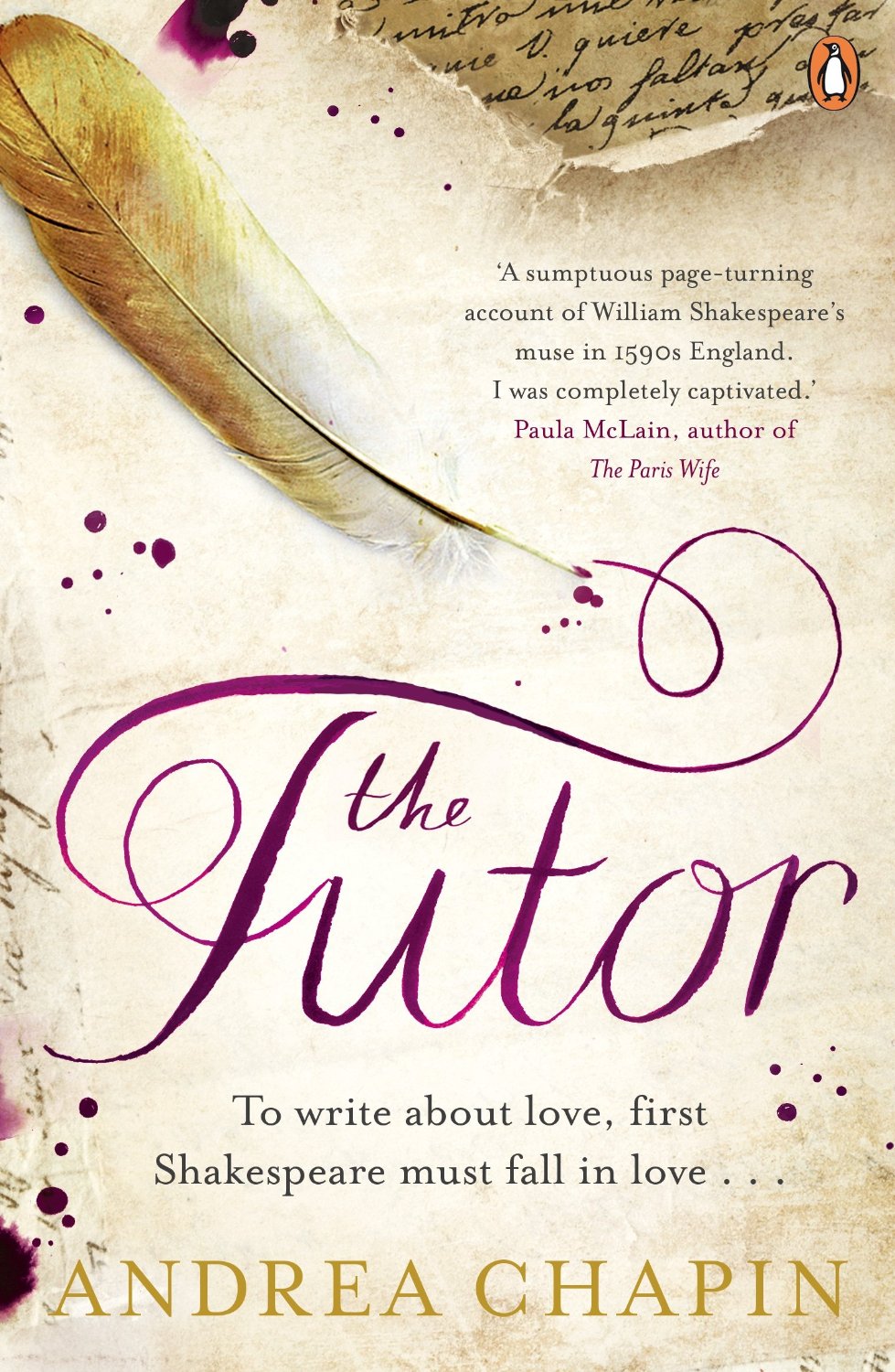
thetutor William Shakespeare is probably the most famous name in literature, yet there is still so much we don’t know about his life and his work. Despite centuries of research by academics and historians many questions remain unanswered. In particular, very little is known about Shakespeare’s activities between 1585 and 1592. In The Tutor, Andrea Chapin gives a fictional account of one of these ‘lost years’.

The novel begins in 1590 and introduces us to Katharine de L’Isle, a widow living in her uncle’s household at Lufanwal Hall in Lancashire. Katharine has no plans to marry again and is enjoying spending time with her cousins and their children and discussing poetry with her Uncle Edward. However, the family are Catholics, and with a Protestant queen on the throne of England they know that their peaceful lives could be interrupted at any moment. Their troubles begin when the family priest and schoolmaster is murdered and Edward is forced into exile, but for Katharine, as well as being a time of tragedy, this is also the start of an exciting new episode in her life.

The death of the priest leads to the arrival of a new tutor at Lufanwal – a young man from Stratford whose name is William Shakespeare. Will’s task is to teach the children Greek and Latin, but Katharine soon discovers that her own knowledge of these languages is better than his. When he confesses that what he really wants to do is write poetry, Katharine agrees to read his verses, offering advice and criticism, and in this way the poem Venus and Adonis begins to take shape. As they continue to work together, Katharine finds that she is falling in love – but does Will feel the same way?

The first thing you need to know about The Tutor is that there is no historical evidence that Shakespeare was in Lancashire during this period or that he ever knew a woman called Katharine de L’Isle. I’m not really sure how I feel about books that fictionalise a whole episode in the life of a real historical figure – I think I prefer to read novels that either deal with wholly fictitious characters placed into historical settings or that follow the life of a famous person while sticking closely to the facts – but the author does make it clear that the relationship between Katharine and Will is imaginary. The romantic aspect of the story was developed well, though I couldn’t really understand why Katharine was so attracted to Will, as I found him arrogant, manipulative and generally annoying. It’s not a very flattering portrayal at all – though having said that, I don’t think I’ve read a fictional portrayal of Shakespeare yet that I did like!

Katharine’s relationship with Will and her influence on his work is one element of this novel: the historical setting is another. I loved reading about life at Lufanwal Hall – the clothes people wore, the food they ate, the superstitions and beliefs they held, how they occupied their time – and we are also given some insights into the dangers of being a Catholic family living in Elizabethan England. Elizabeth I may have been more tolerant of religious differences than her sister and predecessor Mary I, but persecution did still occur under her reign as we see throughout this novel. I found this part of the story very interesting and I think there would have been enough material for a fascinating novel here even without the Katharine and Shakespeare storyline!

I hosted a guest post by Andrea Chapin as part of a blog tour back in April in which she talked about her research for the novel and it’s obvious that she did put a lot of thought into what Shakespeare may realistically have been doing during those lost years. I have read other novels which also explore possible theories regarding Shakespeare and the women who may have inspired his work (Dark Aemilia by Sally O’Reilly and Shakespeare’s Mistress by Karen Harper) and this book compares well with both of those, although I still wasn’t entirely convinced that the writing of Venus and Adonis could have happened exactly as described in the novel.

The Tutor is Andrea Chapin’s first novel and while there were some aspects of it that I thought worked less well than others, I still found a lot to enjoy and will be interested to see what she writes next. Meanwhile, I have added a new page to the Journey Through Time section of my blog in which you can find more suggestions for Shakespeare-inspired reading.

Historical Musings #3: Perceptions of the genre

Historical Musings Before I introduce this month’s Historical Musings topic, this is probably a good time to mention that the winner of the Walter Scott Prize for Historical Fiction was announced yesterday. The winner is The Ten Thousand Things by John Spurling, a novel set in 14th century China, which I haven’t read but am looking forward to as I love reading about Chinese history. As you may know, I am slowly working my way through all the titles shortlisted for the Walter Scott Prize since it began in 2010. You can follow my progress here. Kay of What Me Read is doing the same and I hope other readers will consider joining us! I have found the winners and shortlisted books that I’ve read so far to be of a consistently high quality, which leads nicely into this month’s discussion topic…

Can a novel be both historical and literary?

My answer, unsurprisingly, is yes, of course it can…but for a lot of people, the answer doesn’t seem to be as simple as that. Here are some examples of the sort of comments I often see and hear when people talk about historical fiction:

* I don’t read historical fiction but I enjoyed this book and consider it to be literary fiction anyway.

* To describe this as a historical novel is doing a disservice to the author’s writing skills.

* This is very well written and explores some interesting themes, but it’s historical fiction so it’s hardly literature, is it?

* I’m not interested in historical fiction, but this is more of a literary novel set in the past so I was happy to read it.

* This was surprisingly good; it went beyond any expectations I had for historical fiction.

I respect other people’s points of view, of course, but I do think it’s disappointing that so many people have such a low opinion of a genre I love. I read a wide range of historical fiction and while I think the lighter ones can often be perfectly enjoyable and entertaining, I can think of many authors who have successfully managed to write novels that are historical and could also be considered to have literary merit: Hilary Mantel, Umberto Eco, Dorothy Dunnett, Patrick O’Brian, A.S. Byatt, Amitav Ghosh and countless others. Charles Dickens, George Eliot and Victor Hugo have all written historical fiction too; are their novels not literature?

This makes me wonder why historical fiction is sometimes viewed in a negative way. Is it because people have had bad experiences in the past? I know there are some badly written, poorly researched historical novels out there, but you could say the same about any genre (and there are also plenty of books classed as literary fiction that haven’t impressed me at all). Or is it that people sometimes associate the term ‘historical fiction’ with a certain type of book that doesn’t appeal to them – family sagas, maybe, or books with a lot of battle scenes, or romances with women in pretty dresses on the cover – and aren’t aware of how large the genre is and how many different sub-genres it encompasses?

It does seem that there are some readers who will avoid a book because it’s described as ‘historical fiction’ but who will happily read that same book if the term ‘literary fiction’ is used instead. As someone who never gives a lot of thought to genre labels and has always read whatever I want to read regardless of how other people might perceive it, I find this a bit difficult to understand. The Historical Novel Society website has an excellent article on this subject written by Sarah Johnson in 2002. I think the reputation of historical fiction has improved since then and so has its popularity, but she still makes some interesting points.

What are your thoughts on this? Do you have low expectations of certain genres or certain types of book? Is there a difference between a well-written ‘historical fiction novel’ and a ‘literary novel set in the past’?

I would also like to know if anyone has read John Spurling’s The Ten Thousand Things – and if so, what did you think of it?

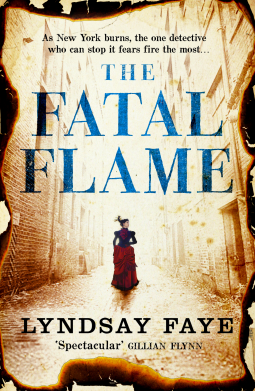
The Fatal Flame by Lyndsay Faye

The Fatal Flame Since reading The Gods of Gotham, Lyndsay Faye’s first novel to feature New York ‘copper star’ Timothy Wilde, I’ve been looking forward to each new book in what I’d hoped would be a long series. I was disappointed to discover that it’s actually a trilogy and The Fatal Flame is the last we’ll see of Tim and his friends – but pleased to have had the chance to read what has been a very enjoyable set of books.

Timothy’s story began in 1845 when his home in Manhattan was destroyed by fire and his brother, Valentine, helped him find work as a copper star in the newly formed New York City Police Department (the name comes from the copper stars the officers wore to identify themselves). In The Gods of Gotham you can read about the early days of Timothy’s career and how his crime-solving skills gained him a position as one of the NYPD’s first detectives, while the second book, Seven for a Secret, followed his investigations into a gang of ‘blackbirders’ (people who hunted down runaway slaves and returned them to slavery in the south). Ideally, these two books should be read before The Fatal Flame as there are some recurring characters and storylines, but it’s not essential.

In this third and final book, set in 1848, a mysterious arsonist appears to be targeting properties belonging to the unscrupulous politician and businessman Robert Symmes. The main suspect is one of his former employees at the New American Textile Manufactory, a woman with a grudge. But as Tim begins to dig deeper into Symmes’ business dealings and his treatment of his female workers, things quickly become much more complex than they seemed at first – especially when Tim’s brother, Valentine, announces that he will be running against Symmes in the next election. Meanwhile, Mercy Underhill, the fascinating, eccentric woman Timothy loves, has returned from London and it’s not long before she befriends Dunla Duffy, a young Irish girl who could hold the key to the mystery.

Most of the other characters we got to know in the previous novels are also back again in this one, including Bird Daly, Silkie Marsh, Jim Playfair and Elena Boehm. With this being the end of the trilogy, the personal story of each character is brought to a close, in one way or another – I would have hoped for a happier ending for one or two of them, but was satisfied with the way most of their stories concluded. I’ve particularly enjoyed watching the relationship between Timothy and Valentine (my favourite character) develop throughout the three books and I loved their scenes together in this book, especially towards the end.

I have mentioned in my posts on the previous two Timothy Wilde books the use of flash (the language of the criminal underworld) and how it adds to the atmosphere and authenticity of the story. Each novel includes a glossary which translates the flash terminology, although by the time you reach the third book in the series you’ll find yourself relying on it less and less (and the meaning can often be worked out from the context anyway). In this book, we see flash being used for the purpose for which it was originally intended – as a secret language to enable the speakers to hold a conversation that is unintelligible to anyone else who may be listening.

Another of the highlights of this trilogy has been seeing how Lyndsay Faye brings to life the New York City of the 19th century and tackles some of the important issues facing the people who lived there during that period. I have hinted at two of the main themes in The Fatal Flame already: political corruption and the exploitation of female employees (particularly Irish immigrants). Sometimes, though, Timothy’s attitudes towards the injustices of 19th century life make him feel slightly unconvincing as a man of his time, which is really my only criticism of the book and of the trilogy as a whole.

The language, the setting, the atmosphere and, most of all, Tim and Val Wilde – I’ve found so much to enjoy in these three novels! Now I’m wondering what Lyndsay Faye will be writing next.

Thanks to Headline for providing a copy of this book for review.

Doctor Faustus by Christopher Marlowe

Dr Faustus As I mentioned in my post on May’s reading and my plans for June, I have challenged myself to read the three plays on my Classics Club list this month. They are The Importance of Being Earnest by Oscar Wilde, Cyrano de Bergerac by Edmond Rostand, and this one, Doctor Faustus by Christopher Marlowe.

I had several reasons for including this particular play on my list for the Classics Club, not least because it is one of the few plays (apart from the complete works of Shakespeare) that I actually have a copy of on my shelf. Not having studied English Literature at university, I feel there are whole areas of literature I’ve missed out on; I have read very few plays (again apart from Shakespeare) and almost no Elizabethan literature (yet again, apart from Shakespeare). It was obvious that I needed to venture away from Shakespeare! Also, and this may seem a silly reason, having come across Marlowe several times as a character in historical fiction I thought it was time I actually read some of his work.

Marlowe’s play, written in blank verse, is based on the German legend Faust which is about a man who sells his soul to the devil. Doctor Faustus is a scholar who believes he has reached the limits of all traditional types of knowledge – logic, law, medicine and divinity. When a friend tells him “The miracles that magic will perform Will make thee vow to study nothing else,” he decides to turn his attention to magic instead and begins by summoning the demon Mephastophilis. Through Mephastophilis, Faustus makes a deal with the devil Lucifer, the “arch-regent and commander of all spirits”: he will allow the devil to claim his soul in return for twenty-four years of service from Mephastophilis.

Having gained the powers he has dreamed of, Faustus fails to put them to good use, wasting them on practical jokes and frivolous magic tricks instead. Despite his pact with Lucifer the opportunity for repentance is still there, but Faustus repeatedly rejects the chance of salvation…until the twenty-four-year time period begins to draw to a close. Has he left it too late to be redeemed?

Doctor Faustus is thought to have first been performed in 1594 and published ten years later in a form now referred to as the A Text. A second version, known as the B Text was published in 1616 with extra lines and altered wording. It seems that there has been some controversy as to which is the closest to the play as originally written by Marlowe; the book I read (a New Mermaids edition) uses the A Text but also includes the additional scenes from the B Text as an appendix.

There are obvious lessons to be learned from Doctor Faustus – the corruption that can come with power, the dangers of wishing for what we do not have and seeking knowledge beyond our limits – and throughout the play we hear the thoughts of a Good Angel and an Evil Angel who fill the roles of the two conflicting sides of Faustus’ conscience. It’s also quite an entertaining story, although you have to remember that it was written to be performed and I think it’s probably a play that I would have enjoyed watching more than I enjoyed reading. There are some scenes, such as the one where the Seven Deadly Sins appear to Faustus, that I found difficult to visualise just from the text.

I’m not going to attempt a deep analysis of Doctor Faustus here, but will leave that to others who are more familiar than I am with Marlowe’s work and more comfortable discussing plays (novels are definitely my own comfort zone, which you may have guessed from my blog title). I’m pleased, though, to have finally read something by Marlowe – and such an important and influential play. As a side note, I hadn’t realised that the famous description of Helen of Troy as “the face that launched a thousand ships” came from this play.

My June play-reading project is off to a good start! I hope to have another one to tell you about next week.

Ten from the TBR

Like many of you, I use Goodreads to keep track of the books I’m reading, have read and want to read. Yesterday I noticed that there are now 550 books on my Goodreads “to read” shelf – they are not all books that I actually own, but at some point in the last five years I must have clicked the “want to read” button to add them to my shelf. The question is, do I still want to read all of these books?

I have used a random number generator to pick ten numbers corresponding to ten of these books and have listed them below. My task now is to either read these books or make the decision to remove them from my shelf on Goodreads. No time limit, no pressure – and when I’ve finished with these ten books I’ll pick another ten.

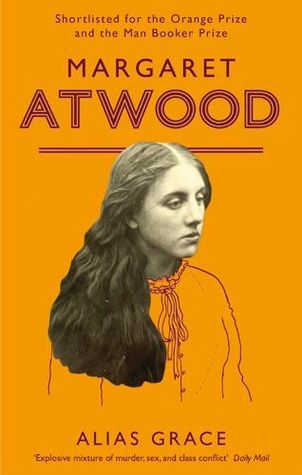
Alias Grace

177 – Alias Grace by Margaret Atwood

I’ve been meaning to read something else by Margaret Atwood since I read The Handmaid’s Tale, which I loved. I have a few of her books on my TBR and do like the sound of this one.

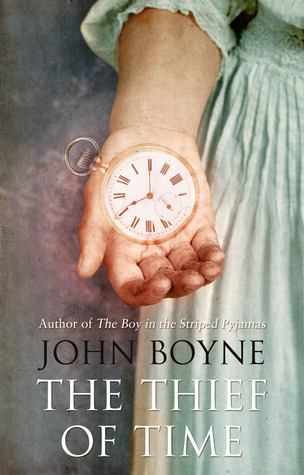
The Thief of Time

347 – The Thief of Time by John Boyne

I have read three John Boyne books and enjoyed them all, so I definitely want to read this one!

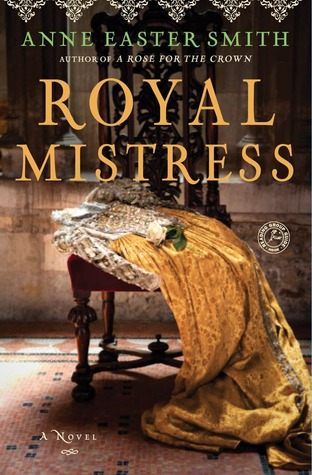
Royal Mistress

158 – Royal Mistress by Anne Easter Smith

This is the story of Jane Shore, Edward IV’s mistress, and was added to my TBR because the Wars of the Roses is one of my favourite time periods to read about. I don’t know if I actually still want to read it, though.

The Odd Women

84 – The Odd Women by George Gissing

This was on my original Classics Club list but I have amended my list several times since then and must have decided to remove this book so that I could add a different one. I think I would still like to read it but I’m not sure.

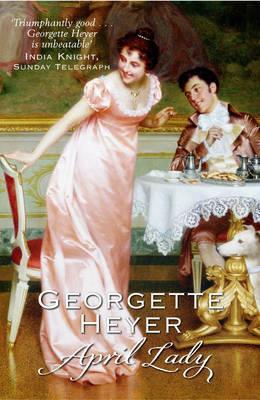
April Lady

1 – April Lady by Georgette Heyer

I tried to read this in May 2010 and couldn’t get into it so left it unfinished. I was a relatively new Heyer reader at the time, so maybe I will like it now that I’ve read a lot more of her work.

The Bones of Avalon

147 – The Bones of Avalon by Phil Rickman

I was drawn to this book because I saw that the main character was Dr John Dee, the Elizabethan astrologer. Do I actually want to read it? I’m not sure.

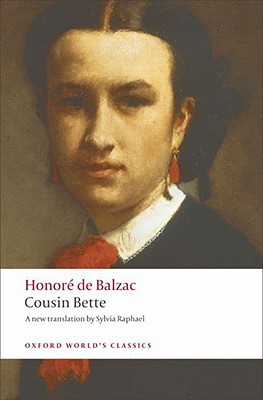
Cousin Bette

315 – Cousin Bette by Honoré de Balzac

I can’t even remember adding this book to the shelf! I do want to read something by Balzac, though, so maybe I should start with this one.

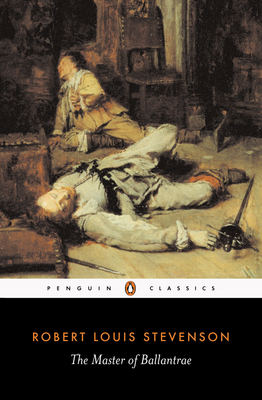
The Master of Ballantrae

125 – The Master of Ballantrae by Robert Louis Stevenson

I don’t know much about this book but I’ve enjoyed other novels by Stevenson, so I would like to try this one.

Wieland

409 – Wieland by Charles Brockden Brown

This is an early American Gothic novel and must have sounded appealing to me once, but it doesn’t now. If you’ve read it maybe you can convince me to try it!

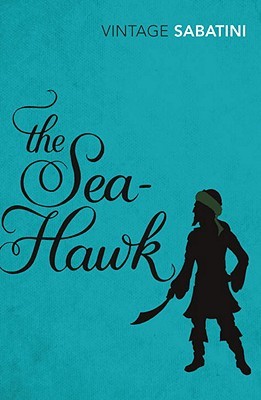
The Sea Hawk

127 – The Sea Hawk by Rafael Sabatini

I love Sabatini and am still looking forward to reading this book. I’ve just been waiting for the right time to read it. Maybe that time has arrived?

So there are my first ten choices! Are there any of these you think I should definitely read? Any that you wouldn’t recommend?