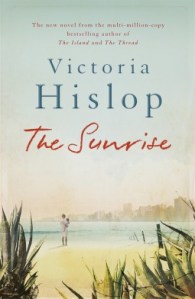
 This is Victoria Hislop’s fourth novel but the first one I’ve read. She has previously written about the Greek leper colony on the island of Spinalonga (The Island), the Spanish Civil War (The Return), and the history of the Greek city of Thessaloniki (The Thread), all of which sound interesting to me as I know nothing about any of those subjects! Like the three books I’ve just mentioned, in The Sunrise, Hislop takes a time and place that many people, including myself, will be unfamiliar with and weaves a story around it.
In the summer of 1972, the city of Famagusta in Cyprus is a thriving holiday resort, one of the most popular tourist destinations in the Mediterranean. The beach is lined with luxury hotels, the most luxurious and expensive of them all being The Sunrise, which has just opened its doors for the first time. For the hotel’s owner, Savvas Papacosta, these are exciting times; his dream of becoming the most successful hotelier in Famagusta is moving one step closer to reality.
Within two years, everything changes. Unknown to the tourists as they enjoy the sun, sea and sand, a Greek military coup has led to Turkey invading the northern part of the island to protect the Turkish Cypriots. When the army approaches Famagusta, frightened guests evacuate the hotels and people flee their homes, among them Savvas and his glamorous wife, Aphroditi. But as Turkish soldiers surround the abandoned city, two families remain hidden inside their apartments. One family, the Georgious, are Greek Cypriots, and the other, the Özkans, are Turkish Cypriots. We follow the stories of both of these families, as well as the Papacostas, and see how each character copes with what has happened to their city.
I did enjoy The Sunrise but I thought it felt a bit uneven; not much happened in the first half of the book and a lot of time was spent introducing the characters, setting the scene and describing the interior of the new hotel. With hindsight, I can see that maybe this was necessary, so that we could appreciate the extent to which the lives of these characters were disrupted and destroyed by the coming conflict, but I still found myself getting impatient and wanting to get into the story! I loved the second half of the novel, though. The descriptions of the abandoned city – houses with beds still unmade and food still on the tables, waiting in vain for their owners to return – are extremely vivid and there are images from the book that have stayed in my mind several days after finishing it.
I didn’t particularly like any of the characters in the story but I thought they were an interesting selection of people and I could certainly sympathise with the situations in which they found themselves. While there are one or two characters in the novel who are motivated by greed and self-interest, it was good to see people of different backgrounds and political beliefs working together, overcoming their differences and discovering that their ‘enemies’ are human beings just like themselves.
Towards the end of the book there are too many coincidences and things are wrapped up too neatly for my liking, but overall I found The Sunrise a fascinating read. I have never been to Cyprus and as I said at the start of this post, I know very little about its history (apart from the 15th century civil war, which I read about in Dorothy Dunnett’s Race of Scorpions) so I’m pleased to have had an opportunity to learn about Famagusta’s tragic past. What makes the story even more poignant is that the district of Varosha, where The Sunrise is set, remains a ghost town even today, untouched and uninhabited for four decades.
Thanks to Bookbridgr for my copy of The Sunrise.






 She Reads Novels