Historical Musings #89: My year in historical fiction 2024

Welcome to my monthly post on all things historical fiction. For my first Musings post of the year, I am looking back at the historical fiction I read in 2024 and have put together my usual selection of charts and lists! I have kept most of the same categories I’ve used for the previous eight years so that it should be easy to make comparisons and to see if there have been any interesting changes in my reading patterns and choices (here are my posts for 2023, 2022, 2021, 2020, 2019, 2018, 2017 and 2016).

Before I begin, just a reminder that I do actually read other genres but for the purposes of this post I haven’t included those books in these stats!

~

Time periods read about in 2024:

The 19th and 20th centuries are almost always the top two periods I read about and last year I read an equal number of books set in each of them.

The books I read with the earliest settings were Babylonia by Costanza Casati (set in the Assyrian Empire in the 9th century BC) and The Voyage Home by Pat Barker (set in Ancient Greece).

~

35% of the historical fiction authors I read in 2024 were new to me.

This is about the same as the last few years; apart from in 2019, when I read 54% new authors, I do tend to stick mainly to authors I already know and love.

Here are three historical novels I read by new-to-me authors in 2024:

The Bone Hunters by Joanne Burn
The King’s Witches by Kate Foster
The Fraud by Zadie Smith

~

I read 3 historical novels in translation in 2024

If I had included books from all genres, I would have had a much longer list of translated works read in 2024, but these are just the historical ones. Two Japanese and one Welsh!

Silence by Shūsaku Endō (Translated from Japanese by William Johnston)
The Life of Rebecca Jones by Angharad Price (Translated from Welsh by Lloyd Jones)
The Meiji Guillotine Murders by Futaro Yamada (Translated from Japanese by Bryan Karetnyk)

~

Publication dates of historical fiction read in 2024:

Again, most of the historical fiction books I read were new releases, which I know is due to my use of NetGalley. I do have lots of older books on my own shelves and am hoping to read more of them in 2025, but I say that every year so we’ll see!

The oldest historical fiction novel I read in 2024 was The Trumpet-Major by Thomas Hardy (published in 1880 and set during the Napoleonic Wars).

~

14% of my historical reads in 2024 were historical mysteries.

This is about the same percentage as in previous years. Here are three I enjoyed reading in 2024:

The Bells of Westminster by Leonora Nattrass
A Case of Mice and Murder by Sally Smith
Cabaret Macabre by Tom Mead

~

I read historical fiction set in 24 different countries in 2024:

This is an improvement on 2023 when I read about 17 countries. England still dominates, but I’m pleased to have read about such a wide variety of other countries as well, even if there were just one or two books set in each. I’ve included Babylonia as a country here, although it was actually an ancient state located in modern day Iraq, Iran and Syria.

~

Four historical men I read about in 2024:

St Cuthbert (Cuddy by Benjamin Myers)
Lord Edward Fitzgerald (The Ballad of Lord Edward and Citizen Small by Neil Jordan)
Llewelyn ap Gruffydd (The Reckoning by Sharon Penman)
Somerset Maugham (The House of Doors by Tan Twan Eng

Four historical women I read about in 2024:

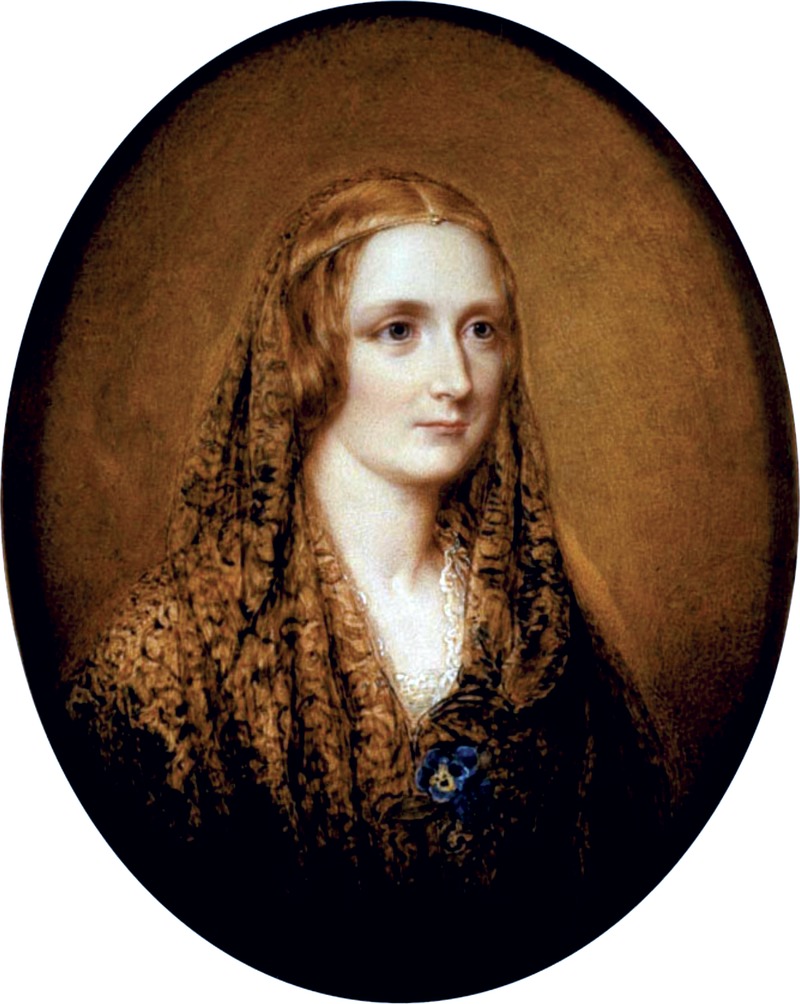
Claire Clairmont (Clairmont by Lesley McDowell)
Elizabeth Bathory (The Nightingale’s Castle by Sonia Velton)
Lady Mary Wortley Montagu (A Woman of Opinion by Sean Lusk)
Berengaria of Navarre (The Lost Queen by Carol McGrath)

~

What about you? Did you read any good historical fiction last year? Have you read any of the books or authors I’ve mentioned here and have you noticed any patterns or trends in your own reading?

Tea on Sunday by Lettice Cooper

Lettice Cooper is a new author for me. I’m aware that two of her books from the 1930s, National Provincial and The New House, have been published by Persephone, but I haven’t read either of them yet. Tea on Sunday, her only detective novel, sounded appealing, though; it was published in 1973, very late in her life, but has the feel of a Golden Age mystery and has recently been reissued as a British Library Crime Classic.

The plot is quite a simple one. On a snowy winter’s day, Alberta Mansbridge invites eight guests to a tea party at her home in London. The guests include her family doctor, her ‘man of business’, an old friend, the manager of her late father’s engineering company, her nephew Anthony and his wife, and two young men she has taken under her wing – an Italian and an ex-prisoner. As the group gather outside her door that Sunday afternoon, they become concerned when their knocking goes unanswered. Eventually the police are called and force open the door to find that Alberta has been strangled while sitting at her desk.

There’s no real mystery regarding how the murder took place. The doors and windows had been locked and there’s no sign of a burglary, so the police are satisfied that the killer must have been someone Alberta knew and let into the house – probably one of the eight guests who arrived early, committed the murder, then left again to return a few minutes later with the others. But which of the eight was it and why did they want Alberta dead?

Tea on Sunday is a slow paced novel where, once the murder is discovered, not much else actually happens. Most of the focus is on Detective Chief Inspector Corby interviewing the various suspects one by one and delving into Alberta’s personal history to see if the answer lies in her past in Yorkshire. Despite the lack of action, I still found the book surprisingly absorbing and that’s because of Cooper’s strong characterisation. Any of the eight could be the culprit as none of them have alibis and this means Corby has to learn as much as he can about each person and whether or not they have a motive.

Corby is a likeable detective and it’s a shame he only appears in this one book by Lettice Cooper as she could probably have built a whole series around him. Although a few of his comments about women are questionable, I could make allowances for the period in which the novel was written and in general he’s respectful towards the people he interviews and doesn’t judge until he’s heard all the facts. It would be easy, for example, for him to pin the blame on Barry Slater, the former prisoner Alberta met through her charitable work and who runs away as soon as the police are called to the scene, but he doesn’t do this and waits to form his own opinion.

Of the eight suspects, the characters who stand out the most, in my opinion, are Anthony Seldon and his wife, Lisa. As the dead woman’s nephew and the only direct family member invited to the tea party, Anthony naturally comes under suspicion, so a lot of time is spent on his background, painting a picture of a young man who disappointed his aunt by refusing to go into the family business and by marrying a woman she dislikes quite intensely. Another interesting character is Myra Heseltine, Alberta’s close friend who lodged with her until discovering that Alberta’s latest protégé, Marcello Bartolozzi, whom Myra distrusts, may be moving in as well.

It’s Alberta Mansbridge herself, however, whose character comes across most strongly. Despite being murdered so early in the book, she is brought to life through the words and memories of those who knew her: a woman proud of her family’s legacy, stubbornly resistant to change and progress, who interferes in other people’s business but at the same time is generous and giving. At first it’s difficult to see why so many people may have wanted her dead, but gradually motives emerge for almost all of the suspects.

The actual solution to the mystery is disappointingly simple and there are no clever twists along the way, like we would expect from Agatha Christie, for example. I felt let down by the ending, but it was still an enjoyable read up to that point and as the first book I’ve completed in 2025 it means my reading for the year is off to a good start.

Top Ten Tuesday: New releases to look out for

This week’s topic for Top Ten Tuesday (hosted by That Artsy Reader Girl) is: “Most Anticipated Books Releasing in the First Half of 2025”.

I’ve already listed some of my most anticipated historical fiction releases in a recent post, which you can see here. I’m listing below another ten books that I either found out about after putting that post together or that fall into other genres – so these are not necessarily my *most* anticipated books, but are still some that I would like to read.

The covers for the last two books haven’t been revealed yet.

1. Black Wood, Blue Sky by Eowyn Ivey (4th February 2025) – I’m pleased to see there’s a new Eowyn Ivey book on the way. I enjoyed her first two.

2. The Morrigan by Kim Curran (6th February 2025) – An Irish mythology retelling, which makes a change from the Greeks!

3. Woman in Blue by Douglas Bruton (20th February 2025) – A new novella from Bruton about a painting in the Rijksmuseum.

4. Dream Count by Chimamanda Ngozi Adichie (4th March 2025) – It’s been such a long time since Adichie’s last novel!

5. The Other People by CB Everett (10th April 2025) – I have this one from NetGalley and it sounds intriguing.

6. Marble Hall Murders by Anthony Horowitz (10th April 2025) – A third Atticus Pünd book at last! This is definitely one of my most anticipated books of the year.

7. The Pretender by Jo Harkin (24th April 2025) – A new historical novel based on the story of the royal pretender, Lambert Simnel.

8. Air by John Boyne (8th May 2025) – The final book in Boyne’s Elements quartet. I enjoyed all of the first three.

9. Written on the Dark by Guy Gavriel Kay (27th May 2025) – I always enjoy Kay’s historical fantasy, so I’m looking forward to this.

10. The Jealous One by Celia Fremlin (5th June 2025) – An older book set to appear in a new edition from Faber & Faber.

~

Do you want to read any of these? Which new releases are you anticipating in the first half of 2025?

Six Degrees of Separation: From Orbital to Prague Nights

It’s the first Saturday of the month which means it’s time for another Six Degrees of Separation, hosted by Kate of Books are my Favourite and Best. The idea is that Kate chooses a book to use as a starting point and then we have to link it to six other books of our choice to form a chain. A book doesn’t have to be connected to all of the others on the list – only to the one next to it in the chain.
This month we’re starting with Orbital by Samantha Harvey. I haven’t read it and it doesn’t sound like my usual sort of book, but so many people have loved it that I’m starting to think I’ll have to at least try it. Here’s what it’s about:

A team of astronauts in the International Space Station collect meteorological data, conduct scientific experiments and test the limits of the human body. But mostly they observe. Together they watch their silent blue planet, circling it sixteen times, spinning past continents and cycling through seasons, taking in glaciers and deserts, the peaks of mountains and the swells of oceans. Endless shows of spectacular beauty witnessed in a single day.

Yet although separated from the world they cannot escape its constant pull. News reaches them of the death of a mother, and with it comes thoughts of returning home. They look on as a typhoon gathers over an island and people they love, in awe of its magnificence and fearful of its destruction.

The fragility of human life fills their conversations, their fears, their dreams. So far from earth, they have never felt more part – or protective – of it. They begin to ask, what is life without earth? What is earth without humanity?

I’ll start with a book I have read by Samantha Harvey, The Western Wind (1). This is a mystery novel set in a small English village in 1491 and taking place over a period of four days. Unusually, the story is told in reverse, beginning on the fourth day and then moving backwards in time.

Another novel written in reverse is The Night Watch by Sarah Waters (2). This is one of my favourite books by Waters and follows the stories of four people during and after World War II, introducing us to the characters in 1947 before moving back in time to 1944 and then 1941.

The word ‘watch’ also appears in the title of Watch the Lady by Elizabeth Fremantle (3). This is a novel about Penelope Devereux, 16th century noblewoman and sister of Robert Devereux, Earl of Essex, a favourite of Elizabeth I’s. Penelope is thought to be the inspiration for the poet Philip Sidney’s Astrophil and Stella.

The name Penelope leads me to my next book, The Penelopiad by Margaret Atwood (4). This is a retelling of the events of the Odyssey from the perspectives of Penelope and the twelve maids who were hanged by her son, Telemachus. The sections narrated by the maids are written in a different style every time – a poem, a ballad, a lecture and even a trial.

Cuddy by Benjamin Myers (5) is also written in a range of styles including a narrative poem and a ghost story told through diary entries. The separate sections of the book all add up to paint a picture of the life and legacy of the Anglo-Saxon monk St Cuthbert, sometimes known by the nickname Cuddy.

My final link is a simple one – another author with the name Benjamin. Well, actually Benjamin Black is a pseudonym of the Irish author John Banville. He has written a number of crime novels under the Black name, including the Quirke series about a 1950s pathologist and a standalone mystery, Prague Nights (6), set in 16th century Prague.

~

And that’s my first chain of 2025! My links included Samantha Harvey books, novels with reverse timelines, the word ‘watch’, characters called Penelope, books written in mixtures of styles and authors with the name Benjamin.

In February we’ll be starting with Dangerous Liaisons by Pierre Choderlos de Laclos.

What Time the Sexton’s Spade Doth Rust by Alan Bradley

After a five year gap, Flavia de Luce is back! It seemed that 2019’s The Golden Tresses of the Dead was going to be the last in the series, so I was pleased to see book eleven, What Time the Sexton’s Spade Doth Rust, appear towards the end of 2024. If you’re wondering about the title, it comes from the poem At the End by Andrew Dodds.

In this book, our young heroine Flavia de Luce and her fellow amateur detective, the gardener Dogger, are investigating yet another suspicious death in the village of Bishop’s Lacey. Major Greyleigh, a retired hangman, has been found dead after eating a breakfast of apparently poisonous mushrooms – and the police suspect Mrs Mullet, the de Luce family cook, who had picked and served the mushrooms to the victim. Flavia and Dogger are sure there’s been a mistake – Mrs Mullet can’t possibly be a murderer! Before they can prove her innocence, however, they must try to find the real killer.

I enjoyed the mystery in this book more than in the last one – it was less complicated and easier to follow. Mrs Mullet being implicated makes Flavia and Dogger’s investigation feel more personal and relevant than usual, while the profession of the victim – a hangman – provides motives for other people to want him dead. Also, with the cause of death believed to involve poison, there are plenty of opportunities for Flavia to put her knowledge of chemistry to good use!

I do miss Flavia’s interactions with her sisters, especially as after fighting and arguing with them for most of the series it had seemed a few books ago that her relationships with them were starting to turn a corner. Feely (Ophelia), who got married at the beginning of the previous book, is still away on her honeymoon and doesn’t appear at all, and although Daffy (Daphne) is still living at home, we barely see her either. In fact, it’s mentioned that she’s busy completing her application for Oxford University, so presumably she’ll be gone soon as well. I was struggling to work out the ages of the characters in this book; we were told in the last one that Flavia is twelve, but I can’t remember how much older her sisters are – and I can’t believe only a year has passed since the beginning of the series, where she was eleven!

One character we do see a lot of is Undine, Flavia’s annoying younger cousin (I’m not sure exactly how old she is either). Again, Flavia’s relationship with Undine is improving as she starts to acknowledge that in some ways her cousin actually reminds her of herself. Unfortunately, I don’t find Undine at all fun or endearing and she’s really no substitute for Daffy and Feely.

I was surprised to see that the storyline introduced earlier in the series involving the secret society known as the Nide was picked up again in this book. Having formed a big part of the plot of book six, The Dead in Their Vaulted Arches, and to a lesser extent book seven, it has never really been referred to again until now – and, to be honest, I think it should have just remained forgotten. An espionage/world power storyline doesn’t really fit with the otherwise charming, cosy mystery feel of the series. Still, it meant several big plot twists and the return of a character I hadn’t expected to see again!

Alan Bradley has said that he’s now busy working on the twelfth Flavia book, so it will be interesting to see where things go next.

Thanks to Orion for providing a copy of this book for review via NetGalley.

Reading Resolutions for 2025

Happy New Year! As I do every January, I am listing below some reading resolutions for the year ahead. I prefer not to set numerical targets and goals or anything that restricts my reading choices too much, so these are just some loose plans and projects to help shape my year of reading.

Read Christie 2025
I will be taking part in the Read Christie challenge again and this year’s theme is Characters and Careers. I doubt I’ll join in every month as that’s just too much for me and I’m also starting to run out of new Christie books to read. The prompt for January is characters who are artists and I’ve already read all of the suggested titles so maybe I’ll just wait until February. Last year I managed eight out of the twelve monthly books and will be quite happy to achieve the same this year, but as I said above, I don’t want to worry about numbers.

Historical Fiction Reading Challenge
I’ll also be taking part in the Historical Fiction Reading Challenge (see my sign-up post here). This is never a very ‘challenging’ challenge for me, but I still like to join in and be part of the historical fiction community! In 2025 I would like to read more historical fiction in translation and/or set in countries I don’t often read about, particularly those in Africa, Asia or South America. Any suggestions and recommendations are welcome.

Classics Club list
I’ve been neglecting my Classics Club list recently, but there are only five books left on it now and I would like to read them soon so I can think about posting a new list. None of them are very long books, so I should be able to achieve that in the first few months of the year.

Re-reads
Every year I say I’m going to do some re-reading, but usually never actually get round to it. The list of books I would like to re-read is now very long and I’m determined to find time for at least a few of them in 2025. I’m tempted to join in with some of the Classics Club’s Jane Austen sync reads, which would all be re-reads for me!

Non-fiction
I never read much non-fiction, but read less than ever in 2024! Thanks to last year’s Nonfiction November and also the HWA Crown Awards longlist I’m not short of ideas and inspiration, so I’m hoping to read more in 2025. To get off to a good start, I’ve already picked up Britain’s Greatest Private Detective by Nell Darby, which is very interesting so far!

Reading the Walter Scott Prize
Reading the shortlists for the Walter Scott Prize is a personal project of mine. I’ve managed to read all of the books on the 2024 shortlist apart from one, The New Life by Tom Crewe, which I have on my TBR and am hoping to get to soon. There are still lots of books I haven’t read from the previous years’ lists, so I would like to catch up with some of them as well.

I’m sure I’ll be joining in with some of the reading events hosted by other bloggers throughout the year, but otherwise I just want 2025 to be a year of reading whatever I want to read, whenever I want to read it – and hopefully getting through more of the books that are already on my shelves or my Kindle rather than acquiring more. My ultimate resolution, as always, is to make every book I read a potential book of the year!

~

What about you? Do you have any reading resolutions or plans for 2025?

My Commonplace Book: December 2024

A selection of quotes and pictures to represent December’s reading:

commonplace book
noun
a book into which notable extracts from other works are copied for personal use.

~

“That,” said Lazare, “is a pity. Have you ever reflected, Miss Sally, how much wasted energy would be saved if people would do at the beginning what, in the end, they will certainly have to do.”

The Red Lacquer Case by Patricia Wentworth (1924)

~

Life was a puzzle box. It was made up of innumerable little drawers – some locked, some not, with glinting clasps and metal teeth. Someone was playing a game with her.

The Queen of Fives by Alex Hay (2025)

~

Interior of the Morgan Library, New York

But at his core, Sean was captivated by Helen as no one else had ever been, and he coaxed from her all that was special. The most important thing to her was that he accepted her, just as she was.

The Ghost of Madison Avenue by Nancy Bilyeau (2019)

~

It reminded her that you can throw away the rules of life and let your creative instinct take over; that you can put strange, unfitting parts together and create something atypical but beautiful, something truly unique.

Carrion Crow by Heather Parry (2025)

~

“We’ve got to take our chance. But if we don’t, it may never come again. Not like this. If we love one another, nothing else matters. Nothing. Get that straight. Love is something which you can’t order on a plate. It just serves itself – or doesn’t – whether you’re German or American. We must just take it – it may never be offered us again.”

A House on the Rhine by Frances Faviell (1955)

~

Guillemot eggs

Each bird laid an egg that was unlike any other that had ever been laid by any other guillemot in history. In the high-density fields of the North Yorkshire cliffs, where birds might roost at the rate of fifty pairs to a square yard, it was required that a bird knew exactly which egg was theirs, so that it didn’t end up warming one six inches to the left, or an inch to the right.

The Impossible Thing by Belinda Bauer (2025)

~

My peers made arguments aplenty in their lilting Latin platitudes: that dreams lack reason, which is the truth of all matters. That dreams defy logic, which is the root of all things. That in dreaming, we surrender our enlightened mindfulness to baser, animalistic instincts and, in doing so, negate the essence of our humanity. I listened to the arguments unconvinced, for it often seemed to me that I was more human for dreaming.

The Resurrectionist by A. Rae Dunlap (2025)

~

“But you know, my dear,” said Poirot gently, “people are never like what you remember them. You make them as the years go by, more and more the way you wish them to be, and as you think you remember them. If you want to remember them as agreeable and gay and handsome, you make them far more so than they actually were.”

Third Girl by Agatha Christie (1966)

~

Canaries, St Lucia

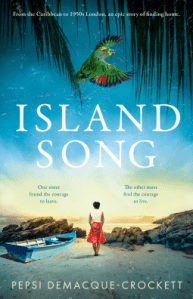
Her enthusiasm always surprised Agnes. ‘How you so, Margaret? You always happy and you have so much energy I wish I had.’

‘My mother always told me life don’t wait for no one. You have to make it yourself.’

Island Song by Pepsi Demacque-Crockett (2025)

~

Also, I got just gently interested in history. I said to the history teacher, Miss Nelson, ‘The reason I like this subject is because everything in it is safely in the past, so I don’t have to get worked up and worried about it,’ and she replied that she thought this was ‘a very odd and ignorant attitude to have and really not true at all.’

Absolutely and Forever by Rose Tremain (2023)

~

‘Sofi!’ There is an unusual edge to her tone and she darts a look at my drawing. ‘Do not speak so when you only see half the story. Why do you always fixate on circumstances that do not concern you, when you could be improving your own?’

The Woman in the Wallpaper by Lora Jones (2025)

~

Favourite books read in December:

The Impossible Thing, The Resurrectionist and Island Song

Authors read for the first time in December:

Heather Parry, A. Rae Dunlap, Lora Jones, Pepsi Demacque-Crockett

Countries visited in my December reading:

England, Scotland, Germany, Wales, USA, France, St Lucia

~

Reading notes: I took part in Dean Street December this month, reading two very different books published by Dean Street Press – The Red Lacquer Case and A House on the Rhine. As you can see, I’ve also been reading some of the books on my NetGalley shelf with publication dates in January and February, which I’ll be reviewing nearer the time.

In January, I’m hoping to read something for Japanese Literature Month but otherwise I’m just looking forward to starting a fresh new year of reading!

What did you read in December? Do you have any plans for your January reading?

Happy New Year!