My Classics Club Spin book is…

Number 20!

The Classics Club

Last week I decided to take part in the fifth Classics Club Spin. The rules were simple – list twenty books from your Classics Club list, number them 1 to 20, and the number announced today (Monday) represents the book you have to read during February and March.

The number that has been selected is 20, which means the book I’ll be reading is:

Can You Forgive Her

Can You Forgive Her? by Anthony Trollope

I’m not sure how I feel about this…it’s not one of the titles on my list that I was hoping for, but I wasn’t dreading it either. This is the first of Trollope’s Palliser novels and my copy has been on my shelf unread for three or four years, waiting for me to finish the Barsetshire series. I read the last of the six Barsetshire novels last year so I now have no excuse not to read this one!

If you participated in the spin are you happy with your result?

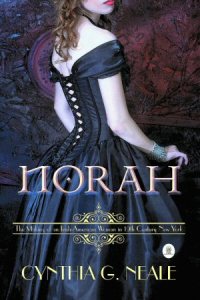
Norah by Cynthia G. Neale

Norah Norah McCabe is a young Irish woman living in Five Points, New York City in the 1850s. Having left Ireland during the Famine to come to America as an immigrant, Norah is determined to work hard and escape a life of poverty. Her first venture is a used clothing store called A Bee in Your Bonnet which she runs with her friend, Mary, but when the purchase of an expensive dress leads to them both being implicated in a murder inquiry this proves to be an unexpected turning point in Norah’s career. Offered a job as a reporter for the Irish-American newspaper, she meets a man who introduces her to revolutionary politics – and finds herself both in love and in serious danger.

Cynthia Neale has previously written two young adult books about Norah McCabe, The Irish Dresser and Hope in New York City, which tell the story of Norah’s journey to America as a teenager and her first years in her new country. This book, subtitled The Making of an Irish-American Woman in 19th Century New York, is the author’s first adult novel and continues Norah’s story. The fact that this is actually the third Norah McCabe book probably explains why from the very first chapter Norah feels like a fully developed, three-dimensional character.

I didn’t always like Norah or agree with her decisions – she can be sharp tongued, impulsive and reluctant to take advice – but she is also ambitious, courageous and resilient. Some of the terrible situations she finds herself in could possibly have been avoided, which was frustrating, but I was pleased to find that she does learn from her mistakes and continues to mature over the course of the novel. While I’m not Irish, not an immigrant and not living in 1850s New York, I could still relate to parts of Norah’s story and enjoy watching her use her wits and intelligence to overcome the obstacles that are constantly being placed in her path.

As a work of historical fiction, the background to the novel has clearly been well researched. Life in the poorer areas of New York during this period was not easy and not always very pleasant and the author doesn’t shy away from describing the violence, corruption and prejudice that Norah encounters. But this is also a book about love, about the importance of family and friends, and about what it was like to be a woman in the 19th century – a woman with dreams and ambitions and the determination to try to make them a reality.

Although the pace was slow at the beginning of the book, there was plenty of drama in the later chapters to make up for it. I found this quite an enjoyable, inspirational read and I’m pleased to have had the chance to get to know Norah McCabe.

Norah book tour

I read Norah as part of a Virtual Book Tour organised by Fireship Press, an independent publisher of historical and nautical fiction and non-fiction. For more reviews, guest posts and giveaways please see the tour schedule.

The Renaissance: The Best One-Hour History by Robert Freeman

The Renaissance I spotted this book on Netgalley towards the end of last year and as I’ve been trying to read more historical non-fiction recently, I requested it immediately. It has taken until now for me to get round to reading it, which I feel guilty about as it really did only take an hour to read from beginning to end!

This book is part of a series of One Hour History books each dealing with a different historical period or theme. Other titles include The Protestant Reformation, The French Revolution and The Vietnam War, with more to come soon. This particular volume covers the period of history we know as the Renaissance.

Freeman begins by explaining how factors such as the decline of the feudal system following the Black Death, the fall of Constantinople which led to Greek scholars returning to other parts of Europe, and the decline in the influence of the Catholic Church marked the transition from the ‘Dark Ages’ into the Renaissance. Next he looks at Renaissance art (paintings, sculptures and examples of architecture) and developments in other areas including religion, printing, exploration and medicine. Finally, there’s a timeline showing the dates of significant events.

The author suggests googling the names of the paintings and sculptures discussed in the book so that you can look at them as you read. Most of these works of art were already familiar to me (Freeman chooses to focus on famous pieces such as Leonardo da Vinci’s Mona Lisa and The Last Supper, Botticelli’s The Birth of Venus and Michelangelo’s Sistine Chapel ceiling, which is understandable, as this book is only intended to give a concise overview) and may be familiar to you too, but I would still recommend searching for the images to look at while you read what Freeman has to say about perspective, light and shadow and other techniques.

This very short book is obviously not intended for people who already have an in-depth understanding of the Renaissance (and it would probably not be very satisfying for those readers) but for anyone with little or no knowledge this is an ideal introduction. After reading it you may decide that you now know as much as you want to know about the Renaissance, but it could also be used as a good starting point for a deeper study of the period – although it’s disappointing that there is no list of suggestions for further reading.

This was not what I would describe as a particularly fun or entertaining book to read – with so much history to get through in so few pages there’s no time for anything but the basic facts – but it was an interesting and educational way to spend an hour of my time.

Review copy received via Netgalley.

The Classics Club Spin #5

The Classics Club

The Classics Club Spin is back for the fifth time! I have been lucky with my last three Spin books (Aurora Floyd, Cold Comfort Farm and A Tale of Two Cities) so I’m hoping another great book will be chosen for me again.

Here are the rules:

* List any twenty books you have left to read from your Classics Club list.
* Number them from 1 to 20.
* Next Monday the Classics Club will announce a number.
* This is the book you need to read during February and March!

And here is my Spin List:

1. The House of Mirth by Edith Wharton
2. The Heart of Midlothian by Sir Walter Scott
3. David Copperfield by Charles Dickens
4. The Mill on the Floss by George Eliot
5. The Remains of the Day by Kazuo Ishiguro
6. The Idiot by Fyodor Dostoyevsky
7. Vanity Fair by William Makepeace Thackeray
8. Family Roundabout by Richmal Crompton
9. Excellent Women by Barbara Pym
10. East of Eden by John Steinbeck
11. Howards End by E.M. Forster
12. Cranford by Elizabeth Gaskell
13. A Country Doctor’s Notebook by Mikhail Bulgakov
14. The Heir of Redclyffe by Charlotte M. Yonge
15. Frenchman’s Creek by Daphne du Maurier
16. Germinal by Emile Zola
17. The Sea Hawk by Rafael Sabatini
18. The Mayor of Casterbridge by Thomas Hardy
19. The Vicomte de Bragelonne by Alexandre Dumas
20. Can You Forgive Her? by Anthony Trollope

Now I just need to wait until Monday to find out what I’ll be reading. Which numbers do you think I should be hoping for?

A Burnable Book by Bruce Holsinger

There seem to have been a lot of historical thrillers in recent years that focus on the search for a valuable item – a book, a crown or a manuscript. A Burnable Book is another one, but with enough differences to make it feel refreshing and original. While many authors (CJ Sansom, SJ Parris, Nancy Bilyeau to name a few) set their stories in the Tudor period, this one is set in the 14th century, during the reign of Richard II, a period covered less often in historical fiction. The missing item in question is a book of prophecies which accurately predicts the deaths of the previous twelve Kings of England…and the one who is currently on the throne, King Richard II.

This book – and the embroidered cloth in which it is wrapped – has fallen into the hands of Agnes Fonteyn, a ‘maudlyn’ (or prostitute), who receives it from another girl whom she meets just outside London’s city walls. Minutes later this girl is murdered, leaving Agnes, who is unaware of the book’s contents, wondering what is so special about it that someone was prepared to kill for it.

John Gower, poet and ‘trader in information’, hears about the book from his friend, Geoffrey Chaucer, who asks John to find it for him but refuses to explain exactly why he wants it so desperately. When John begins his search for the book he soon discovers that he and Chaucer are not the only ones looking for it and that the prophecies it contains could implicate one of England’s most important noblemen in a plot against the King. As the action moves from one side of London to the other, over the Thames to Southwark, to the libraries of Oxford and then to Florence and back again, the history of this ‘burnable book’ is slowly revealed.

The name of the author, Bruce Holsinger, should be familiar to anyone who took the Coursera course “Plagues, Witches and War: The Worlds of Historical Fiction” last year (Holsinger was the instructor). This is his first novel and after listening to him talk about other works of historical fiction during the course, I was interested to see what his own book would be like. I’m pleased to report that it’s very good! The setting is believable, the historical background feels thoroughly researched, the plot is cleverly constructed and the story is exciting.

I did have a slight problem with the number of characters in the book as I found some of them difficult to distinguish from each other, particularly some of the bishops and noblemen who only played a minor role in the story. After a while, though, several characters began to emerge as stronger and more interesting than the others: John Gower, whose strained relationship with his exiled son, Simon, is tested during the course of his investigations; Millicent Fonteyn, sister of Agnes, who will do anything to avoid returning to life in the brothel where she grew up; and Edgar/Eleanor Rykener, born “a man in body, but in soul a man and woman both”. I liked the fact that the novel shows us the lives of people from all levels of society, from the nobility and clergy of England to London’s lower classes, including butchers’ apprentices and the ‘maudlyns’. Eventually the stories of each of these characters and more begin to come together, connected by the common thread of the burnable book and its treasonous prophecies.

Bruce Holsinger is a medieval scholar and it shows in his portrayal of the 14th century world which feels accurate and authentic. I can’t say the same for the dialogue, which is too modern for the period, but this didn’t irritate me as much as it sometimes does and the slang probably reflected the way some of the characters would have spoken. When reading the author’s note at the end I was interested to find that some of the things I’d assumed were fictional were actually based on fact. The character of Edgar or Eleanor Rykener, for example, was inspired by historical records of a transvestite prostitute. The poet John Gower really existed but not many details of his life are known, so Holsinger was able to use his imagination to fill in the gaps.

I think my favourite aspect of the novel was the concept of the ‘burnable book’ itself and the cryptic messages it contains. It was fascinating to learn more about the process of creating and breaking ciphers and codes and to watch as various characters tried to interpret the meanings of the prophecies. I also enjoyed following Gower’s mission to locate the book and identify its author, and the problems faced by Agnes and the other maudlyns in deciding what to do with such a dangerous possession. I don’t know if Bruce Holsinger is planning to write a sequel to A Burnable Book but I hope so as I would love to meet some of these characters again!
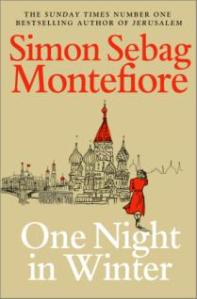
One Night in Winter by Simon Sebag Montefiore

One Night in Winter It’s Moscow, June 1945 and a Victory Parade is taking place to celebrate the defeat of Nazi Germany. A group of teenagers, all members of a secret literary society called the Fatal Romantics’ Club, meet on a bridge during the parade to re-enact a duel scene from the poet Pushkin’s Eugene Onegin. It’s supposed to be a game, but something goes tragically wrong and two of them are shot dead.

The secret police begin to investigate at the orders of Stalin himself, but it’s not clear whether the deaths were the result of an accident, a suicide pact or a murder. Because the teenagers involved in the incident are the children of some of the Soviet Union’s highest-ranking officials, they find themselves suspected of conspiring to overthrow the government. When the children are arrested and questioned they discover that the answers they give could incriminate their families and that innocent people could suffer.

More and more people are gradually drawn into the investigation and taken to Moscow’s Lubianka Prison where they are interrogated. As well as the members of the Fatal Romantics’ Club themselves (including eighteen-year-olds Serafima Romashkina, the daughter of a famous actress, and Andrei Kurbsky, son of an ‘Enemy of the People’), questions are also asked of their school teachers, parents and even two younger children aged just ten and six.

One Night in Winter is based on a real incident that occurred in 1943 and as you would expect, some parts of the book are quite harrowing, especially the descriptions of frightened children being made to testify against their own families, knowing that if they say the wrong thing they could be condemning a parent to death. Some of the parents, such as Hercules Satinov, have to continue working with and obeying Stalin even while knowing that he is responsible for the imprisonment of their children.

But this is also a book about love – in many different forms, whether it’s the romantic love between a man and a woman or the special bond between a parent and a child. Almost everyone in the novel seems to be in love with someone else and some of them are involved in secret romances. Over the course of the novel we see how far our characters are prepared to go to protect the ones they love. The secret police believe that a mysterious lover of Serafima’s could hold the key to the whole mystery. And the idea behind the Fatal Romantics’ Club is that “if we cannot live with love, we choose death”.

Simon Sebag Montefiore is a historian and the author of several historical non-fiction books which include a biography of Stalin. It’s obvious that he has an excellent knowledge of the period and its historical figures (Stalin himself has an important role to play in the novel) and his portrayal of life in Stalinist Moscow feels thoroughly researched and authentic. The settings include School 801, the exclusive school attended by all of the children in the story, the interior of Lubianka Prison, the dirty communal apartment where Andrei and his mother live and the luxurious homes of the Bolshevik leaders.

The only thing that was lacking in this novel was emotional impact and I do think this could have been improved if the author had chosen to focus on the viewpoint of just one or two characters, rather than switching between so many different characters. There are such a lot of people to keep track of that I found the character list at the front of the book absolutely essential and while I can understand the reasons for telling the story from different perspectives, it meant I struggled to form any strong emotional connections.

Simon Sebag Montefiore is a new author for me, but I am now interested in reading his other Russian novel, Sashenka.

I received a copy of this book from the publisher for review

The Midnight Rose by Lucinda Riley

The Midnight Rose Anahita (Anni) Chavan’s whole family are gathering at her hill-top bungalow in Darjeeling to celebrate her one-hundredth birthday, but even surrounded by her children, grandchildren and great-grandchildren, there is still one person missing. This is Moh, her beloved son, whom she has not seen since he was a small child. Everyone believes him to be dead…everyone except Anni who is sure that he is still alive somewhere in the world. A year later Anni herself has died, but before her death she had written down her story and entrusted it to her favourite great-grandson, Ari Malik, in the hope that he would try to find out what happened to her missing son.

Anni’s story leads Ari to Astbury Hall in England, where filming is currently taking place for a new period drama set in the 1920s starring the beautiful young American actress, Rebecca Bradley. When Lord Astbury invites her to stay at the Hall for the duration of the filming as a safe haven away from the world’s press, Rebecca gratefully accepts, hoping that the peace and quiet will give her a chance to decide what to do about her equally famous actor boyfriend, Jack, who has just proposed to her.

Soon Rebecca is drawn into Ari’s search for the truth about Anahita’s past and as her tragic story unfolds, we are taken back to India in 1911, where as a young girl Anni becomes friendly with Princess Indira, the daughter of the Maharaja and Maharani of Cooch Behar. She and Indira are sent to school in England just before the beginning of the Great War, and while staying with family friends at Astbury Hall in Devon the relationship Anni forms with Donald Astbury changes her life forever.

This is the third Lucinda Riley novel I’ve read (the other two were The Girl on the Cliff and The Light Behind the Window – I still need to read Hothouse Flower) and it’s my favourite of the three. Although there were times when I found the plot easy to predict and a few coincidences that felt too implausible, there were enough unexpected twists to keep me in suspense wondering what was going to happen next. I particularly loved the parts of the book set in India during the British Raj and also the insights into what life was like for a young woman trying to find a place for herself in a new and unfamiliar country.

Sometimes when a book is set in multiple time periods, the different threads of the story can feel disjointed and unconnected, but that was not the case here. They came together perfectly, with the secrets of Astbury Hall being slowly revealed as Ari and Rebecca discover them. As usual, though, I found myself enjoying the historical sections of the book more than the contemporary ones. The modern day characters do have storylines of their own – Rebecca’s troubled relationship with her boyfriend and Ari’s struggle to find the right balance between his work and his personal life – but they didn’t interest me as much as Anni’s. I thought Lucinda Riley’s writing really came alive in the sections about Anni – the dialogue felt vibrant and the characters were strong and memorable, especially Anni herself, her best friend Indira, and Donald’s cruel and manipulative mother, Maud Astbury, the villain of the book.

The Midnight Rose is a long novel (650 pages – and it’s one of those books that is physically big and heavy too) but once I became swept up into the story I stopped thinking about the number of pages and concentrated on enjoying Anahita Chavan’s fascinating tale.

I received a copy of this book from Pan Macmillan for review