The Herbalist by Niamh Boyce

The Herbalist by Niamh Boyce The Herbalist is set in a small unnamed town in Ireland in the 1930s and tells the story of four women whose lives are affected by the arrival of a stranger – a travelling herbalist who appears from nowhere one day and begins selling his lotions and tonics in the marketplace. Nobody knows anything about the herbalist or his history and initially they are suspicious, but slowly he starts to cast a spell over the women of the town, including sixteen-year-old Emily. Lonely and vulnerable after losing her mother, Emily convinces herself that she and the herbalist are in love, but when she makes a shocking discovery she finds herself with a difficult decision to make.

Another of our main characters is Carmel, who runs a small shop in the town. Having suffered a recent tragedy, Carmel is depressed and insecure and she feels that the only person who understands is the herbalist. Her brother, a teacher, suggests she should find an assistant to help her in the shop and recommends a former student, Sarah, for the job – but how will Carmel react to Sarah’s arrival?

We also follow Sarah, who is having problems of her own. The night before she leaves home to start her new job, her beloved aunt Mai throws a party for her and something that happens at that party will have a big impact on Sarah’s future. Finally, there’s Aggie, a ‘woman of ill repute’ and a fortune-teller. Aggie is an outsider, but through watching and listening to what is going on around her she seems to know more about the herbalist than anyone else in the town. The stories of Emily, Carmel and Sarah are told in alternating chapters, with occasional contributions from Aggie, and gradually the truth about the herbalist is revealed.

I was very impressed with this book and found it hard to believe that it’s Niamh Boyce’s first novel! The writing is beautiful, the setting and the characters feel completely believable and the story itself is fascinating – inspired by true events, according to the author’s note at the front of the book.

Something I found particularly intriguing was the fact that two of the women’s stories are told in the third person (Carmel’s and Sarah’s) and two in the first person (Emily’s and – in question and answer format – Aggie’s). The only problem with this was that while Emily and Aggie both have distinctive narrative voices of their own, the other two feel very similar. One way in which the use of multiple viewpoints works very well in this novel, though, is that it allows us an opportunity to see things from the perspectives of women from different social backgrounds whose lives are confined by the class system of their small, narrow-minded community.

The herbalist himself remains a mysterious, shadowy figure and although he is at the centre of everything that is happening throughout the novel, the focus is always on the female characters and the various ordeals they are going through. I should mention that this is not a happy story and really delves deeply into the darker side of life in 1930s Ireland. I would like to be able to tell you more about some of the issues the book raises, but then I would be giving away the herbalist’s secrets!

I loved The Herbalist and hope there will be more books from Niamh Boyce in the future.

I received a copy of this book from Penguin Ireland for review.
It was the best of times, it was the worst of times…

The Classics Club

The result of the Classics Club Spin has been announced today! The Spin number is…

Number 10!

This means I have to read the book at number 10 on the list I posted last week.

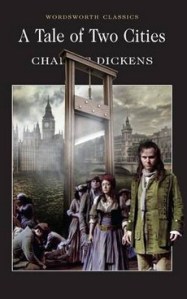
A Tale of Two Cities

A Tale of Two Cities by Charles Dickens

This is not one of the books I was hoping would be chosen, but I’m happy enough with this result as it’s been a while since I last read anything by Dickens.

Have you read it? What did you think of it?

If you participated too, I hope the Spin has selected something you’ll love!

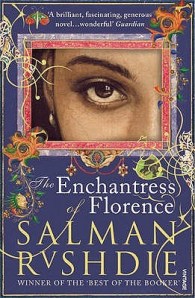
The Enchantress of Florence by Salman Rushdie

A More Diverse Universe I’ve never read anything by Salman Rushdie before and have always felt slightly intimidated by him, but when I was looking for something to read for the A More Diverse Universe blog tour (hosted by Aarti of Booklust) I came across this title on Aarti’s list of suggestions and thought it sounded intriguing.

The Enchantress of Florence is a very imaginative mixture of history and fantasy, with a plot that is almost impossible to describe – though I’ll do my best! The story begins in 16th century India when a mysterious yellow-haired stranger calling himself the Mogor dell’Amore arrives by bullock-cart at the court of the Emperor Akbar in Sikri. Claiming to be related to Akbar, he begins to tell the Emperor the story of the lost Mughal princess, Qara Köz, or Lady Black Eyes, who is captured and after a series of adventures ends up in Florence where she falls in love with the soldier Antonino Argalia. Qara Köz is the enchantress of the title, believed to have powers of sorcery, as well as great beauty, and the entire city of Florence becomes captivated by her presence. In a separate, but connected, storyline we also learn of Argalia’s childhood, growing up in Florence with his friends Ago Vespucci and Il Machia (Niccolò Machiavelli). Will Akbar believe the stories he is told and what effect will they have on the Emperor and his court?

The Enchantress of Florence There are lots of themes and ideas in The Enchantress of Florence and I’m sure I didn’t fully understand all of them. However, one of the main themes, to me, seems to be the power and the magic of storytelling. The novel is made up of lots of separate interlocking stories, not just the three main ones I’ve mentioned above. One character will begin to tell a story and then a character within that story will begin to tell another story and so on, until you almost begin to forget who the original storyteller was and who the listeners are. These stories may or may not be true and all of them are rich in magical realism – we meet the emperor’s favourite wife Jodha, for example, who is imaginary but also seems to have a life of her own; a slave girl who has become a ‘Memory Palace’ (or a device to aid the memory); and an artist hiding inside one of his own paintings.

The fantasy elements and the abundance of princesses, emperors, giants and witches gives the book a fairy tale feel (I was reminded of The Arabian Nights) and there are beautiful, lavish descriptions of both Mughal India and Renaissance Florence, two settings which are very different but also surprisingly alike. I did enjoy this book, especially the sections set in India, and I thought it was beautifully written, but I did find it very complicated and difficult to follow and I think I would probably have needed to read it twice to be able to really appreciate it. People often talk about books having multiple layers, and that’s usually a good thing, but this one has so many layers I was a bit overwhelmed!

I won’t be immediately rushing out to buy the rest of Salman Rushdie’s books but I’m glad I chose to read this one – it was a challenge, but worth the effort, I think.

Time for another Classics Club Spin!

The Classics Club

This is the fourth Spin hosted by the Classics Club this year. I didn’t take part in the last one but enjoyed the previous two so I’ve decided to join in again with this one.

Here are the rules:

* List any twenty books you have left to read from your Classics Club list.
* Number them from 1 to 20.
* Next Monday a number will be chosen.
* This is the book you need to read in November and December!

And here is my Spin List:

In the past I’ve tried to be creative and divide my list into categories. This time it’s less complicated; the odd numbers are books I’m looking forward to reading and the even numbers are books that I do want to read but have been putting off either because of the length or because they don’t appeal to me as much as they did when I first added them to my Classics Club list last year.

Obviously I would prefer an odd number but I’ll be happy to read whatever the Spin chooses for me!

1. The Mayor of Casterbridge by Thomas Hardy
2. Can You Forgive Her? by Anthony Trollope
3. Frenchman’s Creek by Daphne du Maurier
4. Vanity Fair by William Makepeace Thackeray
5. Family Roundabout by Richmal Crompton
6. East of Eden by John Steinbeck
7. The Sea Hawk by Rafael Sabatini
8. The Mill on the Floss by George Eliot
9. The Remains of the Day by Kazuo Ishiguro
10. A Tale of Two Cities by Charles Dickens
11. A Country Doctor’s Notebook by Mikhail Bulgakov
12. Wuthering Heights by Emily Bronte (re-read)
13. Excellent Women by Barbara Pym
14. Crime and Punishment by Fyodor Dostoevsky
15. The Vicomte de Bragelonne by Alexandre Dumas
16. The Heart of Midlothian by Sir Walter Scott
17. Idle Thoughts of an Idle Fellow by Jerome K. Jerome
18. The Charterhouse of Parma by Stendhal
19. The Heir of Redclyffe by Charlotte M. Yonge
20. The Hunchback of Notre Dame by Victor Hugo

Now I just need to wait until Monday to find out what I’ll be reading!

Have you read any of these? Which numbers should I be hoping for or dreading?

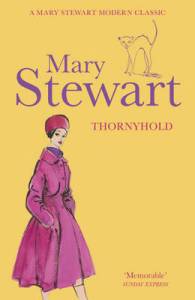
Thornyhold by Mary Stewart

Thornyhold After reading all the reviews and posts during Anbolyn’s recent Mary Stewart Reading Week, I had almost decided that the next Stewart books I read would be her Merlin series, but instead I found myself picking up this one from the library shelf.

Thornyhold starts off differently from the other Mary Stewart books I’ve read. Instead of getting straight into the action, our narrator, Geillis (Gilly) Ramsey, spends the first few chapters looking back on her childhood. As the daughter of a vicar and his cold, distant wife, bullied at school and feeling lonely and isolated, it was not a very happy childhood for Gilly and the one bright spot in her life was her relationship with her mother’s cousin, another Geillis.

Several years go by and both of Gilly’s parents die, leaving her an orphan in her early twenties. Just as she’s wondering what to do with her life, she hears that Geillis has also died, leaving her cottage in the countryside to Gilly. The name of the cottage is Thornyhold and it comes complete with an overgrown garden, a black cat called Hodge and a collection of dusty books of magic spells and herbal remedies. Could Gilly’s cousin Geillis have been a witch? With the help of William, a ten-year-old boy who shares her love of nature, Gilly begins to uncover some of the secrets of Thornyhold.

Thornyhold is one of Mary Stewart’s most recent books, published in 1988 (only Stormy Petrel and Rose Cottage came after that) and I’ve found that these final three books have a different feel from her earlier ones, being a lot gentler with less of the suspense and adventure that are usually associated with her work. In this book, although there are a few mysteries for Gilly to solve and one or two people who try to cause trouble for her (including the housekeeper Agnes Trapp, who seems desperate to get her hands on one of cousin Geillis’ herbology books), I never felt that I needed to worry about Gilly or that there was any danger of there not being a happy ending. But while I do prefer the more exciting, suspenseful books such as Nine Coaches Waiting and The Moonspinners, I enjoyed this one too, for different reasons.

This book may not have the exotic setting that many of her others have, but that doesn’t mean the descriptions aren’t still beautiful. It was a pleasure to watch Gilly exploring her new home, settling into the cottage and discovering the natural beauty of her surroundings. The story is set in the 1940s and has a lovely nostalgic feel with references to rationing and other details of post-war life. I also liked the characters, especially Gilly herself, who blossoms from a lonely child into a confident young woman with a lot to offer in terms of friendship and love (yes, there’s a love story too). Although this hasn’t become a favourite Stewart novel, it was a nice, relaxing read with a magical atmosphere and just what I was in the mood for!

After the Sunday Papers #12: Trying again

newspaper-clip-art-4 “She had read novels while other people perused the Sunday papers”
~ Mary Elizabeth Braddon, The Doctor’s Wife

***

I know I say this every time I write one of my Sunday Papers posts, but I can’t believe how long it’s been since the last one! It was always my intention to have a weekly roundup of my reading, upcoming reading events and other book-related musings, but for one reason or another I’ve never been able to get organised and post on a regular basis. As I do like to have some variety in my blogging and I feel that I’ve been posting nothing but book reviews recently, I’m going to try again and aim to post on at least one or two Sundays each month, even if I can’t manage every Sunday. Thinking about this has made me consider my whole blogging schedule (or lack of it) and I’ve been wondering whether it would be more or less stressful to have a fixed schedule where I post, for example, two reviews a week on a Tuesday and Thursday, with a post like this one on a Sunday, if I feel like it. What do you think? Do you plan ahead and post on certain days or do you prefer to be more spontaneous?

A More Diverse Universe Anyway, let’s start with an update on what I’m reading at the moment, beginning with my choice for A More Diverse Universe, which is being hosted by Aarti of Booklust from 15-17 November. Aarti has defined this on her blog as follows: “A More Diverse Universe celebrates diversity in speculative fiction by encouraging people to read books in the fantasy or science fiction genres that were written by people of color.” Who else is taking part in this? You can sign up here.

I had some trouble at first finding a book that would fit the requirements and that actually appealed to me (which I think highlights the need for an event like this, as there are so many more fantasy and science fiction books to choose from that are written by white authors), but when I saw that a few participants last year had read Salman Rushdie, I thought it would be a good opportunity to finally try one of his books. I am currently halfway through The Enchantress of Florence, which is full of magical realism, and enjoying it so far.

Speaking of fantasy, it’s not a genre I read often, but over the last few days I’ve been having fun re-reading my favourite fantasy series for the first time in more than a decade. More on that in a future post!

wilkieinwinter-1024x1024 Another event coming up in December is Wilkie in Winter hosted by The Estella Society. Wilkie Collins is one of my favourite authors and it’s been too long since I last read one of his books!

There are going to be two readalongs as part of Wilkie in Winter – The Frozen Deep and The Woman in White – though I haven’t decided yet if I want to participate in them. I’ve never read The Frozen Deep so I’m tempted to join in with that one, but I’ve already read The Woman in White a few times and while I do love it, I think I would rather re-read one of his others…possibly Armadale. I can never decide whether The Woman in White or Armadale is my favourite!

What have you been reading this week? What are your reading plans for the rest of 2013?

Sleeping Patterns by J.R. Crook

Sleeping Patterns I was lucky enough to win a copy of this book in a giveaway hosted by Charlie of The Worm Hole earlier this year. It’s probably not a book I would have chosen for myself but Charlie’s review (and others) made it sound very intriguing.

To begin with, the book is dedicated to the memory of the author, J.R. Crook, who we are told in the introduction (written by his friend, a fictional character called Annelie Strandli) is dead*. Before he died, Annelie says, he sent her fifteen envelopes each containing one piece of an untitled story and she has put them together to form a book. Annelie received these fifteen story fragments out of order and has presented them in that same order in the book so that Chapter 5 appears first, followed by Chapter 1, then 11.

Annelie herself is a main character in the story. A Finnish student living in London, the story tells of her relationship with Berry Walker, an aspiring writer. Annelie, Berry and Jamie (J.R.) Crook all live in the same student accommodation. Intrigued by the mysterious Berry, who is an insomniac, Annelie begins sneaking into his room and reading his writings, which he keeps in his desk drawer. Hoping for some insights into Berry’s character, Annelie becomes absorbed in the story he is writing – the story of Boy One, who has the habit of falling asleep at the most inappropriate times and entering the world of dreams.

There are so many clever ideas to be found in this book and it has such an unusual, innovative structure! I was impressed by its originality, though a bit disappointed that the actual plot wasn’t more compelling. Due to the fragmented nature of the story, possibly reflecting Berry’s disturbed sleeping patterns and Boy One’s dreams, I found it difficult to follow what was really happening (a story-within-a-story-within-a-story doesn’t even begin to describe it!) However, if you see the book as a sort of puzzle or jigsaw to be solved, then it definitely works in that respect.

When presented with chapters numbered incorrectly, the natural reaction is to want to read them in the correct numerical order, starting with Chapter 1. I managed to resist the temptation and just read the book straight through from cover to cover the way it was presented, but I did wonder whether the story would have made more sense if read in the right order or whether that would have just left me more confused. After spending most of the book feeling lost I was pleased to find that things did start to become clearer towards the end! At just over 100 pages, it would have been short enough to read again if I had wanted to and I’m sure a lot of things would have been clarified on a second read.

This book won the Luke Bitmead Bursary for previously unpublished authors and, having now read it, I can see why, because I can honestly say I’ve never read a book quite like Sleeping Patterns before. My personal preference is for more traditional novels – stories with a beginning, middle and end – but I’m always happy to try something a bit different. And this was certainly different!

* Don’t worry – J.R. Crook is not really dead. He even signed my copy of the book!