Midnight is a Lonely Place by Barbara Erskine

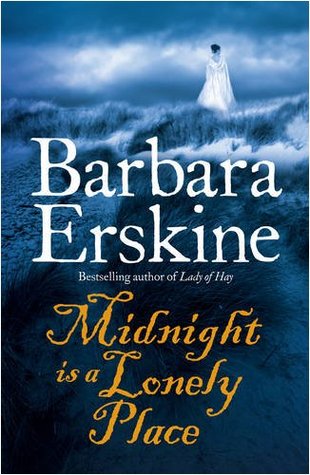
Midnight is a Lonely Place My first introduction to Barbara Erskine’s work last year, River of Destiny, left me unimpressed but I was assured by Erskine fans that her earlier books were better, so when I found this one at the library I decided to give her another chance. I also thought it sounded like an ideal book to read for the RIP challenge, even though it wasn’t on my original list.

When author Kate Kennedy’s relationship with her boyfriend, Jon, comes to an end and she is forced to move out of their London home, she decides to rent a cottage on the Essex coast where she can spend the winter working on her new biography of Byron. The owners of the cottage, Diana and Roger Lindsey, live in a farmhouse nearby and do their best to make Kate feel welcome, but unfortunately not all the members of the Lindsey family are happy to see her. The eldest son, Greg, an aspiring artist, had been using the cottage for his painting and resents Kate for pushing him out. His fifteen-year-old sister, Alison, is an amateur archaeologist and is furious when she discovers that Kate has been interfering with her dig at what she believes is an ancient Roman grave.

When strange things start to happen at Redall Cottage, Kate suspects Greg and Alison of trying to frighten her away, but after several encounters with ghostly figures she begins to accept that she is being haunted by the ghosts of the Roman soldier Marcus Severus Secundus, his wife Claudia, and the Druid prince, Nion. It seems that Kate has stumbled upon a two thousand-year-old love triangle that ended in a murder and a curse – and secrets that have been buried under the earth for centuries are about to be revealed at last.

Midnight is a Lonely Place was much better than River of Destiny, but still not a book that I can say I loved. I was right about it being a perfect RIP choice, though. It has all the elements of a classic ghost story: a lonely, isolated cottage, an ancient burial site, ghostly apparitions, strange smells and unexplained noises, relentless snow, sleet and blizzards. It’s quite scary in places and you might not want to read it late at night if you’re on your own (while I was finishing the book on Friday evening the real-life weather outside obliged with heavy rain and strong winds which made it even more atmospheric).

While Marcus Severus Secundus, Claudia and Nion do have a strong presence in this novel, the story is set entirely in the early 1990s (which actually feels surprisingly dated from a 2013 perspective) and we only learn about the Roman characters’ lives in brief flashbacks at the start of the chapters. I would have liked their storyline to have been more fully developed as I felt I didn’t get to know them well enough to really care about them or their secrets and this meant that, for me, the novel wasn’t as effective as it would have been with a stronger historical element.

The second half of the book is suspenseful and action packed, as the level of paranormal activity increases and more and more of Kate’s friends and neighbours become involved (at one point it felt as if the whole population of Essex were wandering about getting lost in the snow) but I found the ending disappointingly abrupt. I’m not sure I correctly interpreted the final page and after reading what was quite a long book (more than 400 pages) I had expected a more satisfying conclusion. I certainly enjoyed this book a lot more than River of Destiny but I’m not sure I’ll be looking for any more of Barbara Erskine’s books – though I might still be interested in reading Lady of Hay, her first and best known book.
Bring Up the Bodies by Hilary Mantel

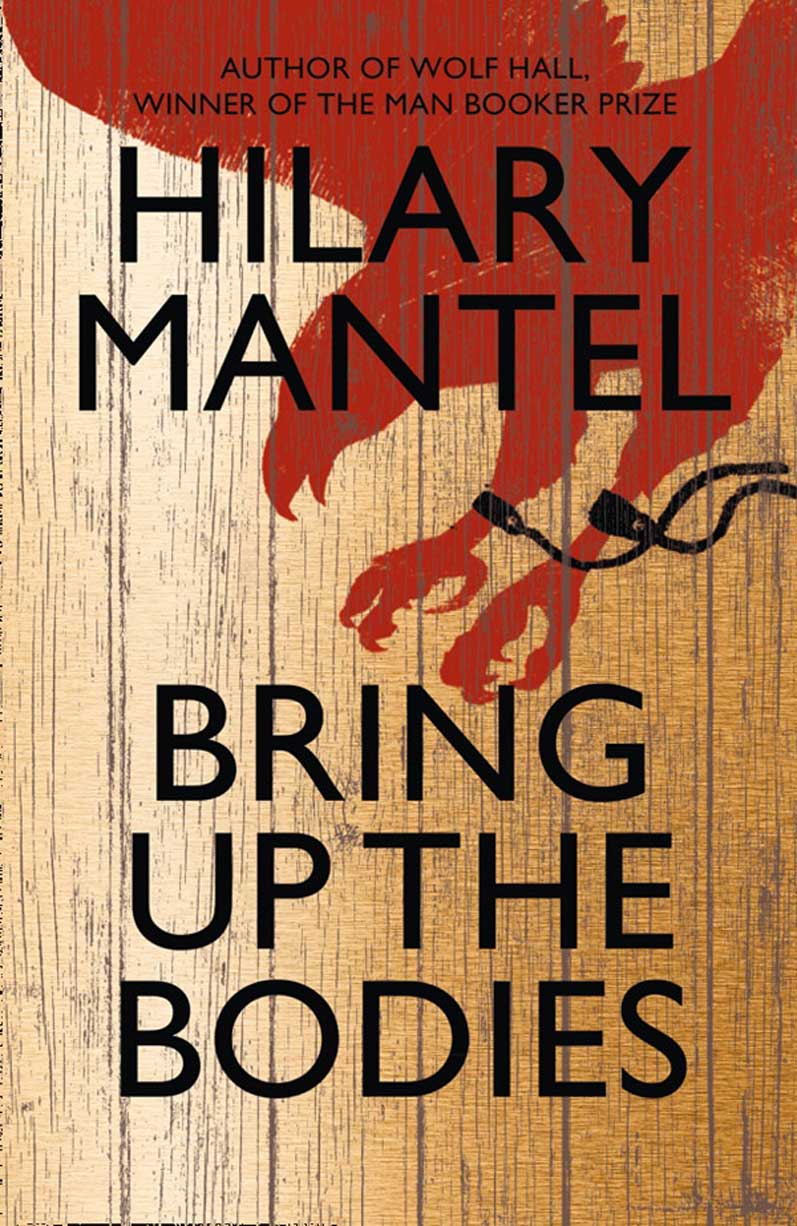
Bring up the Bodies This is the sequel to Wolf Hall and the second in a planned trilogy of novels telling the story of Thomas Cromwell, Henry VIII’s chief minister.

While Wolf Hall was concerned with Cromwell’s rise to power, the fall of Cardinal Wolsey and the process that led to Henry’s divorce from Katherine of Aragon, in Bring up the Bodies the King has grown dissatisfied with his second wife, Anne Boleyn, who has failed to give him a male heir, and he is now turning his attentions to Jane Seymour. Beginning in 1535, just after Wolf Hall ends, this book follows Cromwell as he attempts to find a solution to Henry’s problem. It’s not an easy task but Cromwell has already proven himself to be an expert at negotiating complex political situations and getting what he wants, while also trying to do what he believes is best for the King and for England.

I think most of us probably know what happened to Anne Boleyn and what her eventual fate would be, so I won’t say much more about the plot of this book. But although I’ve read about Anne Boleyn’s downfall many times before, I have never read about it from this perspective or in so much detail. By allowing us to follow events through Cromwell’s eyes, Mantel makes what to many of us is a familiar story feel like a fresh and interesting one – and in a world already filled with Tudor novels this is a real accomplishment!

I was intrigued by the suggestion that Cromwell had his own motives for plotting the demise of Anne and the men who were brought down with her. I don’t suppose we can ever know what thoughts were really going through Cromwell’s mind or what made him act the way he did, but Mantel’s theory was interesting. As in the previous book, Cromwell is a fascinating character and portrayed as neither a hero nor a villain. He’s ruthless, clever, ambitious and (in this book, at least) vengeful, but away from the court and the world of politics, we are shown a more human side to him. Through his relationship with his son, Gregory, and through his frequent memories of his wife and two daughters and his mentor Thomas Wolsey, who are all now dead, we see that he is also a man who loves his family and is loyal to his friends.

You could probably read Bring up the Bodies without having read Wolf Hall first, especially if you already have a good knowledge of Tudor history, but I would still recommend reading Wolf Hall before starting this one. It’s not completely necessary but will help you to understand Cromwell’s personality and how his mind works. You will also be introduced to the members of Cromwell’s large household (made up of extended family, servants and employees) and the other secondary characters who appear in this book.

Mantel’s novels are not easy reads but I did find this book much easier to read than Wolf Hall, maybe because I knew what to expect from her writing style this time. One criticism that I and many other readers had of Wolf Hall was regarding Mantel’s use of the pronoun ‘he’ without making it obvious who ‘he’ refers to. It was usually safe to assume that ‘he’ was Cromwell but it could still be confusing, especially when there were a lot of male characters in the same scene. In this book, Mantel still uses ‘he’ but sometimes clarifies it by adding ‘he, Cromwell’ which makes things easier to follow. I also found this a much quicker read than Wolf Hall, as it’s not as long and is faster paced and more focused on one subject – the fall of Anne Boleyn.

Now that I’ve caught up with the first two books in the trilogy, I can join those of you who are patiently (or maybe impatiently) awaiting the third one!

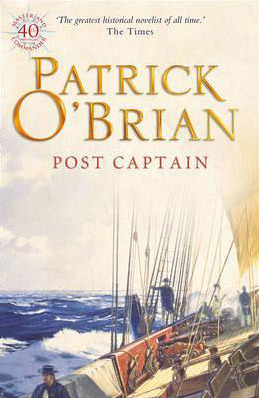
Post Captain by Patrick O’Brian

Post Captain This is the second book in Patrick O’Brian’s Aubrey-Maturin series following the adventures of Royal Navy Captain Jack Aubrey and his friend, ship’s surgeon Stephen Maturin.

Post Captain continues the story begun in Master and Commander. As the novel opens, the French Revolutionary Wars have come to a sudden end with the Peace of Amiens and Aubrey and Maturin have returned to England where Jack has rented a country estate – which happens to be near the home of Mrs Williams, a lady with several daughters of marriageable age. For the first hundred or so pages of the book, we follow Jack and Stephen as they live the lives of country gentleman, attending social engagements and becoming involved in complex romantic relationships with the eldest Williams daughter, Sophia, and her widowed cousin, Diana Villiers.

This period of peace soon comes to an end, though. Jack and Stephen are forced to flee to France when Jack finds himself in financial difficulties and while they are there, war breaks out again. The rest of the book centres around their return to naval action, Jack’s efforts to avoid being arrested for debt, and the conflict between Jack and Stephen caused by their involvement with Sophie and Diana.

After I posted my thoughts on the previous book, Master and Commander, and mentioned my general dislike of nautical books, I was told that this one might be more to my taste as it had more land-based action. And I did enjoy this book a lot more than the previous one. I still struggled at times with the sea battles and naval terminology, but I think I can cope with not being able to follow all the details of what is happening as long as I can understand the final outcome. As for the land-based chapters, I don’t think I’ve ever read anything more Austenesque that wasn’t actually written by Jane Austen! The Austen comparison, by the way, is not just because of the plot but also the writing style and language.

The fact that fewer pages are devoted to descriptions of naval action means there’s lots of time to develop the two main characters and explore various aspects of their personalities and their relationships. I also enjoyed meeting Sophie and Diana and I look forward to getting to know them better. Obviously when Aubrey and Maturin are at sea it’s a very male-dominated environment, so I was pleased to see that O’Brian also writes such convincing female characters.

With the friendship between Jack and Stephen being threatened by their romantic entanglements, there’s a lot of tension in this book but there are plenty of funny moments too, including a scene with a dancing bear on the road to Spain. I also loved Stephen’s attempts at beekeeping while at sea…

“There! A glass hive. Is it not ingenious, charming? I have always wanted to keep bees.”

“But how in God’s name do you expect to keep bees on a man-of-war?” cried Jack. “Where in God’s name do you expect them to find flowers, at sea? How will they eat?”

“You can see their every motion,” said Stephen, close against the glass, entranced. “Oh, as for their feeding, never fret your anxious mind; they will feed with us upon a saucer of sugar, at stated intervals. If the ingenious Monsieur Huber can keep bees, and he blind, the poor man, surely we can manage in a great spacious xebec?”

Having enjoyed this book so much, I now feel much more enthusiastic about reading the rest of the series than I did after the first book. I’m looking forward to H.M.S Surprise!

The Golem and the Djinni by Helene Wecker

The Golem and the Djinni Meet Chava. She’s a golem, a woman made of clay, created by a Rabbi in Poland and brought to life on a ship sailing to America. When her master dies during the voyage, the Golem, only a few days old, finds herself alone in a strange and unfamiliar land.

Ahmad is a djinni, a magical being made of flame, born in the Syrian desert in the seventh century and trapped inside a copper flask by a wizard. Now, many centuries later, the Djinni is released from the flask by a New York tinsmith, but discovers that he is bound to human form by an iron band around his wrist.

As the Golem and the Djinni try to adapt to their new surroundings and struggle to find a place for themselves in New York society, the two are eventually drawn together and their separate storylines begin to merge together in some unexpected ways.

The Golem and the Djinni have many things in common, the most obvious being that they are two non-human creatures trying to survive in the human world. They share a vulnerability and a childlike wonder at the people and things around them, which is what makes them both such endearing characters. But coming from such different cultures, they soon discover that they also have very different natures. Chava, as a golem, is designed to serve a master and satisfy the desires of others, while Ahmad has been imprisoned against his wishes and is desperate to regain his independence. The question of free will is something that comes up in their conversations often. Are the Golem and the Djinni responsible for their own actions or do their natures make them behave in a certain way? How much free will does either of them actually have? And what are the things that make a person human?

I found the relationship between the Golem and the Djinni very moving to read about and I think the reason for that was because it was not written as a typical ‘love at first sight’ romance. At first their relationship is based on curiosity and a longing to be able to discuss things with another outsider. A friendship gradually starts to form but it’s not until they find themselves threatened by a mutual enemy that the Golem and the Djinni realise how much they care about each other. I really liked the fact that the author took her time to introduce us to the characters and allowed their story to develop slowly so that the pace never felt too rushed.

Another thing I loved was the choice of setting – New York in 1899. As the Golem and the Djinni are mythical creatures they could probably have been placed into any setting and their story would still have been interesting, but choosing this specific time and place was particularly fascinating because of the insights we are given into the various immigrant communities of turn of the century New York. Through the Golem we get to know some of the city’s Jewish population and through the Djinni we meet the inhabitants of ‘Little Syria’, as well as learning about the Djinni’s previous life among the Bedouin desert tribes. There are lots of great characters in each of these communities: the old Rabbi who befriends Chava and the tinsmith who befriends Ahmad, the ice cream seller who suffers from a strange affliction that prevents him from looking people in the eye, and the beautiful young girl who receives some late night visits from the Djinni.

As a first novel, The Golem and the Djinni was a very ambitious one but everything worked perfectly. There were so many things about this book that impressed me – the beautiful writing, the clever plot, the blending of fantasy with historical fiction, and most of all, the wonderful characterisation of both Chava and Ahmad. In four months’ time when I make my list of favourite books of the year The Golem and the Djinni is one title that I’m sure will be on that list!

(Now, can anyone tell me why the spelling Djinni is used in the UK edition and Jinni in the American one?)

It’s time for R.I.P. VIII

RIP8main300

September is rapidly approaching, the nights are starting to get darker again, and that means it’s time for R.I.P. (R.eaders I.mbibing P.eril), the annual reading event hosted by Carl at Stainless Steel Droppings.

For those of you who are new to R.I.P. the idea is to read books that could fit one of the following categories:

Mystery.
Suspense.
Thriller.
Dark Fantasy.
Gothic.
Horror.
Supernatural.

As always, there are different levels of participation to choose from and I am signing up for Peril the First, which means reading at least four books between now and the end of October.

rip8peril1st

I’ve listed below some of the books I’m thinking about reading for R.I.P. this year. I don’t expect to read all of them, of course, but I like to have lots of books to choose from!

Frankenstein by Mary Shelley
The Haunting of Hill House by Shirley Jackson
The Romance of the Forest by Ann Radcliffe
These first three books are all taken from my Classics Club list so I’m hoping to read at least one of them.

Speaking from Among the Bones by Alan Bradley – I loved the first four Flavia de Luce books and can’t wait to read this one.

What Angels Fear by C.S. Harris – These books have been recommended to me a few times and I’ve finally managed to get a copy of the first one in the series.

Blood Harvest by S.J. Bolton – The only Bolton novel I still haven’t read.

Ten Second Staircase by Christopher Fowler – It’s been too long since I last read a Bryant & May book and this is the next in the series.

The Woman in Black by Susan Hill – This was on my R.I.P list last year but I didn’t have time for it so will try again this year.

Dragonwyck by Anya Seton – Another one I was hoping to read last year and never got round to.

The Curse of the Pharaohs by Elizabeth Peters – Hearing about Elizabeth Peters’ death a few weeks ago reminded me that I really want to continue the Amelia Peabody series!

A Monstrous Regiment of Women by Laurie R. King – I’ve also been meaning to continue this series since reading The Beekeeper’s Apprentice more than a year ago.

The Asylum by John Harwood – I loved both of John Harwood’s two previous books so I’m looking forward to this one.

Bellman & Black by Diane Setterfield – I requested this book from Netgalley and can’t wait to start reading it. I’m sure it will be a perfect R.I.P. book!

I’m also planning to take part in the Mary Stewart Reading Week so will be reading one of Mary Stewart’s suspense novels in September too – I still haven’t decided which one yet!

Are you going to join in with R.I.P this year? What are you planning to read?

The Wild Girl by Kate Forsyth

The Wild Girl Hansel and Gretel, Rumpelstiltskin, Sleeping Beauty…I’ve known all of these stories since my childhood, but I’ve never really thought about where they came from. Yes, they all appeared in my big book of Grimms’ Fairy Tales but how exactly did the Brothers Grimm come up with all these wonderful stories? What was their inspiration? Kate Forsyth’s new novel, The Wild Girl, shows us how Jakob and Wilhelm Grimm spent years collecting and writing down old tales told to them by their friends and neighbours. One of these friends was Dortchen Wild, a young woman who grows up next door to the Grimm family in the small German kingdom of Hessen-Cassel. The Wild Girl is Dortchen’s story.

Dortchen is one of six daughters of an apothecary and his wife, described on the back cover as “the pretty one (Gretchen), the musical one (Hanne), the clever one (Rose), the helpful one (Lisette), the young one (Mia) and the wild one (Dortchen)”. As there are six sisters to get to know – and a brother, Rudolf – giving each of them one or two strong characteristics made it easy to remember which was which, even if it meant that not all of them felt as well-rounded as Dortchen. The Grimms are also a large family but in a worse position than the Wilds financially, as Frau Grimm is a widow and with the Napoleonic Wars raging throughout Europe, her sons are struggling to find work. Dortchen has been in love with Wilhelm Grimm from the age of twelve, but knows that her father will never allow them to marry – partly because of Wilhelm’s poverty but also because he just doesn’t seem to want Dortchen to have any happiness in her life.

As I read The Wild Girl I was desperately hoping for Dortchen and Wilhelm to get the happy ending they deserved, but I don’t want to give the impression that this is just a romance novel, because it’s not. Another thing that I loved was the historical setting – I’ve never read about the Napoleonic Wars from a German perspective before and Kate Forsyth has helped me to understand what it was like for the people of Hessen-Cassel as they were invaded first by the French then by the Russians. The violence of the war and the horrors experienced by the soldiers are described in vivid detail – sometimes a bit too vivid for me! There are also lots of lovely descriptions of cobbled streets lit by lanterns, medieval market squares and dark forests, as well as of Dortchen’s work in her father’s apothecary shop, gathering plants and herbs and preparing medicines.

This is quite a dark book and what makes it particularly disturbing is the depiction of Dortchen’s suffering at the hands of her abusive father, Herr Wild. As the novel progresses and he becomes more and more violent and cruel, it’s sad to see how Dortchen, who begins the book as “the wild one”, has her spirit crushed and her confidence destroyed. The darkness of the novel means that we can look forward to the fairy tales as a way to escape, even if only briefly, from the harsh realities of the world being described. The fairy tales are cleverly woven into the novel at relevant points so that they feel like an important part of Dortchen’s story rather than being randomly included just for the sake of it. I found that some of the tales told by Dortchen and other characters could easily be identified as the stories we all know and love; others were new to me but had several elements that felt familiar. While the brothers’ original aim was to try to preserve the old stories that had been passed down by word of mouth from generation to generation, they were eventually forced to edit their tales to make them more suitable for children and easier to market to the public.

Finally, I think the publishers, Allison & Busby, deserve a word of praise for the way this book has been presented. The hardback edition was a pleasure to read with that pretty blue cover!

The Wild Girl tour banner This post is part of the Historical Fiction Virtual Book Tour. I’m the last stop on the tour, but if you’d like to read more about The Wild Girl you can find a list of previous reviews and interviews here.

Elizabeth I: A Novel by Margaret George

Elizabeth I I don’t think I really need to write a plot summary of this book, do I? Elizabeth I: A Novel is exactly as the title suggests – a novel about Elizabeth I. Not just about Elizabeth, of course. Although the story is narrated by the queen herself, all the important historical figures of the period are here – from sailors and explorers (Sir Francis Drake, Sir Walter Raleigh), to politicians and advisers (Francis Walsingham, Robert Cecil), and poets and playwrights (Edmund Spenser and William Shakespeare). And if this all seems very male-dominated, there’s also another very important female character, Lettice Knollys, who shares the narration with Elizabeth.

Lettice Knollys was Elizabeth’s cousin, but at the time when this novel begins the two haven’t spoken for many years following Lettice’s marriage to Robert Dudley, Earl of Leicester, a man with whom Elizabeth was once thought to have been romantically involved. Lettice has been banished from court and her hopes of being allowed to return rest on her son, Robert Devereux, the Earl of Essex – but when he becomes the centre of a rebellion against the queen, it seems Lettice’s hopes could be destroyed. Elizabeth’s relationship with Essex and how she deals with his rebellion form a big part of the story.

When I saw the size of this novel (nearly 700 pages) I expected it to cover the whole of Elizabeth’s life. It doesn’t. It starts towards the end of her reign, just before the arrival of the Spanish Armada in 1588, and takes us through only the last few years of her life (Elizabeth died in 1603). You can probably imagine, then, how in-depth and detailed the book is to take so many pages to cover such a short period of Elizabeth’s reign. The only problem with this is that things quickly start to become repetitive. The changing of the seasons every year is described in minute detail every time – a cold winter, a hot summer, a bad harvest…over and over again. I couldn’t help thinking that some editing would have improved things and made the book a more gripping read. As it was, it felt far too long and I started to get bored towards the end (and I don’t usually have a problem with long books).

Apart from this, Elizabeth I wasn’t a bad book and I could tell that a huge amount of research must have gone into it. Although I read lots of historical fiction, I haven’t actually read many books about Elizabeth so there was enough new material here to leave me with the feeling that I had really learned a lot. I should also point out that this is definitely not a romance or a bodice ripper – the focus is on Elizabeth herself, as a strong, intelligent, competent woman facing challenges both within her own kingdom and from overseas, including poverty, famine and the constant threat of attack from Spain. One aspect of Elizabeth’s life that I thought Margaret George portrayed very convincingly was the way she felt as she tried to come to terms with growing older and watching her most trusted friends and advisers dying one by one of old age.

I thought the choice of Lettice as the second viewpoint character was a good one. Not only do her chapters of the book give us a chance to see what’s going on away from Elizabeth’s court, but Lettice also offers a very different outlook on life. The two women have such different priorities and motivations – while Elizabeth considers herself ‘married to England’ and is always thinking of what is best for the country, the most important thing to Lettice is her family, particularly her son, the Earl of Essex. While there is not a lot of distinction between the narrative voices of the two women and without the chapter headings it might even have been difficult to tell who was narrating at times, I found Lettice an easier character to understand than Elizabeth – though I’m not sure if I can really say that I ‘liked’ either of them.

The other characters in the book felt less developed, maybe because we only saw them through the eyes of Elizabeth and Lettice, and despite having such an interesting collection of historical characters to work with, George never really succeeded in bringing them to life for me. The book isn’t badly written – quite the opposite, in fact – I just found it a bit dry and lacking any special magic. This is the first Margaret George book I’ve read, though, and the few problems I’ve mentioned here haven’t stopped me wanting to try her others!