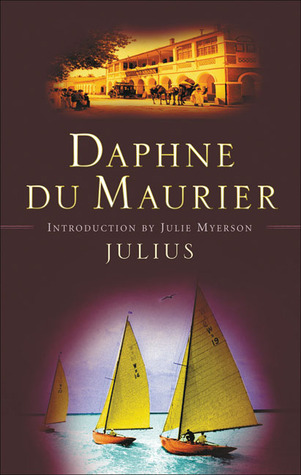
 This book was originally published under the title The Progress of Julius and is the chilling story of an ambitious and ruthless man who goes through life determined to get “something for nothing” and not caring who gets hurt in the process.
The novel begins in 1860 when Julius Levy is born into a family of French peasants who live in a small village on the banks of the Seine. The biggest influences on Julius’s early life are his loud, coarse grandfather and irresponsible mother, but he later grows closer to his father, Paul, a quiet Jewish man. With the outbreak of the Franco-Prussian war the Levys take refuge in Paris until a tragedy results in Julius and his father fleeing for the safety of Paul’s home country, Algeria.
At first, Julius plans to follow a religious life, but he soon finds that buying and selling in the marketplace holds more attraction for him and that he enjoys cheating people out of their money. When life in Algeria starts to bore him, Julius travels to England where he begins to build up a huge business empire. But even as Julius becomes one of the richest and most successful men in the world, he continues to show a complete lack of regard for the people around him, using and manipulating them to get what he wants…until his daughter Gabriel is born.
This was Daphne du Maurier’s third novel, published in 1933 when she was only twenty six years old and it amazes me that she was able to write such a sophisticated, powerful novel at such an early stage of her career. I’ve found that all of du Maurier’s books have some dark and disturbing elements, but this must surely be the darkest and most disturbing of them all – though not in a gothic way like Rebecca or Jamaica Inn. The main reason I found this book so disturbing is because Julius Levy is one of the most horrible, despicable characters I’ve ever come across in literature.
He’s completely heartless, cruel and callous with no redeeming features at all. Early in the story when the Levy family are forced to leave their village for Paris, Julius drowns his beloved cat rather than leave her with a neighbour, because if he can’t have her he doesn’t want anyone else to have her. This is an early indication of what Julius is like and as the story continues there are dozens of other examples of his selfishness and cruelty. And yet, for some reason, he still inspires feelings of love and friendship in other people, which is hard to understand as he rarely, if ever, shows any consideration or compassion for anybody but himself – they always come second to his latest money-making schemes.
As usual, du Maurier’s settings are wonderfully atmospheric, from the small French village of Puteaux to the dusty marketplaces of Algeria to the area of London in which Julius gets his first job in a bakery. The historical setting, beginning with the Franco-Prussian War and the Siege of Paris, is interesting too. This was not one of my favourite du Maurier novels (it was much too uncomfortable and unpleasant for that) but, like all of her books, it kept me gripped and fascinated from the first page to the last.








 She Reads Novels