Irish Short Story Month Year 3: Two from Oscar Wilde

Irish Short Story Month

Irish Short Story Month is an annual event hosted by Mel U of The Reading Life. To participate all you need to do is read at least one Irish short story during the month of March. In 2011 I read Laura Silver Bell by Sheridan Le Fanu. I didn’t manage to take part in 2012, but as I’ve been neglecting my short story-reading in recent months, I decided to join in again this year.
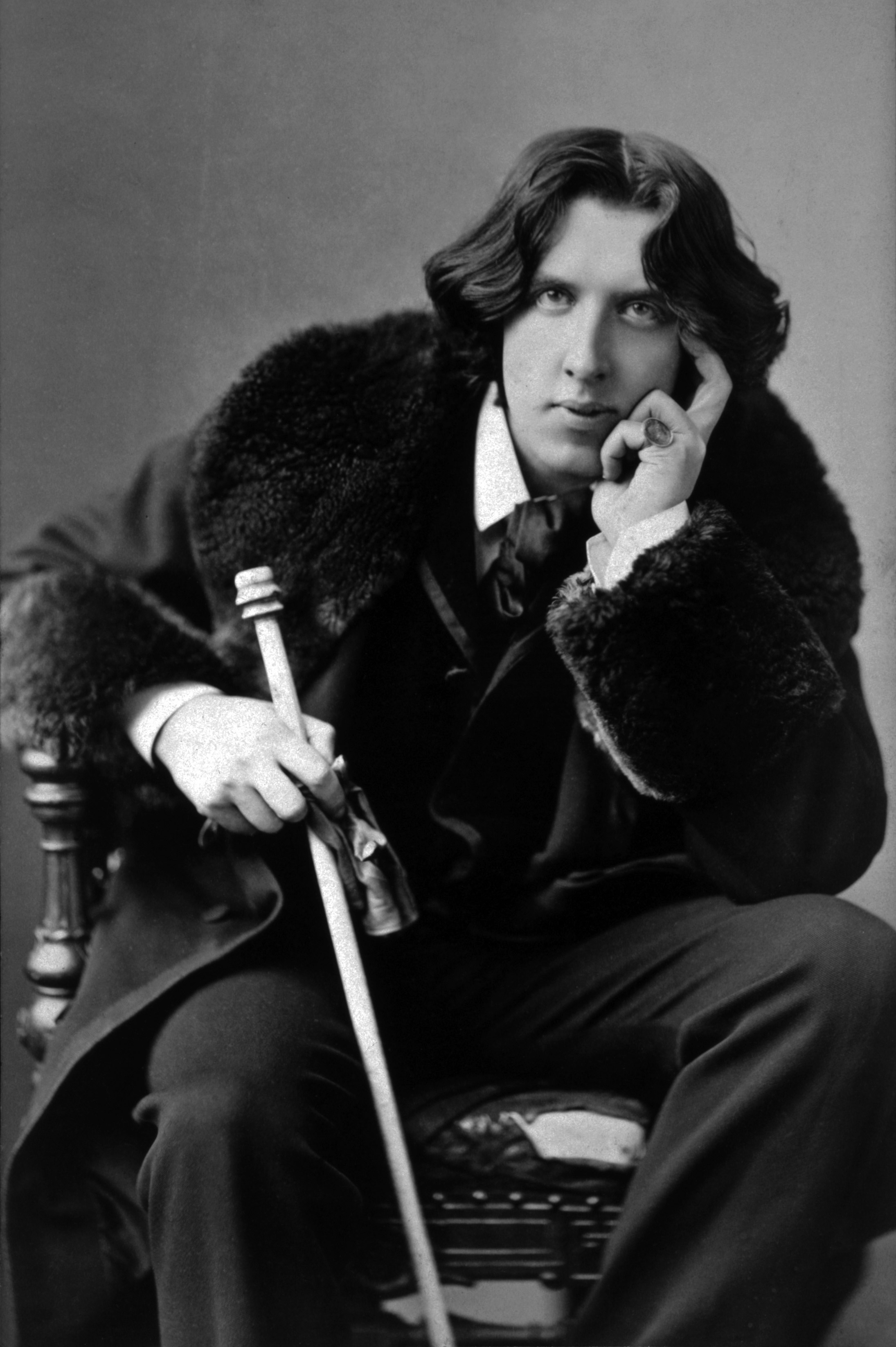
Oscar Wilde, 1854-1900

Oscar Wilde, 1854-1900

I have previously read one of Oscar Wilde’s fairy tale collections for children, A House of Pomegranates, but none of his short fiction for adults. For Irish Short Story Month I’ve read two of his stories – The Model Millionaire and The Sphinx Without a Secret. Both of these are available online and can easily be read in just a few minutes. They also appear in the collection, Lord Arthur Savile’s Crime and Other Stories.

In The Model Millionaire we meet Hughie Erskine, who is in love with Laura Merton, the daughter of a retired Colonel. Hughie is handsome and good-natured but unfortunately has no money and the Colonel will not let him marry Laura until he has ten thousand pounds of his own. One day, Hughie visits his artist friend, Alan Trevor, and finds him painting a portrait of an old beggar dressed in rags, who is standing in the corner of the room.

The beggar himself was standing on a raised platform in a corner of the studio. He was a wizened old man, with a face like wrinkled parchment, and a most piteous expression. Over his shoulders was flung a coarse brown cloak, all tears and tatters; his thick boots were patched and cobbled, and with one hand he leant on a rough stick, while with the other he held out his battered hat for alms.

‘What an amazing model!’ whispered Hughie, as he shook hands with his friend.

‘An amazing model?’ shouted Trevor at the top of his voice; ‘I should think so! Such beggars as he are not to be met with every day. A trouvaille, mon cher; a living Velasquez! My stars! what an etching Rembrandt would have made of him!’

‘Poor old chap!’ said Hughie, ‘how miserable he looks! But I suppose, to you painters, his face is his fortune?’

‘Certainly,’ replied Trevor, ‘you don’t want a beggar to look happy, do you?’

Hughie asks his friend how much he will be paying the beggar for modelling for him and is shocked at how little the amount is compared to the amount Trevor will make from selling the picture. Although Hughie himself is very poor, he feels sorry for the old man and as soon as his friend leaves the room he gives the beggar all the money he has in his pocket. Later that night he discovers that his act of generosity has had a surprising result.

I thought it was very easy to predict what was going to happen in this story, but I enjoyed it and despite it being so short, I still found it satisfying – and very well written, of course.

The other story I read, The Sphinx Without a Secret, is another very short one. The narrator meets his friend, Lord Murchison, in Paris and seeing that something is wrong, asks him what the problem is. Murchison tells him about the beautiful Lady Alroy, whom he had loved and planned to marry.

He took from his pocket a little silver-clasped morocco case, and handed it to me. I opened it. Inside there was the photograph of a woman. She was tall and slight, and strangely picturesque with her large vague eyes and loosened hair. She looked like a clairvoyante, and was wrapped in rich furs.

‘What do you think of that face?’ he said; ‘is it truthful?’

I examined it carefully. It seemed to me the face of some one who had a secret, but whether that secret was good or evil I could not say. Its beauty was a beauty moulded out of many mysteries – the beauty, in face, which is psychological, not plastic – and the faint smile that just played across the lips was far too subtle to be really sweet.

Finding her to be very secretive and surrounded by an atmosphere of mystery, Murchison decided to follow her one day and saw her entering a boarding house where she stayed for a few hours before returning home. When Lady Alroy tried to deny visiting the house, Murchison became convinced that she was hiding something – but what could it be?

Although I didn’t find either of these to be particularly memorable stories, I did enjoy them both as I love Oscar Wilde’s writing style. I liked the ambiguous ending of The Sphinx Without a Secret; despite the suspense that builds up throughout the story it’s not hard to guess what Murchison is going to discover as the title does give it away, but we are still left with something to think about at the end. This story may have been intended as a satire on Victorian sensation fiction, in which everybody had a secret to hide and an ulterior motive for every seemingly innocent action, as well as being a study of a person’s desire to pretend to be something they’re not.

Have you read any of Oscar Wilde’s short stories? Who are your favourite Irish writers?
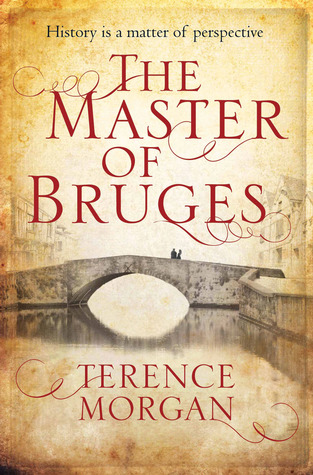
The Master of Bruges by Terence Morgan

The Master of Bruges The Master of Bruges is presented as the fictional memoirs of the 15th century artist, Hans Memling. In December 1464, following the death of his master, the Flemish painter Rogier van der Weyden, Hans travels to Bruges where he works at the Burgundian court, painting portraits of the nobility. As an artist, Memling is naturally a very observant, perceptive person and can offer the reader some insights into both the politics of the period and the lives and personalities of the people he meets in Bruges.

One night two strangers calling themselves ‘Ned and Dick Plant’ come to seek refuge at Memling’s house and Hans finds himself drawn into the drama and intrigues of the Wars of the Roses, the conflict between England’s House of York and House of Lancaster. And when several years later he is invited to England and renews his acquaintance with Ned and Dick, he becomes caught up in one of history’s greatest mysteries: the disappearance of Edward IV’s sons, the Princes in the Tower, who many people believe were murdered by their uncle, Richard III.

Before reading this book I had heard of Hans Memling but was not familiar with his work. The only one of his paintings I knew anything about was his triptych The Last Judgment, which featured a portrait of the banker Tommaso Portinari being weighed in St Michael’s scales, and was captured by the Danzig pirate Pauel Benecke as it was being shipped to Italy. The only reason I was aware of this anecdote was because it formed a minor plot point in Dorothy Dunnett’s House of Niccolo series (specifically, in To Lie with Lions and Caprice and Rondo). Luckily, many of Memling’s paintings can be seen online and I can guarantee that you’ll want to look at them as you read. There are also some short chapters interspersed throughout the novel in which Hans shares with us his views regarding artistic technique, perspective, focus, colours, and some of the tricks artists use to please their sitters, and I enjoyed reading these. As well as being fascinating to read, these chapters are relevant to the story as Memling’s descriptions of his techniques are either directly or indirectly linked to aspects of the plot.

I thought the first part of the novel, which details Hans’ early days as an artist, worked very well but not the second part, after he travels to England. I was interested in learning about Hans and his portraits and I was also interested in the Richard III story – it was the way the two were combined that didn’t work for me. Despite the Wars of the Roses being one of my areas of interest in historical fiction, I think I would have liked this book more if it had continued to tell the story of Memling’s life in Bruges rather than changing focus halfway through to concentrate on the mystery of the Princes in the Tower.

I don’t expect historical novelists to always stick rigidly to the facts, otherwise they would be writing non-fiction rather than fiction, but this particular book stretches credibility too much for me. I appreciated the author’s note at the end of the book, but I wished it had given more information on exactly which aspects of the story were based on fact and which were fictional. As far as I can tell there is no evidence to suggest that Hans Memling ever came to England or had any involvement with the Plantagenets. I also found it hard to believe Morgan’s theories regarding what happened to the two princes (especially a plan of Edward IV’s to have them declared illegitimate), though they were certainly very imaginative ideas. I was happy enough with the characterisation of Richard III, though – he is one of my favourite historical figures and I am definitely of the opinion that he has been unfairly treated by history, so it was good to see him portrayed in a more positive light in this book.

Because of the problems I’ve noted above, I can’t say that I loved The Master of Bruges, but I’m glad I kept reading to the end as there were some big surprises within the final chapters. I think as long as readers are aware that this book does not always give an entirely historically accurate account of the period and that it sometimes takes a more speculative approach to what might possibly have happened, it can be enjoyed as something refreshingly different and fun.

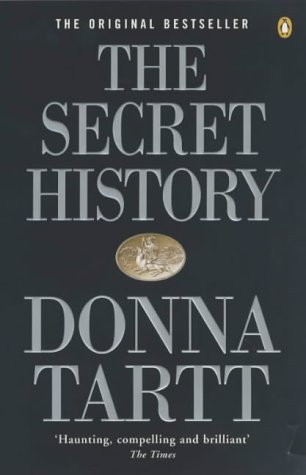
The Secret History by Donna Tartt

The Secret History “I suppose at one time in my life I might have had any number of stories, but now there is no other. This is the only story I will ever be able to tell…”

The Secret History is not exactly a mystery novel, in the usual sense. We are told right at the beginning of the book, in the prologue in fact, that our narrator Richard Papen and his friends have murdered a fellow student, Edmund ‘Bunny’ Corcoran. What we don’t know is why.

To explain the events leading up to the murder, Richard then takes us back to his first day at Hampden College in Vermont where he resolves to join the Classics department, an elite group of five students and their enigmatic professor, Julian Morrow. Despite being warned that Julian is very selective about the students he admits to his class and that taking Classics would leave him isolated from the rest of the college, Richard persists and is accepted into the group. His new friends – Henry, Bunny, Francis, Camilla and her twin brother, Charles – are rich, eccentric and secretive, and as Richard gets to know them better, he learns something shocking about them. But by now he has been drawn into their inner circle and it’s too late to walk away…

The Secret History is divided into two parts and as I read Part 1 and learned more about the build-up to Bunny’s death I found myself completely agreeing with the general opinion that this was a great book. Although we know from the start who is going to be murdered and who will be responsible for his death, the story is still compelling as there are still a lot of secrets to be revealed and a lot of questions to be answered. The story had a timeless feel, which I’m sure was intentional, and I couldn’t work out exactly when it was supposed to be set. I finally decided it must be the late 80s/very early 90s though due to some confusing cultural references for a long time I thought it might be earlier than that. It’s also a wonderfully atmospheric book, a combination of the elegant writing and the insular setting of a small college in a small community. The cold, harsh winter Richard spends alone in Hampden, virtually homeless and trying to stay warm, particularly stays in my mind after finishing the book, although I’m not sure what significance that episode had in the context of the rest of the story.

So, The Secret History is definitely a page-turner and only took me a few days to read, despite the length. Somewhere in Part 2, though, I thought the story started to lose some of its impetus. There was still plenty of suspense as right until the end of the book the reader is kept wondering how things will resolve for Richard, Henry, Francis and the twins, and how they will cope with the consequences of what they did. But I felt that this was dragged out for too long and I quickly got bored with the various excesses of the characters (were there any students in that entire college who didn’t have a drug or alcohol problem? I could accept that some of them might have done, but surely not all of them!) I’m glad to have finally read The Secret History – I was starting to feel that I was the only person in the world who still hadn’t read it – but although I did enjoy it I was not as enamoured with it as so many other people have been. I wonder if maybe I would have liked it more if I’d read it when I was younger and closer to the age of the characters in the story.

One final thing I want to mention is that almost as soon as I started reading The Secret History I started to get the feeling I already knew the story. And then I remembered what it reminded me of – The Secret Diaries by Janice Harrell, a trilogy of young adult novels I read and loved as a teenager. I managed to find my old copy of the final book in the trilogy, Escape, and couldn’t believe the number of similarities with The Secret History, which was published two or three years before Harrell’s books. It was not just the general plot that was the same (a group of students covering up a dark secret, a narrator who is a newcomer and desperate to be accepted by the group, etc.), but some of the finer details as well – the personalities of some of the characters, the consequences of their actions, the weekend trips to a cabin in the woods, even the fact that two of the characters in The Secret History were twins (one male and one female) while in The Secret Diaries we’re constantly being told that Stephen and his girlfriend Tessa look like twins. I can’t find any more information about this online, apart from one or two bloggers who have said they noticed the same thing, but it has made me curious! Has anyone else read both The Secret History and The Secret Diaries?

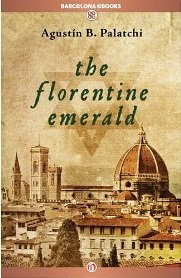
The Florentine Emerald by Agustín Bernaldo Palatchi

The Florentine Emerald The Florentine Emerald is historical fiction set in Florence during the Renaissance. The story begins in 1478 at Cardona Castle in Spain, where Mauricio Coloma is visiting his father, Pedro, who has been chained in a dungeon after being falsely accused of treason. Knowing that he is facing execution, Pedro reveals to Mauricio the truth that until recently converting to Christianity, their ancestors had been Jews. Before he is put to death he also tells his son of a valuable emerald ring hidden under a tile in the floor of their home in Barcelona and advises him to take it to Florence to sell to the Medici, the powerful Florentine family of bankers.

Arriving in Florence with the priceless jewel, Mauricio finds himself in the right place at the right time to thwart an assassination attempt on Lorenzo de’ Medici, the man who rules the Florentine Republic. As a sign of his gratitude, Lorenzo helps Mauricio establish himself in Florence. But then he meets and falls in love with Lorena Ginori, a girl whose parents are planning a more ambitious marriage for her with a man she dislikes. As the years go by, both Lorena and Mauricio have to confront some secrets from their pasts, while around them Florence is thrown into turmoil by the prophecies of the priest Savonarola and the conspiracies of those who want to cause the downfall of both Mauricio and the Medici.

This is an English translation of a Spanish novel by Agustín Bernaldo Palatchi, published by Barcelona eBooks, who if I’ve understood correctly are a spin-off of the Spanish publisher Roca Editorial and partners of Open Road Media, specialising in digital versions of Spanish and English translations. I was pleased to have the opportunity to read the ebook via Netgalley, but as I know not everyone likes or is able to read ebooks I thought it was only fair to point out that I’m not sure if or when The Florentine Emerald might be available in English in any other format.

Something I really enjoyed about this book was learning more about Renaissance-era Florence. In the fifteenth century, Florence was one of the most important centres of European trade and culture, which makes it an ideal setting for historical fiction. There were so many things happening both within Florence itself and in Europe in general during this period that had an effect on Mauricio’s story: outbreaks of plague; the voyages of Christopher Colombus; and the Spanish Inquisition and the threat to the Jews of expulsion from Florence. The first part of the novel is set during roughly the same period as Dorothy Dunnett’s House of Niccolò series which I read recently and so I was already familiar with some of the characters and events that were covered in the book (the papal alum monopoly, the Medici and Strozzi families, the Duke of Urbino and King Ferrante of Naples). This was useful as I would probably have found some of the historical details much more confusing otherwise!

I did find it a bit hard to believe that Mauricio would have been befriended by Lorenzo de’ Medici and given a position at the Medici bank almost as soon as he arrived in Florence and I had to suspend disbelief again as Mauricio immediately began to associate with Leonardo da Vinci, Christopher Columbus and so many other famous people of the period. However, this was only a small part of the story and overall I did enjoy the inclusion of so many real historical figures, especially as there were some I had previously known little or nothing about, including the philosopher Marcilio Ficino and the Dominican friar and preacher, Girolamo Savonarola who plans to reform Florentine society.

I thought the translation was generally good – the writing flowed well and I didn’t have any problems with it, except that it was maybe slightly lacking in emotion and passion. I enjoyed following the adventures of Mauricio and Lorena but something got in the way of me really being able to connect with them emotionally and whether that was due to the translation or not it’s difficult to say without having read the original. I liked the characterisation of Lorenzo de’ Medici, though, and it was interesting to read about the position of power and influence he held in Florence and the much less successful rule of his son and heir, Piero, who followed him. All of this left me wanting to read a good biography of the Medici family or even another fictional account, so any recommendations are welcome!

The Moonspinners by Mary Stewart

The Moonspinners “Sometimes, when you’re deep in the countryside, you meet three girls, walking along the hill tracks in the dusk, spinning. They each have a spindle, and onto these they are spinning their wool, milk-white, like the moonlight. In fact, it is the moonlight, the moon itself…all they have to do is to see that the world gets its hours of darkness, and they do this by spinning the moon down out of the sky.”

With spring still a few weeks away and the weather still cold, damp and miserable, The Moonspinners with its beautifully described Greek island setting was just what I needed!

The story is narrated by Nicola Ferris, who is taking a break from her job at the British Embassy in Athens to spend a few days visiting Crete. She has arranged to meet her cousin, Frances, there but Nicola arrives a day earlier than planned and decides to go exploring on her own. In the mountains above Agios Georgios, the village where they are going to be staying, Nicola stumbles into adventure when she meets a young Englishman, Mark Langley, who has been wounded after witnessing a crime.

Mark is being tended by his Greek friend, Lambis, but his younger brother, Colin, has been kidnapped by the criminal gang and Mark is worried that he might have been murdered. Nicola wants to help but it’s time to go down to the village and meet Frances, so she reluctantly leaves Mark and Lambis in their hiding place. After arriving at her hotel and speaking to the hotel owner and his assistant, Nicola thinks she has discovered who was responsible for Colin’s disappearance, but will she be able to find him before it’s too late?

I love Mary Stewart’s books because they’re fun and easy to read while still being well-written, intelligent novels with exciting plots and atmospheric settings. Her descriptive writing is so impressive in this book; whether she’s describing the colour of the sea, the warmth of the sun, the fishing boats in the bay, the unspoilt countryside or the picturesque sight of windmills with white sails, she always chooses the perfect words and makes everything sound beautiful and idyllic:

“A clump of tamarisk trees stood where the gravel gave way to the flat rock of the foreshore; this, smoothed and fissured by water, burned white in the sun. In every cranny of rock blazed the brilliant pink and crimson sunbursts of ice daisies, and just beside them, the sea moved lazily, silky and dark, its faint bars of light and shadow gently lifting and falling against the hot rock.”

I have never been to Crete but reading the wonderful, evocative way it is depicted in this book made me wish I was there, though as the book was written in the 1960s before the Greek islands became such popular tourist destinations (Nicola and Frances are the only guests at their tiny hotel in Agios Georgios) I’m sure the culture and landscape must have changed a lot since then!

Of the five Mary Stewart novels I have now read, this is one of my favourites so far and might be a good one to start with if you’ve never read any of her books. There’s also a 1964 Disney film version of The Moonspinners with Hayley Mills, though I haven’t seen it and have heard that it’s very different to the book. Has anyone seen it?

The Gabriel Hounds will be the next Mary Stewart book I read – I found it in the library last week and am looking forward to starting it in the next few days.

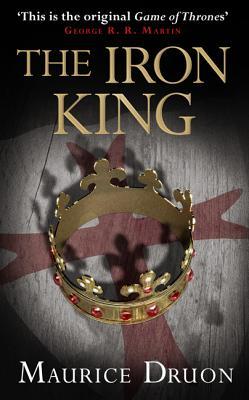
The Iron King by Maurice Druon

The Iron King “This is the original Game of Thrones” it says on the front cover, but anyone picking this book up hoping for an epic fantasy novel is going to be disappointed. The French novelist Maurice Druon may have been George R.R. Martin’s inspiration (I haven’t read Martin’s books so wouldn’t know how strong the influence actually is), but this is definitely not fantasy – it’s an historical fiction novel and an excellent one too. While I think it’s good that Martin’s recommendation is encouraging people to read The Iron King, I do think it was maybe a mistake for the publisher to market the book in this way, as looking through the various reviews on Amazon it seems a lot of people have not got the novel they were expecting and as a consequence The Iron King has ended up with a lower rating than it deserves.

Anyway, now that we’ve established what type of book this is, let me tell you what it’s about! Originally published in the 1950s, this is the first in the seven-volume “Accursed Kings” series and tells the story of a fascinating period of French history. The Iron King of the title is Philip IV of France, who was also known as Philip the Fair. For seven years Philip has been persecuting the Knights Templar who he wishes to destroy because of their power and riches, and he finally succeeds in having their Grand Master, Jacques de Molay, burned at the stake. But before the Grand Master goes to his death, he puts a curse on the King and his descendants – “accursed to the thirteenth generation!”

Things soon start to go badly for Philip and his family when it emerges that his sons’ wives are cheating on them with two young courtiers. Philip’s daughter Isabella, who is in a loveless marriage to King Edward II of England, sees an opportunity to bring their adultery to light, with the assistance of her ambitious and vengeful cousin, Robert of Artois, who is forming a plot of his own to reclaim his lands from his hated Aunt Mahaut. It seems that the Grand Master’s curse has been successful…

As this is a novel first published in 1955 and translated from French, it does have a very different feel in comparison to most of the historical fiction novels that are being written today and this was something I really liked about the book. Unfortunately I don’t have the language skills to be able to read it in its original French, but as far as I could tell, the translator (Humphrey Hare) has done a good job and The Iron King was one of the most entertaining historical fiction novels I’ve read for a while. There were so many interesting things to learn about – the origins of the famous ‘Tour de Nesle affair’; the demise of the Knights Templar; the community of Lombard bankers in Paris – and with a plot involving murder, torture, poisonings, court intrigue, and family feuds, there was always something happening.

Don’t worry if you know nothing about this period of French history – I had absolutely no previous knowledge of Philip the Fair and his family before reading this book but that was not a problem at all because this edition of the book makes the story easy to understand and follow. Everything you need to know regarding the historical background, the politics or the causes of feuds and disputes is clearly explained in the notes at the back of the book and the character list at the front helped me remember who everyone was and how they were related to each other. I am now looking forward to the second Accursed Kings book, The Strangled Queen. I hope the publisher will continue to reissue the rest of the series!

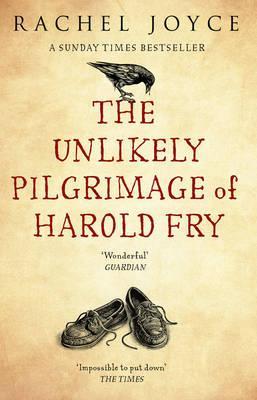
The Unlikely Pilgrimage of Harold Fry by Rachel Joyce

The Unlikely Pilgrimage of Harold Fry When I started reading The Unlikely Pilgrimage of Harold Fry it occurred to me how few contemporary novels I read these days. Most of the books I’ve read so far this year have been historical fiction, classics or ‘older’ books, so it was actually a refreshing change to read something written and set in the 21st century for once!

As the title suggests, this is the story of a man who embarks on an unlikely journey from one end of England to the other. His name is Harold Fry and his pilgrimage begins when he receives a letter from an old friend, Queenie Hennessey, who is writing to say goodbye because she has been diagnosed with terminal cancer. Harold writes a letter in reply but on his way to post it he becomes aware of the complete inadequacy of his words. And so Harold just keeps on walking…all the way to the hospice in Berwick-upon-Tweed, over five hundred miles away from his home in Devon.

Because it was such a spur of the moment decision, Harold is badly prepared for the walk. He’s wearing the wrong clothes and shoes, he doesn’t have a map and he has left his phone at home. With blistered feet and only a vague idea of the route he needs to take, Harold’s progress is slow but still he continues to put one foot in front of the other, convinced that his pilgrimage will help keep Queenie alive.

As Harold walks, he reflects on the things that have happened in his life, the choices – both good and bad – that he has made, and his relationships with his friends and family. In particular he thinks about what has gone wrong in his marriage to his wife, Maureen, and why he has always found it so difficult to connect with their son, David.

The plot may seem simple but there’s so much emotion and poignancy packed into every page. There’s a sense of mystery too, with lots of questions to be answered. We don’t know at first what exactly happened between Harold and Queenie. What did she do to help him all those years ago? Did they have a romantic relationship or were they just friends? We also don’t know what the problem is with David and why Harold has hardly spoken to him for years. And what was it that caused the rift in Harold and Maureen’s marriage? There are clues to all of these mysteries scattered throughout the story and we learn a little bit more in each chapter, with the truth slowly unfolding as Harold progresses on his journey.

As well as learning about Harold we also spend some time with Maureen, left at home on her own, and it was good to have some of the story told from a different perspective. It was interesting to see how Maureen reacted to her husband’s decision to walk to Berwick and how she tried to come to terms with it, torn between worry, frustration and an understanding that this was something Harold felt he had to do.

During his journey, Harold meets and talks to a variety of people from all walks of life – including a girl who makes him a burger, a Slovakian woman who gives him a room for the night, an American oncologist who explains cancer to him – and most of these are very supportive when they hear about Harold’s mission. Not all of them really understand what he is trying to do, but there’s always the feeling that their lives have been altered in some way by their encounter with Harold. Later his walk starts to attract publicity and Harold finds that he has become a celebrity. He is joined en route by a number of other people, some who have good intentions but others who are walking for the wrong reasons. When the other walkers began to join Harold it felt as if the original purpose of the pilgrimage had been lost, along with the simply beauty of Harold’s walk, and around this point in the book I started to lose interest. But I kept reading because I cared about Harold and Maureen and wanted to know how things would resolve for each of them. And I was rewarded with some wonderful chapters at the end of the book, filled with revelations about Harold, Maureen, Queenie and David.

I didn’t love this book as much as so many other people seem to have done, but I did still enjoy getting to know Harold Fry!

I received a copy of this book from the publisher via Netgalley