A Farewell to Arms by Ernest Hemingway

I’ve never read anything by Ernest Hemingway before, partly because he’s one of those classic authors I’ve always felt intimidated by, but when I was offered a review copy of this beautiful new hardback edition of A Farewell to Arms (with a cover image replicating the original 1929 cover and lots of additional material) it seemed a perfect opportunity to give one of his books a try.

A Farewell to Arms is narrated by Frederic Henry, an American ambulance driver who is serving as a Lieutenant (or ‘Tenente’) in the Italian army during the Italian Campaign of World War I. Early in the story he meets a British nurse, Catherine Barkley. When Henry is injured by a mortar shell he has to spend some time in hospital and during this period his relationship with Catherine develops. What will happen when it’s time for him to return to the front? Part love story, part war story, this novel is based on Ernest Hemingway’s own experiences in the Italian ambulance corps where, like Henry, he was injured and fell in love with one of the nurses at the hospital. The fact that the story is semi-autobiographical gives it a realistic, unsentimental feel.

Hemingway’s writing style is very simple and direct, he gets straight to the point and avoids flowery language and long, detailed descriptions (though he still manages to choose just the right words to evoke the settings he is writing about). You might think that such plain, simple prose would be easy to read but for me, the opposite was true; it was distracting and it took me a long time to get used to it. Some passages are written in an almost stream-of-consciousness style, which is something I often struggle with, and there are also lots of very long sentences consisting of a string of short clauses all joined together by the word ‘and’. His writing is very distinctive and you’ll either like it or you won’t.

Hemingway rarely tells us anything that is not completely essential to the plot and so I finished the book feeling that I never really got to know either Henry or Catherine – neither of them are described in any great detail, we are only given very basic information about their backgrounds, and we aren’t even told the narrator’s name until several chapters into the book. Instead it is left to us to read between the lines, work things out for ourselves and use our imagination, and I think it’s intentional that we are told so little about the lives of Catherine and Henry before the war. However, the fact that the characters were not fully fleshed out meant that Catherine in particular didn’t feel like a real three-dimensional person; I liked her, but seen through Henry’s eyes she was very sweet and submissive, and it would have been nice to have had more insight into her personality.

Frederic Henry’s narrative style is detached and factual, almost as if things are happening at a distance and as if he sometimes feels very disconnected from the events going on around him. This works though, because it helps to portray the futility and harsh reality of war, and it reflects the way Henry feels; he is a person who has seen so many terrible things they no longer have such an emotional effect on him. The problem with the combination of terse writing style and detached narrative voice is that it made it hard for me to form any kind of emotional attachment to the characters, but the story was still quite poignant and moving in places, especially the final chapter.

Apparently Hemingway wrote the ending of the book thirty-nine times before he was satisfied with it. This new edition of the book includes an appendix with the text of all thirty-nine different endings. I read some of them, though not all (I think this type of supplementary material might be of more interest to someone who is studying Hemingway or considers themselves a fan of his work rather than to a first-time reader like myself) and although I did like some of the alternate endings, in my opinion the one he finally settled on was probably the right choice. I had tears in my eyes at the end and I’ve always thought that if an author can make me cry he or she must have done something right!

I’m not sure if I’ll want to read more Hemingway novels in the future but I’m glad I’ve had the chance to try this one and have now had some experience of an author I had heard so much about.

Thanks to William Heinemann for the review copy of A Farewell to Arms
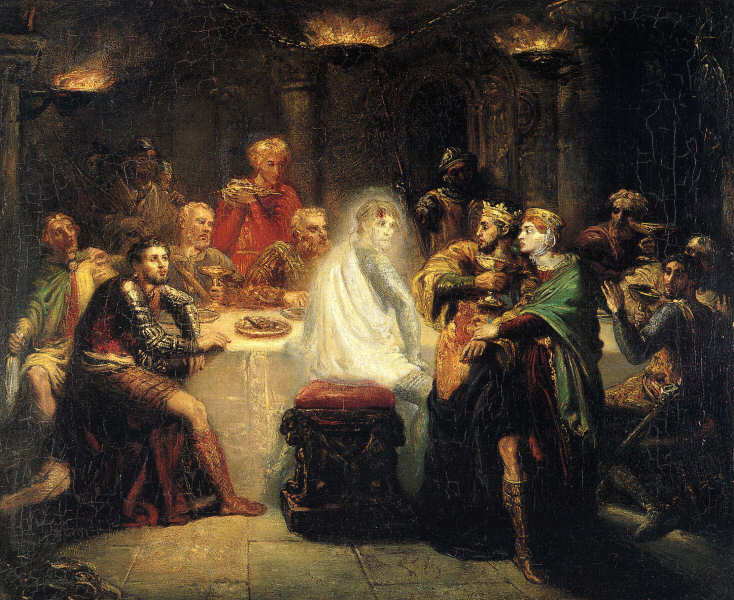
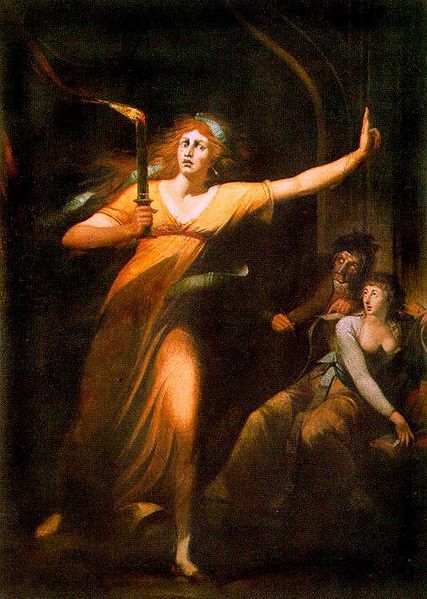
Double, Double, Toil and Trouble!

Earlier this year I re-read Macbeth as part of a Shakespeare reading challenge, but never got round to actually posting about it. And so, in honour of Halloween I decided to share ten of my favourite quotes from the play. Enjoy!

***

“Tis safer to be that which we destroy, Than by destruction dwell in doubtful joy”

***


“I have no spur
To prick the sides of my intent, but only
Vaulting ambition, which o’erleaps itself
And falls on the other.”

***

“Stars, hide your fires; Let not light see my black and deep desires.”

***

“Tomorrow, and tomorrow, and tomorrow
Creeps in this petty pace from day to day
To the last syllable of recorded time;
And all our yesterdays have lighted fools
The way to dusty death. Out, out, brief candle!
Life’s but a walking shadow, a poor player
That struts and frets his hour upon the stage,
And then is heard no more. It is a tale
Told by an idiot, full of sound and fury,
Signifying nothing.”

***

“Give sorrow words; the grief that does not speak whispers the o’er-fraught heart, and bids it break.”

***


“Come, you spirits
That tend on mortal thoughts! Unsex me here,
And fill me from the crown to the toe top full
Of direst cruelty; make thick my blood,
Stop up the access and passage to remorse,
That no compunctious visitings of nature
Shake my fell purpose, nor keep peace between
The effect and it!”

***

“By the pricking of my thumbs, Something wicked this way comes.”

***

“Away, and mock the time with fairest show:
False face must hide what the false heart doth know.”

***

“Come what come may, time and the hour run through the roughest day.”

***

“Double, double, toil and trouble;
Fire burn and cauldron bubble!”

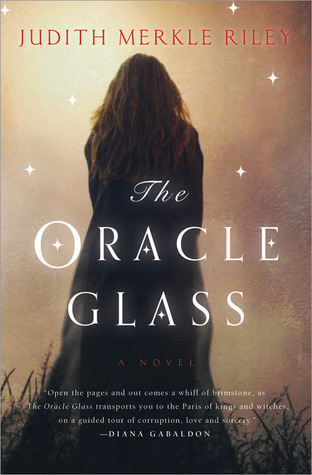
The Oracle Glass by Judith Merkle Riley

Set in Paris during the reign of Louis XIV, The Oracle Glass combines historical fiction with the supernatural to tell the story of Genevieve Pasquier and her involvement in one of the darkest episodes in French history, the Affair of the Poisons.

When her father and grandmother die under suspicious circumstances, fifteen-year-old Genevieve runs away from home and is rescued by the notorious witch, La Voisin. From an early age Genevieve has had the ability to read people’s fortunes by looking into water, and with La Voisin’s help she transforms herself into the mysterious Marquise de Morville, a fortune-teller who claims to be one hundred and fifty years old. Genevieve plans to use her powers to achieve two goals – to make the handsome Andre Lamotte fall in love with her, and to take revenge on the people who have wronged her in the past. But as she becomes more involved in the intrigues of the Sun King’s court, she begins to learn that she has stumbled into a dangerous world of magic and murder and that La Voisin, the Shadow Queen, is at the centre of a circle of witches, poisoners and abortionists.

The Oracle Glass was a wonderful, magical read. After a slow start, I soon began to look forward to picking up the book and escaping for a while into Judith Merkle Riley’s recreation of 17th century Paris. Not knowing anything about this period of history, I was surprised to discover that many of the characters I’d assumed were fictional were actually real people: Madame de Montespan, for example, the King’s mistress who frequently visits the Marquise de Morville to have her fortune told, La Reynie, chief of the Paris police, and the sorceress La Voisin herself. A lot of the events described in the story, including the eventual fates of some of the characters, were also true and in a way, I’m glad I didn’t know anything about these people as it meant I never had any idea what was going to happen next.

Genevieve, or the Marquise de Morville, is a wonderful character with a warm and engaging narrative voice and through her eyes we are shown how difficult life could be for a young single woman trying to make an independent living for herself in the 17th century. What makes her such an interesting character is that she is so flawed; she makes mistakes, does things that are wrong or stupid, and although she is intelligent she can also be very naïve.

There’s no real attempt to make the dialogue sound authentic – and Genevieve’s narrative voice sometimes feels very modern – but although this often irritates me in other books, I think there’s a certain type of historical fiction where it doesn’t matter too much and this is an example of that type: a book designed to be fun and entertaining, with plenty of humour to offset the darker themes. And yet the depiction of Paris in the 1600s does still feel vivid and real; I loved the descriptions of carriage rides through the snow-covered streets and the court of Louis XIV, the Sun King, is also very well portrayed. My only criticism is that at over five hundred pages I really don’t think the book needed to be quite so long and there were a few sections, especially in the middle, that seemed to drag.

Judith Merkle Riley is an author I’ve heard about but have never had the opportunity to read until now – I believe some of her books have been out of print for a long time but I’m glad to have finally had the chance to read The Oracle Glass and would certainly be interested in reading her other novels after enjoying this one so much!

I received a copy of The Oracle Glass through Netgalley courtesy of Sourcebooks

The Seance by John Harwood

When Constance Langton’s little sister Alma dies, she takes her grieving mother to a séance. She has her doubts as to whether it’s really possible to summon spirits, but she hopes it might offer her mother some comfort. Unfortunately though, Constance’s decision has tragic consequences that she couldn’t have foreseen. Alone in the world, Constance is contacted by solicitor John Montague and learns of an inheritance connecting her with Wraxford Hall, a crumbling manor house surrounded by gloomy woods. The dark secrets of the Hall’s sinister past are revealed to the reader through the narratives of Constance, Montague and another young woman, Eleanor Unwin, whose fate also becomes linked with the house. It’s not surprising that Constance is advised to “sell the Hall unseen; burn it to the ground and plough the earth with salt if you will; but never live there…”

The Séance is a wonderfully atmospheric gothic mystery set in Victorian England. The book was published in 2008 but has everything you’d expect to find in a Victorian ghost story or sensation novel: a derelict mansion said to be haunted, bad weather (complete with thick fog, heavy rain, howling winds and dramatic thunderstorms), wills and inheritances, dangerous scientific experiments, mesmerism, spiritualism, mysterious disappearances, ghostly apparitions and family secrets. There’s even a haunted suit of armour! The story is told in the form of the various characters’ narratives, letters and journal entries – a style reminiscent of The Woman in White by Wilkie Collins, for example. I would be very surprised if Collins is not one of John Harwood’s influences, but there are shades of other Victorian gothic/sensation fiction writers too. Harwood’s writing is not as flowery and descriptive as a typical Victorian author but at the same time he perfectly captures the mood and tone of a piece of 19th century writing.

The plot does start to become very complicated – much more complicated than it needed to be, in my opinion – but it does keep the reader guessing and wondering what the next plot twist will be. The villain was very easy to identify though! The changing viewpoints were handled well, and the author chose the right points to end one character’s narrative and move onto the next – although there was such a long gap between Constance’s two narratives that by the time I came to the second one I’d almost forgotten about her. This made Constance feel slightly disconnected from the other two narrators and she didn’t seem such a vital part of the novel as Montague and Eleanor. I also thought the voices of the different narrators could have been more distinctive (this is an area where Wilkie Collins really excels but where so many other authors seem to have difficulties). But although the characters could have been stronger, the real heart of the novel is the house, Wraxford Hall, which is almost a character in itself.

About thirty yards from the house I stumbled over the remnant of a low stone wall, where I settled myself with my tablet and pencils. The air was still and cold; somewhere in the distance a fox barked, but no answering cry arose from the blackness opposite. Minute by minute, the clearing brightened; the Hall seemed to be inching its way upward out of darkness. As the moon rose higher, the proportions of the house appeared to alter until it loomed above me like a precipice. I reached down for my tablet and, as I straightened, saw a light spring up in the window immediately above the main entrance

The Séance is the second book I’ve read by John Harwood; the first was The Ghost Writer, which I read almost exactly a year ago. Of the two, I enjoyed The Ghost Writer more (I loved the ghost stories in that one) but both are very creepy, very gothic and perfect books to read at this time of year.

Scales of Gold by Dorothy Dunnett

This is the fourth book in the House of Niccolò series and my favourite so far. As always, I have done my best to avoid any major spoilers in this post but would still advise newcomers to the series to start at the beginning with Niccolò Rising and work through the other novels in order.

This book begins as Nicholas vander Poele returns to Venice from Cyprus following the events of Race of Scorpions. Facing financial problems and threatened by powerful new business rivals, he soons departs for Africa in search of a new source of gold. With him on the journey are his kinsman Diniz Vasquez, Bel of Cuthilgurdy (Diniz’s mother’s companion), the priest Godscalc who hopes to bring Christianity to the African tribes and reach the fabled lands of Prester John in distant Ethiopia, and Gelis van Borselen whom we first met as a thirteen-year-old girl in Niccolò Rising and who now blames Nicholas for her sister Katelina’s fate.

With the help and guidance of his friend Loppe, a former slave, Nicholas and the others sail down the African coast, a voyage fraught with danger as they find themselves racing against another rival ship. More trouble awaits them when they arrive in Africa – it’s important for those who know the location of the source of gold to keep it a secret and strangers from Europe are treated with suspicion and distrust. And that’s really all I want to say about the plot. Like all of the other novels in this series, Scales of Gold is very complex and intricately plotted, so I won’t go into any more detail but will leave you to enjoy Niccolò’s adventures for yourself.

One of the things I love about the House of Niccolò (and Dunnett’s other series, The Lymond Chronicles) is the range of unusual and exotic locations the books take us to. The period the Niccolò books cover (the second half of the 15th century) is a period I’m very familiar with in terms of English history, having read quite a lot of books, both fiction and non-fiction, about the Wars of the Roses and the reigns of Henry VI and Edward IV. However, I have to admit that I know almost nothing about what was going on in the rest of the world during the same period and it’s been a delight to be able to fill in some of the gaps in my knowledge – some of the places we’ve visited so far in this series include Bruges, Trebizond and Cyprus, all of which have been wonderful to read about. Although parts of Scales of Gold are set in Europe (the first few chapters take us from Venice and the glassworks of Murano to Portugal, Spain and Madeira) a long section of the story takes place in Africa. Historical fiction novels set in Africa are not very common and I loved learning about all the places Nicholas and his companions passed through on their journey, especially when they arrived in Timbuktu, yet another location I knew absolutely nothing about! I had no idea Timbuktu was once such an important centre of trade, culture and learning.

It’s also good to know that as far as the historical detail is concerned, I can trust that it will all be as accurate as Dorothy Dunnett could make it. In each book Nicholas meets a host of real historical figures and becomes embroiled in a series of real historical events, although his actions are never allowed to directly change the course of history. Scales of Gold, like all good historical fiction novels should, leaves me wanting to do some extra research of my own into some of the fascinating topics covered in the book.

Finally, any discussion of this book can’t be complete without mentioning the shocking cliffhanger ending! I was kicking myself because earlier in the story I had suspected something of that sort might happen but then I decided I had misjudged the character concerned and changed my mind – and so I was completely stunned by the revelations at the end, just as Dunnett had intended us to be. Outwitted yet again! Looking through some other reviews of this book, it seems people either love the ending or feel cheated by it. Personally I fall into the first group: I love it when an author surprises me, making me believe first one thing and then another, especially if the clues were there from the beginning. Anyway, I’m glad I already have a copy of The Unicorn Hunt at hand so I don’t have to wait too long to find out what happens next and how Nicholas will deal with what he has learned!

Classics Challenge October Prompt: Chapter Musings

This year I have been taking part in a Classics Challenge hosted by Katherine of November’s Autumn. Every month Katherine posts a prompt to help us discuss the classic novel we are currently reading. The prompt for October is:

Chapter Musings

Jot down some notes about the chapter you’ve just read or one that struck you the most. It can be as simple as a few words you learned, some quotes, a summary, or your thoughts and impressions.

The classic I’m reading at the moment is A Farewell to Arms by Ernest Hemingway, the story of an American ambulance driver on the Italian front during World War I. This is the first Hemingway book I’ve read and I wasn’t sure what to expect, as he seems to be one of those authors people either love or hate. I’m only seven (very short) chapters into the book so it’s really too early to tell, but so far I’m finding it a lot more readable than I had thought it would be.

Chapter 1, which is the chapter I’ve chosen to focus on for the purposes of this post, is less than two pages long yet it has a lot of significance as it sets the scene and the tone of the novel. We learn almost nothing about our narrator in these two pages, not even his name, and although it’s obvious that he is involved with the army in some way, he seems very detached from what is going on around him.

“Troops went by the house and down the road and the dust they raised powdered the leaves of the trees. The trunks of the trees too were dusty and the leaves fell early that year and we saw the troops marching along the road and the dust rising and leaves, stirred by the breeze, falling and the soldiers marching and afterward the road bare and white except for the leaves.”

I’ve included the quote above because I think it’s a good example of Hemingway’s writing style. He uses simple, direct language and seems to like stringing together very long sentences using the word ‘and’! He also manages to paint vivid pictures of his settings while avoiding flowery descriptions. I’m not sure yet whether I like his writing or not, but I’ll see how I feel after reading a whole book written in this style.

Chapter 1 ends with the following two sentences:

“At the start of the winter came the permanent rain and with the rain came the cholera. But it was checked and in the end only seven thousand died of it in the army.”

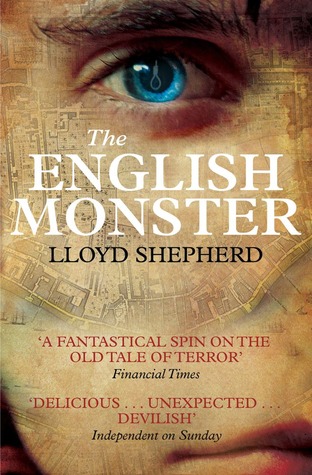
The English Monster by Lloyd Shepherd

Well, this was one of the most unusual books I’ve read for a long time! It got off to a great start and after reading the first few chapters (in which we witness six pirates being hanged at London’s Execution Dock, go on a midnight journey through the dark streets of 19th century Wapping, and meet a sea captain at an inn in Plymouth) I was beginning to feel very excited about this book. It seemed destined to become one of my favourites of the year, although by the time I finished it, I did feel a little bit less enthusiastic about it.

The novel consists of two alternating stories set in different time periods, but while they may appear to be entirely separate at first, there is in fact a link between the two of them. The way in which they are linked is not immediately obvious so I’ll leave you to discover the connection for yourself.

The first story, set in the Regency period, is based on a true crime which involved the killing of members of two different families in the Wapping area of London in December 1811. These deaths became known as the Ratcliffe Highway Murders. There was no official police force in England at that time and the way the case was handled was amateurish and incompetent. The English Monster introduces us to John Harriott, the magistrate of the Thames River Police Office, and Waterman-Constable Charles Horton as they attempt to investigate the murders.

The second thread of the novel, beginning in October 1564, is a good old fashioned swashbuckling adventure story following Billy Ablass, a young man who decides to go to sea to make his fortune and finds himself aboard a ship owned by Queen Elizabeth I, ready to embark on England’s first official slaving voyage. Or at least, I thought I was reading a good old fashioned adventure story – until I came to a very surprising and dramatic twist that made it obvious this was definitely not going to be a conventional historical fiction novel or a conventional murder mystery either. And of course I’m not going to tell you what the twist is – you’ll have to read the book yourself to find out.

When a novel has multiple timelines, I usually find I’m drawn to one period more than the other but with this book I think I can honestly say I enjoyed them both equally. The Ratcliffe Highway story was fascinating, especially the insights we are given into how useless and inadequate the investigation was. I found Charles Horton a very interesting character: a ‘detective’ working in an era when modern methods of detection were almost non-existent. I believe Horton and the magistrate John Harriott are going to reappear in Lloyd Shepherd’s next book and I’m looking forward to meeting them again.

The Billy Ablass sections of the novel were very compelling too, although some of the scenes that dealt with the cruelty and brutality of the slave trade were uncomfortable to read, as you might expect. Unfortunately though, slavery is part of our history and we can’t ignore the fact that it happened. A lot of real historical figures make an appearance throughout these chapters, such as Francis Drake (who is usually thought of as an Elizabethan hero but was also involved in the slave trade), the Welsh pirate Henry Morgan, the notoriously violent buccaneer L’Ollonais, and John Hawkyns, captain of England’s first slave ship. At the end of the book there’s an interesting note from the author in which, among other things, he explains how much of his portrayal of these characters is based on fact and how much is purely fiction.

As a first novel, I thought The English Monster was very impressive. I’m not sure I wouldn’t have preferred the straightforward historical fiction novel the book had initially seemed to be and that’s why some of my enthusiasm faded slightly as I got further into the story, but there’s no doubt Lloyd Shepherd has come up with something very different and very imaginative here. I’m already looking forward to the sequel, The Poisoned Island.

Thanks to Simon & Schuster for sending me a review copy of this book