A Classics Challenge – February: Joe Gargery

This year I am taking part in a Classics Challenge hosted by Katherine of November’s Autumn. The goal is to read seven classics in 2012 and every month, Katherine will be posting a prompt to help us discuss the book we are reading.

The novel I’m currently reading for the challenge is Great Expectations by Charles Dickens and this month Katherine is asking us to answer some questions about a character from the book we are reading. As you would expect from any Dickens novel there are plenty of memorable characters in Great Expectations to choose from – Miss Havisham, Pip, Estella, Mr Jaggers, Abel Magwitch and many others – but the character I’ve decided to write about is one of my favourites, Joe Gargery.

Level 1
What phrases has the author used to introduce this character? What are your first impressions of them? Find a portrait or photograph that closely embodies how you imagine them.

Joe is the brother-in-law of the novel’s narrator, Pip, and one of the biggest influences on his early life. Joe and his wife (Pip’s sister, referred to throughout the novel as Mrs Joe Gargery) have brought Pip up since he was orphaned as a child. Mrs Joe is a hard, overbearing woman who is often cruel to Pip, but Joe is a kind and loving father figure.

Here is our first introduction to Joe, as seen through Pip’s eyes:

Joe was a fair man, with curls of flaxen hair on each side of his smooth face, and with eyes of such a very undecided blue that they seemed to have somehow got mixed with their own whites. He was a mild, good-natured, sweet-tempered, easy-going, foolish, dear fellow – a sort of Hercules in strength, and also in weakness.

Level 2
How has the character changed? Has your opinion of them altered? Are there aspects of their character you aspire to? or hope never to be? What are their strengths and faults? Do you find them believable? If not, how could they have been molded so? Would you want to meet them?

I haven’t finished the book yet but based on what I’ve read so far, Joe doesn’t really change over the course of the book and my opinion of him hasn’t altered. The thing that does change is the way Pip views him. After Pip meets Miss Havisham and Estella he starts to feel ashamed of Joe because of his lack of education and refinement. Joe doesn’t have much interest in money, property or any of the other things that are so important to most of the other characters in the novel – he seems happy with his simple way of life and doesn’t have any ‘great expectations’, unlike Pip.

Who are your favourite characters from Great Expectations? What do you think of Joe Gargery?
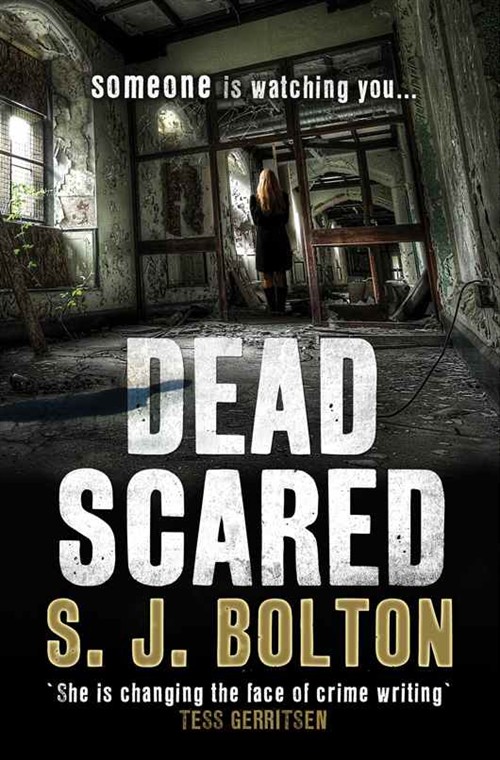
Two from S.J. Bolton: Now You See Me and Dead Scared

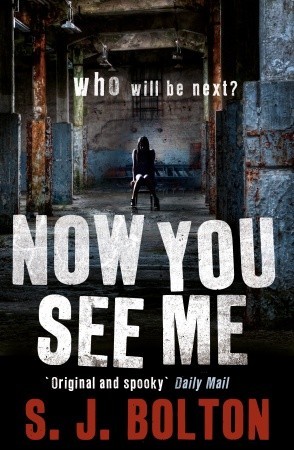
I don’t read a lot of contemporary crime fiction, but one author whose work I’ve been enjoying recently is S.J. Bolton. Last year I read Sacrifice and Awakening and loved both of them. But while those two books had atmospheric settings and a gothic feel (both things which appeal to me in a book) Now You See Me sounded like a more conventional crime novel and I wasn’t sure how I would feel about it. I had been putting off reading it for a while but finally picked it up a couple of weeks ago to read in preparation for reading the sequel, Dead Scared. I’ve decided to combine my thoughts on Now You See Me and Dead Scared into one post as I read them so close together.

Now You See Me introduces us to DC Lacey Flint, a young police detective based in London. After interviewing a witness one evening, Lacey returns to her car to find a dying woman slumped across it. The woman has been stabbed but there’s no sign of her attacker. As more murders take place across the city it starts to appear that they are the work of a serial killer copying the crimes of Jack the Ripper – who happens to be Lacey’s favourite historical figure. Lacey uses her knowledge of the Ripper to guess the killer’s next moves, but it soon becomes obvious that there’s a connection between the murders and Lacey herself, and she’s forced to confront some secrets from her past that she would prefer to keep hidden.

I needn’t have worried that I wouldn’t like this book because I enjoyed it almost as much as the others. What I loved most about Now You See Me was the character of Lacey Flint. As the story’s narrator we’re relying on her to give us all the facts but we quickly discover that there are a lot of things she’s not telling us. I liked Lacey but she’s very flawed and secretive, and the truth about her past is only revealed very slowly as the story progresses. Towards the end of the book, the plot takes a lot of unexpected twists and turns and I loved the fact that S.J. Bolton managed to surprise me after I thought I’d figured everything out!

In Dead Scared we join Lacey again as she goes undercover at Cambridge University to investigate an unusually high number of suicides among the students, most of them attractive young women. Many of these students had reported having problems sleeping and waking from nightmares feeling that someone had been in their room. Posing as a depressed, vulnerable student, Lacey tries to find out what’s going on, but could she be putting her own life at risk?

The only person at Cambridge who knows Lacey’s true identity is Evi Oliver, a psychiatrist with an interesting past of her own. Although most of the book is again narrated by Lacey, there are also some chapters written in the third person from Evi’s perspective. Apparently Evi first appeared in Blood Harvest, the only book by Bolton that I haven’t read yet, and I felt there were a lot of things I didn’t understand about her background – I will have to read Blood Harvest soon!

Now that we’ve had the chance to get to know Lacey better she’s much more open with us and I felt her character had developed a lot since the first book. It would probably be best to read Now You See Me first as it will help you understand Lacey and the way she interacts with the other characters, but this book does stand alone quite well so if you do find yourself reading this one first it shouldn’t spoil things too much.

Both novels also explore Lacey’s relationship with one of her male colleagues, DI Mark Joesbury. It’s obvious almost from their first scene together that they have feelings for each other but neither wants to admit it to the other. There’s a real chemistry between the two of them and this adds another interesting angle to the story.

Like S.J. Bolton’s other novels, Now You See Me and Dead Scared are quick and exciting reads due to the combination of fast-paced plot, short chapters and cliffhanger chapter endings. Bolton is great at creating a dark, menacing atmosphere and building the tension as her characters find themselves becoming increasingly isolated and in danger. These books are not for the faint hearted as the descriptions of the murders and suicides are quite graphic, but if you enjoy reading this type of crime novel I can recommend either or both of these.

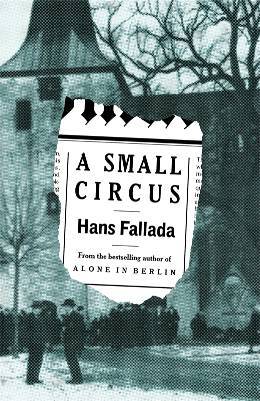
A Small Circus by Hans Fallada

Of all the books I read last year, my favourite was Hans Fallada’s Alone in Berlin (US title Every Man Dies Alone), the story of a German couple who decide to resist the Nazi regime after their son is killed fighting in the war. It was such an exciting, moving and powerful book, and when I saw that Penguin Classics were publishing a new translation of another of Fallada’s novels, A Small Circus, I couldn’t wait to read it.

A Small Circus is set in and around Altholm, a fictional German town, in 1929. Within the town there are lots of different groups and factions who are all in conflict with each other, including the mayor, various political parties, farmers, journalists and the police. None of these opposing groups are able to cooperate and work together. The novel describes the events leading up to and following a demonstration by the protesting farmers which ends in violence, causing things to quickly spiral out of control.

I have to admit, based on the synopsis alone this was not the kind of book I would normally have chosen to read but I decided to give it a chance anyway, remembering how much I had loved Alone in Berlin. And I really wanted to love A Small Circus too, but I have to be honest and say that, for me, this book was a big disappointment. I found the plot confusing and difficult to follow, partly because of my lack of knowledge of early 20th century Germany and the politics involved, but also because so much of the story was told through dialogue. Almost two thirds of the novel is written in the form of dialogue (according to the Foreword) and it was just too much for me.

I also disliked the translation style. Obviously I haven’t read the original German edition of this book from 1931 so I don’t know what Fallada’s actual writing was like, but this translation feels too modern and full of words and phrases that I wouldn’t have thought would have been used at the time. I’m sure there will be a lot of other readers who will love this lively, slang-filled style, but it didn’t have any appeal for me personally. Alone in Berlin was translated by the same person, Michael Hofmann, but for some reason the language in that book didn’t bother me at all, maybe because I was so gripped by the story.

A bigger problem for me was that there wasn’t a single character in the book that I liked. I can see that I probably wasn’t intended to like them, and this was maybe the whole point of the story (to show the effects of hatred, violence and corruption on a small town and how this was being replicated across Germany, opening the way for the Nazis), but it didn’t make it much fun to read. It’s really important for me to have at least one or two characters that I can enjoy reading about or connect with in some way, but without exception I found everyone in A Small Circus greedy and selfish, with few or no redeeming qualities. And not only were there no heroes to side with, there were no great villains that I could love to hate either – just a lot of very unpleasant people.

I want to finish this very negative post by pointing out that although I didn’t enjoy it very much I didn’t actually think this was a bad book. For the right type of reader, A Small Circus would probably be a fascinating read and the other reviews I’ve seen have been mostly very positive. Unfortunately I was obviously not the right type of reader for this book, though I think I would still be prepared to try more of Fallada’s novels in the future.

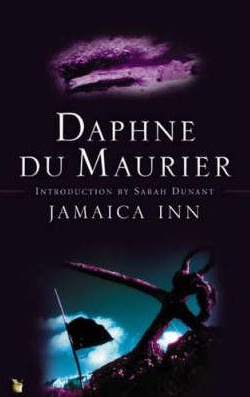
Jamaica Inn by Daphne du Maurier (re-read)

After her mother’s death, Mary Yellan goes to live with her Aunt Patience and Uncle Joss at their inn on Bodmin Moor in Cornwall. But during the coach journey to her new home, Mary hears some disturbing things about Jamaica Inn and its landlord. Soon Mary makes her own shocking discoveries about Joss Merlyn’s activities and finds herself drawn into his villainous schemes while trying to protect her frightened, nervous Aunt Patience. And when Mary is befriended by two very different men – one of them her uncle’s horse thief brother, Jem Merlyn, and the other Francis Davey, the albino vicar of Altarnun – she must decide which, if either, she can trust.

This was actually a re-read for me, although it’s been so long since I first read it that all the details of the plot had completely faded from my mind. What I did remember was being disappointed. When I read it for the first time it was immediately after finishing Rebecca (which I loved – and which is still one of my favourite books ever) and Jamaica Inn just wasn’t as good. This was more than ten years ago though, so I recently decided to give it a second chance. And I did enjoy the book much more this time than I did the first time, maybe because now that I’ve read so many of du Maurier’s other novels it meant I could consider Jamaica Inn in the context of a wider body of work rather than solely in comparison with Rebecca.

Like many of du Maurier’s other books, this one is dark, gothic and atmospheric. Published in 1936 but set in the early 1800s, it has a lot of the traditional elements you would expect to find in a gothic novel (stormy weather, smugglers, locked rooms, shipwrecks, desolate moors, a remote, lonely inn). There are also some memorable characters – Mary herself is an intelligent and courageous heroine, and I know I said that I couldn’t remember much from my previous read, but I certainly hadn’t forgotten the character of her violent, brutal Uncle Joss!

So, Jamaica Inn is not one of my favourite du Maurier novels but not my least favourite either. It does not have the depth and complexity of Rebecca or some of her later novels, but then this one was written near the beginning of her career and is a good early example of her work. The plot is not particularly complicated and I found it quite predictable but du Maurier’s skill at creating tension and suspense meant that I still enjoyed reading it.

From one to six…

Before I started blogging I only ever used to read one book at a time. Now I’ve somehow found myself in the middle of six!

Here are the books I’m currently reading:

A Small Circus by Hans Fallada

Alone in Berlin was one of the best books I read last year, so I was excited about reading another of Hans Fallada’s novels. So far though, this one is not as good and I’m finding the plot quite confusing. I’m trying to decide whether or not I want to continue with it but will give it at least a few more chapters.

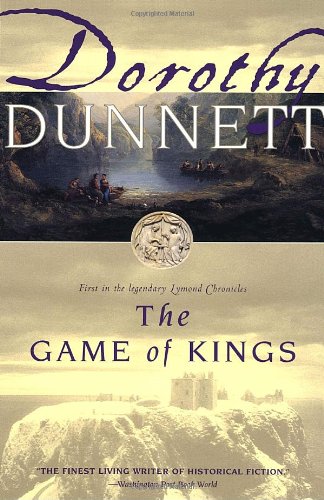
The Game of Kings by Dorothy Dunnett

This is the first of the Lymond Chronicles and the first Dorothy Dunnett book I’ve read. Dunnett fans will be pleased to know that I’m absolutely loving this book and have already ordered the next one in the series!

Mariana by Susanna Kearsley

After reading The Rose Garden a few months ago I wanted to read another Susanna Kearsley book and was delighted to receive this one through Netgalley. I’m still near the beginning but I can already tell it’s going to be as good, or maybe even better, than The Rose Garden.

Great Expectations by Charles Dickens

With February marking the 200th anniversary of Dickens’ birth, I wanted to read one of his novels this month. I’m enjoying Great Expectations so far and finding it surprisingly easy to read compared to some of the other Dickens novels I’ve read. I’m reading a few chapters a day on my Kindle which I’ve found is a good way to get through some of these long classics.

Charles Dickens: A Life by Claire Tomalin

I started this Dickens biography in January. Not being a big non fiction fan, it’s taking me a long time to read this one as I’m only picking it up when I’m in the right mood for it.

Clarissa by Samuel Richardson

As I mentioned in a previous post I’m reading Clarissa as part of a year-long group read so I’m not expecting to finish it before December. This is another one I decided to read as an ebook as the paperback is just too big!

***

The six books that I’m reading at the moment are all different enough that I’m not having any trouble keeping them separate in my mind, but I do feel as if it’s been a long time since I actually finished a book!

How many books do you usually have on the go at the same time? Do you always finish one book before you start another or do you like to have a variety to choose from?

The Last Summer by Judith Kinghorn

In the summer of 1914, Clarissa Granville is almost seventeen years old and lives at Deyning Park, her family’s country estate. For Clarissa, her brothers and their friends, it’s a summer of parties, tennis games, walking by the lake, playing croquet, and having a good time. It’s also the summer when Clarissa meets Tom Cuthbert, the housekeeper’s son who is home from university. The two soon fall in love but their romance is in trouble from the start, as they both know that Clarissa’s parents will never allow her to marry the son of a servant. Then suddenly everything changes: Britain is at war and Clarissa’s whole world is altered forever.

So many different aspects of World War I are covered over the course of the novel, though with the story being told from Clarissa’s perspective the focus is on the effects of the war on British society and on the people left at home while their loved ones are away fighting. After the war is over we see how the world has become a very different place. We meet men who are trying to cope with the injuries and disabilities they’ve been left with, and the women who are trying to understand and to help them, as well as coming to terms with the loss of all the husbands, brothers, sons and fathers who never came home.

One of the biggest changes to Clarissa’s life is that the class structure that was in place before the war has been broken down. Many rich families like the Granvilles are left struggling financially, unable to afford to keep big houses like Deyning and all the servants they used to have. People who had previously felt secure in their comfortable, privileged lifestyles find themselves desperately trying to find a place in a new and unfamiliar world. But through it all, Clarissa will always remember that final perfect summer of 1914.

Although the story is narrated by Clarissa, we are also given occasional fragments of letters written by unnamed characters. These letters give us a different perspective on things, including some glimpses of life in France during the war, but who is writing them? It’s all revealed eventually and by the time you reach the end of the novel I can almost guarantee you’ll want to go back and read the letters again – they’ll make more sense the second time round.

The Last Summer is a beautifully written novel and one that I really enjoyed. I liked the characters, the time period is one of my favourites to read about, and Clarissa is a lovely, engaging narrator. Clarissa and Tom’s relationship is an interesting one to follow because nothing ever goes smoothly for them and so many obstacles are thrown in the way of their love. Not only are they separated by the war, they also face a lot of other problems including their differences in class and background, Clarissa’s disapproving mother, and their relationships with other people. I desperately wanted them to find happiness together but it was difficult to see how that could ever happen, and I will leave you to discover for yourself whether the book has a happy ending or not.

The Last Summer is my second book for the War Through the Generations reading challenge.

Blog Tour: Russian Winter by Daphne Kalotay

When former ballerina, Nina Revskaya, decides to auction her jewels to raise money for the Boston Ballet Foundation, she finds herself reflecting on her past and remembering things that she would prefer to forget. Her memories take us back to Soviet Russia in the 1940s and 1950s, showing us how she rose to fame with the Bolshoi Ballet and how she met her future husband, the poet Viktor Elsin. However, Nina is reluctant to share these memories with anyone else – not even with Drew Brooks, who works for Beller Auction House and is trying to research the ballerina’s life for the auction catalogue.

We also meet Grigori Solodin, a university professor with a special interest in Viktor Elsin’s poetry. When Grigori donates an amber necklace to the auction that seems to match Nina’s amber bracelet and earrings, Drew is intrigued. Could the three items all belong to the same set? Is there a connection between Nina and Grigori?

I enjoyed this book, although the beginning was quite slow and it took me a while to really get into the story and warm to the characters. It was definitely worth sticking with the novel though, because the second half was much more compelling than the first and once I’d been drawn into Nina’s story I found it difficult to put the book down.

I find Russian history fascinating so it’s not surprising that my favourite parts of the book were the sections set in the past. Daphne Kalotay does a wonderful job of conveying what life was like in Soviet Russia in an era when you never knew who you could and couldn’t trust, when saying the wrong things to the wrong people could put your life at risk. For Nina and her friends, most of them dancers, writers or musicians, it was a dangerous time, with artists not always able to express themselves as freely as they wished. I also loved following the progress of Nina’s career as a dancer. I don’t know very much about ballet, but the descriptions were so vivid I had no problem picturing the ballets being performed onstage, as well as the emotions the dancers experienced before, during and after the performance.

Although Drew’s and Grigori’s stories didn’t interest me as much as Nina’s, the three separate threads were cleverly woven together with links between all three main characters. One of the things that intrigued me about the present day scenes was the question of how Grigori came to possess a necklace matching the other pieces in Nina’s collection, and why she was so determined not to talk to him about it. There was a point where I thought I knew where the story was heading and how it would end – but it turned out to be much less predictable than I’d thought. Some of the plot twists towards the end of the book surprised me as much as they surprised the characters themselves!

So apart from the slow start, I did enjoy Russian Winter. It’s complex, elegantly written and gives insights into three interesting but very different subjects: communism, ballet and jewellery auctions! I thought it was an impressive debut novel and I’ll be looking out for Daphne Kalotay’s next book.

If you’d like to find out more about Daphne and Russian Winter, you can visit her website and her Facebook page. A reading group guide is also available.

I read this book as part of a blog tour organised by TLC Book Tours. Don’t miss the other stops on the tour to see what other readers thought of Russian Winter.

Wednesday, February 8th: Reading With Tea
Thursday, February 9th: Fleur Fisher in her world
Tuesday, February 14th: DizzyC’s Little Book Blog
Wednesday, February 15th: Pining for the West
Thursday, February 16th: Chuck’s Miscellany
Monday, February 20th: one more page
Tuesday, February 21th: I hug my books
Wednesday, February 22th: The Sweet Bookshelf
Thursday, February 23rd: A Book Sanctuary