Dreams of Joy by Lisa See

Dreams of Joy is the sequel to Lisa See’s Shanghai Girls which I read in October. When I reached the end of Shanghai Girls and found that it finished with a big cliffhanger, I was desperate to find out what happened next. Luckily my library had a copy of the sequel available so I didn’t have long to wait. And this one, in my opinion, is the better of the two books. It certainly has a more satisfying ending!

It’s difficult to know how much to say about the plot of a sequel because I know there may be people reading this who haven’t yet read Shanghai Girls and I would hate to spoil things for anyone. All I will tell you then is that Dreams of Joy is set in China during the 1950s and is the story of nineteen-year-old Joy Louie, the daughter of one of the characters in the previous novel. Joy has recently made a discovery that has thrown her life into turmoil and she decides to leave her home in Los Angeles and travel to Shanghai in search of answers. She’s also looking forward to becoming part of Chairman Mao’s new communist China…but the longer she spends there the more she begins to think that maybe communism isn’t quite as wonderful as it seemed at first.

The story is told in the form of alternating narratives by Joy and another character from Shanghai Girls, Pearl. Although I didn’t think there was a lot of difference in the style of Pearl’s narrative voice and Joy’s, there are some big differences in attitude with Pearl being more cautious and cynical about communism and Joy full of enthusiasm, at least at first. It was good to have the chance to see things from two opposing viewpoints. Joy could be frustratingly naïve at times, but that’s only because we have the benefit of knowing what would happen during Mao’s regime.

The only other book I’ve read about communism in China was Wild Swans by Jung Chang (one of the best books I read last year, by the way, and one I highly recommend you read if you haven’t already). I had forgotten just how horrible some of the things that happened during Mao’s Cultural Revolution and Great Leap Forward were. The Great Leap Forward included Mao’s campaign to increase the country’s steel production, at the expense of agriculture, which resulted in a severe famine. Lisa See goes into quite a lot of detail about what happened during this period, so there are some horrific descriptions of cruelty, starvation and suffering, particularly in the sections where Joy is living in Green Dragon Village, a commune in the countryside. Lisa See really likes to put her characters through some terrible ordeals, but the book isn’t completely bleak and depressing – it’s also a story about the relationship between sisters Pearl and May and the special bond each of them has with Joy.

So is it necessary to have read Shanghai Girls first? I would say it’s not completely essential, as I’m sure this book could easily be understood and enjoyed on its own, but my personal recommendation would be to read both of them in the correct order beginning with Shanghai Girls.
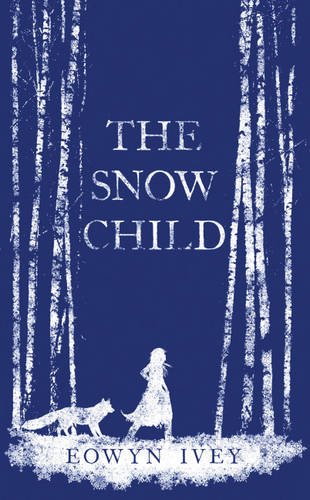
The Snow Child by Eowyn Ivey

Eowyn Ivey’s first novel, The Snow Child, is set in 1920s Alaska, where Mabel and her husband Jack are planning to start a new life. Mabel is still grieving for her still-born child and sees the move to Alaska as a chance to come to terms with the fact that she’s never going to be a mother. But things are proving to be a lot harder than she expected – clearing the land for farming is too much work for Jack, food is becoming scarce, and Mabel is beginning to feel lonely and desperate.

When the first snow of the winter arrives, Mabel and Jack decide to build a child from snow. By morning the snow child has gone and Jack catches a glimpse of a little girl running through the trees. But as Faina slowly becomes a part of Jack and Mabel’s lives, they begin to wonder: is she a real child or has she been created from two people’s hope and love?

If this story sounds familiar, that’s because it’s inspired by an old Russian fairy tale, Snegurochka, or The Snow Maiden. The story has been retold many times over the years but this book takes a fresh approach by combining the feel of a timeless fairy tale with the harsh realities of life as a homesteader in early 20th century Alaska.

The novel has a very small number of characters, which is to be expected considering that the area of Alaska in which Mabel and Jack lived was very sparsely populated. Something I thought the author managed to convey very well was the complete isolation Jack and Mabel experienced during their early days in Alaska and the many dangers they faced, including starvation, ‘cabin fever’, and the risks of injury or sickness in a place where even the closest town is too small to have a doctor.

Among the few other people we do meet are a neighbouring family, George and Esther Benson and their three sons. I particularly loved the character of Esther: a woman who knew what had to be done to survive in the wilderness and was prepared to do it. And as for Faina herself, I thought she was a fascinating character, mysterious and otherworldly but with a charm and vulnerability that made it easy to understand why a lonely middle-aged couple would welcome her into their lives.

But my favourite thing about The Snow Child is the stunning setting Eowyn Ivey has chosen for her story. Her knowledge and love of Alaska comes through in the beautifully written descriptions of the snowy landscapes, complete with frozen rivers, swirling snowflakes and icy mountain ridges. It’s all very atmospheric and the perfect backdrop for such an enchanting and magical story.

The Snow Child will be published in February 2012 and I can promise you it’s worth waiting for. It really is a lovely story and a very impressive debut novel from Eowyn Ivey.

Thanks to Headline for sending me a review copy of this book.

November Reading Summary

Favourite books read in November:

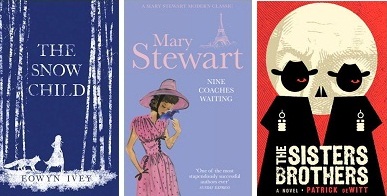
I enjoyed all of the books I read in November, but have chosen three favourites. The first is The Snow Child, a beautiful, enchanting story by Eowyn Ivey set in 1920s Alaska and inspired by a Russian fairy tale. The second, Nine Coaches Waiting, was my first experience of Mary Stewart and turned out to be one of the best books I’ve read all year. And I decided to try something completely different with Patrick deWitt’s The Sisters Brothers and I’m glad I did because it was so much fun to read.

Other books read in November:

The second Mary Stewart book I read last month was Rose Cottage. It was good, but I would describe it as a pleasant book rather than a thrilling one like Nine Coaches Waiting. Blow on a Dead Man’s Embers by Mari Strachan was my most surprising read of the month as I wasn’t expecting to love it as much as I did. It’s a moving and absorbing story set in Wales in the aftermath of World War I and I can highly recommend it.

I also enjoyed The Ghost of Lily Painter by Caitlin Davies, which combines a ghost story and a family mystery with an account of ‘baby farming’ in Edwardian London. The Rose Garden by Susanna Kearsley was another great read. And I was gripped by Dreams of Joy, the sequel to Lisa See’s Shanghai Girls which I read in October.

In New York by Edward Rutherfurd I learned about the history of New York City via the stories of some fictional families who lived there. Rutherfurd’s books are a good example of how historical fiction can be both educational and entertaining. I read some historical non-fiction in November too: The Women of the Cousins’ War: The Duchess, the Queen and the King’s Mother by Philippa Gregory, David Baldwin and Michael Jones. This is the companion book to Gregory’s Cousins’ War series of novels and helped fill some of the gaps in my knowledge.

Also last month, I decided it was time for another Agatha Christie book and thought I’d try The Murder of Roger Ackroyd. I loved it, but did have a slight problem with it which I’ll explain when I post my review! I also read The House of the Wind by Titania Hardie, a dual timeframe story set in modern day San Francisco and 14th century Tuscany. And I read the third book in Alan Bradley’s Flavia de Luce mystery series, A Red Herring without Mustard, which I was pleased to find was as enjoyable as the previous two.

As you’ll have noticed, I haven’t posted my thoughts yet on some of these books, but I’ll get to them eventually. I’ve decided to stop worrying about how many books I still need to write about, though it would be nice to catch up before January!

Did you read any good books in November? What are you hoping to read before the end of the year?

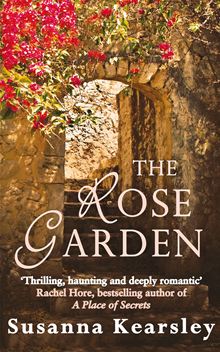
The Rose Garden by Susanna Kearsley

Following the death of her sister Katrina, Eva Ward leaves her home in Los Angeles and travels to England to scatter Katrina’s ashes. Eva knows that of everywhere in the world the place that held the most special memories for her sister was Cornwall, where the two of them had spent many happy days visiting Trelowarth, the home of their childhood friends, the Halletts. As well as scattering the ashes, Eva is looking forward to spending time with Mark and Susan Hallett again and helping them think of ways to attract tourists to the new tea room at Trelowarth. What she hasn’t expected is to find herself slipping back and forth in time between the present day and the eighteenth century, a world of Jacobites, smugglers – and a man called Daniel Butler.

I had never read anything by Susanna Kearsley until now, but she was one of those authors I was sure I would like – and now that I’ve read The Rose Garden I’m pleased to have been proved right! I love novels where time travel forms part of the plot and it’s always interesting to see the different methods authors come up with to explain how and why it happens. In this book I thought the author handled the transitions between past and present very well, in a way that reminded me of Daphne du Maurier’s The House on the Strand (which is also set in Cornwall). I also couldn’t help thinking of Diana Gabaldon’s time travel novels, due to the idea of a modern day woman finding herself in the eighteenth century and in the middle of a Jacobite rebellion. But it wouldn’t be fair to describe The Rose Garden as a copy of any other novel because it’s different enough from anything else that I’ve read to be a great book in its own right.

Eva meets some interesting characters in both time periods, though the most memorable are probably the ones she gets to know in the eighteenth century: Daniel Butler, his brother Jack, and their Irish friend, Fergal. It would have been nice to have seen more of Eva’s conversations with Daniel and Fergal though, as this would have helped make their characters feel more fully developed. And in the present day, I would have liked to have spent more time with Claire (Mark and Susan’s stepmother). I suppose there was a limit to how much the author could include, but I did feel there was the potential for this book to be even better than it already was.

I also loved the Cornish setting – it provided the perfect backdrop for both the historical and contemporary periods of the story. I enjoyed reading about Eva’s adventures in both periods and because the two threads of the story were woven together so closely I found them equally interesting. And later in the book the plot took a turn that I hadn’t expected, which was a nice surprise.

I’m sure I’ll be reading more books by Susanna Kearsley soon – I just need to decide which one to try next!

War Through the Generations: 2012 Challenge

I wasn’t planning to sign up for any reading challenges in 2012 but I couldn’t resist this one as it deals with a subject I was hoping to read more about next year anyway. War Through the Generations is a project created by Anna of Diary of an Eccentric and Serena of Savvy Verse and Wit who host reading challenges devoted to books about the impact of war. Previous challenges have included World War II, Vietnam and the US Civil War. The theme for 2012 will be World War I.

The challenge will run from January 1 2012 to December 31 2012.

Here are the rules, taken from the War Through the Generations blog:

This year you have options when reading your fiction, nonfiction, graphic novels, etc. with the WWI as the primary or secondary theme.

Books can take place before, during, or after the war, so long as the conflicts that led to the war or the war itself are important to the story. Books from other challenges count so long as they meet the above criteria.

Dip: Read 1-3 books in any genre with WWI as a primary or secondary theme.

Wade: Read 4-10 books in any genre with WWI as a primary or secondary theme.

Swim: Read 11 or more books in any genre with WWI as a primary or secondary theme.

Additionally, we’ve decided that since there are so many great movies out there about WWI, you can substitute or add a movie or two to your list this year and have it count toward your totals.

I’ve signed up for the Wade level as I’m sure I should be able to include at least four WWI-related books in next year’s reading, though I haven’t decided yet which books I would like to read. Anna and Serena have put together a recommended reading list (which you can find on the challenge blog) and I’ll probably read a few of those. I also received some WWI fiction recommendations in the comments on my recent review post of Blow on a Dead Man’s Embers (thanks to everyone who commented on that post, by the way!) so I have plenty of books to choose from.

If you’re interested in signing up for this challenge please see the War Through the Generations blog for more information – and let me know if you’re planning to participate too!

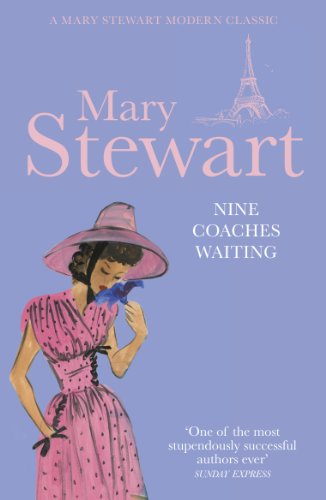
Nine Coaches Waiting by Mary Stewart

I can’t believe this is the first Mary Stewart book I’ve read! Looking at other reviews of Nine Coaches Waiting it seems almost everyone else discovered her when they were a teenager and it’s so annoying to think that I’ve missed out on all these years when I could have been reading her books. Anyway, better late than never!

Nine Coaches Waiting is the story of Linda Martin, a half French/half English orphan who arrives in France to take a job as governess to young Philippe de Valmy. Philippe is also an orphan and heir to his father’s title and estates, but as he is only nine years old he is living under the guardianship of his Uncle Leon and Aunt Heloise at the family chateau in the Haute-Savoie region of France.

As soon as Linda arrives at the chateau it becomes obvious that something isn’t right and we are immediately thrown into an atmosphere of mystery and suspense. The de Valmys had insisted that their nephew’s new governess should be an English girl, so Linda decides not to admit that she speaks fluent French. But why is this important? Do Leon and Heloise have something to hide? When Leon’s dark, handsome son Raoul comes to visit, Linda finds herself falling in love with him – but does Raoul know what his father is planning and could he be part of the de Valmys’ wicked schemes?

To discuss any more of the plot details would be unfair to any future readers, so that’s all I’m going to say as I would like everybody to be as gripped by the story as I was. Throughout the entire book I found myself worrying about Linda, worrying about little Philippe, and wondering who they could and could not trust. And we are kept guessing right until the end. The tension rises and rises during the final chapters and although there were a couple of different ways the book could have concluded, I got an ending that I was happy with.

It’s not surprising that I enjoyed this book so much, because it has everything I love in a novel: mystery, suspense, romance, memorable characters and even some gothic undertones. It also had the beautiful setting and haunting atmosphere of a Daphne du Maurier novel and would be a perfect book for readers who like stories that are dark and thrilling without actually being scary. The book was written in the 1950s and is set in the 50s too, I think, but the story has a timeless feel and if not for the references to cars and planes it could have been set in a much earlier period.

Nine Coaches Waiting is one of the best books I’ve read this year. It’s maybe not the most life-changing or the most original, but certainly one of the most enjoyable and exciting. My only regret is that I didn’t curl up with it on a quiet weekend with no distractions, rather than starting it during a busy working week when I didn’t have much time to sit down and read. It’s great to have found a potential new favourite author and now I’m looking forward to exploring the rest of her work.

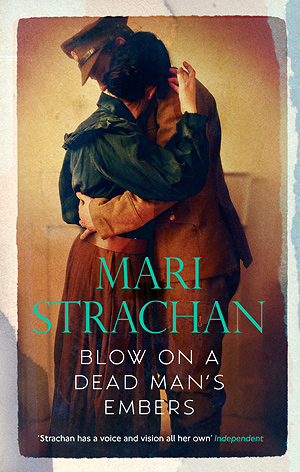
Blow on a Dead Man’s Embers by Mari Strachan

Blow on a Dead Man’s Embers has been sitting patiently on my shelf for a few months waiting until I felt it was the right time to read it. It sounded interesting and I’d heard some positive things about it, but it didn’t seem like a book that was calling out to be read immediately. Looking at the first couple of pages I noticed that it was written in third person present tense, something I often have a problem with, and this was another reason I wasn’t in any hurry to start reading. Well, it seems I was doing this book an injustice because Blow on a Dead Man’s Embers turned out to be a very moving, atmospheric novel and one I loved from beginning to end.

The book is set in a small community in Wales in the 1920s, just a few years after the end of World War I. The war has left many women grieving for a husband, a son or a brother and Non (Rhiannon) Davies is one of the lucky ones whose husband Davey has come home. But although Davey is physically unharmed he is still haunted by his experiences in the trenches. When Non finds him hiding under the kitchen table one morning she grows concerned for his mental health, but she knows that before she can help him she needs to find out exactly what happened to him during the war. Could a letter from a woman called Angela in London hold the answers?

As well as being a story about the aftermath of the Great War, this is also the story of Non and her relationships with the various members of her family. She has two teenage stepchildren to take care of, in addition to seven-year-old Osian who appears to be autistic (although this condition would not have been understood in the 1920s). Then there’s Non’s nephew, Gwydion, whose parents disapprove of his politics and his Irish girlfriend, and her mother-in-law, Catherine Davies, who makes no secret of her dislike for Non. Even the book’s minor characters are well-drawn and believable, from the Davies’ interfering neighbour, Maggie Ellis, to their tame crow, Herman.

One of the things I loved about this book was the way it looks at so many different aspects of World War I and what it was like in the years immediately afterwards. As well as Davey’s shell shock (what we would now call post traumatic stress disorder) we also meet other former soldiers with various physical or mental problems caused by the war. There are also a lot of men who are struggling to find work now that the war is over and are wandering the Welsh countryside in search of food and shelter. And we also see how the women are trying to cope with the loss of their loved ones and how some of them are in denial, unable to accept what has happened.

I don’t think I’ve ever read a novel set in Wales during this period and Mari Strachan’s descriptions of life in 1920s Wales are just how I would have imagined it. The book does use some Welsh terms which, unless you’re Welsh, may seem unfamiliar at first (the children call their grandparents Nain and Taid and their father Tada, for example) but I soon got used to them.

For a book where nothing very dramatic happens this was still a very absorbing story and after a slow start I found that I really cared about the Davies family and I wanted to read on and find out what would happen to them. At first I thought this was going to be a bleak, depressing book but it actually wasn’t because it’s told with a lot of warmth and even some humour.

Have you read any books about World War I? Which ones can you recommend?