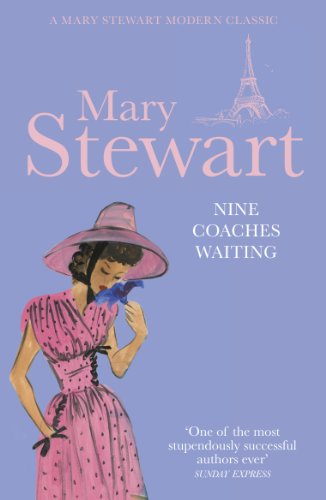
Nine Coaches Waiting by Mary Stewart

I can’t believe this is the first Mary Stewart book I’ve read! Looking at other reviews of Nine Coaches Waiting it seems almost everyone else discovered her when they were a teenager and it’s so annoying to think that I’ve missed out on all these years when I could have been reading her books. Anyway, better late than never!

Nine Coaches Waiting is the story of Linda Martin, a half French/half English orphan who arrives in France to take a job as governess to young Philippe de Valmy. Philippe is also an orphan and heir to his father’s title and estates, but as he is only nine years old he is living under the guardianship of his Uncle Leon and Aunt Heloise at the family chateau in the Haute-Savoie region of France.

As soon as Linda arrives at the chateau it becomes obvious that something isn’t right and we are immediately thrown into an atmosphere of mystery and suspense. The de Valmys had insisted that their nephew’s new governess should be an English girl, so Linda decides not to admit that she speaks fluent French. But why is this important? Do Leon and Heloise have something to hide? When Leon’s dark, handsome son Raoul comes to visit, Linda finds herself falling in love with him – but does Raoul know what his father is planning and could he be part of the de Valmys’ wicked schemes?

To discuss any more of the plot details would be unfair to any future readers, so that’s all I’m going to say as I would like everybody to be as gripped by the story as I was. Throughout the entire book I found myself worrying about Linda, worrying about little Philippe, and wondering who they could and could not trust. And we are kept guessing right until the end. The tension rises and rises during the final chapters and although there were a couple of different ways the book could have concluded, I got an ending that I was happy with.

It’s not surprising that I enjoyed this book so much, because it has everything I love in a novel: mystery, suspense, romance, memorable characters and even some gothic undertones. It also had the beautiful setting and haunting atmosphere of a Daphne du Maurier novel and would be a perfect book for readers who like stories that are dark and thrilling without actually being scary. The book was written in the 1950s and is set in the 50s too, I think, but the story has a timeless feel and if not for the references to cars and planes it could have been set in a much earlier period.

Nine Coaches Waiting is one of the best books I’ve read this year. It’s maybe not the most life-changing or the most original, but certainly one of the most enjoyable and exciting. My only regret is that I didn’t curl up with it on a quiet weekend with no distractions, rather than starting it during a busy working week when I didn’t have much time to sit down and read. It’s great to have found a potential new favourite author and now I’m looking forward to exploring the rest of her work.
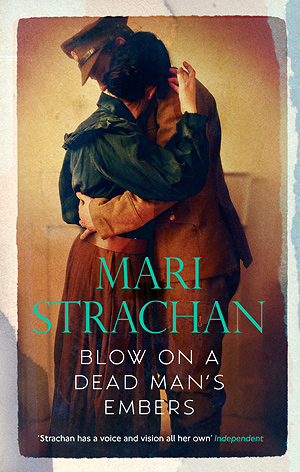
Blow on a Dead Man’s Embers by Mari Strachan

Blow on a Dead Man’s Embers has been sitting patiently on my shelf for a few months waiting until I felt it was the right time to read it. It sounded interesting and I’d heard some positive things about it, but it didn’t seem like a book that was calling out to be read immediately. Looking at the first couple of pages I noticed that it was written in third person present tense, something I often have a problem with, and this was another reason I wasn’t in any hurry to start reading. Well, it seems I was doing this book an injustice because Blow on a Dead Man’s Embers turned out to be a very moving, atmospheric novel and one I loved from beginning to end.

The book is set in a small community in Wales in the 1920s, just a few years after the end of World War I. The war has left many women grieving for a husband, a son or a brother and Non (Rhiannon) Davies is one of the lucky ones whose husband Davey has come home. But although Davey is physically unharmed he is still haunted by his experiences in the trenches. When Non finds him hiding under the kitchen table one morning she grows concerned for his mental health, but she knows that before she can help him she needs to find out exactly what happened to him during the war. Could a letter from a woman called Angela in London hold the answers?

As well as being a story about the aftermath of the Great War, this is also the story of Non and her relationships with the various members of her family. She has two teenage stepchildren to take care of, in addition to seven-year-old Osian who appears to be autistic (although this condition would not have been understood in the 1920s). Then there’s Non’s nephew, Gwydion, whose parents disapprove of his politics and his Irish girlfriend, and her mother-in-law, Catherine Davies, who makes no secret of her dislike for Non. Even the book’s minor characters are well-drawn and believable, from the Davies’ interfering neighbour, Maggie Ellis, to their tame crow, Herman.

One of the things I loved about this book was the way it looks at so many different aspects of World War I and what it was like in the years immediately afterwards. As well as Davey’s shell shock (what we would now call post traumatic stress disorder) we also meet other former soldiers with various physical or mental problems caused by the war. There are also a lot of men who are struggling to find work now that the war is over and are wandering the Welsh countryside in search of food and shelter. And we also see how the women are trying to cope with the loss of their loved ones and how some of them are in denial, unable to accept what has happened.

I don’t think I’ve ever read a novel set in Wales during this period and Mari Strachan’s descriptions of life in 1920s Wales are just how I would have imagined it. The book does use some Welsh terms which, unless you’re Welsh, may seem unfamiliar at first (the children call their grandparents Nain and Taid and their father Tada, for example) but I soon got used to them.

For a book where nothing very dramatic happens this was still a very absorbing story and after a slow start I found that I really cared about the Davies family and I wanted to read on and find out what would happen to them. At first I thought this was going to be a bleak, depressing book but it actually wasn’t because it’s told with a lot of warmth and even some humour.

Have you read any books about World War I? Which ones can you recommend?

The Ghost of Lily Painter by Caitlin Davies

When Annie Sweet and her daughter Molly move into their new home in the Holloway area of London, Annie becomes obsessed with researching the lives of the people who previously lived in the house. Looking at the 1901 census records she discovers a list of the former residents of 43 Stanley Road, including William George, a police inspector, and one of his lodgers, a young music hall star whose name was Lily Painter. As Annie begins to investigate Lily’s story, she uncovers a scandal involving two notorious ‘baby farmers’, Nurse Sach and Mrs Walters – and at the same time, she becomes aware of a ghostly presence at 43 Stanley Road.

The book has four different narrators: Annie Sweet in the present day, Lily Painter and Inspector William George in Edwardian London, and another character who narrates some later sections set during World War II. This could have become confusing, but it didn’t – it was actually very easy to follow what was going on and is an example of multiple time periods and narrators being handled perfectly! I found all the different threads of the story equally interesting and everything seemed relevant to the overall plot. And I appreciated the way the author had made an effort to change her writing style to suit the voice of each narrator: Inspector George’s journal has a formal feel, for example, while the wartime narrator uses a lot of slang. My only criticism is that the plot relies heavily on coincidences and the way in which all the parts of the story are brought together at the end is both predictable and hard to believe.

As well as being a great story, I was also able to learn something from this book. I didn’t know anything about baby farmers and had never heard of Amelia Sach and Annie Walters, but they were real people and you can read about their crimes online. Baby farmers were people who advertised for pregnant women, offering to care for them before and during the birth and to arrange for adoption of the child if necessary. Many of these mothers were desperate young women who knew they would be unable to keep their child for financial reasons or because it was illegitimate. Of course, the young mother had to pay the baby farmer for their services and while some baby farmers may have genuinely tried to find an adoptive home for the child, others would just take the money and murder the baby. As you can probably imagine, this is all very disturbing to read about and I did have tears in my eyes once or twice!

Finally, I should point out that although the book is called The Ghost of Lily Painter, and yes there is a ghost, this is not really a traditional ‘ghost story’. Although a few scenes were slightly creepy, I was never actually frightened so if you’re looking for something scary and chilling you might be disappointed. I would recommend this book to people who enjoy historical fiction set in the Edwardian period and World War II, and despite the baby farming storyline this is a light, entertaining read.

The Children’s Book by A.S. Byatt

Since The Children’s Book was published in 2009 I’ve picked it up a few times but have been put off by the length (over 600 pages of small print in the paperback edition) and also by the very mixed reviews. It seems that people have either loved this book or have found it almost impossible to get through. After I read my first A.S. Byatt book, Possession, earlier this year and found it easier to read than I had expected, I decided it was time I stopped feeling intimidated and tried this one too. I enjoyed it but now that I’ve read it I can understand why it might be a love it/hate it type of book. If you’re not interested in the historical and cultural events of the Victorian and Edwardian periods, if you don’t like reading fairy tales, if you prefer books with more action and less description, then this may not be the right book for you. It’s such a complex novel with so many layers I would find it impossible to write a summary of the plot, but I’ll do my best to give you an idea of what the book is about.

In The Children’s Book, Byatt tells the story of the Wellwood family and their friends and neighbours in the context of the larger social changes taking place in the world around them. As you can probably tell, despite the title, this is not a book for children. However, many of the characters are children at the beginning of the book and we watch them grow up over the years and begin to follow their own paths in life. As the children become adults they make some surprising discoveries and find that nothing is quite as it seems.

The book begins in the late Victorian period and ends just after World War I, so all kinds of important historical moments and events are covered, from the Exposition Universelle de Paris to the death of Queen Victoria and the Boer War. Some of the characters become involved with groups and movements such as the Fabians, anarchists and Suffragettes. There are also lots of descriptions of the Arts and Crafts movement, pottery and ceramics, puppet shows, summer crafts camps, making lanterns etc. And from the world of literature there are references to authors including Oscar Wilde, the Brothers Grimm, J.M. Barrie and Kenneth Grahame.

One of the main characters, Olive Wellwood, is a famous writer of fairy tales and she creates a special book for each of her children, Tom, Dorothy, Phyllis, Hedda and Florian. Inside each child’s book is a personalised story Olive has written for them. We are given the chance to read extracts from some of these stories and this was one of my favourite aspects of the novel. I know not everyone will be as enthusiastic about the fairy tales as I was, but I did really enjoy them.

In addition to the Wellwood family, there are literally dozens of other characters, each of them with an interesting story of his or her own. As the book progresses the relationships between the various characters become very complex and intricately linked. Considering the length and scope of the book, I think having a character list to refer to would have been very useful! Of all the characters in the novel, I think Dorothy Wellwood was my favourite. I was interested in her attempts to study medicine and become a doctor, something very rare and difficult for a woman at the beginning of the 20th century. In Dorothy and a couple of the other young female characters who also consider going to university, we see how women often felt that they had to make a choice between marriage and a career and couldn’t have both.

Something I probably haven’t made clear yet is how dark and moving this book is at times with its portrayal of the loss of childhood innocence and with the number of devastating family secrets that are revealed. A.S. Byatt has said that she wanted to explore the effects of writing children’s books on an author’s real children, and one of the saddest parts of the novel for me was the storyline involving Olive Wellwood’s eldest son, Tom. I won’t tell you what happens to him but I thought it was heartbreaking.

The only thing that disappointed me slightly was that towards the end it seemed as if Byatt was trying to squeeze as much as possible into the final pages of the novel. After the slow, steady pace of the rest of the book, I thought the ending was very rushed and the story seemed to disappear under an overwhelming amount of historical facts and dates. Apart from that, I loved this book.

Have you read The Children’s Book? What did you think of it?

Shanghai Girls by Lisa See

Shanghai Girls tells the story of two beautiful Chinese sisters, Pearl and May Chin, who are leading glamorous lives working as models in Shanghai. When their father gambles away all his money, he attempts to pay his debts by selling the girls to husbands who have come from America to look for Chinese wives. It’s 1937, however, and May and Pearl are modern women; they expect to make their own decisions and be allowed to choose their own husbands. Finding that this freedom has been taken away from them, they try to rebel against their arranged marriages, but are eventually forced to leave China behind and travel to Los Angeles to live with men they barely know. We then follow Pearl and May as they try to adapt to life in America, but find themselves facing a new set of challenges.

The story is set against a backdrop of the historical and political events taking place during the first half of the 20th century including the horrors of Japan’s invasion of China and later the rise of communism. Pearl and May’s story is very sad, with one tragedy followed by another, and only a few moments of happiness, so this is not always an easy book to read. There are also some plot twists and one or two big secrets, though it’s not too hard to guess what these are before they’re revealed. But above all, this is a story about the bond between two sisters.

Pearl, born in the Year of the Dragon, is very protective of her younger Sheep sister, May, who Pearl believes is their parents’ favourite. Throughout the story it’s obvious that May and Pearl love each other but there’s also a lot of jealousy and resentment – something more serious than normal sibling rivalry – that threatens to damage their relationship. I found I didn’t actually like either of them, though this didn’t stop me from enjoying the book (in fact the only character I really did like was Sam, Pearl’s husband). As the first-person narrator of the novel, Pearl was the sister I naturally tended to have more sympathy for. May seemed very selfish and shallow to me, but as I learned more about her I started to understand what caused her to behave the way she did and I saw that the relationship between the two sisters was more complex than I’d thought. Both characters had good points and bad points and I found both of them frustrating at times!

The only problem I had with this book was that the ending was not very satisfactory. It was obviously intended to be left on a cliffhanger so that you would have to read the sequel to find out what happens next. The sequel, Dreams of Joy, is out now and I’m hoping to start reading it soon, but I was still disappointed that this book didn’t have a proper ending.

This is the second of Lisa See’s historical fiction novels I’ve read. The first was Snow Flower and the Secret Fan, a story set in 19th century China, but I liked this one a lot more than Snow Flower. Have you read any of Lisa See’s books? Which ones have you enjoyed the most?

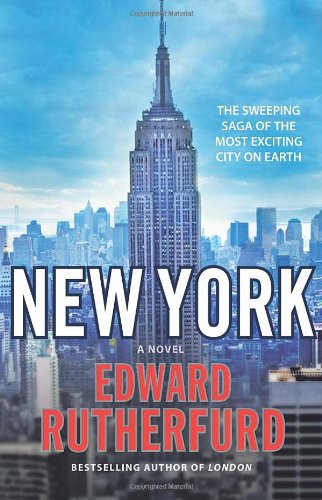
New York by Edward Rutherfurd

This historical fiction novel by Edward Rutherfurd looks at the fascinating story of New York City from its early years as a 17th century Dutch trading post through to the present day. Along the way we learn about some of the important events that have shaped the New York we know today, from wars, blizzards and stock market crashes to the 9/11 tragedy. Some real historical figures make brief appearances – including Peter Stuyvesant, George Washington, Benjamin Franklin, Abraham Lincoln and a few others – but the story is told through the lives of a fictional family, the Masters, who we follow down the generations.

I should start by saying that I’m a big fan of Edward Rutherfurd, having read all of his previous books (London, Sarum, The Forest, Dublin, Ireland Awakening and Russka). Each of Rutherfurd’s novels tells the story of a city or country over a period of hundreds of years and follows the lives of some of the families who lived there. His novels are all written in the same format and although they certainly won’t appeal to everybody I do think that if you read one of his books and enjoy it, there’s a good chance that you’ll enjoy at least some of his others.

This one, New York, is slightly different to the previous books in that it covers a much shorter period of time (from the 1600s to the present day, in comparison to Sarum, for example, which begins in the ice age and ends in the present day). This means that where in the previous novels it was sometimes necessary to skip forward by a few centuries, missing out several generations, New York is told as a more continuous narrative.

Another difference is that while Rutherfurd’s other books have told the stories of five or six main families, this one concentrates on one in particular: the Master family. I’m not sure I liked the way Rutherfurd chose to follow the Masters throughout the entire book. They were a family of merchants and bankers so their lives revolved around money, banking and the stock exchange, things I don’t find very interesting to read about. The book would have worked better for me if instead of spending so much time with the money-obsessed Masters, there had been more focus on some of the other families we meet: the Caruso family, who were Italian immigrants, the Jewish Adler family, the Irish O’Donnells, and the descendants of Quash the slave.

I also felt that the book was too uneven. I appreciate that when writing a novel like this one it must be very difficult to decide what to include and not to include, but I thought there were some parts that felt very rushed while others dragged on for too long. Also, I found the characters in the earlier chapters more engaging and well-developed. It almost seemed that the author himself had started to lose interest when he reached the 20th century and was making less effort to think of compelling storylines and characters for the later sections of the book.

I don’t want to sound too negative though, because I did think this was a good book and I learned a lot from it. I’m British, have never been to New York (though I would love to) and have never had the opportunity to study its history, so a lot of things mentioned in the novel were new to me. I knew little or nothing about some of the historical events such as the Draft Riots of 1863 and the Triangle Shirtwaist Factory fire of 1911, for example. I expect that if you’re a New Yorker you’ll take different things away from this book than I did (and maybe you’ll notice historical inaccuracies that I wasn’t aware of) but hopefully you’ll still be able to learn something new.

But although I did enjoy New York, it’s not one of Rutherfurd’s best novels in my opinion, for the reasons I’ve mentioned above. If you’re new to his books, Sarum (English history with a focus on the city of Salisbury and nearby Stonehenge) would be my personal recommendation as a good place to start, though it really depends on your own areas of interest. If you’d like to try some Russian history, I can also highly recommend Russka, and the two books about Ireland are excellent too. Oh, and one final thing I should say is that Rutherfurd’s novels are very long. This one has over 1,000 pages, though it hasn’t taken me as long to read it as I was expecting. I don’t see how the story of New York could possibly be told in any less than 1,000 pages, so I hope the length won’t put you off!

Have you read any of Edward Rutherfurd’s books? Which ones have you enjoyed?

The House of the Wind by Titania Hardie

The House of the Wind is a novel consisting of two storylines, one set in the present day and one in the 14th century. In 2007 we meet Madeline Moretti, a young lawyer living in San Francisco. Maddie is grieving for her fiancé, Chris, who has been killed in a car accident. She is also involved in a complicated legal case involving a large company suspected of putting the health of their employees at risk. In an attempt to help Maddie cope with her bereavement away from the stresses of her job, her Italian grandmother arranges for her to spend some time in Italy with a family friend. When Maddie arrives in Tuscany she becomes intrigued by the legend of the Casa al Vento, or House of the Wind, which tells of a woman who emerged unscathed from the ruins of a house destroyed by a storm.

The second main thread of the novel is set in the same area of Tuscany in the year 1347, a time when a mysterious and deadly disease is spreading across Europe. Maria Maddalena, known as Mia, has been raised by her Aunt Jacquetta and hasn’t spoken since her mother’s tragic death. When two young pilgrims come to stay at Jacquetta’s house, Mia slowly begins to find her voice again and at the same time makes some surprising discoveries about her past.

The House of the Wind is the first book I’ve read by Titania Hardie. I thought her writing was beautiful and whether I was reading about 14th century Tuscany or modern day California I was able to become completely immersed in the time and place. I also liked the way so many different elements of myths and legends, religion, poetry, medieval medicine, arts and literature were incorporated into the story.

The obvious similarity between Maddie’s story and Mia’s is that they are both young women trying to deal with their pain and grief (more than six centuries apart) but there are lots of other connections between the two and these are slowly revealed to us as the novel progresses. Although both of the storylines were engaging, I found I was much more interested in the 14th century one and it was fascinating to learn what life was like in Tuscany during that period. However, I’ve read a lot of books with dual timeframes and it seems to be almost inevitable that I’ll like one more than the other (usually the historical one due to my love of historical fiction). I expect there will be plenty of other readers who prefer the present day storyline!

The only problem I had with this book was that the pace was too slow for me in places and there were times when I felt the plot wasn’t moving forward at all, which made the book feel longer than it needed to be. Other than that, I enjoyed The House of the Wind and as I haven’t read Titania Hardie’s previous novel, The Rose Labyrinth, I still have that one to look forward to.

I received a copy of this book from Headline for review