Burned by Thomas Enger

Burned is the first in a new series of crime novels by Norwegian author Thomas Enger. This book is set in Oslo and introduces us to Henning Juul, a journalist working for 123news, an internet-based newspaper. When we first meet Henning he is trying to come to terms with the tragic death of his son, Jonas, in a house fire. On his first day back at work after a long absence, he is asked to cover the story of a young woman who has been found brutally murdered in a tent on Ekeberg Common. Henning’s research leads him from Oslo’s Muslim community to the world of film-making, but will his investigations make him the killer’s next target?

This series has a lot of potential and I’m pleased I could be there at the beginning rather than coming in halfway through the series which is what usually seems to happen to me! Although I didn’t think it was an outstanding book, there was a lot to like about Burned and I’m pleased to have discovered another Scandinavian crime writer whose work I enjoy. With its short chapters and fast-paced plot the book was difficult to put down and despite its length was a quick read.

There were plenty of twists and turns in the plot which helped to keep me interested, but while plot twists can be an important element of a good crime novel, I thought there were too many towards the end of the book. I wasn’t quite sure exactly what was supposed to be happening and I started to get slightly confused. The writing doesn’t always flow very well either, though this could be due to the translation (the book has been translated from the original Norwegian by Charlotte Barslund).

I enjoyed the descriptions of daily life in an internet newspaper office and the processes involved in researching, writing and publishing news items. I’ve never worked as a journalist but it all seemed quite realistic to me (which is to be expected as I believe Thomas Enger has experience in journalism himself). I also really liked Henning Juul and found him an intriguing character. I was left thinking that there must be a lot of aspects of his history and his personality still to explore, and that is why I’m already looking forward to the publication of the second book in the series.

I received a copy of this book from LibraryThing Early Reviewers

The Obscure Logic of the Heart by Priya Basil

The Obscure Logic of the Heart is the story of Anil Mayur and Lina Merali who meet as students and fall in love. The problem is, Anil’s family are Sikhs and Lina’s are Muslims. It seems that almost everyone disapproves of their relationship: Anil’s parents are prepared to support their son but make it clear they’re not happy, Lina’s parents refuse to even consider allowing her to marry a non-Muslim, and Anil’s best friend Merc also has his own reasons for trying to split them up. And when Lina, who is beginning a career in the UN, starts to suspect that Anil’s father may be involved in illegal arms trading, she faces a battle not just with her parents but with her conscience too.

Interspersed with the main storyline are letters written by a woman to a man during the 1960s. At first this was confusing and I had no idea who or what I was reading about. Eventually, though, everything became clear and when I went back to re-read the letters again they made much more sense.

It took me a while to really get into this book, but as the author threw more and more obstacles into the way of Lina and Anil’s love, I became desperate to see how things would work out for them and whether they could overcome all their differences. Lina’s indecisiveness irritated me at times, but I could understand the difficulties and conflicting emotions she faced in trying to please both Anil and her parents. I thought Priya Basil did an excellent job of showing us the situation from a number of different perspectives so that at various points of the book we could sympathise in turn with Lina, Anil and both sets of parents. I particularly liked the parts told from the viewpoint of Shareef and Iman Merali, which helped me see why they were so reluctant to approve of their daughter’s relationship with Anil.

The variety of settings in which Priya Basil sets her story is another interesting aspect of the book. Anil’s family live in Nairobi, the capital of Kenya, Lina’s family are from Birmingham in England, and there are other chapters set in London, New York and various parts of Sudan. I also found Lina’s work for the UN fascinating to read about. It gave the author a chance to incorporate lots of different political and human rights issues into the novel, including the illegal arms trade, the corruption of governments, guns and violence, poverty in Africa, and how people viewed Islam following the 9/11 attacks. There’s such a lot going on in this book; it’s much more than just a simple love story.

This is my second book for the Transworld Book Group reading challenge. It’s also the first book I’ve read by Priya Basil and I’m pleased to be able to say that I enjoyed my first experience of her work.

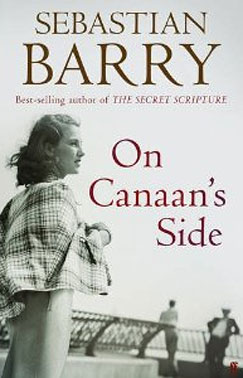
On Canaan’s Side by Sebastian Barry

“Bill is gone. What is the sound of an eighty-nine-year-old heart breaking? It might not be much more than silence, and certainly a small slight sound.”

When this year’s Man Booker Prize longlist was announced at the end of July, one of the titles that I was most looking forward to reading was this one, On Canaan’s Side. I read The Secret Scripture last year and fell in love with Sebastian Barry’s beautiful, poetic writing style. There are some similarities between The Secret Scripture and On Canaan’s Side, the most obvious one being the idea of an old woman looking back on her life, but the stories are different enough to make this book a good read too.

On Canaan’s Side is narrated by Lilly, a retired cook. At the beginning of the book she is eighty-nine years old and has just lost her beloved grandson, Bill, who has committed suicide after returning from fighting in the Gulf War. As Lilly mourns for her grandson, she begins to remember all the things that have happened in her life and over the next seventeen days she shares her memories with us.

Canaan, in the Bible, is the ‘promised land’ and the title On Canaan’s Side represents the idea that many Irish people had that America was a place where they would be safe and happy. Lilly’s story begins during her childhood in Ireland as the daughter of the superintendent of the Dublin police. She is forced to run away to America when both she and her boyfriend, Tadg Bere, find themselves the target of an IRA death sentence. However, Lilly soon discovers that even there, on ‘Canaan’s Side’, she and Tadg are still in danger. The following decades are filled with tragedy and sorrow. Lilly’s story is unbearably sad and yet her voice never becomes self-pitying; she stays a strong and resilient character until the day when her ‘eighty-nine year-old heart’ finally breaks.

At first I thought I wasn’t going to enjoy this book because the first chapter was very ‘stream-of-consciousness’ and it seemed as if it was going to be one of those novels where nothing really happens. But when I got further into the book and the story began to take shape I didn’t want to stop reading. I mentioned at the start of this post how beautifully written The Secret Scripture was and I thought Sebastian Barry’s writing was possibly even more beautiful in this book. I usually prefer books with more plot but the way Barry uses language and imagery is so stunning and mesmerising, the slow pace of the story didn’t bother me.

And it’s really not true that nothing happens: there’s murder, rape and suicide, for a start. Other themes include war (both World Wars, Vietnam and the Gulf War) and how it’s possible to survive a war physically but not mentally; identity and how sometimes we can live with people for years without really knowing who they are; important events in Irish and American history; racial tensions; love and loss.

I loved this book and although it was slow to begin with, I was soon swept away by the quality of Barry’s writing and the atmosphere his words convey. I haven’t read his previous books Annie Dunne and A Long, Long Way but as they are about Lilly’s sister and brother I really should read them soon.

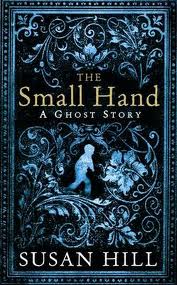
The Small Hand by Susan Hill

I read this book a few weeks ago so I can’t count it as one of my books for the R.I.P Challenge. However, I noticed that a lot of people were planning to read a Susan Hill book for RIP, so this seems like a good time to post my thoughts on The Small Hand.

It’s a short book and I would recommend reading it in as few sittings as possible to get the maximum impact from the story. The book is beautifully written, although if you’re expecting something very chilling and scary I think you might be disappointed because I would describe it as an eerie, unsettling read rather than a frightening one.

Our narrator is Adam Snow, an antiquarian book dealer. Driving home to London one day after visiting a client, he takes a wrong turning and decides to ask for directions. Heading for the nearest house, Adam finds himself in an overgrown garden. Seeing that the house itself appears derelict and deserted, he starts to walk back to the car and it’s here that he has the first in a series of supernatural experiences when he feels a child’s small hand gripping his own. As time goes by Adam is visited by the small hand on several more occasions and becomes aware of a ghostly presence that seems determined to lead him into danger. But who does the hand belong to and what does its owner want?

As far as ghost stories go, I didn’t think this one was particularly original. Even though I don’t read a lot of this type of book anymore, I still found it easy to predict what was going to happen. The best thing about this book is the atmosphere Susan Hill creates. The story has a timeless feel and apart from the occasional cultural references that tell us it’s taking place in the present day, it could just as easily have been set a hundred years ago. The descriptions of the various settings, such as the neglected house and garden or the lonely French monastery, are wonderful too. I loved the world Susan Hill created, but I think the plot was too thin to make this a very satisfying read for me. Or it could just be that I read it at the wrong time of year – summer is not the best time to read ghost stories and this is definitely a book to curl up with on a dark night.

August Reading Summary

For me August was the month when I finally started to catch up with all those outstanding reviews! I read eleven books and have posted my thoughts on ten of them. I know I still have a few books to write about from July, but at least I didn’t get any further behind!

Here are three of my favourite books read in August:

I read two books by Jude Morgan in August. I loved them both but The Taste of Sorrow, a novel about the Brontës, interested me slightly more than Passion, which is about the Romantic Poets. The House by the Sea was the first book I’ve read by Santa Montefiore and was a perfect summer read. And The Sandalwood Tree by Elle Newmark was my first choice for the Transworld Book Group Reading Challenge. It’s a great historical fiction novel set in India, with some beautiful and vivid descriptions of the country.

Other books read:

Possession by A.S. Byatt
When God was a Rabbit by Sarah Winman
Full Dark House by Christopher Fowler
Winter King: The Dawn of Tudor England by Thomas Penn
Princes in the Land by Joanna Cannan
The Parasites by Daphne du Maurier
On Canaan’s Side by Sebastian Barry (Review coming soon)

I hope you all had a great August and have some good books planned for September. Now that summer is coming to an end I’m looking forward to some atmospheric, autumnal reading for the R.I.P. Challenge!

R.I.P VI is here!


I’ve been trying not to sign up for any more reading challenges, but I knew I’d have to make an exception for the R.I.P. challenge. This was my favourite of all the challenges I participated in last year and I’ve been looking forward to taking part again this year. If you’re interested in joining in too, please see the R.I.P. VI blog post at Stainless Steel Droppings!

There are several different levels (or perils) to choose from and I’m signing up for Peril the First. This means reading four books that could be classified as:
Mystery.
Suspense.
Thriller.
Dark Fantasy.
Gothic.
Horror.
Supernatural.

I’ve listed below some of the books I’m thinking about reading. I’m not expecting to read all of these and it’s also possible that I’ll decide to read some other books that aren’t on my list.

Frankenstein by Mary Shelley – I was meaning to read this for R.I.P last year but didn’t have time. I’m making it a priority for this year as it’s one of those books I feel I really should have read before now.

A Red Herring Without Mustard by Alan Bradley – I enjoyed the first two books in the Flavia de Luce series and am hoping the third one will be just as good.

The Phantom of the Opera by Gaston Leroux – I’ve seen very mixed opinions of this book, so I think it’s time I tried it for myself.

The Quarry by Johan Theorin – This is the third in a series of spooky Swedish crime novels. I loved the first two so I’ve been looking forward to this one.

The White Devil by Justin Evans – I noticed this book appearing on a lot of American blogs a few months ago and I’ll finally get a chance to read it now that it’s being published in the UK.

Uncle Silas by Joseph Sheridan Le Fanu – I read some of Le Fanu’s short stories earlier in the year and can’t wait to read this gothic novel.

We Have Always Lived in the Castle by Shirley Jackson – Another book I can’t believe I still haven’t read!

Florence and Giles by John Harding – I hadn’t even heard of this book until recently. It’s described as a gothic thriller and sounds like something I would love.

Awakening by S.J. Bolton – I loved her first book, Sacrifice, and immediately bought two more of her books but haven’t had a chance to read them yet. I could either read this one or Blood Harvest.

Have you read any of these? What are you reading for this year’s RIP?

Princes in the Land by Joanna Cannan

This is one Persephone book I had never heard anything about, so I picked it up and started reading without having any idea what to expect. I didn’t know who Joanna Cannan was until I read the biographical information on the cover and saw that she was the mother of Christine, Josephine and Diana Pullein-Thompson, three authors who were famous for their horse and pony stories. I remember reading some of the Pullein-Thompsons’ books as a child, so this made me more curious about reading Princes in the Land.

This novel has very little plot but like most Persephone books it raises a lot of interesting issues including marriage, parent/child relationships and class differences. The book itself is well-written and I liked the setting and the time period, but unfortunately this is the first Persephone I’ve read that I didn’t enjoy much at all.

Princes in the Land, published in 1938, is the story of Patricia Crispin and her experiences of being a wife and mother. We first meet Patricia as a child, shortly after her father has been killed in the Boer War. Patricia and her sister Angela are being taken by their mother to live with their grandfather, Lord Waveney, at his mansion in the countryside. While Angela is the quieter and better behaved of the two girls, Lord Waveney takes a special liking to the red-haired, freckled Patricia, who is more courageous and shares his love of horses.

Several years pass and Patricia marries Hugh Lindsay, a student from a poor background, much to the disgust of her mother who wanted Patricia to marry someone of her own class. Patricia and Hugh have three children, August, Giles and Nicola – and as they grow older they begin to disappoint Patricia as much as she had disappointed her own mother.

The biggest problem I had with this book was the characters. I don’t always need to like the characters to be able to enjoy a book, but in this case I think it would have made a big difference if there had been just one person I had been able to identify with and care about. Patricia and her mother both seemed to be complete snobs. Patricia’s attitude towards her daughter-in-law, Gwen, is particularly nasty and based purely on the fact that she thinks Gwen’s family are ‘common’. I don’t mind reading about snobbish characters if they are written with a touch of humour or satire, as in Jane Austen novels for example, but that wasn’t the case here. Patricia seems to think her attitude is perfectly acceptable and I felt that we, as the readers, were expected to agree with her.

The portrayals of marriage and parenthood were very cynical. The sad thing is that I really liked Patricia when she was a child at the very beginning of the book but as the years went by she changed into a person even she herself didn’t appear to be comfortable with. It’s tragic that despite devoting her life to her children, they barely seemed to know or understand each other at all. None of them really did anything bad and were children who Patricia could have been proud of, but because they failed to meet her expectations she ended up feeling disappointed in them and dissatisfied with her own life.

I’m sure a lot of people would enjoy reading Princes in the Land much more than I did, so please don’t let me put you off reading it. It was an interesting book, worthy of being a Persephone title and I can’t fault the writing either, but the amount of snobbery and class-obsession was just too much for me.