Samuel Pepys: The Unequalled Self by Claire Tomalin

As you may have noticed, I don’t often read non-fiction (a big clue can be found in my blog name) but this is something I’d like to change. I have heard a lot of praise for Claire Tomalin’s biographies, so I had high hopes for this one.

Samuel Pepys: The Unequalled Self is a long and comprehensive biography of an important historical figure, most famous for the diaries he kept during the 17th century. I haven’t actually read the diaries of Samuel Pepys yet but would certainly like to read them at some point in the future. I wasn’t sure whether not having read the diaries would cause problems with my understanding of the biography, but luckily it didn’t seem to matter – in fact, it might actually be best to read the biography first as it helps to put the diaries in context.

The first few chapters deal with Pepys’ childhood and early life (pre-diary) and understandably we don’t have a lot of information regarding this period of his life – we can only speculate about what Pepys may or may not have done. I found these chapters quite boring in comparison to the rest of the book, although I did enjoy learning about a typical day in a 17th century school – and I was fascinated by the description of the operation Pepys had to remove a stone from his bladder. I’ve always had an interest in the history of medicine and it never ceases to amaze me how anybody ever survived at all!

Tomalin explains that what makes Pepys’ diary so interesting and noteworthy is that he records a mixture of both public events and personal experiences. Pepys lived through a fascinating and eventful period of English history and his famous diary covers such events as the Restoration of Charles II, the plague of 1665 and the Great Fire of London in 1666. I was slightly disappointed that more attention wasn’t given to the plague as it’s a topic I find fascinating to read about (I hope that doesn’t sound too morbid!) but as Tomalin explains it was something that didn’t affect Pepys personally and so he doesn’t spend a lot of time talking about it.

The most interesting parts of the book for me were the descriptions of daily life. While I confess to struggling to get through some of the chapters about Pepys’ political and business activities, I found the more personal sections completely gripping. I thought Tomalin stayed very objective throughout the biography, drawing attention to both the good and the bad aspects of Pepys’ character (and to be honest, he didn’t seem to be the most pleasant of people). But I can tell that even though Tomalin doesn’t shy away from discussing his negative points, she has a lot of enthusiasm and liking for her subject. She also fleshes out the characters of other important people in Pepys’ life including his wife Elizabeth, with whom he had a very complex and volatile relationship. He could be very cruel to her and both physically and verbally abusive, but they did appear to have some genuine affection for each other and Tomalin describes some of the happy times they had together as well as the bad.

For someone like myself who doesn’t often read this type of literary biography, this was quite a challenging book but worth the effort. If I had tried to read this book straight through from beginning to end I probably wouldn’t have managed to finish it, but reading it over the course of a month, a few chapters at a time between reading my usual fiction books, worked perfectly for me.

Have you read any of Claire Tomalin’s biographies? Which ones would you recommend?
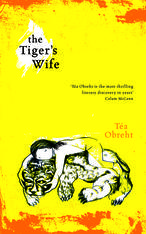
The Tiger’s Wife by Téa Obreht

As you may know, the winner of the 2011 Orange Prize for Fiction will be announced on 8th June. I’ve read three of the six books from this year’s shortlist but I’ve been so far behind with my reviews this year that I haven’t yet posted on any of them – even though it’s now been a while since I finished reading them. I’m beginning to catch up now so hopefully I’ll be posting my thoughts on all three books this week. As for the other three shortlisted books, I would still like to read them eventually.

The Tiger’s Wife, Téa Obreht’s first novel, was one of the Orange titles I was most looking forward to reading and although I did enjoy it, I felt that it didn’t quite fulfil its promise. There were parts of the book that I loved, but I thought the story was made up of too many separate elements that in my opinion never really came together as a whole.

Set in an unnamed Balkan nation, The Tiger’s Wife is an unusual mixture of myth, magic and reality. The main thread of the story follows Natalia, a doctor who is on a goodwill mission to inoculate the children at an orphanage in the fictional town of Brejevina. When Natalia discovers that her beloved grandfather has died, not at home with her grandmother as might be expected, but in a village not far from the orphanage where she is headed, she decides to investigate and find out what he was doing there.

Interspersed with Natalia’s story are accounts of important events in her grandfather’s life and some of the Balkan folk-tales she remembers him telling her. One of these is the story of an escaped tiger living near a remote village in the mountains and a young deaf-mute woman said to be the tiger’s wife; another involves Darisa the bear hunter. I particularly enjoyed reading about the grandfather’s encounters with the ‘deathless man’, a mysterious individual who can predict the deaths of other people without ever dying himself. However, some of these tales were so long and involved that by the time we returned to the present day storyline I found it difficult to pick up where we had left off. And to be honest, I found Natalia’s grandfather and his magical stories a lot more interesting than the character of Natalia herself.

Although the country in which the book is set is never named and any towns and villages that are mentioned are fictional, it’s not difficult to tell that we’re reading about the former Yugoslavia. The city in which Natalia lives is referred to only as ‘The City’ but is probably Belgrade. But despite the anonymity of the setting, Obreht still conveys a great sense of place through her wonderfully descriptive writing.

I can see why this book has been getting so many accolades, but for me, I think it may have been a little bit too ambitious and the disjointed structure of the book stopped me from loving it as much as I had hoped to. The ending of the book left me feeling confused and with the impression that all the separate threads of the story hadn’t been adequately pulled together. If only the author could have found a way to weave the various parts of the novel into a more coherent story The Tiger’s Wife had the potential to be an excellent book, and I’m looking forward to seeing what Téa Obreht does next.

The Report by Jessica Francis Kane

3 March 1943, London: The air raid sirens sound in Bethnal Green and the residents begin making their way to the tube station which is being used as a public air raid shelter. As the crowds begin to descend the steps into the station there’s an accident, the entrance becomes obstructed and 173 people are crushed to death.

This tragic true story is the subject of Jessica Francis Kane’s new novel, The Report. Although hundreds of people were affected by what happened, Kane’s story concentrates on just a few of them: eight-year-old Tilly and her mother Ada, two survivors of the crush; Bertram Lodge, a young clerk who was heading towards the shelter as the crowd began to push forward; James Low, the chief warden of the shelter, who is stricken with grief and self-blame; and the Rev McNeely from St. John’s church in Bethnal Green who attempts to give hope and comfort following the disaster. Spending time with each of these characters before, during and after the incident gives the story a very personal touch and allows us to see things from several different perspectives.

Thirty years later a young filmmaker, Paul Barber, decides to make a new documentary about Bethnal Green and pays a visit to Laurence Dunne in search of answers. Dunne is the magistrate who was commissioned by the Home Secretary to write a report on the tragedy – which he did within three weeks, having interviewed a large number of witnesses, survivors, medical staff and other officials. When Dunne agrees to cooperate with the documentary, some new details about the disaster and Paul’s own past are brought to light.

This was the worst civilian disaster of World War II and yet I think it’s safe to say that even today it’s not something that many people have heard about. I was vaguely aware of it, but only because it was briefly alluded to in another book I read. I had never read about it in any depth and had no idea what caused the disaster or what happened afterwards. Something that becomes clear as you read the book and learn the details of Dunne’s inquiry is that no one person was to blame for what happened – and yet almost everyone involved blamed either themselves or someone else to some degree. What Dunne wanted to avoid was making one person or group of people into a scapegoat and he had to make some important decisions as to what he would and would not include in his report.

An interesting blend of fact and fiction, The Report manages to be both informative and moving, without ever becoming too sentimental. The theory that Kane puts forward at the end of the novel may or may not be close to the truth, but either way I’m glad to have had the opportunity to learn more about such an important historical incident.

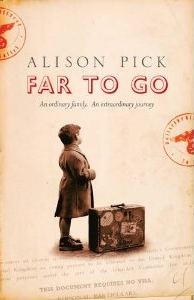
Guest Post: Alison Pick – author of Far to Go

Something slightly different today: a guest post from author Alison Pick! You may remember that I recently posted my review of Alison’s new novel, Far to Go. Alison is visiting She Reads Novels today as part of her UK blog tour and here she tells us what inspired her to write Far to Go.

Growing up, there was a secret in my family. We went to Church, and celebrated Christmas, but we weren’t really Christians. We were hiding something. I didn’t know what.

I got older. There were clues. My great-grandparents had died in Europe. It had something to do with a camp, and with my grandmother’s pearls that she’d smuggled into Canada in a jar of cold cream.

I understood the truth in stages. My great grandparents were murdered in Auschwitz. Why? Because they were Jewish. Which meant their children, my grandparents, were Jewish too. Which meant, of course, that my father was the same.

I both knew this, and did not know it.

The reason for my psychic ambivalence was a moratorium on discussion. My grandmother forbid any and all questions about her parents, their deaths, or their backgrounds. In retrospect this makes perfect sense. Granny was a young woman when she arrived in Canada. Although culturally Jewish, she’d never practiced. Her own parents, who she had been very close to, were supposed to meet her in Canada, but they never made it out of Europe. It was out of a horrific lifelong grief that our family’s silence was sewn.

When my grandmother passed away in the year 2000 I was bereft. I wrote poems about her life following the Holocaust. Although she probably wouldn’t have liked the poems, they were my tribute to her.

Still, they weren’t enough. I grew as a writer, and the desire to write something bigger to honour my history grew too. Finally, in 2007, I began work on the novel that would become FAR TO GO. Paradoxically, I knew that the book would not tell my grandparents story in a literal sense. I wanted to write a gripping novel, one that would keep the reader turning the pages, and I didn’t want the constraint of “what really happened” to get in my way.

In other words, I wanted to forsake their particular story to tell one that was more universal.

Well, it’s done. FAR TO GO sold in five countries, won the Canadian Jewish Book Award for Fiction, and has been optioned for film. More importantly, it has given me incredible pleasure to write something for the family I never knew, and for my grandmother, who I did know and who I miss terribly. I’m not sure what she would have thought. Secrets die hard, especially ones like hers. I have a hunch, though, that she would have been proud.

As Jews around the world say on the anniversary of a loved one’s death: May her memory be for a blessing.

~

Thanks for visiting us today, Alison!

See what Alison said yesterday at Catherine, Caffeinated and don’t forget to visit Get On With It tomorrow to hear more from her!

For a full list of tour stops please see the blog tour button in my sidebar.

The Daughter of Time by Josephine Tey

Inspector Alan Grant is in hospital recovering from a broken leg. In an attempt to alleviate his boredom, his friend Marta encourages him to investigate an unsolved mystery from his hospital bed. When she brings Grant a picture of Richard III, he’s immediately intrigued. Richard, of course, is widely believed to have murdered his two young nephews, the sons of his brother King Edward IV, to secure his own claim to the throne after Edward’s death. Grant, however, is not convinced. How can this kind, sensitive face belong to one of the most notorious murderers of all time? Over the next few weeks, Grant reads everything he can find about Richard and his alleged crimes, and makes some surprising discoveries about this controversial king.

With my interest in the Plantagenets, the Wars of the Roses, and Richard III in particular, I expected to enjoy this book and I did. It doesn’t compare to Sharon Kay Penman’s wonderful The Sunne in Splendour, which I read last year, but then, it’s a completely different type of book.

Much as I happen to agree with Josephine Tey that Richard has been unfairly treated, this book is obviously very biased in his favour. But the argument she makes for Richard’s innocence is certainly very convincing. She shows how Grant takes one source at a time, looks at who wrote it (often one of Richard’s enemies) and what the writer’s motive could have been in discrediting Richard. The book also considers Richard’s possible motives and what reasons he may have had for committing (or not committing) the crimes of which he was accused.

As Alan Grant, at the beginning of the novel, knows very little about Richard III it means that the reader doesn’t need to have a lot of prior knowledge either and can learn along with Grant. In fact, from reading other reviews it seems that for many people this book has been their first introduction to this period of history. If, like me, you’ve already read one or two books about Richard and have some basic knowledge of the subject, The Daughter of Time is still a fascinating read. I was surprised that the Duke of Buckingham was hardly mentioned, as he is usually considered along with Richard and Henry Tudor to be one of the main suspects for the murder of the two princes. Tey also suggests that the princes were still alive when Henry VII took the throne, which is interesting as the general opinion now seems to be that they died during Richard’s reign.

But whether we agree with Tey’s theories or not isn’t really important. What is important is that we’re aware of the unreliability of many historical sources and how we have to be very careful because something that is now considered to be ‘historical fact’ may actually originate from nothing more than lies or rumours.

Classics Circuit Tour: Jane Austen (Persuasion) vs Charles Dickens (The Mystery of Edwin Drood)

Today, as part of a Classics Circuit Tour, I’m hosting a duel between two very different authors: Jane Austen and Charles Dickens!

Tour participants were invited to choose a novel by either Austen or Dickens – or both. As there were still a couple of Austen novels I hadn’t read, as well as a whole pile of unread Dickens books, I decided this would be a good opportunity to read one of each. But which one would I like the best?

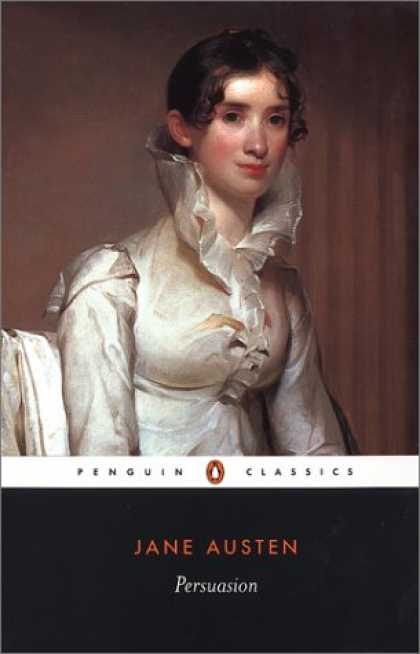
The first book I want to discuss is Jane Austen’s Persuasion, a moving story of mistakes, misunderstandings and second chances.

Austen begins by introducing us to the Elliot family: the vain and conceited Sir Walter of Kellynch Hall and his three daughters, Elizabeth, Anne, and Mary. Mary is married with children of her own, but Elizabeth and Anne still live at home. Elizabeth is very like her father but Anne is gentle, kind-hearted and intelligent. We also meet Lady Russell, a family friend who took on the role of advisor to the girls following the death of their mother.

Several years prior to the beginning of our story, Lady Russell persuaded Anne against marrying Frederick Wentworth, who at that time was a poor young naval officer. Anne has tried to move on with her life but has been unable to forget her first love and she is still unmarried eight years later when she hears that he has returned as the wealthy and respectable Captain Wentworth. Unexpectedly thrown back into his company and forced to see him with another woman, Louisa Musgrove, Anne knows she still loves him – but can Wentworth forgive her for breaking off their engagement all those years ago?

In comparison to the other Austen books I’ve read this one feels more serious and subdued. Anne Elliot is twenty-seven years old which makes her the oldest of Austen’s heroines and this could explain the different tone of the book (as well as the fact that Jane Austen herself was older, this being her final novel). We don’t see Anne as a younger girl in the days of her original romance with Wentworth; instead we meet her when she’s older and more mature. Anne is not a lively, spirited young woman like Elizabeth Bennet or Emma Woodhouse but she has a quiet strength and a warm heart and it’s easy to see what Captain Wentworth loved in her.

It’s slightly disappointing that Anne and Wentworth are kept apart through most of the novel and have little direct interaction with each other, but I appreciated the way Austen kept the reader waiting and wondering, giving the story a sense of restraint and tension. I loved this book and I think it might even have become my favourite Austen novel – although that could still change after I read Sense and Sensibility, which is the only one of her books that I still need to read.

Moving on to Charles Dickens…

There were plenty of Dickens books I could have chosen, as I’ve only read three of them so far (A Christmas Carol, Bleak House and Our Mutual Friend) but as I’d also committed to reading a Jane Austen book I thought I’d better pick one of his shorter novels.

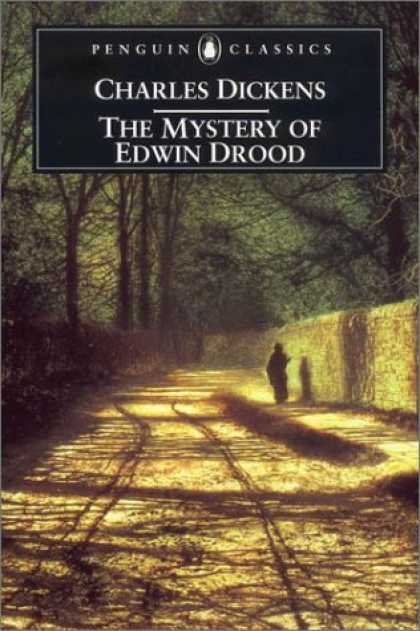
Trying to avoid one of his eight hundred page tomes played a large part in my decision to read The Mystery of Edwin Drood for the Duelling Authors tour. In comparison to other Dickens novels it’s relatively short – and for a good reason. It’s the novel Dickens was working on when he died in 1870 and unfortunately he was unable to complete it. I wasn’t sure how I would feel about reading an unfinished book but I can tell you that reaching the final page and realising that the mystery wasn’t going to be solved was every bit as frustrating as you might expect!

A large part of the novel is set in the fictional cathedral town of Cloisterham, which is thought to have been based on Rochester, where Dickens lived. We are also taken on a journey into the darker side of Victorian London; the opening scenes of the book take place in Princess Puffer’s opium den, to which Cloisterham choirmaster and piano teacher John Jasper is a regular visitor.

We learn that Jasper is in love with Rosa Bud, an orphan who lives at the Nun’s House in Cloisterham. There are only two problems with this: the first is that Rosa finds Jasper terrifying; the second is that she’s already engaged to his nephew, Edwin Drood, who is only a few years younger than Jasper himself. So when Drood disappears and is presumed to have been murdered it should be obvious who’s to blame, shouldn’t it? Well, no. There’s another suspect: Neville Landless, recently arrived in Cloisterham with his twin sister Helena, who is known to have previously had a violent argument with Drood and was with him the night before his disappearance.

Unfortunately we never find out what really happened to Drood and a number of other storylines are also left unresolved. We can guess what might have been going to happen, and I was able to find lots of possible theories online, but maybe Dickens had a few surprise twists planned for us – we’ll probably never know for certain.

Compared to the other Dickens books I’ve read, I found this one more direct and easy to follow, with less sub-plots and superfluous characters. Almost every chapter helps to move the story forward significantly. It was also quite funny in places, which was good as I haven’t really got on with Dickens’ sense of humour in the past. I can’t help thinking I’ve done things backwards though: I read Drood by Dan Simmons last year, which meant that when I started this book I felt I knew part of the story already. Many of the characters’ names were familiar and I could appreciate how cleverly Simmons had incorporated elements of Dickens’ novel into his own: the opium dens, the tours of the cathedral vaults and crypts, Drood’s interest in Egypt, the ‘hideous small boy’ who throws stones at Durdles. I think it would have been more sensible to have read this book first before the Dan Simmons one!

So who has emerged as the victor of this duel? Well, The Mystery of Edwin Drood was a fun, entertaining read but Persuasion I’m sure will be one of my books of the year – so I think Jane Austen is the winner here!

If you’re still not sure which author you prefer, the other Classics Circuit participants’ Austen and Dickens reviews might help you decide – you can find a full list of tour stops on the Classics Circuit blog.

Touch by Alexi Zentner

In Touch, the debut novel by Alexi Zentner, we follow the story of three generations of one family who live and work in Sawgamet, a small Canadian mining and logging town. Our narrator, Stephen, has just returned to Sawgamet after a long absence because his mother is dying. Back in his childhood home Stephen becomes lost in memories – and shares some of those memories with the reader. Foremost in Stephen’s thoughts is the day his grandfather, Jeannot, came back to the town after disappearing for many years and announced that he had come to “raise the dead”.

With tales of sea witches and creatures that live in the forest, dogs that sing and golden caribou, the line between fantasy and reality often becomes blurred. I’m not always a fan of magical realism but it is done perfectly here, and so is the non-linear narrative which moves seamlessly between past and present.

Sawgamet is one of the most vivid settings I’ve encountered in a book for a long time. I could picture Jeannot’s cabin and mill, the miners panning for gold in the river, the suffocating blankets of snow that buried the landscape during the long cold winters. Enchanting and magical one minute, dark and threatening the next, the atmosphere Zentner created was wonderful. His writing is beautiful and elegant and there are some haunting images that have stayed in my mind even after finishing the book.

As a debut novel I thought Touch was hugely impressive and I’ll certainly be looking out for more work by this author in the future.