The Guernsey Literary and Potato Peel Pie Society by Mary Ann Shaffer and Annie Barrows

Everyone seemed to be reading this book a couple of years ago, apart from me! It had never appealed to me before, but recently I’ve been reading a lot of World War II fiction so I thought it was time I gave it a try – and I’m glad I did.

In The Guernsey Literary and Potato Peel Pie Society we meet Juliet Ashton, who has become famous as a result of the witty newspaper column she wrote during the war. When the war is over, Juliet receives an unexpected letter from a man called Dawsey Adams. Dawsey, who lives in Guernsey, one of the Channel Islands, tells Juliet about the Guernsey Literary and Potato Peel Pie Society, a group he and his neighbours had formed to enable them to meet without arousing the suspicion of the German soldiers who occupied the island. Through Dawsey, Juliet corresponds with the other members of the society. They all have their own stories to tell about both literature and wartime Guernsey, so each member writes to Juliet individually to talk about their favourite books and the joys of reading.

Despite the popularity of this book I had somehow managed to avoid hearing very much about it, so I wasn’t aware until I started reading that it was going to be told entirely in the form of letters. At first I was concerned that this wasn’t going to work for me, but I actually thought the use of letters to tell the story was very effective. It meant we were given a wide variety of different narrators and it allowed each of their stories to unfold slowly and gradually through their correspondence.

I’m ashamed to say that I’ve never even thought about what it was like to live in Guernsey during the war when the island was occupied by German troops and effectively cut off from Britain for five years – and I’m glad that, having read this book, I’ve now learned something about it. There are both happy scenes, such as when all the children who had been evacuated from the island came home to Guernsey at the end of the war, and sad ones – people’s pets being put down because there wasn’t going to be enough food for them, for example. And I enjoyed reading how the islanders managed to outwit the German officers who insisted that all livestock should be handed over to them.

This is a lovely, inspiring story of how in times of hardship and tragedy, people can make the best of a bad situation and work together to help each other survive – and even to have fun.

March Reading Summary

I was intending to post my March Reading Summary yesterday but the day turned out to be busier than expected, which is why I’m posting this later than planned!

March was another good month. I read seven books by men and nine by women – all but four were new authors for me. I read books set in France, England, Spain, Italy, USA, Sweden and the former Czechoslovakia (only one was a translation, though). And unfortunately I’ve only had time to post my thoughts on five of them so far, which means another month of trying to catch up!

Favourite books read in March:

After years of thinking I wouldn’t like Life of Pi, I’ve read it at last – and loved it! I also loved Three Men in a Boat by Jerome K. Jerome and in And Then There Were None I’ve finally found an Agatha Christie book that I really enjoyed.

Other books read in March:

Ann Veronica by H.G. Wells
Mistress of the Art of Death by Ariana Franklin
Far to Go by Alison Pick
A House of Pomegranates by Oscar Wilde
Echoes from the Dead by Johan Theorin
The Weed That Strings the Hangman’s Bag by Alan Bradley
The Suspicions of Mr. Whicher by Kate Summerscale
Ethan Frome by Edith Wharton
Samuel Pepys: The Unequalled Self by Claire Tomalin
The Creation of Eve by Lynn Cullen
The Lost Book of Salem by Katherine Howe
13, rue Therese by Elena Mauli Shapiro
The Island of Doctor Moreau by H.G. Wells

As I mentioned earlier, I still have a lot of these books to review, although I do have most of them drafted and ready to post soon. I might have to try some of those multi-book posts that I’ve seen other bloggers use so effectively!

Other reading/blogging events:
During the week of 14-20 March, I took part in the Irish Short Story Week which was hosted by Mel U of The Reading Life. The story I chose to read was Laura Silver Bell by Joseph Sheridan Le Fanu. Although I didn’t think it was a fantastic story, it was still enjoyable and good enough to make me want to try some more of Le Fanu’s work soon.

How was your March? What are you looking forward to reading in April?

The News Where You Are by Catherine O’Flynn

Frank Allcroft, the central character in this novel by Catherine O’Flynn, is a local celebrity. He can be seen on television every evening presenting the regional news – or ‘the news where you are’. Amongst the never-ending stream of missing dogs, charity fundraisers and other typical ‘local news’ reports, there’s the occasional item that affects Frank more deeply. These tend to be the stories that deal with deaths and disappearances: the stories about old people found dead in their own homes with nobody having noticed that they were missing. To ensure that their deaths don’t go unnoticed, Frank has started leaving flowers outside their houses and attending their funerals – where he is often one of the only mourners.

There are many important people in Frank’s life, including his depressed elderly mother Maureen, his ambitious co-presenter Julia, his wife Andrea and their little girl, Mo. But equally important are the people who are no longer there: Frank’s friend and fellow TV presenter, Phil Smethway, for example, who was killed in a hit-and-run accident. And his father, Douglas, an architect who died when Frank was young and whose buildings are now being demolished one by one.

This book addresses lots of interesting issues – coping with ageing, adjusting to change and progress, the pressures of being a celebrity – but overall it was a bit too slow for me. The problem I had was that the first 100 pages just felt like a very long introduction to the characters, with no real plot to speak of. Eventually, a mystery began to emerge when Frank decided to investigate the connection between Phil Smethway’s death and the death of one of Phil’s old friends, Michael Church, and at this point I started to find the story more compelling. So, as long as you’re not expecting something fast-paced and thrilling this is an enjoyable enough book with likeable characters (I particularly loved Mo). I did really like the way Catherine O’Flynn writes and am looking forward to reading What Was Lost, which I’ve heard is better than this one.

Echoes from the Dead by Johan Theorin

One foggy afternoon in 1972, a little boy went missing on the Swedish island of Öland. Twenty years later, his mother, Julia Davidsson, is still trying to come to terms with the loss of her son. She has left Öland and is living alone in Gothenburg, depressed, drinking too much and barely speaking to her elderly father, Gerlof. One day she receives an unexpected telephone call from her father, who now lives in an old people’s home on the island, saying he has received new evidence regarding the disappearance: one of the sandals little Jens was wearing on that fateful day. Julia immediately returns to Öland and together she and Gerlof attempt to discover what really happened to Jens.

Gerlof believes his grandson may have been abducted by Nils Kant, a notorious criminal who fled Öland at the end of the Second World War. But Nils Kant is known to have died in the 1960s – his body was sent back to the island from Costa Rica and is now buried in the churchyard there – so how could he possibly have been involved in the events of 1972?

Echoes from the Dead has all the ingredients of a great crime novel: a gripping, well-structured plot, believable characters and an atmospheric setting. I thought the pacing was perfect – slower at the beginning and steadily building in suspense and tension towards the end. Although I didn’t guess the solution to the mystery, I’m not sure whether it would have been possible to work it out before the final chapter anyway – there were some surprising twists towards the end that were completely unexpected.

There were three main characters: Julia, Gerlof and Nils Kant. I didn’t find Julia very engaging, but I loved Gerlof and his stubborn determination to do things in his own way and on his own terms. Nils Kant’s story unfolds slowly through a series of flashbacks interspersed with the present day storyline and I found him another intriguing character. And the Swedish island of Öland is almost a character in itself. Beautiful but cold and lonely, it provided a wonderful setting for the novel. Despite never having been to Öland (or any part of Sweden) Theorin’s descriptions of this island were so vivid I could visualise exactly what it must look like.

I’m glad I’ve now discovered Johan Theorin and am looking forward to reading his second book set on Öland, The Darkest Room.

I received a copy of this book from Transworld as part of their Great Crime Caper.

Remember These? Books beginning with D and E

Remember These? is a series of posts looking at some of the books I recorded in my old pre-blogging reading diary. The diary spanned my teens to my early twenties, and although I’ve included my original ratings, these ratings do not necessarily reflect what I would feel about the books if I read them again today!

Here are some of the books that appeared on the ‘D’ and ‘E’ pages of my notebook.

Dragonfly in Amber by Diana Gabaldon (5/5)

If there’s any author who really seems to divide opinion, it’s Diana Gabaldon. I personally love her books and have read the whole Outlander/Cross Stitch series several times (there are currently seven books in the series with at least one more to come). Dragonfly in Amber is probably my favourite – I loved the Paris setting and the black magic aspect, and it’s also the most emotional of the seven books, in my opinion.

The Dark Half by Stephen King (5/5)

Between the ages of about fifteen and twenty I read a lot of Stephen King books but haven’t read any since then. I seem to remember this being one of my favourites. It’s about an author, Thad Beaumont, who writes under the name George Stark. But when Thad decides to ‘kill off’ his pseudonym, he discovers that George doesn’t want to die…

Dragonfly by John Farris (4/5)

Synopsis: “Abby Abelard is the hottest-selling romance writer in America. Dr. Joe Bryce, a dedicated physician, has spent the last three years in war-torn Africa. But he has sins on his conscience and a frightening past he can never outrun, even with Abby’s help.”
I have no memories of this book at all, so can’t tell you what it was that I liked about it. Have any of you read it?

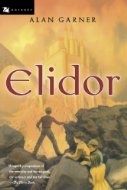
Elidor by Alan Garner (3/5)

I first read this at school and later bought my own copy of it. It’s about four children who find themselves drawn into a mystical land called Elidor where evil forces are at work. The book is quite scary in places but I would highly recommend it for older children and young teenagers.

The Dark Cliffs by F.E. Smith (3/5)

This is obviously a very obscure one! I’ve been unable to find any information online at all, although LibraryThing tells me it’s been tagged as gothic suspense. I’d love to hear from anyone who remembers reading this book.

Elric of Melnibone by Michael Moorcock (3/5)

I only came across Michael Moorcock’s books because my dad liked them and passed his collection on to me. I’ve never been very interested in fantasy, but I loved these books. The Elric series (particularly this one, Stormbringer and The Stealer of Souls) were my favourites.

Double Vision by Annie Ross (2/5)

Synopsis: “When an American heiress is murdered, the police charge her British husband with murder. But, when a second murder occurs, there is no solution. UK TV director, Bel Campbell, learns of a third mysterious death, and finds the key to the identity of the murderer.”
Yet another one I don’t have any memories of reading!

The Drowning People by Richard Mason (2/5)

This is a murder mystery with a difference – we are told the identity of the murderer on the first page and the rest of the book attempts to show us why he did it.

Have you read any of these books?

Moon Tiger by Penelope Lively

The famous historian Claudia Hampton is dying. From her hospital bed she tells the nurse that she is going to write a history of the world: “A history of the world…and in the process, my own”.

Penelope Lively’s Moon Tiger won the Booker Prize in 1987 and yet it’s not a book that I’ve ever heard much about. Maybe it’s a good thing I didn’t know anything about it, as I would otherwise probably have felt too intimidated by the thought of reading it and might never have picked it up. And that would have been a shame because although it was certainly a complex, challenging book, it was also one that I found very rewarding and I didn’t regret the time and effort I put into reading it.

I really wanted to love Moon Tiger. And I did love parts of it. The whole book is beautifully written (I particularly liked the final chapter) and I found myself constantly marking passages I wanted to remember. The only problem I had was that the story was too fragmented for me. The narration jumps from third person past tense to first person past tense to third person present tense – as well as back and forth in time. Eventually I began to really appreciate how well-structured the story actually was, but unfortunately it didn’t start to work for me until I was halfway through the novel.

As Claudia explains at the beginning of the book she is taking a ‘kaleidoscopic’ view of history. One idea leads to another with only very tenuous connections between them. The most tiny and innocent things that happen in the hospital (a conversation with the nurse about God, a poinsettia plant brought in by her sister-in-law) trigger memories which lead to other memories and then other memories…

Sometimes the narrator also changes very abruptly, so that we see the same scene from two different perspectives. This made things even more confusing, but did help build up a full, balanced picture of Claudia. And Claudia is not the most likeable of people. I loved her as a character – she’s fascinating and unconventional – but not as a person. At first I couldn’t understand her animosity towards her sister-in-law, Sylvia, and I was frustrated that she wasn’t more loving to her daughter, Lisa. The reasons for her behaviour are revealed only very slowly as the story progresses and the secrets of Claudia’s past come to light. This gave the novel some suspense and mystery, as not everything was obvious from the beginning and a lot of things didn’t fall into place until near the very end. I still couldn’t actually like Claudia, but at least I could understand her better.

I did like the way Claudia talked about history and how she was able to relate historical events to events from her own past. To Claudia, history is a personal subject – she writes her history books for the general public, in language that they can understand. And just as it would be difficult to write a history of the entire world in strictly chronological order, the story Penelope Lively tells in Moon Tiger is not chronological either.

Where the book really comes into its own is in Claudia’s recollections of Egypt when she was working in Cairo as a war correspondent during World War II. The descriptions of Egypt are vivid and realistic, the type that could only be written by someone familiar with the country (as Penelope Lively was). It’s in these sections that we begin to see a softer side of Claudia – and in case you were wondering, this is also when we finally learn what a Moon Tiger is!

I still find it hard to say what I thought about this book. I was impressed by it, but did I actually enjoy it? No, not really – but it was certainly one of the most interesting and unusual books I’ve read this year.

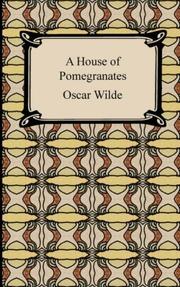
A House of Pomegranates by Oscar Wilde

Last week I posted my thoughts on Laura Silver Bell by Sheridan Le Fanu for Irish Short Story Week. I then wanted to read another short work by an Irish author and remembered that A House of Pomegranates by Oscar Wilde was one of the free ebooks that came with my Sony Reader. Perfect!

A House of Pomegranates contains four short fairy tales by Wilde. I originally intended just to read one of them but ended up reading the whole book! Each story has a moral lesson for the reader but first and foremost they are enjoyable fairy tales – although quite dark in tone, as many fairy tales are.

Wilde apparently said that the stories in A House of Pomegranates are “meant partly for children, and partly for those who have kept the childlike faculties of wonder and joy, and who find in simplicity a subtle strangeness.” Having read the book I would agree with this assessment of it. Although I’m sure there are a lot of children who would enjoy the stories (I know I would probably have loved them if I’d read them when I was younger), I think they might be too long and too heavy on description for some, and in many ways will be appreciated more by adults.

In The Young King, we are warned against the love of beauty and luxury. On the eve of his coronation, the young king, who loves all the beautiful things in life, has three dreams in which he learns exactly where his magnificent new robe, sceptre and crown have come from – and suddenly, they don’t appear so beautiful after all.

The Birthday of the Infanta is a poignant story about the King of Spain’s daughter, who is celebrating her twelfth birthday. Among the entertainments that have been arranged for her is a performance by a dwarf, who later becomes convinced that the Infanta is in love with him. It quickly becomes obvious that the Infanta has a very sad and lonely life, but my sympathy was for the dwarf, who can be seen to represent anyone who is the victim of cruelty and prejudice. Even the flowers in the palace garden ridicule him.

The Flowers were quite indignant at his daring to intrude into their beautiful home, and when they saw him capering up and down the walks, and waving his arms above his head in such a ridiculous manner, they could not restrain their feelings any longer.

‘He is really far too ugly to be allowed to play in any place where we are,’ cried the Tulips.

‘He should drink poppy-juice, and go to sleep for a thousand years,’ said the great scarlet Lilies, and they grew quite hot and angry.

The Fisherman and his Soul is the longest of the four stories and to be honest, I didn’t think it needed to be quite so long. It felt very repetitive, which was a shame because it was otherwise an excellent story about a fisherman who falls in love with a mermaid and sacrifices his soul for her. It can almost be seen as a re-working of The Little Mermaid by Hans Christian Andersen, but instead of the mermaid longing to become human as in Andersen’s story, this is the reverse.

My favourite story in the book was The Star-Child, about a child who is found by a woodcutter after a shooting star falls from the sky. The child grows up to be selfish and conceited, but finally gets a chance to redeem himself.

A House of Pomegranates is certainly worth reading if you’re looking for something a bit different or if you like Oscar Wilde’s writing (although the wit and humour which shines through in his other works isn’t really present here). I would be interested in comparing this book with Wilde’s other, more popular, book of short stories, The Happy Prince & Other Tales, but I’ll have to wait until I’m in the mood for some more fairy tales!

Have you read either of Oscar Wilde’s two books of fairy tales?