Virago Reading Week: The Enchanted April by Elizabeth von Arnim

This is my second post for Virago Reading Week, hosted by Rachel of Book Snob and Carolyn of A Few of My Favourite Books. When I was choosing my books for this week, I knew it was time to try something by Elizabeth von Arnim, a writer whose work I had never read but who seems to be one of the most popular and most loved Virago authors.

The Enchanted April, first published in 1922, is the story of four women who rent a castle in Italy together one April. The women are strangers to each other at the beginning of the novel, but each of them has her own reasons for wanting a holiday. Spending a month at San Salvatore surrounded by sunshine and flowers gives each woman a chance to resolve her problems and try to find happiness.

Our four main characters have very different personalities and very different circumstances. First, there’s Lotty Wilkins who has grown tired of having her life controlled by her husband and is desperate to escape from him for a while. Calm, grave Rose Arbuthnot has the opposite problem: her husband is so wrapped up in his career that he barely remembers she exists:

To be missed, to be needed, from whatever motive, was, she thought, better than the complete loneliness of not being missed or needed at all.

Then there’s Lady Caroline Dester, also known as ‘Scrap’, who is bored with her life and just wants to be left alone. And finally there’s Mrs Fisher who, at sixty-five, is older than the others, and spends most of her time reminiscing about the past.

The story begins when Lotty and Rose meet for the first time in a Women’s Club in London one rainy afternoon and decide to respond to an advertisement in The Times:

To Those Who Appreciate Wistaria and Sunshine: Small mediaeval Italian Castle on the shores of the Mediterranean to be Let furnished for the month of April. Necessary servants remain. Z. Box 1000, The Times.

How could anyone resist answering an ad like that? However, they need to find another two ladies to help share the cost and this is where Lady Caroline and Mrs Fisher come into the story. All four of the female protagonists are interesting, complex people and I enjoyed seeing how they were transformed by their time in Italy. I think my favourite was probably Lady Caroline. She’s tired of being surrounded by people who only care about her looks and money and throughout the novel she attempts to keep her companions at a distance – but as the reader, we are given an insight into her mind and can understand her unhappiness.

People were exactly like flies. She wished there were nets for keeping them off too. She hit at them with words and frowns, and like the fly they slipped between her blows and were untouched. Worse than the fly, they seemed unaware that she had even tried to hit them. The fly at least did for a moment go away. With human beings the only way to get rid of them was to go away herself.

I’m so glad my first experience with von Arnim was a good one. I hadn’t expected something so readable and full of gentle humour and wit and yet with so much depth and such a lot of character development. I also loved the setting and the atmosphere. The images of Italy in the spring were beautifully described, with the sun shining and the flowers bursting into bloom. I defy anybody to read this story and not want to immediately book a trip to Italy this April!

As the title suggests, The Enchanted April is a lovely, enchanting story! After enjoying this one so much, I’ll definitely be reading more of Elizabeth von Arnim’s books – any suggestions as to which one I should read next?
Cutting for Stone by Abraham Verghese

“I will not cut for stone, even for patients in whom the disease is manifest; I will leave this operation to be performed by practitioners, specialists in this art.” ~ the Hippocratic Oath

We’re in the middle of Virago Reading Week at the moment (I posted my thoughts on Rebecca West’s The Return of the Soldier on Tuesday and will be posting on The Enchanted April by Elizabeth von Arnim at the weekend) but today I want to talk about a non-Virago book I read earlier this month. It’s taken me a while to put this post together as I’ve had trouble finding the words to convey how wonderful the book was.

Cutting for Stone is the story of Marion and Shiva, the identical twin sons of Sister Mary Joseph Praise, an Indian nun, and Thomas Stone, a British surgeon, who are both working at Missing Hospital in Addis Ababa, Ethiopia. When Mary Joseph Praise dies in childbirth, Thomas Stone is unable to cope and, refusing to take responsibility for his children, disappears from the hospital. It falls to two of Missing’s other doctors, Hema and Ghosh, to give the twins a loving home and ensure their safety amid the political instability and military coups that affected life in Ethiopia in the second half of the twentieth century.

Cutting for Stone has an epic feel, spanning several continents and several decades. Through the eyes of our narrator, Marion Stone, we meet the people who live in and around Missing Hospital from the Matron and the Staff Probationer to Thomas Stone’s former maid, Rosina, and her daughter, Genet, the girl Marion loves. All of the characters, even the less likeable ones, have a lot of depth and as we learn more about them, we are able to understand what makes them behave the way they do. But at the heart of the story is the relationship between Marion and Shiva. Conjoined twins, born attached at the head, they have a very special bond which is put to the test several times throughout the novel.

There are some very detailed and graphic descriptions of surgical procedures throughout the whole book. This didn’t really bother me, and a lot of it was very interesting, but I feel I should warn you so that those of you who are squeamish can be prepared! Without even reading the author bio, it was obvious that Abraham Verghese must be a doctor himself because the language he uses is very technical. The fact that the book was written by a physician gives it a real authenticity and the author’s own passion for medicine and healing shines through. Medical care in 1950s Ethiopia was very basic and I had a lot of sympathy for the Matron of Missing Hospital, who did her best for the patients under her care despite the limited resources available to her. I could really feel her frustration as the hospital patrons gave her Bibles in place of the medicine and food she so desperately needed.

I think this is the first book I’ve read that is set in Ethiopia. Before I started reading I knew almost nothing about the country and its political history, but this didn’t matter at all as everything was explained in a way that was both informative and easy to understand. Little facts and details were dropped into the story, building up a clear picture of Marion’s life in Ethiopia. I love books like this one that leave me feeling that I’ve really learned something new while being entertained by a great story at the same time!

Although I’ve had a copy of Cutting for Stone since last summer I wasn’t sure I would enjoy it and hadn’t felt like reading it until I saw how many people had named it as one of their top books of 2010 and I finally decided I’d better read it as soon as possible, in the hope that it might become one of my own top books of 2011. Well, even though it’s still only January, I can’t imagine I’ll be reading a lot of books this year that are better than this one.

Highly recommended.

Virago Reading Week: The Return of the Soldier by Rebecca West

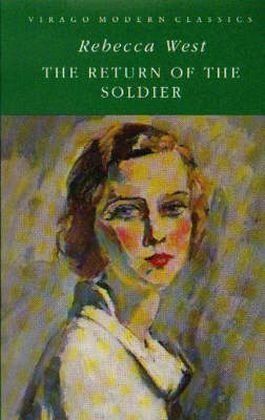
Rebecca West’s The Return of the Soldier was written during World War I and published in 1918. The soldier of the title is Christopher Baldry, who has just been sent home from a hospital in Boulogne. Chris is suffering from severe amnesia and is unable to remember the last fifteen years of his life. He can’t wait to be reunited with his girlfriend Margaret Allington, the daughter of an innkeeper on Monkey Island. Unfortunately, though, Margaret is no longer his girlfriend – she’s married to another man and is now Mrs Grey. And to make matters even more complicated, Chris has a wife of his own.

The story is narrated by Jenny, Chris’s cousin, who has been staying at his home, Baldry Court, with his wife, Kitty. Jenny is unmarried but appears to be in love with Chris herself and is devoted to making him happy. When it becomes obvious that Chris really can’t remember Kitty and is still in love with Margaret, the three women are faced with a decision. Is it better for him to be ‘cured’ and regain his memory, even if it means bringing back the horrors of war – or should he be left as he is, blissfully unaware of what has happened during the last fifteen years?

Despite being a quick read at less than 200 pages, The Return of the Soldier raises some interesting issues and leaves the reader with a lot to think about. Although the title character is a First World War soldier, this is not really a book about the war itself and we learn almost nothing about what Chris experienced (in fact, I felt that we didn’t really get to know Chris very well at all). Instead, West takes the war as a starting point to explore some of the consequences that arose from it, such as memory loss as a symptom of the shell shock which many soldiers suffered due to their horrific experiences in the trenches.

But to me, the major theme of this novel was West’s portrayal of class differences, with the rich, spoilt Kitty on one side and the poor, plain Margaret on the other. Kitty treats Margaret with disdain and contempt and Jenny initially shares the same views. I actually found the first couple of chapters quite difficult to read because of their nasty attitudes. For example, this is what Jenny thinks of Margaret on their first meeting:

She was repulsively furred with neglect and poverty, as even a good glove that has dropped down behind a bed in a hotel and has lain undisturbed for a day or two is repulsive when the chambermaid retrieves it from the dust and fluff.

Eventually Jenny’s attitude starts to change and she begins to see why Chris loves Margaret so much. However, Kitty’s character is never really developed at all. I was expecting Kitty and her relationship with Chris to play a bigger part in the story, but this didn’t happen. Instead, as Margaret comes into the forefront of the story and we start to see her inner beauty and warmth, Kitty’s role becomes less significant.

This book can easily be read in one sitting, which is exactly what I did as I didn’t want to put it down. Rebecca West’s writing is beautiful and for such a short book it was very moving and poignant. Just a word of warning, though – don’t read the back cover first as it gives the ending away!

I read this book as part of the Virago Reading Week hosted by Carolyn of A Few of My Favourite Books and Rachel of Book Snob.

Our Mutual Friend by Charles Dickens

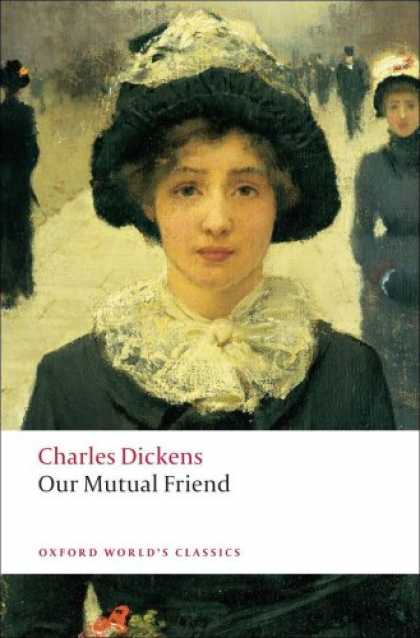
I’m planning to read a lot of Victorian classics this year for the Victorian Literature Challenge (and because I love reading them anyway, of course) so I decided to start with one that has been on my TBR pile for a long time: Our Mutual Friend by Charles Dickens.

Last year I read Bleak House and although I didn’t love it, it didn’t put me off reading more Dickens. However, this one at first felt very similar and some of the aspects of Bleak House that I didn’t like were present here too (a huge number of characters were introduced within the first 100 pages and a lot of different storylines were begun then abandoned for several chapters). I wondered if I really wanted to continue, or if I should choose a different Dickens book to read instead. Then suddenly, things improved. The story started to make sense and I found I was enjoying it. Really enjoying it!

Our Mutual Friend opens with Gaffer Hexam and his daughter Lizzie discovering a dead body in the Thames. The body is assumed to be that of John Harmon, who was on his way to London to marry Bella Wilfer. John’s father had recently died and one of the conditions of his will was that unless John married Bella, he would not be allowed to claim his inheritance.

Bella is disappointed when she learns that he has drowned. It’s not fair: not only has she missed out on the money, now she’s going to have to wear mourning for a man that she’s never met and who died before they were even married! Mr and Mrs Boffin, the kind-hearted couple who inherit the Harmon fortune in John’s absence, feel sorry for her and invite her to stay with them. However, the Boffins soon become the target of fortune hunters and blackmailers such as Silas Wegg and Mr Venus.

Being almost 800 pages long, and being Dickens, this is only one small part of the story. There are several other plots and sub-plots which eventually become woven together – and some very memorable characters, including Jenny Wren, the ‘Dolls’ Dressmaker’, Mrs Higden, who lives her life in terror of the workhouse, and Bradley Headstone, a murderous schoolmaster who falls in love with Lizzie Hexam.

Although I did enjoy this book and found most of it entertaining and gripping, I did struggle with the chapters that took place in the ‘fashionable world’ of the Veneerings’ dining room. This world of dinner parties and politics contrasts sharply with the other main setting of the book, the River Thames, where most of the action takes place. We meet the people who earn their living from the river, we spend some time in the riverside inns and taverns, and in a way the river becomes the most important ‘character’ in the book.

And as the great black river with its dreary shores was soon lost to her view in the gloom, so she stood on the river’s brink unable to see into the vast blank misery of a life suspected, and fallen away from by good and bad, but knowing that it lay there dim before her, stretching away to the great ocean, Death.

I liked both of the two main female characters. Lizzie Hexam is a typical Dickens heroine, but she didn’t irritate me like Esther Summerson did in Bleak House. Bella Wilfer, though, turned out to be a surprisingly complex character. Although she was quite self-absorbed and materialistic, I liked her because she was warm-hearted and despite admitting she wanted to marry a man with money, she also seemed to feel genuinely guilty about it. Money, and how it can change people, is one of the main themes of the book, as Bella explains to her father here:

And yet, Pa, think how terrible the fascination of money is! I see this, and hate this, and dread this, and don’t know but that money might make a much worse change in me. And yet I have money always in my thoughts and my desires; and the whole life I place before myself is money, money, money, and what money can make of life!’

Fathers and daughters play a big part in the story and it’s interesting that with only a few exceptions, the relationship is always the same – a strong, loyal and loving daughter with a weak, villainous or child-like father. Mr Wilfer is described as ‘cherubic’ and devoted to Bella, who treats him like a baby. Then there’s Pleasant Riderhood and her criminal father, Rogue, as well as Lizzie and her father, Gaffer, who was a former associate of Rogue’s. And there’s Jenny Wren, who refers to her alcoholic father as her ‘bad child’ and makes him sit in the corner in disgrace.

Our Mutual Friend is such a big, complex novel it does require the reader to invest a lot of time and effort in it, but it was definitely worth it for me! I now feel much happier about reading more Dickens in the future.

It’s time for Bloggiesta!

Bloggiesta is here at last! I was unable to participate in last June’s event, so I’ve been looking forward to this one.

For those of you who are wondering what Bloggiesta is, it’s a three day marathon for bloggers to spend some time working on their blogs, making improvements, fixing problems and finding inspiration. Bloggiesta is hosted by Natasha at Maw Books and you can sign up anytime during the weekend.

I don’t know how much time I’m going to have this weekend, but I’m hoping to do as much as I can. Here are a few of my goals, though I’ll probably be adding more things to this list as they occur to me. I’ll strike through each item as I complete it.

1. Catch up with writing my reviews – I hate being behind with them! UPDATE: Got most of these done, but still have one to write.
2. Write the next few posts in my Remember These? series – UPDATE: Started these but will need to spend more time on them.
3. Check that my posts are tagged correctly and in the correct categories.
4. Update my About page and Review Policy.
5. Check my reviews on Goodreads and LibraryThing – I know some of them are still linking back to my old Blogger blog instead of this one.
6. Finish cross posting reviews to Goodreads/LibraryThing/Amazon.
7. Tidy my sidebars/update links in Blogroll.
8. Try to organise my Google Reader.
9. Change email address and associate blog with new email address.
10. Find out how to transfer my Google Reader feed subscriptions to my new email address.
11. Make new header image.
12. Back up my blog.

I’ll be updating this post a few times over the weekend. Good luck to everyone else who is taking part!

Major Pettigrew’s Last Stand by Helen Simonson

For some reason I have found this review very difficult to write and have started and re-started it several times. I think the problem is that Major Pettigrew’s Last Stand is a very simple novel, but also a very complex one. On one level it’s a gentle, romantic story about sixty-eight year old Major Ernest Pettigrew and his love for Mrs Jasmina Ali, the Pakistani woman who runs the village shop. But there’s so much more to the book than that. In Major Pettigrew’s Last Stand, Helen Simonson explores a number of issues including racism, religion, loneliness, family relationships and tradition vs progress.

The book is set in the small English village of Edgecombe St Mary where Major Pettigrew, a retired British army officer, lives on his own at Rose Cottage. Both he and Mrs Ali have suffered recent bereavements and are starting to feel very alone in the world. The Major welcomes Mrs Ali’s friendship as she’s refreshingly different from the other women in Edgecombe St Mary; she’s quiet, dignified and shares his love of literature. Unfortunately, the Major’s middle-class friends and neighbours disapprove – they can’t think of Mrs Ali as anything other than the woman from the village shop. Meanwhile, Mrs Ali’s nephew, Abdul Wahid, is also unhappy about his aunt’s new relationship – he’s hoping she’ll move away to live with family so that he can take over the management of the shop. Can the Major and Mrs Ali overcome these obstacles and find happiness?

Major Pettigrew is a wonderful character, both endearing and annoying at the same time. It seemed to me that while he was accusing others of being judgmental, he was constantly making his own judgments about people: northerners, teenagers, Americans and even his own family and friends. However, he is never rude to other people and he does come to discover that some of his own prejudices are unfair. He has a certain amount of old-fashioned charm and I could sympathise with him as he tried to adapt to a rapidly-changing world. I loved him from the beginning because he was a polite, honourable person who genuinely wanted to do the right thing.

I also loved Mrs Ali. She wanted so much to be accepted by her neighbours but struggled to fit in with such a narrow-minded community where most of the other ladies were wrapped up in a world of parties, dances and committees, and didn’t even seem to realise how hurtful and insensitive some of their comments were. Almost all of the other characters, as seen through Major Pettigrew’s eyes, were loud, selfish and bad-mannered, which reflected the way the Major viewed the modern world. The Major’s son Roger was particularly obnoxious!

I really liked the setting of Edgecombe St Mary. Although the story was presumably supposed to be taking place in the 21st century, the descriptions of the village could have been from decades ago and showed a stark contrast with the commercialism and development that the Major hated so much.

If there was one thing that spoiled this book for me, it was a plot development near the end that I thought was unnecessarily dramatic and which felt completely out of place. Up to this point the story had been fairly slow-paced and subtle, concentrating on the small dramas of day to day life, and I would have preferred it to have continued this way to the end. Apart from this small criticism, I really enjoyed this book. Major Pettigrew’s Last Stand is a lovely, inspiring story and for such a gentle, leisurely read it was very difficult to put down!

Spilling the Beans on the Cat’s Pyjamas by Judy Parkinson

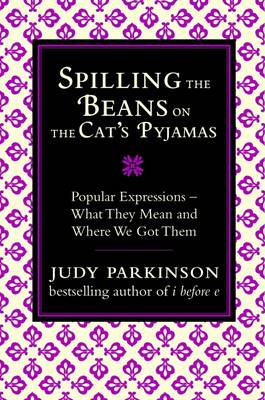
My sister gave me this pretty little book for Christmas, which was great because it’s not the type of book I would usually think about buying for myself. The title might leave you wondering exactly what this book is about, but the subtitle helps to explain: Popular Expressions – What They Mean and Where We Got Them.

The book looks at some of the well-known phrases and proverbs which appear in the English language and explains what they mean and how they originated. Do you know what ‘to shoot the moon’ means, for example, or why we give someone ‘the third degree’. Why do we ‘steal someone else’s thunder’ and why do we ‘go to the Land of Nod’ when we fall asleep?

The phrases appear in alphabetical order. I was a bit disappointed by some of the entries which are little more than a straight definition of the phrase or proverb, but the majority were interesting and I learned a lot of fascinating little facts. Some of them such as ‘ballpark figure’ and ‘take a rain check’ have American origins. Others stem from Ancient Greece or Rome. There are others that come from the Bible, some that are derived from Aesop’s fables and some that were made famous by Shakespeare. A few of the phrases have no definite origins and in these cases the author tells us that the definitions she’s providing are merely speculation.

I particularly liked the explanation for the phrase ‘to blow hot and cold’.

The expression has its origins in the Aesop’s fable that describes the experience of a traveller who accepted the hospitality of a satyr (one of the gods of the forest, a creature who is part goat and part man). The chilly traveller blew on his cold fingers to warm them – and then blew on his hot broth to cool it. The indignant satyr ejected him because he blew hot and cold with the same breath.

This is not really a book you would read from cover to cover in one sitting; it’s perfect for dipping in and out, reading a few entries at a time. It’s strangely addictive though as the entries are temptingly short (usually no more than two or three paragraphs). I’d recommend it to anyone with a love for the English language. It’s a perfect book to buy as a gift too, as it even has a special page at the front where you can write your ‘to’ and ‘from’!