Remember These? Books beginning with ‘C’

Remember These? is a series of posts looking at some of the books I recorded in my old pre-blogging reading diary. The diary spanned my teenage years to my early twenties, so most of the books mentioned below will have been read during the 1990s and although I’ve included my original ratings, these do not necessarily reflect what I would feel about the books if I read them again today!

I gave the books ratings out of 5. The symbol * means I loved the book. X means I didn’t finish it.

Books beginning with ‘C’

Here are a selection of the books that appeared on the ‘C’ page of my notebook:

The Clan of the Cave Bear – Jean M Auel (5/5*)

This is the first book in the Earth’s Children series which follows the adventures of Ayla, a prehistoric girl who is adopted by a group of Neanderthal people. I loved this one, but for some reason I couldn’t get into the second book at all, so gave up on the series. Should I give these books another chance?

Charley – Joan G. Robinson (5/5*)

Also published under the title, The Girl Who Ran Away. I’d love to hear from anyone else who remembers this children’s book, as it was one of my favourites. It was about a girl called Charley who was sent to stay with her aunt. When a misunderstanding caused her to believe that her aunt didn’t want her, she ran away and tried to survive on her own in the English countryside.

Claudia’s Shadow – Charlotte Vale Allen (4/5)

I can’t remember reading this one at all! Here’s a description from Amazon: “When her sister Claudia dies mysteriously, Rowena Graham cannot accept the verdict of suicide. In a desperate move to learn the facts about her sister’s death, Rowena moves into her sister’s home and takes over the management of Claudia’s restaurant.”

Children of the Dust – Louise Lawrence (3/5)

This is a post-apocalyptic YA novel which follows the story of three generations of people who survive a nuclear war. I read this book at school and remember it being a very effective and harrowing portrayal of both the war itself and the aftermath.

The Christmas Mystery – Jostein Gaarder (3/5)

I first read this as a teenager and re-read it in December 2009 (my review is here). I didn’t like it as much as Gaarder’s other books such as Sophie’s World or The Solitaire Mystery, but it is a perfect book to read at Christmas and has an interesting advent-calendar structure of twenty-four chapters, one for each day of advent.

Choices – Noah Gordon (3/5)

This is the third in a trilogy of books by Noah Gordon about three doctors from three different generations of the Cole family who have all inherited a special ‘gift’: they can sense when a patient is going to die. The first book, The Physician, is set in the 11th century; the second, Shaman, is set during the US Civil War. This one has a more modern setting and I didn’t enjoy it as much as the first two. It was also a lot shorter and didn’t have the same ‘epic’ feel.

The Copper Peacock – Ruth Rendell (2/5)

A short story collection by the crime writer Ruth Rendell. I can’t even remember reading this book or anything else by Ruth Rendell.
The Celestine Prophecy – James Redfield (1/5)

This book was part adventure story, part spiritual self-help book. It was about an ancient manuscript discovered in the rainforests of Peru, which contains nine important insights into life. Although it sounded fascinating I was very disappointed by it.

Crucifix Lane – Kate Mosse (x)

Kate Mosse is better known as the author of Labyrinth, Sepulchre and The Winter Ghosts. This was one of her earlier novels and something a bit different, as it was a science-fiction novel about a woman from the 1990s who travels 11 years forward in time. I didn’t manage to finish this one and haven’t had any better luck with any of her other novels.

Have you read any of the books I’ve mentioned?

Coming soon… Remember These? Books Beginning with ‘D’

The House on the Strand by Daphne du Maurier

Dick Young is at a turning point in his life. He has recently left his job at a London publishing firm and needs to decide what he wants from his future. He’s been offered another job in New York and his American wife Vita wants him to accept it, but Dick’s not so sure. When his friend Professor Magnus Lane invites him to stay at his farmhouse in Cornwall for the summer, he agrees, looking forward to a few days of peace before Vita and his two stepsons join him. But when Dick arrives at Kilmarth, Magnus convinces him to take part in a secret experiment: he has developed a new drug which allows the user to travel back in time – and he wants Dick to test it for him…

Choosing to begin 2011 with a book by one of my favourite authors was the right decision. The House on the Strand is a strange and unusual book which blends historical fiction, science fiction, time travel and psychology. I loved it! In fact, it might even make my best of 2011 list at the end of the year. Although Rebecca is still my favourite Daphne du Maurier book, this one ties with The Scapegoat as my second favourite. It actually has a very similar mood and feel to The Scapegoat even though the plots of the two books are entirely different. Both books have a male narrator and both have themes of identity and escaping from reality.

I enjoy reading about time travel and this book took a slightly different approach to the question of time travel than any other book I’ve read. Rather than physically going back in time, it’s only Dick’s mind that travels while his body stays in the present – and as you can imagine, this has some disastrous and embarrassing results. The 14th century world that Dick witnesses when under the influence of the drug seems completely vivid and real to him, yet he’s unable to interact with any of the people he meets. He feels a special connection with Roger Kylmerth, steward to the Champernoune family, and also with the beautiful Isolda Carminowe. As Dick’s fascination with Roger and Isolda grows, he spends more and more time in the past and becomes increasingly dependent on the drug.

Du Maurier wrote this book in the late 1960s when psychedelic drugs such as LSD were at the height of their popularity and the drug which Magnus invents seems to be very similar to what I’ve read about LSD. As Dick becomes psychologically addicted to the drug, he gradually grows more distant and withdrawn and his relationships with his family start to suffer. His life in the present is portrayed as dull and boring in comparison to the vivid events of the 14th century and when seen through Dick’s eyes, Vita and her two sons are unlikeable and obnoxious. To me though, they were normal, reasonable people who were trying to make sense of their husband and stepfather’s bizarre behaviour.

Despite my own interest in history and historical fiction, I didn’t find the 14th century subplot particularly compelling. The story wasn’t very strong and there were too many characters with similar names who all seemed to be married to their cousins, which made it very difficult to keep all the relationships straight. I was constantly turning to the family tree at the front of the book and still couldn’t remember who was who. My advice to anyone reading The House on the Strand would be not to worry too much about following the 14th century story. By far the most interesting part of the book is the part which takes place in the present.

There were only one or two other negative points. First of all, I was disappointed that we didn’t get to know Magnus better, as I thought he was potentially the most interesting character in the book. Secondly, du Maurier made a point of describing the landscape and the locations of the various 14th century farmsteads and manor houses in great detail. I know this was supposed to show us how the appearance of the landscape had changed over the centuries (which is quite important to the plot), but I found it confusing and even by referring to the map at the front of the book, I couldn’t seem to build a picture in my mind of what the area looked like. Apart from these minor complaints though, I loved this book.

I’ve now read around half of du Maurier’s books. The good news is that I still have the other half to look forward to!

The Thirteenth Tale by Diane Setterfield

The last book I read in 2010 was The Thirteenth Tale by Diane Setterfield. This is a book that has been hugely popular with book bloggers over the last few years and as usual, I appear to be one of the last to read it. I don’t have any excuse for this other than that certain books just seem to pass me by!

The Thirteenth Tale is the story of the reclusive and secretive Vida Winter, the world’s most popular author. Despite Winter’s fame, her past is shrouded in mystery; every time a new book is published she agrees to be interviewed – and every time she gives the journalist a different version of her life story. Now that she’s approaching the end of her life, she decides it’s time to tell the truth and summons Margaret Lea to write her biography.

Margaret is surprised by the request – after all, she’s just an amateur biographer who works in her father’s bookshop – but she agrees to visit Miss Winter and listen to what she has to say. As the story of Winter’s childhood unfolds, Margaret discovers what it is they have in common and why she was chosen to write the biography.

The Thirteenth Tale borrows elements of classic novels such as Wuthering Heights, The Woman in White, Jane Eyre, and The Turn of the Screw and it felt instantly familiar to me: the Yorkshire moors, twins, mistaken identities, ghosts and governesses all play a part in the story. I’m not saying this book was unoriginal or an exact copy of any other novel – it wasn’t – but Diane Setterfield was obviously trying to capture the overall mood of those gothic classics. Not only are the books I just mentioned referred to over and over again in the story, but they are cleverly incorporated into the plot.

Yet despite the familiarity, I didn’t guess everything that was going to happen. When the solution to the mystery (or one of the mysteries, as there are a few) was revealed, it surprised me – although the clues had been there all along and I’m sure if I read the book again it would be obvious.

One thing that struck me while I was reading this book was that we are never told when the story was supposed to be set. There are no historical references to suggest when the events of the book are taking place. Even Margaret’s timeframe, although obviously fairly recent, is still vague. I’m sure this was deliberate and it does help to give the story a timeless feel, but I’m one of those readers who likes to know when a story is set!

I can see why The Thirteenth Tale has been so popular because it really is a book for book lovers, with lots of great quotes like this:

Do you know the feeling when you start reading a new book before the membrane of the last one has had time to close behind you? You leave the previous book with ideas and themes – characters even – caught in the fibers of your clothes, and when you open the new book, they are still with you.

And this:

Do they sense it, these dead writers, when their books are read? Does a pinprick of light appear in their darkness? Is their soul stirred by the feather touch of another mind reading theirs? I do hope so.

While I didn’t love this book as much as I hoped I would (which I suspect might just be because I’ve read too many books of this type recently), it was fun, entertaining and very quick to read for a book with over 450 pages. It was also a perfect read for late December – a book to curl up with indoors while it’s cold and dark outside.

The Return of Captain John Emmett by Elizabeth Speller

When Captain John Emmett returns from France at the end of World War I, his mother and sister are worried about his mental condition. John is suffering from shell-shock, which is causing him to become aggressive and violent. After spending some time in a nursing home, John escapes and is later found dead in a nearby wood. It is assumed that he committed suicide.

John’s sister, Mary, contacts one of her brother’s old school friends, Laurence Bartram, in the hope that he can help her discover what really happened to her brother. Why would a man who had survived the horrors of the war shoot himself two years later? As Laurence starts to investigate, he begins to wonder whether someone else was behind John’s death.

The Return of Captain John Emmett is a fascinating story. It works well as a historical fiction novel, with its portrayal of the people of 1920s Britain coming to terms with the aftermath of World War I. But it’s also a gripping psychological mystery in which Laurence Bartram reluctantly takes on the role of detective to investigate the circumstances surrounding his friend’s death. There are clues, suspects, red herrings and all the other elements that make up a compelling and well-structured detective story.

The book is also an interesting and poignant study into the effects, both long-term and short-term, that the war had on individuals and their families. How people came back from the war an entirely different person to when they went away. How men dealt with the memories of the atrocities they witnessed. How their wives felt about the part of their husbands’ lives that they had been unable to share. How people were left with physical disabilities and had to learn to adjust.

We are given insights into the thoughts and emotions of a First World War soldier and we learn what it was like to be part of a firing squad. The War Poets are also touched upon, and so are the loyalties and friendships formed in British public schools.

Due to the subject and setting, the book had a sombre and depressing feel, yet I found myself really enjoying it. As the mystery surrounding John Emmett’s death became more and more complex and involved, I was completely drawn into Laurence Bartram’s investigations. The plot relies quite heavily on coincidences in places, but not so much that it spoiled the story for me at all. I loved it and will definitely be looking out for more novels from Elizabeth Speller!

I received a review copy of this book from NetGalley courtesy of Houghton Mifflin Harcourt.

The Secret Scripture by Sebastian Barry

It’s 2011, the start of a new reading year, but I still have a few reviews to post of books that I read in December 2010.  This is the first, and I’ll be posting another two later in the week before I start to discuss my 2011 reading.

The Secret Scripture tells the story of Roseanne McNulty, who has spent most of her adult life in Roscommon Regional Mental Hospital. She’s now almost one hundred years old and has decided to devote her final days to recording her life story in a secret journal. Meanwhile, the hospital is about to be closed down and Dr Grene has begun the slow process of reassessing his patients to see if they can return to the community. There’s something about Roseanne that intrigues him and he becomes determined to find out why she is there and how she came to be admitted to a mental institution.

The story is told in the form of two alternating narratives: the first is Roseanne’s Testimony of Herself in which she relates anecdotes and memories from her childhood in Sligo, Ireland, building up a picture of the events that led to her admission to the mental hospital. Roseanne is a captivating narrator with a strong, memorable voice and her story is absolutely heartbreaking; it seemed her whole life was just one tragedy after another. The second narrative is from Dr Grene’s Commonplace Book, the doctor’s account of his investigations into Roseanne’s past, as well as the details of his own troubled marriage and strained relationships. Although Dr Grene’s voice was not as strong as Roseanne’s, I still found his sections of the story interesting.

I don’t want to say too much about the plot because I think this is one of those books that will have more impact if you go into it knowing as little as possible. What I do want to tell you about is Sebastian Barry’s writing style. His style is quite unusual, very poetic in places, and it took me a few chapters to get used to it. But as the book went on, I became more and more impressed by the quality of the writing. There are so many great lines, such as when Dr Grene describes his relationship with his wife:

Now we are two foreign countries and we simply have our embassies in the same house. Relations are friendly but strictly diplomatic.

Or when Roseanne describes how her mother’s beauty has faded:

She was like a painting with its varnish darkening, obscuring the beauty of the work.

It really was beautifully written and the plot started to take second place to the gorgeous prose.

The author assumes you have some previous knowledge of 20th century Irish history. There are a lot of references to the Free State, the Irregulars, the IRA, Eamonn de Valera, the Royal Irish Constabulary and the Irish civil war, for example. I only have a basic knowledge of Irish history and although I could still follow what was happening, I think I might have got more out of the novel if I’d had a deeper understanding of the historical and political context. I also knew nothing at all about the bombing of Belfast during World War II, described here by one of the characters:

I ran like a demon along the ways, screaming I do not doubt, and saying wild prayers for the people of Belfast, and soon there were hundreds in the streets, all doing the same as me, people in their nightdresses and people naked as babes, running and screaming, and at the edge of the city we just kept going, and the waves of planes had come in behind us, all the while without mercy letting go the bombs, and an hour later or maybe more, I cannot say, I was perched on the edge of a huge dark mountain, and looked back, and Belfast was a huge lake of fire, burning, burning, the flames leaping like red creatures, tigers and such, high high into the sky…

This is just one example of Barry’s vivid imagery; I could have included a lot more.

The only thing that disappointed me about this book was a plot development towards the end that just felt too contrived and unrealistic. If it wasn’t for that one negative point, The Secret Scripture would definitely have been one of my favourite books of 2010.

Highly recommended

Best of 2010

When I sat down to compile a list of my favourite books of 2010, I expected it to be difficult because I loved so many of the books that I read this year. But when I actually looked back at all the books I read in 2010, I found it quite easy to pick out my favourites. So, in no particular order, here are the best books I’ve read this year.

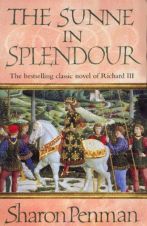
The Sunne in Splendour by Sharon Kay Penman

I read this one at the beginning of December, just in time for it to make my Best of 2010 list. The Sunne in Splendour is a fictional account of Richard III which attempts to dispel some of the myths and misconceptions surrounding one of England’s most controversial kings.
From my review: Not only did it turn out to be the best historical fiction book I’ve read for a long time, it was also one of the best books of any type that I’ve read this year.

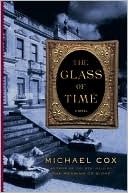
The Glass of Time by Michael Cox

This book is the sequel to The Meaning of Night, which I also read in 2010. Although they were both great books, I thought this one was the better of the two.
From my review: I enjoyed The Meaning of Night but I loved The Glass of Time even more…together these two novels are the best examples of neo-Victorian fiction I’ve read: complex, atmospheric and beautifully written.

The Far Pavilions by M.M. Kaye

I wasn’t sure whether or not to include re-reads in my Best of 2010, but as both of the books I re-read this year are two of my favourite books ever, I’ve decided they deserve a place in the list anyway. The Far Pavilions is about a British boy raised in India as a Hindu and is so well-written and well-researched I would highly recommend it to lovers of both historical fiction and literary fiction.
From my review: The term ‘sweeping epic’ is used so often it’s become a cliché, but it’s actually an accurate description of The Far Pavilions…One of my all-time favourite historical fiction novels.

The Sweetness at the Bottom of the Pie by Alan Bradley

I don’t read mysteries as often as I used to, but I really enjoyed this one. I’m planning to read the second Flavia de Luce book, The Weed that Strings the Hangman’s Bag, very soon!
From my review: I had high hopes for this book – and I wasn’t disappointed. It was every bit as enjoyable and delightful as I had been told it was.

Middlemarch by George Eliot

After a couple of previous failed attempts, I finally read Middlemarch this summer. It wasn’t an easy read but was certainly worth the effort.
From my review: After reaching the final page I can now see why so many people love this book so much. I would recommend Middlemarch to all lovers of Victorian fiction who are prepared to invest the time it takes to read such a long and complex novel.

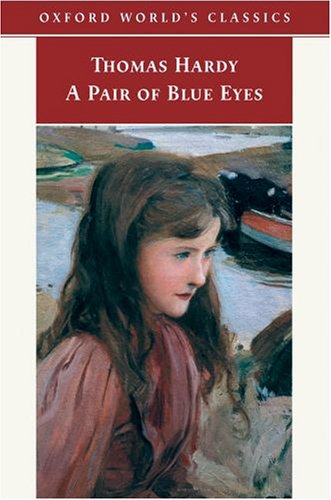
A Pair of Blue Eyes by Thomas Hardy

I was surprised by how much I enjoyed this book, as I had never even heard of it until I saw it on the shelf in the library.
From my review: I’m loving Thomas Hardy more and more with every book of his that I read…I would even say that of all the classics I’ve read so far this year, this might be my favourite.

Watership Down by Richard Adams

This was my second re-read in 2010. Watership Down was one of my childhood favourites and I was pleased to find that I loved it as an adult too!
From my review: Did I still enjoy this book as much as I did when I was 10? Yes, of course I did. No matter how many other books I read, Watership Down will always hold a special place in my heart.

The Black Tulip by Alexandre Dumas

I loved The Count of Monte Cristo and The Three Musketeers, and this one was almost as good. It was an exciting, fast-paced read and one of my favourite books of the summer.
From my review: Who would have thought that a book about growing tulips could be so exciting? And yet Alexandre Dumas managed to write a compelling page turner based on that very subject.

The Scapegoat by Daphne du Maurier

I read three Daphne du Maurier books in 2010 and although I enjoyed them all, this was the one I liked best.
From my review: Wonderfully atmospheric…This was a fascinating and unusual story, one of my favourite du Maurier books so far.

The Tenant of Wildfell Hall by Anne Bronte

I finally read both of Anne Bronte’s books in 2010. Although I was less impressed with Agnes Grey, I loved this one.
From my review: Emily Bronte’s Wuthering Heights and Charlotte Bronte’s Jane Eyre have always been two of my favourite Victorian classics…I feel a bit guilty that it has taken me so long to get round to reading one of Anne’s books, especially as I enjoyed it almost as much as the other two books I’ve just mentioned.

Tess of the d’Urbervilles by Thomas Hardy

This is a book that really seems to divide opinion, but luckily I loved it. Yes, it’s very bleak and miserable but that didn’t actually bother me, and after loving both this book and A Pair of Blue Eyes I can’t wait to read more Hardy in 2011.
From my review: I don’t have a problem with a story being tragic, melodramatic or depressing as long as it’s well-written. And Hardy’s writing is beautiful…if you haven’t read this book yet give it a try – you might hate it, but you might just love it like I did.

Wild Swans by Jung Chang

I don’t read a lot of non-fiction, but I thought this book was excellent. It made a big impact on me and I knew as soon as I started reading it that it was going to be one of my books of the year.
From my review: The most riveting non-fiction book I’ve ever read…Wild Swans is not just the story of three women – it’s much broader in scope than that and is the story of an entire nation.

Have you read any of these books? What’s the best book you’ve read this year?

Drive-By Saviours by Chris Benjamin

Drive-By Saviours, the debut novel by Canadian author Chris Benjamin, tells the story of two men from very different backgrounds who meet one day on the subway in Toronto and form a friendship that changes both of their lives forever. One of these men is Bumi, an illegal immigrant from Indonesia, on the run from his troubled past. The other is Mark, a Canadian social worker who is growing increasingly disillusioned with his job. As they get to know each other, Mark learns that Bumi is suffering from OCD (obsessive compulsive disorder) and decides to try to help him get the treatment he needs – and at the same time discovers that this new friendship could have important consequences for his own future.

The novel moves back and forth between Indonesia and Canada, with alternating chapters being told from first Bumi’s perspective, then Mark’s. Bumi’s chapters are in chronological order, whereas Mark’s are in the form of flashbacks and anecdotes. This might sound like a confusing structure, but the author handles the transitions very well and the story flows nicely.

This wasn’t a bad book by any means, but overall it didn’t quite work for me. Although I enjoyed the first half of the book, there were a few occasions during the second half where I started to lose interest in the story. And while I thought Bumi was a fascinating and sympathetic character, I felt less engaged with the chapters narrated by Mark. Maybe I just wasn’t the right reader for this book as most other reviews seem to be very positive.

However, there were some things I really liked about this book. First of all, I enjoyed the chapters set in Indonesia which described Bumi’s childhood on a small fishing island and the difficulties he experienced when he was sent to school in the city of Makassar as part of a government experiment. I know very little about Indonesia so it was nice to have the opportunity to learn something about the history, politics and culture of the country. I also found the portrayal of Bumi’s OCD very interesting to read about. The author spent a lot of time describing how Bumi’s obsessions originated and spiralled out of control, what the symptoms were, and how people reacted to his behaviour in a community where most people were uneducated and had a limited understanding of mental illness.

A lot of other interesting issues are touched on, including families being separated by immigration, the effects of tourism and progress on an island community, and life in Indonesia under President Suharto’s regime. But at the centre of the novel is the idea that two people who have grown up thousands of miles apart can discover a number of parallels in their lives and form a bond that transcends their cultural and personal differences.

I received a review copy of this book through LibraryThing Early Reviewers