Readalong: Middlemarch by George Eliot

I have had two previous attempts at reading George Eliot’s Middlemarch but both times abandoned the book after a few chapters. When I saw that Nymeth was planning a readalong this summer, I thought this might give me the motivation to persevere and actually finish the book. I think part of the problem with my past attempts was that I found the book so long and slow-moving it didn’t hold my attention and I ended up being tempted by other books on my shelf. This time round I decided to do things differently. I started reading the book at the end of June alongside other books (something I don’t usually do – I prefer to concentrate on one book at a time) and worked slowly through it, interspersing it with an occasional shorter book. As it turned out, this was the perfect way for me to read Middlemarch, as it meant I could take my time and give it the attention it deserved. And this is a book that really benefits from being read slowly.

The plot is so layered, every sentence filled with so much meaning, that I’m sure there are a lot of things that I’ve missed and will have to pick up on a subsequent reading. It certainly is a book that you need to concentrate on. There are so many characters, who all seem to be related by marriage in some way, that I had to make notes as I was reading and would never have kept all the characters straight otherwise.  I highly recommend you do the same as I found my amateurish family trees became invaluable as I progressed through the book!

So what is Middlemarch about? Well, even after finishing the book I don’t really know how to describe the plot.  Middlemarch is the story, not just of one or two people, but of an entire town and its inhabitants. It portrays the atmosphere of life in a small community where everybody knows everybody else’s business and most people’s biggest concern is what their neighbours will think of them. The relationships and interactions between the characters are wonderfully complex and Eliot cleverly weaves their storylines together, so that the actions of one person may have unforeseen consequences on the life of another.

The prologue certainly seems to refer to Dorothea Brooke and at first it appears that the book is going to be about Dorothea and her marriage to the dry and scholarly Edward Casaubon.  Dorothea is an intelligent, sincere, idealistic girl who despite the warnings of her friends and family becomes determined to marry Mr Casaubon, insisting that he has a “great soul” and that nothing will give her greater happiness in life than assisting him with his studies.

“In this latter end of autumn, with a sparse remnant of yellow leaves falling slowly athwart the dark evergreens in a stillness without sunshine, the house too had an air of autumnal decline, and Mr. Casaubon, when he presented himself, had no bloom that could be thrown into relief by that background.”

Just as we’re becoming absorbed in her story, however, Dorothea disappears for several chapters and we are introduced to some new characters.  The first is a newcomer to Middlemarch: Tertius Lydgate, a young doctor with some new and radical ideas.  Soon after his arrival, Lydgate enters into a relationship with Rosamond Vincy, which proves to be just as difficult and disappointing as Dorothea’s marriage to Mr Casaubon.

“Lydgate could only say, “Poor, poor darling!” – but he secretly wondered over the terrible tenacity of this mild creature. There was gathering within him an amazed sense of his powerlessness over Rosamond. His superior knowledge and mental force, instead of being, as he had imagined, a shrine to consult on all occasions, was simply set aside on every practical question.”

We also follow Rosamond’s brother Fred Vincy as he tries to find his true vocation in life and to earn the respect of Mary Garth, the woman he loves.  These three storylines (and several other subplots) all run alongside each other, meeting and intersecting from time to time.

There are many things that make this book so impressive and so notable but the most striking, in my opinion, is the incredibly detailed characterisation. Every character Eliot introduces us to is interesting, nuanced and believable. She even gives her characters distinctive voices (literally!) – we are repeatedly told that Celia speaks “with a quiet staccato” and that Mr Brooke has a habit of repeating himself (“I thought you had more of your own opinion than most girls. I thought you liked your own opinion – liked it, you know”).

We see almost every conceivable personality type; we experience almost every imaginable human emotion. And most importantly, the characters develop throughout the book – they mature, they learn from their mistakes, they become better people.  I could find something to admire in almost all of the characters. They all have their own flaws and faults but also have some good qualities – this makes even less likeable people such as Mr Bulstrode interesting to read about and allows us to empathise with them.  There are plenty of characters who are very likeable, though.  I particularly loved Mary Garth and her father Caleb.

“Mary was fond of her own thoughts, and could amuse herself well sitting in twilight with her hands in her lap; for, having early had strong reason to believe that things were not likely to be arranged for her peculiar satisfaction, she wasted no time in astonishment and annoyance at that fact. And she had already come to take life very much as a comedy in which she had a proud, nay, a generous resolution not to act the mean or treacherous part. Mary might have become cynical if she had not had parents whom she honored, and a well of affectionate gratitude within her, which was all the fuller because she had learned to make no unreasonable claims.”

I am not usually very good at spotting themes in books, but I could find several in Middlemarch. The most obvious is marriage and how it often fails to live up to our expectations (i.e. Dorothea Brooke and Mr Casaubon; Rosamond Vincy and Tertius Lydgate). In her portrayals of these marriages, George Eliot never places the blame entirely on either the husband or the wife.  Instead, she shows how an unhappy or problematic marriage can be caused by personality differences, unrealistic idealism and a failure to understand the person we are married to.

“All these are crushing questions; but whatever else remained the same, the light had changed, and you cannot find the pearly dawn at noonday. The fact is unalterable, that a fellow-mortal with whose nature you are acquainted solely through the brief entrances and exits of a few imaginative weeks called courtship, may, when seen in the continuity of married companionship, be disclosed as something better or worse than what you have preconceived, but will certainly not appear altogether the same.”

Another theme is change: we should remember that although Middlemarch was published in the 1870s, it was set around forty years earlier at a time of great change: there were changes in politics (the Reform Bill of 1832); changes in transport (the arrival of the railway) and changes in medicine (as portrayed through Tertius Lydgate’s new ideas and theories).

There are so many other aspects of this book that I wanted to discuss here, but I have to stop somewhere!  I haven’t even mentioned Will Ladislaw, who is made to feel unwelcome in Middlemarch by his relative, Mr Casaubon; or Mr Farebrother, who is in love with Mary Garth; or Raffles, who is as close to a villain as we get in Middlemarch.

After reaching the final page I can now see why so many people love this book so much. I would recommend Middlemarch to all lovers of Victorian fiction who are prepared to invest the time it takes to read such a long and complex novel. I don’t think this book would be for everyone though. If you prefer faster-paced stories you may have trouble getting into it, as I did on my earlier attempts. My advice to you would be to stick with it, take your time and savour every word, and the story does become more compelling as it goes on.

If I’m going to be completely honest, there are a lot of classics that I’ve enjoyed a lot more than this one, but I can’t think of any that are greater in scope, more insightful or offer a more penetrating study of humanity. After spending the summer with Dorothea and Will, Tertius and Rosamond, Fred and Mary, and the others, I’m really going to miss them all.

I’ll leave you with some more quotes from the book:

“But indefinite visions of ambition are weak against the ease of doing what is habitual or beguilingly agreeable; and we all know the difficulty of carrying out a resolve when we secretly long that it may turn out to be unnecessary.”

“And certainly, the mistakes that we male and female mortals make when we have our own way might fairly raise some wonder that we are so fond of it.”
Please see this post at Things Mean a Lot for other bloggers’ thoughts on Middlemarch

Review: The Tapestry of Love by Rosy Thornton

When Rosy Thornton offered me a review copy of her new novel, The Tapestry of Love, I thought it looked and sounded wonderful – but I wasn’t sure what I would think of it as it’s a bit different from the type of book I usually read. I needn’t have worried though, because I thoroughly enjoyed it! I admit that I had previously been unfamiliar with Rosy Thornton and her books, but now that I’ve been enlightened I would definitely like to read more of her work.

The Tapestry of Love is the story of Catherine Parkstone, a forty-eight year old divorced woman who decides to sell her home in England and buy a cottage in the mountainous Cévennes region of France. Catherine intends to start her own business providing home furnishings for her neighbours, but unfortunately things don’t go quite according to plan. And her life becomes even more complicated when her sister Bryony arrives on a three month sabbatical!

Although the book has a quiet, gentle tone, the plot was interesting enough to hold my attention from beginning to end. There were enough moments of drama to keep the story moving along and some humourous scenes too – for example, Catherine’s telephone conversations with her daughter Lexie, an aspiring journalist who is feeling increasingly disillusioned with her job at a cake-decorating magazine.

I particularly enjoyed reading about all the little details of Catherine’s new life: gardening, cooking, beekeeping, shopping at the market. The real highlight of this book though, is the sense of community: when Catherine first arrives in La Grelaudiere she is a stranger, an outsider, but over time she begins to gain the trust and respect of her neighbours and starts to forge some real friendships. We get to know Monsieur Bouschet and his wife; the reclusive Guillaume; the elderly widow Madame Volpiliere and the enigmatic Patrick Castagnol. The author skilfully brings the characters to life and makes them feel completely realistic.

I’ve never been to the Cévennes, but the mountains, remote hamlets and picturesque villages are described so vividly I could easily build a picture of the area in my mind. While I don’t think I’d be brave enough to do what Catherine did and leave my home and family to move there all on my own, it does seem like a beautiful and peaceful place to live, the kind of place you could easily fall in love with.

I very much enjoyed spending time in the mountains with Catherine and her neighbours. If you’re interested in France, needlework, nature or good food, or if you’re simply looking for an absorbing and well-written story with likeable, believable characters, you should find plenty here to keep you happy.

Recommended

I received a copy of this book from the author for review

Picture from Wikipedia

Summer Reading Challenge: After You by Julie Buxbaum

Eight-year-old Sophie has been left traumatised after witnessing the murder of her mother, Lucy, in the street near their London home. Sophie’s reaction to the tragedy is simply to stop speaking. Lucy’s best friend, Ellie Lerner, has travelled from America to London to try to help her goddaughter and she becomes determined to break through Sophie’s self-imposed silence. Knowing how much Sophie loves reading books, Ellie decides to introduce her to one of her own childhood favourites – The Secret Garden by Frances Hodgson Burnett.

However, Ellie has plenty of problems of her own. She’s left her husband Phillip at home in Boston – and she’s not sure if she wants to go back to him. Lucy’s grieving husband, Greg, is drinking too much and Ellie doesn’t want to leave him alone with Sophie just yet. And her divorced parents have just announced that they’re getting married again.

I was very unsure about this book at first; it looked very ‘chick lit’ and I’m not usually a fan of chick lit. So why did I request it from Transworld for their Summer Reading Challenge, you might ask? Well, the plot sounded interesting and the Secret Garden connection piqued my curiosity (The Secret Garden was one of my favourite books when I was a child – I really need to reread it sometime!). It’s nice to think that sharing a special book with someone can help them through a difficult time. I also learned a few interesting facts about the book – I never knew Frances Hodgson Burnett was inspired by the walled garden at Great Maytham Hall, for example.

The author has given Sophie a well-developed personality of her own, making her a believable and endearing eight-year-old. She’s a girl who prefers reading to playing games and as a result isn’t very popular with other children her age; Ellie’s own love of books helps her to form a bond with Sophie and watching their friendship develop was one of the highlights of the story.

This book is not just about Sophie though. I was kept guessing how Ellie’s relationships were going to resolve themselves, as it wasn’t immediately obvious what was going to happen. Would she go back to her husband? Or would she end up with Greg or someone else entirely? As the main character and narrator, I didn’t always agree with Ellie’s actions (particularly the way she had left Phillip without giving him a proper explanation) but as the book progresses it becomes obvious that she is grieving too – and not just for Lucy – and is trying to work out what she wants from life.

Another aspect of the book I found interesting was the way Ellie, as an American woman from Boston, had to adapt to the British culture and life in London.

So, although this was not a book I would usually have chosen to read, I did enjoy it. It was a much more complex and emotional story than I had been expecting with some important messages about love, loss, relationships and family.

I received a review copy of this book from Transworld Publishers as part of their Summer Reading Challenge.

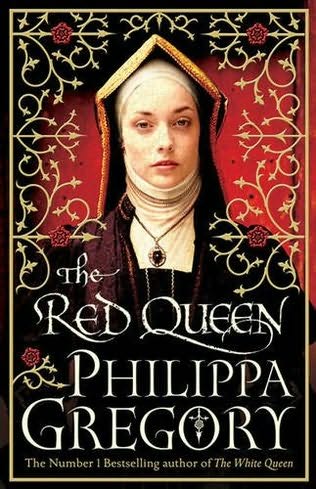
Review: The Red Queen by Philippa Gregory

This is the second book in Philippa Gregory’s new series set during the Wars of the Roses, a tumultuous period of English history in which the rival houses of York and Lancaster struggled for power. In The White Queen we met Elizabeth Woodville, wife of Edward IV of York, sister-in-law of Richard III and mother of the two young princes who mysteriously disappeared in the Tower of London in 1483. The Red Queen is the story of another woman who also played an important part in the Wars of the Roses: Margaret Beaufort of Lancaster, the mother of King Henry VII.

Although this is the second book in the series, I wouldn’t really describe it as a sequel – that is, The Red Queen doesn’t just pick up where The White Queen left off. The two books overlap somewhat and cover some of the same events, but from opposing sides of the conflict. You don’t really need to have read the first book to understand this one, although it would probably make sense to read them in the correct order. I really like the concept of two books each telling the story from a different perspective; throughout much of The White Queen, Margaret Beaufort and the Tudors were shadowy characters in the background, plotting and scheming from afar, so it was good to have them take centre stage in The Red Queen.

One of the themes running throughout the book is Margaret’s belief that God has chosen her to be another Joan of Arc, who will lead the House of Lancaster to victory, and that God’s will is for her son Henry Tudor to be crowned King. Margaret was not very likeable – in fact she came across as a very cold, ambitious and unpleasant person – but as far as I can tell, this is probably true of the historical Margaret. I was surprised that I could still enjoy this book despite the narrator being so unsympathetic; sometimes obnoxious characters can be fun to read about, and I found Margaret’s uncharitable thoughts about the House of York and the Woodville family quite funny at times.

I can’t really comment on the historical accuracy of this book because I have never studied the period in any depth – however, my lack of knowledge meant that I could just concentrate on enjoying the story! The Wars of the Roses were a complex and long-running series of conflicts, during which many of the key players changed their allegiances several times (and just to confuse things further, many of them also had the same names – lots of Henrys and Edwards, for example) but Philippa Gregory has made it easy to understand and follow what’s going on. I do think a more detailed family tree would have been helpful though – the one provided in the book was incomplete and I didn’t find it very useful.

The book is written in the same format as The White Queen, with most of the story being told in the first person present tense, occasionally switching to the third person to relate important events at which Margaret was not present, such as the Battle of Bosworth Field. I really like the way Philippa Gregory writes battle scenes using language that I can understand, as I often find reading about battles very confusing! The whole book is written in quite simplistic prose and can be repetitive at times, but it always held my attention and drew me into the story.

If you are new to the Wars of the Roses – a fascinating period of history – then I would recommend either The Red Queen or The White Queen as an excellent starting point. I also think that if you’ve tried Philippa Gregory in the past and didn’t find her books to your taste, it could be worth giving her another chance as these newest books are quite different from the Tudor ones that I’ve read.

Recommended

I received a copy of this book from Simon & Schuster UK for their Red Queen Blog Tour

Review: Poor Miss Finch by Wilkie Collins

You are here invited to read the story of an Event which occurred in an out-of-the-way corner of England, some years since.
The persons principally concerned in the Event are: – a blind girl; two (twin) brothers; a skilled surgeon; and a curious foreign woman. I am the curious foreign woman. And I take it on myself – for reasons which will presently appear – to tell the story.

Having read all four of Wilkie Collins’ best known books in my pre-blogging days (The Woman in White, Armadale, No Name and The Moonstone), I am now exploring his less popular novels. I recently reviewed Basil and A Rogue’s Life, two of his earlier books from the 1850s. This one, Poor Miss Finch, was published in 1872 and unlike most of the books that preceded it, is not really a ‘sensation novel’, although it does have certain sensational elements (mysterious strangers, theft, assault, letters being intercepted, mistaken identities etc). What it is is an interesting study into what it’s like to be blind since infancy and the emotions a person experiences on learning that there may be a chance of regaining their sight.

The story is told by a Frenchwoman called Madame Pratolungo, the widow of a South American political activist, who has just arrived in the village of Dimchurch in England to take up a position as companion to Lucilla Finch. Lucilla has been blind since she was a child and her blindness has led to a strange phenomenon – she has developed an irrational fear of darkness and dark colours. Even knowing that someone is wearing a dark purple dress, for example, sends her into a panic.

Oscar Dubourg and his twin brother Nugent are newcomers to Dimchurch. Soon after their arrival, Oscar suffers a fit and learns that he has epilepsy. In the 19th century a common cure for epilepsy was to take nitrate of silver. Unfortunately, a side effect of nitrate of silver consumption is that the skin turns blue. When Oscar and Lucilla fall in love, Oscar feels secure in the knowledge that Lucilla will never be able to see him and need never be told that his face is dark blue. However, when Nugent introduces them to the German oculist Herr Grosse, it appears that there could still be hope for Lucilla after all.

This book handles the topic of blindness in a sensitive and intriguing way. It’s obvious that Collins had done a lot of research into the subject and the results are fascinating. He discusses the theory that when a person is blind their other senses improve to compensate for their lack of sight and he weighs up the advantages and disadvantages there would be if this person then regained their sight. I had never even thought about some of the aspects of blindness that are mentioned in the book. For example, there’s an interesting moment when Madame Pratolungo realises why Lucilla shows little regard for normal Victorian conventions and proprieties.

What did it mean?
It meant that here was one strange side shown to me of the terrible affliction that darkened her life. It meant that modesty is essentially the growth of our own consciousness of the eyes of others judging us – and that blindness is never bashful, for the one simple reason that blindness cannot see.

The characters, as usual, are wonderful – most of them anyway. I didn’t find Lucilla very likeable (she has a tendency to throw foot-stamping tantrums when she doesn’t get her own way) but I loved Madame Pratolungo – she was such an amusing and engaging narrator!

I cast all feminine restraints to the winds. I sat down with my legs anyhow, like a man. I rammed my hands into the pockets of my dressing-gown. Did I cry? A word in your ear – and let it go no farther. I swore.

We also meet Reverend Finch, Lucilla’s father, who chooses to recite Hamlet at the most inappropriate moments, and his wife, Mrs Finch, who is ‘never completely dressed; never completely dry; always with a baby in one hand and a novel in the other’. With Lucilla’s little half-sister Jicks’, Collins even makes a three year old girl into an unusual and memorable character:

This amazing apparition advanced into the middle of the room, holding hugged under one arm a ragged and disreputable-looking doll; stared hard, first at Oscar, then at me; advanced to my knees; laid the disreputable doll on my lap; and, pointing to a vacant chair at my side, claimed the rights of hospitality in these words:
“Jicks will sit down.”

Although I thought parts of the plot felt contrived, the story did become very gripping towards the end. This was an interesting and thought provoking read, and if you have enjoyed any other Wilkie Collins books, then I suspect you might enjoy this one too.

Recommended

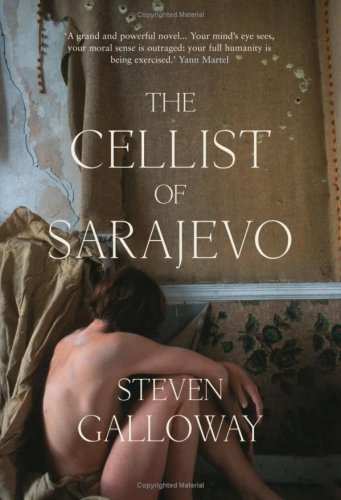
Review: The Cellist of Sarajevo by Steven Galloway

Sarajevo is a city under siege. On 27th May 1992, twenty two people are killed by a mortar shell as they wait outside to buy bread. In memory of those who died, a cellist sits in the street on twenty two consecutive afternoons and plays Albinoni’s Adagio in G Minor on his cello.

The cellist, however, is not the main character in this book – although he is there in the background throughout the story, playing his music as a message of hope and inspiration. Instead, Galloway has chosen to focus on three different characters, who are each coping in their different ways with the changes war has brought to their lives.

One of these is Arrow, a young woman who was once the star of the university target shooting team. Now she’s been recruited as an army counter-sniper and given the responsibility of protecting the cellist from attack. Then there’s Kenan, a man in his forties for whom the simple task of going to collect water for his family means putting his life in danger. And finally there’s Dragan, an older man who sent his wife and son out of Sarajevo before the siege began, and is now slowly making his way across the war-torn city to the bakery where he works.

I was only 11 years old when the Bosnian War started so probably wasn’t paying a lot of attention to news reports about it – I’m ashamed to admit that I know very little about what happened and before I read this book was only vaguely aware that Sarajevo had been under siege. However, if you’re looking for a book that will teach you the facts about the war, you’ll need to look elsewhere as this book does very little to educate the reader about the war itself. We are never even told the nationality of any of the characters. The snipers surrounding the city are referred to as simply ‘the men on the hill’; those defending Sarajevo are ‘the men in the city’.

This vagueness was very effective because in a way, Steven Galloway was saying that it doesn’t matter who’s fighting who, it doesn’t matter why a war began, because people everywhere are the same, have the same feelings and emotions, and are similarly affected by the pain and suffering of war. The author could have taken any war or any siege as the basis for this book and the overall mood he created would have been the same.

I can’t say that I enjoyed this book because ‘enjoyed’ isn’t the right word. Neither is ‘loved’. But it was an incredibly powerful book and I’m glad I finally found time to read it. I think some readers would probably dislike the structure of the book with its alternating chapters from the viewpoints of each of the three characters, but it worked for me. Arrow’s storyline was the most compelling and could have been a whole book on its own, but I also found it interesting to follow Dragan and Kenan as they dodged the snipers and negotiated hazardous bridges and ruined buildings on their dangerous journeys through the city.

The Cellist of Sarajevo doesn’t tell us how the war started, the reasons for the war or even who the war was between. What it does attempt to tell us is the effects the war had on individual people, how they felt and how they tried to survive.

Highly Recommended

After the Sunday Papers #5

Last month was a great reading month for me – I read ten books, which I know is not many for a lot of other bloggers, but for me it’s more than I usually manage to read. And as well as reading those ten books, I was also slowly working my way through Middlemarch by George Eliot, which I finished last weekend. Considering this was my third attempt at reading it, I felt a real sense of achievement when I reached the final page! As I’ve finished it a few weeks ahead of schedule for Ana’s readalong, I won’t post my thoughts on the book just yet, but will wait until later in the month. Who else has been reading Middlemarch for the readalong? Are you enjoying it?

Another readalong I’ve signed up for is Bleak House by Charles Dickens, which is being hosted by Amanda of The Zen Leaf. Bleak House, like Middlemarch, is a book that I started reading once before but stopped because I wasn’t in the right mood for it. I can be a very moody reader sometimes! Hopefully this time I’m going to enjoy it. If you’d like to participate too, see Amanda’s post to sign up.

This week I’ve been reading The Red Queen by Philippa Gregory which I was sent by Simon & Schuster UK for their Red Queen blog tour. The Red Queen is the second book in Philippa Gregory’s new Wars of the Roses series, which was a fascinating time in English history. I would welcome any recommendations of good non-fiction books about this period as I’d really like to learn more about it.

I’ll be posting my review of The Red Queen soon, but in the meantime why not enter this competition to win a signed copy of the UK hardback – it’s open worldwide until September 30th.

I also received two more books for review this week, which is exciting for me as I don’t usually get very many.

After You by Julie Buxbaum is the third book I’ve received from Transworld for their Summer Reading Challenge (the first two that I’ve read and reviewed were Second Hand Heart and If I Stay). I also had a nice surprise when Rosy Thornton contacted me to offer me a copy of her new novel, The Tapestry of Love. I’m looking forward to reading both of these books.

What will you be reading this week?