Review: The White Queen by Philippa Gregory

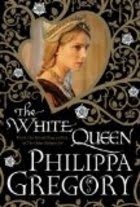
Philippa Gregory is best known for her Tudor court novels, but with The White Queen she moves further back in time to the Plantagenets and the Wars of the Roses.

Elizabeth Woodville is twenty seven when she meets and falls in love with King Edward IV. Following a private wedding, Elizabeth becomes Queen of England and finds herself caught up in the ongoing battles between the House of Lancaster and the House of York. Amidst all the politics, intrigue and betrayal, Elizabeth’s concern is for the future of her children – in particular her two royal sons who will become the famous ‘Princes in the Tower’, a mystery which remains unsolved to this day.

The book is written in the first person present tense which I found slightly irritating, though not enough to stop me from enjoying the book. The use of present tense does help the reader to feel as if they are experiencing events along with Elizabeth, so it works in that sense, but my personal preference is definitely for past tense. There are a few passages where the viewpoint temporarily changes to the third person in order to describe battles which Elizabeth doesn’t witness but which are an important part of the storyline. I often find battle scenes boring, but these are well written and go into just the right amount of detail.

I found the story itself quite suspenseful and exciting – it probably helped that although I read a lot of historical fiction novels, I haven’t read many about the War of the Roses, so only had a vague idea of what was going to happen. Of course, this meant that I wasn’t sure exactly which parts of the book were based on fact and which parts were the invention of the author. In her note at the end of the book, Gregory mentions that there’s not much information available about the period, therefore there are some areas where she felt free to use her imagination.

If you’re not very familiar with the historical background, you’ll need to concentrate to be able to keep track of all the battles, changes of allegiances and numerous claimants to the throne. The family tree provided at the front of the book is not very helpful – it’s incomplete and really needed to show at least one more generation, as it ends before some of the important characters in the story were even born.

I found it difficult to warm to the character of Elizabeth but could feel sympathy for her, especially towards the end of the book. Richard III was also portrayed quite sympathetically – nothing like the evil hunchback in Shakespeare’s play! I would have liked to have seen his relationship with Elizabeth more thoroughly explored in the book – there was no real explanation for why she distrusts him so much, other than that she’s had dreams and premonitions that something bad will happen to her sons in the Tower. On the subject of the Princes in the Tower, the book explores an interesting theory, which may or may not be true – it would be nice to think that it was.

Interspersed with the main story is the tale of Melusina, the water goddess, from whom Elizabeth and the female members of her family are said to have descended and from whom they claim to have inherited magical powers.
Magic and mythology are recurring themes throughout the book. Elizabeth and her mother Jacquetta’s witchcraft skills are used as an explanation for several key historical events – for example, they whistle up storms to defeat their enemies at sea. This aspect of the story became quite repetitive and just didn’t appeal to me much. Sometimes it felt as if there were references to Melusina, water, rivers, the sea etc on almost every page!

The book ends abruptly, but that’s not surprising since The White Queen is the first in a trilogy called The Cousins’ War and will be followed by The Red Queen and The White Princess which will focus on Margaret Beaufort and Elizabeth of York respectively.

I would recommend The White Queen if, like me, you don’t have much knowledge of the Wars of the Roses and are looking for an enjoyable and relatively easy to understand introduction to the period. For those of you with a lot of background knowledge, I think there should still be enough new ideas to keep you interested.

Recommended

Genre: Historical Fiction/Pages: 417/Publisher: Simon & Schuster/Year: 2009/Source: My own copy bought new

Bloggiesta: Starting Post

Today is the first day of Bloggiesta! For those of you who don’t know what Bloggiesta is, it’s a blogging marathon hosted by Natasha of Maw Books and is a great way for bloggers to get ideas and inspiration to help improve their blogs.

When I first decided to start a book blog in October last year, I had no idea the book blogging community was so huge. I just thought I would post some reviews as a kind of online reading diary and if I was lucky one or two other people might read them. Consequently I didn’t give much thought to layouts, graphics, post templates or anything like that. That’s why I’m looking forward to taking part in Bloggiesta this weekend. I’ll try to post a few updates along the way to let you know what I’ve been doing!

See this post at Maw Books for more information.

National Just Read More Novels Month 2010

NaJuReMoNoMo books

January is National Just Read More Novels Month 2010 hosted by yellojkt of Foma.

Here are the rules, taken from the NaJuRedMoNoMo post:

1. Must Be A Novel. Works of fiction only, please. Memoirs, non-fiction, how-to books, and Garfield collections don’t count.
2. Memoirs Aren’t Novels. No matter how made up the story, anything ostensibly true isn’t a novel. Also known as The James Frey Rule.
3. Start and Finish in January. I guess if you got some cool books for Christmas, Hanukkah or some other gift-giving event and jumped the gun, you can’t be blamed. But I only count books I start and finish within the 31 day window.
4. Re-reading Doesn’t Count. Try something new. Read something by your favorite author or try an entirely new author or tackle that novel you have always wanted to read.
5. Have Fun. Nobody is grading you or paying you or judging you. Read what you like and like what you read.

The Sunday Salon: 3rd January 2010

Welcome to the first Sunday Salon of the year! I’ll be going back to work tomorrow after 11 days holiday, so I really need to put some kind of schedule together so I can keep posting regularly. Next weekend I’ll be taking part in Bloggiesta so I’m hoping that will be the motivation I need to get organized!

I’m more than halfway through The White Queen by Philippa Gregory which means I’ll soon have finished my first book of 2010 and will be able to post my first review of the year. I am keeping track of all the books I read in 2010 elsewhere on this blog. This will also be my list for the 100+ Reading Challenge. I’ll be surprised if I do actually manage to read 100 books this year because I’m not the fastest reader in the world (it doesn’t help that I work full-time and that I usually read long books) but I’m not going to worry about it if I fail the challenge. It will just be interesting to see how many books I read, because I’ve never kept count before.

Reviewed in the last week:

The Christmas Mystery by Jostein Gaarder

Added to my wishlist:

I was reading a post at Historically Obsessed about a new Susan Higginbotham book called The Stolen Crown due to be published in March. It’s about the same subject as The White Queen – The Wars of the Roses – so it’s been added to my wishlist.

It’s 2010!

Myspace Graphics
New Year Graphics at WishAFriend.com

Well, it’s 2010! I woke up today to the heaviest snow we’ve had here for years, so I don’t think I’ll be going anywhere this morning which is fine because it gives me time to organize my 2010 challenges and to do some reading.

The first book I’m reading this year is The White Queen by Philippa Gregory which will count towards a few different challenges including both the historical fiction ones. What about you – what’s your first book of 2010?

2009 End Of Year Wrap-Up Post

Since I only started blogging in October, this post refers to my October-December 2009 reading only. I’m looking forward to 2010 as it will be my first full year as a book blogger.

Number of books read (from 17th October – 31st December):

11

Reviews posted in 2009 (from 17th October – 31st December):

October 2009

An Echo in the Bone – Diana Gabaldon

November 2009

Les Miserables – Victor Hugo
Testament of Youth – Vera Brittain
The Woman in White – Wilkie Collins
The Moonlit Cage – Linda Holeman
Molly’s Millions – Victoria Connelly

December 2009

The Kite Runner – Khaled Hosseini
The Rendezvous and Other Stories by Daphne du Maurier
A Christmas Carol – Charles Dickens
A Warrior’s Life: A Biography of Paulo Coelho – Fernando Morais
The Christmas Mystery – Jostein Gaarder

Challenges completed in 2009:

The Christmas Reading Challenge

Thanks to everyone who has visited my blog in 2009. It’s great to be a part of the book blogging community! Happy New Year and I hope you all enjoy your reading in 2010!

Christmas Reading Challenge: Wrap-Up Post

The Christmas Reading Challenge was hosted by Michelle of The True Book Addict. The idea was to read at least one Christmas book between November 26 2009 and December 31 2009. I read two books: A Christmas Carol by Charles Dickens which I gave 4.5 stars and The Christmas Mystery by Jostein Gaarder which got 3 stars. I was unsure whether The Christmas Mystery would count, as Michelle had stated no children’s books – but although the two main characters are children, I don’t consider it to be a children’s book. Anyway, I’ve completed the challenge!

1. A Christmas Carol by Charles Dickens
2. The Christmas Mystery by Jostein Gaarder

See my original post about the challenge.