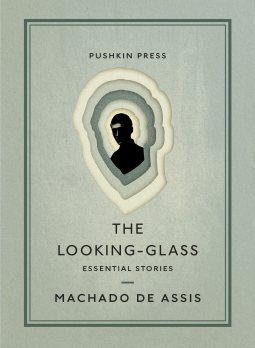
Recent reads: The Drums of War; Ashes in the Snow; Ithaca

I’m falling behind with my reviews again, so here are my thoughts on three recent reads – all very different books.

The Drums of War is the third in Michael Ward’s Thomas Tallant mystery series, continuing the story begun in Rags of Time and The Wrecking Storm. It also works as a standalone novel, so don’t worry if you haven’t read the first two in the series.

This third novel opens in London in 1642. With the divisions between King and Parliament becoming greater, England is rapidly heading towards Civil War and spice merchant Thomas Tallant and his friends are being forced to choose sides. Soon Tom finds himself assisting the Puritan leader John Pym in his search for a consignment of stolen gunpowder being smuggled out of London by Royalist forces. Meanwhile, Elizabeth Seymour is carrying out investigations of her own as she sets out on the trail of a mysterious jewel thief. Although Tom and Elizabeth are separated for most of the book and I missed their interactions, I did find both storylines interesting, particularly Elizabeth’s as she suffers a personal trauma and begins to fall back into some of her former bad habits as a result!

As with the first two books in the series, real historical figures appear alongside the fictional ones and as well as John Pym and the commander of the London Trained Bands, Philip Skippon, we also meet the scientist and physician William Harvey and are reacquainted with the intriguing Lucy, Countess of Carlisle. In the second half of the novel, the focus moves away from the mystery-solving for a while to concentrate on the events of the Civil War, particularly the battles of Edgehill and Brentford. This aspect of the story was of less interest to me, but that’s just down to personal taste (I’m not really a fan of battle scenes) and I still found this an enjoyable novel overall.

~

Ashes in the Snow is Oriana Ramunno’s debut crime novel, written in Italian and translated into English by Katherine Gregor. The book is set in Poland during World War II and begins with a young boy, Gioele Errera, finding the body of an SS officer in the snow. The man appears to have choked on an apple, but it soon seems that there is more to his death than that and German criminologist Hugo Fischer is summoned to investigate. Finding the murderer will not be easy, particularly as the dead man’s wife seems reluctant to cooperate, but Gioele agrees to help – if, in return, Hugo will help him to find his family from whom he has become separated.

This is a beautifully written and translated novel but not an easy one to read because, as we quickly discover, Gioele has a twin brother and the two of them have become subjects of the infamous Josef Mengele’s experiments. Of course this sort of thing is not supposed to be pleasant to read about, but I wasn’t really prepared for the level of detail Ramunno goes into in describing this and other parts of Gioele and Hugo’s stories. Hugo is an interesting and likeable character, a man suffering from a degenerative illness who must keep his condition a secret to avoid becoming a target of the Nazi regime himself. He’s an unusual detective and the crime element of the novel works well, but this book wasn’t for me.

~

Ithaca by Claire North is the latest of many Greek mythology retellings based on the events surrounding the Trojan War. What makes this one different from the others I’ve read is that it focuses on the story of Penelope as seen through the eyes of the goddess Hera.

It has been seventeen years since Penelope’s husband Odysseus, King of Ithaca, sailed away to war with Troy and although the war is now over, she and her son, Telemachus, are still awaiting his return. Penelope is kept busy running the kingdom with the help of her women, while also trying to defend the island of Ithaca from raiders and fend off the attentions of the crowd of suitors who have descended upon her home in the hope of marrying her if Odysseus never comes back. Meanwhile, Penelope’s cousin Clytemnestra has fled to Ithaca looking for somewhere to hide after murdering her husband, Agamemnon.

Ithaca is quite a long novel and moves at a slow pace; it’s the first in a planned trilogy and Claire North takes her time setting the scene and introducing the characters. I liked the choice of Hera as narrator; she provides a different perspective on a well-known story and I enjoyed her observations of the mortal world and her interactions with other goddesses such as Athena. However, it does mean we are kept at a distance from Penelope herself, which could explain why I found it difficult to form any kind of connection with her – or with any of the other characters. For that reason, I don’t think I’ll be continuing with the second book. Claire North writes beautifully but I needed more than that to sustain my interest and I preferred Margaret Atwood’s The Penelopiad – I didn’t love that one either, but it was a shorter and more memorable read.

The Romantic by William Boyd

Wandering through Africa wasn’t that much different, in a sense, from wandering through London, or Paris, or Boston. You thought the road ahead was obvious and well marked but more often than not the destination you had so clearly in mind would never be reached. Never. Things got in the way. There were diversions, problems, changes of mind, changes of heart…

Cashel Greville Ross, the hero of William Boyd’s new novel The Romantic, is a man who does plenty of wandering and whose path through life changes direction many times. Born in Ireland in 1799, he lives through some of the major events of the 19th century and becomes a soldier, a writer, a farmer and an explorer – though not all at the same time. He is present on the battlefield of Waterloo, befriends Byron and Shelley in Pisa and travels through Africa in search of the source of the Nile.

Cashel is not a real person, of course, although Boyd does his best to convince us that he is. The book is presented as a biography, complete with footnotes, pieced together from a bundle of letters, notes, maps and photographs which apparently fell into Boyd’s hands several years ago. It’s not a new idea, but it’s very cleverly done here and I can almost guarantee that you’ll be googling things to see if they’re true, even while knowing that they can’t possibly be!

The Romantic is a long novel, but I read most of it in one weekend because it was so gripping I couldn’t bear to put it down. Although the story never becomes bogged down with historical or geographical detail, it’s still completely immersive and I loved every minute I spent in Cashel’s world. His life story unfolds in a series of distinct episodes and I found each one equally compelling: his childhood in County Cork and the uncovering of family secrets; a journey across Italy in order to write a book about his travels; a moral dilemma faced in a Sri Lankan village while fighting with the Indian Army…these are just a few of Cashel’s adventures and there are many more which I’ll leave you to discover for yourself.

Cashel himself is a likeable character, but also a flawed one. As the title suggests, he’s hopelessly romantic; as a young man, his own proud and impulsive nature ruins his chance of happiness with the woman he loves and this sets the tone for the rest of the novel and the rest of his life, as he continually moves from country to country, continent to continent, unable to put this missed opportunity behind him and settle down. His naivety makes him vulnerable and he is repeatedly taken advantage of, suffering a series of injustices and at one point ending up in the Marshalsea Prison for debt, but he never seems to learn from his mistakes, falling into the same traps over and over again. It’s frustrating, but it’s also what kept me turning the pages, desperate to see how Cashel would get out of the latest predicament he had found himself in!

This is one of my books of the year without a doubt and I’m sorry that I’ve never read any William Boyd before.

Thanks to Viking for providing a copy of this book for review via NetGalley.
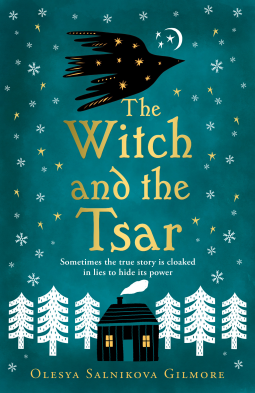
This is book 53 read for the Historical Fiction Reading Challenge 2022.

Kwaidan: Stories and Studies of Strange Things by Lafcadio Hearn

The next book I’ve read for this year’s R.I.P. XVII event is a fascinating and unusual collection of Japanese short stories, first published in 1904. The writer and translator Lafcadio Hearn was born in Greece and raised in Ireland, before later settling in Japan where he began to collect Japanese legends and folktales which he translated into English. Kwaidan: Stories and Studies of Strange Things contains seventeen of these tales, as well as three essays on insects – one on butterflies, one on mosquitoes and one on ants. These mainly focus on the role of the insects in Japanese and Chinese mythology, art, drama and poetry and are full of intriguing little snippets of information.

The other seventeen pieces are a mixture of ghost stories, fairy tales and strange anecdotes, some of which Hearn translated from old Japanese texts and others which he heard on his travels through Japan and attempted to put into words himself. For example, in his introduction, Hearn states that the story of Yuki-onna, in which a beautiful young woman in white appears to two woodcutters during a snowstorm, was told to him by a farmer in Musashi Province. Although the Yuki-onna character dates back centuries, Hearn’s account is based on this verbal version and not translated from any other source.

The creepier stories in the book are the ones that explore the different kinds of ghosts and monsters that appear in Japanese myth, such as the ‘faceless ghosts’ or noppera-bō, the human-like goblins called rokurokubi with detachable floating heads and the corpse-eating spirits known as the jikininki or ‘hungry ghosts’. These are interspersed with more traditional ghost stories, involving spirits returning after death to look for a loved one or to search for a lost possession. There’s also a great story recounting the legend of Hoichi the Earless, a blind musician who is tricked into playing his biwa (lute) for an audience of ghosts in a cemetery every night. If you want to know what happens to his ears, you’ll have to read the story!

Not all of the stories are particularly spooky, though – some are just, as the title suggests, ‘studies of strange things’. Of a Mirror and a Bell is an account of the legend of the Mugen-Kane bell which was made by melting down old bronze mirrors. Hearn then goes on to explore the Japanese concept of nazoraeru, where one item can be used as a substitute for another, to bring about magical results. There’s also a very short but beautiful story about a pair of oshidori, or Mandarin ducks, and another I enjoyed is The Dream of Akinosuke, about a man who falls asleep and dreams that he is the ruler of his own island province. This story incorporates both butterflies and ants, which makes the insect essays at the end of the book feel more relevant!

Some of the stories are too short or incomplete to be very satisfying, but the collection as a whole is fascinating and I would recommend it to anyone with an interest in Japanese culture and folklore. There’s also a Japanese film version from 1965, also titled Kwaidan, which I haven’t seen, but it seems to be very highly acclaimed and received an Oscar nomination for Best Foreign Language Film.

Have you read this or any other book of Japanese ghost stories?

Book #4 read for R.I.P. XVII

In the Shadow of Queens: Tales from the Tudor Court by Alison Weir

This is a collection of thirteen short stories and novellas written by Alison Weir over the last few years to accompany her Six Tudor Queens series of novels. The stories were released as individual ebooks one by one as they were written, but are now available all together in one volume.

I have read all six of the full-length novels in the Six Tudor Queens series, each one exploring the life of one of the wives of Henry VIII. These short stories fill in the gaps between the novels, providing more insights or looking at things from a different perspective. They are arranged in roughly chronological order, starting before Henry’s marriage to Katherine of Aragon and ending after the death of Katherine Parr. I had already read one of them – The Tower is Full of Ghosts Today, about a Tower of London tour guide with a strange resemblance to Anne Boleyn – but the rest were all new to me.

Several of the stories are written from the perspectives of members of the Tudor dynasty whose voices weren’t heard in the main series. Arthur: Prince of the Roses, about Henry VIII’s ill-fated elder brother Arthur Tudor, The Unhappiest Lady in Christendom, narrated by the future Mary I, and The Princess of Scotland, about Henry’s niece Margaret Douglas, all fall into this category. Others provide more background and depth to the stories of the six wives themselves – for example The Chateau of Briis: A Lesson in Love explores Anne Boleyn’s years at the French court as maid of honour to Queen Claude and her potential link with a tower at Briis-sous-Forges called the Donjon Anne Boleyn.

The stories that were of most interest to me were the ones that follow characters on the periphery of the Tudor court or those who are living ‘in the shadow of queens’, as the title suggests. I particularly enjoyed reading about the court painter Susannah Horenbout, sent to Cleves to investigate the background of a potential bride for the King, and Lady Rochford, wife of George Boleyn, who was instrumental in the downfalls of both Anne Boleyn and Katherine Howard. Naturally, given the time period and subject matter, some of the stories are quite sad, involving executions, imprisonments, betrayals and infant deaths. If you’re of a squeamish disposition, be aware that the final story, In This New Sepulchre, describes in graphic detail the shocking desecration of Katharine Parr’s tomb and corpse.

My favourite story in the collection was probably The Curse of the Hungerfords, which introduces us to Agnes Cotell, the second wife of Sir Edward Hungerford, who becomes involved in a 16th century murder case. Her narrative alternates with that of Anne Bassett, whom many people believed would become one of Henry VIII’s wives, although obviously that never happened. Weir keeps us waiting to see how the lives of these two women are connected and I thought this could easily have been developed into a longer novel, which would have allowed for more depth and detail.

I haven’t discussed all of the thirteen stories here, but I hope I’ve given you a good idea of what the book contains. I would have been disappointed if I’d paid for some of these stories individually in the e-short format, but as a collection I found this a worthwhile read. If you’ve read some or all of the Six Tudor Queens series it works well as a companion volume, but it’s not essential to have read any of those books before reading this one. Alison Weir’s next novel, Henry VIII: The Heart and the Crown, will be published in 2023, but in the meantime I have her latest non-fiction book, Queens of the Age of Chivalry, to read.

Thanks to Headline for providing a copy of this book for review via NetGalley.
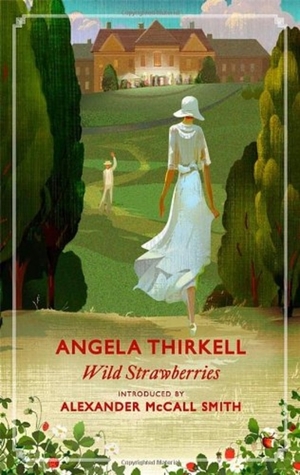
This is book 52 read for the Historical Fiction Reading Challenge 2022.

The Butterfly Picnic by Joan Aiken

Although Joan Aiken is best known for her children’s novel The Wolves of Willoughby Chase, she also wrote lots of books for adults. I read one of them, Castle Barebane, last year and enjoyed it so much I knew I would have to read more of them. Unlike Castle Barebane, which was a Gothic historical novel set in Scotland, The Butterfly Picnic, first published in 1972, is contemporary and has much more in common with the suspense novels of Mary Stewart. The characters even reference Stewart’s My Brother Michael once or twice!

The Butterfly Picnic is narrated by Georgia Marsh, a Greek-Chinese-Russian-French orphan with six older brothers, all of them scientists. Georgia has been summoned to the beautiful Greek island of Dendros by her cousin Sweden, another scientist. With no idea why Sweden wants to meet her so desperately, she makes her way to her cousin’s boat which has just sailed into the harbour – and is just in time to witness Sweden’s murder. Unfortunately, Georgia doesn’t see the killer’s face and when she reports the incident to the local police they show very little interest in catching him. In fact, they seem to think Georgia has imagined the whole thing and insist on sending her off on the next plane home. Luckily, the plane is promptly hijacked by Palestinian liberators disguised as priests and Georgia persuades them to return her to the island so she can continue to investigate Sweden’s death.

At this point I was beginning to wonder what on earth I was reading. The plot seemed too ridiculous for words and quickly became even more bizarre…

The plane lands Georgia on the other side of the island where she finds herself accepting a teaching job at a very unusual school inside a castle belonging to a millionaire described as ‘the wickedest man on the island’. However, it seems that someone is determined to prevent Georgia from discovering the truth, and she suffers a series of mishaps including being locked inside a kiln and falling through a trapdoor into an oubliette. While lost in a maze of underground tunnels, Georgia asks herself what Esther Summerson in Dickens’ Bleak House would do: Esther would have bustled up and down the passages doing a great many household errands and embroidering half a dozen yards of ornamental work and jingling her bunch of keys.

The Butterfly Picnic is fun to read and quite a page-turner, but definitely shouldn’t be taken too seriously! As I mentioned above, there are some similarities with Mary Stewart’s novels (the Greek setting, the brave and capable young heroine), while the scientist storyline also reminded me of Agatha Christie’s Destination Unknown, but this is clearly intended to be a parody of those genres of books. As long as you go into it expecting a book that’s more of a comedy rather than a conventional thriller or suspense novel, you’ll probably find it entertaining.

Although I can’t really say that I loved this book as the plot was just a bit too silly, I will continue to try more of Joan Aiken’s novels. The next one I have on my TBR is The Embroidered Sunset and I’m curious to see what it’s like. One final note – be aware that the US title of this book is A Cluster Of Separate Sparks. I wouldn’t want anyone to buy the same book twice!

Book #3 read for R.I.P. XVII

Historical Musings #75: HWA Crown Awards 2022

Welcome to my not-quite-monthly post on all things historical fiction! I don’t normally post this early in the month, but wanted to highlight the HWA Crown Award longlists which were announced last Wednesday by the Historical Writers Association. There are three separate awards – one for debut novels, one for non-fiction and the other (the Gold Crown) for the best historical novel of the year. The shortlists are announced later in October and the winner in November. I have no plans to try to read all of these books, but thought it would be interesting to look at what I’d read so far from each list.

Gold Crown Award 2022 longlist

Booth by Karen Joy Fowler
The Wolf Den by Elodie Harper
All of You Every Single One by Beatrice Hitchman
Small Things Like These by Claire Keegan
The Winter War by Tim Leach
Case Study by Graeme Macrae Burnet
The Thin Place by CD Major
The Rebel Daughter by Miranda Malins
The Fortune Men by Nadifa Mohamed
The Kingdoms by Natasha Pulley
The Great Passion by James Runcie
Great Circle by Maggie Shipstead

I loved both Booth and The Wolf Den, two of my favourite books of the year so far. I also found The Fortune Men a powerful and emotional read, but I’m a bit surprised to see The Rebel Daughter here – I found it interesting but nothing special. As for the others on the list, I’ve enjoyed earlier books by Tim Leach and Graeme Macrae Burnet, but didn’t like the only book I’ve read by Natasha Pulley so I won’t be reading The Kingdoms. I like the sound of The Thin Place by CD Major, an author I hadn’t come across until now. None of the others really appeal, although I know they have all had good reviews.

Non-fiction Crown Award 2022 longlist

Operation Jubilee by Patrick Bishop
The Invention of Miracles by Katie Booth
Midnight in Cairo by Raphael Cormack
The Turning Point by Robert Douglas-Fairhurst
The Irish Assassins by Julie Kavanagh
Metaphysical Animals by Clare Mac Cumhaill and Rachael Wiseman
The Library by Andrew Pettegree and Arthur der Weduwen
Loot by Barnaby Phillips
The Hidden Case of Ewan Forbes by Zoë Playdon
The Searchers by Robert Sackville-West
National Treasures by Caroline Shenton
Fallen Idols by Alex von Tunzelmann

I haven’t read any of these or even heard of them, but I’m not a big reader of non-fiction so that’s probably not surprising. I’ve investigated a few of the titles and am particularly drawn to The Turning Point, a year in the life of Charles Dickens, and The Library, about the history of libraries from ancient times to the present.

Debut Crown Award 2022 longlist

The Leviathan by Rosie Andrews
The Queen’s Lender by Jean Findlay
The Silver Wolf by J C Harvey
The Flames by Sophie Haydock
Beasts of a Little Land by Juhea Kim
The Mad Women’s Ball by Victoria Mas
Black Drop by Leonora Nattrass
Moonlight & The Pearler’s Daughter by Lizzie Pook
The Deception of Harriet Fleet by Helen Scarlett
Hear No Evil by Sarah Smith
The Plague Letters by VL Valentine
The Spirit Engineer by AJ West

I’ve only read three from this list. Black Drop was an interesting historical mystery and I have the sequel, Blue Water, on my NetGalley shelf to read soon. I thought The Silver Wolf, the first in a series, was an impressive, ambitious debut and The Leviathan was great until the fantasy/magical realism elements became more dominant towards the end. I’ve heard of a few of the others on the list but am unfamiliar with the rest, so will have to find out more.

~

Have you read any of these? Are you interested in reading them?

Don’t forget, you can find links to all 74 previous Historical Musings topics here.

Six Degrees of Separation: From Notes on a Scandal to The Surgeon’s Mate

It’s the first Saturday of the month which means it’s time for another Six Degrees of Separation, hosted by Kate of Books are my Favourite and Best. The idea is that Kate chooses a book to use as a starting point and then we have to link it to six other books of our choice to form a chain. A book doesn’t have to be connected to all of the others on the list – only to the one next to it in the chain.

This month we’re starting with Notes on a Scandal by Zoë Heller. Here’s what it’s about:

Schoolteacher Barbara Covett has led a solitary life until Sheba Hart, the new art teacher at St. George’s, befriends her. But even as their relationship develops, so too does another: Sheba has begun an illicit affair with an underage male student. When the scandal turns into a media circus, Barbara decides to write an account in her friend’s defense—and ends up revealing not only Sheba’s secrets, but also her own.

I haven’t read Notes on a Scandal and it doesn’t really appeal, so I’ve been looking at some reviews to try to find inspiration for that all-important first link. The only thing that struck me is that Sheba’s full name is Bathsheba Hart – and I immediately thought of another fictional character with that name, Bathsheba Everdene in Far from the Madding Crowd by Thomas Hardy (1). It’s not one of my favourite Hardy novels but I did enjoy it. It’s less tragic than some of his others and has a wonderful hero in Gabriel Oak.

My next link is to another novel with the word ‘far’ in the title. The Booker Prize-nominated Far to Go by Alison Pick (2) is the story of a Jewish family, the Bauers, living in the former Czechoslovakia in the 1930s. With the German annexation of the Sudetenland in 1938, the Bauers send their six-year-old son to Britain on the Kindertransport. I found this an interesting and moving novel, particularly as I had never read about the Kindertransport in fiction before.

Another book with a Czech setting is Melmoth by Sarah Perry (3). This dark and atmospheric Gothic novel set in modern-day Prague explores the story of Melmoth the Witness (an imaginary legend which Perry has loosely based on the Charles Maturin classic Melmoth the Wanderer). Through a sequence of stories-within-stories, we see how the Melmoth legend has touched the lives of people throughout history. I enjoyed it, but preferred Perry’s previous novel, The Essex Serpent.

The protagonist in Melmoth is called Helen, which is also my name, as well as the name of the heroine of Anne Brontë’s The Tenant of Wildfell Hall (4). The main part of the story unfolds through the diary of Helen Huntingdon, the ‘tenant’ of the title, who describes how she tries to escape from her marriage to an abusive alcoholic husband. Critics at the time considered the novel shocking and ‘coarse’, but I loved it and I’m sorry that Anne Brontë never seems to get as much attention as her sisters, Charlotte and Emily!

There are a lot of books that are written completely or partially in the form of a diary, but the one I’m going to link to here is Marking Time by Elizabeth Jane Howard (5). Set in the early years of World War II, this is the second book in Howard’s series, the Cazalet Chronicles. The story is told from the perspectives of several members of the Cazalet family, including the teenage Clary, who records her thoughts and observations in her diary. I enjoyed this and really need to continue with the third book soon; I just hope I can remember enough of the first two books to be able to pick up the threads of the story again.

Another series I’m in the middle of is Patrick O’Brian’s Aubrey and Maturin series. I never thought I would like these books as they’re set mainly at sea and I usually struggle with anything nautical, but I’ve found that it doesn’t matter too much if I don’t understand all the naval terms and sea battles; the quality of the writing and the central relationship between the main characters, Jack Aubrey and Stephen Maturin, make up for that! The Surgeon’s Mate (6) was the last one I read and is the seventh book. With a total of twenty-one books in the series, I still have a long way to go!

~

And that’s my chain for this month. My links have included: the name Bathsheba, the word ‘far’, Prague, fictional Helens, diaries and series-in-progress.

In November we’ll be starting with The Naked Chef by Jamie Oliver.