My Commonplace Book: September 2022

A selection of words and pictures to represent September’s reading:

commonplace book
noun
a book into which notable extracts from other works are copied for personal use.

~

‘The most learned minds in England disagree with you.’

‘Learned minds can still believe wicked things, especially when their own interests are at stake.’

Act of Oblivion by Robert Harris (2022)

~

He had never trusted anyone his entire life, only his instincts. Such a life creed afforded one wisdom because it meant he was never disappointed by the actions of men.

Hawker and the King’s Jewel by Ethan Bale (2022)

~

The End of the ‘Forty Five’ Rebellion, by William Brasse Hole

What was the point in a life without honour, and where the honour in a promise that is not kept?

The Bookseller of Inverness by SG MacLean (2022)

~

‘But the whole point about stories is that they’re for sharing. That’s the very nature of their existence. Stories are what bring us together. It’s how we try to understand each other and understanding is exactly what my job is all about.’

The Twist of a Knife by Anthony Horowitz (2022)

~

Mdina, Malta

And now it was changing again. How unsettled it made you feel – you thought your world would remain unchanged and go on just as it always had but then suddenly, without you doing anything, anything at all, it completely turned on its head.

The Hidden Palace by Dinah Jefferies (2022)

~

‘Some people wear armour,’ he remarked. ‘If you try and tear it off them you discover things you’d never have suspected. A past of suffering, an unavowable secret that made them into what they are, for better or worse.’

Ashes in the Snow by Oriana Ramunno (2022)

~

Only, words confused everything, they said either too much or not enough.

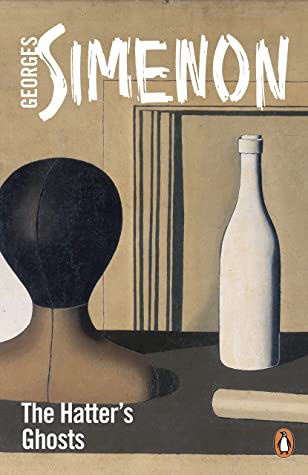
The Hatter’s Ghosts by Georges Simenon (1949)

~

Penelope and the Suitors by John William Waterhouse

He finds that silence on this topic lends the hearer the power of imagination, which is usually far richer than the truth.

Ithaca by Claire North (2022)

~

Favourite books read in September:

The Twist of a Knife

Authors read for the first time in September:

Ethan Bale, Oriana Ramunno, Claire North

Places visited in my September reading:

US (Connecticut and Massachusetts), England, Italy, Scotland, France, Malta, Poland, Greece

~

Reading notes: My September reading got off to a good start, but I seem to have read very little in the second half of the month. I’m pleased, though, that I’ve visited so many different countries in my reading – 8 in total. In October I need to read my Classics Club Spin book, The Fortune of the Rougons by Émile Zola, and 1929 Club is also coming up at the end of the month, so I will be reading something from that year as well. Otherwise, I’ll be continuing with some autumnal reads for R.I.P. XVII and catching up with some NetGalley review copies with October publication dates.

Did you read any good books in September? Do you have any plans for your October reading?
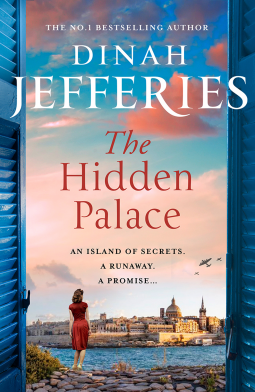
The Hidden Palace by Dinah Jefferies

This is the second book in Dinah Jefferies’ new World War II trilogy which began last year with Daughters of War. Although I think it’s always best to read a series in order if you can, I don’t think it would be a problem if you wanted to start with this book. People and events from the first book are alluded to, but are not essential to understanding the plot of this second novel.

Of the three Baudin sisters we met in Daughters of War, The Hidden Palace only focuses on one of them – the youngest sister, Florence, who has left occupied France for the safety of the English countryside. In England, Florence is reunited with her estranged mother, Claudette, who asks for her help in finding her sister Rosalie – Florence’s aunt – who ran away from home as a teenager and hasn’t been seen or heard from for years. Claudette believes that Rosalie may be in Malta, but with war still raging across Europe, no one is able to go there to look for her.

In an alternating storyline, we go back to the 1920s and follow Rosalie’s adventures when, after an argument with her father, she leaves home and finds work as a dancer in a nightclub in Malta. As the years go by, she builds a new life and identity for herself on the island, which makes Florence’s task much more difficult when, once the war is over, she is able to travel to Malta to begin her search. Accompanied by Jack, the Baudin sisters’ friend who worked for the British Special Operations Executive during the war, Florence is determined to find her aunt – but will her aunt want to be found?

I enjoyed The Hidden Palace overall, although I missed the other two sisters from the first book, Hélène and Élise, who stay behind in France and appear only briefly. Florence was not initially my favourite of the sisters so I wasn’t sure how I would feel about this book focusing mainly on her, but I did warm to her after a while – although I had mixed feelings about the development of her romance with Jack, knowing that he had originally been Hélène’s love interest. I also found the sections of the book set in England slightly lacking in atmosphere; you would hardly think the war was still taking place, as the lives of the characters seem largely unaffected and there’s no sense of any real hardship.

The chapters set in Malta were of much more interest to me, particularly as I have been to Malta and enjoyed revisiting, through Rosalie’s eyes, the vibrant streets of the capital Valletta and the peaceful stillness of Mdina, the ‘Silent City’. Malta was very badly hit during the war, due to its strategic importance as a base in the Mediterranean between Europe and North Africa, and it was the target of thousands of German and Italian air raids, making it one of the most heavily bombed places in the world. This is where Rosalie spends the war years, so as you can imagine, her story is a lot more dramatic than Florence’s in the Devon countryside! However, Rosalie also becomes caught up in a scandal involving human trafficking and I couldn’t see the point in this storyline as it didn’t seem to lead anywhere.

The novel has a satisfactory ending, but not everything is fully resolved, so I’m looking forward to finding out what happens in the final part of the trilogy. The third book, Night Train to Marrakech, is due next year.

Thanks to HarperCollins for providing a copy of this book for review via NetGalley.

This is book 51 read for the Historical Fiction Reading Challenge 2022.

The Bookseller of Inverness by S G MacLean

The Scottish author SG MacLean is best known for her Seeker series and before that, the Alexander Seaton series originally published under the name Shona MacLean. I haven’t read any of those books (although I do own The Redemption of Alexander Seaton), but when I saw that her new novel, The Bookseller of Inverness, was a standalone, it seemed like a good place to start.

Set in Scotland in the aftermath of the 1745 Jacobite Rising, the ‘bookseller’ of the title is Iain MacGillivray, a survivor of the Battle of Culloden. Six years have now passed since he was wounded on the battlefield and although he escaped with his life, his face has been left badly scarred. Still traumatised by the death of his cousin Lachlan, Iain has been living quietly since the failed rising, selling books and running a small public library in Inverness. One day, Iain notices a stranger searching through the shelves, opening and closing books; he won’t tell Iain what he is looking for and only leaves when the shop is shut for the night.

The next morning, Iain opens up the shop again to find the stranger dead on the floor, his throat cut and beside him a sword with a white cockade on the hilt – the symbol of the Jacobites. The murder coincides with the reappearance of Iain’s father Hector, a prominent Jacobite who fled Scotland years earlier but still hasn’t given up hope of seeing a Stuart king on the throne once more. When more murders follow, Iain and Hector begin to search for a missing book containing the names of traitors to the Jacobite cause – a book they believe could hold the key to finding the killer.

Although the search for the book and the murderer drives the plot forward, I didn’t think the mystery was a particularly strong one. I was more interested in the historical detail, the descriptions of everyday life in 18th century Inverness and the insights into the mood, politics and changing loyalties in the years following Culloden. I’ve read about the Jacobites many times before and would prefer authors to explore other periods of Scottish history, but MacLean’s enthusiasm for this subject and setting shine through and her very detailed author’s note shows that a huge amount of research went into the writing of this novel. I’m glad I already had some knowledge of this period, though, as I think I might have found the twists and turns of the story a bit difficult to follow otherwise. MacLean also incorporates some subplots that touch on wider topics such as the slave trade and indentured servitude.

Most of the characters in the book are fictional, although many of them, as I discovered from the author’s note, are based on the lives and experiences of real people. One historical figure who plays an important part in the story without actually appearing in it is Simon Fraser, Lord Lovat – known as the ‘Old Fox’ – who readers of Diana Gabaldon’s Outlander series will remember as Jamie Fraser’s grandfather. Iain MacGillivray himself is an engaging character with an interesting past; I enjoyed getting to know him and reading about the work he and his assistants put into collecting, restoring and selling – or lending – books to the people of Inverness.

I’m pleased to have finally read something by MacLean. The Redemption of Alexander Seaton will be next!

Thanks to Quercus Books for providing a copy of this book for review via NetGalley.

This is book 50/50 read for the Historical Fiction Reading Challenge 2022.

The Hatter’s Ghosts by Georges Simenon (tr. Howard Curtis)

This standalone novel by Belgian author Georges Simenon was originally published in 1949 as Les Fantômes du chapelier and is now available from Penguin Classics in an English translation by Howard Curtis. Although Simenon is better known for his series of Maigret detective novels, he also wrote many books like this one – short psychological thrillers, some of which he referred to as romans durs, or ‘hard novels’. I have read a few of them and my favourite so far has been The Venice Train; this one has some similar plot elements, but is a much darker story.

The novel is set in La Rochelle during a wet and miserable December. It has been raining for twenty days, ever since an old lady was found murdered near the canal. Since then, more bodies have been discovered, all of them elderly women and all of them strangled with a cello string. The newspapers are full of speculation over who the murderer might be, but the reader knows from the opening pages exactly who is responsible – and so does the tailor Kachoudas, who has seen something that has convinced him of the killer’s identity. As the rest of the story unfolds, we are kept wondering whether Kachoudas will go to the police or whether he’ll be the murderer’s next victim.

Although we know from the beginning who the culprit is, there’s still a sense of mystery because we have no idea why he has set out to kill so many women and how he has chosen his victims. The truth is eventually revealed and we discover exactly what is going on behind closed doors, but as this is just a short novel (as many of Simenon’s seem to be), I can’t really go into the plot in any more detail without spoiling it. Anyway, the mystery is only one aspect of the story; the real interest is in following the thought processes of the murderer as he tries to justify his actions to himself and deal with his conflicted thoughts and emotions. I was reminded very much of In a Lonely Place by Dorothy B. Hughes, another novel where we know the killer’s identity from the beginning and spend the rest of the book inside his mind, wondering whether he will give himself away.

The Hatter’s Ghosts is an atmospheric, unsettling novel and I loved the descriptions of the dark, rainy streets of La Rochelle. The Howard Curtis translation is clear and accessible and feels quite modern, while also preserving the tone of the 1940s. If you’re new to Simenon, or have only read his Maigret books, I can definitely recommend any or all of the romans durs I’ve read so far – as well as this one and The Venice Train, I have read The Man from London and The Strangers in the House and am looking forward to investigating some of his others.

Thanks to Penguin Classics for providing a copy of this book for review via NetGalley.

Book #2 read for R.I.P. XVII

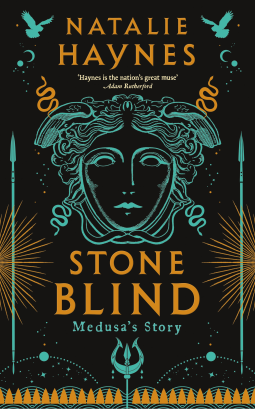
Stone Blind by Natalie Haynes

It’s always good to come across a Greek mythology retelling that has nothing to do with the Trojan War! There have been so many over the last few years (Natalie Haynes’ A Thousand Ships being one of the best I’ve read) that it makes a refreshing change to read about other characters and other myths.

Stone Blind is subtitled Medusa’s Story but is actually written from the perspectives of many different characters, all coming together to tell the tale of the Gorgon Medusa and Perseus’ quest to capture her head. In traditional accounts of this myth, Perseus is seen as the hero, bravely slaying the monstrous snake-haired Medusa whose eyes can turn living creatures to stone. This version looks at things from a different angle, questioning whether it’s really fair to refer to Medusa as a monster and painting Perseus as, if not exactly a villain, a thoughtless, dim-witted boy who ends up completing his quest almost by accident.

While part of the story is told from Medusa’s point of view, we also hear the voices of many other gods, mortals and mythical beings including the other two Gorgons, their sisters the Graia, who share one eye and one tooth between them, the Ethiopian princess Andromeda, who is chained to a rock as a sacrifice, and even the olive trees of Athens. Some have a lot to say, others appear only for a few pages, but each one has an important contribution to make. This is the same style Natalie Haynes used in A Thousand Ships, but I found it more effective here. Whereas in the previous book the various characters’ narratives felt as though they were appearing in a random order, almost like a collection of separate short stories, here they are ordered in a way that makes chronological sense, with each new voice helping to move the story forward.

Medusa, as she is portrayed here, is a very sympathetic character. The only mortal Gorgon of the three and therefore the most vulnerable, she is raised by her two older sisters, Sthenno and Euryale. Medusa’s monstrous features only appear after she is raped by Poseidon in Athena’s temple and the angry goddess punishes her by transforming her hair into a seething mass of snakes and cursing her with the ability to turn everything around her to stone. Condemned to a life of blindness, afraid to uncover her eyes in case her gaze should fall upon one of her beloved sisters, Medusa’s story is very sad – and we know that it is only going to get worse because, far away, Polydectes, King of Seriphos, has challenged Perseus to bring him the severed head of a Gorgon. Fortunately, Haynes doesn’t dwell on the Gorgon-slaying episode, moving straight on with other parts of the myth.

Despite the tragic elements of the plot, the story is told with plenty of humour, particularly in the scenes dealing with the petty squabbling of Zeus, Hera, Athena, Hermes and the other Olympian gods. Haynes does an excellent job of capturing their fickle, petulant natures and the childish rivalries between them. In fact, I can’t really say anything negative about this book, other than that the title is slightly misleading as this is so much more than just Medusa’s story. I’m looking forward to future books by Natalie Haynes and must also go back and read her earlier novel, The Children of Jocasta.

Have you read any other retellings of this myth? If so, I would be interested in any recommendations.

Thanks to Mantle for providing a copy of this book for review via NetGalley.

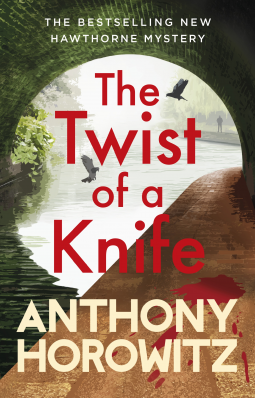
The Twist of a Knife by Anthony Horowitz

This series, of which The Twist of a Knife is the fourth book, takes as its premise the idea that the author Anthony Horowitz himself is one of the main characters, enlisted by the fictional detective Daniel Hawthorne to write books about the cases he investigates. It’s a concept that some people love and others hate, but if you have followed this series through to its fourth outing you probably, like me, fall into the first category. If you’re yet to read any of these books, you could start with this one if you want to as it does stand alone, but I would recommend beginning with the first, The Word is Murder, if you can. Either way, try one and see what you think!

The Twist of a Knife begins with Hawthorne trying to persuade Horowitz to write another book about him, but Anthony has other plans. He had only agreed to a three-book deal and that is now complete; now he’s working on a different novel – Moonflower Murders – and preparing for the London opening of his play, Mindgame. However, as Anthony himself then admits, the fact that we, the reader, are holding a fourth Hawthorne novel in our hands proves that somehow Hawthorne must get what he wants!

The story then moves on to the first night of Mindgame at London’s Vaudeville Theatre. The play has been very well received on tour and Horowitz is hoping that London audiences will like it just as much. Everything goes smoothly on that first night, but as Anthony and the cast get together in the green room after the play, the first review comes in – and it’s a bad one. In fact, it couldn’t be much worse. Written by the critic Harriet Throsby for the Sunday Times, the review is rude, scathing and insulting, placing most of the blame on Horowitz’s writing. When Harriet is found stabbed to death the next morning, suspicion immediately falls on Horowitz and he is arrested for murder. His only hope is that Hawthorne can find the real culprit and clear his name – but what will Hawthorne expect in return?

I think this could be my favourite of the four books in this series. I loved the theatrical setting and I found the mystery a particularly interesting one. Just about everyone involved with the play Mindgame has both the motive and the opportunity to have killed Harriet and I enjoyed learning more about each of the suspects – I did pick up on some of the clues, but certainly not all of them and I didn’t guess who the murderer was until the truth was revealed in an Agatha Christie-style denouement at the end of the book. Mindgame is a real play written by Horowitz which was first performed in 1999, although in this book it’s presented as a new work and the actors, director and events of the opening night are fictional. It sounds like a fascinating play and I’m tempted to read it, although it sounds like one that would have to be seen on stage to fully appreciate.

Daniel Hawthorne remains a private, secretive person, as he has from the beginning of the series, but with each book a few more facts about him are uncovered. In this book, Horowitz has the chance to spend some time in Hawthorne’s home and makes one or two intriguing discoveries which I’m sure will be explored further in the next book. I’m assuming there will be a next book – in fact, there were hints at the end of this one that we could have several more to look forward to. I hope so, although I would still prefer another book about Susan Ryeland and Atticus Pünd to follow Magpie Murders and Moonflower Murders!

Thanks to Century for providing a copy of this book for review via NetGalley.

Book #1 read for R.I.P. XVII

Classics Club Spin #31: The result

The result of the latest Classics Club Spin was revealed today.

The idea of the Spin was to list twenty books from my Classics Club list, number them 1 to 20, and the number announced by the Classics Club represents the book I have to read before 30th October 2022. The number that has been selected is…

2

And this means the book I need to read is…

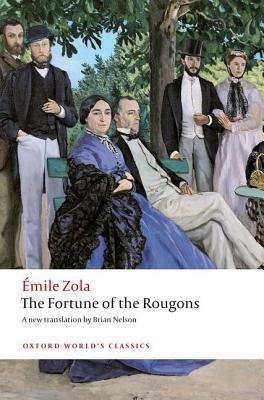
The Fortune of the Rougons by Émile Zola

The Fortune of the Rougons is the first in Zola’s famous Rougon-Macquart series of novels. In it we learn how the two branches of the family came about, and the origins of the hereditary weaknesses passed down the generations. Murder, treachery, and greed are the keynotes, and just as the Empire was established through violence, the “fortune” of the Rougons is paid for in blood.

Set in the fictitious Provencal town of Plassans, The Fortune of the Rougons tells the story of Silvere and Miette, two idealistic young supporters of the republican resistance to Louis-Napoleon Bonaparte’s coup d’etat of December 1851. They join the woodcutters and peasants of the Var to seize control of Plassans, and are opposed by the Bonapartist loyalists led by Silvere’s uncle, Pierre Rougon. Meanwhile, the foundations of the Rougon family and its illegitimate Macquart branch are being laid in the brutal beginnings of the Imperial regime.

~

I’m happy with this as I’ve read very little by Zola and would like to read more. I originally had Germinal on my Classics Club list but found it difficult to get into, so decided to replace it with this one. It’s the first in the Rougon-Macquart series and my edition is translated by Brian Nelson.

Have you read this? If you took part in the Spin, are you pleased with your result?