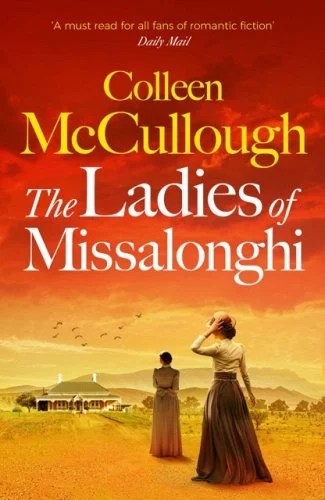
The Ladies of Missalonghi by Colleen McCullough

I acquired a copy of this book when it was published in a new edition in 2015 following Colleen McCullough’s death that year. For some reason, despite loving The Thorn Birds (which I read long before I started blogging so have no review to link to here), I had never read any of her other books and was looking forward to this one. Then I read that there had been accusations of plagiarism when the book was originally published in 1987 due to it apparently being so similar to LM Montgomery’s 1926 novel, The Blue Castle, and that put me off for a while. However, I was looking for something to read for Aus Reading Month (hosted by Brona of This Reading Life and thought I would give it a try. I was unsure whether I could also count it towards Novellas in November as there were 224 pages in my edition (more than the upper limit of 200 for a novella) but several of those pages turned out to be an excerpt from another McCullough book, so I think it counts!

The Ladies of Missalonghi is set in the early 1900s in the small town of Byron in Australia’s Blue Mountains. For generations the Hurlingford family, descendants of the town’s founder, the first Sir William Hurlingford, have held all the power in Byron, owning most of the land and running almost all of the businesses. Only the male Hurlingfords are able to inherit financially, so any unmarried or widowed women find themselves impoverished and relying on the charity of their relatives. Thirty-three-year-old Missy Wright is one of these women; she has never married and lives with her widowed mother, Drusilla Wright (formerly Hurlingford), and spinster aunt, Octavia, in a house known as Missalonghi after the Greek town where the poet Lord Byron died in 1824.

Plain and dark-haired in a clan of tall, blonde Hurlingfords and always dressed in brown to save money, it is now looking likely that Missy will remain single, but she has never given up hope of one day owning a red dress and escaping from her humdrum existence. The romance novels provided by her librarian friend Una are her ‘only solace and sole luxury’ – until one day a stranger arrives in Byron. His name is John Smith and he has bought land in the valley nearby. Has Missy found a way to escape at last?

The Ladies of Missalonghi is in many ways a typical romance novel but it’s an enjoyable one and has a few elements that I found particularly interesting. First, there’s the portrayal of the fate of unmarried women in the years just before World War I, women like Missy, Drusilla and Octavia who lack financial independence and have limited options for improving their position in life. The women of Missalonghi have been treated badly by the men they are forced to rely on for support and scorned by the wealthier, more privileged Hurlingford women. Missy is determined to see these people get their comeuppance, but I won’t tell you how she goes about it as that’s part of the fun of the story!

There’s also a supernatural element that I wasn’t expecting – quite a subtle one, but it’s there and I’m not really sure that it was necessary, particularly as it only emerges at the end and there weren’t any clues to suggest that it was going to happen. On the other hand, it fits with the whole fairy-tale feel of the plot (with Missy as Cinderella). It was actually the romantic thread of the novel that I found least interesting as there didn’t appear to be any chemistry between hero and heroine and their relationship seemed to be based on lies and deceit.

As for the plagiarism issue, I have never read The Blue Castle so can’t comment. McCullough denied the allegations, saying the similarities were unintentional – she had read the book as a child and the details must have stayed with her subconsciously. Whether that’s the truth or not, I can’t see why an already successful author would do something like that deliberately, knowing she would be found out. I’ll have to read The Blue Castle one day to see what I think.
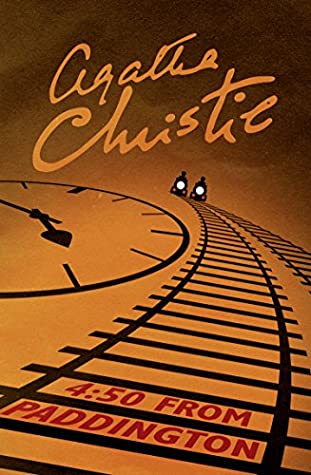
4.50 from Paddington by Agatha Christie

This month’s theme for Read Christie 2022 is ‘a story featuring train travel’. I had already read most of the possibilities – The Mystery of the Blue Train, Murder on the Orient Express and The ABC Murders – but hadn’t yet read the Miss Marple novel 4.50 from Paddington, so that was my choice for this month.

The ‘train travel’ element of the story appears in the very first chapter, with the elderly Elspeth McGillicuddy taking a train to the village of St Mary Mead to visit her friend, Miss Jane Marple. Mrs McGillicuddy happens to glance out of the window just as her train passes another train running parallel in the same direction. At that moment, a blind flies open in the window of the other train and she is horrified to witness a man standing with his back to her strangling a woman. She reports the incident to the ticket collector and the police are informed, but when no dead body is found on the train Mrs McGillicuddy is dismissed as an old woman with an overactive imagination. Miss Marple, however, knows her friend is telling the truth and is determined not to let the matter drop.

Convinced that the body may have been thrown from the train as it passed the grounds of Rutherford Hall, Miss Marple enlists the help of Lucy Eyelesbarrow, a young woman she knows who has established a reputation for herself as a professional and efficient cook and housekeeper. Lucy’s skills mean she is very much in demand and never short of work, but Miss Marple persuades her to take a position at Rutherford Hall for a few weeks so that she can search for the body while she’s there. Settling into her new job, Lucy begins to get to know the residents of Rutherford Hall – the family patriarch Luther Crackenthorpe, his sons, daughter, in-laws and grandchildren – and begins to wonder whether their connection to the murder on the train really was a coincidence after all.

I found this a particularly enjoyable Miss Marple novel – probably in my top two or three. It seems that it has had some criticism due to the lack of clues and logical deductions and I do understand that complaint because we never find out exactly what leads Miss Marple to identify the correct suspect. However, I didn’t have a problem with this. The solution does make sense, even if we don’t know how she arrived at it, and the culprit was actually the person I suspected myself (again, not based on any real evidence – just a hunch!).

Although Miss Marple is the one who solves the mystery, we don’t really see very much of her in this book. Unable to infiltrate the Crackenthorpe household herself, she sends Lucy Eyelesbarrow in her place, which means a lot of the story is written from Lucy’s perspective. Luckily, Lucy is a great character – independent, intelligent and courageous. Several of the male Crackenthorpes are drawn to her and there’s a hint at the end of the book that she’s going to marry one of them. Which one she chooses is left for the reader to decide – although I’ve since discovered that Christie reveals Lucy’s choice in her Secret Notebooks, published in 2009.

There’s only one month left in this year’s Read Christie challenge and the December theme will be ‘a story containing precious jewels’. However, plans for Read Christie 2023 have already been announced and you can register your interest here: https://linktr.ee/OfficialAgathaChristie

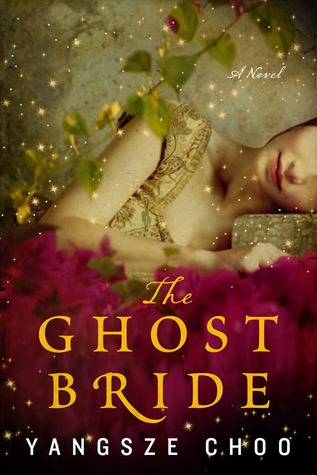
The Ghost Bride by Yangsze Choo

I originally intended to read The Ghost Bride for this year’s RIP challenge but ran out of time. I then thought it might be suitable for Chris and Lizzie’s Witch Week earlier this month (it seemed to fit their theme of Polychromancy – fantasy/sci-fi by authors from diverse backgrounds) but I didn’t finish it in time for that either. Never mind – I’ve read it now and enjoyed it, although it wasn’t really what I’d expected. Having previously read Yangsze Choo’s other novel, The Night Tiger, a story steeped in Chinese and Malaysian folklore but with only a small amount of magical realism, I had thought this book would be similar. However, I discovered that this one has a much stronger fantasy element.

The Ghost Bride is narrated by seventeen-year-old Li Lan, a young Chinese woman who lives with her opium-addicted father and her beloved amah (nursemaid) in 1890s Malacca, a city in what was then known as Malaya. The time has come for Li Lan to marry, but her father has fallen into financial difficulties and her options are limited. When she receives an offer from the wealthy Lim family to become the wife of their son, Lim Tian Ching, this should have been a wonderful opportunity for Li Lan, but instead she is horrified – because Lim Tian Ching is dead. This arrangement would provide financial security and comfort for Li Lan, but it would mean living the rest of her life as a widow.

Li Lan vows to resist the attempts of the Lim family to turn her into a ‘ghost bride’, but Lim Tian Ching has other ideas and begins to visit her in her dreams every night, claiming that he was murdered by his cousin, Tian Bai. Li Lan wants nothing to do with the whole situation, but when her soul becomes separated from her body during an illness, she finds herself thrust into the afterlife. In this world populated with ghosts and spirits, she must try to discover the truth about Lim Tian Ching’s death if she wants to have any chance of returning to her body and living in peace.

As you can probably tell, this is a book with a very strange plot – I’ve never read anything quite like it! It’s definitely not my usual sort of read and as I’ve said, I was expecting something more like The Night Tiger – historical fiction with just a little bit of fantasy. Instead, I found I was reading a book set almost entirely in the Chinese underworld, complete with dragons and ‘ox-headed demons’. It was interesting, though, and Yangsze Choo’s worldbuilding is excellent. I was fascinated by the way she incorporates the Chinese custom of burning ‘funeral money’ as offerings for the dead into the plot, with the paper money burnt in the real world corresponding to the appearance of paper houses, paper animals and even puppet-like paper servants in the afterlife.

Although a lot of time is spent on describing the bureaucracy of the world in which Li Lan finds herself, the court cases that take place in the Plains of the Dead and the ways in which the souls of the recently deceased are judged, the focus is always on Li Lan’s personal story and the people she meets in the underworld who can help her with her task. There’s even a touch of romance, although Li Lan’s love interest is certainly not Lim Tian Ching, whom she despises from the beginning. I won’t tell you who he is, but he ended up being my favourite character.

I felt that this book was longer than it really needed to be and some of Li Lan’s adventures in the Plains of the Dead were too drawn out, but overall I found The Ghost Bride an unusual and intriguing novel which has left me wanting to know more about the Chinese afterlife!

Powers and Thrones by Dan Jones

I actually started Dan Jones’ Powers and Thrones for last year’s Nonfiction November but found it so long and intensely detailed I could only read it in small doses. Although it’s a fascinating book and I’ve been learning a lot from it, 736 pages covering more than a thousand years of history is not something I could read quickly. I confess that I kept putting it aside and getting distracted by other books…so here I am, finishing it a year after I began and conveniently just in time for Nonfiction November again!

In Powers and Thrones, Jones explores the long period of history known as the Middle Ages. Starting in 410 AD, just before the fall of the Roman Empire, and ending in 1527 during the Renaissance, he looks at some of the ‘powers’ that helped to build the world we know today – not just ‘thrones’, but also powers such as money, trade, religion and exploration. He moves forward chronologically throughout the book while choosing a different topic to focus on in each chapter; Monks, Knights, Scholars, Crusaders, Merchants and Builders are just a few of the chapter titles.

As well as putting key events into the context of their own time, Jones also draws lots of parallels with modern life. It’s impossible to read about the first recorded global pandemic – a form of bubonic plague thought to have killed millions of people worldwide during the middle of the 6th century – without thinking of the similarities and differences with our own recent Covid-19 pandemic. Again, when he discusses the later outbreak of plague in the 14th century known as the Black Death, he looks at the economic impact on prices and wages, something as relevant now as it was then. It was also interesting to read about the effects of climate change and extreme weather such as droughts on the mass migration of people in the 4th and 5th centuries that led to ‘barbarian’ tribes pushing across the Roman frontiers and contributing to the fall of Rome.

Although the book concentrates on broad themes like these, Jones does pick out individual historical figures to write about in more detail. These range from ancient leaders such as Attila the Hun and Theodoric, king of the Ostrogoths to Henry the Navigator, Marco Polo, and Dick Whittington – a real-life merchant and politician before he became a British pantomime character! The book is quite Eurocentric, but Jones doesn’t ignore things that were taking place in other parts of the world, particularly where they affect European life and culture. For example, he includes sections on Genghis Khan and the Mongols and on the caliphates of the Arab world.

The problem with Powers and Thrones is that there’s just too much information here for one book. Any of the chapters could have been expanded into an entire book in itself; trying to condense it all into one volume was a bit overwhelming. I’m still glad I read it, though, and am pleased I made it all the way through to the end – I finished it with a real sense of achievement!

Thanks to Head of Zeus for providing a copy of this book for review via NetGalley.

The Secret of Matterdale Hall by Marianne Ratcliffe

The Secret of Matterdale Hall is Marianne Ratcliffe’s new novel and the first book to be published by Bellows Press, a small independent publisher who describe themselves as ‘championing unagented writers of speculative & historical fiction, particularly queer, POC & marginalised authors’. In many ways Matterdale Hall seems like a traditional Victorian Gothic novel, but it also has some fresh new elements that make it feel original and different.

Our heroine, Susan Mottram, is a young woman whose family has fallen into poverty following her father’s death. Looking for a way to support her mother and younger sister, Susan finds work as a teacher at Matterdale Hall, a girls’ boarding school run by Dr and Mrs Claybourn in a remote part of Yorkshire. Susan immediately likes the eccentrically dressed doctor, who treats psychiatric patients in his infirmary within the hall, but she has a more difficult relationship with his wife and their daughter Marion, whose views on teaching and discipline conflict with Susan’s own. Some of the children also prove challenging, particularly the badly-behaved Isabella and the silent, withdrawn Mary.

One day, Susan crosses paths with Cassandra, a young woman from a neighbouring estate. At first Cassandra seems strangely hostile, but when Susan discovers that Cassandra is both mixed-raced and deaf, able to communicate only through sign language, she understands that what she had mistaken for hostility is actually shyness and a lack of trust. Gradually, a friendship begins to form between the two of them – and Susan finds that she desperately needs a friend to help her unravel the mysteries that are beginning to emerge at Matterdale Hall. What happened to Susan’s predecessor, who disappeared without trace? Why does little Mary never speak? And what is really going on in Dr Claybourn’s ‘infirmary’?

Although I found some of the secrets of Matterdale Hall quite easy to guess, there was still plenty of suspense as I waited to see whether I was right and how and when Susan would also discover the truth. The lonely Yorkshire setting, with much of the story taking place in the winter, added to the atmosphere and it was difficult not to think of Jane Eyre and Wuthering Heights, while I was also reminded of Stacey Halls’ Mrs England. But as well as the secrets and mysteries, I was fascinated by the portrayal of a small school in the 19th century and the attitudes to education and methods of teaching.

Despite the darkness and the sense of foreboding, there are still some moments of happiness for Susan. The patience and kindness she offers to the girls in her care is rewarded when they begin to open up to her and allow her to help them and her relationship with Cassandra also starts to flourish, first as a simple friendship and then as something more. I liked the way the two women’s feelings for each other develop slowly and realistically rather than being a love at first sight romance, giving the reader time to get to know them both and become invested in their stories. Deaf people don’t get a lot of attention in historical fiction (Shadow on the Highway by Deborah Swift is the only other book I can think of with a deaf heroine) so I found that aspect of the book interesting too.

The Secret of Matterdale Hall is written in a formal style that mimics the Victorian novels that have obviously influenced it and the long chapter titles, giving us an idea of what the following pages will contain, also add to the 19th century feel. It’s an entertaining read and I’ll be interested to see what Marianne Ratcliffe writes about in her next book.

Thanks to the author for providing a copy of this book for review.

Book #60 read for the Historical Fiction Reading Challenge 2022.

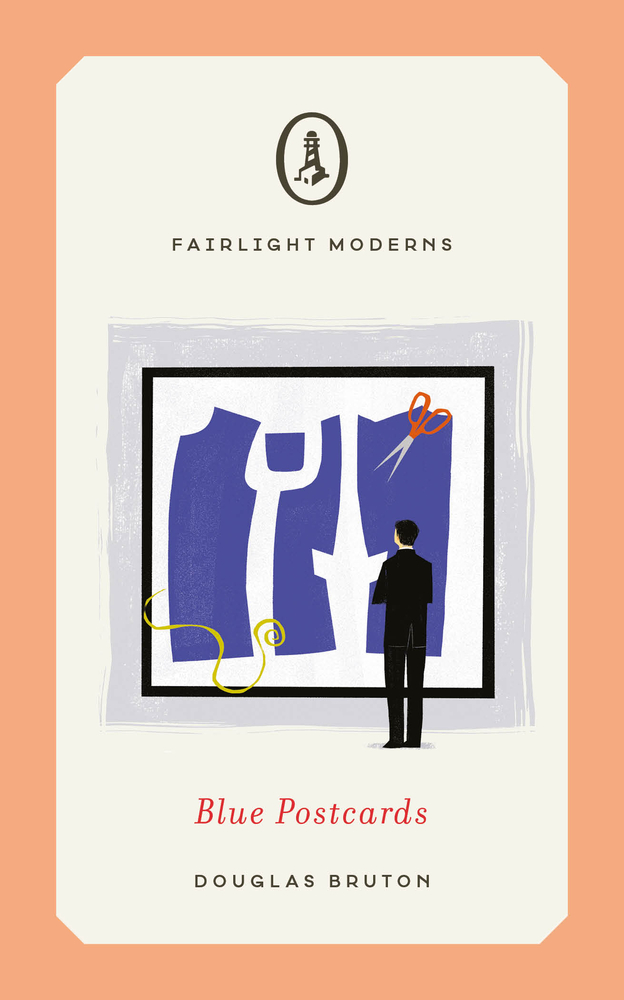
Blue Postcards by Douglas Bruton – #NovNov22

This little book published by Fairlight Moderns came to my attention when it was longlisted for the Walter Scott Prize earlier this year. I wasn’t sure it would be my sort of book but it sounded intriguing and at only 160 pages I knew it would be perfect for Novellas in November.

The book opens in the present day with our unnamed narrator buying a postcard from a Parisian market stall beside the Eiffel Tower. The postcard is completely blue on one side and date stamped 1957. The young woman who sells it to him has no idea of its significance, but the narrator knows exactly what it is: an invitation to an exhibition of the French artist Yves Klein’s monochrome paintings which was held in that year. He takes the card away with him but is drawn back to the stall again and again hoping to find more blue postcards and slowly a relationship begins to develop between the narrator and Michelle, the postcard seller.

Two other narratives are woven into the story. In one, we follow the career of Yves Klein, who becomes famous as the creator of International Klein Blue (IKB), an intense shade of aquamarine. In the other we meet Henri, a Jewish tailor – the only one left on what was once called the Street of Tailors. Henri also has a connection with blue: he sews a blue thread, in a shade known as ‘tekhelet’ in Hebrew, into the leg of every suit he makes in the belief that it will bring good luck to the wearer. One day, Yves Klein visits the tailor to order a suit and so the three separate parts of the novel fit together like the pieces of a jigsaw puzzle.

There was something to interest me in each of the three storylines. In the modern day one it was the unreliability of the narrator who admits that some of the things he is telling us didn’t necessarily happen and that memories can change over the years. The most compelling parts of Henri’s story involve his memories of the 1930s when he and his family were victims of the Night of Broken Windows. And I was struck by the descriptions of Klein’s monochrome exhibition where he displayed eleven identical blue (IKB) squares, placed at different angles and priced differently because he argued that the experience of viewing each one was different. I knew nothing about Klein before reading this book and his art is not really the kind I like, but it was good to learn a little bit about him.

What makes this book unusual, however, is the structure – and as I suspected, it wasn’t entirely successful with me! There are five chapters and each chapter is made up of one hundred numbered paragraphs, some only one or two sentences long but all what you could describe as ‘postcard-sized’. The three narratives alternate rapidly throughout the book, so we have one or two paragraphs telling the narrator’s story then one or two telling Henri’s or Yves Klein’s. I found it easy enough to follow but it does feel fragmented and meant I didn’t have time to become invested in one story before switching back to another.

Bruton has also set himself the challenge of including the word ‘blue’ at least once in every single paragraph, so we have characters with blue eyes, clothes with blue ink stains, mussels with blue shells, memories lost in the blue mists of time, and so on. Add to this the narrator’s obsession with finding blue postcards, Klein’s obsession with creating blue artworks and Henri’s obsession with blue threads and I started to feel overwhelmed with blue. There’s no doubt that it’s all very cleverly done and can’t have been an easy book to write, but I personally prefer books that allow me to become fully absorbed in the story without any distractions. I wasn’t the ideal reader for this book, but I knew that before I started and wanted to try it anyway, so I don’t have any complaints!

Have you read anything by Douglas Bruton – or any of the other books in the Fairlight Moderns collection?

I’m counting this book towards Novellas in November hosted by 746 Books and Bookish Beck.

Book #59 read for the Historical Fiction Reading Challenge 2022.

Spell the Month in Books: November – The Nonfiction Edition

I’ve seen Spell the Month in Books appearing on other blogs I follow for a long time now, but have never tried it myself until today. It’s hosted by Jana at Reviews From the Stacks on the second Saturday of each month and the idea is to spell the current month using the first letter of book titles. Sometimes there’s a monthly theme and the theme for November is non-fiction – which is very appropriate as Nonfiction November is one of the many reading/blogging events taking place this month! I thought this would be a good opportunity to join in and highlight some of the non-fiction I’ve read.

N

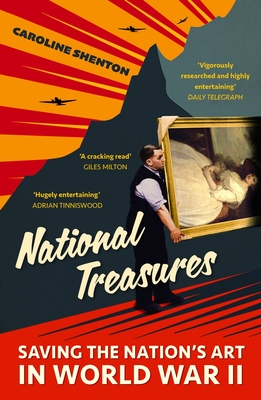
National Treasures: Saving the Nation’s Art in World War II by Caroline Shenton – I had hoped to do this using only books that I’ve read and reviewed, but it seems I haven’t reviewed a single non-fiction book beginning with N! Instead, I chose one that caught my eye on this year’s HWA Non-Fiction Crown Award shortlist. It’s a book about the people who moved London’s valuable museum, library and art gallery collections to safety during the war.

O

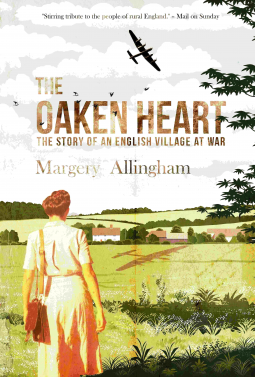
The Oaken Heart by Margery Allingham – I loved this book by Golden Age crime author Allingham, describing her life in a small English village (referred to as ‘Auburn’, but really her own village of Tolleshunt D’Arcy in Essex) during the early part of World War II. The book was published in 1941, making it a first-hand account of wartime life – I thought it was fascinating and I’m just sorry that she never wrote a sequel telling us how the people of Auburn coped with the remaining war years.

V

A Very Short Introduction: The Gothic by Nick Groom – I’ve read more than one book from the Very Short Introduction series but I found The Gothic particularly interesting. These little books are a great way to introduce yourself to a new subject and the series covers a wide range of topics. This one begins by looking at the history of the early Germanic tribes known as the Goths before moving on to explore Gothic architecture, classic Gothic literature and modern Gothic fashions, art and music.

E

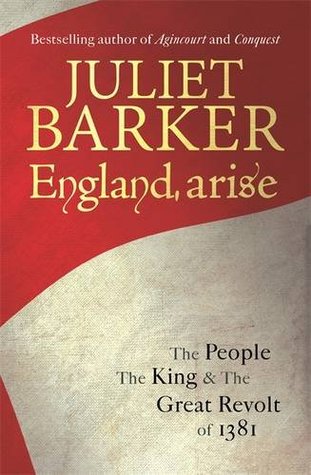
England, Arise by Juliet Barker – This is an account of the Peasants’ Revolt of 1381 (which Barker refers to as the Great Revolt, due to the fact that it didn’t involve just peasants). The first part of the book puts things into context, explaining the background to the revolt and the living conditions in medieval England, before going on to describe the rebellion itself. I found it interesting, but there was a lot of repetitive detail that I felt I didn’t really need. I would still like to read Juliet Barker’s biography of the Brontës, if only it wasn’t so long!

M

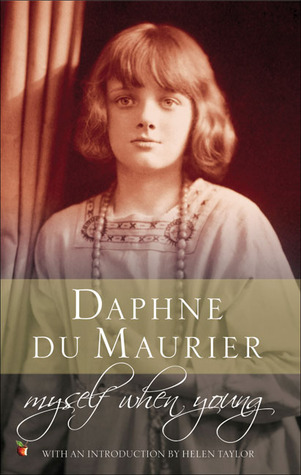
Myself When Young by Daphne du Maurier – This autobiography, originally published in 1977 as Growing Pains: The Shaping of a Writer, is based on diaries kept by du Maurier throughout her childhood and early adulthood. She describes the homes she lived in as a child, her early life as part of a famous theatrical family, her friendships and romantic relationships and the things that inspired some of her later novels. It was good to learn more about one of my favourite authors!

B

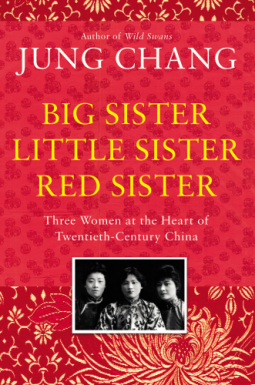
Big Sister, Little Sister, Red Sister by Jung Chang – I loved Jung Chang’s Wild Swans and although I found this one slightly disappointing in comparison, it was still an interesting book. It tells the story of the three Soong sisters, Ei-ling, May-ling and Ching-ling, all of whom played important roles in Chinese politics and society in the 20th century. Unlike Wild Swans which is about Jung Chang’s own family, this book lacked a personal connection and that made it a less powerful read.

E

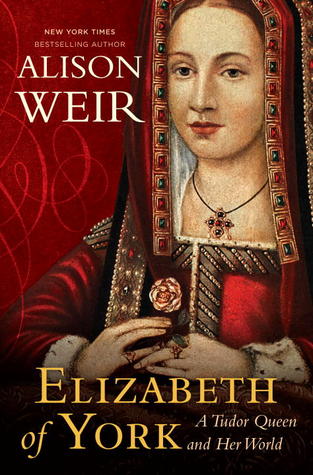
Elizabeth of York: A Tudor Queen and Her World by Alison Weir – There’s also a recent novel by Alison Weir about Elizabeth of York, but this earlier book is a non-fiction account of Elizabeth’s life and world. As the daughter of Edward IV, wife of Henry VII and mother of Henry VIII, who lived through the Wars of the Roses and the founding of the Tudor dynasty, Elizabeth’s story is fascinating. I did enjoy this long and very detailed book, but felt that there were places where it relied too heavily on speculation and Weir’s personal theories.

R

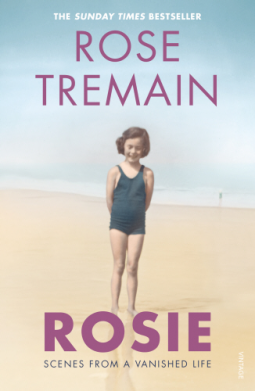
Rosie: Scenes from a Vanished Life by Rose Tremain – This is a childhood memoir by author Rose Tremain, finishing before she publishes her first book. Despite her wealthy, privileged background, Rose (or Rosie as she was known as a child) doesn’t seem to have received much love or affection from her parents and grandparents or any support in pursuing the education and career she wanted. I found it quite a sad book, but it was nice to get to know the young Rosie and her world.

~

Could you spell November in nonfiction books? Have you read any of the books I’ve mentioned here?