Powers and Thrones by Dan Jones

I actually started Dan Jones’ Powers and Thrones for last year’s Nonfiction November but found it so long and intensely detailed I could only read it in small doses. Although it’s a fascinating book and I’ve been learning a lot from it, 736 pages covering more than a thousand years of history is not something I could read quickly. I confess that I kept putting it aside and getting distracted by other books…so here I am, finishing it a year after I began and conveniently just in time for Nonfiction November again!

In Powers and Thrones, Jones explores the long period of history known as the Middle Ages. Starting in 410 AD, just before the fall of the Roman Empire, and ending in 1527 during the Renaissance, he looks at some of the ‘powers’ that helped to build the world we know today – not just ‘thrones’, but also powers such as money, trade, religion and exploration. He moves forward chronologically throughout the book while choosing a different topic to focus on in each chapter; Monks, Knights, Scholars, Crusaders, Merchants and Builders are just a few of the chapter titles.

As well as putting key events into the context of their own time, Jones also draws lots of parallels with modern life. It’s impossible to read about the first recorded global pandemic – a form of bubonic plague thought to have killed millions of people worldwide during the middle of the 6th century – without thinking of the similarities and differences with our own recent Covid-19 pandemic. Again, when he discusses the later outbreak of plague in the 14th century known as the Black Death, he looks at the economic impact on prices and wages, something as relevant now as it was then. It was also interesting to read about the effects of climate change and extreme weather such as droughts on the mass migration of people in the 4th and 5th centuries that led to ‘barbarian’ tribes pushing across the Roman frontiers and contributing to the fall of Rome.

Although the book concentrates on broad themes like these, Jones does pick out individual historical figures to write about in more detail. These range from ancient leaders such as Attila the Hun and Theodoric, king of the Ostrogoths to Henry the Navigator, Marco Polo, and Dick Whittington – a real-life merchant and politician before he became a British pantomime character! The book is quite Eurocentric, but Jones doesn’t ignore things that were taking place in other parts of the world, particularly where they affect European life and culture. For example, he includes sections on Genghis Khan and the Mongols and on the caliphates of the Arab world.

The problem with Powers and Thrones is that there’s just too much information here for one book. Any of the chapters could have been expanded into an entire book in itself; trying to condense it all into one volume was a bit overwhelming. I’m still glad I read it, though, and am pleased I made it all the way through to the end – I finished it with a real sense of achievement!

Thanks to Head of Zeus for providing a copy of this book for review via NetGalley.

The Secret of Matterdale Hall by Marianne Ratcliffe

The Secret of Matterdale Hall is Marianne Ratcliffe’s new novel and the first book to be published by Bellows Press, a small independent publisher who describe themselves as ‘championing unagented writers of speculative & historical fiction, particularly queer, POC & marginalised authors’. In many ways Matterdale Hall seems like a traditional Victorian Gothic novel, but it also has some fresh new elements that make it feel original and different.

Our heroine, Susan Mottram, is a young woman whose family has fallen into poverty following her father’s death. Looking for a way to support her mother and younger sister, Susan finds work as a teacher at Matterdale Hall, a girls’ boarding school run by Dr and Mrs Claybourn in a remote part of Yorkshire. Susan immediately likes the eccentrically dressed doctor, who treats psychiatric patients in his infirmary within the hall, but she has a more difficult relationship with his wife and their daughter Marion, whose views on teaching and discipline conflict with Susan’s own. Some of the children also prove challenging, particularly the badly-behaved Isabella and the silent, withdrawn Mary.

One day, Susan crosses paths with Cassandra, a young woman from a neighbouring estate. At first Cassandra seems strangely hostile, but when Susan discovers that Cassandra is both mixed-raced and deaf, able to communicate only through sign language, she understands that what she had mistaken for hostility is actually shyness and a lack of trust. Gradually, a friendship begins to form between the two of them – and Susan finds that she desperately needs a friend to help her unravel the mysteries that are beginning to emerge at Matterdale Hall. What happened to Susan’s predecessor, who disappeared without trace? Why does little Mary never speak? And what is really going on in Dr Claybourn’s ‘infirmary’?

Although I found some of the secrets of Matterdale Hall quite easy to guess, there was still plenty of suspense as I waited to see whether I was right and how and when Susan would also discover the truth. The lonely Yorkshire setting, with much of the story taking place in the winter, added to the atmosphere and it was difficult not to think of Jane Eyre and Wuthering Heights, while I was also reminded of Stacey Halls’ Mrs England. But as well as the secrets and mysteries, I was fascinated by the portrayal of a small school in the 19th century and the attitudes to education and methods of teaching.

Despite the darkness and the sense of foreboding, there are still some moments of happiness for Susan. The patience and kindness she offers to the girls in her care is rewarded when they begin to open up to her and allow her to help them and her relationship with Cassandra also starts to flourish, first as a simple friendship and then as something more. I liked the way the two women’s feelings for each other develop slowly and realistically rather than being a love at first sight romance, giving the reader time to get to know them both and become invested in their stories. Deaf people don’t get a lot of attention in historical fiction (Shadow on the Highway by Deborah Swift is the only other book I can think of with a deaf heroine) so I found that aspect of the book interesting too.

The Secret of Matterdale Hall is written in a formal style that mimics the Victorian novels that have obviously influenced it and the long chapter titles, giving us an idea of what the following pages will contain, also add to the 19th century feel. It’s an entertaining read and I’ll be interested to see what Marianne Ratcliffe writes about in her next book.

Thanks to the author for providing a copy of this book for review.

Book #60 read for the Historical Fiction Reading Challenge 2022.

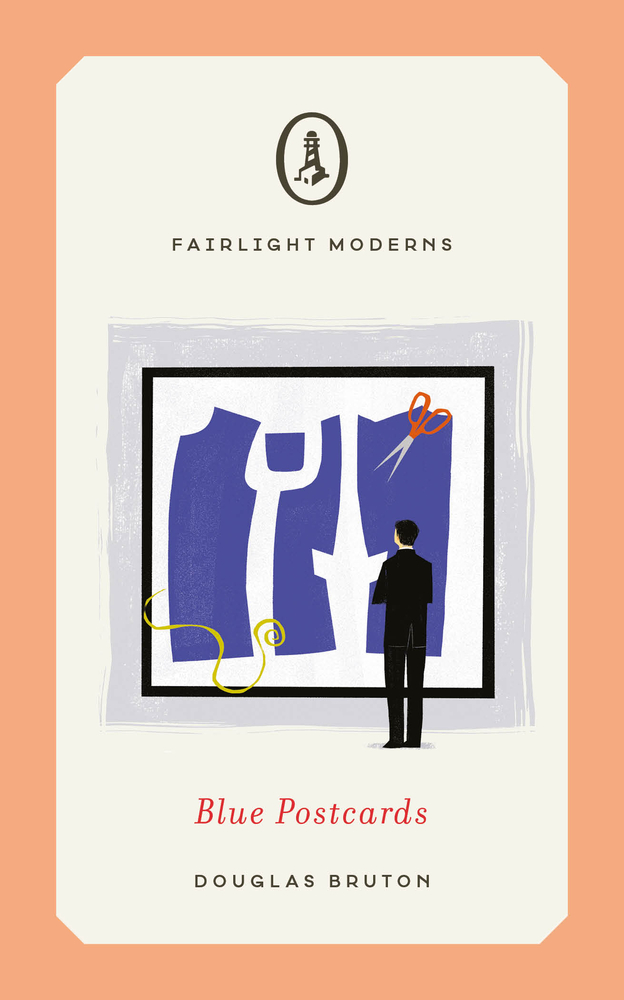
Blue Postcards by Douglas Bruton – #NovNov22

This little book published by Fairlight Moderns came to my attention when it was longlisted for the Walter Scott Prize earlier this year. I wasn’t sure it would be my sort of book but it sounded intriguing and at only 160 pages I knew it would be perfect for Novellas in November.

The book opens in the present day with our unnamed narrator buying a postcard from a Parisian market stall beside the Eiffel Tower. The postcard is completely blue on one side and date stamped 1957. The young woman who sells it to him has no idea of its significance, but the narrator knows exactly what it is: an invitation to an exhibition of the French artist Yves Klein’s monochrome paintings which was held in that year. He takes the card away with him but is drawn back to the stall again and again hoping to find more blue postcards and slowly a relationship begins to develop between the narrator and Michelle, the postcard seller.

Two other narratives are woven into the story. In one, we follow the career of Yves Klein, who becomes famous as the creator of International Klein Blue (IKB), an intense shade of aquamarine. In the other we meet Henri, a Jewish tailor – the only one left on what was once called the Street of Tailors. Henri also has a connection with blue: he sews a blue thread, in a shade known as ‘tekhelet’ in Hebrew, into the leg of every suit he makes in the belief that it will bring good luck to the wearer. One day, Yves Klein visits the tailor to order a suit and so the three separate parts of the novel fit together like the pieces of a jigsaw puzzle.

There was something to interest me in each of the three storylines. In the modern day one it was the unreliability of the narrator who admits that some of the things he is telling us didn’t necessarily happen and that memories can change over the years. The most compelling parts of Henri’s story involve his memories of the 1930s when he and his family were victims of the Night of Broken Windows. And I was struck by the descriptions of Klein’s monochrome exhibition where he displayed eleven identical blue (IKB) squares, placed at different angles and priced differently because he argued that the experience of viewing each one was different. I knew nothing about Klein before reading this book and his art is not really the kind I like, but it was good to learn a little bit about him.

What makes this book unusual, however, is the structure – and as I suspected, it wasn’t entirely successful with me! There are five chapters and each chapter is made up of one hundred numbered paragraphs, some only one or two sentences long but all what you could describe as ‘postcard-sized’. The three narratives alternate rapidly throughout the book, so we have one or two paragraphs telling the narrator’s story then one or two telling Henri’s or Yves Klein’s. I found it easy enough to follow but it does feel fragmented and meant I didn’t have time to become invested in one story before switching back to another.

Bruton has also set himself the challenge of including the word ‘blue’ at least once in every single paragraph, so we have characters with blue eyes, clothes with blue ink stains, mussels with blue shells, memories lost in the blue mists of time, and so on. Add to this the narrator’s obsession with finding blue postcards, Klein’s obsession with creating blue artworks and Henri’s obsession with blue threads and I started to feel overwhelmed with blue. There’s no doubt that it’s all very cleverly done and can’t have been an easy book to write, but I personally prefer books that allow me to become fully absorbed in the story without any distractions. I wasn’t the ideal reader for this book, but I knew that before I started and wanted to try it anyway, so I don’t have any complaints!

Have you read anything by Douglas Bruton – or any of the other books in the Fairlight Moderns collection?

I’m counting this book towards Novellas in November hosted by 746 Books and Bookish Beck.

Book #59 read for the Historical Fiction Reading Challenge 2022.

Spell the Month in Books: November – The Nonfiction Edition

I’ve seen Spell the Month in Books appearing on other blogs I follow for a long time now, but have never tried it myself until today. It’s hosted by Jana at Reviews From the Stacks on the second Saturday of each month and the idea is to spell the current month using the first letter of book titles. Sometimes there’s a monthly theme and the theme for November is non-fiction – which is very appropriate as Nonfiction November is one of the many reading/blogging events taking place this month! I thought this would be a good opportunity to join in and highlight some of the non-fiction I’ve read.

N

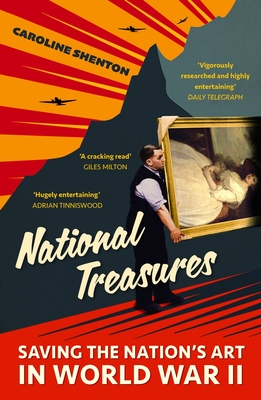
National Treasures: Saving the Nation’s Art in World War II by Caroline Shenton – I had hoped to do this using only books that I’ve read and reviewed, but it seems I haven’t reviewed a single non-fiction book beginning with N! Instead, I chose one that caught my eye on this year’s HWA Non-Fiction Crown Award shortlist. It’s a book about the people who moved London’s valuable museum, library and art gallery collections to safety during the war.

O

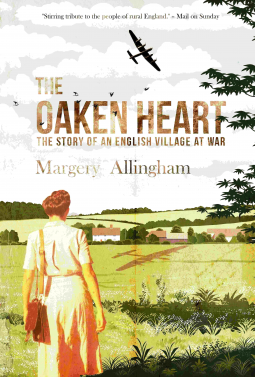
The Oaken Heart by Margery Allingham – I loved this book by Golden Age crime author Allingham, describing her life in a small English village (referred to as ‘Auburn’, but really her own village of Tolleshunt D’Arcy in Essex) during the early part of World War II. The book was published in 1941, making it a first-hand account of wartime life – I thought it was fascinating and I’m just sorry that she never wrote a sequel telling us how the people of Auburn coped with the remaining war years.

V

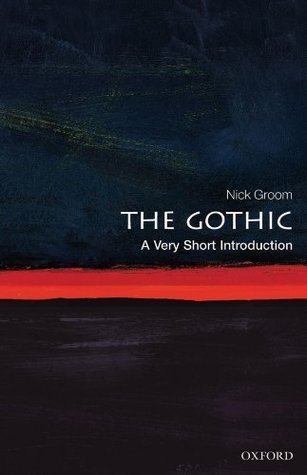
A Very Short Introduction: The Gothic by Nick Groom – I’ve read more than one book from the Very Short Introduction series but I found The Gothic particularly interesting. These little books are a great way to introduce yourself to a new subject and the series covers a wide range of topics. This one begins by looking at the history of the early Germanic tribes known as the Goths before moving on to explore Gothic architecture, classic Gothic literature and modern Gothic fashions, art and music.

E

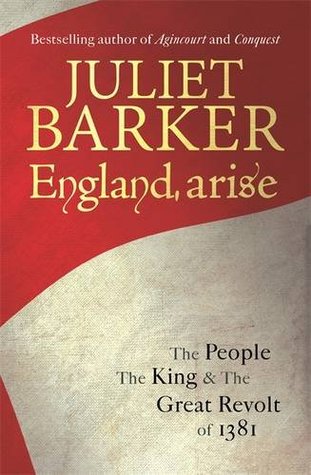
England, Arise by Juliet Barker – This is an account of the Peasants’ Revolt of 1381 (which Barker refers to as the Great Revolt, due to the fact that it didn’t involve just peasants). The first part of the book puts things into context, explaining the background to the revolt and the living conditions in medieval England, before going on to describe the rebellion itself. I found it interesting, but there was a lot of repetitive detail that I felt I didn’t really need. I would still like to read Juliet Barker’s biography of the Brontës, if only it wasn’t so long!

M

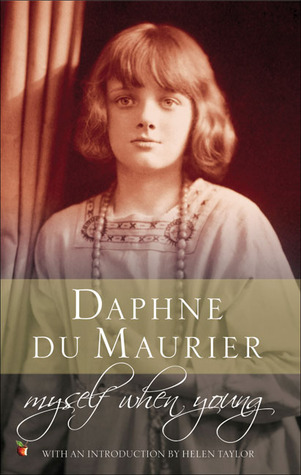
Myself When Young by Daphne du Maurier – This autobiography, originally published in 1977 as Growing Pains: The Shaping of a Writer, is based on diaries kept by du Maurier throughout her childhood and early adulthood. She describes the homes she lived in as a child, her early life as part of a famous theatrical family, her friendships and romantic relationships and the things that inspired some of her later novels. It was good to learn more about one of my favourite authors!

B

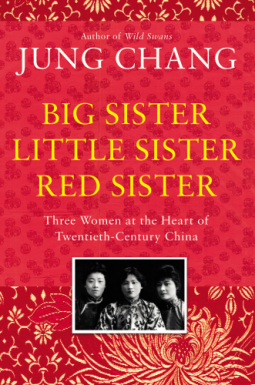
Big Sister, Little Sister, Red Sister by Jung Chang – I loved Jung Chang’s Wild Swans and although I found this one slightly disappointing in comparison, it was still an interesting book. It tells the story of the three Soong sisters, Ei-ling, May-ling and Ching-ling, all of whom played important roles in Chinese politics and society in the 20th century. Unlike Wild Swans which is about Jung Chang’s own family, this book lacked a personal connection and that made it a less powerful read.

E

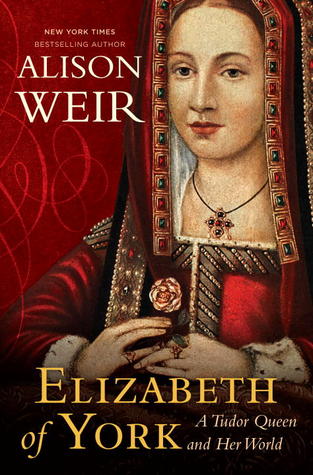
Elizabeth of York: A Tudor Queen and Her World by Alison Weir – There’s also a recent novel by Alison Weir about Elizabeth of York, but this earlier book is a non-fiction account of Elizabeth’s life and world. As the daughter of Edward IV, wife of Henry VII and mother of Henry VIII, who lived through the Wars of the Roses and the founding of the Tudor dynasty, Elizabeth’s story is fascinating. I did enjoy this long and very detailed book, but felt that there were places where it relied too heavily on speculation and Weir’s personal theories.

R

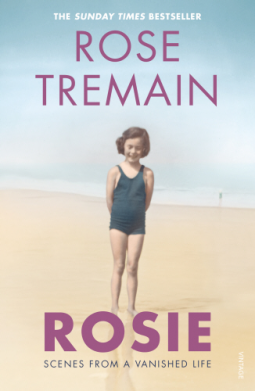
Rosie: Scenes from a Vanished Life by Rose Tremain – This is a childhood memoir by author Rose Tremain, finishing before she publishes her first book. Despite her wealthy, privileged background, Rose (or Rosie as she was known as a child) doesn’t seem to have received much love or affection from her parents and grandparents or any support in pursuing the education and career she wanted. I found it quite a sad book, but it was nice to get to know the young Rosie and her world.

~

Could you spell November in nonfiction books? Have you read any of the books I’ve mentioned here?

The Buried by Sharon Bolton

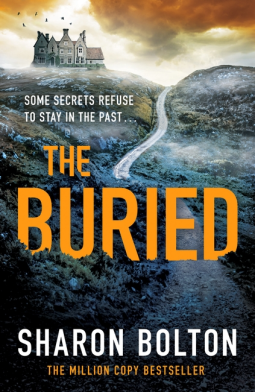
Two new Sharon Bolton books in one year! I loved The Dark, the latest in Bolton’s Lacey Flint series, which was published in the spring – and now, with The Buried, she returns to her Florence Lovelady series. I’ve been waiting for this sequel since I read The Craftsman in 2018 and had almost given up hope of it ever appearing, but here it is at last. It was definitely worth the wait!

The Buried begins in the summer of 1999, with Florence Lovelady visiting Larry Glassbrook in prison. Florence, now a senior police officer with the London Met, was responsible for Larry’s conviction thirty years earlier for the murder of three teenagers in Sabden, Lancashire. Now the remains of four more children have been discovered and Florence is confused. Are these more of Larry’s victims or are the remains more recent, meaning that the real killer is still on the loose? Also, the bodies were found in the grounds of Black Moss Manor Children’s Home, which Florence had helped to close down in 1969 after finding evidence of neglect and cruelty. What does this mean and how can she discover the identity of the children?

Soon after Florence’s visit, Larry Glassbrook dies of cancer and preparations are made for his funeral. His daughter Cassie returns to Sabden after a long absence and immediately sets her sights on John Donnelly, whom she loved as a teenager and who is now a married man with children. Cassie herself has become a successful songwriter, but she has never quite managed to put the past behind her and still has questions about some of the things that happened in Sabden thirty years ago.

The first section of the book alternates between Florence and Cassie during the build up to Larry’s funeral and I have to admit, I felt very confused. I found that I’d forgotten most of The Craftsman and I kept coming across references to people and events I couldn’t remember at all. Who was Marigold? What was Florence’s involvement with Black Moss Manor? I had no memories of those things at all, but they were obviously important. Then I discovered that I wasn’t supposed to remember them as they didn’t actually form part of the plot of The Craftsman. I just needed to be patient because the second section of the novel takes us back to 1969 and my questions about Marigold and Black Moss Manor were answered. The shifting timelines with various parts of this book set both before and after the events of The Craftsman means it works as both a sequel and, in a way, a prequel.

The 1969 storyline (which forms the main part of the novel) is excellent – Sharon Bolton at her best. I was completely gripped by Florence’s investigations into the allegations of abuse at the children’s home and the obstacles she faces in trying to get anybody to take her concerns seriously. The 1960s setting allows Bolton to explore the sexism and misogyny Florence faces as she tries to do her work; the other police officers are exclusively male – local men from Sabden who resent Florence’s university education, southern accent and the fact that she is a woman doing what they consider a man’s job. Meanwhile, we get to know Sally Glassbrook, Cassie’s mother, who is struggling to cope after Larry’s arrest and imprisonment. As the family of a convicted murderer, Sally and her daughters are in a vulnerable position and find themselves having to fend off the unwanted attentions of Roy Greenwood, Larry’s former business partner.

Finally, I need to mention the supernatural elements! The way The Craftsman ended made me think these were going to be a major part of the second book, but things didn’t go quite as far in that direction as I’d expected and the crimes committed are all very human ones. We do see more of the coven of witches who are operating in Sabden (Pendle Hill, site of the famous 17th century witch trials, casts its shadow over the town), the influence of the mysterious and sinister group known as the Craftsmen, and Florence’s own seeming ability to communicate with the dead, but I didn’t think these elements dominated the story too much. However, they are there and won’t appeal to everyone. I would say these books are closer in tone to Bolton’s early standalones such as Sacrifice and Awakening than they are to the Lacey Flint novels or her other recent thrillers.

I loved this book once I managed to get back into the story, but I would definitely recommend reading The Craftsman first – or re-reading it if, like me, you read it several years ago and can’t remember the details.

Thanks to Orion for providing a copy of this book for review via NetGalley.

Maureen Fry and the Angel of the North by Rachel Joyce – #NovNov22

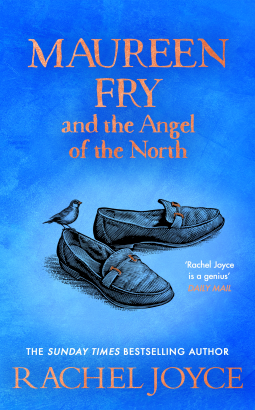
Almost ten years ago I read Rachel Joyce’s first novel, The Unlikely Pilgrimage of Harold Fry, in which a man sets out to walk almost the entire length of England, from his home in Devon to a hospice in Berwick-upon-Tweed, to visit an old friend who has been diagnosed with cancer. A second book followed – The Love Song of Miss Queenie Hennessy, written from the friend’s perspective – but I didn’t read that one. Maureen Fry and the Angel of the North is the final part of the trilogy and I wondered whether I would struggle with it because of not having read the middle book first, but luckily that wasn’t the case.

At only 133 pages, Maureen Fry is a short, quick read but contains an entire journey, both physical and psychological. This time, though, it’s not Harold who is making the journey, but his wife, Maureen. It’s been several years since Queenie Hennessy’s death but the garden she created in Embleton on the Northumberland coast has become a tourist attraction. Hearing that the garden contains a memorial to her own son, David, who committed suicide, Maureen decides to go and see it for herself. It’s something she wants to do alone so, leaving Harold behind, she prepares to head north – not on foot like her husband, but by car.

I found the title of the book intriguing because the obvious reference is to the Angel of the North, Antony Gormley’s sculpture of the same name that stands on a hill overlooking the A1 in Gateshead, just south of Newcastle upon Tyne. I was at Newcastle College on the day it was erected in 1998 and remember watching from the tenth-floor window! Maureen Fry does see the Angel as she drives past, but it’s only mentioned briefly and there are several other possible meanings of the title (although I won’t tell you who or what the other Angels of the North could be). The US version doesn’t refer to angels in the title at all and is simply Maureen, just in case anyone thinks they are two different books!

Maureen’s journey is very different from Harold’s, not just because she chooses to drive instead of walk but also because she has a very different personality. While her husband was easy to like, she is not. She’s rude, unpleasant and unlike Harold, who made new friends during his pilgrimage, Maureen seems to make only enemies. It took me a long time to warm to her at all, but eventually I began to understand the reasons for her behaviour. For such a short book, there’s a lot of emotion within its pages as Maureen begins to face up to the grief she’s been trying to suppress for so many years.

If you’re new to this trilogy, I would definitely recommend reading Harold’s story before Maureen’s. I didn’t feel that I’d missed anything essential by not having read Queenie’s, but I would like to go back and read it now anyway – as well as all the other Rachel Joyce books I still haven’t read!

Thanks to Doubleday for providing a copy of this book for review via NetGalley.

I’m counting this book towards Novellas in November hosted by 746 Books and Bookish Beck.

Six Degrees of Separation: From The Naked Chef to Hotel on the Corner of Bitter and Sweet

It’s the first Saturday of the month which means it’s time for another Six Degrees of Separation, hosted by Kate of Books are my Favourite and Best. The idea is that Kate chooses a book to use as a starting point and then we have to link it to six other books of our choice to form a chain. A book doesn’t have to be connected to all of the others on the list – only to the one next to it in the chain.

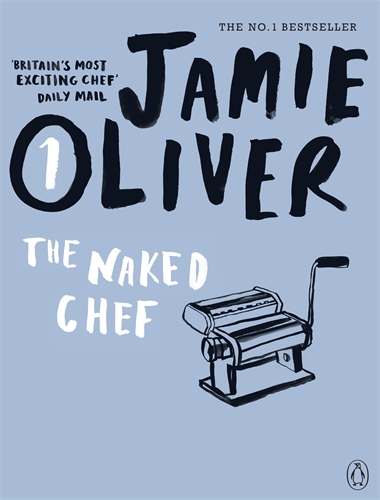
This month, we’re starting with The Naked Chef by Jamie Oliver.

The Naked Chef teaches you how to make beautiful dishes from scratch, whether you’re cooking for guests or simply enjoying good food with your family. Host a dinner party your friends won’t forget with light Vegetable Tempura, followed by melt-in-the-mouth spiced Slow-Cooked Lamb Shank. Or why not try the Chilli, Tomato, Oregano and Pancetta Pizza; perfect for getting the family stuck in.

This book has something for everyone – from those who want great food but want to keep it simple, to those who work for a living and don’t have time to spend all evening cooking. The Naked Chef is all about giving people confidence and getting them to feel at ease in the kitchen, with the help of Jamie Oliver, even if they have never tried cooking before!

I don’t own this book and am not likely to, particularly as I’m a vegetarian (I know he has written another one, Veg), but I thought it was an interesting starting point for this month’s chain.

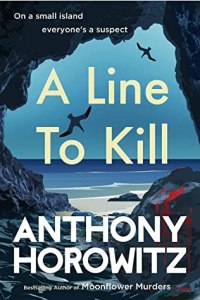
When I saw that we were going to be starting with the Jamie Oliver book, I thought immediately of a novel I read just this summer that features a celebrity chef: A Line to Kill by Anthony Horowitz (1), the third in the Hawthorne and Horowitz mystery series, in which the author uses himself as one of the protagonists. This book revolves around a murder during a literary festival on the island of Alderney and the chef character – Marc Bellamy – is one of the suspects. Horowitz is attending the festival with the detective Daniel Hawthorne and the two reluctantly team up again to investigate the murder.

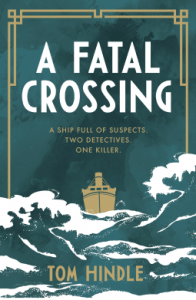
Daniel Hawthorne and Anthony Horowitz have had a difficult and uncomfortable working relationship throughout the series. The relationship between the narrator and the detective in A Fatal Crossing by Tom Hindle (2) – a murder mystery set on board a cruise ship in the 1920s – struck me as very similar, with the detective, James Temple, being a bad-tempered and hostile man who resents the attempts of the bumbling ship’s officer Timothy Birch to help him solve the crime. This was Tom Hindle’s first novel and I really enjoyed it; I’m looking forward to reading his new one, The Murder Game, which is out in February.

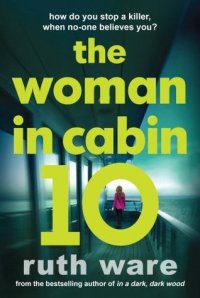
The Woman in Cabin 10 by Ruth Ware (3) is another crime novel set on a ship. A journalist, Lo Blacklock, goes on a cruise around the Norwegian fjords to see the Northern Lights and is convinced that someone has fallen overboard when she hears a scream and a splash from the next cabin, Cabin 10. When the cabin door is opened the room is empty with no sign that anyone had ever been staying there – yet Lo had met the woman in Cabin 10 earlier that very evening. I found this book quite enjoyable, but too drawn out towards the end.

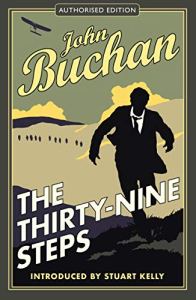
There are lots of books with numbers in their titles, but the one I’m linking to here is John Buchan’s The Thirty-Nine Steps (4). In this classic adventure/espionage novel, Richard Hannay goes on the run across the Scottish countryside after becoming mixed up in a plot to assassinate a Greek politician. I didn’t love this book – I thought it was entertaining at the beginning, but eventually became too repetitive as Hannay makes one last-minute escape after another. I do still want to read more of Buchan’s novels but I’m not sure whether I’ll continue with the others in the Hannay series or try something different.

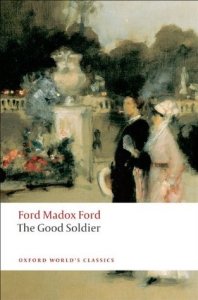
The Thirty-Nine Steps was published in 1915. Another book I’ve read from that same year is The Good Soldier by Ford Madox Ford (5). Despite being published during the war and having the word soldier in the title, this is not actually a war novel, which I remember finding surprising! It’s the story of two couples, one British and one American, who meet at a German spa town in 1904. A clever, interesting novel with an intriguingly unreliable narrator, but not a book that I particularly enjoyed.

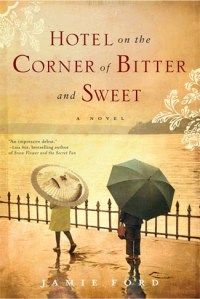
The name Ford leads me to my final book: Jamie Ford’s Hotel on the Corner of Bitter and Sweet (6). This novel is set in Seattle and follows the story of a Chinese-American boy whose Japanese-American friend, Keiko, is sent to an internment camp with her family during World War II. I found the story both heartbreaking and heartwarming, without becoming overly sentimental. Also, the words ‘bitter’ and ‘sweet’ are tastes, which provides a link back to The Naked Chef at the beginning of this month’s chain. Jamie Ford and Jamie Oliver both share a name as well!

~

And that’s my chain for this month! My links have included: celebrity chefs, unlikely detective duos, mysteries set at sea, numbers in titles, the year 1915 and the name Ford.

In December we’ll be starting with The Snow Child by Eowyn Ivey.