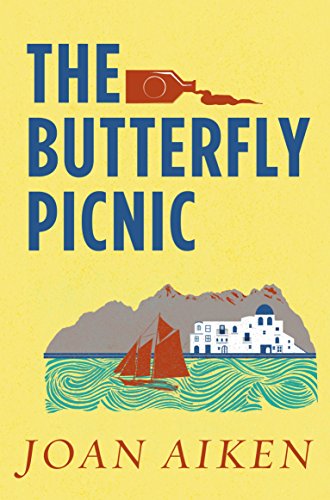
The Butterfly Picnic by Joan Aiken

Although Joan Aiken is best known for her children’s novel The Wolves of Willoughby Chase, she also wrote lots of books for adults. I read one of them, Castle Barebane, last year and enjoyed it so much I knew I would have to read more of them. Unlike Castle Barebane, which was a Gothic historical novel set in Scotland, The Butterfly Picnic, first published in 1972, is contemporary and has much more in common with the suspense novels of Mary Stewart. The characters even reference Stewart’s My Brother Michael once or twice!

The Butterfly Picnic is narrated by Georgia Marsh, a Greek-Chinese-Russian-French orphan with six older brothers, all of them scientists. Georgia has been summoned to the beautiful Greek island of Dendros by her cousin Sweden, another scientist. With no idea why Sweden wants to meet her so desperately, she makes her way to her cousin’s boat which has just sailed into the harbour – and is just in time to witness Sweden’s murder. Unfortunately, Georgia doesn’t see the killer’s face and when she reports the incident to the local police they show very little interest in catching him. In fact, they seem to think Georgia has imagined the whole thing and insist on sending her off on the next plane home. Luckily, the plane is promptly hijacked by Palestinian liberators disguised as priests and Georgia persuades them to return her to the island so she can continue to investigate Sweden’s death.

At this point I was beginning to wonder what on earth I was reading. The plot seemed too ridiculous for words and quickly became even more bizarre…

The plane lands Georgia on the other side of the island where she finds herself accepting a teaching job at a very unusual school inside a castle belonging to a millionaire described as ‘the wickedest man on the island’. However, it seems that someone is determined to prevent Georgia from discovering the truth, and she suffers a series of mishaps including being locked inside a kiln and falling through a trapdoor into an oubliette. While lost in a maze of underground tunnels, Georgia asks herself what Esther Summerson in Dickens’ Bleak House would do: Esther would have bustled up and down the passages doing a great many household errands and embroidering half a dozen yards of ornamental work and jingling her bunch of keys.

The Butterfly Picnic is fun to read and quite a page-turner, but definitely shouldn’t be taken too seriously! As I mentioned above, there are some similarities with Mary Stewart’s novels (the Greek setting, the brave and capable young heroine), while the scientist storyline also reminded me of Agatha Christie’s Destination Unknown, but this is clearly intended to be a parody of those genres of books. As long as you go into it expecting a book that’s more of a comedy rather than a conventional thriller or suspense novel, you’ll probably find it entertaining.

Although I can’t really say that I loved this book as the plot was just a bit too silly, I will continue to try more of Joan Aiken’s novels. The next one I have on my TBR is The Embroidered Sunset and I’m curious to see what it’s like. One final note – be aware that the US title of this book is A Cluster Of Separate Sparks. I wouldn’t want anyone to buy the same book twice!

Book #3 read for R.I.P. XVII

Historical Musings #75: HWA Crown Awards 2022

Welcome to my not-quite-monthly post on all things historical fiction! I don’t normally post this early in the month, but wanted to highlight the HWA Crown Award longlists which were announced last Wednesday by the Historical Writers Association. There are three separate awards – one for debut novels, one for non-fiction and the other (the Gold Crown) for the best historical novel of the year. The shortlists are announced later in October and the winner in November. I have no plans to try to read all of these books, but thought it would be interesting to look at what I’d read so far from each list.

Gold Crown Award 2022 longlist

Booth by Karen Joy Fowler
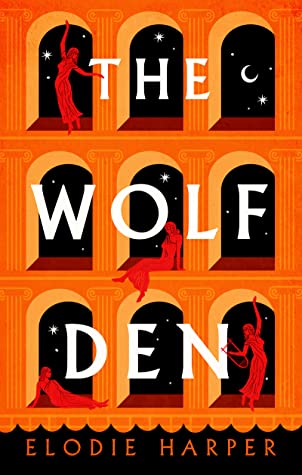
The Wolf Den by Elodie Harper
All of You Every Single One by Beatrice Hitchman
Small Things Like These by Claire Keegan
The Winter War by Tim Leach
Case Study by Graeme Macrae Burnet
The Thin Place by CD Major
The Rebel Daughter by Miranda Malins
The Fortune Men by Nadifa Mohamed
The Kingdoms by Natasha Pulley
The Great Passion by James Runcie
Great Circle by Maggie Shipstead

I loved both Booth and The Wolf Den, two of my favourite books of the year so far. I also found The Fortune Men a powerful and emotional read, but I’m a bit surprised to see The Rebel Daughter here – I found it interesting but nothing special. As for the others on the list, I’ve enjoyed earlier books by Tim Leach and Graeme Macrae Burnet, but didn’t like the only book I’ve read by Natasha Pulley so I won’t be reading The Kingdoms. I like the sound of The Thin Place by CD Major, an author I hadn’t come across until now. None of the others really appeal, although I know they have all had good reviews.

Non-fiction Crown Award 2022 longlist

Operation Jubilee by Patrick Bishop
The Invention of Miracles by Katie Booth
Midnight in Cairo by Raphael Cormack
The Turning Point by Robert Douglas-Fairhurst
The Irish Assassins by Julie Kavanagh
Metaphysical Animals by Clare Mac Cumhaill and Rachael Wiseman
The Library by Andrew Pettegree and Arthur der Weduwen
Loot by Barnaby Phillips
The Hidden Case of Ewan Forbes by Zoë Playdon
The Searchers by Robert Sackville-West
National Treasures by Caroline Shenton
Fallen Idols by Alex von Tunzelmann

I haven’t read any of these or even heard of them, but I’m not a big reader of non-fiction so that’s probably not surprising. I’ve investigated a few of the titles and am particularly drawn to The Turning Point, a year in the life of Charles Dickens, and The Library, about the history of libraries from ancient times to the present.

Debut Crown Award 2022 longlist

The Leviathan by Rosie Andrews
The Queen’s Lender by Jean Findlay
The Silver Wolf by J C Harvey
The Flames by Sophie Haydock
Beasts of a Little Land by Juhea Kim
The Mad Women’s Ball by Victoria Mas
Black Drop by Leonora Nattrass
Moonlight & The Pearler’s Daughter by Lizzie Pook
The Deception of Harriet Fleet by Helen Scarlett
Hear No Evil by Sarah Smith
The Plague Letters by VL Valentine
The Spirit Engineer by AJ West

I’ve only read three from this list. Black Drop was an interesting historical mystery and I have the sequel, Blue Water, on my NetGalley shelf to read soon. I thought The Silver Wolf, the first in a series, was an impressive, ambitious debut and The Leviathan was great until the fantasy/magical realism elements became more dominant towards the end. I’ve heard of a few of the others on the list but am unfamiliar with the rest, so will have to find out more.

~

Have you read any of these? Are you interested in reading them?

Don’t forget, you can find links to all 74 previous Historical Musings topics here.

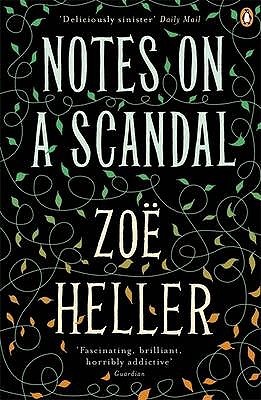
Six Degrees of Separation: From Notes on a Scandal to The Surgeon’s Mate

It’s the first Saturday of the month which means it’s time for another Six Degrees of Separation, hosted by Kate of Books are my Favourite and Best. The idea is that Kate chooses a book to use as a starting point and then we have to link it to six other books of our choice to form a chain. A book doesn’t have to be connected to all of the others on the list – only to the one next to it in the chain.

This month we’re starting with Notes on a Scandal by Zoë Heller. Here’s what it’s about:

Schoolteacher Barbara Covett has led a solitary life until Sheba Hart, the new art teacher at St. George’s, befriends her. But even as their relationship develops, so too does another: Sheba has begun an illicit affair with an underage male student. When the scandal turns into a media circus, Barbara decides to write an account in her friend’s defense—and ends up revealing not only Sheba’s secrets, but also her own.

I haven’t read Notes on a Scandal and it doesn’t really appeal, so I’ve been looking at some reviews to try to find inspiration for that all-important first link. The only thing that struck me is that Sheba’s full name is Bathsheba Hart – and I immediately thought of another fictional character with that name, Bathsheba Everdene in Far from the Madding Crowd by Thomas Hardy (1). It’s not one of my favourite Hardy novels but I did enjoy it. It’s less tragic than some of his others and has a wonderful hero in Gabriel Oak.

My next link is to another novel with the word ‘far’ in the title. The Booker Prize-nominated Far to Go by Alison Pick (2) is the story of a Jewish family, the Bauers, living in the former Czechoslovakia in the 1930s. With the German annexation of the Sudetenland in 1938, the Bauers send their six-year-old son to Britain on the Kindertransport. I found this an interesting and moving novel, particularly as I had never read about the Kindertransport in fiction before.

Another book with a Czech setting is Melmoth by Sarah Perry (3). This dark and atmospheric Gothic novel set in modern-day Prague explores the story of Melmoth the Witness (an imaginary legend which Perry has loosely based on the Charles Maturin classic Melmoth the Wanderer). Through a sequence of stories-within-stories, we see how the Melmoth legend has touched the lives of people throughout history. I enjoyed it, but preferred Perry’s previous novel, The Essex Serpent.

The protagonist in Melmoth is called Helen, which is also my name, as well as the name of the heroine of Anne Brontë’s The Tenant of Wildfell Hall (4). The main part of the story unfolds through the diary of Helen Huntingdon, the ‘tenant’ of the title, who describes how she tries to escape from her marriage to an abusive alcoholic husband. Critics at the time considered the novel shocking and ‘coarse’, but I loved it and I’m sorry that Anne Brontë never seems to get as much attention as her sisters, Charlotte and Emily!

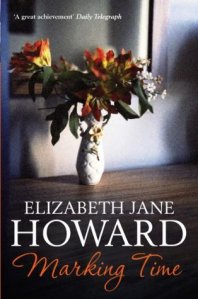
There are a lot of books that are written completely or partially in the form of a diary, but the one I’m going to link to here is Marking Time by Elizabeth Jane Howard (5). Set in the early years of World War II, this is the second book in Howard’s series, the Cazalet Chronicles. The story is told from the perspectives of several members of the Cazalet family, including the teenage Clary, who records her thoughts and observations in her diary. I enjoyed this and really need to continue with the third book soon; I just hope I can remember enough of the first two books to be able to pick up the threads of the story again.

Another series I’m in the middle of is Patrick O’Brian’s Aubrey and Maturin series. I never thought I would like these books as they’re set mainly at sea and I usually struggle with anything nautical, but I’ve found that it doesn’t matter too much if I don’t understand all the naval terms and sea battles; the quality of the writing and the central relationship between the main characters, Jack Aubrey and Stephen Maturin, make up for that! The Surgeon’s Mate (6) was the last one I read and is the seventh book. With a total of twenty-one books in the series, I still have a long way to go!

~

And that’s my chain for this month. My links have included: the name Bathsheba, the word ‘far’, Prague, fictional Helens, diaries and series-in-progress.

In November we’ll be starting with The Naked Chef by Jamie Oliver.

My Commonplace Book: September 2022

A selection of words and pictures to represent September’s reading:

commonplace book
noun
a book into which notable extracts from other works are copied for personal use.

~

‘The most learned minds in England disagree with you.’

‘Learned minds can still believe wicked things, especially when their own interests are at stake.’

Act of Oblivion by Robert Harris (2022)

~

He had never trusted anyone his entire life, only his instincts. Such a life creed afforded one wisdom because it meant he was never disappointed by the actions of men.

Hawker and the King’s Jewel by Ethan Bale (2022)

~

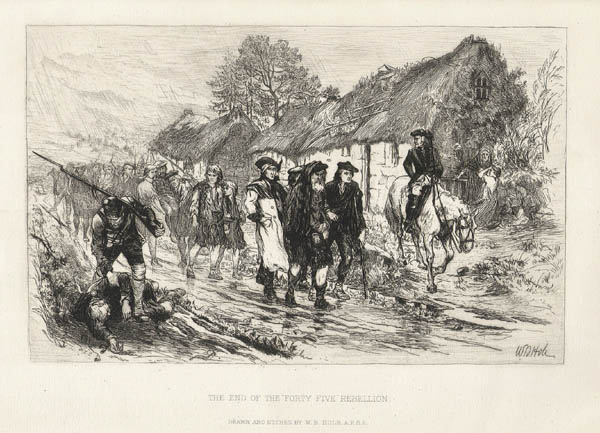
The End of the ‘Forty Five’ Rebellion, by William Brasse Hole

What was the point in a life without honour, and where the honour in a promise that is not kept?

The Bookseller of Inverness by SG MacLean (2022)

~

‘But the whole point about stories is that they’re for sharing. That’s the very nature of their existence. Stories are what bring us together. It’s how we try to understand each other and understanding is exactly what my job is all about.’

The Twist of a Knife by Anthony Horowitz (2022)

~

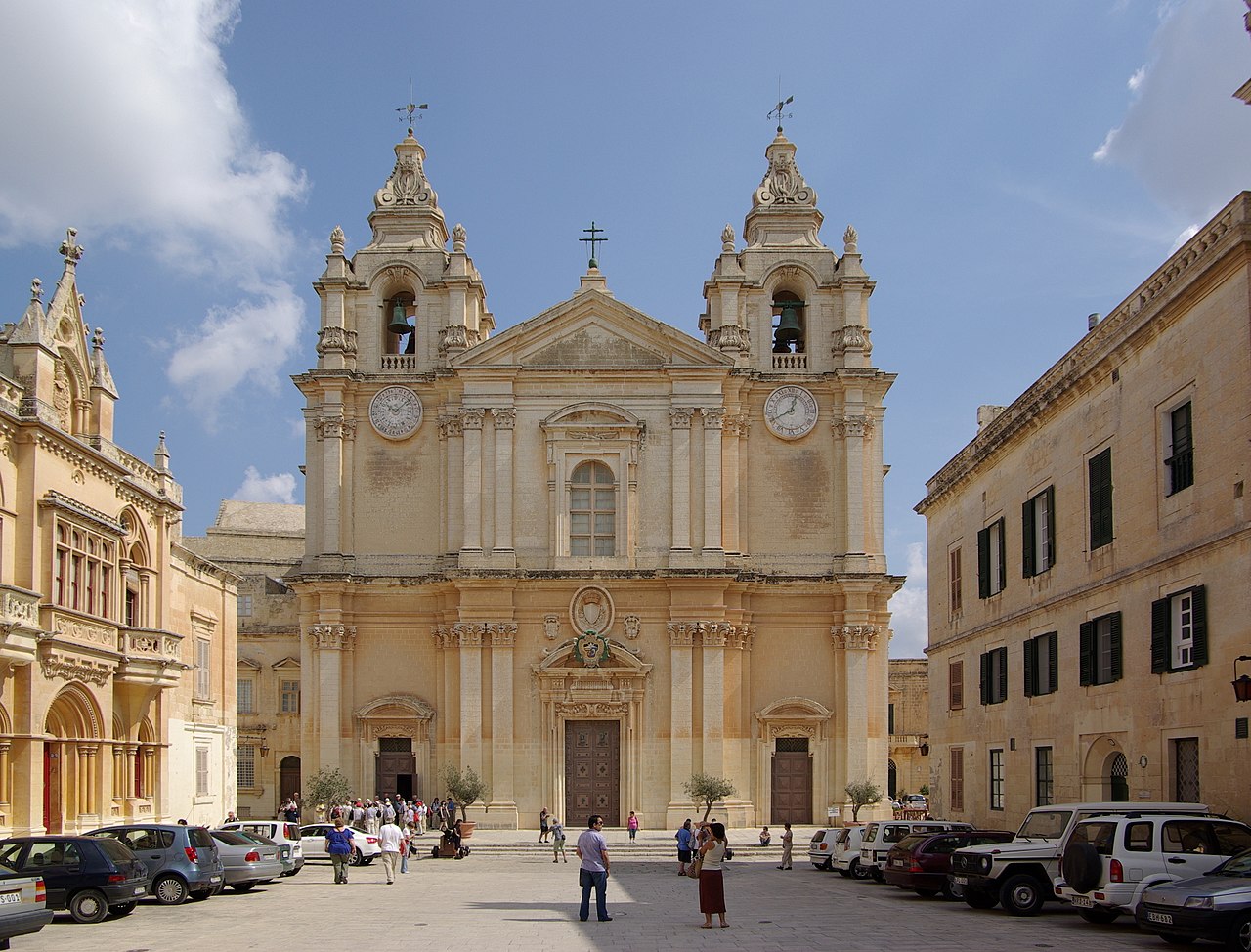
Mdina, Malta

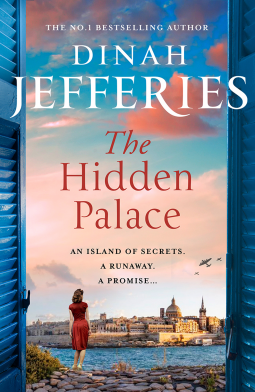
And now it was changing again. How unsettled it made you feel – you thought your world would remain unchanged and go on just as it always had but then suddenly, without you doing anything, anything at all, it completely turned on its head.

The Hidden Palace by Dinah Jefferies (2022)

~

‘Some people wear armour,’ he remarked. ‘If you try and tear it off them you discover things you’d never have suspected. A past of suffering, an unavowable secret that made them into what they are, for better or worse.’

Ashes in the Snow by Oriana Ramunno (2022)

~

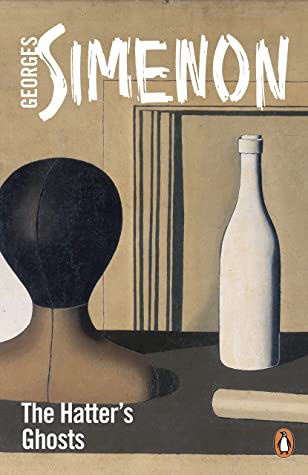
Only, words confused everything, they said either too much or not enough.

The Hatter’s Ghosts by Georges Simenon (1949)

~

Penelope and the Suitors by John William Waterhouse

He finds that silence on this topic lends the hearer the power of imagination, which is usually far richer than the truth.

Ithaca by Claire North (2022)

~

Favourite books read in September:

The Twist of a Knife

Authors read for the first time in September:

Ethan Bale, Oriana Ramunno, Claire North

Places visited in my September reading:

US (Connecticut and Massachusetts), England, Italy, Scotland, France, Malta, Poland, Greece

~

Reading notes: My September reading got off to a good start, but I seem to have read very little in the second half of the month. I’m pleased, though, that I’ve visited so many different countries in my reading – 8 in total. In October I need to read my Classics Club Spin book, The Fortune of the Rougons by Émile Zola, and 1929 Club is also coming up at the end of the month, so I will be reading something from that year as well. Otherwise, I’ll be continuing with some autumnal reads for R.I.P. XVII and catching up with some NetGalley review copies with October publication dates.

Did you read any good books in September? Do you have any plans for your October reading?

The Hidden Palace by Dinah Jefferies

This is the second book in Dinah Jefferies’ new World War II trilogy which began last year with Daughters of War. Although I think it’s always best to read a series in order if you can, I don’t think it would be a problem if you wanted to start with this book. People and events from the first book are alluded to, but are not essential to understanding the plot of this second novel.

Of the three Baudin sisters we met in Daughters of War, The Hidden Palace only focuses on one of them – the youngest sister, Florence, who has left occupied France for the safety of the English countryside. In England, Florence is reunited with her estranged mother, Claudette, who asks for her help in finding her sister Rosalie – Florence’s aunt – who ran away from home as a teenager and hasn’t been seen or heard from for years. Claudette believes that Rosalie may be in Malta, but with war still raging across Europe, no one is able to go there to look for her.

In an alternating storyline, we go back to the 1920s and follow Rosalie’s adventures when, after an argument with her father, she leaves home and finds work as a dancer in a nightclub in Malta. As the years go by, she builds a new life and identity for herself on the island, which makes Florence’s task much more difficult when, once the war is over, she is able to travel to Malta to begin her search. Accompanied by Jack, the Baudin sisters’ friend who worked for the British Special Operations Executive during the war, Florence is determined to find her aunt – but will her aunt want to be found?

I enjoyed The Hidden Palace overall, although I missed the other two sisters from the first book, Hélène and Élise, who stay behind in France and appear only briefly. Florence was not initially my favourite of the sisters so I wasn’t sure how I would feel about this book focusing mainly on her, but I did warm to her after a while – although I had mixed feelings about the development of her romance with Jack, knowing that he had originally been Hélène’s love interest. I also found the sections of the book set in England slightly lacking in atmosphere; you would hardly think the war was still taking place, as the lives of the characters seem largely unaffected and there’s no sense of any real hardship.

The chapters set in Malta were of much more interest to me, particularly as I have been to Malta and enjoyed revisiting, through Rosalie’s eyes, the vibrant streets of the capital Valletta and the peaceful stillness of Mdina, the ‘Silent City’. Malta was very badly hit during the war, due to its strategic importance as a base in the Mediterranean between Europe and North Africa, and it was the target of thousands of German and Italian air raids, making it one of the most heavily bombed places in the world. This is where Rosalie spends the war years, so as you can imagine, her story is a lot more dramatic than Florence’s in the Devon countryside! However, Rosalie also becomes caught up in a scandal involving human trafficking and I couldn’t see the point in this storyline as it didn’t seem to lead anywhere.

The novel has a satisfactory ending, but not everything is fully resolved, so I’m looking forward to finding out what happens in the final part of the trilogy. The third book, Night Train to Marrakech, is due next year.

Thanks to HarperCollins for providing a copy of this book for review via NetGalley.

This is book 51 read for the Historical Fiction Reading Challenge 2022.

The Bookseller of Inverness by S G MacLean

The Scottish author SG MacLean is best known for her Seeker series and before that, the Alexander Seaton series originally published under the name Shona MacLean. I haven’t read any of those books (although I do own The Redemption of Alexander Seaton), but when I saw that her new novel, The Bookseller of Inverness, was a standalone, it seemed like a good place to start.

Set in Scotland in the aftermath of the 1745 Jacobite Rising, the ‘bookseller’ of the title is Iain MacGillivray, a survivor of the Battle of Culloden. Six years have now passed since he was wounded on the battlefield and although he escaped with his life, his face has been left badly scarred. Still traumatised by the death of his cousin Lachlan, Iain has been living quietly since the failed rising, selling books and running a small public library in Inverness. One day, Iain notices a stranger searching through the shelves, opening and closing books; he won’t tell Iain what he is looking for and only leaves when the shop is shut for the night.

The next morning, Iain opens up the shop again to find the stranger dead on the floor, his throat cut and beside him a sword with a white cockade on the hilt – the symbol of the Jacobites. The murder coincides with the reappearance of Iain’s father Hector, a prominent Jacobite who fled Scotland years earlier but still hasn’t given up hope of seeing a Stuart king on the throne once more. When more murders follow, Iain and Hector begin to search for a missing book containing the names of traitors to the Jacobite cause – a book they believe could hold the key to finding the killer.

Although the search for the book and the murderer drives the plot forward, I didn’t think the mystery was a particularly strong one. I was more interested in the historical detail, the descriptions of everyday life in 18th century Inverness and the insights into the mood, politics and changing loyalties in the years following Culloden. I’ve read about the Jacobites many times before and would prefer authors to explore other periods of Scottish history, but MacLean’s enthusiasm for this subject and setting shine through and her very detailed author’s note shows that a huge amount of research went into the writing of this novel. I’m glad I already had some knowledge of this period, though, as I think I might have found the twists and turns of the story a bit difficult to follow otherwise. MacLean also incorporates some subplots that touch on wider topics such as the slave trade and indentured servitude.

Most of the characters in the book are fictional, although many of them, as I discovered from the author’s note, are based on the lives and experiences of real people. One historical figure who plays an important part in the story without actually appearing in it is Simon Fraser, Lord Lovat – known as the ‘Old Fox’ – who readers of Diana Gabaldon’s Outlander series will remember as Jamie Fraser’s grandfather. Iain MacGillivray himself is an engaging character with an interesting past; I enjoyed getting to know him and reading about the work he and his assistants put into collecting, restoring and selling – or lending – books to the people of Inverness.

I’m pleased to have finally read something by MacLean. The Redemption of Alexander Seaton will be next!

Thanks to Quercus Books for providing a copy of this book for review via NetGalley.

This is book 50/50 read for the Historical Fiction Reading Challenge 2022.

The Hatter’s Ghosts by Georges Simenon (tr. Howard Curtis)

This standalone novel by Belgian author Georges Simenon was originally published in 1949 as Les Fantômes du chapelier and is now available from Penguin Classics in an English translation by Howard Curtis. Although Simenon is better known for his series of Maigret detective novels, he also wrote many books like this one – short psychological thrillers, some of which he referred to as romans durs, or ‘hard novels’. I have read a few of them and my favourite so far has been The Venice Train; this one has some similar plot elements, but is a much darker story.

The novel is set in La Rochelle during a wet and miserable December. It has been raining for twenty days, ever since an old lady was found murdered near the canal. Since then, more bodies have been discovered, all of them elderly women and all of them strangled with a cello string. The newspapers are full of speculation over who the murderer might be, but the reader knows from the opening pages exactly who is responsible – and so does the tailor Kachoudas, who has seen something that has convinced him of the killer’s identity. As the rest of the story unfolds, we are kept wondering whether Kachoudas will go to the police or whether he’ll be the murderer’s next victim.

Although we know from the beginning who the culprit is, there’s still a sense of mystery because we have no idea why he has set out to kill so many women and how he has chosen his victims. The truth is eventually revealed and we discover exactly what is going on behind closed doors, but as this is just a short novel (as many of Simenon’s seem to be), I can’t really go into the plot in any more detail without spoiling it. Anyway, the mystery is only one aspect of the story; the real interest is in following the thought processes of the murderer as he tries to justify his actions to himself and deal with his conflicted thoughts and emotions. I was reminded very much of In a Lonely Place by Dorothy B. Hughes, another novel where we know the killer’s identity from the beginning and spend the rest of the book inside his mind, wondering whether he will give himself away.

The Hatter’s Ghosts is an atmospheric, unsettling novel and I loved the descriptions of the dark, rainy streets of La Rochelle. The Howard Curtis translation is clear and accessible and feels quite modern, while also preserving the tone of the 1940s. If you’re new to Simenon, or have only read his Maigret books, I can definitely recommend any or all of the romans durs I’ve read so far – as well as this one and The Venice Train, I have read The Man from London and The Strangers in the House and am looking forward to investigating some of his others.

Thanks to Penguin Classics for providing a copy of this book for review via NetGalley.

Book #2 read for R.I.P. XVII