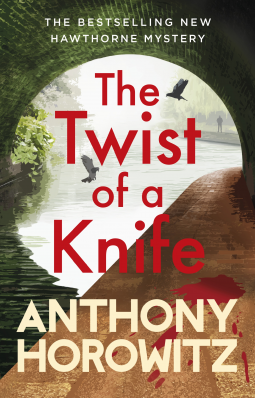
The Twist of a Knife by Anthony Horowitz

This series, of which The Twist of a Knife is the fourth book, takes as its premise the idea that the author Anthony Horowitz himself is one of the main characters, enlisted by the fictional detective Daniel Hawthorne to write books about the cases he investigates. It’s a concept that some people love and others hate, but if you have followed this series through to its fourth outing you probably, like me, fall into the first category. If you’re yet to read any of these books, you could start with this one if you want to as it does stand alone, but I would recommend beginning with the first, The Word is Murder, if you can. Either way, try one and see what you think!

The Twist of a Knife begins with Hawthorne trying to persuade Horowitz to write another book about him, but Anthony has other plans. He had only agreed to a three-book deal and that is now complete; now he’s working on a different novel – Moonflower Murders – and preparing for the London opening of his play, Mindgame. However, as Anthony himself then admits, the fact that we, the reader, are holding a fourth Hawthorne novel in our hands proves that somehow Hawthorne must get what he wants!

The story then moves on to the first night of Mindgame at London’s Vaudeville Theatre. The play has been very well received on tour and Horowitz is hoping that London audiences will like it just as much. Everything goes smoothly on that first night, but as Anthony and the cast get together in the green room after the play, the first review comes in – and it’s a bad one. In fact, it couldn’t be much worse. Written by the critic Harriet Throsby for the Sunday Times, the review is rude, scathing and insulting, placing most of the blame on Horowitz’s writing. When Harriet is found stabbed to death the next morning, suspicion immediately falls on Horowitz and he is arrested for murder. His only hope is that Hawthorne can find the real culprit and clear his name – but what will Hawthorne expect in return?

I think this could be my favourite of the four books in this series. I loved the theatrical setting and I found the mystery a particularly interesting one. Just about everyone involved with the play Mindgame has both the motive and the opportunity to have killed Harriet and I enjoyed learning more about each of the suspects – I did pick up on some of the clues, but certainly not all of them and I didn’t guess who the murderer was until the truth was revealed in an Agatha Christie-style denouement at the end of the book. Mindgame is a real play written by Horowitz which was first performed in 1999, although in this book it’s presented as a new work and the actors, director and events of the opening night are fictional. It sounds like a fascinating play and I’m tempted to read it, although it sounds like one that would have to be seen on stage to fully appreciate.

Daniel Hawthorne remains a private, secretive person, as he has from the beginning of the series, but with each book a few more facts about him are uncovered. In this book, Horowitz has the chance to spend some time in Hawthorne’s home and makes one or two intriguing discoveries which I’m sure will be explored further in the next book. I’m assuming there will be a next book – in fact, there were hints at the end of this one that we could have several more to look forward to. I hope so, although I would still prefer another book about Susan Ryeland and Atticus Pünd to follow Magpie Murders and Moonflower Murders!

Thanks to Century for providing a copy of this book for review via NetGalley.

Book #1 read for R.I.P. XVII
Classics Club Spin #31: The result

The result of the latest Classics Club Spin was revealed today.

The idea of the Spin was to list twenty books from my Classics Club list, number them 1 to 20, and the number announced by the Classics Club represents the book I have to read before 30th October 2022. The number that has been selected is…

2

And this means the book I need to read is…

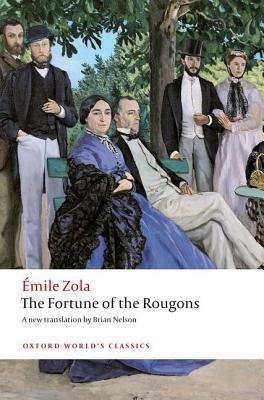
The Fortune of the Rougons by Émile Zola

The Fortune of the Rougons is the first in Zola’s famous Rougon-Macquart series of novels. In it we learn how the two branches of the family came about, and the origins of the hereditary weaknesses passed down the generations. Murder, treachery, and greed are the keynotes, and just as the Empire was established through violence, the “fortune” of the Rougons is paid for in blood.

Set in the fictitious Provencal town of Plassans, The Fortune of the Rougons tells the story of Silvere and Miette, two idealistic young supporters of the republican resistance to Louis-Napoleon Bonaparte’s coup d’etat of December 1851. They join the woodcutters and peasants of the Var to seize control of Plassans, and are opposed by the Bonapartist loyalists led by Silvere’s uncle, Pierre Rougon. Meanwhile, the foundations of the Rougon family and its illegitimate Macquart branch are being laid in the brutal beginnings of the Imperial regime.

~

I’m happy with this as I’ve read very little by Zola and would like to read more. I originally had Germinal on my Classics Club list but found it difficult to get into, so decided to replace it with this one. It’s the first in the Rougon-Macquart series and my edition is translated by Brian Nelson.

Have you read this? If you took part in the Spin, are you pleased with your result?

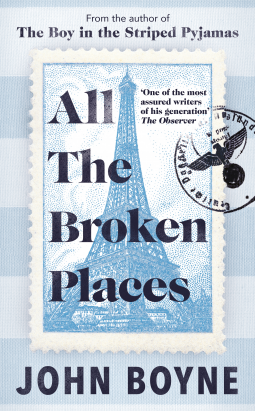
All the Broken Places by John Boyne

I love John Boyne’s books and couldn’t wait to read his new one, All the Broken Places. It’s a sequel to his 2006 children’s novel The Boy in the Striped Pyjamas, but this time it’s aimed at adults. Although I haven’t read the first book, I have seen the film and that helped me understand the background of the characters and the references to things that had happened in the past. If you’re not familiar with The Boy in the Striped Pyjamas, though, I don’t think it would matter too much as this book does work on its own.

All the Broken Places begins in the present day, 2022, and is narrated by ninety-one-year-old Gretel Fernsby. Gretel has lived in the same luxury apartment building in London since the 1960s; most of the other residents have also been there for a long time, so when a new family move into the flat below, Gretel is curious to meet her new neighbours. However, she is alarmed to discover that the family includes a nine-year-old boy, Henry, who brings back memories of her own brother at the same age – memories Gretel has spent her whole life trying to suppress.

As she gets to know Henry and his parents, Gretel quickly becomes aware that something is not right. She wants to help, but is afraid of making the situation worse. At the same time, she is forced to confront her own past when, as the young daughter of a Nazi commandant of a Polish concentration camp, she and her mother fled to France at the end of the war and tried to build new lives for themselves under new identities. Gretel has lived with the shame and guilt ever since, but now it seems she might have an opportunity to redeem herself.

As the story of Gretel’s life unfolds, we are taken on a journey from Poland to France, Australia and then England. Chapters set in the past alternate with chapters set in the present as Gretel battles with her conscience again to try to do the right thing for Henry. There are not many books with protagonists in their nineties and I admired her for the courage, resilience and wisdom she displays in old age, despite what she may have done or not done when she was younger.

I really enjoyed this book, although at times it’s an uncomfortable read and often a moving one. John Boyne has shown previously that he’s not afraid to tackle controversial subjects in his novels and I’m sure this is another one that will divide opinion. Some readers will take the view that anyone with any connection to the atrocities of the Holocaust deserves no pity; others will have sympathy for a twelve-year-old girl who, although she was at least partly aware of what was happening, lacked the strength, will and opportunity to do anything about it and has regretted it ever since. This is a theme Boyne has explored several times before, particularly in A History of Loneliness (a novel about the child abuse scandal within the Catholic church and probably my favourite of his books) – whether by turning a blind eye to the actions of others we are as much to blame as they are and whether it’s our responsibility to speak out if we know something is wrong.

This is a fascinating novel; it’s published today and I look forward to hearing what other people think of it.

Thanks to Doubleday for providing a copy of this book for review via NetGalley.

This is book 49/50 read for the Historical Fiction Reading Challenge 2022.

Classics Club Spin #31: My list

It’s time for another Classics Club Spin. This is the 31st – I can’t believe there have been so many! If you’re not sure what a CC Spin is, here’s a reminder:

The rules for Spin #31:

* List any twenty books you have left to read from your Classics Club list.
* Number them from 1 to 20.
* On Sunday 18th September the Classics Club will announce a number.
* This is the book you need to read by 30th October 2022.

Here’s my list:

1. The White Guard by Mikhail Bulgakov
2. The Fortune of the Rougons by Émile Zola
3. The End of the Affair by Graham Greene
4. The New Magdalen by Wilkie Collins
5. Claudius the God by Robert Graves
6. Sword at Sunset by Rosemary Sutcliff
7. Random Harvest by James Hilton
8. Farewell the Tranquil Mind by RF Delderfield
9. Moonfleet by John Meade Falkner
10. Strangers on a Train by Patricia Highsmith
11. A Laodicean by Thomas Hardy
12. Nicholas Nickleby by Charles Dickens
13. Jane and Prudence by Barbara Pym
14. Strangers on a Train by Patricia Highsmith
15. The Life and Opinions of the Tomcat Murr by ETA Hoffmann
16. Rogue Male by Geoffrey Household
17. The Trumpet-Major by Thomas Hardy
18. Fire from Heaven by Mary Renault
19. Wild Strawberries by Angela Thirkell
20. The New Magdalen by Wilkie Collins

I only have 18 books left on my Classics Club list so have had to repeat some of them. I don’t really mind which of these I get, but is there any particular number you think I should be hoping for?

Top Ten Tuesday: History and Geography!

This week’s topic for Top Ten Tuesday, hosted by Jana of That Artsy Reader Girl, is “Books with Geographical Terms in the Title” (for example: mountain, island, latitude/longitude, ash, bay, beach, border, canyon, cape, city, cliff, coast, country, desert, epicenter, hamlet, highway, jungle, ocean, park, sea, shore, tide, valley, etc).

I haven’t taken part in Top Ten Tuesday for a few months, so thought I would join in with this one. The topic was suggested by Lisa, who blogs at Hopewell’s Public Library of Life.

The ten books I’ve listed below are all historical novels with geographical terms in the title and they are all books that I’ve reviewed on my blog. They are also all written by female authors, although I didn’t do that intentionally!

1. Hungry Hill by Daphne du Maurier – This is a family saga following five generations of the Brodrick family of Clonmere Castle in Ireland. A curse placed on the family by a feuding neighbour seems to come true as each generation experiences tragedy, unhappiness and bad luck. Du Maurier is one of my favourite authors and although I did like this one, it was certainly bleak and miserable!

2. The Child from the Sea by Elizabeth Goudge – The first Goudge novel I read, this is a beautifully written book telling the story of Lucy Walter, a Welsh girl from Pembrokeshire who later becomes a mistress of King Charles II.

3. The Country of Others by Leïla Slimani – This book was originally written in French and is available in an English translation by Sam Taylor. It’s the story of a young woman from France who marries a Moroccan soldier in the 1940s and goes to live with him in Morocco, but finds that settling into life in a new country is much more difficult than she’d expected.

4. The Girl on the Cliff by Lucinda Riley – A multiple timeline novel which moves between wartime London, 1970s Ireland and modern day New York. Unusually, I found all of the storylines equally interesting to read about; normally I find myself drawn to one or the other.

5. The Romance of the Forest by Ann Radcliffe – This 1791 classic is set in 17th century France. It’s not Radcliffe’s best, but it’s still an entertaining read with all the elements you would expect in a Gothic novel, including dark forests, ruined buildings and gloomy weather.

6. Islands of Mercy by Rose Tremain – This novel set in the 19th century follows two very different characters: a young nurse from Bath and an eccentric Englishman living on the island of Borneo. It should have been fascinating but I found it disjointed and it’s the only Rose Tremain novel I’ve read so far that I haven’t enjoyed.

7. The Light Between Oceans by ML Stedman – I loved this book about a young couple living in a lighthouse on an island off the coast of Australia in 1926. When a boat with a baby girl in it is washed up on the shore, they have different opinions over whether to keep the child to raise as their own. A moving and thought-provoking read.

8. In a Dark Wood Wandering by Hella S Haasse – I read this in an English translation by Lewis C Kaplan as it was originally published in Dutch in 1949. It’s set in France during the Hundred Years’ War and written from the perspective of Charles of Orléans. A beautifully written novel and one that I loved.

9. City of God by Cecelia Holland – Cecelia Holland is a very prolific author whose books cover a wide range of time periods and topics. This one is set in Rome at the time of the Borgias and follows the story of a secretary in the Florentine embassy who becomes drawn into Borgia conspiracies.

10. River of Destiny by Barbara Erskine – I’ve tried a few Erskine novels now and am not really a fan, but they do all have interesting settings. This book has three storylines, one set in Anglo-Saxon England, one in the Victorian period and the other in the present day, all linked by sightings of a ghostly Viking ship.

~

Have you read any of these? Which other books with geographical terms in the title can you think of?

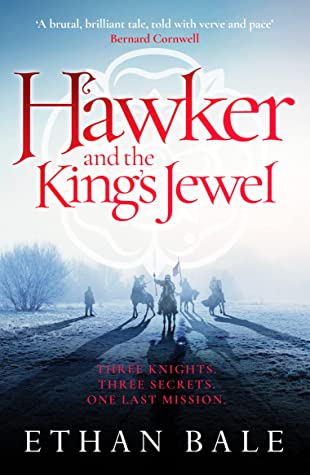
Hawker and the King’s Jewel by Ethan Bale

The Wars of the Roses is one of my favourite periods of history to read about and I’m always looking out for new books, both fiction and non-fiction, that explore the key events, colourful figures and controversial mysteries of this fascinating era.

Ethan Bale’s new novel, Hawker and the King’s Jewel, begins just before the Battle of Bosworth in August 1485 with King Richard III summoning his loyal knight, Sir John Hawker, to send him on one last mission. Richard possesses a valuable jewel, one of the legendary Tears of Byzantium, and he wants Hawker to return it to its previous owner, the Doge of Venice. He also has another request to make of Hawker – to take care of his illegitimate son, Sir Giles Ellingham, who is unaware of his true parentage. Hawker promises to carry out both tasks, but when Richard falls in battle and Henry Tudor takes the crown, the situation becomes much more dangerous. Not only are those who supported Richard now seen as traitors, but Sir Giles could become a focus for both Tudor and Yorkist conspiracies.

The action moves from Bosworth to Flanders and then on to Venice, where most of the story unfolds. Hawker is accompanied by his young squire and a small band of mercenary soldiers, so you can expect some battle scenes, as well as smaller-scale fights and skirmishes (including the mock battles known as battagliola, staged on the bridges of medieval Venice). I was concerned at first that there would be too much of this in the book for my taste, but that wasn’t the case and there were plenty of other things to hold my interest – some political intrigue, a fascinating theory to explain the disappearance of the Princes in the Tower, and even a touch of romance as we discover that Hawker has been in Venice before and left a lover behind there.

Although Sir John Hawker is the main character, the other men who make up his little band become more fully developed as the book progresses. I found one of them particularly intriguing as his motives for remaining with Hawker’s company seem to change continuously as he reassesses the political situation and tries to decide whether loyalty or betrayal will be more to his advantage. There’s also an interesting female character – a Hungarian noblewoman with her eye on the jewel Hawker is carrying – and her storyline helps to carry the novel through to its conclusion.

It seems that this is the first book in a planned series, Swords of the White Rose. I’ll be looking out for the next one.

Thanks to Canelo Adventure for providing a copy of this book for review.

This is book 48/50 read for the Historical Fiction Reading Challenge 2022.

Dubliners by James Joyce

I read Dubliners at the end of July but haven’t had a chance to post my thoughts on it until now as my 20 Books of Summer reviews had to take priority. This is not my first experience of James Joyce’s work as I have read one of his novels, A Portrait of the Artist as a Young Man, but that was about twenty years ago and I can remember very little of it now except a long and vivid description of the horrors of hell! Not being a fan of experimental writing, Ulysses and Finnegans Wake have never appealed at all, but Dubliners sounded much more accessible.

First published in 1914, this is a collection of fifteen short stories. Apparently they are arranged so that the first three are about children, the next few about young adults and the rest about older characters – although I didn’t notice this while I was reading and wasn’t aware of it until after I’d finished the book. Each story provides a snapshot of Dublin life in the early part of the 20th century and I found each one interesting for the insights it gave me into the people, society and culture of that time and place. However, they are not the sort of stories I personally prefer; I like them to have a beginning, middle and end, like a novel in shorter form, but many of the stories in Dubliners are more what I would describe as character sketches and others introduce ideas that are not fully developed, leaving the reader to decide for themselves what might happen next.

I’m not going to discuss all fifteen of them here and I don’t think I would have much to say about some of them anyway, but one I particularly liked was Eveline, about a young woman who made a promise to her dying mother to keep the family home together. Now she has fallen in love with a sailor who wants her to go with him to Buenos Aires and she must choose between keeping her promise and staying at home with her abusive father or seizing her own chance of happiness. I also enjoyed The Dead, the longest and most developed story in the book – almost a novella – in which a man makes an unexpected discovery about his wife at a Christmas party, while the snow falls outside. This has been described as one of the greatest stories in the English language and although I wouldn’t go that far myself, I did find it the most intriguing and satisfying story in this collection.

The other themes and topics Joyce includes in Dubliners range from religion, politics and Irish nationalism to poverty, loneliness and marriage. Together they paint a portrait of a city and its people, often bleak and miserable, but that’s how life would have been for some of these people, I suppose. Although most of the stories feel incomplete and leave a lot open to interpretation, I’m still glad I read them.

This is book 32/50 from my second Classics Club list.