Historical Musings #73: Walter Scott Prize winner and project progress report

Welcome to this month’s post on all things historical fiction!

The winner of this year’s Walter Scott Prize for Historical Fiction was announced yesterday at the Borders Book Festival. Congratulations to James Robertson and News of the Dead!

There were only four titles on the shortlist this year and I have managed to read two and a half of them. The two are Rose Nicolson and Fortune and the half is The Magician, which I’m hoping to finish soon. Typically, News of the Dead is the only one I haven’t had time to get to yet.

The 2022 shortlist:

Rose Nicolson by Andrew Greig
News of the Dead by James Robertson
Fortune by Amanda Smyth
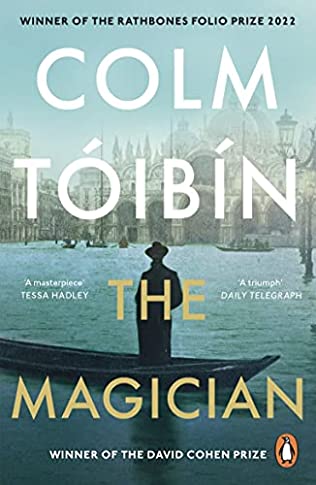
The Magician by Colm Tóibín

Have you read any or all of these books? Which one do you think should have won?

As some of you will know, I’m attempting to read all of the shortlists since the Walter Scott Prize began back in 2010, but my progress with this seems to have stalled recently. Kay, who blogs at What Me Read and is working on the same project, is doing much better than I am and has almost finished! I am keeping track of all my Walter Scott Prize reads here but thought it might be interesting to take a more detailed look at what I’ve read and not read so far. Below you can see my progress with the 2010-2015 shortlists; I’ll save the 2016-2022 lists for next month’s Historical Musings post.

2010

READ:

Wolf Hall by Hilary Mantel (winner)
Stone’s Fall by Iain Pears
Lustrum by Robert Harris

STILL TO READ:

Hodd by Adam Thorpe
Sacred Hearts by Sarah Dunant
The Glass Room by Simon Mawer
The Quickening Maze by Adam Foulds

It would be difficult to argue with Wolf Hall as the winner here, but I also loved Lustrum and Stone’s Fall – in fact, all three made it onto my books of the year lists in the years when I read them. Of the remaining books, I’m particularly looking forward to the Sarah Dunant as I enjoyed one of her others.

2011

READ:

The Long Song by Andrea Levy (winner)
Ghost Light by Joseph O’Connor
Heartstone by C. J. Sansom

STILL TO READ:

To Kill A Tsar by Andrew Williams
C by Tom McCarthy
The Thousand Autumns of Jacob de Zoet by David Mitchell

I did enjoy 2011’s winner, The Long Song, but as a Shardlake fan I preferred Sansom’s Heartstone. Ghost Light was interesting, but I didn’t really get on very well with the writing style.

2012

READ:

On Canaan’s Side by Sebastian Barry (winner)
The Sisters Brothers by Patrick deWitt
Pure by Andrew Miller

STILL TO READ:

The Quality of Mercy by Barry Unsworth
Half-Blood Blues by Esi Edugyan
The Stranger’s Child by Alan Hollinghurst

I loved On Canaan’s Side – Sebastian Barry writes so beautifully. But then, I loved The Sisters Brothers as well; I never expected to find a Western so enjoyable! Andrew Miller’s Pure was an atmospheric read, but I didn’t like it as much as the other two.

2013

READ:

The Garden of Evening Mists by Tan Twan Eng (winner)
The Daughters of Mars by Thomas Keneally
Bring Up the Bodies by Hilary Mantel
The Streets by Anthony Quinn
Merivel: A Man of His Time by Rose Tremain

STILL TO READ:

Toby’s Room by Pat Barker

I’ve read five out of the six books on the 2013 list. The Garden of Evening Mists is another beautiful book and a worthy winner, but my vote would probably have gone to Bring Up the Bodies. I only need to read Toby’s Room now, but I know it’s a sequel to Life Class so would prefer to read that one first.

2014

READ:

An Officer and a Spy by Robert Harris (winner)
Life After Life by Kate Atkinson
The Luminaries by Eleanor Catton
Harvest by Jim Crace
Fair Helen by Andrew Greig

STILL TO READ:

The Promise by Ann Weisgarber

This is a great shortlist! An Officer and a Spy is wonderful (one of my favourites by Robert Harris), but I also really enjoyed the other four that I’ve read, particularly Life After Life and Fair Helen. The Promise doesn’t sound as appealing to me and I haven’t rushed to read it, but will try to get to it soon so I can complete the 2014 list.

2015

READ:

Arctic Summer by Damon Galgut
The Lie by Helen Dunmore
A God in Every Stone by Kamila Shamsie

STILL TO READ:

The Ten Thousand Things by John Spurling (winner)
The Zone of Interest by Martin Amis
Viper Wine by Hermione Eyre
In the Wolf’s Mouth by Adam Foulds

I haven’t done very well with the 2015 shortlist. I’ve only read three of the seven books and wasn’t all that impressed with any of them. I liked parts of The Lie, but it’s not a favourite Helen Dunmore book, and A God in Every Stone was interesting, but I suspect it wasn’t the best Shamsie novel I could have started with. Arctic Summer wasn’t my sort of book at all and has put me off trying anything else by Damon Galgut. I hope for better things from the other four books on the shortlist, when I get round to reading them!

~

And that’s an update on my progress with the 2010-2015 shortlists! In next month’s Historical Musings post I’ll look at the lists from 2016-2022.

Have you read any of these books? Do you agree with the winners?

Privilege by Guinevere Glasfurd

I enjoyed both of Guinevere Glasfurd’s previous novels, The Words in My Hand and The Year Without Summer, so I hoped for good things from her latest novel which sounded just as intriguing as the other two. The title Privilege could refer to all sorts of things, but in this case it’s a reference to the system in pre-Revolutionary France where publishers had to obtain a ‘royal privilege’ before a book could be published.

The novel begins in Rouen in 1749, where Delphine Vimond is being raised by her father, having lost her mother at an early age. Delphine’s father runs a pottery, but he is also a collector of books and Delphine inherits from him a love of literature and a desire for learning. Finding the key to his library, she discovers a whole new world of adventure and knowledge in the pages of his books. However, when a volume by Milton on the killing of kings is found in his possession, Delphine understands for the first time that not all books are seen as appropriate and that some are even forbidden.

Meanwhile, in London, we meet Chancery Smith, an apprentice printer. A box of papers from Paris signed only with the letter ‘D’ has been received at the print shop and Chancery is given the job of visiting France to try to identify this mysterious author. It’s not going to be an easy task – as the papers contain potentially dangerous writings, Chancery must avoid letting them fall into the hands of the censors who would see the papers destroyed and the courier punished. On arriving in Paris, his path crosses with Delphine Vimond’s and together they set off in search of ‘D’, while trying to stay one step ahead of the royal censor, Henri Gilbert, and his spies.

Privilege is a thought-provoking read, exploring issues such as censorship, the power of the monarch, and the freedom – or lack of it – to write and think about topics that matter to us. Before reading this novel I didn’t really know how the ‘royal privilege’ system worked and how it lead to books written in France having to be published in other countries and smuggled back in, so I found that aspect of the story fascinating. I also picked up lots of other snippets of information on the early publishing industry along the way – I had never heard of France’s ‘blue library’, for example.

I found the mystery/thriller aspect of the novel slightly less successful, maybe because the identity of the unknown author seemed too obvious. Still, with two engaging protagonists in Delphine and Chancery, as well as a strong cast of secondary characters, and with such an interesting subject at the heart of the story, it’s a book that I enjoyed reading.

Thanks to John Murray Press for providing a copy of this book for review via NetGalley.

This is book 29/50 read for the Historical Fiction Reading Challenge 2022.

Death on Gokumon Island by Seishi Yokomizo (Trans. Louise Heal Kawai)

The second book I’ve read from my 20 Books of Summer list is this 1948 Japanese mystery novel, now available in an English translation. This is the fourth book in Yokomizo’s Kosuke Kindaichi series to be published in English by Pushkin Press, but actually the second in original publication order. It works as a standalone, with a few references to Kindaichi’s first case, The Honjin Murders, so you could easily start with this one if you wanted to.

Death on Gokumon Island is set in 1946, just after the end of the Second World War, and nearly ten years after the events of The Honjin Murders. Kosuke Kindaichi is on his way to the strangely named Gokumon – or ‘Hell’s Gate’ – Island to deliver the sad news of his army friend Chimata Kito’s death. Kindaichi knows this will be a difficult task, but what really worries him is a prediction made by the dying man that his three half-sisters, who all live on the island in the family home, are going to be murdered.

Arriving on Gokumon Island, Kindaichi gets to know the members of the Kito household, including Chimata’s father who is said to be mad and kept locked up behind bars, as well as another rival branch of the family who live nearby and would benefit from deaths in the main Kito family. The scene is set for a classic murder mystery – and it’s not long before the first murder does take place. Kindaichi begins to investigate, but the islanders are suspicious of newcomers and are reluctant to answer questions.

I struggled to get into this book at first; I felt that we were being introduced to a lot of characters all at once and it was difficult to distinguish between them. I’ve found that with all of the Japanese mysteries I’ve read the authors seem to be more concerned with puzzle-solving than with character development, although Yokomizo is better in that respect than some of the others. After a few chapters I had settled into the story and began to enjoy it. It was good to see more of Kosuke Kindaichi than we did in The Village of Eight Graves; he’s quite endearing with his nervous stammer and head-scratching and the way he makes mistakes and isn’t afraid to admit to them.

Louise Heal Kawai’s translation is clear and easy to read (she also did the translation for The Honjin Murders, although not Eight Graves, which was translated by Bryan Karetnyk). I’m sure Japanese must be a difficult language to translate into English and I do wonder if any nuance is lost along the way, but I was impressed by the way she managed to capture the meaning of the wordplay, poetry and haikus that form part of the plot. I felt I was learning quite a lot about Japanese culture, as well as post-war life in a country that had been on the losing side.

This book has been compared with Agatha Christie’s And Then There Were None, but I don’t think they have much in common other than that they are both mysteries set on islands. This is a very different sort of island, for a start – unlike Christie’s, it’s inhabited, with a fishing community, a mayor, doctors, priests and barbers (to name just some of the characters we meet) – and although there may be a few similarities in the way the murders are carried out, the solution is completely different. It’s a solution I didn’t manage to guess at all; I was convinced I had picked up on an important clue halfway through but it turned out to be a red herring!

Now I need to find time to read The Inugami Curse, the other Yokomizo book currently available in English.

Thanks to Pushkin Vertigo for providing a copy of this book for review via NetGalley.

This is book 2/20 from my 20 Books of Summer list.
The Diamond Eye by Kate Quinn

I loved The Rose Code by Kate Quinn – it was one of my favourite books last year. Because of that, I think my expectations for her new novel, The Diamond Eye, were slightly too high. I enjoyed it, but I don’t think it will be one of my books of the year this time.

The Diamond Eye is the story of Lyudmila Pavlichenko, a female sniper in the Soviet Army during World War II (and a real historical figure). Lyudmila, or ‘Mila’ as she is called in the novel, was born in Ukraine but considered herself Russian. The book was written before the current war in Ukraine began earlier this year, which gives something as simple as Mila’s choice of identity new relevance.

When we first meet Mila, she is a twenty-one-year-old history student in Kiev (now known as Kyiv, of course) and is trying to get a divorce from her husband Alexei, who seduced her as a teenager then left her to raise their son, Slavka, alone. After an encounter with Alexei at a shooting range during which Mila embarrasses herself by missing a shot, she decides to join an advanced marksmanship course so that she’ll never miss again and can prove to Slavka that she’s the equal of his father. This decision changes Mila’s life because, when Hitler invades Russia a few years later, she is handed a rifle and enlisted into the Red Army as a sniper.

We then follow two alternating storylines – one which describes Mila’s time in the army and how she acquires her reputation as ‘Lady Death’, being credited with 309 kills, and another set in 1942 as Mila embarks on a US tour in an attempt to persuade the Allies to provide support for Russia against the Nazis. The chapters set in America explore Mila’s relationship with Eleanor Roosevelt and a fictitious plot to assassinate the President. This invented storyline adds some tension and excitement to the book, but with Mila’s own life being so fascinating I’m not sure that it was really necessary!

The factual parts of the novel are based on Lyudmila Pavlichenko’s own memoir, Lady Death: The Memoirs of Stalin’s Sniper, which I haven’t read. In fact, I knew nothing at all about Mila before reading this book so everything in it was new to me. Quinn includes a very comprehensive author’s note at the end in which she explains where she tried to stick to the known facts and where she had used her imagination to fill in gaps or make the story more interesting (mainly the bits concerning Mila’s marriage to Alexei and her romantic relationships with two men she meets in the army). Some of the most surprising parts of the story, such as Mila’s friendship with the First Lady are actually true.

There’s a lot of focus on military life, weapons and tactics, which I suppose is to be expected in a novel about a sniper, but that’s never been a particular area of interest to me and reading about the Bletchley Park codebreakers in The Rose Code was much more to my taste. Still, it’s always good to learn something new and I did enjoy the parts of the book about Mila’s personal life and ambassadorial work, if not so much the parts about shooting and killing. I’m sure I’ll be reading more of Kate Quinn’s books.

Thanks to HarperCollins for providing a copy of this book for review via NetGalley.

This is book 28/50 read for the Historical Fiction Reading Challenge 2022.

Classics Club Spin #30: The Result

The result of the latest Classics Club Spin was revealed today.

The idea of the Spin was to list twenty books from my Classics Club list, number them 1 to 20, and the number announced by the Classics Club represents the book I have to read before 7th August. The number that has been selected is…

5

And this means the book I need to read is…

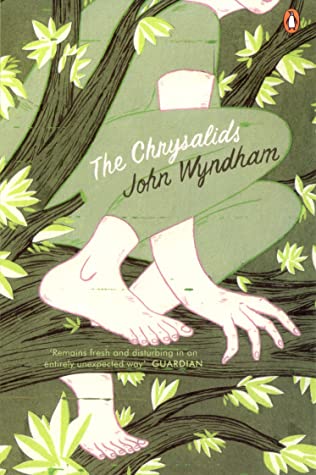
The Chrysalids by John Wyndham

First published in 1955, The Chrysalids is a post-nuclear story of genetic mutation in a devastated world, which tells of the lengths the intolerant will go to to keep themselves pure.

David Strorm’s father doesn’t approve of Angus Morton’s unusually large horses, calling them blasphemies against nature. Little does he realize that his own son, his niece Rosalind and their friends, have their own secret aberration which would label them as mutants. But as David and Rosalind grow older it becomes more difficult to conceal their differences from the village elders. Soon they face a choice: wait for eventual discovery or flee to the terrifying and mutable Badlands…

~

Of all the books on my list, this is one I hadn’t expected to come up in the spin – I have no idea why, but it was a surprise! From the blurb, this is not the sort of book I would usually choose to read, but I have enjoyed others by John Wyndham so am looking forward to this one.

Have you read The Chrysalids? If you took part in the Spin, are you happy with your result?

The Second Sight of Zachary Cloudesley by Sean Lusk

I was drawn to The Second Sight of Zachary Cloudesley by the setting – 18th century Constantinople – but I wasn’t sure that it would really be my sort of book. From the blurb, I was expecting a strong magical realism element, something I don’t always get on with. However, I was pleased to find that this aspect of the novel was actually much more subtle than I’d expected.

The story begins in London in 1754 with the birth of Zachary Cloudesley. Sadly, his mother dies giving birth to him, leaving little Zachary to be raised by his father Abel, a clockmaker and inventor of automata. Fortunately, Abel doesn’t have to do this alone – help soon arrives in the form of wet nurse Mrs Morley and the eccentric Aunt Frances, two very different women who go on to play important roles in Zachary’s life.

From an early age, it becomes apparent that Zachary possesses the gift of ‘second sight’ which allows him to see into the future and this gift only becomes stronger following a serious accident for which Abel blames himself. In order to keep his son safe, Abel is persuaded to accept a commission which takes him far away from his London workshop, to Constantinople (Istanbul). But when Abel fails to return from his journey, Zachary is determined to follow him and do whatever it takes to rescue his missing father.

The first half of this novel has a very Dickensian feel. I was particularly reminded of Dombey and Son, which also begins with a baby being born, the death of the mother in childbirth and the arrival of a wet nurse. I enjoyed getting to know the characters who make up the Cloudesley household: the forthright, opinionated but warm-hearted Grace Morley and her little daughter Leonora; the larger-than-life Aunt Frances who takes her crow and two parrots everywhere she goes; and Abel’s apprentice Tom, an intelligent, talented young man with a not-so-well hidden secret. All of these people have interesting histories of their own, which are revealed during the early stages of the novel.

When the action moves away from London, to the heart of the Ottoman Empire, we are treated to some colourful descriptions of Constantinople, the sultan’s palace, and the seraglio, presided over by the kizlar agha (the head of the eunuchs). However, this is where I felt the story lost its way a little bit and for a while I struggled to stay interested. I think this could have been partly due to the focus switching to Zachary who, despite being the title character, was not as engaging as Frances or Mrs Morley. I’m also not quite sure what the point was in the ‘second sight’ aspect of the book as it didn’t really seem essential to the plot. Still, this was an entertaining debut novel by Sean Lusk – if you read and enjoy it, I can recommend Cynthia Jefferies’ The Outrageous Fortune of Abel Morgan for another adventure in Constantinople or The Clockwork Girl by Anna Mazzola if you’re interested in the world of 18th century automata.

Thanks to Doubleday for providing a copy of this book for review via NetGalley.

This is book 27/50 read for the Historical Fiction Reading Challenge 2022.

Classics Club Spin #30: My list

It’s time for another Classics Club Spin – the 30th, in fact! If you’re not sure what a CC Spin is, here’s a reminder:

The rules for Spin #30:

* List any twenty books you have left to read from your Classics Club list.
* Number them from 1 to 20.
* On Sunday 12th June the Classics Club will announce a number.
* This is the book you need to read by 7th August 2022.

I’m already busy working through my 20 Books of Summer list, so not sure if I will actually have time to read a Spin book as well, but I can’t resist taking part anyway!

Here’s my list:

1. A Laodicean by Thomas Hardy
2. Pied Piper by Nevil Shute
3. Shadows on the Rock by Willa Cather
4. Farewell the Tranquil Mind by RF Delderfield
5. The Chrysalids by John Wyndham
6. Wild Strawberries by Angela Thirkell
7. Moonfleet by John Meade Falkner
8. The White Guard by Mikhail Bulgakov
9. My Theodosia by Anya Seton
10. A Pin to See the Peepshow by F Tennyson Jesse
11. Jane and Prudence by Barbara Pym
12. Strangers on a Train by Patricia Highsmith
13. The New Magdalen by Wilkie Collins
14. Random Harvest by James Hilton
15. Fire from Heaven by Mary Renault
16. Sword at Sunset by Rosemary Sutcliff
17. Pied Piper by Nevil Shute
18. Brat Farrar by Josephine Tey
19. A Pin to See the Peepshow by F Tennyson Jesse
20. The Trumpet-Major by Thomas Hardy

~

Which of these do you think I should be hoping for? I would love to get either Pied Piper or A Pin to See the Peepshow as both of those are on my 20 Books of Summer list, so I’ve included each of them on my Spin list twice to increase my chances! Otherwise, I don’t really mind which number comes up.