The Clockwork Girl by Anna Mazzola

The Clockwork Girl is Anna Mazzola’s third novel and, I think, her best so far. Not only is the cover beautiful, the setting is also wonderfully dark and atmospheric and the story is fascinating.

The year is 1750 and Madeleine Chastel, daughter of a Parisian brothel owner, is about to start a new job as a maid in the household of Dr Reinhart, a Swiss clockmaker. Madeleine is pleased to have an opportunity to escape from her mother’s clutches, but this particular job is not one she has chosen for herself – she has been forced to take it by the chief of police, who wants her to spy on Dr Reinhart and report back on any suspicious activities she witnesses. But although Madeleine soon becomes convinced that the police are correct and something strange is going on in the Reinhart household, she finds that she is growing fond of the clockmaker’s daughter, Veronique, and is reluctant to betray her new friend.

The novel is written from the perspectives of three different characters: Madeleine is one, Veronique is another and the third is Jeanne Poisson, better known as Madame de Pompadour, mistress of King Louis XV. I found the choice of narrators very effective as it means we are given insights into every level of Parisian society – the working class, the bourgeoisie or middle class, and the aristocracy. Our story takes place several decades before the French Revolution would begin, but you can see the foundations being laid here as tensions start to simmer. The various locations in which the novel is set are vividly described, with sharp contrasts between the dark, dirty streets where the poor people live in squalor and the luxury and opulence of the royal palaces of Versailles and the Louvre.

Although The Clockwork Girl is a work of fiction, it is inspired by several real historical events. First, the disappearance of children from the streets of Paris in 1750, a scandal known as ‘The Vanishing Children of Paris’. And secondly, the technological advances during the 18th century in the creation of automata – clockwork dolls, animals and other machines with moving parts. Anna Mazzola weaves both of these things into the plot and the result is an engaging and unusual novel that I thoroughly enjoyed reading.

If this book doesn’t appeal, you may prefer Anna Mazzola’s first book, The Unseeing, based on a true crime (the Edgware Road Murder) or The Story Keeper, a novel set on the Isle of Skye. I enjoyed both of them.

Thanks to Orion for providing a copy of this book for review via NetGalley.

This is book 9/50 read for the Historical Fiction Reading Challenge 2022.

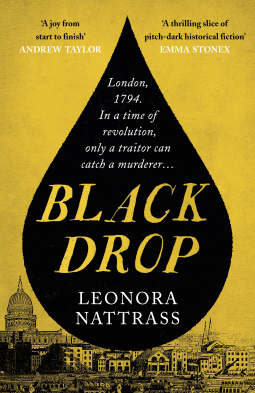
Black Drop by Leonora Nattrass

The final decade of the 18th century is a time of revolution and political upheaval; in 1794, the year in which Black Drop is set, Britain is both at war with France – a country still in the grip of the Reign of Terror – and trying to negotiate a treaty with the recently independent America. Our narrator, Laurence Jago, is a London clerk working in the Foreign Office and facing the difficult task of trying to advance in his career while also hiding a secret that, if discovered, would lead to accusations of treason.

When details of Britain’s military plans are leaked to the press, suspicion falls at first on Jago – but then the blame shifts to another clerk, Will Bates, who is found to have hanged himself in his room. Was Will really the traitor or is he being used as a convenient scapegoat? Jago is sure he was innocent and that his death was actually murder rather than suicide so, with the help of his friend, the journalist William Philpott, he sets out to discover the truth.

I enjoyed this book, although it was more political thriller than murder mystery and I occasionally felt that the plot was becoming more complicated than it really needed to be; I struggled to keep track of all the characters, their roles within the government and which of them may or may not be a spy. Overall, though, it was a fascinating period to read about, with so much going on in the world at that time – not only the French Revolutionary Wars and American treaty mentioned above, but also the fight for political reform led by the British shoemaker Thomas Hardy (not to be confused with the author of the same name!) and the growing debate over slavery and abolition.

Laurence Jago is a great character and the sort of flawed hero I love. The ‘Black Drop’ of the title refers to the laudanum Jago depends upon to get through the day and to ease the fear of his secrets being discovered. As his addiction worsens, it begins to affect the way he judges people and situations and leads the reader to question whether or not everything he is telling us is completely reliable. Despite this, I liked him very much and connected with his narrative style immediately. Jago is one of several fictional characters in the novel whom we see interacting with real historical figures such as Thomas Hardy, Lord Grenville, the Foreign Secretary, and John Jay, the American envoy. I knew nothing about any of these people before reading this book; it’s always good to learn something new!

Black Drop is Leonora Nattrass’ first novel. The way this one ended made me think there could be a sequel, but if not I will be happy to read whatever she writes next.

Thanks to Viper for providing a copy of this book for review via NetGalley.

Book 46/50 read for the 2021 Historical Fiction Reading Challenge.

Book 7 for R.I.P. XVI

The Infernal Riddle of Thomas Peach by Jas Treadwell

READER! – Good-day to you!
And good-morrow, too! for our acquaintance is destined to be long. We are sure of it. We see it in your eye –

Who is Thomas Peach? Why has he fled London to take up residence in a quiet country village in Somerset? What is in the locked chest he keeps hidden beneath the stairs? Why does Mrs Peach never leave her bedroom and why is she not permitted visitors? Does she even exist – and if not, who is it that Thomas talks to at night, when the curious maidservant stands with her ear to the bedroom door?

These are the questions our narrator, an unnamed person who describes themselves as a necromantic historian, sets out to answer in this strange and fascinating new novel by the equally mysterious Jas Treadwell. By the end of the book, we have answers to these questions, as well as some others that are raised along the way, but what makes this such an intriguing and entertaining read, in my opinion, is not the plot so much as the style in which the book is written. Not everyone will agree, of course; I think whether or not you will enjoy Thomas Peach could depend on how you feel about the sort of book it is parodying – the 18th century novel.

Set in 1785, the book imitates the fiction of that time, with the narrator speaking directly to the reader, commenting on what has happened and what is about to happen and providing footnotes where they feel further information is necessary. If you’ve read Susanna Clarke’s Jonathan Strange and Mr Norrell, you will have an idea of what I mean, although the narrator in this book is much more intrusive and is there with us through every turn of the page. Chapter Ten, for example, begins like this:

Like the rustic, who closes his eyes at sun-set, after his day of wholesome toil, and wakes again with the dawn, we omit the night altogether, by the simple method of opening our new chapter upon the following day.

This is probably the kind of writing you either like or you don’t; it does require some patience, as those 18th century authors never used one word when they could use ten! Treadwell draws heavily on the literature of the period and there are lots of references to Samuel Richardson’s huge 1748 epistolary novel Clarissa (which I was glad I had read, as it meant I knew what the narrator was talking about without having to rely on the footnotes!) as well as books by other authors such as Henry Fielding and Tobias Smollett. You don’t actually need to have read any of these books, but a familiarity with some of them will add to your experience of the novel.

Due to the leisurely pace of the novel and all the diversions and digressions, Thomas Peach’s story unfolds very slowly – and when his secrets do eventually begin to be revealed, I felt that beneath the clever writing, the plot was less complex, less magical and less satisfying than I had expected it to be at first. Still, I enjoyed meeting Thomas Peach and the other characters, particularly Clary, a young woman about whom I can’t really say anything at all without spoiling the surprise! Although I couldn’t read a lot of books like this as the style would quickly become irritating, this one kept me entertained.

Thanks to Hodder & Stoughton for providing a copy of this book for review via NetGalley.

Book 9/20 of my 20 Books of Summer.

Book 38/50 read for the 2021 Historical Fiction Reading Challenge.

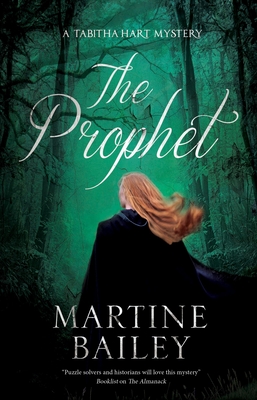
The Prophet by Martine Bailey

When I finished reading Martine Bailey’s The Almanack last year I didn’t know there was going to be a sequel and didn’t expect one, so it was a nice surprise to come across The Prophet and to reacquaint myself with characters I hadn’t thought I would meet again. This book does work as a standalone, though, so if you haven’t read The Almanack yet, don’t worry!

The story begins in 1753, on Old May Day – eleven days were ‘lost’ the year before when Britain changed over from the Julian calendar to the Gregorian calendar – and Tabitha De Vallory and her husband Nat have decided to ride into the forest to see the giant Mondrem Oak which has been decorated for the occasion. Tabitha also has a special reason of her own for wanting to visit the oak; she is pregnant and wants to ask the tree spirit for a safe childbirth. However, she and Nat are unprepared for what they actually find beneath the tree – the dead body of a young woman, brutally murdered.

The woman’s death has coincided with the arrival of a group of people who are on their way to America to start a new life in Pennsylvania and have set up camp in the forest before continuing their journey to the coast. Led by a charismatic young preacher known as Baptist Gunn, the group deny all knowledge of the murder, but are they telling the truth? Could the dead woman be linked to Gunn’s prophecy predicting the coming of a second messiah on Midsummer’s Day?

I enjoyed being back in Netherlea, the Cheshire village in and around which these books are set. It’s a small community steeped in tradition and folklore, where people’s lives are still ruled by ancient superstitions and rituals, making them suspicious of things that are new and unfamiliar – the perfect setting in which a religious cult like Baptist Gunn’s can take root and develop. The conflict between new and old is also explored through the themes of pregnancy and childbirth as Tabitha looks forward to the arrival of her baby with both excitement and anxiety.

The mystery element of the novel is also interesting; both Tabitha and Nat have a personal connection to the dead woman which makes it even more important for them to find out what happened to her. In addition to the prophet Gunn, there are several other suspects and some of the revelations towards the end of the book surprised me! As well as trying to solve the mystery, Tabitha is trying to put her past behind her and adjust to a new way of life as the lady of Bold Hall, with all the changes in status her marriage has brought her.

Of the two books, I think I preferred The Almanack, mainly because I loved the little riddles at the start of every chapter which aren’t included in this one, but The Prophet was still an enjoyable, if unsettling, read.

Thanks to Severn House for providing a copy of this book for review via NetGalley

Book 14/50 read for the 2021 Historical Fiction Reading Challenge.

Daughters of Night by Laura Shepherd-Robinson

It’s 1782 and Caroline Corsham – known to her friends as Caro – is waiting for her husband, Captain Harry Corsham, to return to London from France where he has been sent on diplomatic work. Visiting the Vauxhall Pleasure Gardens one evening, Caro is horrified when she comes across the body of her friend, Lady Lucia, an Italian noblewoman, who has been stabbed and left to die. The London authorities seem to have no intention of investigating the murder, which confuses Caro until she discovers that her friend was not who she claimed to be: she was actually a prostitute known as Lucy Loveless. As the police are no longer interested, Caro knows that she will have to avenge Lucy’s death herself – so with the help of thief taker Peregrine Child, she sets out to begin an investigation of her own.

Daughters of Night is a sequel to Laura Shepherd-Robinson’s previous novel, Blood & Sugar, but both books work as self-contained mysteries and I don’t think it will matter if you read them out of order. Those of you who have read Blood & Sugar will remember that it follows Harry Corsham as he investigates the death of an abolitionist friend and uncovers the horrors of the slave trade. Caro was only a minor character in that book, but now, with Harry absent in France, this is Caro’s turn to take centre stage with her own mystery to solve – and again, there is a very dark topic at the heart of the story, in this case prostitution and the treatment of women in 18th century society.

I mentioned in my review of the first book that I found the characters too thinly drawn and not memorable enough, but that was not a problem at all with this second novel. Daughters of Night is written partly from Caro’s perspective and partly from Peregrine Child’s; I liked them both and thought they complemented each other very well. Child’s previous experience as a magistrate means he knows what sort of questions to ask and what clues to look out for, and while he has some personal problems of his own he is a decent and honourable man. Caro is new to crime solving but there are things she understands that Child does not and together they make a perfect team. I certainly had no idea who the murderer was; there were several suspects who all seemed equally likely to me, so I enjoyed following the twists and turns of the plot until the truth is revealed.

Although the Georgian world that has been created here is not always very pleasant, it’s always fascinating to read about and feels thoroughly researched, ranging from larger themes such as the roles of art and classical mythology to the tiniest pieces of arcane knowledge that add colour and intrigue to the story. Laura Shepherd-Robinson has said that her next book will be a standalone but that she might return to this world again for a future novel – and I hope she does, as I would love to find out what else life has in store for Caro and Harry!

Thanks to Mantle for providing a copy of this book for review via NetGalley.

Book 8/50 read for the Historical Fiction Reading Challenge.

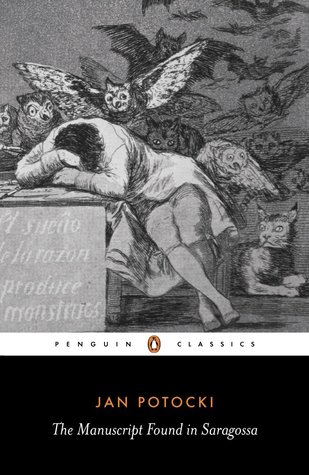
The Manuscript Found in Saragossa by Jan Potocki

Last November I took part in the Classics Club’s 25th Classics Spin and the book selected for me to read before the deadline, which is this Saturday, was The Manuscript Found in Saragossa. Written in French and first published in 1804 and then again in a longer version in 1810, this very unusual novel is the work of the Polish author Count Jan Potocki who, it seems, led a very unusual life: born into an aristocratic family he spent some time with the Knights of Malta, he was apparently the first Polish person to fly in a hot air balloon, and he is said to have shot himself with a silver bullet after becoming convinced that he was a werewolf! I read a Penguin Classics edition of the book translated into English by Ian Maclean. I’m not sure how many other English translations exist, but I highly recommend this one; it’s very readable and makes the novel accessible to the modern reader without losing the feel of the period in which it is set.

I’m going to find it very difficult to give a summary of the plot, but I will do my best! It begins in 1739 with Alphonse van Worden, a young Walloon officer in the Spanish army, on his way to join his regiment in Madrid. Taking shelter in a seemingly abandoned inn in the mountains of the Sierra Morena, two beautiful women appear who introduce themselves as his cousins from Tunis, Emina and Zubeida. After listening to their story, Alphonse goes to bed for the night, only to wake up outside under a gallows, beside the bodies of two hanged men.

This is the first of many bizarre situations in which Alphonse finds himself over the next sixty-six days as he encounters a succession of strange and intriguing characters, including a gypsy chief, a cabbalist, a hermit and even the legendary Wandering Jew. Each of them has a story to tell – and often, another character within their story has another story of his or her own to tell too. Sometimes the stories-within-stories become several layers deep, to the point where one of the characters, the mathematician Velásquez, remarks:

“I do not know who is speaking and who is listening. Sometimes the Marques de Val Florida is telling the story of his life to his daughter, sometimes it is she who is relating it to the gypsy chief, who in turn is repeating it to us. It is a veritable labyrinth. I had always thought that novels and other works of that kind should be written in several columns like chronological tables.”

This probably sounds very confusing, but the novel is actually not as difficult to read as you might think. Although, like Velásquez, I often forgot who was speaking and who was listening, I found that in most cases it didn’t really matter all that much. I stopped trying to keep everything straight in my mind and just enjoyed each story for its own sake – and there’s a lot to enjoy! There are tales of hauntings and evil spirits, duels and disguises, magic and hidden treasures and, apart from one or two – the Wandering Jew’s story became a bit tedious, I thought – they are all very entertaining. Some are romantic, some are gothic and ghostly and others are funny; I was reminded at various times of Don Quixote and The Thousand and One Nights. The novel is conveniently divided into sixty-six chapters, one for each day of Alphonse’s journey (although some of the stories are split across several days), so if you wanted to you could probably read one chapter per day, although I was so gripped by it that I finished the book much more quickly than that!

Despite the sometimes random and meandering feel of the book, it does all come together at the end and most of the loose ends are tied up quite neatly. However, I thought this was one of the few weak points of the book – the conclusion of Alphonse’s story seemed too convenient and too abrupt and I think I would have preferred a different kind of ending. Still, The Manuscript Found in Saragossa was a lot of fun to read and just the sort of escapism I needed at the moment!

This is book 19/50 read from my second Classics Club list.

Still She Wished for Company by Margaret Irwin

Times past, times present, or times to come, were they not all one, if he had the power to make them so?

Part ghost story, part time-slip fantasy and part historical fiction, Margaret Irwin’s first novel from 1924, recently reissued with a pretty new cover, is a wonderful, dreamlike read.

Jan Challard is a young woman living in 1920s London and trying to find her place in the new society which has emerged from the aftermath of the First World War. Life seems to be going well, but Jan feels restless: she is bored with her office job, bored with the nice, suitable young man who wants to marry her, and haunted by a face in a portrait – a Gentleman Unknown, who seems to be following her everywhere she goes.

In 1779, we meet another bored young woman: seventeen-year-old Juliana Clare, the youngest daughter of an aristocratic family with an estate in Berkshire. Juliana spends her days walking in the gardens of Chidleigh House and writing in her journal, while waiting for something more exciting to happen and remembering a line from her favourite childhood fairytale: “…still she sat and still she span, and still she wished for company”. Company does eventually arrive, but perhaps not in the way Juliana had expected.

First, following the death of Lord Chidleigh, Juliana’s eldest brother Lucian returns after a long absence to take up his father’s title and his inheritance. Stories of the wild, debauched lifestyle Lucian has been leading have reached the family and he receives a frosty welcome at Chidleigh House. Juliana is the only one who is happy to see him and as the brother and sister grow closer, something strange begins to happen: the centuries separating Juliana’s life from Jan’s seem to dissolve and merge. Jan can see Juliana and Juliana can see Jan, but which of them is the ghost and which of them is real?

This is a very short novel, but just the right length for the story – or stories – being told, and it really doesn’t need to be any longer. Jan’s story frames Juliana’s and is confined to a short section at the beginning of the book and another at the end; Margaret Irwin appears to be more comfortable writing about the eighteenth century (a period she obviously knew well and knew how to bring to life) and most of the novel concentrates on Juliana. I couldn’t help comparing this to most of the dual time-period books being written today, where I usually find that far too much time is spent on a weaker present day narrative, leaving me impatient to get back to the more interesting historical one. The structure of Still She Wished for Company is much more effective, in my opinion, as I could become fully immersed in Juliana’s story without being pulled out of it after every few chapters.

The book is beautifully written, with the same elegant prose and powerful descriptive writing I’ve loved in the other Margaret Irwin novels I’ve read. There are no obvious anachronisms, no dialogue that feels jarringly wrong for the time period…it was just a pleasure to read! The eighteenth century storyline on its own could have been the basis for a compelling novel, but the addition of the ghost story/time travel elements make it something special, particularly as they are handled so well that they feel almost believable. It’s a lovely, magical read and just the sort of thing I was in the mood for at the moment!

Thanks to Agora Books for providing a copy of this book for review via NetGalley.