Murder at Gulls Nest by Jess Kidd

I’ve read three books by Jess Kidd and so far they’ve all been completely different. This new one, though, is described by the publisher as ‘the first in a sparkling new 1950s seaside mystery series’, so presumably she’s going to stick with one style and genre for her next few books. The series stars Nora Breen, a former nun who has left the convent that has been her home for the last thirty years. She’s an interesting and unusual character and I enjoyed meeting her in this first novel, Murder at Gulls Nest.

Gulls Nest is a guest house in the seaside town of Gore-on-Sea on the southeast coast of England. It’s also the last known address of Frieda, who was once a novice at Nora’s convent before leaving the order and promising to keep in touch. Frieda had been a good friend of Nora’s and when her letters stop arriving, Nora becomes so worried that she also decides to leave and travel to Gore-on-Sea to find out what has happened. Once at Gulls Nest, Nora learns that Frieda disappeared one night without explanation, yet no one else seems to be concerned about it, including the police. Convinced that something bad must have happened to her friend, Nora takes the room that was once Frieda’s and begins to investigate.

As Nora gets to know the other lodgers, she discovers that some of them are not what they seem and appear to be hiding secrets. Then a murder takes place, which may or may not be linked to Frieda’s disappearance. Nora is sure that if she can solve one crime it could provide clues to the other, but Inspector Rideout makes it clear that the police don’t want or need the assistance of a middle-aged ex-nun. Of course, Nora isn’t going to give up that easily!

Murder at Gulls Nest is as entertaining as I’ve come to expect from Jess Kidd’s books, with her usual array of colourful, quirky characters. Some of the most memorable are Professor Poppy, an elderly puppeteer who runs a Punch and Judy show; Dinah, the young daughter of the Gulls Nest landlady, who never speaks but sees everything that’s going on; and the exasperated Inspector Rideout, who wants Nora kept away from his investigation at all costs. I loved Nora’s relationship with Rideout and look forward to seeing how it continues to develop in the next book. As for Nora herself, although I couldn’t quite believe that she had until recently been a nun, I did like her as a character and enjoyed seeing her interacting with the other residents of Gore-on-Sea. I particularly loved the chapter where she’s invited to afternoon tea with the vicar and his ‘family’ – and I won’t spoil the fun by telling you what happens there!

At times this felt like a parody of a mystery novel rather than one to be taken too seriously, but at other times it became surprisingly dark, which kept things interesting all the way through. There’s also a good sense of time and place, bringing the 1950s British seaside setting to life. I hope we don’t have to wait too long for the second book.

Thanks to Faber & Faber for providing a copy of this book for review via NetGalley.

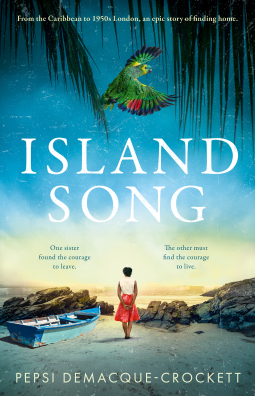
Island Song by Pepsi Demacque-Crockett

Pepsi Demacque-Crockett has had a successful career in music as a backing singer for Wham! and then as a member of the duo Pepsi and Shirlie. Although she was born in London, her parents came to England from St Lucia in the Caribbean, and this forms the inspiration for Island Song, her debut novel.

Island Song is set in the 1950s. Agnes Deterville and her sister, Ella, who live in the village of Canaries on the island of St Lucia, are two very different people. As the quiet, cautious older sister, Ella can’t imagine leaving her island home and knows that she’ll never want to live anywhere else. Agnes is bolder and more adventurous, ready to follow her dreams and seize new opportunities. Working as a housekeeper for an English family, the Chesters, Agnes is captivated by Mrs Chester’s descriptions of her home country and longs to see it for herself. Hearing that people from the Caribbean have been invited to help rebuild post-war Britain, she decides to use her savings to travel to London.

Agnes has two young children from a failed relationship, whom she leaves behind with Ella, and her intention is to return to St Lucia as soon as she’s made enough money to improve the lives of the whole family. However, everything changes when, soon after arriving in England, she falls in love with another new immigrant, Raphael Toussaint. Agnes and Raphael come from the same village and she knows him by his bad reputation, but meeting him again in London he seems to be a different person and assures her that he has changed. Agnes wants to believe him, but how can she know he’s telling the truth?

Island Song is a fascinating exploration of the experiences of immigrants and the way in which people often build up an image of something in their mind that isn’t matched by reality. Having listened to Mrs Chester’s idyllic tales of her life in Dorset, Agnes expects something similar when she arrives in London and is shocked to find that this isn’t the case. Rather than sipping tea in elegant drawing rooms, she’s working in a kitchen making tea for other people, while being bullied by her boss. Similarly, Raphael comes to London hoping to make a fortune, but instead spends several months unemployed before eventually finding a lowly job painting walls for a construction company. They – like the rest of the Caribbean community – face racism, discrimination and even violence, but also make new friends amongst both immigrants and white British people who give them the confidence that not everyone in their new country wants them to leave.

Agnes is a strong character and I did like her, but I found Raphael more interesting because he goes through more growth and development throughout the novel. He has a drinking problem and is easily influenced by his friends, but he also has a kind heart and does genuinely seem to want to change and be a good partner to Agnes. I really wanted them to find happiness, both in their relationship and in their working lives. Ella is another character who grows as a person as the book progresses. Although most of the focus is on the characters who have left the island, we do catch up with Ella now and then and see how she’s gradually able to move on from some bad experiences in her past and gain the confidence to take control of her own life.

Demacque-Crockett writes beautifully about St Lucia and her love for her own heritage shines through in the London sections of the novel as well. The English spoken by her St Lucian characters is peppered with Kwéyòl, a French-based Creole language, and we see the immigrants trying to adapt to British culture while at the same time trying to retain parts of their own culture, such as their favourite foods and music. I really enjoyed this book and I hope Demacque-Crockett will write another one!

Thanks to HarperCollins for providing a copy of this book for review via NetGalley.

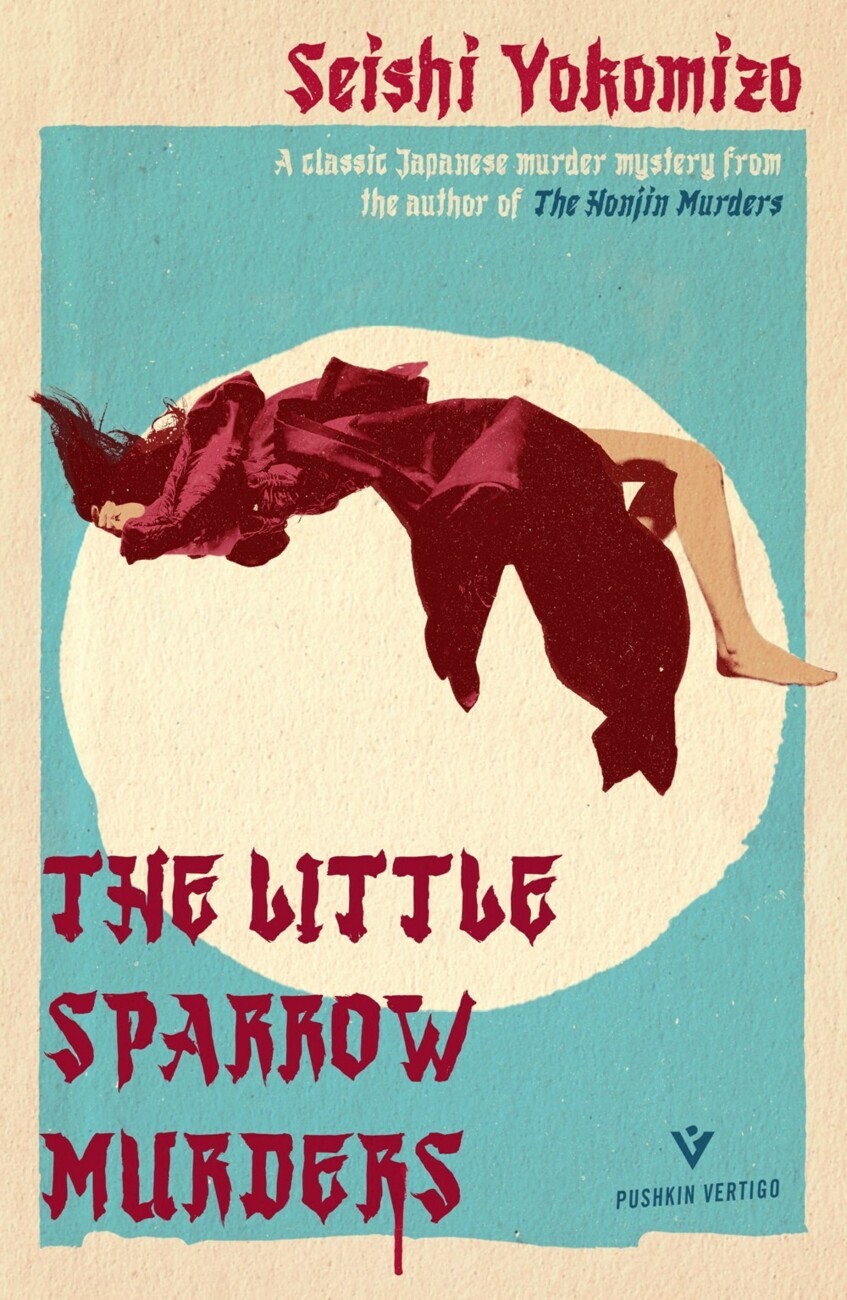
The Little Sparrow Murders by Seishi Yokomizo

Translated by Bryan Karetnyk

I’ve read all five of Seishi Yokomizo’s Kosuke Kindaichi mysteries that have previously been published by Pushkin Press in new English translations. This is the sixth, with another due later this year, and I decided to read it for the Japanese Literature Challenge being hosted this month and next by Dolce Bellezza.

The Little Sparrow Murders was originally published in Japanese in 1959 and is set a few years earlier in the village of Onikobe in Okayama Prefecture. Private detective Kosuke Kindaichi is taking a break from crime-solving and has decided to travel to Okayama to visit his old friend, Inspector Isokawa, at the prefectural police headquarters. Isokawa gives him the address of a nearby inn to stay at, run by Rika Aoike, a widowed friend. Although Kindaichi had been hoping to relax and avoid any mysteries for a while, he finds himself drawn into one when he learns that Rika’s husband, Genjiro, was murdered twenty years earlier – and the killer was never found.

As Kindaichi hears more about the events before and after Genjiro’s death and gets to know some of the people involved, another murder takes place, coinciding with the disappearance of the village chieftain and a sighting of a mysterious old woman on a mountain path. It seems that Kindaichi’s relaxing break is over before it even started. He and Isokawa begin to investigate, convinced that the key to the present day mystery lies in determining what really happened to Rika’s husband all those years ago.

Having read a lot of older Japanese crime novels over the last few years, thanks mainly to Pushkin who are doing a wonderful job with their new translations, I’ve found that many of them – most notably the ones I’ve read by Yukito Ayatsuji and Soji Shimada – are more concerned with solving seemingly impossible crimes and complex puzzles than with characters and motives. Yokomizo, I think, usually finds a better balance between the two; although his books still have intricate plots, the focus is often not so much on working out how the murders were committed, but rather on why they were committed and who could have had a reason for doing so. The impossible crime books can sometimes be fun as well, but I personally prefer the more character-driven ones. In this particular novel, the murders take place out in the open, not in locked rooms, and there’s almost no discussion of alibis, timings or similar things that can sometimes bog down a plot.

One thing I loved about The Little Sparrow Murders is that Yokomizo builds the story around a children’s rhyme – a device that Agatha Christie also often used. The killer in this novel is inspired by a temari song (a song sung by children in Japan while bouncing colourful embroidered temari balls). It begins “In the trees in the garden behind our house, Three little sparrows came to stay” and goes on to describe three young women from different families, who were “all of them sent away” – in other words, murdered. The deaths in the book correspond to the rhyme, which adds some extra interest to the mystery. I hadn’t heard of temari songs or balls before so, as always, a Yokomizo novel has contributed to my knowledge of Japanese culture.

This is one of my favourite Yokomizo novels so far, along with The Honjin Murders and The Inugami Curse, but I did have one problem with it – trying to keep track of the huge number of characters! There are five families in the book and it’s not easy to remember which family each character belongs to and how they’re connected to people in the other families. If you’re reading the ebook version (or maybe even if you’re not), I recommend taking the time to draw some family trees using the character list at the front of the book before you start, then you can easily refer to them as you read. I would have been lost otherwise, I think.

I’m now looking forward to the next Yokomizo book, Murder at the Black Cat Café, coming in September. Pushkin Vertigo also have another Ayatsuji novel, The Clock House Murders, on the way, as well as others by authors I haven’t tried yet, so 2025 should be a good year if you’re a fan of Japanese mysteries!

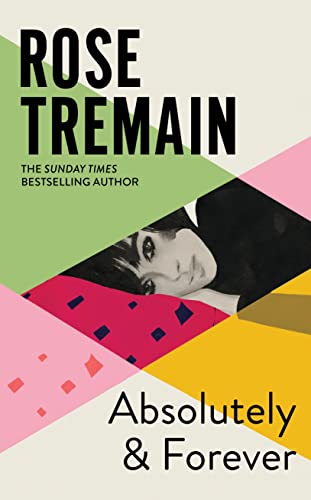
Absolutely and Forever by Rose Tremain

I’ve had mixed experiences with Rose Tremain’s books, enjoying some and struggling with others. Absolutely and Forever was shortlisted for last year’s Walter Scott Prize for Historical Fiction and as it’s a personal project of mine to try to read all of the shortlisted titles, I decided to read this one despite it not sounding particularly appealing to me. It’s a short book (under 200 pages), so at least it wouldn’t be too big a commitment if I didn’t like it.

Here’s how the book begins:

When I was fifteen, I told my mother that I was in love with a boy called Simon Hurst and she said to me, ‘Nobody falls in love at your age, Marianne. What they get are “crushes” on people. You’ve just manufactured a little crush on Simon’.

What Marianne Clifford has manufactured, however, is more than just a little crush. It’s an obsession. She knows she’s going to love Simon Hurst ‘absolutely and forever’ and at first it seems that he feels the same way about her – but when he leaves for Paris to study at the Sorbonne and never returns, Marianne’s heart is broken. As the years go by, Marianne tries to move on and build her own life, but she can never quite let go of her love for Simon and the dreams she once had.

The book is set in the 1950s and 1960s and Marianne narrates the story of her life during and after her relationship with Simon. A lot happens to her over the years – she attends secretarial college in London, has several jobs, gets married and makes new friends – but all the time she’s pining for Simon, which holds her back from finding happiness and contentment. It’s understandable that she would be upset for a while, but when she continues to grieve for years and years afterwards, it quickly becomes frustrating, particularly as it’s so one-sided and Simon clearly doesn’t care as much as she does. But Marianne herself is naïve, innocent and childlike, never really seeing the world as other people see it, so it’s maybe not surprising that she reacts the way she does. Although she grows from a teenager into an adult over the course of the book, she doesn’t develop very much as a person and the Marianne at the end is not a lot different from the Marianne at the beginning.

Although I didn’t dislike Marianne and found her story quite sad, it was Hugo, the man she marries, who had my sympathy. Hugo is completely devoted to Marianne and she does like him very much, but her feelings for Simon prevent her from loving anybody else. At least Marianne is lucky enough to have a close female friend in Petronella, a sensible, practical Scottish woman she’s known since their school days, and Petronella does her best to help her move on with her life, but ultimately she can’t control whether Marianne chooses to take her advice.

The time period the story covers is the period when Rose Tremain herself was a teenager and young adult and I’m sure she’ll have drawn on some of her own personal memories and experiences of that era. Having read her memoir, Rosie: Scenes from a Vanished Life, however, this novel seems to be only partly autobiographical – Marianne’s life follows a different course from Rose’s own, but there are also some similarities, such as Marianne’s desire to be an author (for much of the book she’s working on a novel narrated by an Argentinian horse).

As I’ve mentioned, Absolutely and Forever appeared on the Walter Scott Prize shortlist in 2024, but it didn’t win and I think I can see why. Although I found it quite an easy, enjoyable read (despite Marianne being a bit irritating), sometimes the more readable books aren’t the ones that win prizes and this one doesn’t really tackle important or topical issues like the others on the list. I have the final shortlisted title, The New Life by Tom Crewe, to read soon.

What Time the Sexton’s Spade Doth Rust by Alan Bradley

After a five year gap, Flavia de Luce is back! It seemed that 2019’s The Golden Tresses of the Dead was going to be the last in the series, so I was pleased to see book eleven, What Time the Sexton’s Spade Doth Rust, appear towards the end of 2024. If you’re wondering about the title, it comes from the poem At the End by Andrew Dodds.

In this book, our young heroine Flavia de Luce and her fellow amateur detective, the gardener Dogger, are investigating yet another suspicious death in the village of Bishop’s Lacey. Major Greyleigh, a retired hangman, has been found dead after eating a breakfast of apparently poisonous mushrooms – and the police suspect Mrs Mullet, the de Luce family cook, who had picked and served the mushrooms to the victim. Flavia and Dogger are sure there’s been a mistake – Mrs Mullet can’t possibly be a murderer! Before they can prove her innocence, however, they must try to find the real killer.

I enjoyed the mystery in this book more than in the last one – it was less complicated and easier to follow. Mrs Mullet being implicated makes Flavia and Dogger’s investigation feel more personal and relevant than usual, while the profession of the victim – a hangman – provides motives for other people to want him dead. Also, with the cause of death believed to involve poison, there are plenty of opportunities for Flavia to put her knowledge of chemistry to good use!

I do miss Flavia’s interactions with her sisters, especially as after fighting and arguing with them for most of the series it had seemed a few books ago that her relationships with them were starting to turn a corner. Feely (Ophelia), who got married at the beginning of the previous book, is still away on her honeymoon and doesn’t appear at all, and although Daffy (Daphne) is still living at home, we barely see her either. In fact, it’s mentioned that she’s busy completing her application for Oxford University, so presumably she’ll be gone soon as well. I was struggling to work out the ages of the characters in this book; we were told in the last one that Flavia is twelve, but I can’t remember how much older her sisters are – and I can’t believe only a year has passed since the beginning of the series, where she was eleven!

One character we do see a lot of is Undine, Flavia’s annoying younger cousin (I’m not sure exactly how old she is either). Again, Flavia’s relationship with Undine is improving as she starts to acknowledge that in some ways her cousin actually reminds her of herself. Unfortunately, I don’t find Undine at all fun or endearing and she’s really no substitute for Daffy and Feely.

I was surprised to see that the storyline introduced earlier in the series involving the secret society known as the Nide was picked up again in this book. Having formed a big part of the plot of book six, The Dead in Their Vaulted Arches, and to a lesser extent book seven, it has never really been referred to again until now – and, to be honest, I think it should have just remained forgotten. An espionage/world power storyline doesn’t really fit with the otherwise charming, cosy mystery feel of the series. Still, it meant several big plot twists and the return of a character I hadn’t expected to see again!

Alan Bradley has said that he’s now busy working on the twelfth Flavia book, so it will be interesting to see where things go next.

Thanks to Orion for providing a copy of this book for review via NetGalley.

A House on the Rhine by Frances Faviell – #DeanStreetDecember24

My previous experience with Frances Faviell has been limited to her Second World War memoir, A Chelsea Concerto, so I was curious to see what her novels were like. There are several currently available from Dean Street Press and as Liz is hosting her Dean Street December event this month, I decided it was a good time to give one of them a try.

A House on the Rhine, first published in 1955, tells the story of a family trying to adjust to life in postwar Germany. After their home was destroyed during the war, the family – Joseph and Moe and their twelve children – spent four and a half years living in an air raid shelter and have now been rehoused by the authorities in a village outside Cologne. Moe once received a medal from the Nazis for having more than ten children (large Aryan families being seen as the Nazi ideal), but now it seems that almost every member of that large family is embroiled in trouble of some sort and it’s anything but a happy, harmonious household.

Seventeen-year-old Katie is raising her young son alone after his father, a Belgian soldier, left her and went back to his own country. She sees the little boy as a burden preventing her from getting a job like her siblings and is envious of her older sister, Anna, whose own illegitimate child died. She can’t rely on her mother to help her with childcare because Moe is too distracted these days – she’s having an affair with their lodger, the much younger Rudi, and the whole family knows about it, including Joseph. And so, determined to have some fun and the chance to make some money, Katie has started sneaking out at night with several of her brothers to join a gang of other young people who engage in theft and violence under the cover of darkness.

Katie’s foster sister, Krista, has no memory of her own parents or her early life, having been found unconscious by Joseph during an air raid on Cologne. She has grown up with Joseph and Moe’s children, but is still seen as different and not quite like the others. Krista is in love with Paul, an American soldier, but is afraid to take their relationship any further because she knows her foster father doesn’t approve. Paul is confused. Is it his nationality that’s the problem – or is it because Joseph’s own feelings for Krista are not purely paternal?

I wasn’t prepared for this book being so dark! As well as the affairs, the unwanted pregnancies and the gang violence, some of the siblings also become implicated in a murder, while another, little Carola, is suffering from polio in hospital. It’s very bleak and the only characters I really liked, apart from the very young children, were Krista and Paul. Katie, her brother Hank, and the gang leader Leo were particularly horrible! The narrative moves around from one character to another so we have a chance to get to know all of the major players and I found Joseph, the patriarch of the family, the most complex and interesting. It’s clear that the war – and the time he spent in a prisoner of war camp in France – has affected him deeply, as has the loss of pride he has suffered in not being able to house his own family and the discovery that his children are now earning more than he is himself.

This is certainly not the usual gentle, comforting read I’ve come to associate with the Dean Street Press Furrowed Middlebrow imprint. I found it quite disturbing at times, though also very gripping. It’s a novel with a lot of depth and multiple layers and I know I’ve barely scratched the surface of it here. I can find very few other reviews of it, so if you’ve read it I would love to hear what you thought!

This edition of the book also contains a short story, The Russian for Sardines, originally published in the London Evening Standard in 1956 and also set in Germany after the war – a much more optimistic and uplifting story than A House on the Rhine! I’ll look forward to reading Frances Faviell’s other two novels published by DSP, Thalia and The Fledgeling, as well as her other memoir, The Dancing Bear.

Mischief by Charlotte Armstrong

I read this last month and it would have been perfect for Novellas in November, but I’ve been behind with my reviews. At 170 pages, this was a quick read but also quite an intense one. It was first published in 1950 and adapted for film two years later under the title Don’t Bother To Knock, starring Marilyn Monroe in the role of Nell. I haven’t seen it so don’t know how the plot and characters differ between page and screen.

Mischief begins with Peter and Ruth Jones in their New York hotel room preparing to leave for a convention where Peter will be giving an important speech. Unfortunately, they’ve been let down by their babysitter for the evening and urgently need a replacement. The hotel elevator operator, Eddie, comes to the rescue, volunteering the services of his niece, Nell, and assuring them that nine-year-old Bunny will be safe in her care. When Nell is brought up to their room, Ruth finds that there’s something about the young woman that makes her feel uneasy, but she can’t put her finger on what it is. Anyway, she tells herself that it’s only for one evening and Bunny will be going to bed soon, so what could possibly go wrong?

Meanwhile, Jed Towers is enjoying a night out with his girlfriend, Lyn – until a difference of opinion over giving money to a homeless person blows up into a huge argument and Jed goes back to his hotel room alone. Looking into a window on the other side of a courtyard he sees Nell, who catches his eye and invites him up for a drink. Still angry with Lyn, Jed accepts the invitation in the hope that he can still have some fun despite what has happened. However, he gets much more than he bargained for as his evening quickly goes from bad to worse.

I don’t want to say too much about what takes place inside Room 807 that night, but you won’t be surprised to hear that Ruth’s misgivings about the babysitter are proved correct. Nell is a terrifyingly psychopathic character, cold and heartless, seemingly lacking normal human emotions and empathy. Once in the room with her, Jed becomes increasingly uncomfortable, particularly when he becomes aware of Bunny’s presence in the adjoining bedroom. He wants to get himself out of the situation he has found himself in, but senses that Nell shouldn’t be left alone with the child. It seems to him that the problem with Nell is that she lives entirely in the present, not thinking about the consequences of her actions:

“What if the restraint of the future didn’t exist? What if you never said to yourself, ‘I’d better not. I’ll be in trouble if I do’? You’d be wild, all right. Capricious, unpredictable…absolutely wild.”

The tension builds throughout the book as one thing spirals into another and various hotel guests and staff members gradually become concerned about what is going on. I was genuinely worried for Bunny, especially as everyone seemed content to stand around talking about what might be happening in Room 807 and frustratingly slow to actually come and investigate!

As an example of mid 20th century American noir, I think this compares well to books I’ve read by Dorothy B. Hughes and Patricia Highsmith. I would like to read more of Charlotte Armstrong’s books and it seems she was quite prolific, so there are plenty to choose from.