The Flight of the Falcon by Daphne du Maurier

Having read most of Daphne du Maurier’s more popular books I’m now slowly working through her lesser known novels (though I’m saving Frenchman’s Creek for last as I’m expecting to love that one and want to have something to look forward to). Published in the 1960s, The Flight of the Falcon was one of her final novels and although I didn’t think it was one of her best, I did still enjoy it. If you’re new to du Maurier I would recommend reading some of her other books first, but this one is definitely worth reading too.

Our narrator, Armino Fabbio, works for Sunshine Tours and at the beginning of the book he is showing a group of British and American tourists the sights of Rome. By chance he becomes indirectly involved in the murder of an elderly peasant woman, who he believes he recognises as his childhood nurse, Marta. Deciding to visit Ruffano, the town of his birth, in an attempt to find out what had happened to Marta, Armino begins to uncover some shocking family secrets.

After Armino’s arrival in Ruffano (which is based on the real Italian city of Urbino), the story begins to revolve around the city’s university and the rivalry between the Arts students and the Commerce & Economics students. The battle between these two groups reaches its climax during the preparations for a festival re-enacting the final moments of the city’s fifteenth-century ruler, the evil Duke Claudio – also known as The Falcon.

As I think I’ve said every time I’ve written about a du Maurier book, one of the things I love most about her writing is the atmosphere she creates. In The Flight of the Falcon she succeeds in making Ruffano, with its medieval streets, historic churches and ducal palace, seem beautiful and picturesque but claustrophobic and forbidding at the same time. Whether she’s writing about Cornwall, Italy, France or any other part of the world, her settings always feel vivid and real.

Not everything about this book worked for me, though. I found I didn’t really care about the university politics and rival student groups, which formed such a big part of the plot. I was much more interested in Armino’s personal story. Armino himself is not the strongest of characters, but I was fascinated by his relationship with his elder brother, Aldo. And I hadn’t realised how many of du Maurier’s novels have male narrators! My Cousin Rachel, The Scapegoat, The House on the Strand, I’ll Never Be Young Again and now this one. Are there any others?

In October, Simon from Savidge Reads and Polly of Novel Insights are hosting a ‘Discovering Daphne’ season, so if you still haven’t read any of Daphne’s books that could be a good time to start.

The Help by Kathryn Stockett

As I’ve mentioned before, I always find it difficult to write about a book that so many people have already read. I feel as if there’s nothing new I could possibly say and that nobody will want to hear about it yet again anyway (which I know is not true – there is no book that absolutely everybody in the world has read, however much it sometimes seems that way). But at least I’ve read The Help now and can see why it’s been getting so much attention. And I have to agree with all the bloggers who’ve been giving this book such glowing reviews because it really does deserve it.

The Help is told in the form of alternating narratives by three women living in Jackson, Mississippi during the early 1960s. Two of them, Aibileen and Minny, are black women working as maids, or ‘helps’, for white families. The third is Eugenia Phelan, nicknamed Skeeter because she’s ‘long and leggy and mosquito-thin’. In contrast to the first two narrators, Skeeter is a white woman from a rich family. Skeeter dreams of becoming a writer and convinces Aibileen and Minny to help her write a book throwing new light on the life of a black maid in Jackson.

I loved all three of the narrators, who were each given very different and distinctive voices of their own. I thought it was impressive that Stockett could write so convincingly from the perspectives of three such different people. The intelligent, dignified Aibileen was a lovely, engaging narrator and probably my favourite. But Minny was an equally captivating character – she was outspoken and funny and in some ways felt the most real. I liked Skeeter too but found that she didn’t come to life for me as vividly as the other two. I found it hard to believe that she hadn’t noticed how cruel and prejudiced her best friends were until she reached the age of twenty two (and also hard to believe that she would have been friends with people like them in the first place).

The Help is a powerful and thought-provoking read which raises a number of issues relating to various aspects of racial discrimination, segregation and the Civil Rights Movement, though I’m happy to leave it to people with more knowledge of these subjects to discuss them in the depth they deserve. Judging it purely on its merits as a novel, this was one of the most enjoyable books I’ve read this year. I was alternately enraged by the prejudice and injustice the black maids were forced to endure, amused by the antics of Minny and the other characters, intrigued by the well-meaning but very eccentric Celia Foote, and filled with loathing for Hilly Holbrook, one of the vilest characters ever!

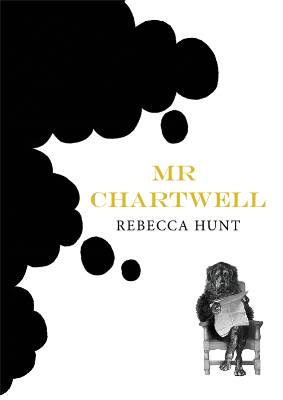
Mr Chartwell by Rebecca Hunt

It’s a well-known fact that British Prime Minister Winston Churchill experienced periods of depression which he referred to as ‘the black dog’. Just a metaphor, of course, but what if the black dog was real? Rebecca Hunt has used this idea as her inspiration for one of the most bizarre books I’ve read for a long time!

It begins with the 89-year-old Churchill waking up one morning in 1964 to find that he’s not alone in the room; someone – or something – is sitting in the opposite corner. Later that morning, librarian Esther Hammerhans is preparing to welcome the new tenant who’s going to be renting her spare room. When she opens the door and is confronted by a huge black dog who introduces himself as Mr Chartwell, Esther is shocked but agrees to let him have the room. He needs to stay in the area for a few days, he says, while he’s visiting a client. But what is Mr Chartwell’s job and who is his mysterious ‘client’?

If you’re going to read Mr Chartwell you need to be prepared to keep an open mind and just accept that one of the protagonists is a dog or you’re not going to get very far with this book! I thought bringing the ‘black dog’ of depression to life was a wonderful idea. Mr Chartwell, or Black Pat as he calls himself, is a fascinating character (and not just because he’s a huge talking dog). He’s manipulative and controlling but sometimes behaves in a more dog-like manner and can even be quite charming and likeable. But although the reader knows what the dog represents (and Churchill knows it too, having been well acquainted with him for many years) Esther has no idea what’s going on and is completely in the dark as to why Mr Chartwell has chosen her house to visit.

Another interesting aspect of the book is that there are little details of Churchill’s life incorporated into the plot, both directly and indirectly. Some of the things he says in the book are based on things that the real Churchill was quoted as saying. And even the dog’s name, Chartwell, was the name of the Churchill family home in Kent.

I loved the opening chapters of this book but started to lose interest a little bit as I got further into the story. The overall tone was quite light (which I know it was probably intended to be) but I think it would have worked better for me if it had been more serious in places and if Mr Chartwell had been portrayed as a less likeable character. The first half of the book in particular is very whimsical, though it does turn darker towards the end where Hunt starts to explain the significance of some of the metaphors and how they relate to depression. Overall though, I thought this was an impressive debut novel and I’ll be looking out for more Rebecca Hunt books in the future.