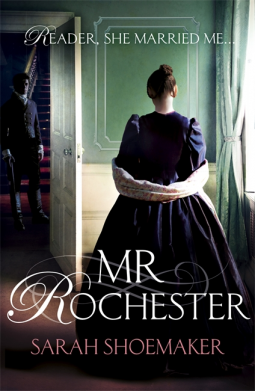
Mr Rochester by Sarah Shoemaker

As I’m not usually a fan of sequels, prequels or retellings of classic novels, I wondered if I was making a mistake in reading Mr Rochester, a book which, as you have probably guessed, is inspired by Charlotte Brontë’s Jane Eyre. However, I’ve always found Mr Rochester an interesting character and the premise of this novel was intriguing enough to tempt me. And I enjoyed it more than I thought I would; the first few sections of the book are excellent – but the last part doesn’t work as well, for reasons I’ll explain shortly.

In Jane Eyre, we meet Edward Fairfax Rochester at his home, Thornfield Hall, where Jane has come to take up a position as governess. We do learn a little bit about his family background and his life before Jane, but is it enough for us to fully understand what made him the man he is? I’ve never thought so and clearly Sarah Shoemaker didn’t either because in Mr Rochester she takes us back to Edward’s childhood to explore the people and events that may have shaped his character and formed the man who will eventually fall in love with Jane Eyre.

At the beginning of Shoemaker’s novel, Edward is a lonely little boy who is largely ignored and neglected by his father and older brother Rowland. At the age of eight he is sent away to be educated, along with two other boys, at the home of his tutor, and although at first he is heartbroken at having to leave his beloved Thornfield Hall the friendships he forms at school will have a big influence on his life. On the rare occasions when he is reunited with his family, he receives no love or affection at all, yet it is clear that his father has not forgotten him and has his future all mapped out. Edward ends up in Jamaica where he takes over the management of the Rochester plantation, Valley View – and is pushed into marriage with the beautiful Bertha Mason, the woman who will become Brontë’s famous ‘madwoman in the attic’.

I really enjoyed the first two thirds of the book, covering the period described in my previous paragraph. This is the part of Rochester’s life Charlotte Brontë didn’t tell us about – at least not in any detail – so Shoemaker is free to use her imagination. I loved reading about Edward’s early childhood, his schooldays and his apprenticeship in a mill; this could have been the basis of an interesting piece of Victorian historical fiction in itself, even without the Jane Eyre connection. The Jamaican chapters are compelling too. There are some similarities with Wide Sargasso Sea by Jean Rhys, but this time our sympathies are intended to be with Mr Rochester as well as with Bertha. Shoemaker’s Rochester does his best for Bertha under difficult circumstances and I found him a more likeable character than both Rhys’s Rochester and Brontë’s…until the point where he returns to Thornfield and meets Jane Eyre.

The rest of the novel – about a third of the book – is a fairly straightforward retelling of Jane Eyre, written from Rochester’s perspective instead of Jane’s. This is where things start to fall apart, in my opinion. Shoemaker puts Brontë’s words directly into the mouths of Rochester and Jane rather than her own – and although she has written in a suitably ‘Victorian’ style throughout the novel, her writing is obviously not the same as Brontë’s, which means the sudden change in the dialogue feels unnatural and uncomfortable. I think I would have preferred her to have simply followed the broad outline of the Jane Eyre plot instead of trying to stick to it rigidly.

The Mr Rochester for whom I’d gained so much sympathy earlier in the book, the quiet, lonely, obedient little boy whose life paralleled Jane’s in so many ways, the insecure man pushed into a career and a marriage not of his own choosing and who longed for nothing more than to go home to Thornfield Hall – that man is gone and I had trouble believing that Shoemaker’s Rochester would behave the way he does in the final section of the book; the whole Blanche Ingram storyline feels out of character, for example.

In other words, if this had just been an original novel inspired by Jane Eyre and set in the Victorian period I would probably have loved it; it was the retelling of the familiar Brontë plot that I didn’t find entirely successful. I didn’t feel that this book really added to or changed my feelings about Jane and Mr Rochester, but there were enough things that I liked about it to make it an enjoyable read anyway.

Thanks to Headline Review for providing a copy of this book for review via NetGalley.
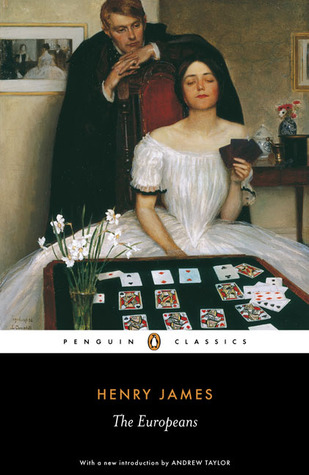
Salt Creek by Lucy Treloar

As well as taking part in German Literature Month this November, I also wanted to read something for Brona’s Australia Reading Month. I haven’t read many Australian books or authors and this is something I want to change, as discussed in a recent Historical Musings post. Lucy Treloar’s Salt Creek was one of the books I needed to read for my Walter Scott Prize project so seemed like the perfect choice.

Salt Creek is set in the 19th century and narrated by Hester Finch, who is fifteen years old as the novel opens in 1855. Having been leading a comfortable lifestyle in Adelaide, the family have fallen on hard times and Hester’s father has decided that they should move to the Coorong region of South Australia where they can try to build a new life for themselves farming the land. Arriving at Salt Creek in the Coorong, however, they find that things are not going to be easy. The landscape is beautiful but desolate, the land is difficult to tame and their Aboriginal neighbours view the newcomers with suspicion.

Hester’s mother, who has been depressed for some time, struggles to adapt and Hester, as the eldest daughter, finds herself taking on more responsibilities around the house. When the chance of freedom comes her way, will she take it or are the ties binding her to Salt Creek too strong? Meanwhile, the efforts of her father and brothers to work the land and make it suitable for farming bring them into conflict with the indigenous Ngarrindjeri people who have made the Coorong their home for generations.

Acting as a bridge between the two cultures is Tull, a boy from a local tribe who is welcomed into the Finch family and grows up with Hester and her brothers and sisters.

That winter I began to notice how differently he saw almost everything compared to us. Mama might say that the colours of winter reminded her of the highlands of Scotland, and I might say that the sky was sapphire or that the washing lines were like cobwebs on a cold morning. Hearing these things perplexed him, as did so much else – the encumbrances of our clothing, our impractical hair, our heavy boots, the fences that we built – which he made apparent by his stillness or his incredulity…

Tull’s relationship with the Finches is one of the most interesting aspects of the story. They come from such different worlds, yet find shared ground and common interests, giving hope that the wider groups they represent – the Aboriginal people and the white settlers – may be able to cooperate and work together. However, it is through Tull that Hester becomes aware of the harm the arrival of her family is doing to the Ngarrindjeri and to the environment.

The story itself has a bleakness to match the harshness of the landscape. Most of the characters experience little or no happiness, enduring poverty, the death and loss of loved ones, prejudice, betrayal and the breakdown of trust. It’s such a sad and tragic story – and yet I didn’t feel quite the emotional connection to Hester that I would have liked. I’m not sure why that should be, but I didn’t become fully invested in Hester’s personal story until I was well into the second half of the book. I don’t think it helped that the author chose to write part of the novel from the perspective of an older Hester living in England and looking back on her life. A more linear timeline might have worked better for me.

Still, Salt Creek is a beautifully written novel, with some lovely, vivid descriptions of the Coorong. Here is Hester having her first glimpse of her new home:

There was little enough to see – dry grasses and low shrubs in sweeps down to the lagoon, an arm of contorted trees hugging the slope from the low ridge and modest folds of land – a bed risen from like my own and its covers pushed back to hold the warmth of night. The colours were not intrinsic. A dry grass stem in shadow could be as drab as sightless eyes or gold in sunlight or silver in moonlight, but I did not know that then.

This was a good choice for the Reading Month; I loved the blend of fact and fiction (Lucy Treloar explains this in her author’s note) and the insights it gave me into life in South Australia, a place I knew very little about until now. I’m sure I’ll be picking up more Australian fiction soon!

The Crow Garden by Alison Littlewood

This is the first book I’ve read by Alison Littlewood, although I do remember hearing about The Hidden People a year or two ago and thinking it sounded interesting. I was attracted to The Crow Garden by its striking cover, but it sounded appealing too, with its Victorian setting and comparisons to Wilkie Collins and Susan Hill, so I thought I would give it a try.

Our narrator, Nathaniel Kerner, is a newly qualified ‘mad-doctor’ on his way to Yorkshire to take up his first position at Crakethorne Manor, an asylum for those ‘troubled in mind’. The tone of the novel is set immediately, with descriptions of dark skies, desolate heaths and remote villages on the journey north and Nathaniel’s first sight of his new place of work, a bleak grey stone building with iron bars on the windows. The asylum is run by Doctor Chettle, a man whose preferred methods of treatment – cold baths, electric shocks and phrenology – are very different from Nathaniel’s. Nathaniel will have the opportunity to try out some of his own ideas when he is assigned his first patient, the beautiful Victoria Adelina Harleston.

Mrs Harleston has been brought to Crakethorne by her husband following an incident on a London omnibus. Accusing her of hysteria, he demands that Nathaniel and Chettle stop at nothing to find a cure for his wife. Believing that the best way to get to the bottom of a patient’s problems is by talking and listening, Nathaniel gradually begins to uncover Mrs Harleston’s story. Far from making things clearer, however, the situation only becomes more confusing. Is Mrs Harleston really insane or is there more to her hysteria than meets the eye? Nathaniel knows he is becoming too deeply involved in the life of his patient but he has vowed to help her and now there’s no going back.

This is the sort of story and setting I usually enjoy, but I think there’s a limit to how many novels about Victorian asylums you can read and I am now close to reaching that limit! I was pleased when, in the middle of the book, the action moved away from Crakethorne for a while and into the streets of London. Here Nathaniel is swept up in the world of mesmerists, spiritualists and séances and although these are also common elements in Victorian historical fiction, I found that the book became much more interesting from this point onwards. Nathaniel’s narration also starts to become increasingly less reliable (although I won’t tell you why as I want to leave you to discover some of the novel’s surprises for yourself) and it is difficult to tell exactly what is real and what isn’t, which gives the rest of the novel a disturbingly hypnotic and unsettling feel.

I appreciated the effort Alison Littlewood makes to tell Nathaniel’s story in language appropriate to the 19th century. It’s something that is always important to me in historical fiction, but even more so in books of this type in which the atmosphere and the setting play such a big part. A few poorly chosen words and phrases can so easily pull you out of the time period, but thankfully Littlewood gets it just about right.

The Crow Garden was an interesting read but, as I’ve said, I think I’ve read too many books with similar settings and themes to really get anything new out of this one. The Asylum by John Harwood, Affinity by Sarah Waters, The Girl Who Couldn’t Read by John Harding and, of course, Wilkie Collins’ classic The Woman in White all came to mind while I was reading, and I would recommend all of those ahead of this book. It didn’t help that I disliked the character of Mrs Harleston so didn’t have the sympathy for her that I would usually have with a woman at her husband’s mercy and committed to an asylum against her will.

Despite not really loving this book, though, I did find it entertaining – and with its atmosphere, Gothic undertones and subtle touches of the supernatural, it’s an ideal autumn or winter read. If anyone else has read it, I would be interested to know what you thought.

Thanks to Quercus Books for providing a copy of this book for review via NetGalley.
The Count of Monte Cristo by Alexandre Dumas (re-read)

When I joined the Classics Club in 2012 and put together the list of books I wanted to read, I decided that, whichever order I read the others in, I would save my re-read of The Count of Monte Cristo until last. It’s one of my favourite books (I had already read it twice) and I thought it would be something to look forward to, even if some of the other classics on my list turned out to be disappointing.

Picking it up to start reading for the third time, I did have a few doubts – there’s always a chance that a book you once loved might have lost its magic – but of course I needn’t have worried. The opening line (“On the 24th of February 1815, the lookout at Notre-Dame de la Garde signalled the arrival of the three-master Pharaon, coming from Smyrna, Trieste and Naples”) is hardly the most scintillating or memorable in literature but reading it, knowing what is to come, gives me the same feeling as when I re-read the first line of other favourite books, such as Rebecca (“Last night I dreamt I went to Manderley again”), Jane Eyre (“There was no possibility of taking a walk that day”) or Watership Down (“The primroses were over”).

Anyway, back to The Count of Monte Cristo! Our hero, or anti-hero (he can be considered to be both), is Edmond Dantès, a young sailor who, at the beginning of the novel, feels that he is the luckiest man in the world. Not only is his marriage to the beautiful Mercédès approaching, but following the death of his captain, he is also about to be given a ship to command. Things couldn’t be better…until the day of his wedding, when he is arrested on suspicion of conspiring against the king with the exiled Napoleon Bonaparte. Of course, Edmond has done nothing of the sort – it is all part of a plot by his jealous shipmate, Danglars, and his rival for Mercédès’ love, Fernand Mondego.

A third man, Villefort, has reasons of his own for wanting Dantès imprisoned and safely out of the way, so with these three enemies ranged against him, Edmond is thrown into a dungeon in the Château d’If where he remains for the next fourteen years. Although he does eventually find a way to escape, his life has been ruined: all of his hopes and dreams have been destroyed, Mercédès is lost to him and he can never get back the years of his youth that have been stolen from him. Vowing to punish his enemies for what they have done, Edmond transforms himself into the Count of Monte Cristo and launches an intricate and carefully planned system of revenge.

The events I have described above take up only a relatively small section of the novel; most of the book is devoted to following the Count as he sets his plans into action. It takes a long time before he begins to see results, but if there is one thing he has learned in prison it is how to be patient – and so he is prepared to spend years devising the perfect methods of revenge. This means the reader is faced with a series of seemingly unrelated subplots and a huge cast of characters; it can be quite overwhelming on a first read, but when you’re reading for the second or third time you can appreciate how things that appear to be irrelevant actually have great significance. This time round, without the same urgency to turn the pages to ‘see what happens next’, I was able to read at a slower pace and enjoy some of the episodes I had previously seen as unnecessarily long digressions, such as Franz and Albert’s adventures in Rome, La Carconte and the diamond ring, and the story of the bandit Luigi Vampa.

Does the Count achieve his aims – and is he happy with the final outcome? I’m not going to tell you (and if you haven’t read the book I’m sure you don’t want me to) but I will say that he does have some doubts along the way, particularly when he discovers that innocent people he never intended to hurt have also become caught up in his web of revenge. “What a fool I was,” said he, “not to tear my heart out on the day I resolved to avenge myself”. I always find it sad to see how he has changed as a result of his imprisonment – when we first meet him again after his escape from the Château d’If, the lively, optimistic young man has disappeared, to be replaced by someone much more cynical and bitter – but towards the end of the book there are signs that the old Edmond is still there, beneath the surface. Most people think of this as a revenge novel, which it certainly is, but we should remember that the Count also takes care to help and reward the friends who stayed loyal to him throughout everything.

Although The Count of Monte Cristo was published around the same time as Dumas’ d’Artagnan series, I think this is a much more mature novel, dealing with serious issues and raising some thought-provoking questions. There are moments of reflection and philosophy like this:

“The friends that we have lost do not repose in the bosom of the earth, but are buried deep in our hearts, and it has been thus ordained that we may always be accompanied by them.”

And this:

“It is the way of weakened minds to see everything through a black cloud. The soul forms its own horizons; your soul is darkened, and consequently the sky of the future appears stormy and unpromising.”

And this:

“Joy to hearts which have suffered long is like the dew on the ground after a long drought; both the heart and the ground absorb that beneficent moisture falling on them, and nothing is outwardly apparent.”

The novel takes the reader through a range of emotions, from anger to pity to frustration to sadness (some of Edmond’s scenes with a certain other character always bring tears to my eyes, thinking of everything he has lost and can never regain). As always with Dumas, though, you can expect an exciting and entertaining read, so there are also murders, poisonings, court cases and duels, thefts, anonymous letters, illegitimate children and searches for buried treasure. Not everything that happens feels entirely realistic and you do need to suspend disbelief now and then, but I don’t mind that when a book is so enjoyable to read.

I haven’t said very much about the other characters in the book (and apart from Edmond Dantès himself, whom I have always found fascinating and complex), I have to admit that most of them don’t have a lot of depth. There are two, however, that I do particularly love. The first is the Abbé Faria, a fellow prisoner of Edmond’s in the Château d’If, an extraordinary man who acts as inspiration, adviser and teacher to Edmond and without whom he would have lost the will to live. The other is Monsieur Noirtier, an elderly man who has been left unable to walk and talk, but who devises an unusual form of communication and forms a special bond with his granddaughter, Valentine.

There is so much more I would like to say about this wonderful book, but I would have to give spoiler warnings, and I think this post is long enough now anyway! I will leave you to read The Count of Monte Cristo for yourself, if you haven’t already. I know the length of the book can seem off-putting, but I wouldn’t recommend reading an abridged edition as the story is so complex I think you would be missing out on a lot.

This is book 100/100 read for the Classics Club, which means I have now completed my list! I’ll be posting a summary of my Classics Club experience soon.

The Bedlam Stacks by Natasha Pulley

This is Natasha Pulley’s second novel. I remember seeing lots of very positive reviews of her first, The Watchmaker of Filigree Street, a year or two ago and thinking it sounded interesting. I never got round to reading that book, but when I heard about her new one, The Bedlam Stacks – which sounded just as intriguing – I decided to give it a try.

Set mainly in Peru in 1860, The Bedlam Stacks is narrated by Merrick Tremayne, a former opium smuggler and an expert in botany. Confined to his family estate in Cornwall due to a leg injury, Merrick is trying to come to terms with the fact that he will now have to put his adventuring days behind him and find something else to do with his life. Just as he is beginning to lose hope, his old friend Clem Markham arrives with a request from Merrick’s former employers, the East India Company. To tackle the problem of treating malaria in India, a supply of quinine is urgently needed – and Merrick’s expertise with plants makes him the ideal person to travel with Clem to Peru to take cuttings of the quinine-rich cinchona tree.

At first Merrick is reluctant to agree, knowing that his disability will make it difficult for him to travel through dangerous terrain – not to mention the fact that the Peruvians have a monopoly on the trees and are not about to let anyone else steal them. The alternative, though, is to stay at home and follow his brother’s suggestion of becoming a parson, so it doesn’t take him long to reach a decision! Venturing into the uncharted depths of Peru, Merrick and Clem finally arrive in the holy town of Bedlam, a place where the boundaries between magic and reality begin to merge.

The magical realism elements in The Bedlam Stacks are much more dominant than I had expected. There are moving statues, exploding trees and several other surprises which I will leave you to discover for yourself! This wasn’t really to my taste – I think I would have found it just as enjoyable to read a novel about an expedition to Peru that was based entirely on fact, without the touches of fantasy – but it was certainly imaginative and original. I did love the concept of the Markayuq statues, which apparently really exist and are still found in the countryside in Peru, originally thought to be guarding the villages. Natasha Pulley finds a clever and fascinating way to incorporate these into the story, but again I don’t want to say too much.

The sense of place is very strong – there are some wonderful descriptions of the Peruvian landscape as well as vivid accounts of more practical considerations such as the altitude sickness experienced during the journey – but I was slightly disappointed that there wasn’t a stronger sense of the time period. Neither Merrick’s narrative voice nor the dialogue between the characters felt convincingly Victorian to me; the choice of words and phrases, the grammar and the structure of sentences just weren’t right for the 19th century. I’m aware, though, that I can be a bit pedantic about anachronistic language used in historical novels and I know it’s not something that bothers everyone!

I did find a lot to enjoy in The Bedlam Stacks, although I’m sorry that I couldn’t quite manage to love it. Maybe I’m just not the right reader for Natasha Pulley’s books, but I’m still glad I’ve tried this one – even if not everything worked for me, I can understand the appeal!

Thanks to Bloomsbury Publishing for providing a copy of this book for review via NetGalley.
Blood and Sand by Rosemary Sutcliff

Rosemary Sutcliff is probably best known as a children’s author, but she also wrote several novels for adults and Blood and Sand, published in 1987, is one of them.

Blood and Sand is based on the true story of Thomas Keith, a Scottish soldier serving in the British Army during the Napoleonic Wars. Taking part in the Alexandria expedition of 1807 – an operation designed to capture the city of Alexandria in Egypt – Thomas is taken prisoner by Ottoman forces at El Hamed. Most of his fellow captives are sent back to Cairo as prisoners of war, but the Ottoman general in command of El Hamed has other plans for Thomas, who is ‘an extremely personable young soldier who speaks French, knows how to bear pain like a gentleman, and is the best swordsman and shot in his regiment’. Sent to train in the desert with the Bedouin cavalry, Thomas gradually rises through the ranks to enter the service of Tussun Bey, the Viceroy of Egypt’s youngest son, and to become Governor of Medina.

You may be wondering how it was possible for a Christian to reach such heights within the Ottoman Empire, so I should explain that Thomas makes the decision to convert to Islam. He does this partly because he is advised that it is the only way to progress in his military career but also because during his time as a prisoner he reads about and studies the Islamic religion and decides that conversion is something he feels comfortable with. However, it seemed to me that he made this choice a bit too easily and quickly; I would have found it more convincing if he had struggled with it more and if he had thought more often of the life he had left behind in Edinburgh and to which he would now never be able to return.

As far as I can tell – I had never heard of Thomas Keith until reading this book – most of the characters in the novel really did exist and most of the events described really did happen. This certainly seems to be true of the battles and military campaigns, but also two of the novel’s most exciting and memorable scenes: a dramatic duel and a desperate battle for survival on a dark turnpike stair. Of course, it’s Sutcliff’s skill as a writer which brings these scenes to life and fills them with suspense and tension, but it sounds as though the real Thomas Keith must have had a fascinating career and some hair-raising adventures. It’s surprising that he has not been a more popular subject for historical fiction.

In her author’s note Sutcliff says that the only area where she relies completely on her imagination is with the romance she creates for Thomas. This possibly explains why our hero’s love interest doesn’t appear until halfway through the book and only plays a relatively small role in the story. A much more interesting and moving relationship is the one between Thomas and Tussun, the Viceroy’s son – a relationship which develops over the years as Tussun grows from an impulsive, hot-headed teenager into a mature, well-respected leader and although it stops short of actual romantic love, is deeper than a normal friendship.

I enjoyed the first half of the novel very much, but later in the book Thomas and Tussun become embroiled in fighting against the Wahabis of Arabia and the heavy focus on military action was much less interesting to me than the more human story I had been finding so engrossing. That’s just my personal taste, though, and the battle scenes will probably appeal to other readers more than they did to me. I didn’t love this book quite as much as I’d thought I was going to at first, then, but I will certainly be reading more by Rosemary Sutcliff, having enjoyed both this one and The Rider of the White Horse.

The Fortune of War by Patrick O’Brian

This is book number six in Patrick O’Brian’s Aubrey/Maturin series. I enjoyed the previous one so much I thought it would be a difficult act to follow, but I actually found this one just as good – and maybe even better. If you haven’t yet had the pleasure of meeting Captain Jack Aubrey and Dr Stephen Maturin, I would recommend beginning with the first of the series, Master and Commander, and saving this review until you’ve caught up; otherwise, although I have tried to avoid too many spoilers in this post, you may come across something you would prefer not to know just yet.

The Fortune of War picks up the story shortly after Desolation Island ended. With his ship HMS Leopard declared unfit, Jack receives orders to return to England to take command of a forty-gun frigate, the Acasta. He and Stephen Maturin, accompanied by several other members of the crew, begin the long journey home as passengers on the courier ship La Flèche. Early in the voyage, however, they learn that war has broken out between Britain and America – the War of 1812 – and following a series of disasters, they are taken prisoner and find themselves brought to Boston, which is now enemy territory. At first, despite being wounded in the arm, Jack is not too worried; he’s sure there will be an exchange of prisoners soon and then they can be on their way again. The Americans, though, are convinced that there had been a spy on board the Leopard and are not about to let their suspects escape so easily!

I really enjoyed this book, after an initial panic where I found I couldn’t remember what happened at the end of Desolation Island. I think I need to stop leaving such long gaps between books! Luckily, though, Jack gives a recap to the Admiral in the first chapter and this serves as a reminder for the reader too. Once I settled back into the flow of the story, I loved it, particularly the parts of the novel set in Boston where Stephen’s spying activities come to the forefront. This leads to exciting scenes which are different from anything we’ve read in the series so far.

Stephen also has his long-awaited reunion with Diana Villiers, the woman he loves and who broke his heart at the end of HMS Surprise – but Diana has changed and it seems that his own feelings for her have changed too. Despite his disillusionment I found Diana much easier to like in this book than I did in the earlier ones, although with so much still unresolved by the end, I was left wondering whether they will find any happiness in the next book or whether their relationship will continue down its tempestuous path.

I have stopped worrying about the nautical terminology in these novels. I appreciate the authenticity O’Brian brings to the naval scenes, the level of his research and of course, his writing ability, but I know I’m never going to be able to follow everything that is happening; as long as I can understand the outcome of each battle or manoeuvre I’m happy! I think this must be the first book in the series where Jack has not actually had a ship of his own to command, but he and Stephen still manage to get caught up in two naval actions, both of which are closely based on real events from the War of 1812.

The next book in the series is The Surgeon’s Mate and based on the quality of the last two books I’m really looking forward to it.