The Shogun’s Queen by Lesley Downer

the-shoguns-queen Japan, as I discussed in my recent Historical Musings post, is a country whose history I know very little about. Lesley Downer has written several books about Japan, including a quartet of novels set in the 19th century; I remember reading about one of the others on The Idle Woman’s blog a few months ago, so I was pleased to have the opportunity to read Downer’s latest book, The Shogun’s Queen. This is the final book in the quartet to be published, but it’s the first chronologically so even though I haven’t read the other three I didn’t expect to be at any disadvantage.

After a brief prologue, the novel opens in 1853 with Japan on the cusp of change. Until now, the country has been largely insulated from the outside world and apart from some limited contact with Dutch traders, Japanese ports have been closed to the west. The sight of barbarian ships approaching, then, causes panic, fear and confusion. What do the barbarians (westerners) want and what will they do if Japan refuses to agree to their demands?

It’s during this turbulent period that our heroine, Okatsu, is adopted by the ambitious Lord Nariakira of Satsuma and taken into his household, where she is renamed Atsu. Adoption, in Japan at this time, is a way of raising a woman’s rank and improving her marriage prospects, so a few years later Nariakira arranges for Atsu to be adopted again, this time by his brother-in-law Prince Konoe. His ultimate aim is to marry Atsu to Iesada, the 13th Tokugawa Shogun, and in 1856 this aim is achieved. Nariakira hopes Atsu can use her position as Iesada’s wife to influence the Shogun’s choice of a successor – but as Atsu gets to know her new husband she discovers how difficult that task will be.

The approach of western ships means Japan is facing a new set of threats, dangers and opportunities, so strong leadership is desperately needed. I’m not going to say too much about the character of Iesada, but as soon as he appears on the page it is obvious that he can’t possibly be that strong leader. Poor Atsu; although she does begin to feel affection and even love, of a sort, for the Shogun, it is not a normal or happy marriage and it would be difficult not to have sympathy for her. Iesada’s mother is a cruel, manipulative woman who resents having to relinquish any of her control over her son, and this makes it almost impossible for Atsu to carry out the instructions she has been given by Nariakira.

As if Atsu’s situation wasn’t already bad enough, she has been forced to separate from the man she truly loves, Kaneshige, and doesn’t expect to see him again, knowing that once she enters Edo Castle as the Shogun’s wife she will never be allowed to leave. As I’ve said, I knew nothing about this period of Japanese history before I started reading, and I was fascinated by the descriptions of Atsu’s life, both before her marriage, when she lived in the Satsuma domain, and later, in the confines of the Women’s Palace in Edo (the former name for Tokyo). It was also fascinating to read about the ‘barbarians’ – Americans and Europeans – and how they and their culture appeared when seen through Japanese eyes.

I would have no hesitation in recommending The Shogun’s Queen to readers who, like myself, are looking for an accessible introduction to the history of 19th century Japan. A lack of familiarity with the period is not a problem as Lesley Downer makes everything easy to follow and understand; the book also includes a map, a list of characters and a detailed afterword in which the author provides more information on the historical background and gives us an idea of which parts of the novel are based on fact and which are largely fictional (such as the relationship between Atsu and Kaneshige). First and foremost, though, this is a gripping and entertaining story with characters to love and characters to hate. I enjoyed it and will be exploring Lesley Downer’s other books, as well as continuing to look out for more novels set in Japan.

I received a copy of The Shogun’s Queen from the publisher for review.
Orphans of the Carnival by Carol Birch

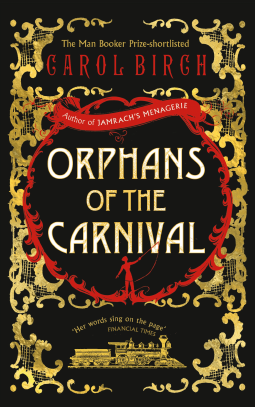
orphans-of-the-carnival It’s been more than five years since I read Carol Birch’s excellent Jamrach’s Menagerie, an adventure novel set in the Victorian period; I had intended to go back and explore her earlier books, but that never happened, so I was pleased to have the opportunity to read her new one, Orphans of the Carnival. It’s a very different book from Jamrach, but just as fascinating in its own way.

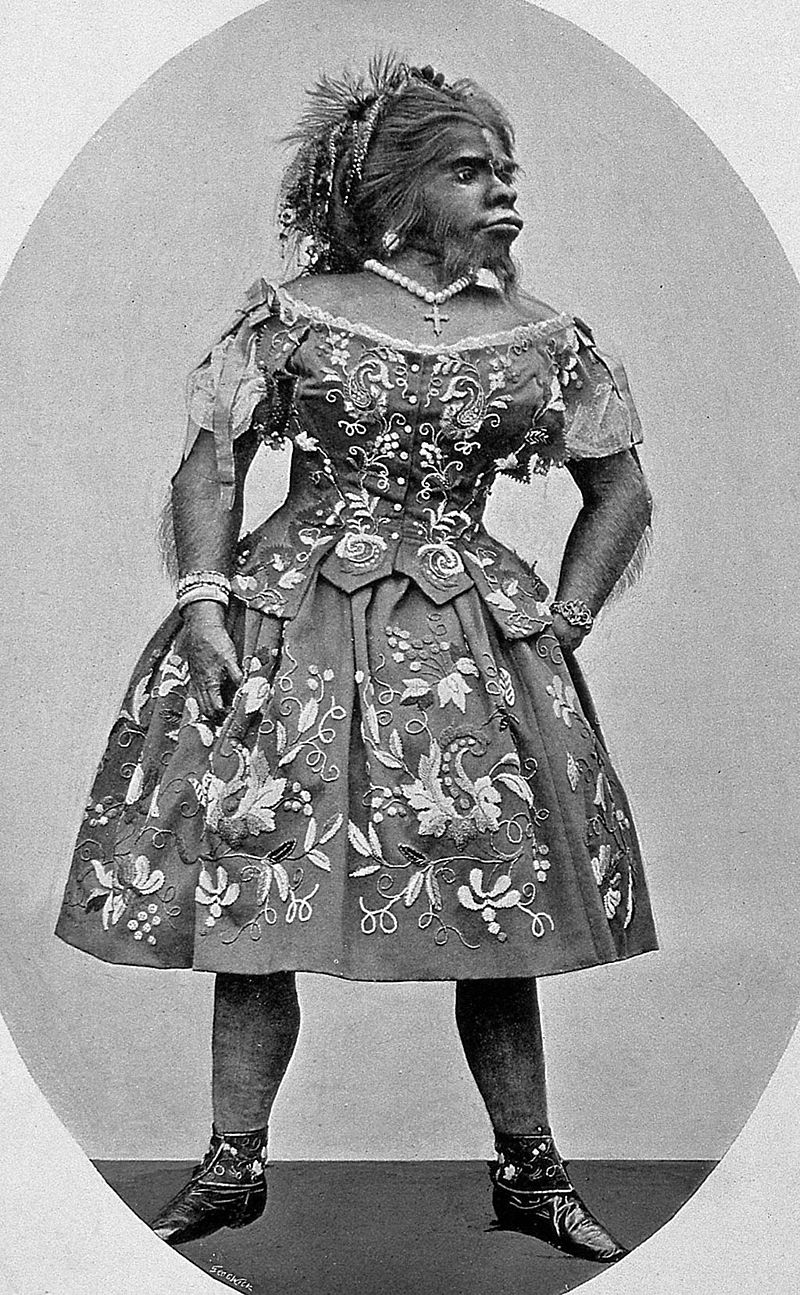
Orphans of the Carnival is the story of Julia Pastrana, a Mexican woman born in 1834 with a rare genetic condition, hypertrichosis terminalis, which has resulted in her face and body being covered in thick black hair. In addition to this, Julia also has a jutting jaw and thick gums and lips, caused by another condition called gingival hyperplasia. Julia is an intelligent, talented woman – as well as speaking three languages, she sings and dances well enough to build a career for herself in the circuses and theatres of 19th century America and Europe. However, she knows that the crowds who come to watch are not really interested in her musical ability; they just want to marvel at her unusual looks.

Interspersed with Julia’s story is the story of another woman, this time one who lives in London in the 1980s. Her name is Rose and she’s a hoarder – she hoards useless items she finds in the street, things that other people have thrown away. Near the beginning of the novel, she brings home an old, discarded doll which she names Tattoo; the doll provides a link between Julia and Rose, but we won’t find out exactly what the connection is until we reach the end of the book.

This is an unusual and moving novel based on the life of a real person. Yes, Julia Pastrana really existed and you can easily find pictures and information about her online. Although I didn’t know anything about Julia before I read this book, it seems that Carol Birch has followed the known historical facts as far as possible while using her imagination to fill in the gaps. The novel is written in the third person but mainly from Julia’s perspective and by the end I felt that I knew her well.

julia-pastrana Julia is a gentle and sensitive woman, and also quite an innocent and vulnerable one, largely because she has spent so much time sheltered from the outside world, living with friends and colleagues from the circus and carnival circuit and hiding her face behind a veil when she does venture out in public. I had a lot of sympathy for Julia; I’m sure there would be medical treatment and support available for someone born with her conditions today, but in the 1800s there was nothing that could be done. I felt bad for her when she reads a review of one of her performances describing her not just as ugly (which she was prepared to accept) but also as ‘an insult to decency’ – and again when her show is closed down on advice from a doctor who claims that the sight of her face could be harmful to pregnant women.

Eventually, Julia meets Theodore Lent, the man who is to become both her manager and her husband. I found it hard to tell what Theo really thought about Julia. He does seem to have some affection for her, but he also appears to be much more interested in the money to be made than he is in Julia as a person. It’s so sad when Julia, who just wants a husband who loves her, says to Theo: “It’s not love though, is it? Not like it is with other people. Real humans.”

Julia’s story is interesting and compelling, but I don’t think the 1980s sections add very much – in fact, they are just a distraction. The characters aren’t developed in anywhere near as much depth as the historical ones and although I did appreciate the eventual shocking revelation which links the two storylines together, I didn’t feel that it was really necessary.

This isn’t a perfect book, then, and it’s also not one that I can say I ‘enjoyed’ as I found it quite uncomfortable to read (not because of what Julia looks like, but because of the way other people treat her and respond to her). It’s certainly worth reading, though, and I’m glad I’ve had the chance to learn a little bit about the life of Julia Pastrana.

Thanks to Canongate Books for providing a review copy via NetGalley.

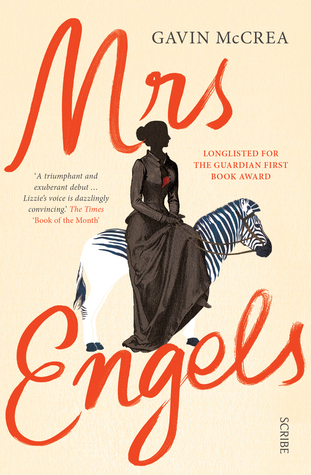
Mrs Engels by Gavin McCrea

Mrs Engels This is another book read for my Reading the Walter Scott Prize project and another one that I’ve enjoyed. I don’t think I had even heard of it until it appeared on the shortlist for this year’s prize and I’m pleased that it did because otherwise I would probably never have read it and would never have had the opportunity to get to know Lizzie Burns – the Mrs Engels of the title.

The novel is narrated by Lizzie herself, a working-class Irish woman who becomes the lover and common-law wife of the German philosopher Friedrich Engels. In 1870, when we first meet Lizzie, she and Engels are boarding a train which will take them from Manchester to London, where they will be moving into a house in Primrose Hill close to Friedrich’s friend, Karl Marx. The narrative then moves backwards and forwards in time, so that as well as watching the couple settle into their new home, we also learn something of Lizzie’s early life in Manchester, where she and her sister, Mary, grew up in poverty before starting work at Ermen & Engels cotton mill – something which will bring them into contact with the man who is to become such an important part of both of their lives.

I came to this book knowing almost nothing about Friedrich Engels and his work (other than that he co-authored The Communist Manifesto with Karl Marx) and I wondered whether that would be a problem. I needn’t have worried, though, because the focus of this novel is very much on the details of his personal life and his relationships with the Burns sisters, first Mary, his partner of many years, and then – after her death – Lizzie. It seems that little is known about the real Lizzie and Mary, so I kept in mind while reading that not everything that happens in the novel is historically accurate and that a lot of it is the product of the author’s imagination.

One thing we do know about Lizzie Burns is that Marx’s daughter Eleanor said she was “illiterate and could not read or write but she was true, honest and in some ways as fine-souled a woman as you could meet”. I think Gavin McCrea does a great job in Mrs Engels of displaying these different facets of Lizzie’s character. On the surface she’s strong, outspoken and tough – she has to be, to cope with everything life throws at her – but underneath there’s an intelligence, a sensitivity and a sharp wit. Through his choice of words and spellings, McCrea also manages to convey the fact that she is illiterate and poorly educated. The result is a narrative voice which is unusual, memorable and perfectly suited to Lizzie’s character.

Mrs Engels is not a perfect novel – the transitions between time periods are not always clear and the characters, with the exception of Lizzie, feel thinly drawn and difficult to like. However, I found it interesting to read the descriptions of the living and working conditions experienced by mill workers in Victorian Manchester and the challenges faced by a working-class woman who suddenly finds herself moving up the social ladder and trying to manage a London household. It’s a fascinating read – and I loved the fact that a woman who was unable to tell her own story has finally been given a voice.

Shirley by Charlotte Brontë

Do you anticipate sentiment, and poetry, and reverie? Do you expect passion, and stimulus, and melodrama? Calm your expectations; reduce them to a lowly standard. Something real, cool, and solid lies before you; something unromantic as Monday morning, when all who have work wake with the consciousness that they must rise and betake themselves thereto.

Shirley I’m not sure why it has taken me so long to decide to read Shirley. I have read all of the other novels by the Brontë sisters (Jane Eyre and Wuthering Heights as a teenager and Agnes Grey, Villette, The Tenant of Wildfell Hall and The Professor in more recent years) but for some reason haven’t felt motivated to read Shirley – until a few weeks ago when, looking at the remaining titles on my Classics Club list, I decided I couldn’t leave it to languish unread on my shelf any longer.

Shirley (published in 1849) is set in Briarfield, a small Yorkshire community in which a mill is the major employer. The year is 1811 and England’s economy is suffering from the effects of the Napoleonic Wars. Robert Moore, owner of the mill, is struggling financially and, as the novel opens, he is preparing to take delivery of some new machinery which will enable him to lay off some of his employees. Needless to say, the millworkers are enraged by this and set out to destroy the machines; uprisings like these would take place all over the country and become known as the Luddite Riots.

Against this political and social backdrop, the stories of two very different young women are played out. One is the local clergyman’s niece, Caroline Helstone, a quiet girl of eighteen. Caroline is in love with Robert Moore but he is reluctant to return her feelings due to her lack of money and position. The other is the title character, Shirley Keeldar, a beautiful young heiress. Shirley is a strong and spirited person with independent wealth – and although Caroline likes her very much, she becomes convinced that her new friend is going to marry Robert.

The title of the novel is Shirley, but this is as much Caroline’s story as Shirley’s (in fact, Shirley herself doesn’t appear until Chapter Eleven). I found them both interesting characters; there are many differences in personality, situation and outlook on life, but as the two become close friends we see a bond developing between them as they discover shared values and interests. They are described in the novel as ‘a graceful pencil sketch compared with a vivid painting’. After finishing the book I learned that Charlotte Brontë is thought to have based the character of Caroline on her sister Anne, and Shirley on Emily (she would lose both of her sisters to tuberculosis during the writing of the novel).

Another interesting fact about Shirley is that before the book was published, Shirley was usually a male name rather than a female one:

…she had no Christian name but Shirley: her parents, who had wished to have a son, finding that, after eight years of marriage, Providence had granted them only a daughter, bestowed on her the same masculine family cognomen they would have bestowed on a boy, if with a boy they had been blessed.

I can’t say that I loved this book – maybe because, as Brontë hinted in the opening lines (quoted at the beginning of this post) it lacked passion and I never felt that I had been truly drawn into the stories of Shirley and Caroline the way I had been drawn into Jane Eyre’s or Lucy Snowe’s. This was a slow read for me and at times quite a dry one, but I did find a lot to like and appreciate, from the relationships between the main characters to the historical background. Even though this hasn’t become a favourite, I’m pleased to have now read all of the Brontë sisters’ novels.

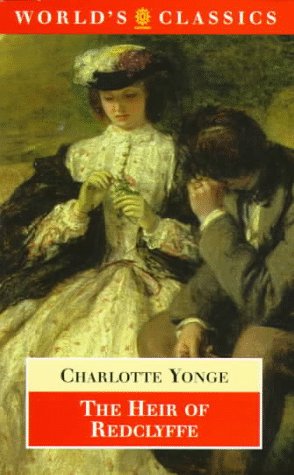
The Heir of Redclyffe by Charlotte M Yonge

The Heir of Redclyffe I was supposed to be writing about Kristin Lavransdatter today – it was the book chosen for me in the last Classics Club Spin and today is the deadline for reading it – but there’s been a change of plan. For the last few weeks I’ve been engrossed in a completely different classic novel, so Kristin has had to wait. I’ve started reading it at last (and like what I’ve read so far) but for today, I’m going to talk instead about The Heir of Redclyffe.

When the elderly Sir Guy Morville dies, his title and his estate of Redclyffe pass to his grandson, another Guy. Being only seventeen years old, the new Sir Guy is taken in by another branch of the family, the Edmonstones, who provide him with a home and an education. With his generous, warm-hearted nature, Guy quickly wins the respect of Mr and Mrs Edmonstone, the friendship of three of his cousins – Charles (crippled with a disease in the hip), the beautiful Laura, and little Charlotte – and the love of the fourth, Amabel (known as Amy). In fact, the only person who doesn’t seem to like Guy is Philip Morville, another cousin.

To Guy’s dismay, Philip – who happens to be the next heir to Redclyffe – makes no secret of his dislike for him. Philip is a well-educated, confident and accomplished young man, and based on a long-ago family rivalry, is determined to disapprove of Guy, finding fault with everything he does. After Guy and Amy declare their love for each other, Philip decides to do everything he can to put a stop to their marriage. Meanwhile, he himself has fallen in love with Amy’s sister, Laura, but due to his financial situation he is reluctant to make their romance public and so he asks Laura to keep their relationship secret from her parents.

And that’s really all I want to say about the story, as it does become quite convoluted and I wouldn’t want to spoil things for future readers. I knew very little about this novel before I started it (although I remember that Lisa enjoyed it a few years ago) and part of the pleasure in reading it was wondering how things would turn out for Guy and Amy, Philip and Laura, and the others. Yonge took me completely by surprise once or twice with some plot developments that I hadn’t expected, one of which was very sad – although I would have been prepared for that if only I’d remembered that in Little Women, Jo March is found “eating apples and crying over The Heir of Redclyffe”!

I liked Guy – it would probably be difficult not to – and I also liked Amabel, although it irritated me that she is always referred to (by herself and others) as ‘silly little Amy’ when it’s obvious that she has far more sense and strength of character than anybody gives her credit for. I never felt that I really knew or understood Laura, but as for Philip, I found him completely annoying, arrogant and overbearing. He’s not a villain exactly (there are no villains in this book – only flawed human beings) and he does seem to believe that he’s acting with the best intentions, but those actions cause a lot of unnecessary misery for a lot of people. My favourite character, though, was probably Charles, one of the few people prepared to stand up to Philip and say what he thinks, while also trying to come to terms with his own illness and disability.

First published in 1853, The Heir of Redclyffe was a popular bestseller throughout the 19th century, yet how many people still read this book today? It seems that Charlotte Mary Yonge’s novels haven’t stood the test of time as well as books by other female Victorian authors, which is a shame as I found a lot to like about The Heir of Redclyffe. Maybe it’s too sentimental for modern tastes and with too much emphasis on faith and spirituality – not that any of those things stopped me from enjoying this book. I would definitely consider reading more of Yonge’s work in the future!

The Return of the Native by Thomas Hardy

The Return of the Native Egdon Heath, part of Hardy’s fictional Wessex, is a wild and haunting place, steeped in history and superstition. Many of the people who live and work there love the heath and appreciate its beauty, but there are some – including Eustacia Vye – who find the loneliness oppressive. Eustacia, who lives with her grandfather in an isolated cottage on the heath, is desperately looking for a way to escape and believes she has found it in Clym Yeobright.

Clym is the returning native of the title, home for Christmas from Paris where he has been working as a diamond merchant. Clym, who dislikes the diamond trade, is planning to stay at home and become a schoolmaster, but Eustacia sets her sights on marrying him in the hope that she can persuade him to take her back to Paris. After all, there is nothing to keep her on Egdon Heath now that her former lover, the innkeeper Damon Wildeve, has married Clym’s cousin, Thomasin.

Clym’s mother, Mrs Yeobright, is opposed to the idea of both marriages – her son’s with Eustacia and her niece’s with Wildeve – but although she reluctantly accepts Thomasin’s decision, a series of misunderstandings and disagreements damages her relationship with Clym and this will have tragic consequences.

I have mentioned five of the novel’s six main characters so far: the sixth is Diggory Venn, a reddleman (a seller of red ochre, which farmers use to mark their sheep). Diggory is in love with Thomasin and remains quietly devoted to her even after she marries Wildeve. The lives of these six people will draw closer together, with the actions of each one impacting on all of the others. For some, there will be a happy ending, but for others there will be only unhappiness and tragedy.

The Return of the Native was Thomas Hardy’s sixth published novel and first appeared as a serial in 1878. I’ve read almost half of his novels now and always enjoy my visits to Wessex and my glimpses of rural life in the 19th century. This book has a very memorable and atmospheric setting, with the heath itself being at the centre of the story. The way in which the lives of the characters are shaped by the heath is one of the driving forces of the plot, particularly as Clym and Eustacia have such different feelings about it:

Take all the varying hates felt by Eustacia Vye towards the heath, and translate them into loves, and you have the heart of Clym.

A common theme in Hardy’s novels is the progress of the industrial revolution and nostalgia for a way of life that, even in Hardy’s day, was rapidly disappearing. An example of this in The Return of the Native is the character of Diggory Venn, the reddleman, whose skin and clothes are stained with the red dye that he sells.

The traveller with the cart was a reddleman — a person whose vocation it was to supply farmers with redding for their sheep. He was one of a class rapidly becoming extinct in Wessex, filling at present in the rural world the place which, during the last century, the dodo occupied in the world of animals. He is a curious, interesting, and nearly perished link between obsolete forms of life and those which generally prevail.

We also meet some of the local people who live on Egdon Heath – many of whom work as furze (gorse) cutters. These characters provide some moments of comedy and also allow Hardy to explore some of the superstitions, customs and traditions of the region (one of the most memorable scenes occurs near the beginning of the book when dozens of bonfires are lit all around the heath).

As I mentioned above, not all of the characters in the novel are rewarded with a happy ending – but this is something you have to be prepared for with Hardy. The story does finish on a more positive note, although it was interesting to read the footnote at the end explaining that the ending was originally going to be slightly less positive and was changed during the serialisation of the novel.

I loved The Return of the Native, though not as much as some of the other Hardy novels I’ve read. I have one more to read on my Classics Club listThe Woodlanders – which I’m looking forward to reading.

The Odd Women by George Gissing

George Gissing - The Odd Women Published in 1893, George Gissing’s novel is based around the idea that there were at least half a million more women than men in Victorian England. As one of the characters in the story, Rhoda Nunn, explains:

“So many odd women – no making a pair with them. The pessimists call them useless, lost, futile lives. I, naturally – being one of them myself – take another view.”

Rhoda believes that it is possible for these ‘odd’ (that is, unmarried) women to lead lives that are both happy and useful. In partnership with her friend, Mary Barfoot, she runs an establishment in London where young middle-class women can learn typing and other secretarial skills that will enable them to earn a living if they remain single. Rhoda herself is now in her thirties and has no intention of marrying, but when Miss Barfoot’s cousin Everard comes to visit she is tempted to change her mind.

The Odd Women is also the story of Rhoda’s friends, the Madden sisters, faced with having to support themselves after the death of their father. With so few career choices available to them, the two elder sisters, Alice and Virginia, find work as a governess and a paid companion, while dreaming of opening their own school one day – a dream that is unlikely to ever become a reality. The youngest Madden girl, Monica, is working long hours in a draper’s shop and her future looks no brighter than her sisters’…until she receives a marriage proposal from Edmund Widdowson, a retired clerk much older than herself. Aware that this could be the only opportunity she gets, Monica jumps into marriage with a man she knows she doesn’t love.

When I first started to read The Odd Women, it seemed that Alice and Virginia were going to be the main focus of the novel, but that turned out not to be the case. Instead, the two elder Madden sisters quickly move into the background and we focus almost solely on the alternating storylines of Rhoda and Monica. Through the character of Rhoda, Gissing explores the views of a woman determined to resist marriage and make her own way in life, and through Monica he looks at the fate of a woman who chooses to marry simply because she is afraid of what her life will become if she stays single.

This is a fascinating novel and for a book written in the 1890s it feels very modern. With themes including feminism, marriage and the roles of women, it’s not the sort of book you would usually expect from a male Victorian author. It reminded me very much of Alas, Poor Lady by Rachel Ferguson. Both books show how women in Victorian/Edwardian society tended to be poorly prepared for an unexpected change in circumstances and how few options were open to them when they found themselves in need of employment.

I found this novel very readable, although the long discussions between Rhoda and Mary Barfoot did become a bit tedious at times and often felt more like lectures on feminism than believable conversations between two people (and I was disappointed that, while being so open-minded regarding unmarried middle-class women, they didn’t have the same sympathy for working-class women). Other than that, I enjoyed The Odd Women much more than I thought I would – although enjoyed is maybe not the right word to use, as this is really quite a bleak story. I would like to read more of George Gissing’s books, starting with New Grub Street, I think.