The Essex Serpent by Sarah Perry

What is the Essex Serpent? A magical beast? A wonder of science? A judgement from God? William Ransome, vicar of the parish of Aldwinter, where the legendary serpent is said to have been sighted, is reluctant to give any credence at all to the rumours, viewing them as a distraction from the religious faith he is trying to instil in his parishioners. Cora Seaborne, however, is fascinated by tales of the fearsome sea monster lurking in the marshes of Essex, stealing away livestock and claiming human lives. Unusually for a woman in 1893, Cora is an amateur naturalist, with a particular interest in the work of the fossil collector Mary Anning. When she hears of the Essex Serpent, she wonders whether it could be an undiscovered species – or some sort of dinosaur?

Cora will have plenty of opportunities to test her theories and investigate further; having been recently widowed, she and her son Francis have moved from London to Colchester in Essex. It is on a visit to nearby Aldwinter that she meets William Ransome. Although their views are very different – not just on the serpent, but also on science, religion, and just about everything else – the two find themselves drawn together and a friendship begins to develop; a friendship which could become something more, if it wasn’t for the fact that Will is already married and that his wife, Stella, is dying of tuberculosis.

Although it is the relationship between Cora and William which drives the novel forward, there are many other subplots involving a large number of other characters. There’s Cora’s companion Martha, for example, a socialist who is campaigning to improve the living conditions of London’s poorest people, and Luke Garrett, a surgeon who closely follows all the latest advances in medicine and is itching for an opportunity to try them out for himself. A lot of time is also devoted to Francis, a serious, solitary boy who would probably be diagnosed today with a form of autism, and to Stella who, as her health declines, develops an obsession with collecting anything blue. I couldn’t help feeling, at times, that Sarah Perry was trying to do too much – trying to include every possible social issue of the 19th century – but on the whole I thought this was a fascinating, intelligent novel, with ideas spilling out of every page.

The Essex Serpent is one of those novels which is not only set in the Victorian era, but also attempts to capture the tone and style of a Victorian novel – while at the same time, being written in the modern day, bringing a new perspective to topics and themes which Victorian authors had less freedom to explore. The French Lieutenant’s Woman by John Fowles is a good comparison – although I have to say I enjoyed this book a lot more than Fowles’. I thought Sarah Perry’s writing was excellent, especially her descriptions of the landscape and the natural world, but occasionally her choice of language (particularly the use of contractions such as I’d’ve and shouldn’t’ve) pulled me out of the 19th century world she had otherwise so carefully created.

The criticisms I have of this book, though, are just minor ones; overall I was very impressed and can certainly understand why it has been so popular and so successful. It’s also nice to find a book that lives up to the promise of its beautiful cover!

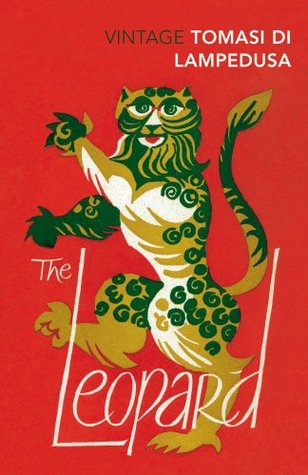
The Leopard by Giuseppe Tomasi di Lampedusa

This novel by Italian author Giuseppe Tomasi di Lampedusa, published posthumously in 1958, is one I had been interested in reading for a few years, having seen lots of very positive reviews, but it was including it on my 20 Books of Summer list that pushed me into picking it up towards the end of June. I have to confess, when I first started reading it I wasn’t at all sure whether I was going to like it, but I think that was mainly because I had no understanding of the historical context. Google came to the rescue and after I’d familiarised myself with the background to the novel I found it much easier to follow what was happening.

The Leopard is set in 19th century Sicily during the Risorgimento (the movement for the unification of Italy). We explore this period of Italian history through the eyes of a Sicilian nobleman, Don Fabrizio Corbera, Prince of Salina, who is forced to watch as the world around him changes beyond his control. Beginning in 1860, the year Garibaldi lands on the coast of Sicily, we see the gradual decline of the Prince’s family and the nobility as a whole.

While Don Fabrizio regrets the loss of values he once held dear and hopes that somehow, once Italy has been united, the class system will be able to survive, his nephew Tancredi has a very different outlook, explaining that “everything needs to change, so that everything can stay the same”. The relationship which develops between Tancredi and the beautiful Angelica, daughter of a wealthy businessman, is only possible because of the breakdown in the class structure; characters like Angelica represent the future, whereas those like Don Fabrizio are becoming part of history.

Although the novel is set in the past – and does immerse the reader in another time and place, with some elegant and vivid descriptive writing – the author occasionally reminds us that he is viewing events from a point many years in the future. For example, he lets us know that the palace he is describing with painted gods on the ceiling will be destroyed by a bomb in 1943. It all adds to the poignancy and to the atmosphere of decay and decline.

If you’re wondering about the title, it refers to the symbol of the Salina dynasty and, I think, the power and grace of the aristocracy. As the Prince himself muses, “We were the Leopards, the Lions; those who’ll take our place will be little jackals, hyenas…” The whole novel is rich in symbolism: a stone leopard above the door has the legs broken off in a sign of things to come, while the initals engraved on Don Fabrizio’s wine glass are fading away and even the fate of his dog Bendico is another reminder that everything must come to an end.

The Leopard is a beautifully written book and although it’s surprisingly short, there’s so much packed into its pages I think a re-read would be necessary to be able to fully appreciate it. After an uncertain start, I was very impressed with this book and can see why it is considered a classic Italian novel.

This is Book 4/20 for my 20 Books of Summer challenge.

The Wonder by Emma Donoghue

Despite enjoying two of Emma Donoghue’s previous books – Room and Frog Music – this latest novel about a girl in 19th century Ireland who stops eating didn’t appeal to me when it was published last year. It was only when I picked it up in the library a few weeks ago that I thought ‘actually, this does sound good’ – and with such a beautiful cover, how could I resist? And as it turned out, this is my favourite of the three Donoghue books I’ve read so far.

The Wonder is set in a small community in rural Ireland during just two weeks in 1859. Lib Wright, an English nurse who worked with Florence Nightingale in the Crimean War, arrives in the village to start a new job, knowing nothing about the position she has accepted except that her services will only be required for fourteen days. She is surprised to discover that her patient is an eleven-year-old girl, Anna O’Donnell, and that her task is not to nurse but to watch and observe.

Anna’s parents insist that their daughter has eaten nothing at all since her birthday four months ago and exists purely on prayer and faith. Lib is sceptical, but it seems that most people in the O’Donnells’ village – including the local priest and Anna’s elderly doctor – are happy to believe the claims. News of the girl’s amazing achievement has spread far and wide and visitors are arriving from all over Ireland to see ‘the Wonder’ for themselves. To prove whether or not Anna is a fraud, Lib and another woman – Sister Michael, a nun – have been appointed by a committee to take turns watching over Anna all day and night for the next two weeks.

Lib expects to get to the bottom of this mystery very quickly. Anna looks so healthy and full of life, it seems obvious that someone must be providing her with secret supplies of food – all Lib needs to do is keep her wits about her and ensure that she and Sister Michael never let the girl out of their sight. After a few days, however, she’s not so sure. Is Anna really the saint the villagers believe her to be? Is it all an elaborate hoax? Or could something more sinister be going on – and if Lib decides Anna is in danger, at what point should she try to intervene?

Like The Good People by Hannah Kent, another book set in 19th century Ireland, this is a fascinating exploration of the harm that can be done, often unintentionally, by superstition and a lack of understanding and the basic knowledge we take for granted today. In addition to this, there’s the hugely influential role of the Catholic Church, such a large part of everyday life for many Irish people in the 1850s, which Lib Wright – as an Englishwoman who has had her own faith driven out of her by her experiences in the Crimea – finds very frustrating; it seems incomprehensible to her that so many people are ready to accept that Anna O’Donnell is a living miracle when science suggests that there must be a more logical explanation. Anna’s situation is often quite sad and harrowing to read about and I desperately hoped her story would have a happy ending.

I was curious to know whether The Wonder was based on a true story, as the other Emma Donoghue books I’ve read were, but on reading the author’s note at the end it seems that although it is inspired by tales of Victorian ‘fasting girls’, it is not based on one particular case and is a fictional story.

The mystery element of the novel is very strong and at first the reader is as confused as Lib. Anna doesn’t appear to be a starving child, so she must be getting food from somewhere – but who is giving it to her and how? As the novel progresses and we learn more about the O’Donnell family and the community in which they live, other questions are raised. I was able to put enough of the clues and hints together to form a theory as to what was happening, but I was still completely gripped, waiting for Lib to uncover the truth. I thought The Wonder was…well, wonderful. Highly recommended!

This is Book 1/20 for my 20 Books of Summer challenge.

Crime and Punishment by Fyodor Dostoevsky

This is one of my final reads from my Classics Club list and, I have to admit, it wasn’t one that I was looking forward to, having had at least two previous attempts to read it. I did read The Idiot a few years ago (also for the Classics Club) and got on much better with that one, so I was prepared to give Crime and Punishment another chance. I’m glad I did, because I managed to get to the end this time and enjoyed it much more than I thought I would.

Crime and Punishment, Dostoevsky’s 1866 novel, follows the actions and thought processes of Rodion Romanovich Raskolnikov, an impoverished former student living in St Petersburg. In the first chapter we learn that Raskolnikov is planning the murder of an elderly pawnbroker, Alyona Ivanovna, a crime he proceeds to carry out, although it doesn’t go entirely according to plan. At this stage his motives are not completely clear, but it seems that he is simply in need of money: he is struggling to pay the rent, can’t afford to continue with his studies and has discovered that his sister is about to marry a man she doesn’t love for his money.

Nothing in a Dostoevsky novel is simple, however, and other motives soon begin to emerge. At one point Raskolnikov states that the old woman he has killed is just a ‘louse’ and of no use to society. He also explains that he believes in the theory that there are some people who are superior to others and have the right to commit serious crimes such as murder. He considers Napoleon to be one example of such a person and he is keen to test the theory out for himself. Are some men really so great that the law doesn’t apply to them and that they have no need to worry about the consequences of their actions because by committing murder they will have proved their greatness?

Of course, Raskolnikov does not escape the consequences and from the moment he kills the pawnbroker, his emotions are thrown into turmoil. Although he gets away from the scene of the crime presumably undetected, he obsesses over every detail of the murder, becoming feverish and causing his family and friends – who know nothing of what he has done – to worry about him. Despite taking some steps to cover his traces and remove the evidence, there are times when he seems to want to be discovered and goes out of his way to make himself appear suspicious. He becomes more and more tormented as the novel progresses and as Dostoevsky allows us to access Raskolnikov’s innermost thoughts, this is not the most comfortable or pleasant of reads! You wouldn’t really expect a book with the title Crime and Punishment to be comfortable and pleasant, though, would you?

The crime part of the novel is obvious enough, but the punishment takes more than one form. First, there is Raskolnikov’s psychological disarray in the days following the murder, which is a punishment in itself, but there is also the question of whether or not his crime will eventually be found out and he will receive punishment of a different kind. I won’t spoil things by telling you whether he is discovered, betrayed, confesses or escapes justice forever, because once the detective Porfiry Petrovitch gets involved, there is a certain element of suspense which I’m sure you would rather experience for yourself.

Although I don’t think I would describe this book as “one of the most readable novels ever written” as stated on the cover of my edition, once I got into it I found it very compelling and a quicker read than I’d expected it to be. I’m so pleased I gave it another try and that I persevered past Raskolnikov’s nightmare about a horse being thrashed to death, which was where I stopped on my last attempt. And of course, the horse dream, horrible as it may be, is in the story for a reason and its significance starts to become clear later on. I won’t pretend that I fully understood everything that happens in the book, but I can always read it again one day – after I’ve read The Brothers Karamazov, which I think is going to be one of the titles on the second list I put together for the Classics Club.

The Fourteenth Letter by Claire Evans

With its eye-catching cover, Victorian setting and promise of “a labyrinth of unfolding secrets”, Claire Evans’ debut novel The Fourteenth Letter sounded like a book I really needed to read!

The novel opens in June 1881 with the murder of Phoebe Stanbury at a party to celebrate her engagement to Benjamin Raycraft, son of the wealthy Sir Jasper. The killer, a naked man covered in mud with a strange design tattooed on his chest, disappears after committing the crime and it seems that nobody is able to shed any light on his identity or why he may have wanted to kill an innocent young woman. Detective Harry Treadway is given the job of investigating the murder, but the deeper he delves into the mystery, the more bizarre and complex it becomes.

Meanwhile, William Lamb, an inexperienced, timid young lawyer, goes to visit an eccentric client in his partner’s absence – and ends up in possession of a casket of old papers written in Latin and a cryptic message which means nothing to him. His visit is witnessed by Savannah Shelton, an American woman who has been paid to watch the house, but who is employing her and what do they want? At another house in London, Mildred is applying for a position as governess, then changes her mind when the interview doesn’t go as planned. How are all of these events connected? There are no obvious links at first, but slowly the truth is revealed as the story begins to unfold.

When I first started to read The Fourteenth Letter, I was fascinated. There were so many intriguing characters and so many strange things happening all at once. However, the constant switching from one storyline to another made it difficult for me to settle into the story and after a few chapters I began to wish we could spend a little bit longer with one character before moving on to the next. As I’ve said, the various strands of the plot do start to come together eventually but I would have liked it to have happened more quickly.

Being set in the 1880s, the story takes place during an exciting time in history, a time of great advances in science and technology. Sir Jasper Raycraft’s house, Ridgeside, is described as a famous residence with all the latest scientific developments such as electric light. I immediately recognised this as a description of Cragside in Northumberland, a National Trust property I have visited several times, and I was pleased to have this confirmed when I reached the author’s note!

However, for a novel set in Victorian London, I thought there was very little sense of time and place. Although there are references to historical and political events of the period, I never felt fully immersed in the world Claire Evans had created and it didn’t help that I couldn’t quite manage to believe in Savannah Shelton as a convincing character. William Lamb, though, is a great character – not a typical hero at all – and it was interesting to watch him develop and grow as a person over the course of the story.

Although this is certainly a very unusual and imaginative novel, I didn’t like it as much as I’d hoped to. Maybe I was just not the right reader for this particular book; that happens sometimes and it doesn’t necessarily mean that it isn’t a good book. I’ve seen some very positive reviews so clearly other readers are finding a lot to enjoy in The Fourteenth Letter!

Thanks to the publisher for providing a copy of this book via NetGalley for review.

Andrew Hughes: The Coroner’s Daughter

I found so much to love in The Coroner’s Daughter! A strong, resourceful heroine with a passion for science; an interesting historical setting – 19th century Dublin; and a twisting, turning mystery to keep me guessing. Just like Andrew Hughes’ first novel The Convictions of John Delahunt, which I read and loved a few years ago, this is another great book which manages to be both highly entertaining and darkly atmospheric.

The story takes place in 1816, known as the ‘Year Without a Summer’. The city of Dublin is shrouded in fog and when a frosty July is followed by snow in August, people are at a loss to explain what is going on. Eighteen-year-old Abigail Lawless, however, has conducted her own research into the phenomenon, linking the unseasonable weather to a volcanic eruption on the other side of the world. As the coroner’s daughter, Abigail has always possessed a natural curiosity for anything scientific – and is particularly interested in her father’s work, performing autopsies to establish the cause of death.

When a young servant in a neighbouring household is accused of murdering her newborn baby – and is found dead before the inquest can be held – Abigail is sure there is more going on than meets the eye. She easily discovers the identity of the maid’s lover, but this is only the beginning. The strict religious sect known as the Brethren has been increasing in size and power since their influential leader, Mr Darby, arrived in Dublin the previous year. As she continues to investigate, assisted by her father’s young Scottish apprentice, Ewan Weir, Abigail becomes convinced that the Brethren are connected with the death of the maid and her baby. But who else might be involved? And if Abigail becomes too deeply involved herself, could she be putting her own life in danger?

I really enjoyed The Coroner’s Daughter. I think I preferred John Delahunt as the plot seemed more original and unusual, but this book is excellent too. I loved following Abigail around the Dublin of 1816 which, thanks to the gloomy and oppressive weather, is a very atmospheric setting. Our heroine’s investigations take her to a variety of locations from the Lying-In Hospital at the Rotunda to the smart terraced houses of Fitzwilliam Square and a clockmaker’s workshop on Abbey Street – and all of these are vividly described. Although it’s quite a dark story, it’s written with a lot of humour, which was obvious from the very first sentence: For my eighteenth birthday, Father promised me the hand of a handsome young man, which he duly delivered mounted in a glass bell-jar. First sentences can be so important and that one captured my attention immediately!

I found the scientific aspect of the novel particularly interesting. The story takes place at a time when the fanatical religious views of groups such as the Brethren are coming into conflict with the work of scientists such as the astronomer Professor Reeves, a friend of Abigail’s father. As a woman, Abigail faces additional obstacles, as is seen when she is forced to submit one of her reports to a scientific journal under her father’s name in order to get published, and again when she is the only female member of the audience at an astronomy lecture given by Professor Reeves. Mr Lawless does try to encourage his daughter to be more ‘feminine’ but at the same time, not having any sons, there’s the sense that he is only too pleased to have someone to share his knowledge and passion with!

Now I’m hoping Andrew Hughes will write more books about Abigail Lawless. She’s a great character and the way the novel ended makes me think that she could easily be brought back for a sequel. If not, I will look forward to reading whatever he writes next.

Thanks to the publisher for providing a copy of this book for review.

At the Edge of the Orchard by Tracy Chevalier

It’s been some time since I last read a Tracy Chevalier novel, but having enjoyed some of her books in the past, I was pleased to have the opportunity to read her latest one, At the Edge of the Orchard.

The story begins in 1838 in the Black Swamp of Ohio, where James and Sadie Goodenough are attempting to make a living from the harsh, inhospitable earth on which they have settled. With the help of their five children, James is working hard to establish an orchard with enough apple trees to satisfy the requirements to legally claim their piece of land. Sadie, who does not share her husband’s ambition, longs to move on and start again somewhere else – somewhere more comfortable and welcoming. Finding solace in the strong cider and applejack produced from the fruits of the orchard, Sadie’s is a miserable existence from which there seems to be no escape.

Time passes and we jump forward to the 1850s where the youngest Goodenough son, Robert, has made his way alone to California. What happened to the rest of the family? Why does Robert never get a reply to the letters he sends home to his brothers and sisters? We’ll have to wait until later in the book for these questions to be answered, but in the meantime we read about Robert’s work with the plant collector William Lobb, gathering seeds and plants to sell to gardeners in England. Having grown up surrounded by trees, this is the sort of job that interests Robert – yet there is still something missing from his life, and when he is finally given a chance of happiness, he will have to decide whether to take it.

I enjoyed At the Edge of the Orchard and found it a surprisingly compelling read. I say ‘surprisingly’ because, despite the title and the picture on the cover, which should have been clues, I wasn’t fully prepared for so much information on trees: in the orchard sections, we learn about different types of apple tree – the qualities of ‘eaters’ versus ‘spitters’; the taste of James’ favourite Golden Pippins; and the methods used to graft one tree onto another – and in the California sections we are given a wealth of information on the giant sequoia trees of Calaveras Grove. I have to admit, although I do appreciate the beauty and importance of trees, I have very little interest in them. I’m impressed that Tracy Chevalier managed to hold my attention from the first page to the last; I was never bored and would never have expected a book about trees to be so engaging!

Of course, this is not just a book about trees – it’s also a book about human beings, following the stories of several very different characters. At first, the Goodenoughs don’t seem to be a very pleasant set of people. James is decent enough, but with a tendency to be violent when things annoy him and a frustrating single-mindedness when it comes to growing and nurturing his precious apple trees. His wife, Sadie, is a deeply unhappy woman but any sympathy I may have had for her was destroyed by her bitter, spiteful nature and needlessly cruel actions. It wasn’t until later in the novel that I found some characters I could like and care about. In fact, a series of letters written by two of these characters broke my heart…the sense of loneliness and desperation they each felt came across so strongly.

The novel is carefully structured, moving backwards and forwards in time to ensure that certain things are kept hidden until it becomes necessary for us to know them. A mixture of styles are used to tell the story too, from the letters I’ve mentioned above to conventional third party narration and several passages narrated by Sadie in a very distinctive voice of her own. Although the story of the Goodenoughs is fictional, we also meet several real historical figures: the legendary Johnny Appleseed is one you may have heard of, but the English tree collector William Lobb was also a real person. There are so many different elements to At the Edge of the Orchard and they all come together to form one fascinating, enjoyable and very moving novel.

I’ve now read four Tracy Chevalier novels and so far they have all been very different, covering such diverse subjects as the Dutch art world (Girl with a Pearl Earring), fossil collecting on the south coast of England (Remarkable Creatures), religious conflict in 16th century France (The Virgin Blue) and now the trees and orchards of 19th century America. I’m looking forward to reading the rest of her books now that I’ve been reminded of them!

Thanks to HarperCollins for providing a review copy of this book via NetGalley.