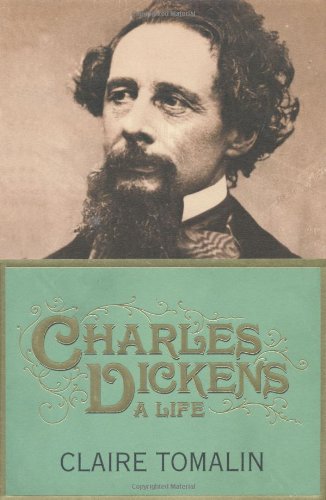
Charles Dickens: A Life by Claire Tomalin

I’ve only read one of Claire Tomalin’s other biographies (Samuel Pepys: The Unequalled Self) but having read that one, Charles Dickens: A Life was everything I was expecting: well researched, thorough and very readable. It took me a long time to finish it but that’s just because I was reading other books at the same time and is no reflection on how much I was enjoying it. Charles Dickens is an ideal subject for a biography as he had such an eventful life and career. One of the things I liked about Tomalin’s Samuel Pepys book was the way she attempted to give us a balanced view of Pepys, looking at both his good points and his bad points, and she does the same here with Dickens.

There are plenty of positive things about Dickens that we can take away from this biography: his incredible energy, his literary talent and the amount of hard work and effort he was prepared to put in to achieve his ambitions. But Tomalin also shows us Dickens’ flaws, particularly the insensitive and cruel way he treated his wife Catherine Hogarth and sometimes his children too. And of course, she discusses his affair with the actress Nelly Ternan (this is the subject of one of Tomalin’s other biographies, The Invisible Woman: The Story of Nelly Ternan and Charles Dickens, which I haven’t read).

It was interesting to read about the progress of Dickens’ career as a writer, and how he went from writing character sketches of the people around him to developing longer stories and eventually producing his famous novels. I enjoyed reading what Tomalin had to say about the Dickens novels that I’ve read – it seems that she admires most of his work though not all of it – but be aware that if you haven’t read all of his books she does include some spoilers. I can understand this, as many of the plot points and characters in Dickens’ novels give us insights into the mind of Dickens himself, and it would be hard to discuss the man without discussing his work. However, I’m sure there will be a lot of people like myself who will read this biography without having read Dickens’ complete works first, so I thought I should warn you that you might come across things you would prefer not to know!

Overall I was left with a negative impression of Dickens rather than a positive one. I can admire the motivation, ambition and talent of someone who worked his way up from a job in a boot blacking factory to become first a journalist and then one of the most famous and successful writers in the world. But the way he treated people in his personal life, as well as the high opinion he seemed to have of himself, makes it hard for me to like him.

I’m not sure how this book compares with other Dickens biographies as this is the only one I’ve ever read, but I enjoyed it, learned a lot from it and was left with a much better understanding of the complex person Dickens was. And as well as the huge amount of information this book contains about the life and work of Dickens himself, as someone who loves reading about the Victorian period in general I was fascinated by all the little details of 19th century life! The book also comes with plenty of additional material including maps, illustrations, a bibliography and a list of the important people in Dickens’ life.

Finally, this has nothing to do with this biography but I was surprised to find how much of Dickens’ life story was already familiar to me through reading novels like Drood and The Last Dickens. This shows that although historical fiction may not always be completely accurate it’s often a good way to absorb historical facts while being entertained at the same time!
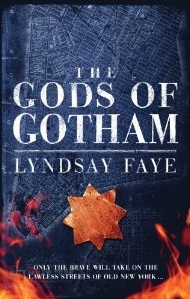
The Gods of Gotham by Lyndsay Faye

New York City, 1845: When Timothy Wilde loses everything in a fire that destroys a large part of Manhattan, his brother Valentine helps him get a job as a ‘copper star’ in New York’s newly formed police force. Due to his knowledge of ‘flash’, a slang spoken largely by criminals, Timothy is assigned to the Sixth Ward, one of the city’s most notorious areas where crime rates are high and where racial and religious tensions are increasing with the influx of Irish immigrants fleeing the potato famine.

Timothy is unenthusiastic about his new job until one night when he’s walking home from work and a ten-year-old girl runs into him, covered in someone else’s blood. Soon Tim finds himself on the trail of a child killer and discovers that he has an unexpected talent for detective work.

I must admit that when I received a copy of The Gods of Gotham from the publisher, I wasn’t sure this was going to be the type of book I would enjoy. Well, I couldn’t have been more wrong, because I loved it! I could tell from the first page that I liked the writing style and by the end of the first chapter I knew I was going to like the narrator too. But the thing I enjoyed most about The Gods of Gotham was the wonderful setting. Every time I picked up this book and started to read I felt I had left the modern world behind for a while and was actually there, walking through the streets of 19th century New York, which is the highest praise I can give to any historical fiction novel. I’ve read so many books set in Victorian London, and it made a nice change to read one set in New York during the same period.

We also meet lots of strong, interesting characters – Mercy Underhill, the reverend’s daughter and the woman Timothy loves; Bird Daly, the little Irish girl he met in the street at the start of the novel; and Silkie Marsh, who runs the brothel at the centre of the murder investigations. And at the heart of the story is the relationship between Tim and his brother Valentine. Timothy himself is easy to like but he isn’t perfect and has enough flaws to make him a believable character. Although he doesn’t always interpret things correctly, he’s intelligent, observant and compassionate. Val is a very different type of person – tough, aggressive, addicted to morphine and drinking – but by the end of the book we learn that there’s more depth to Val than there seemed to be at first.

The use of flash is something that you will probably either love or hate – personally I thought it added to the atmosphere of the book and made the dialogue feel lively and fun. I was surprised to find that I was already familiar with some of the words and it was interesting to see how many of them have now come into everyday use. But there were other words and phrases that meant nothing to me and so the glossary at the front of the book (based on George Washington Matsell’s Vocabulum, or The Rogue’s Lexicon) was very helpful, especially at first!

For me, the actual crime plot was secondary to the setting, the atmosphere and the characters but it was still good enough to keep me guessing until the truth was finally revealed. The Gods of Gotham was something different and original – I loved it and was pleased to discover that there’s going to be a sequel!

I received a review copy of this book from Headline Review.

Great Expectations by Charles Dickens

Despite my love of Victorian literature, Charles Dickens has never appealed to me as much as other 19th century writers and until recently the only Dickens novel I had actually read was A Christmas Carol. A couple of years ago I decided to give him another chance and although I still don’t think Dickens will ever be one of my favourite Victorians, I’m pleased to say that my opinion of his work is rapidly improving with every book of his I read!

Great Expectations is narrated by Pip, a young orphan who is brought up by his sister and her husband, Joe Gargery, a blacksmith. Near the beginning of the book two important incidents occur: first Pip meets an escaped convict in the graveyard near his home, and then soon after this he is invited to visit the eccentric Miss Havisham who lives at Satis House. When Pip unexpectedly receives a large sum of money he moves to London to become a gentleman and leaves his old friends behind. But who is the mysterious benefactor and will Pip’s ‘great expectations’ really change his life for the better?

I won’t go into the plot in any more detail for two reasons: firstly, because I suspect many of you will already be familiar with the story even if you haven’t read the book, and also because I wouldn’t want to spoil any of the surprises and plot twists the novel contains. But as well as the wonderful plot, Great Expectations is also full of strong and memorable characters. Miss Havisham, hidden away in her ruined mansion wearing her wedding dress, is probably the one most people will think of when they think of this book, but from the convict Abel Magwitch and Pip’s best friend Herbert Pocket to the lawyer Mr Jaggers and Miss Havisham’s adopted daughter Estella, the book is full of unforgettable characters. I posted a few weeks ago about one of my favourites, Joe Gargery, and how sad it is to see the way Pip’s relationship with Joe changes after he is given his great expectations.

If you’ve never read any Dickens before, I think this might be a good place to start. I’ve read four of his other novels (A Christmas Carol, Bleak House, Our Mutual Friend and The Mystery of Edwin Drood) and in comparison to some of those, I thought this one was much easier to read and understand. And I loved all the observations on life and human nature that Dickens scatters throughout his writing, like this:

“That was a memorable day to me, for it made great changes in me. But, it is the same with any life. Imagine one selected day struck out of it, and think how different its course would have been. Pause you who read this, and think for a moment of the long chain of iron or gold, of thorns or flowers, that would never have bound you, but for the formation of the first link on one memorable day.”

Or this:

“So, throughout life, our worst weaknesses and meannesses are usually committed for the sake of the people whom we most despise.”

Now I just need to decide which of Dickens’ books I should try next. I have three of his novels on my list for the Classics Club: David Copperfield, A Tale of Two Cities and Oliver Twist. Have you read any of those or is there another one you would recommend?

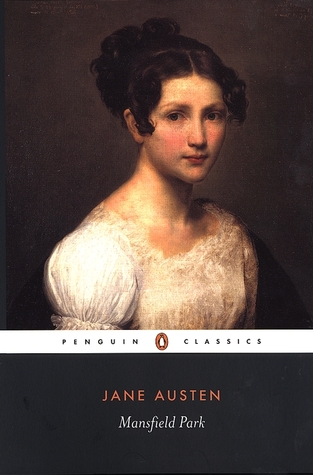
Mansfield Park by Jane Austen (re-read)

Mansfield Park is the story of Fanny Price who, at the age of ten, goes to live with her uncle and aunt, Sir Thomas and Lady Bertram. For Fanny, who has spent her early years in Portsmouth as part of a large working-class family, the Bertrams’ estate, Mansfield Park, is like a different world. While Fanny is grateful for the new opportunities she’s been given, she is made to feel inferior and insignificant by her cousins, Maria and Julia, and another aunt, Mrs Norris (surely one of the nastiest characters in any Austen novel). Only her cousin Edmund offers her any real kindness and friendship, and as the years go by Fanny begins to fall in love with him, although she doesn’t admit it and everyone, including Edmund, is unaware of it. And when Mary Crawford and her brother Henry come to stay at the nearby parsonage, Fanny’s peaceful life at Mansfield Park is suddenly thrown into turmoil.

I first attempted to read Mansfield Park when I was fifteen, immediately after finishing Pride and Prejudice, which I had loved. Compared to Pride and Prejudice I found this one very dry and boring, and gave up after a couple of chapters. Returning to it ten years later, I managed to read it through to the end but still didn’t like it very much. My recent re-read has been an entirely different experience and this time I found that I really enjoyed it!

Fanny Price is a shy, quiet person and seems to be Jane Austen’s least popular heroine, but I’ve never really had a problem with her personality. Not everyone can be witty and lively after all, and since arriving at Mansfield Park Fanny has constantly been reminded that she will never be equal to her cousins and treated almost like a servant, so it’s not surprising that she doesn’t have the confidence of some of the other Austen heroines. I would agree that she’s maybe not the most interesting of characters to read about, and I suppose I can understand why other readers might prefer Mary Crawford, but I personally don’t mind Fanny. I do think she has an inner strength and complexity which wasn’t really apparent to me the first time I read the book but which I could appreciate more this time – one of the reasons I think re-reads are so worthwhile!

I still didn’t like Edmund though, apart from at the beginning when he seems to be the only person who genuinely cares about Fanny. Without him her early days at Mansfield Park would have been a lot more miserable, but later in the book, particularly after the arrival of the Crawfords, he starts to really annoy me.

While Mansfield Park is never going to be my favourite Jane Austen novel, I’m glad I’ve given it another chance. If you’re new to Austen, though, I don’t think I would recommend starting with this one.

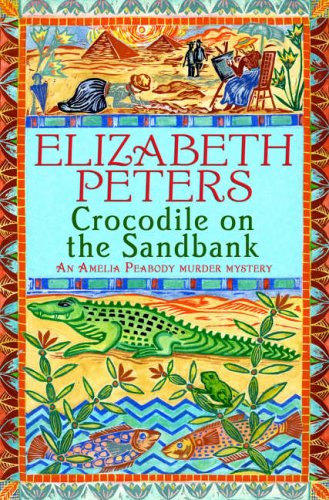
Crocodile on the Sandbank by Elizabeth Peters

Crocodile on the Sandbank is the first of Elizabeth Peters’ Amelia Peabody books, a series of historical mystery novels set in Egypt and following the adventures of a Victorian lady with a passion for archaeology.

When we first meet Amelia at the beginning of the novel, she has recently inherited a fortune following her father’s death and is planning to use some of her money to visit Egypt. Passing through Rome on her way to Cairo, Amelia rescues a young woman, Evelyn Barton-Forbes, who has been abandoned by her lover and the two become friends and travelling companions. After they arrive in Egypt, Amelia and Evelyn meet archaeologist Radcliffe Emerson and his younger brother Walter, who are working on a dig at Amarna. The two women soon team up with the Emerson brothers to tackle a mysterious mummy who seems to be stalking them at night!

Amelia is the book’s first person narrator, but I wasn’t sure at first if I was going to like her. She has a very sharp, witty narrative voice and for the first few chapters I found her alternatively amusing and irritating. Luckily though, after I got to know her better I started to warm to her. As well as being outspoken and sarcastic she’s also brave, intelligent and loyal to her friends – and definitely not a conventional Victorian woman! Emerson is a very strong character too and I enjoyed watching his relationship with Amelia develop.

Although I am interested in history, Ancient Egypt has never been one of my favourite subjects to read about, but Amelia and Emerson are so enthusiastic about Egypt and archaeology that I ended up with more enthusiasm for the subject too. The adventures they have exploring tombs, discovering mummies and deciphering hieroglyphics all sound so fascinating!

The mystery itself wasn’t one of the novel’s strong points though. It was hard to believe that someone as intelligent as Amelia wasn’t able to immediately work out what was happening and who the villain was. But like Alan Bradley’s Flavia de Luce mysteries, I think the charm of this book was in the setting and the characters (or Amelia and Emerson, at least – the other characters didn’t have a lot of depth) rather than the mystery.

The overall tone of Crocodile on the Sandbank is light and entertaining and although I’m not completely convinced about this series yet, I did like this book enough to want to read the second one. I’ll remember to pick up The Curse of the Pharaohs next time I want to relax with another fun Egyptian adventure.

The Professor by Charlotte Brontë

The Professor was Charlotte Brontë’s first novel. She was unable to find a publisher for it during her lifetime and it was eventually published posthumously in 1857. Like Jane Eyre and Villette, this book is written in the first person, but with one difference – the narrator is a man. This is interesting as it shows us Charlotte’s views on how a man would think and behave and what his feelings towards women might be.

The narrator’s name is William Crimsworth, and at the beginning of the novel he is starting a new job as a clerk, working for his brother Edward, a rich mill-owner. However, William finds Edward impossible to get along with – he’s cruel and cold-hearted and treats William badly. Finding himself out of work again, William takes the advice of another businessman, Mr Hunsden, and goes to Belgium to teach English at a boys’ school in Brussels. Here he becomes involved with two very different women: one is Zoraide Reuter, the headmistress of the neighbouring girls’ school, and the other is a poor friendless student-teacher, Frances Henri.

This is the third book I’ve read by Charlotte Brontë. I first read Jane Eyre when I was a teenager and it immediately became one of my favourite books, but I didn’t begin to explore her other work until just last year, when I read Villette. Villette, like this book, is set at a school in Brussels and in many ways is a very similar story to The Professor, but with a female narrator and a more complex, layered plot. In both The Professor and Villette, Charlotte was able to draw on her own personal experience of teaching and studying in Brussels. This is obvious both in her descriptions of the city and in the way she could write so knowledgeably about education and the relationship between teachers and pupils.

What I love about Charlotte Brontë’s writing, as I mentioned in my earlier post on the author, is the way she writes about feelings and emotions. In The Professor she perfectly captures the loneliness and isolation a man might feel on arriving in an unfamiliar country with no money and without a friend in the world.

William is not as sympathetic a character as he should be though, due to Charlotte Brontë expressing some of her own views and prejudices through his narration. There’s a lot of racism and anti-Catholicism throughout this story, particularly when William is describing the girls in the school, making assumptions about them based on their nationality and considering them inferior to Protestant English girls. I’m sure it’s not a coincidence that the scheming, manipulative Zoraide Reuter is Catholic, while the quiet, honest Frances is Protestant (and half-English). Even allowing for the fact that the book was written in the 19th century, some of these passages were uncomfortable to read. And because I could never really warm to William’s character, I didn’t find this book as moving as I might have done otherwise.

Brontë also includes a lot of French dialogue in this novel, which it is assumed that the reader can understand. Some editions of the book provide translations in the notes, but the French is not translated in the original text and it can be frustrating to feel that you might be missing out on something essential to the plot. Also, the constant references to ‘physiognomy’ started to really irritate me (physiognomy is the concept of judging a person’s character based on their appearance). The word seemed to appear on almost every page, whenever William met someone new!

I know I’m probably giving the impression that I didn’t enjoy this book, but that’s not true. Charlotte Brontë’s writing is beautiful and for that reason alone I would say this book is definitely worth reading. Just don’t choose this one as a first introduction to Charlotte’s work – my recommendation would be to start with Jane Eyre and then move on to Villette before deciding whether to try The Professor. I can’t comment on her other book, Shirley, as I still haven’t read that one – maybe later in the year!

The Sisters Brothers by Patrick deWitt

Until I picked up The Sisters Brothers last month I had never read a western before and didn’t think I would ever want to read one. But after Patrick deWitt’s novel, with its unusual title and cover, appeared on the Booker Prize shortlist earlier this year and so many people were saying they enjoyed it, I thought I’d see what it was like.

The Sisters Brothers is set in the 1850s during the Gold Rush and has everything you would expect to find in a western – guns, horses, saloons, duels, drinking, fighting, and gold prospecting. I know this might not sound very appealing to a lot of you, but I hope you won’t let it put you off because at the heart of this novel is a wonderful story about the relationship between two brothers. They are Charlie and Eli Sisters, names that are feared throughout the wild west. Charlie and Eli are hired killers, who earn their living by taking orders from the mysterious Commodore. When the Commodore tells them that their next assignment is to find and kill the prospector Hermann Kermit Warm, the brothers set off on an eventful journey from Oregon to California.

The brothers encounter lots of memorable characters on their travels (including a ‘weeping man’, an orphaned boy and his horse, and a dentist who introduces Eli to the joys of the toothbrush) but the focus is always on Eli and Charlie themselves. Charlie is the more dominant and aggressive brother, while Eli is more cautious and sensitive, which causes some conflict between the two. I was pleased to find that both characters did develop and change, at least to some extent, over the course of the book. Charlie had seemed a completely unsympathetic character at first, but I later found that he had a bit more depth than I’d originally thought. And while Eli wasn’t exactly the most pleasant of people either, I couldn’t help liking him as he did at least have a conscience and wanted to be a better person – even if he didn’t always manage it.

The Sisters brothers are the type of characters we would more often read about from the opposite perspective, as the book’s villains – but in this book, with the story being narrated by Eli, we are supposed to accept them as our heroes (or anti-heroes, maybe). It’s a testament to Patrick deWitt’s writing that he makes it possible for us to care so much about a pair of murderers and I think this is due partly to Eli being such an appealing narrator. Some of the dialogue is very funny and there’s lots of dark humour, but I should probably warn you that there are also some fairly graphic scenes of violence and cruelty, though I think this is to be expected considering the setting and the profession of the two main characters.

The chapters are short and there’s always something happening: in the first fifty pages alone, Eli is bitten by a venomous spider, his horse gets attacked by a bear and a witch tries to put a curse on the brothers. It all felt slightly surreal and sometimes it was hard to see where the story was really leading but it was so much fun it didn’t matter. Later in the book, though, there were some passages that were quite sad and melancholy, which I thought gave the second half of the book a noticeably different feel to the first.

As you can probably tell by now, I loved this book, which I think proves that it doesn’t matter if something is described as a ‘western’, a ‘romance’, a ‘mystery’ or anything else: a good story is a good story and The Sisters Brothers was one of the best I’ve read this year.