Persephone Reading Weekend: Little Boy Lost by Marghanita Laski

Persephone Reading Weekend is hosted by Claire and Verity. For those of you who are new to Persephone and wondering what this is all about, they’re a publisher dedicated to printing “mainly neglected fiction and non-fiction by women, for women and about women” and Claire and Verity have organised a weekend of reviews, giveaways and other Persephone-related fun. I’m glad I’m able to participate for the first time, as I hadn’t discovered Persephone Books in time for last year’s event. Since then I’ve read four Persephones – this one, Little Boy Lost, is my fifth. And I’m pleased to say that it has just become my favourite so far.

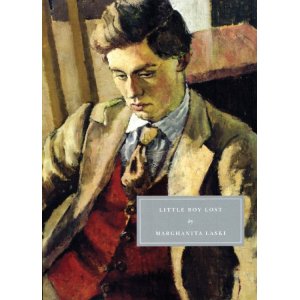
I was originally planning to read Alas, Poor Lady by Rachel Ferguson which I received from my Persephone Secret Santa at Christmas, but due to the length of the book I realised I wasn’t going to be able to read it in time to post about it this weekend. Although I’m still hoping to get to Alas, Poor Lady within the next few weeks (and looking forward to it as I’ve heard some good things about it), I decided that my book for the Reading Weekend would have to be the only other unread Persephone I own, Marghanita Laski’s Little Boy Lost.

And now I feel bad that Little Boy Lost was only my second choice. I can’t believe I’ve let this book sit on my shelf unopened for more than six months; if I’d realised I was going to love it this much I would have read it immediately.

Little Boy Lost is the second book I’ve read by Marghanita Laski – the first was The Victorian Chaise-Longue. However, I found the two books entirely different. Although I did enjoy The Victorian Chaise-Longue, this one was far more emotional and a more gripping, compelling read.

It’s Christmas Day, 1943, when Hilary Wainwright first learns that his son has been lost. He had seen baby John only once – a brief glimpse of a little red face with dark hair poking out of a bundle of blankets. Then, while Hilary was away, his wife, Lisa, was killed by the Gestapo in Paris and their little boy disappeared almost without trace. When the war is over, Hilary goes back to France and with the help of his friend, Pierre, he begins to follow a trail which he hopes will lead him to his lost son.

Laski does an excellent job of portraying the conflicting emotions Hilary experiences, torn between longing to be reunited with his son and worrying that if he does find him he might not want him. All through the book I was guessing what might happen – it wasn’t really obvious what the outcome would be and I could think of several different possibilities, some good and some bad.

The descriptions of post-war France are so vivid: the bomb-damaged buildings, the poverty, the food shortages – unless you were rich enough to take advantage of the black market, of course. And I was shocked by the descriptions of the conditions in the orphanages. As well as there not being enough to eat and drink, and a complete lack of any toys or games, it was chilling to think of children with tuberculosis living alongside the healthy ones.

Although I was trying to avoid hearing too much about this book before I read it, I knew it was supposed to become very nerve-wracking and suspenseful towards the end. Well, I can tell you that this is definitely true! There are so many great books that are let down by a weak ending, but this is certainly not one of them. The tension throughout the final few chapters was nearly unbearable, so much so that I was almost afraid to reach the end. And I imagine most readers, like I did, will have tears in their eyes when they reach the very last sentence.

Nicholas Lezard of The Guardian, who is quoted on the back cover, says it best: “If you like a novel that expertly puts you through the wringer, this is the one.”

Virago Reading Week: The Enchanted April by Elizabeth von Arnim

This is my second post for Virago Reading Week, hosted by Rachel of Book Snob and Carolyn of A Few of My Favourite Books. When I was choosing my books for this week, I knew it was time to try something by Elizabeth von Arnim, a writer whose work I had never read but who seems to be one of the most popular and most loved Virago authors.

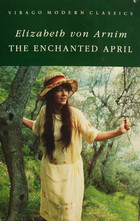
The Enchanted April, first published in 1922, is the story of four women who rent a castle in Italy together one April. The women are strangers to each other at the beginning of the novel, but each of them has her own reasons for wanting a holiday. Spending a month at San Salvatore surrounded by sunshine and flowers gives each woman a chance to resolve her problems and try to find happiness.

Our four main characters have very different personalities and very different circumstances. First, there’s Lotty Wilkins who has grown tired of having her life controlled by her husband and is desperate to escape from him for a while. Calm, grave Rose Arbuthnot has the opposite problem: her husband is so wrapped up in his career that he barely remembers she exists:

To be missed, to be needed, from whatever motive, was, she thought, better than the complete loneliness of not being missed or needed at all.

Then there’s Lady Caroline Dester, also known as ‘Scrap’, who is bored with her life and just wants to be left alone. And finally there’s Mrs Fisher who, at sixty-five, is older than the others, and spends most of her time reminiscing about the past.

The story begins when Lotty and Rose meet for the first time in a Women’s Club in London one rainy afternoon and decide to respond to an advertisement in The Times:

To Those Who Appreciate Wistaria and Sunshine: Small mediaeval Italian Castle on the shores of the Mediterranean to be Let furnished for the month of April. Necessary servants remain. Z. Box 1000, The Times.

How could anyone resist answering an ad like that? However, they need to find another two ladies to help share the cost and this is where Lady Caroline and Mrs Fisher come into the story. All four of the female protagonists are interesting, complex people and I enjoyed seeing how they were transformed by their time in Italy. I think my favourite was probably Lady Caroline. She’s tired of being surrounded by people who only care about her looks and money and throughout the novel she attempts to keep her companions at a distance – but as the reader, we are given an insight into her mind and can understand her unhappiness.

People were exactly like flies. She wished there were nets for keeping them off too. She hit at them with words and frowns, and like the fly they slipped between her blows and were untouched. Worse than the fly, they seemed unaware that she had even tried to hit them. The fly at least did for a moment go away. With human beings the only way to get rid of them was to go away herself.

I’m so glad my first experience with von Arnim was a good one. I hadn’t expected something so readable and full of gentle humour and wit and yet with so much depth and such a lot of character development. I also loved the setting and the atmosphere. The images of Italy in the spring were beautifully described, with the sun shining and the flowers bursting into bloom. I defy anybody to read this story and not want to immediately book a trip to Italy this April!

As the title suggests, The Enchanted April is a lovely, enchanting story! After enjoying this one so much, I’ll definitely be reading more of Elizabeth von Arnim’s books – any suggestions as to which one I should read next?

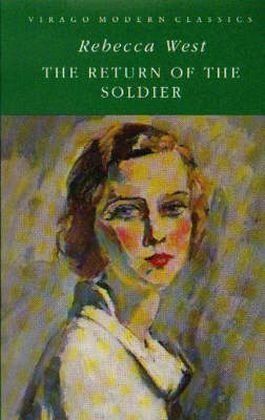
Virago Reading Week: The Return of the Soldier by Rebecca West

Rebecca West’s The Return of the Soldier was written during World War I and published in 1918. The soldier of the title is Christopher Baldry, who has just been sent home from a hospital in Boulogne. Chris is suffering from severe amnesia and is unable to remember the last fifteen years of his life. He can’t wait to be reunited with his girlfriend Margaret Allington, the daughter of an innkeeper on Monkey Island. Unfortunately, though, Margaret is no longer his girlfriend – she’s married to another man and is now Mrs Grey. And to make matters even more complicated, Chris has a wife of his own.

The story is narrated by Jenny, Chris’s cousin, who has been staying at his home, Baldry Court, with his wife, Kitty. Jenny is unmarried but appears to be in love with Chris herself and is devoted to making him happy. When it becomes obvious that Chris really can’t remember Kitty and is still in love with Margaret, the three women are faced with a decision. Is it better for him to be ‘cured’ and regain his memory, even if it means bringing back the horrors of war – or should he be left as he is, blissfully unaware of what has happened during the last fifteen years?

Despite being a quick read at less than 200 pages, The Return of the Soldier raises some interesting issues and leaves the reader with a lot to think about. Although the title character is a First World War soldier, this is not really a book about the war itself and we learn almost nothing about what Chris experienced (in fact, I felt that we didn’t really get to know Chris very well at all). Instead, West takes the war as a starting point to explore some of the consequences that arose from it, such as memory loss as a symptom of the shell shock which many soldiers suffered due to their horrific experiences in the trenches.

But to me, the major theme of this novel was West’s portrayal of class differences, with the rich, spoilt Kitty on one side and the poor, plain Margaret on the other. Kitty treats Margaret with disdain and contempt and Jenny initially shares the same views. I actually found the first couple of chapters quite difficult to read because of their nasty attitudes. For example, this is what Jenny thinks of Margaret on their first meeting:

She was repulsively furred with neglect and poverty, as even a good glove that has dropped down behind a bed in a hotel and has lain undisturbed for a day or two is repulsive when the chambermaid retrieves it from the dust and fluff.

Eventually Jenny’s attitude starts to change and she begins to see why Chris loves Margaret so much. However, Kitty’s character is never really developed at all. I was expecting Kitty and her relationship with Chris to play a bigger part in the story, but this didn’t happen. Instead, as Margaret comes into the forefront of the story and we start to see her inner beauty and warmth, Kitty’s role becomes less significant.

This book can easily be read in one sitting, which is exactly what I did as I didn’t want to put it down. Rebecca West’s writing is beautiful and for such a short book it was very moving and poignant. Just a word of warning, though – don’t read the back cover first as it gives the ending away!

I read this book as part of the Virago Reading Week hosted by Carolyn of A Few of My Favourite Books and Rachel of Book Snob.

Review: Half of a Yellow Sun by Chimamanda Ngozi Adichie

“I do hereby solemnly proclaim that the territory and region known as and called Eastern Nigeria, together with her continental shelf and territorial waters, shall henceforth be an independent sovereign state of the name and title of The Republic of Biafra.”
~Chukwuemeka Odumegwu Ojukwu

Half of a Yellow Sun follows the lives of three central characters before and during the Nigerian-Biafran War of 1967-1970. The first character we meet is Ugwu, a thirteen-year-old boy from a small village, who comes to the town of Nsukka to take up a position as houseboy to Odenigbo. Odenigbo is a university professor who regularly plays host to a lively gathering of friends who are all very opinionated on the political issues facing Nigeria. His girlfriend, Olanna, is the daughter of a rich businessman and is an educated woman with a degree in sociology. Early in the book she travels to Nsukka to live with Odenigbo and Ugwu. The third main protagonist is Richard Churchill, an Englishman drawn to Nigeria by his interest in Igbo-Ukwu art. Richard falls in love with Kainene, Olanna’s intelligent and sarcastic twin sister.

This is the first book I’ve read by Chimamanda Ngozi Adichie and also the first time I’ve read anything on this subject. However, my unfamiliarity with the history, politics and geography of Nigeria wasn’t a problem, because the book explained things very well, on a personal, as well as a political level. The important thing to understand is that the nation of Biafra was formed when one of Nigeria’s ethnic groups, the Igbo, attempted to secede from Nigeria and establish their own country – but the newly-created Republic of Biafra received little support from the rest of the world and lasted less than three years. The Biafran flag (shown to the right) consisted of red, black and green horizontal stripes, with half of a yellow sun in the middle.

The book has an unusual structure: as well as being told from the alternating viewpoints of Ugwu, Olanna and Richard, the story also moves backwards and forwards in time. This structure didn’t really work for me, as I felt it disrupted the flow of the story. It also took me a while to start to feel anything for the characters, which was a problem for me at first. What I did like, though, was that the central protagonists were all from very different backgrounds which gave us the opportunity to see things from three entirely different perspectives.

Then suddenly, the Republic of Biafra was established, the war began, and from this point I became swept into the story and really began to love and care about the characters. We were given some vivid and harrowing descriptions of the suffering of the Biafran people – how children were dying of starvation, how people were murdered and abused, how homes were being destroyed. There’s one memorable scene where Olanna is sitting next to a woman on a train who is holding a calabash containing the severed head of her daughter. There was a lot of violence in the book, but I never felt that it was gratuitous.

The characters all develop over the course of the story, which is always a good thing. Ugwu was probably my favourite character. At the beginning of the book he arrives in Odenigbo’s home as an uneducated teenage boy, who feels bewildered by the new life he has suddenly been thrust into, but as he learns he grows in confidence and becomes a valued member of the family. However, there’s an incident near the end of the book that disappointed me and made me lose respect for him, although the fact that this occurs shows us how war and fear makes people behave in ways that they wouldn’t normally.

The other character I found particularly interesting was Richard. As an Englishman and initally an ‘outsider’, he comes to consider himself a Biafran and wants to write about his experiences, but eventually begins to question whether it’s right for him to tell this story or if it should be left for somebody else to tell. There were also several scenes which took place towards the end of the war when he was accompanying two American journalists who had come to report on the war. The ignorance and insensitivity of the journalists gives an idea of how the situation may have been viewed by some of those outside Nigeria.

There are a few surprises at the end of the book and it certainly didn’t conclude the way I was expecting it to. I can’t really say that I ‘enjoyed’ this book but I’m glad I read it because I now have a much better understanding of this period of Nigerian/Biafran history – and also because the story itself was so moving and one that really affected me.

I’ll leave you with a quote from the book in which Odenigbo explains why his mother, a woman from a small bush village, feels threatened by an educated woman like Olanna.

“The real tragedy of our postcolonial world is not that the majority of people had no say in whether or not they wanted this new world; rather, it is that the majority have not been given the tools to negotiate this new world.”

Highly recommended

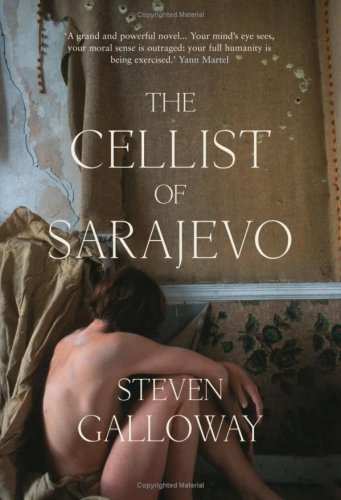
Review: The Cellist of Sarajevo by Steven Galloway

Sarajevo is a city under siege. On 27th May 1992, twenty two people are killed by a mortar shell as they wait outside to buy bread. In memory of those who died, a cellist sits in the street on twenty two consecutive afternoons and plays Albinoni’s Adagio in G Minor on his cello.

The cellist, however, is not the main character in this book – although he is there in the background throughout the story, playing his music as a message of hope and inspiration. Instead, Galloway has chosen to focus on three different characters, who are each coping in their different ways with the changes war has brought to their lives.

One of these is Arrow, a young woman who was once the star of the university target shooting team. Now she’s been recruited as an army counter-sniper and given the responsibility of protecting the cellist from attack. Then there’s Kenan, a man in his forties for whom the simple task of going to collect water for his family means putting his life in danger. And finally there’s Dragan, an older man who sent his wife and son out of Sarajevo before the siege began, and is now slowly making his way across the war-torn city to the bakery where he works.

I was only 11 years old when the Bosnian War started so probably wasn’t paying a lot of attention to news reports about it – I’m ashamed to admit that I know very little about what happened and before I read this book was only vaguely aware that Sarajevo had been under siege. However, if you’re looking for a book that will teach you the facts about the war, you’ll need to look elsewhere as this book does very little to educate the reader about the war itself. We are never even told the nationality of any of the characters. The snipers surrounding the city are referred to as simply ‘the men on the hill’; those defending Sarajevo are ‘the men in the city’.

This vagueness was very effective because in a way, Steven Galloway was saying that it doesn’t matter who’s fighting who, it doesn’t matter why a war began, because people everywhere are the same, have the same feelings and emotions, and are similarly affected by the pain and suffering of war. The author could have taken any war or any siege as the basis for this book and the overall mood he created would have been the same.

I can’t say that I enjoyed this book because ‘enjoyed’ isn’t the right word. Neither is ‘loved’. But it was an incredibly powerful book and I’m glad I finally found time to read it. I think some readers would probably dislike the structure of the book with its alternating chapters from the viewpoints of each of the three characters, but it worked for me. Arrow’s storyline was the most compelling and could have been a whole book on its own, but I also found it interesting to follow Dragan and Kenan as they dodged the snipers and negotiated hazardous bridges and ruined buildings on their dangerous journeys through the city.

The Cellist of Sarajevo doesn’t tell us how the war started, the reasons for the war or even who the war was between. What it does attempt to tell us is the effects the war had on individual people, how they felt and how they tried to survive.

Highly Recommended

Good Evening, Mrs Craven: The Wartime Stories of Mollie Panter-Downes

Mollie Panter-Downes was the London correspondent for the New Yorker and this collection from Persephone Books brings together a number of her contributions to the magazine which were written during World War II. The book opens with her Letter from London dated 3 September 1939 and ends with another dated 11 June 1944. Between the two letters are twenty-one short stories, each of which offers an insight into the hopes and fears of British people trying to deal with the changes the war has brought to their lives.

These stories are not particularly dramatic or sensational in any way. They are realistic stories that focus not so much on the war itself, but on the effects of the war on the women (and a few of the men) who were left behind at home. We read about women attending sewing parties, worrying about loved ones who are away fighting, preparing for their husbands to go to war, coping with being pregnant during the war and experiencing almost any other wartime situation you can think of.

After finishing the book, there are a few stories that stand out in my memory more than the others. In Clover, for example, is a story about a rich woman called Mrs Fletcher who takes in a family of evacuees from a poor part of London. This was an interesting study into how the war pushed together people of different social backgrounds who wouldn’t usually have mixed with each other. This Flower, Safety follows Miss Mildred Ewing as she moves from one hotel to another in an attempt to escape from danger, beginning to despair of ever finding somewhere safe to live. Then there’s the story of Miss Burton, who is so hungry she can think about nothing else. The title story is also one of the best; it’s about a woman who has been having an affair with a married man. On the evening before he leaves to go to Libya, she wonders how she’ll be able to find out whether he’s dead or alive:

“Don’t think I’m being stupid and morbid,” she said, “but supposing anything happens. I’ve been worrying about that. You might be wounded or ill and I wouldn’t know.” She tried to laugh. “The War Office doesn’t have a service for sending telegrams to mistresses, does it?”

The stories are published in chronological order, as they appeared in New Yorker between 1939 and 1944, showing how life in Britain changed as the war progressed. Despite the subject matter, these stories are not all bleak and depressing – there’s also a lot of humour in Panter-Downes’ writing, in the form of gentle wit and irony.

As with most of the short story collections that I’ve read, there were some that didn’t interest me very much, but others that I loved and wished were longer. However, I think reading them all at once was a mistake as it was a bit too much for me. I think I would have enjoyed this collection even more if I had dipped in and out and taken the time to appreciate each story individually.

Recommended.

Review: The Professor’s House by Willa Cather

Willa Cather is an author I’ve heard a lot about but whose work I’ve never read until now.  I should probably have started with her most famous book, My Antonia, but something drew me to this one, The Professor’s House.

The Professor of the title is Godfrey St Peter, a man in his fifties, around the same age as Willa Cather was when she wrote this novel. At the beginning of the book, St Peter and his wife are preparing to move into their new home.  At the last minute the Professor decides that he doesn’t want to give up his old house just yet, so that he can continue to work in his old study and spend some time alone with his memories.

Most of the book revolves around St Peter reminiscing about his family and friends and coming to terms with the idea of leaving the past behind and embracing modern life.  At the forefront of the Professor’s thoughts is his former student Tom Outland, who had once been engaged to his daughter Rosamond. On his death in the First World War, Outland left everything he had to Rosamond – and this inheritance is causing trouble for the St Peter family.

If you prefer books with a gripping plot and lots of action you’ll want to avoid this one, as it was one of the slowest moving books I’ve ever read. I have to admit there were a few times during the first few chapters that I came close to abandoning it, but I kept reading because it was so well written. I would describe this as a calm, quiet, reflective book; one with such powerful, eloquent writing and beautiful imagery that it doesn’t really matter that not much actually happens.

The book is divided into three sections; the first and third are essentially character studies of the Professor and his family, particular his two daughters Rosamond and Kathleen and their husbands. The middle section is very different in both style and subject, as it tells in a flashback the story of Tom Outland’s life in New Mexico before he met the St Peter family. This story-within-a-story was fascinating but did feel slightly out of place, almost as if it had just been dropped at random into the middle of an entirely different book.

One of the things that stood out about Cather’s writing for me was the use of colour in her descriptions.

The grey sage-brush and the blue-grey rock around me were already in shadow, but high above me the canyon walls were dyed flame-coloured with the sunset, and the Cliff City lay in a gold haze against its dark cavern. In a few minutes, it too was grey and only the rim-rock at the top held the red light. When that was gone, I could still see the copper glow in the piñons along the edge of the top ledges. The arc of sky over the canyon was silvery blue, with its pale yellow moon, and presently stars shivered into it, like crystals dropped into perfectly clear water.

The Professor’s House is possibly a book I would appreciate more if I read it again when I’m older, as I found it difficult to identify with a fifty-two year old man looking back on his life. This was my first experience of Willa Cather and although I don’t think she’s going to be a favourite author, I will probably read more of her work at some point in the future.