The Aviator’s Wife by Melanie Benjamin

The Aviator's Wife Melanie Benjamin picks such interesting subjects for her novels, introducing us to historical figures who, despite their significance, we may not know much about: first Alice Liddell, the inspiration behind Alice in Wonderland, then Lavinia Warren or ‘Mrs Tom Thumb’, and now Anne Morrow Lindbergh, wife of the famous aviator, Charles Lindbergh.

We first meet Anne Morrow, daughter of the US ambassador to Mexico, in 1927 at a reception attended by Charles Lindbergh who has recently completed his first solo flight across the Atlantic. Everyone expects Lindbergh to be drawn to Anne’s beautiful older sister, Elizabeth, but instead it is the shy, quiet Anne who catches his eye and when he takes her up in his plane for a private flight, she finds that she shares his love of flying. Soon Lindbergh proposes and Anne accepts, but she quickly discovers that being married to one of the most famous men in America is not going to be easy.

Before reading this book I had heard of the Lindberghs but knew almost nothing about them so, for me, The Aviator’s Wife was very educational as well as being an enjoyable story. I’ve never given much thought as to what being an aviator actually involved and it was interesting to see how the Lindberghs use their roles as aviators to perform a range of useful and varied tasks including charting new routes and mapping flight paths for passenger planes, flying over places of interest to take aerial photographs, and delivering aid to disaster zones. Flying in those early aircraft must have been an amazing experience – the description of Anne’s first flight with Lindbergh is wonderfully written and sounds both terrifying and exhilarating.

This book gives us some fascinating insights into what it is like to be a celebrity. The Lindberghs have very little privacy and everything they do attracts attention from the world’s media. They are followed by reporters and photographers everywhere they go, though as quiet, reserved people neither Charles nor Anne seem very comfortable with being constantly in the spotlight. Charles has already learned to deal with it in his own way, but Anne often finds it difficult. Their fame eventually leads to tragedy – I won’t go into details here (if you’re familiar with the Lindberghs’ lives you will know what this tragedy was and if not I won’t spoil the story for you) but this part of the book was heartbreaking and made even worse by the fact that the way Charles chose to deal with the disaster was completely inadequate.

The relationship between Anne and Charles becomes more and more tense and strained as the years go by, but even as Charles grows increasingly cold and distant, Anne tries to stay loyal to her husband and is supportive when he expresses his controversial views on Hitler and the Nazis, despite the fact that she’s not convinced that he’s right. Charles is portrayed as a complex person with some good qualities but also a lot of bad ones. He tries to control every aspect of Anne’s and their children’s lives and at first it’s frustrating to see how Anne allows him to do this, but eventually she begins to move out of his shadow and finds some independence. As well as being her husband’s co-pilot, navigator and radio operator, Anne becomes an accomplished pilot in her own right and is also the first American woman to obtain a glider pilot’s licence. She later starts to build a successful career of her own as an author, publishing books including the best-selling Gift from the Sea.

I’ve enjoyed all three of Melanie Benjamin’s books but I think this one is her best so far. I was left wanting to learn more about Anne Morrow Lindbergh and feeling that she really deserves to be known as more than just ‘the aviator’s wife’!

I received a review copy of this book from the publisher via Netgalley

Madensky Square by Eva Ibbotson

I felt a sudden longing to record…to retain…my everyday life here in Madensky Square. I shall remember my tragedies, my follies and my joys – everyone remembers those. But what of the ordinary things, the little happenings? What of the ‘dailiness’ – who has a care for that?

I think this is the first Eva Ibbotson book I’ve read. I say ‘think’ because it’s possible that I’ve read one or two of her children’s books (Which Witch? sounds very familiar), but this is definitely the first time I’ve read one of her adult or young adult books. Ibbotson is an author I’ve been wanting to try for a long time as so many of the bloggers I follow keep mentioning how much they love her. Madensky Square isn’t one that I’ve heard much about so probably wouldn’t have been the one I would have chosen to start with, but Amazon were offering it as their Kindle Daily Deal a few weeks ago and I couldn’t resist!

The book is set in Austria just a few years before the start of the First World War. Our narrator, Susanna Weber, is a dressmaker with a small but busy shop on Vienna’s Madensky Square. At the beginning of the novel, Susanna tells us that for the next twelve months she is going to keep a journal recording the lives of her friends, her customers and the other inhabitants of Madensky Square. She starts her story in the spring of 1911 and in the pages that follow we meet and get to know the people who populate Susanna’s world.

Being a dressmaker gives Susanna the opportunity to meet a wide range of people from different walks of life. She hears all of their gossip and becomes involved in the various dramas taking place in each of their lives. There’s Frau Schumacher, for example, who already has six daughters and whose husband is hoping for a son to inherit his timber business; how will he react if their next child is another girl? Then there’s Nini, Susanna’s Hungarian assistant, who is an anarchist and needs to decide whether her political beliefs are more important than her chance of love. Others include the Countess von Metz, a proud, sharp-tongued old lady who still loves buying dresses despite living alone and in poverty, the beautiful and very religious Magdalena Winter, and the eccentric Professor Starsky, an expert in Reptile Diseases. There are a large number of characters, but they are all so different and described in so much depth I never had any difficulty remembering who they all were. Some did feel a bit stereotypical (particularly the plain and awkward ‘bluestocking’, Edith Sultzer, and the fat butcher, Herr Huber) but I could overlook that as they were still so well-written and memorable. Even Rip the dog, whose owner sends him out every day with a little purse tied around his neck to buy the newspaper, has a distinct personality of his own!

Susanna herself is a lovely, warm person who others frequently look to for help and advice. However, her own life is no less interesting and complicated than that of any of the other characters I’ve mentioned. She has experienced a lot of sadness and loss in her past, but I don’t want to give too much of her personal story away as it’s only revealed to the reader slowly as the book progresses. Of all the other storylines in Madensky Square, my favourite was the one involving Susanna’s relationship with Sigismund Kraszinsky, a young Polish orphan. Sigi is a talented pianist and his uncle has brought him to Vienna in the hope of furthering his career as a musician, which unfortunately comes at the expense of allowing him to have a normal childhood. The story of how Susanna befriends this lonely, nervous little boy and tries to bring some happiness into his life is one of the most moving of the novel’s many subplots.

I loved reading the descriptions of Madensky Square itself, with its fountain, café and statue of Colonel Madensky, as well as the countryside, the opera houses and all the other places Susanna visits; I especially enjoyed reading about Susanna and Sigi’s trip to the magical Grottenbahn in Linz! I was satisfied with the way the book ended too – it wrapped things up nicely for all the characters we had been following in so much detail and had grown to love and care about over the course of the novel. There are happy endings for some of them, but not for others, which is realistic and more effective than if there had been a fairytale ending for everyone.

I loved this book and I’m hoping that maybe those of you who are Eva Ibbotson fans can tell me which of her books I should try next?

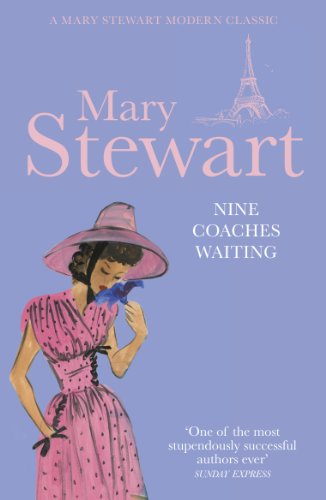
Nine Coaches Waiting by Mary Stewart

I can’t believe this is the first Mary Stewart book I’ve read! Looking at other reviews of Nine Coaches Waiting it seems almost everyone else discovered her when they were a teenager and it’s so annoying to think that I’ve missed out on all these years when I could have been reading her books. Anyway, better late than never!

Nine Coaches Waiting is the story of Linda Martin, a half French/half English orphan who arrives in France to take a job as governess to young Philippe de Valmy. Philippe is also an orphan and heir to his father’s title and estates, but as he is only nine years old he is living under the guardianship of his Uncle Leon and Aunt Heloise at the family chateau in the Haute-Savoie region of France.

As soon as Linda arrives at the chateau it becomes obvious that something isn’t right and we are immediately thrown into an atmosphere of mystery and suspense. The de Valmys had insisted that their nephew’s new governess should be an English girl, so Linda decides not to admit that she speaks fluent French. But why is this important? Do Leon and Heloise have something to hide? When Leon’s dark, handsome son Raoul comes to visit, Linda finds herself falling in love with him – but does Raoul know what his father is planning and could he be part of the de Valmys’ wicked schemes?

To discuss any more of the plot details would be unfair to any future readers, so that’s all I’m going to say as I would like everybody to be as gripped by the story as I was. Throughout the entire book I found myself worrying about Linda, worrying about little Philippe, and wondering who they could and could not trust. And we are kept guessing right until the end. The tension rises and rises during the final chapters and although there were a couple of different ways the book could have concluded, I got an ending that I was happy with.

It’s not surprising that I enjoyed this book so much, because it has everything I love in a novel: mystery, suspense, romance, memorable characters and even some gothic undertones. It also had the beautiful setting and haunting atmosphere of a Daphne du Maurier novel and would be a perfect book for readers who like stories that are dark and thrilling without actually being scary. The book was written in the 1950s and is set in the 50s too, I think, but the story has a timeless feel and if not for the references to cars and planes it could have been set in a much earlier period.

Nine Coaches Waiting is one of the best books I’ve read this year. It’s maybe not the most life-changing or the most original, but certainly one of the most enjoyable and exciting. My only regret is that I didn’t curl up with it on a quiet weekend with no distractions, rather than starting it during a busy working week when I didn’t have much time to sit down and read. It’s great to have found a potential new favourite author and now I’m looking forward to exploring the rest of her work.

We Have Always Lived in the Castle by Shirley Jackson

I’ve heard so much about this book since I started blogging, particularly around this time of year when it seems such a popular choice for Halloween or the dark winter nights. Yet somehow I had managed to avoid reading any detailed summaries of the plot and so when I finally picked this book up to read it for myself, I was able to go into it with very little knowledge of what it was about. I would hate to spoil things for any future readers, so I’ve deliberately tried to keep my summary here as vague as possible.

The book is narrated by eighteen-year-old Mary Katherine Blackwood, or ‘Merricat’, who lives with her sister Constance, their Uncle Julian, and Jonas the cat in a big house on the edge of town. Near the beginning of the story we see Merricat walking home with some shopping, being taunted and chanted at by everyone she passes. It seems the Blackwoods are very unpopular, but at first we don’t know why.

When Merricat returns home, it becomes even more apparent that something is wrong. Merricat herself does not seem like a normal eighteen-year-old – she likes to bury things in the grounds of the Blackwood house and believes that using magic words and rituals will protect her home and family. Constance is agoraphobic and afraid to walk any further than the garden. Uncle Julian, confined to a wheelchair, is obsessed with the book he’s writing about a tragedy that occurred six years earlier. And what exactly has happened to the rest of the Blackwood family?

We Have Always Lived in the Castle is a great book and now that I’ve read it I can see why it’s considered a modern classic. Something that impressed me about it was the way the story was cleverly constructed so that the truth about Merricat and her family was only revealed very slowly. We know from the first page that something is not right but we’re not quite sure what it is. As we read on we start to form some suspicions, though we’re made to wait a while to find out if we’ve guessed correctly or not.

This is a very disturbing and unsettling book with its portrayal of the claustrophobic world behind the locked doors of the Blackwoods’ house and the cruel, hostile atmosphere of the town outside. Some of the sense of unease comes from the fact that the book is narrated by Merricat, who clearly lives in a world governed by her own rules and superstitions. The reader becomes trapped inside her mind and is made to share her unusual outlook on life. And yet although there’s something slightly sinister about her, Merricat is also very child-like and both she and Constance have a vulnerability that made me concerned for them, locked away in the isolation of their ‘castle’.

The ending was not quite what I had expected and I was left with questions that still hadn’t been answered, but having thought about it, maybe it was a suitable ending for such a strange and powerful book. This was my first experience of Shirley Jackson’s work and now I’m looking forward to reading The Haunting of Hill House.

The Land of Green Ginger by Winifred Holtby

The Land of Green Ginger is the second Winifred Holtby book I’ve read, the first being South Riding, which I read (and loved) in February. This one was published a few years earlier than South Riding, in 1927.

It’s the story of a missionary’s daughter, Joanna Burton, who is born in South Africa but raised in England by her aunts. As a young woman, Joanna is a lively, high-spirited person who dreams of travelling and visiting faraway lands. Then during the First World War she falls in love with Teddy Leigh, a young man on his way to fight in the trenches in France, and they get married.

When Teddy returns from the war to their home in Yorkshire, he is in poor health and Joanna finds herself caring for an invalid husband, managing a farm, and trying to look after their two small children, Patricia and Pamela. Life is hard for Joanna and the only person she can rely on for help is their Hungarian lodger, Paul Szermai. But Joanna has never been popular with the neighbours and when people begin to gossip about her relationship with Szermai, things become even more challenging for the Leigh family.

There are some interesting subplots too, including the tale Paul Szermai shares with Joanna of his life in Hungary and other parts of Europe and how it was affected by war and communism. We also see the attitudes of the local people to the group of immigrant workers who have been employed in Joanna’s village and for whom Szermai is acting as interpreter. Holtby does a good job of portraying a small rural community who are suspicious of outsiders and of anything that might change their way of life.

Although I found Paul Szermai and Teddy Leigh difficult to like, Holtby still managed to make me feel some sympathy for all of her main characters: Szermai, because of his tragic history; Teddy, frustrated by the sickness that is keeping him confined to his bed; and of course, Joanna who has had to abandon all her earlier dreams and ambitions, yet still shows a lot of naivety and innocence. Joanna seems to be unaware of how she is perceived by other people and as a result she never quite manages to fit into life in a small village where everybody knows everybody else’s business.

So The Land of Green Ginger is a dark and emotional book, but the ending leaves us feeling more hopeful. It doesn’t have the same depth and scope as South Riding, but I really like Winifred Holtby’s writing and this is still a compelling story. And finally, I want to mention how much I love the covers of the new Virago editions of Holtby’s books!

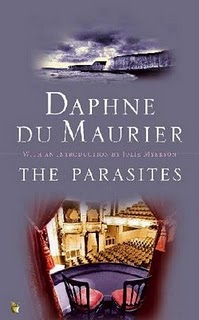
The Parasites by Daphne du Maurier

After reading the first few chapters of Daphne du Maurier’s The Parasites I had a feeling I wasn’t going to enjoy this book. I was finding the story very difficult to get into and I didn’t like any of the characters. But because Du Maurier is one of my favourite authors I decided I didn’t want to give up on the book just yet…and guess what? I ended up loving it! I should have known Daphne wouldn’t let me down.

The Parasites is a study into the lives of the Delaney family: Mama, a famous dancer, and Pappy, a successful singer, and their three children, Maria, Niall and Celia. The story begins one day in the 1940s when Niall and Celia, now adults, are spending the weekend at the home of Maria and her husband, Charles. It’s Charles, losing his temper with them, who refers to the three siblings as ‘parasites’…

“You always have been and you always will be. Nothing can change you. You are doubly, triply parasitic; first, because you’ve traded ever since childhood on that seed of talent you had the luck to inherit from your fantastic forebears; secondly, because you’ve none of you done a stroke of ordinary honest work in your lives, but batten upon us, the fool public who allow you to exist; and thirdly, because you prey upon each other, the three of you, living in a world of fantasy which you have created for yourselves and which bears no relation to anything in heaven or on earth.”

He then leaves the house in a rage, and Maria, Niall and Celia are left alone to wonder what his words meant and if it’s true that they really are ‘parasites’. Through a series of flashbacks and memories, the Delaneys spend the rest of the novel looking back at their childhoods and the things that turned them into the adults they are today.

One of the striking things about this book was the lack of one distinct narrator. Sometimes the three siblings seem to be narrating together, all speaking with one single voice, which was very unusual. It’s difficult to explain, but if you read the book you’ll see what I mean! As I read, I couldn’t help thinking that Maria, Niall and Celia must represent three different sides to Daphne du Maurier’s own personality; she writes so convincingly about all three characters and really gets inside their heads. And of course, her own father was the actor Gerald du Maurier and her mother the actress Muriel Beaumont, so she would have known what it was like to be the child of famous parents and could bring some of her personal experiences into this novel.

Maria, who becomes a famous actress, and Niall, who finds success as a songwriter, are stepbrother and stepsister and have a very strong bond. In her introduction to the book, Julie Myerson compares Maria and Niall with Cathy and Heathcliff from Wuthering Heights. I don’t think this would have occurred to me, but after it was pointed out I could definitely see the parallels.

Celia is half-sister to the other two, sharing a mother with Niall and a father with Maria. Although she also has a strong bond with them both, Celia often feels left behind. Despite her own talent for drawing and writing, she puts other people before herself and stays at home while her brother and sister go off to pursue their dreams. Of the three main characters in the book Celia was the only one who I liked and understood; some of the chapters where she takes a central role are very moving. I really disliked both Maria and Niall, who seemed to me to be very selfish characters who only ever thought about themselves. I found it difficult to feel any sympathy for either of them.

The Parasites may sound like a very serious novel, but there’s actually a good balance of drama and comedy. Some of the scenes are quite funny – in one of my favourite chapters, the Delaney family visit Charles and his parents at their country estate for the first time after Maria’s wedding and completely embarrass themselves! It was nice to see du Maurier’s sense of humour really shining through in this novel.

There are other du Maurier books that I’ve enjoyed more than this one, but after a slow start The Parasites turned out to be much better than I expected. It reminded me a lot of I’ll Never Be Young Again, one of her earlier novels, which was also very character-driven and personal. If you prefer her gothic, suspense-filled novels you may be disappointed, but if you want to try a different type of du Maurier book then hopefully you’ll enjoy this one as much as I did.

Rule Britannia by Daphne du Maurier

I love Daphne du Maurier; whenever I pick up one of her books I know I’m guaranteed a good read. Although this one was not as good as some and I can certainly understand why it’s one of her less popular books, it still kept me gripped for all 300+ pages. I’m pleased I can say that because, having read other opinions on this book, I was concerned that it might be the first du Maurier novel that I wouldn’t like.

Published in 1972 her final novel, Rule Britannia, imagines that the UK has broken away from Europe to form an alliance with the US. This new nation will be known as USUK. The first twenty-year-old Emma knows about this is when she wakes up one morning to find that the tranquil corner of Cornwall where she lives is now under American occupation – there’s an American warship in the harbour, American marines stationed in the area and roadblocks on the routes leading in and out of the town. Already the Queen is visiting the White House and the President is preparing to come to Buckingham Palace. Despite reassurances from the government that the formation of USUK is essential for Britain’s economic and military stability, Emma’s family, friends and neighbours begin to grow increasingly concerned about the exact nature of the alliance and the effect it will have on their previously peaceful lives.

It can’t happen here, thought Emma, it can’t happen here, that’s what people in England have always said, even in wartime when they were bombed, because they were all together on their own ground. Not any more.

Although the story unfolds from Emma’s perspective, the real heroine of the story is her seventy-nine-year-old grandmother, Mad (short for Madam – unless I missed it, we aren’t told her real name), who is a retired actress. Mad and Emma live together with Mad’s six adopted boys whose ages range from three to nineteen, all of whom have suffered some form of tragedy in their early lives. Mad, even in her old age, is a strong-minded, independent woman who is determined to defend her home and family no matter what, and she plays an important part in Cornwall’s resistance to the occupying forces. But although Mad and her family believe they have been invaded, I should point out that we’re told the majority of British people are very happy with the alliance and that it’s only a small percentage of the population who are rebelling against it.

As with most Daphne du Maurier novels, this one does have some suspenseful and unsettling moments. I know from my past experience of her work that nothing is ever quite as it seems and I was wondering what surprises and twists she might have in store for the reader – but unfortunately I found the way the book ended slightly disappointing because I felt there was a lot more she could have done with the story. Another thing I didn’t like was the fact that one of Mad’s adopted sons, three-year-old Ben who happens to be black, appeared to have been included simply as an excuse to make racist jokes. The book was a product of the 1970s I suppose, but these comments are offensive rather than funny. These negative points, along with the overall strangeness of the book, stopped me from enjoying it as much as I’ve enjoyed her other books. It doesn’t compare to her best work and if you’re new to Daphne du Maurier I would suggest starting somewhere else.