Lord Edgware Dies by Agatha Christie

This year’s Read Christie challenge has a ‘Through the Decades’ theme and this quarter we’re reading books from the 1930s. My choice for May is Christie’s 1933 Poirot mystery Lord Edgware Dies (published in the US as Thirteen at Dinner).

The novel is narrated by Poirot’s friend, Captain Hastings – a nice surprise as I tend to love the Hastings books and hadn’t realised he was in this one. At the beginning of the book, Poirot and Hastings are visiting the theatre to watch a performance by the American impressionist Carlotta Adams, known for her impersonations of famous people such as the actress Jane Wilkinson. After the show, they are approached by Jane Wilkinson herself, who asks for Poirot’s help in obtaining a divorce from her husband, Lord Edgware. The actress desperately wants to marry the wealthy Duke of Merton and tells Poirot that if Edgware won’t agree to a divorce, she’s just going to have to kill him!

When Lord Edgware is indeed found dead in his own home, having been stabbed in the neck, Jane Wilkinson appears to be the obvious suspect – after all, she was seen entering the house that evening and everyone knew that she wanted her husband dead. However, Edgware had already agreed to a divorce earlier that day, taking away Jane’s motive. And Jane had spent the whole of that evening at a dinner party with twelve other guests, all of whom can provide her with an alibi. Was Jane really in two places at once – or was it Carlotta Adams who entered Lord Edgware’s house in disguise?

This is a very enjoyable Poirot novel with a clever solution, although I don’t think it’s an absolute favourite as I found it a little bit lacking in atmosphere. The whole story takes place in London and we don’t see much of Poirot actually going out in search of clues – instead he sits and waits for the clues to come to him, much to the frustration of Hastings who wishes Poirot would take a more active role in solving the mystery, like their old friend Inspector Japp:

Poirot replied that he preferred to solve it sitting at home.

“But you can’t do that, Poirot.”

“Not entirely, it is true.”

“What I mean is, we are doing nothing! Japp is doing everything.”

“Which suits me admirably.”

“It doesn’t suit me at all. I want you to be doing things.”

“So I am.”

“What are you doing?”

“Waiting.”

Of course, Poirot is the one who correctly identifies the murderer while Japp, as usual, jumps to the wrong conclusions. I also failed to solve the mystery; although I did guess part of the solution very early on, I allowed myself to get distracted by the red herrings, of which there are many!

What I particularly loved about this book was the relationship between Poirot and Hastings and the way they work so well together, with some chance remarks of Hastings’ inadvertently pointing Poirot in the direction of important clues. Having the novel narrated by Hastings means the reader gets to hear Poirot discussing possible theories with him and sharing his thought processes, which I find more enjoyable than the books where we have no idea what Poirot has been thinking until the end. It also means that we only see the various suspects and witnesses from Hastings’ perspective; Jane Wilkinson, for example, presents herself in public as so silly and vacant that we know there must be more to her than meets the eye. Jane is a great character and Jenny Driver, Carlotta Adams’ friend who owns a fashionable London hat shop, was another favourite.

I’m hoping to read another 1930s Christie novel in June, then for July-September we move on to the 40s and 50s!

The Seven Dials Mystery by Agatha Christie

The theme for the 2024 Read Christie challenge is Agatha Christie: Through the Decades and for the first quarter of the year we are reading books from the 1920s. In January I read The Secret of Chimneys (1925), so this month it made sense to read The Seven Dials Mystery, which was published four years later in 1929 and is loosely a sequel. I say ‘loosely’ because although this book features some of the same characters and is set at the same country house – Chimneys – it’s a completely separate mystery.

The Seven Dials Mystery begins with a house party being held at Chimneys while the house is being rented out to Sir Oswald and Lady Coote. The guests include a group of young people, one of whom, Gerry Wade, has a habit of sleeping very late in the mornings. As a joke, his friends hide eight alarm clocks in his room during the night, timed to go off one after another in the morning. However, things don’t go according to plan and the clocks fail to wake Wade…because he is already dead. The cause of death is thought to be an accidental overdose of a sedative, but how does that explain why there are now only seven alarm clocks in the bedroom instead of eight?

When Lord Caterham, the owner of Chimneys, returns home and hears the news, he is not at all pleased. “I don’t like anyone who comes and dies in my house on purpose to annoy me,” he says. His daughter, Lady Eileen, on the other hand, is more sympathetic, particularly when she discovers that she knows some of the people involved – and it’s not long before she has become involved herself. Lady Eileen – known as ‘Bundle’ to her friends and family – is on her way to London the next day when a man jumps into the road in front of her car. He has time to utter the words Seven Dials before dying of a gunshot wound. What or where is Seven Dials and is there some connection with the seven clocks found in Gerry Wade’s bedroom? Bundle is determined to find out!

This book has a very similar feel to The Secret of Chimneys and although it had seemed like a good idea to read them in consecutive months for the challenge, in hindsight I think I should have left a bigger gap and chosen something different for this month. Still, it was nice to meet Bundle again, who only played a small part in Chimneys but was much more prominent in this book. Superintendent Battle is also back again, but it’s really Bundle who is the ‘detective’ in this novel and she’s a very likeable one!

I didn’t manage to solve the mystery – if there were any clues pointing towards the culprit I must have missed them – but this is really more of a thriller than a conventional mystery novel anyway and I was content just to follow the twists and turns of the plot. There’s a secret society element that reminded me very much of GK Chesterton’s The Man Who Was Thursday, which I’m sure Christie must have read and been inspired by. It’s an entertaining novel but I think my next Read Christie book will be a mystery rather than another thriller.

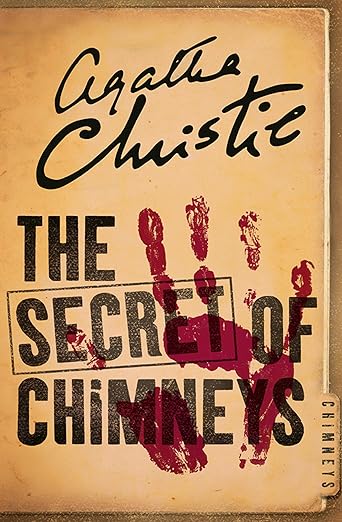
The Secret of Chimneys by Agatha Christie

I’m taking part in Read Christie again this year and the theme for 2024 is Agatha Christie: Through the Decades. Each quarter will focus on a different decade or decades – 20s, 30s, 40s/50s and 60s/70s. For my January read, I have chosen The Secret of Chimneys, which was published in 1925.

The Secret of Chimneys is the first of five novels featuring Superintendent Battle and is more of a thriller than a traditional murder mystery. I usually enjoy the lighter, more adventurous feel of Christie’s thrillers and although this one hasn’t turned out to be a favourite, I did find it very enjoyable. It involves political intrigue in the fictitious Balkan country of Herzoslovakia where attempts are under way to restore the monarchy.

The novel begins in Africa, where Anthony Cade is working as a tour guide when he meets an old friend, James McGrath, in Bulawayo. Anthony agrees to carry out two important tasks for McGrath – firstly, to deliver the manuscript of a memoir written by Count Stylptitch of Herzoslovakia to a London publisher, and secondly, to return a packet of letters to a woman who is being blackmailed. As soon as he arrives in England, however, he discovers that there are other people interested in both the manuscript and the letters, and they will stop at nothing – including murder – to get what they want.

Most of the action takes place at Chimneys, a country estate belonging to Lord Caterham, who invites Anthony to attend a house party at the request of George Lomax, a politician hoping to get his hands on the Stylptitch memoir. With a large and varied group of people gathered at Chimneys – including a beautiful widow, a French governess, a representative from a British oil syndicate and an American collector of rare books – there’s no shortage of suspects when a murder occurs and Superintendent Battle is called in to investigate.

As I’ve said, this is not just a straightforward murder mystery and Christie throws all sorts of things into the plot, from treasure hunts and coded letters to secret societies and international jewel thieves. It’s fun to read, but does need some suspension of disbelief! You also need to be prepared for a lot of racist language, which isn’t unexpected in a Christie novel – or many other 1920s novels – but it seems more excessive in this particular book, maybe because of the large number of characters of other nationalities and races. Other than that, this is an entertaining, fast paced read, written in a light and humorous style that reminded me of PG Wodehouse.

Although Anthony Cade seems to do a lot of the detecting in this book, Battle himself has a larger role than in some of the others in which he appears. He’s certainly no Poirot or Miss Marple, being rather stolid and unimaginative, with what is described as an ‘expressionless face’, but he gets on with his job quietly and unobtrusively and plays a small but important part in the final solving of the mystery. Did I solve it myself? Well, yes and no. I guessed the identity of the jewel thief, King Victor, but there were other revelations that took me by surprise.

This was a good start to a new year of Christie reading! Next month I’m hoping to read The Seven Dials Mystery, another 1920s novel which features some of the same characters.

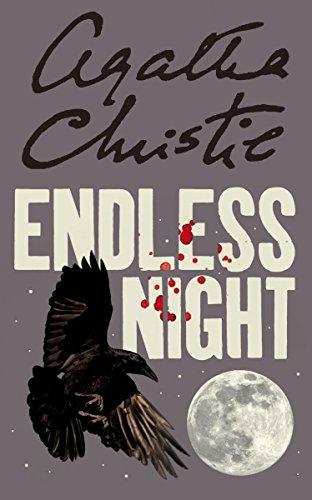
Endless Night by Agatha Christie

There are still a few weeks left in this year’s Read Christie 2023 challenge, but plans for Read Christie 2024 have already been announced! You can find out more and register for full details on the Agatha Christie website here. You don’t need to commit to reading a book every month – I just join in with any that appeal to me or that I haven’t read before.

Back to the 2023 challenge and the prompt for November is a motive: greed. Endless Night, the suggested title for this month, was first published in 1967 and is a standalone novel, not featuring Poirot, Miss Marple or any of Christie’s other famous detectives. It’s also one of only a small number of her novels to be written in the first person (apart from some of the Poirots, which are narrated by Captain Hastings). In fact, it’s really not a typical Christie novel in any way, but I still enjoyed it and apparently it was one of Agatha’s own favourites.

Many of Christie’s novels have titles inspired by nursery rhymes, poems or other works of literature. This one is taken from William Blake’s Auguries of Innocence:

“Every Night and every Morn
Some to Misery are born.
Every Morn and every Night
Some are born to Sweet Delight.
Some are born to Sweet Delight,
Some are born to Endless Night.”

Michael Rogers, our narrator, is an attractive, charming young man but one who has been jumping from one job to another with no real aim in life. When he stumbles upon an old house called The Towers – or ‘Gipsy’s Acre’ as it is known locally – and sees that it’s for sale, he dreams of buying it and settling down there, if only he could afford it. As luck would have it, he meets and falls in love with Ellie, a young American heiress, and soon the two are married and have bought the property, knocking down the old house to build a new one designed by their architect friend, Rudolf Santonix.

Unfortunately, it seems that Michael and Ellie are not destined to be happy in their new home. Gipsy’s Acre has a bad reputation and they are told by an old fortune teller, Esther Lee, that the land is cursed. As Mrs Lee continues to appear, issuing more warnings, Michael wonders whether there really is a curse or if the old woman is trying to drive them away. Then there’s Ellie’s friend and companion, Greta Andersen, who moves in with them when Ellie injures her ankle. Ellie is very close to Greta, but Michael complains that she’s too controlling and has too much influence over his wife.

Christie continues to build tension and suspense in this way until a murder eventually takes place, late in the book. With no detective to investigate the crime and with only Michael’s impression of the other characters to base our opinions on, it’s a difficult mystery to solve. I was convinced I knew who the murderer was, but I wasn’t even close and was completely taken by surprise when the truth was revealed. Although I’m not planning to do it at the moment, I think it would be fascinating to read it again and see how I managed to miss the clues entirely.

I don’t think this ranks as one of my absolute favourites by Christie because I did find it a bit slow in the middle, but that unexpected ending made up for it. I also think it’s one of the most atmospheric of her books, with a real sense of unease and foreboding. I’m not sure yet whether I’ll be able to fit next month’s Read Christie book into my December reading, but I’m definitely signing up again for 2024!

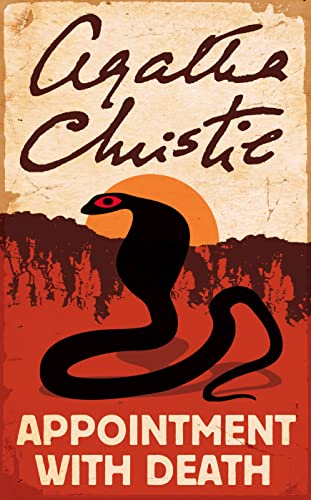
Appointment with Death by Agatha Christie

The September prompt for Read Christie 2023 is a motive: hatred. This is obviously a common motive for murder and there are plenty of Christie novels to fit this month’s theme, but the suggested title is Appointment with Death, a 1938 Poirot mystery set in the Middle East.

Newly qualified doctor Sarah King and French psychologist Dr Gerard are relaxing in the lounge of their Jerusalem hotel when their attention is drawn to an American family who have just entered the room. The head of the family is Mrs Boynton, a monstrous woman who takes a sadistic pleasure in controlling the lives of her adult children. Even her eldest stepson Lennox, who is married, is still completely under her thumb. As Sarah and Dr Gerard learn more about the Boyntons, they each begin to develop a personal interest in the family – Sarah because she has become romantically attracted to Lennox’s brother, Raymond, and Gerard because he thinks he has spotted the early signs of schizophrenia in the youngest Boynton child, Jinny.

When the party moves on to Petra, with the additions of British politician Lady Westholme, her spinster friend Amabel Pierce, and a certain Hercule Poirot, a murder takes place. Nobody has much sympathy for the victim, but the murderer must still be caught – and who better to catch them than Poirot? Insisting that he can solve the mystery in twenty-four hours, he sets out to interview the suspects and sort through the available clues, while remembering a conversation overheard from his hotel window one night: “You do see, don’t you, that she’s got to be killed?”

I always enjoy Christie – even her weaker books are entertaining – but this is a particularly good one! The relationship between the members of the Boynton family is fascinating; Mrs Boynton is a truly horrible woman who has ensured that her children and stepchildren have no friends, no freedom and no independence. Why she has allowed them to come on this trip at all is a mystery in itself and one of the questions Poirot will have to answer.

I loved the Middle East setting (a part of the world Christie knew well due to her travels with her archaeologist husband, Max Mallowan) and although the crime is committed amongst the historic sites of Petra, it almost still has the feel of a typical country house mystery with caves and tents taking the place of rooms. I can’t really claim to have solved the mystery, but I did narrow it down to two suspects and one of them was correct! I missed an important clue which would definitely have pointed me in the right direction earlier on if I had picked up on it, but I think Christie is very fair with the reader in this book and all the clues are there to be seen, as long as you’re paying attention.

I’m not sure yet whether I’ll be taking part in Read Christie next month, but if not I’m looking forward to reading Endless Night in November.

Death Comes as the End by Agatha Christie

This month’s prompt for Read Christie 2023 is a murder method: ‘a fall from height’. I’ve missed the previous two months of the challenge as I’ve been reading other things, but I decided to take part in this one as the suggested title – Death Comes as the End – was one I hadn’t read before and which has always sounded particularly intriguing to me.

First published in 1944, Death Comes as the End is the only historical novel Christie wrote. Unlike her other books, which are all set in the 20th century, this one takes place in Ancient Egypt, a setting that would have been familiar to Christie through her interest in archaeology. I’ve seen it described as the first full-length historical mystery, although I’m not sure if that’s true.

The novel is written mainly from the perspective of Renisenb, a young widow who, following her husband’s death, has returned to her family home by the Nile. Her father Imhotep, a mortuary priest, is away on business in the north, but Renisenb is reacquainted with the other members of the household: her older brothers Yahmose and Sobek and their wives; her younger stepbrother, Ipy; her grandmother, Esa; and several of the family’s servants, including Henet, the housekeeper and Hori, the scribe. There are already some tensions simmering below the surface, but when Imhotep returns with a new concubine, Nofret, things become much worse.

Nofret is a bitter, spiteful woman who seems determined to cause trouble for everyone else. She attempts to manipulate Imhotep into disinheriting his three sons and her plan seems to be working – until Nofret herself is found dead at the bottom of a cliff. As nobody had liked her, there are plenty of suspects, but the situation quickly becomes more complex when more deaths occur. Some of the family believe that Nofret’s spirit is taking her revenge, while others are convinced that a human hand is behind the murders. Renisenb isn’t sure what to think or who to trust, but she knows that if the murderer isn’t caught soon, her own life could be in danger.

I really enjoyed this book, although I felt that the absence of a detective made it difficult for the reader to solve the mystery as there’s no discussion of clues or questioning of witnesses to point us in the right direction. I’m sure you could still correctly identify the murderer if you were paying attention, though; looking back, there are two moments in particular that hint at who the culprit is, but I didn’t pick up on either of them while I was reading. The pool of suspects is considerably narrowed down by the end of the book as well – there’s such a high body count it started to remind me of And Then There Were None. There’s also a romantic element to the novel and although it only forms a small part of the story, I was pleased with the way it was resolved at the end. I would have made that choice myself!

I was surprised to read in Christie’s foreword that “Both places and time are incidental to the story. Any other place at any other time would have served as well.” On the one hand, I can see what she means, because the plot, the characters, and the relationships between the family members are very much what you would expect to find in one of her 20th century country house mysteries. On the other, it seems a strange thing to say because why choose a particular setting if any other would have done just as well? In any case, much as I love her Poirot and Miss Marple novels, I enjoyed being transported back to Thebes in 2000 BC for this one – it was something different and unusual!

This is book 9/20 of my 20 Books of Summer 2023

This is book 30/50 for the 2023 Historical Fiction Reading Challenge.

Unfinished Portrait by Mary Westmacott

May’s theme for the Read Christie 2023 challenge is ‘betrayal’ and the suggested title this month is Unfinished Portrait, a 1934 novel which is one of six books Christie published under the pseudonym of Mary Westmacott. Although I haven’t managed to take part in the challenge every month so far this year, I was particularly keen to join in with this one as I’ve previously only read one Westmacott novel – Giant’s Bread – and have been looking forward to reading more of them ever since.

Unfinished Portrait begins by briefly introducing us to Larraby, a portrait painter who is visiting an unnamed island when he comes across a woman sitting alone in a garden. Sensing that something is wrong, Larraby engages her in conversation and discovers that he is correct – she is intending to commit suicide. Not wanting to leave her alone, he accompanies her back to her hotel and listens as she tells him the story of her life and explains the sequence of events that have put such desperate thoughts into her head.

The woman’s name is Celia – at least that’s what Larraby calls her, as he doesn’t know her real name – and her story forms the main part of the novel. A lot of time is spent on Celia’s sheltered childhood, growing up in the late Victorian period in a comfortable home with servants and a nanny until the family’s financial position is affected by the early death of Celia’s father. I only know the basics about Agatha Christie as a person, but apparently Unfinished Portrait is semi-autobiographical, drawing on her own childhood memories to create Celia’s tales of inventing imaginary friends, time spent abroad due to her father’s poor health, the close relationships she had with her mother and grandmother and her first attempts at writing books. Later, Celia finds herself trapped in an unhappy marriage to Dermot, a man who is insensitive, controlling and eventually unfaithful – which again is based on Agatha’s own marriage to Archie Christie. If I’d been more familiar with Christie’s own life I would have appreciated the autobiographical element of the book a lot more, which would probably have added to my enjoyment of it, but I still found Celia’s story compelling in its own right.

After finishing the book, I could see how it fits the challenge topic for this month, exploring the theme of betrayal from several different angles: Dermot betrays Celia with another woman, Celia herself betrays a previous lover, and later in life she feels she has betrayed her daughter. All of these betrayals combine to cause the deterioration in Celia’s mental state that leads to her feeling so unhappy the day she meets Larraby. It’s a sad and emotional story – even sadder knowing that it was how Christie felt about her own situation at that time. Of course, the book was published in the 1930s and so it’s an ‘unfinished portrait’, leaving a lot of things in Celia’s life (and Christie’s) unresolved and incomplete.

I found this book quite different from Giant’s Bread, the only other Westmacott book I’ve read, and I think I preferred that one overall. I’m definitely more of a Christie fan than a Westmacott fan, but these are still great books and I’m looking forward to reading the other four.