Imperium by Robert Harris

“To be ignorant of what occurred before you were born is to remain always a child. For what is the worth of human life, unless it is woven into the life of our ancestors by the records of history?”

These are the words of the Roman statesman, orator, philosopher and lawyer Marcus Tullius Cicero, a man who lived many centuries before I was born and of whom, thanks to Robert Harris, I am no longer ignorant. I had heard of Cicero, of course, but knew very little about his work and nothing at all about his personal life. Now that I’ve read Imperium, the first in a trilogy of novels narrated by Cicero’s slave and secretary, Tiro, I know much more about both.

Imperium Tiro, like Cicero, really existed and is thought to have written a biography of his master which was unfortunately lost during the fall of the Roman Empire. Imperium is a fictional recreation of the first part of Tiro’s biography and follows Cicero from his humble beginnings as he progresses up the ladder of Roman politics and pursues his ambition of becoming one of Rome’s two Consuls.

As a ‘new man’ – in other words, the first in his family to be elected to the Roman Senate – Cicero’s incredible rise to power is a result of hard work, intelligence and natural ability. He is able to put these skills to good use in his position as lawyer, as we see in the first half of the book when he agrees to prosecute Gaius Verres, the governor of Sicily, who has the support of Rome’s aristocracy despite being accused of corruption. The court case is a victory for Cicero but the drawback of this is that he has made enemies of the aristocrats, who will do whatever they can to prevent him rising any further…

As I’ve mentioned before, Ancient Rome has never been one of my favourite periods to read about, so a few months ago I compiled a list of books that I hoped would change the way I feel about Roman history. Imperium is the first novel I’ve selected from that list and it was a fantastic choice. I’d had high hopes for it anyway, because another book by Robert Harris, An Officer and a Spy, was one of my favourite reads of last year, but I enjoyed this one even more than I’d hoped! A book about Roman politics may sound boring, but I can assure you it’s not. Harris is an author of thrillers as well as historical fiction and this is an exciting, entertaining read, not just an educational one. The trial of Verres is as gripping as anything I’ve read and there are more tense moments later in the book, such as when Cicero sends Tiro to spy on a secret meeting of rival senators.

The characterisation of Cicero is wonderful. Seen through the eyes of Tiro, I felt that there was a slight distance between Cicero and the reader at first, but as the story went on I started to like and admire him more and more, especially during his investigations of Verres, when he conducted himself with so much honesty and integrity. It’s not long before some flaws start to appear – as he sets his sights on the positions of aedile, praetor and finally consul, we see him beginning to sacrifice some of his principles for the sake of ambition – but this just makes him more human. Tiro himself is the perfect choice of narrator – someone who is happy to get on with telling the story without intruding into it too much. As the inventor of one of the earliest forms of shorthand he becomes indispensable to Cicero so it’s quite believable that he accompanies Cicero almost everywhere, taking notes and recording conversations.

Cicero was known as a great orator and Harris really captures the power of some of his speeches in the senate and the court. Many of his letters, writings and transcripts of speeches are still available which means Harris would have been able to draw on those to put words into the fictional Cicero’s mouth. While I don’t have enough knowledge to be able to comment on the historical accuracy of the novel, there’s nothing that feels noticeably inaccurate – as he says in his author’s note, the things in this story either really happened, could have happened, or didn’t definitely not happen.

There’s still so much I would like to say about Imperium, but this post is already becoming very long so I will just quickly mention a few other things I liked: the portrayal of other famous Roman figures of the time, particularly Julius Caesar and Pompey the Great; the details of Cicero’s family life and his relationship with his wife, Terentia; the descriptions of how the Roman legal and political systems worked, especially the complex voting methods that led to high levels of corruption during elections; and the exploration of class differences in Ancient Rome.

Having loved this book so much I’m now looking forward to reading the other two in the trilogy. My copy of Lustrum awaits!

Historical Musings #2: Books about Ancient Rome

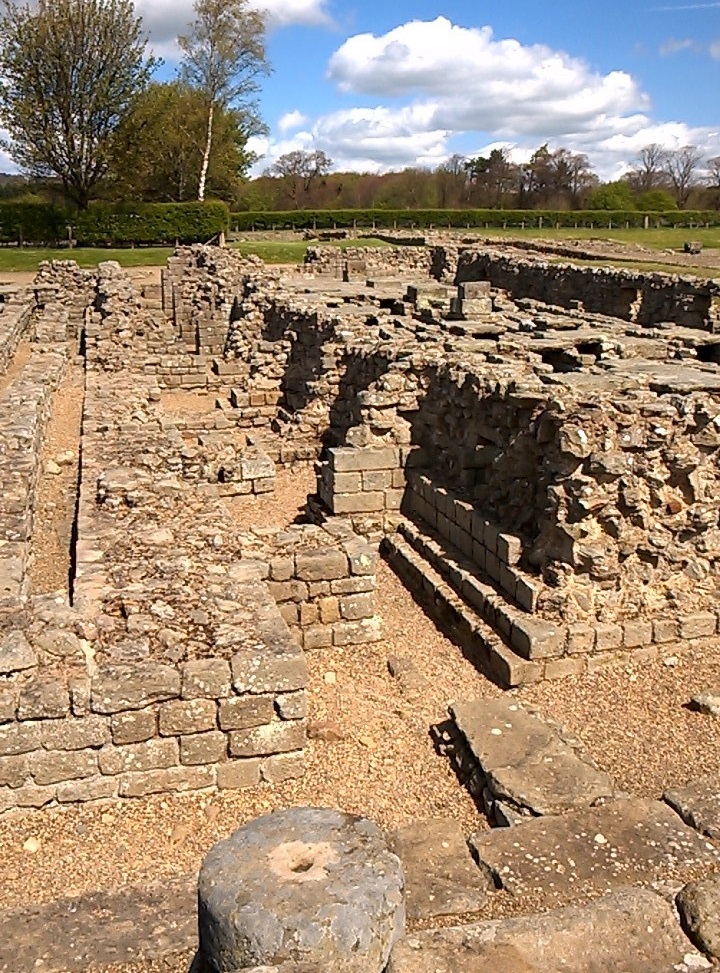
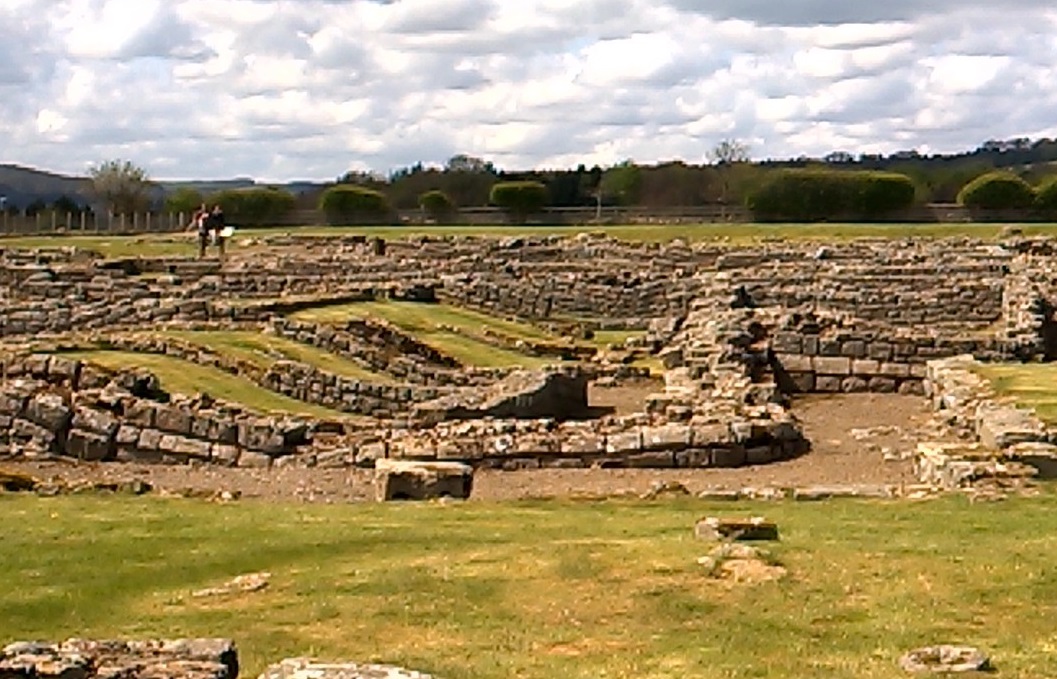
Historical Musings For my second monthly post on history and historical fiction (see last month’s here) I’m going to focus on a topic I know very little about: Ancient Rome. Despite living close to Hadrian’s Wall, I’ve never been particularly interested in Roman history and have only ever explored one or two of the many sites along the wall, but last weekend I decided to take advantage of my English Heritage membership and visit Corbridge Roman Town.

The granary at Corbridge Roman Town

The granary at Corbridge Roman Town

Hadrian’s Wall was built in AD122-30 during the reign of the Emperor Hadrian and stretches for 73 miles across the north of England. It does not separate England from Scotland, as many people believe! Corbridge, in Northumberland, was the site of a busy Roman town and supply base and the remains of the streets and buildings can still be seen today. As well as walking around the ruins, there’s also a museum where you can see a display of some of the items excavated from the site, including the Corbridge Hoard (a collection of Roman weapons and armour found buried in a chest) and the Corbridge Lion (a large stone statue which was originally an ornament from a tomb).

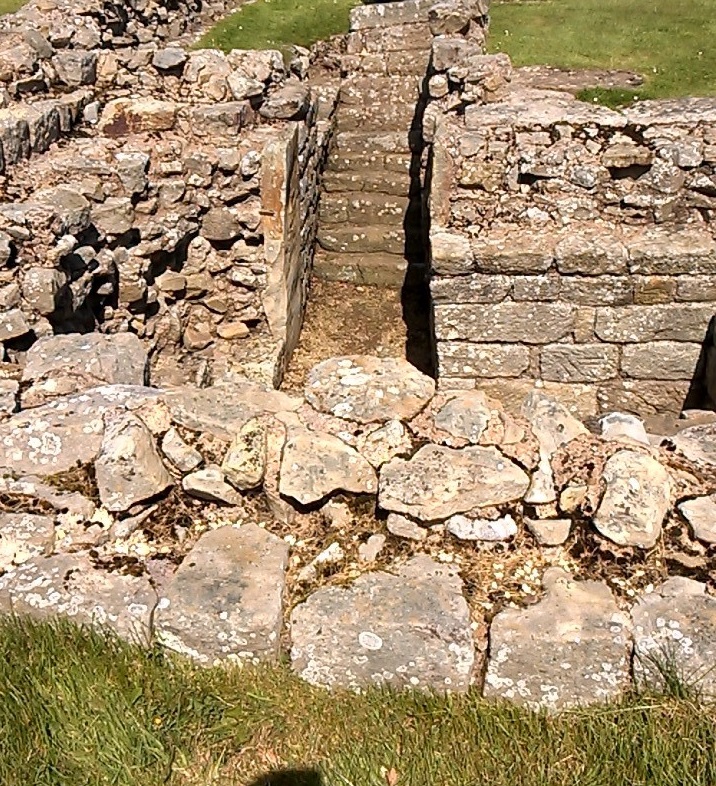
Steps leading to the 'Strongroom'

Steps leading to the ‘Strongroom’

This brief sojourn into Roman history made me wonder why it is that I so rarely choose to read books about the Romans. It’s just not a time period I’ve ever felt drawn to, though I’m not sure why that should be. A quick search for posts using the ‘Ancient Rome’ tag on my blog brings up only two novels set in Rome that I’ve read in the last few years – Colossus: The Four Emperors by David Blixt and Cleopatra’s Daughter by Michelle Moran – and I’m having trouble thinking of any others that I may have read before I started blogging. I would love some recommendations!

Corbridge Roman Town

Corbridge Roman Town

I already have copies of The Eagle of the Ninth by Rosemary Sutcliff and I, Claudius by Robert Graves. Do you think I would like either of these or is there something else you would recommend? Fiction or non-fiction, books set in Rome itself or in other parts of the Roman Empire – all suggestions are welcome!

What are your favourites?

Colossus: The Four Emperors by David Blixt

Colossus - The Four Emperors This historical fiction novel by David Blixt is set in Rome in the 1st century AD and follows the story of one ambitious but honourable man, Titus Flavius Sabinus, and his family. This is actually the second in the Colossus series and I haven’t read the first, but fortunately it doesn’t seem to be essential to read them in order. Rather than being a conventional sequel to the first book, Stone and Steel, this one adds another layer to the same story, choosing to focus on some different characters and events.

The Four Emperors begins near the end of Nero’s reign. An unpredictable and eccentric emperor, Nero is capable of acts of great cruelty, and Rome under his rule is a dangerous place to live. When Nero commits suicide to avoid assassination, a power struggle begins with four different claimants becoming emperor in the space of a year. We see the events of this turbulent period from the perspective of Sabinus and the other members of his family, including his elderly father, his two sons, Tertius and Clemens, and a cousin, Domitian. Domitian’s father, Vespasian, has been sent to Judea to put down a Jewish rebellion there, and Sabinus hopes this will be a chance for the family to rise in the world – but when he visits the Oracle of Delphi, he learns that he may be fated to be forgotten by history…

Ancient Rome is not one of my favourite periods for historical fiction, but having enjoyed another of David Blixt’s books (The Master of Verona, set in 14th century Italy) I was happy to try this one. Because I don’t read about the Romans very often, I was fascinated by Blixt’s portrayal of their daily lives, their beliefs and customs. I thought his descriptions of the Oracle’s prophecies and the wildness of the Saturnalia celebrations were particularly vivid. The book also explores the politics of the period, the military campaigns, and how Jews and Christians were treated by the Romans.

Another storyline I found interesting involved a young Greek shepherd boy called Spiros, who was forced to marry Nero because his face reminded Nero of his dead wife Poppaea Sabina’s. This and many other incidents showed how dangerous and uncertain life could be during this period and how everyone had to obey the Emperor’s every whim, however cruel or outlandish. Life under the other rulers who succeeded Nero during the Year of the Four Emperors was no less precarious and unpredictable. Of all the time periods in history, this is not one that I would like to have lived in!

At first I thought it would be hard to remember who all the characters were, as so many of them had very similar names thanks to the complicated Roman naming system, but it was actually a lot easier to understand than I thought it would be. Sometimes when I read fiction set in Ancient Rome I find it difficult to connect with and relate to the characters. I’m not sure why it should really be any different from reading about the Tudor or medieval periods but for some reason, for me, it is. I didn’t have that problem with The Four Emperors; every character came alive on the page. I’ve only really mentioned the men so far, but there were some interesting female characters too, including Vespasian’s mistress, Caenis, and two slaves, Abigail and Perel.

My only problem with this book was that, after such a great start, in the second half of the novel there are some long battle sequences which, although they were well written, I didn’t really enjoy reading. I just don’t find battle scenes very interesting and my attention often starts to wander so much that I struggle to follow what’s happening. That was the case again here and it meant that I didn’t love the book quite as much as I had expected to at the beginning, but this is just due to my personal taste and not the author’s fault. Apart from this, I did enjoy The Four Emperors and although I didn’t feel at any disadvantage as a result of starting with the second book in the series, I would now like to go back and read the first one, Stone and Steel, which is told from a Judean perspective.

The Four Emperors tour

I read The Four Emperors as part of the Historical Fiction Virtual Book Tour. There’s only one more stop on the tour, but if you’d like to read more about the book and the author you can find a list of previous reviews, guest posts and interviews here.

Cleopatra’s Daughter by Michelle Moran

I was lucky enough to win a signed copy of this book in a giveaway last year. I feel bad about taking so long to read it, but it just never felt like the right time. When I eventually read it I was pleased to find that although I did have one or two problems with it, overall it was very enjoyable.

Kleopatra Selene is the daughter of the famous Queen of Egypt, Cleopatra, and her husband Marc Antony. When Antony’s army is defeated by Octavian at the Battle of Actium and Cleopatra commits suicide, ten year-old Selene and her brothers are left orphaned. Octavian takes them back to Rome with him where they join the household of his sister Octavia. On her arrival in Rome, Selene soon discovers that the city is in a state of unrest, with an unknown rebel known as the Red Eagle urging Rome’s huge slave population to rise against their masters. But Selene also has more personal things to worry about, such as going to school, falling in love and forming friendships – and through it all she hangs on to her dream that one day she will be able to return to Egypt.

I confess that I don’t know very much at all about Ancient Rome. It’s not one of my favourite periods of history to read about and although I know there are lots of historical fiction novels out there about the Romans, I’ve read very few of them. However, this was a good thing because it meant that a lot of the information in Cleopatra’s Daughter was new to me and I learned a lot of interesting facts. For example, I had never heard about the Columna Lactaria (Milk Column), a monument in Rome where mothers left their unwanted babies in the hope that someone would come and feed them.

One thing that strikes me about the Romans is the huge difference between the sophistication and advancement of their culture and the cruelty and barbarity of many of their customs. Michelle Moran does an excellent job of showing both the good side of Rome (the advanced technology, the architecture and the infrastructure of the city) and the bad side (there’s a scene where two hundred innocent slaves face being crucified because one of them has committed a crime, for example).

I did find it difficult to keep the relationships straight between the large cast of characters. This was partly because so many of them had similar names and also because most of the adults had been married at least two or three times each with several children from each marriage. Obviously this wasn’t the author’s fault though, and I did find the character list at the front of the book very useful! There are also some maps, a timeline, a glossary and an afterword explaining the eventual fate of each of the characters. All of these things were extremely helpful to someone like myself, with very little knowledge of Ancient Rome!

Although I did enjoy Cleopatra’s Daughter, it felt a bit too light for me. The characters didn’t have a lot of depth and the story didn’t affect me emotionally the way it was probably intended to. With the teenage narrator and lively writing style, I think this book would appeal to younger readers as well as adults.

Can you recommend any books about Ancient Rome that I might like better than this one?