Six Degrees of Separation: The Christmas Edition

It’s the first Saturday of a new month which means it’s time for another Six Degrees of Separation, hosted by Kate of Books are my Favourite and Best. The idea is that Kate chooses a book to use as a starting point and then we have to link it to six other books of our choice to form a chain. A book doesn’t have to be connected to all of the others on the list – only to the one next to it in the chain.

The book we’re going to begin with this month is, appropriately for December, A Christmas Carol by Charles Dickens. I still have the beautiful hardback copy I was given as a child with illustrations by Arthur Rackham. I talked about my memories of A Christmas Carol in a Classics Club monthly meme from a few years ao.

There were many different directions I could have taken from this starting point, but I decided to get into the festive spirit with a chain made entirely of Christmas-themed books. Shortly after I first started blogging in 2009, I took part in a Christmas reading challenge for which I read two books: the one above and The Christmas Mystery by Jostein Gaarder.

This is an unusual novel (like most of Gaarder’s), in which the story of an ancient pilgrimage to Bethlehem unfolds through scraps of paper found behind the doors of an Advent calendar. In the present day, meanwhile, a mystery begins to emerge involving the creation of the calendar itself.

Now, from one Christmas mystery to a whole collection of them…

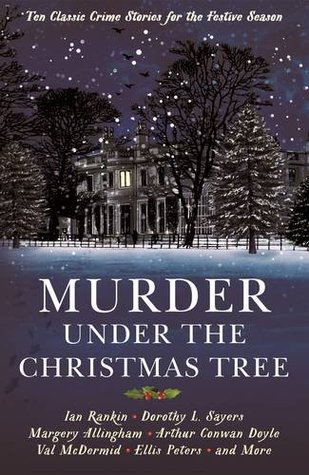
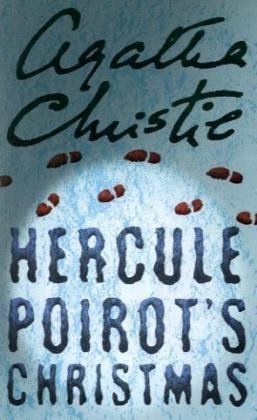
Murder Under the Christmas Tree contains stories by classic crime authors such as Margery Allingham, Dorothy L Sayers and Arthur Conan Doyle. One author whose work doesn’t appear in that collection is Agatha Christie, but she did write a few books with a Christmas theme…including the next book in my chain, Hercule Poirot’s Christmas.

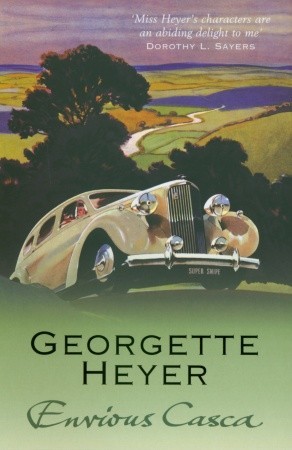
The book involves the murder of an old man who is found dead in his home while his family gather to celebrate Christmas. I enjoyed it, but it wasn’t a favourite Christie and I didn’t find it very Christmassy either. Another book with a very similar plot, published three years later, is Envious Casca by Georgette Heyer.

Envious Casca has also been published under the title A Christmas Party. However, the family featured in the novel were such a nasty, unpleasant group of people, I couldn’t think of anything worse than being a guest at that particular party! Another mystery set at Christmas with a dysfunctional family at its heart is I Am Half-Sick of Shadows, the fourth in Alan Bradley’s Flavia de Luce series.

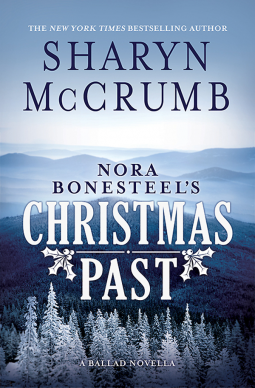
In I Am Half-Sick of Shadows, eleven-year-old Flavia tries to catch Santa Claus on his way down the chimney. In the final book in my chain, Nora Bonesteel’s Christmas Past by Sharyn McCrumb, Sheriff Spencer Arrowood is also trying to catch a man on Christmas Eve – a criminal who lives on a remote farm in the Appalachian Mountains.

For the first time since I’ve started taking part in Six Degrees of Separation, I am able to bring the chain full circle. The title of my final book contains the words ‘Christmas Past’ – and the first book features the Ghost of Christmas Past!

Have you read any of these? What are your favourite Christmas-themed books?

Next month (January) we will be starting our chains with The French Lieutenant’s Woman by John Fowles.

Murder Under the Christmas Tree, edited by Cecily Gayford

Murder Under the Christmas Tree contains ten stories by a variety of crime authors, all with a Christmas theme or set during the festive period. I don’t often choose to read short story collections (although I seem to have read more of them this year than ever before, so maybe that is beginning to change) but I picked this one up in the library a few weeks ago because I was intrigued by the mixture of authors – some modern, some classic, some that I was familiar with and some that I wasn’t.

I’m never sure of the best way to write about books like this, but as there are only ten stories I think I should be able to give all of them a brief mention. The book opens with The Necklace of Pearls, a Lord Peter Wimsey mystery by Dorothy L. Sayers, one of the five authors in the collection I had read before. The story involves a search for a valuable pearl necklace which goes missing as a party of guests gather to celebrate Christmas. I always like Sayers’ writing, but this particular story is not very strong and not a great start to the book, in my opinion. It is followed by The Name on the Window by Edmund Crispin, a locked room mystery set in winter and featuring his detective Gervase Fen. Crispin is another author I have previously read – I highly recommend The Moving Toyshop if you haven’t read it yet – and again, this story is not the best example of his work but it’s still enjoyable and I didn’t guess the solution.

Now we come to one of the authors who were new to me: Val McDermid. Yes, there are some huge gaps in my reading when it comes to more recent crime fiction! A Traditional Christmas is a short and simple murder mystery with a nice twist at the end. I really liked this one, although it felt odd coming straight after Sayers and Crispin – especially as the next story is an even older one: The Adventure of the Blue Carbuncle by Arthur Conan Doyle. This is a classic Sherlock Holmes mystery involving a Christmas goose and a precious jewel. I feel sure I must have read it before, but I couldn’t remember it at all!

The Invisible Man is next: a Father Brown mystery by GK Chesterton. I first encountered Father Brown in a British Library Crime Classics anthology I read earlier this year (Miraculous Mysteries), but I enjoyed this story much more than that one. It made me think about the things we never notice and the things that we do! This is followed by another modern story, Cinders by Ian Rankin. During rehearsals for a performance of Cinderella, the Fairy Godmother is found dead and Rankin’s detective Rebus is called in to investigate. I have never read anything by Ian Rankin before and although there was nothing wrong with this story, I don’t think he’s an author for me.

The next two stories are my favourites. The first, Death on the Air by Ngaio Marsh, is a fascinating story set during the early days of radio. On Christmas morning, ‘Septimus Tonks was found dead beside his wireless set’, presumably having been electrocuted – but was it an accident or was it murder? This is my first introduction to Marsh’s work, but I would love to read more. The next story, Persons or Things Unknown, is by Carter Dickson, a pseudonym of John Dickson Carr. A host entertains his house guests with an atmospheric tale of murder set in the 17th century. I loved it – and again, I will be looking for more by this author.

The penultimate story in the book is Margery Allingham’s The Case is Altered. It’s an Albert Campion mystery and while I had hoped it would be one of the highlights of the book, I found it quite forgettable. The last story, The Price of Light by Ellis Peters, was good but felt out of place in this collection, being a Brother Cadfael mystery set in 1135. I’ve never read anything by Peters before and I liked this enough to want to try one of her full-length Cadfael novels.

This is an uneven collection, then, and I don’t think the mixture of Golden Age, historical and contemporary mysteries really worked. I’m pleased I read it, though, if only because it has given me my first taste of Ngaio Marsh, John Dickson Carr and Ellis Peters. Another book in this series, Murder on Christmas Eve, also edited by Cecily Gayford, has just been published and seems to include many of the same authors.

Hercule Poirot’s Christmas by Agatha Christie

Hercule Poirots Christmas I hope you’ve all had a good Christmas! Mine hasn’t been great, unfortunately. My grandfather, who is eighty-five, fell and broke his shoulder last week and has been in hospital over Christmas. Because of his age and poor general health, the doctors haven’t been able to say whether he will make a full recovery or when he might be able to go home. My grandmother, who also has health problems, can’t be left on her own so we are all helping out with taking care of her until we know what long-term arrangements will need to be made. As you can probably imagine, it’s been quite a stressful time and not conducive to writing good book reviews, so this is just a short post to record some thoughts on a recent Christmas-themed read.

Hercule Poirot’s Christmas is a classic locked-room murder mystery which begins with an elderly millionaire, Simeon Lee, inviting various members of his family to spend Christmas with him at his home, Gorston Hall. The family are surprised and suspicious – they are not all on speaking terms and as they begin to gather at Simeon’s house tensions are running high. When the old man is found dead in a pool of blood in his locked bedroom on Christmas Eve, there is no shortage of suspects.

Who could the killer be? Could it be one of Simeon’s sons – the money-obsessed George, maybe, or Harry, who has been estranged from the rest of the family for many years – or one of their wives? What about Pilar Estravados, Simeon’s granddaughter, newly arrived from Spain? Or Stephen Farr, son of Simeon’s former business partner, who has come unexpectedly from South Africa? Hercule Poirot is called in to investigate and as he begins to piece together what happened on the night of the murder, some family secrets are brought to light.

This is not very high on my list of favourite Agatha Christie novels, but I did enjoy it. As usual, I failed to solve the mystery before Poirot did and although there were a few times when I thought I’d figured it out, I never even came close to being correct! Despite the title, it’s not a particularly Christmassy book (Christmas Day passes almost without mention) but I found it fun, entertaining and quick to read, which is just what I was in the mood for. I was reminded of Envious Casca by Georgette Heyer, which is also set at Christmas and has a similar storyline.

With plenty of other unread Christie novels still to look forward to, I’m sure I’ll be reading more Poirot in 2016.

Nora Bonesteel’s Christmas Past by Sharyn McCrumb

Nora Bonesteels Christmas Past Sharyn McCrumb is a name I remember from about fifteen years ago when I read two of the books in her Ballad mystery series, She Walks These Hills and The Ballad of Frankie Silver, both set in the Appalachian Mountains and steeped in history and folklore. I know that I enjoyed those two books, but the details have faded from my mind now, so when I saw this new novella available on NetGalley I couldn’t wait to read it and reacquaint myself with Sharyn McCrumb’s work. I hadn’t even realised that she had been continuing to write Ballad novels and that there are ten in the series now!

Nora Bonesteel’s Christmas Past is described as a novella, but it’s really two separate short stories which alternate with each other throughout the book. In the first, we join Sheriff Spencer Arrowood and his deputy Joe LeDonne who have been given the unwelcome task of arresting a man on Christmas Eve. Arriving at the alleged criminal’s home – a remote mountain farm – they encounter problems they had never expected and end up spending Christmas Eve in a very unusual way.

Meanwhile, Nora Bonesteel, an elderly woman with the gift of ‘the Sight’, is being visited by her new neighbour, Shirley Haverty, who has moved into the house Nora still thinks of as ‘the old Honeycutt place’. The Havertys have bought the house as a summer home but have decided to stay on this year and experience a traditional Christmas in the mountains. After a few unexplained mishaps Shirley has become convinced that the house is haunted…and that the ghost doesn’t seem to approve of their bright pink artificial Christmas tree! Can Nora use her psychic abilities and her memories of the house in days gone by to lay the ghost to rest?

This is a short book and could easily be read in one or two sittings (though I didn’t manage that due to choosing a busy time to start reading it). It’s not necessary to have read any of Sharyn McCrumb’s previous books, though I did remember the characters of the Sheriff, Joe LeDonne and Nora Bonesteel.

The two stories in the book are, as I’ve said, completely independent of each other and never come together at all, not even at the end. I found this a bit disappointing and I think it might have been better if they had been presented as two entirely separate stories rather than giving us a few pages of one followed by a few of the other. What the stories do have in common is the Appalachian setting and the fact that they both deal with the subjects of Christmas traditions and the mountain lifestyle.

Nora Bonesteel’s Christmas Past doesn’t have the depth or complexity of the longer novels in the Ballad series and unlike the full-length books there’s no mystery to be solved, but it’s an enjoyable, undemanding read and perfect for the Christmas season.

And now I’m going to end this post on an appropriate note by wishing everyone a Merry Christmas! I should be back between Christmas and New Year with another winter-themed review and my end-of-year lists.

Memories of A Christmas Carol: a Classics Club meme

The Classics Club monthly meme question for December asks us for our thoughts and memories of A Christmas Carol by Charles Dickens:

What is your favorite memory of Dickens’ A Christmas Carol? Have you ever read it? If not, will you? Why should others read it rather than relying on the film adaptations?

A Christmas Carol I was given a copy of A Christmas Carol as a Christmas present when I was a child, though I don’t know exactly how old I was. I can’t remember who gave it to me either, but I suspect it was probably an aunt or uncle. I remember taking the book with me to my grandmother’s a few days after Christmas and reading those famous opening lines for the first time:

Marley was dead, to begin with. There is no doubt whatever about that.

The last time I re-read the book was in 2009, shortly after I started blogging, and it was still a pleasure to read – both the story itself and this particular edition. It’s a beautiful hardback book with colour illustrations and black and white line drawings by Arthur Rackham. Reading a book that looks and feels beautiful can really enhance the experience! Rackham’s twelve colour plates, originally published in 1915, can be seen here. I’ve always liked the one of Bob Cratchit sliding down the icy street.

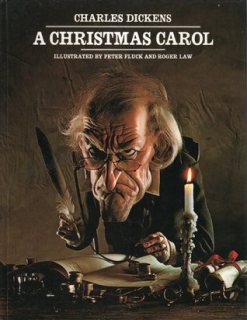
I received a different edition of the book a few years later from another family member (again I’ve forgotten who it was). I’m not sure where I’ve put this one, though I know I must still have it somewhere. After a lot of searching online – which wasn’t easy, as there are literally hundreds of different versions of A Christmas Carol and I couldn’t recall the names of either the illustrators or the publisher – I managed to find a picture of the front cover for you:

A Christmas Carol - Peter Fluck and Roger Law This edition, which I’ve discovered was published by Viking, was illustrated by Peter Fluck and Roger Law (who were also the creators of Spitting Image) with pictures of grotesque puppet-like caricatures, like the one of Scrooge pictured on the cover.

There have been so many adaptations of A Christmas Carol, but although the story and the sentiment might be the same, if you only watch them instead of reading the novel you will be missing out on so much. As I said in my 2009 post on the book, even if you already know the story it’s still worth reading it for the richness and humour of Dickens’ writing and for his wonderful descriptions and imagery.

You can see how other Classics Club members responded to this month’s meme here.

Have a great Christmas and I’ll be back later in the week with my Best Books of 2012!

Envious Casca by Georgette Heyer

Envious Casca “Joseph, having lived for so many years abroad, hankered wistfully after a real English Christmas. Nathaniel, regarding him with a contemptuous eye, said that a real English Christmas meant, in his experience, a series of quarrels between inimical persons bound to one another only by the accident of relationship, and thrown together by a worn-out convention which decreed that at Christmas families should forgather.”

It’s Christmas Eve and at Lexham Manor the family and friends of Nathaniel Herriard are gathering for a Christmas party arranged by the old man’s brother, Joseph. The guests include Nat’s nephew Stephen and his fiancée Valerie, his niece Paula and her playwright friend Willoughby Roydon, a distant cousin, Mathilda Clare, and a business partner, Edgar Mottisfont. Putting up decorations as the snow falls outside, Joseph is looking forward to a good old-fashioned family Christmas. Unfortunately Nat doesn’t like the festive season, doesn’t want to have a party, and finds himself arguing with almost everyone present – which means that when he is found stabbed to death in his room later that evening there are plenty of suspects, all with motives for wanting him dead. The problem, as Inspector Hemingway quickly discovers, is that Nat’s door was locked from the inside. How could the murderer have entered a locked room? What happened to the murder weapon? And where could Aunt Maud’s library book, The Life of the Empress of Austria, have disappeared to?

I have read some of Heyer’s historical novels and loved most of them, but this is the first of her contemporary mysteries I’ve read (contemporary for the time in which they were published, that is – 1941 in this case). I had no idea which one to start with, but when I came across Envious Casca in the library and saw that it was set at Christmas, it seemed the perfect choice for a December read.

I wasn’t sure I was going to like this book at first. It took me a while to really get into the story and it didn’t help that most of the characters were completely unsympathetic. I have rarely read a novel with so many nasty, rude, unpleasant characters and I couldn’t think of anything worse than being a guest at the Herriards’ party, even without a murder taking place! From the obnoxious, sarcastic Stephen and the haughty butler Sturry to the cantankerous, bad-tempered Nathaniel, they were all so annoying I was surprised only one murder was committed. I did understand, though, that it was vital to the plot that the group of people gathered at the house disliked each other and that there had been so much friction and conflict directly before the murder. The clashing personalities did lead to some very funny conversations and situations too – the scene where everyone assembles in the drawing room to listen to Roydon read his play, for example.

The story really picked up for me after Inspector Hemingway was called in from Scotland Yard. I didn’t find Hemingway a very interesting character in comparison to other fictional detectives and I felt I never really got to know him or anything about his background, but I still enjoyed following his investigations and his discussions with his assistant, Sergeant Ware. I was quite proud of myself because I worked out how the murder was committed long before Hemingway did and my suspicion as to the identity of the murderer was proved to be right too. Luckily this didn’t take away any of the pleasure of reading the book and it was still fun looking out for more clues that might confirm I had the right solution. As a classic locked-room mystery with lots of suspects, red herrings and an English country house setting, it was maybe not a very original novel but the plot was well constructed and interesting. I liked the way the title of the book cleverly relates to the story too (if you don’t know what it means, wait until you’ve read the book before looking it up).

As my first introduction to Heyer’s mysteries, I enjoyed this one and am looking forward to reading the others.

I am Half-Sick of Shadows by Alan Bradley

I hope everyone had a great Christmas! I don’t usually read a lot of Christmas-themed books but the one I’m posting about today, I am Half-Sick of Shadows, was a perfect seasonal read.

I know not everyone will be familiar with Alan Bradley’s books, so for those of you who need some background information I can tell you that I am Half-Sick of Shadows is the fourth in a series of mystery novels set in the 1950s and featuring eleven-year-old amateur detective and chemistry genius, Flavia de Luce. Flavia lives with her father and her two older sisters Ophelia (Feely) and Daphne (Daffy), at Buckshaw, their family estate near the small English village of Bishop’s Lacey. Other recurring characters include the de Luces’ two servants, Mrs Mullet and Dogger, as well as the local vicar, the doctor, Inspector Hewitt and several more of the villagers.

At the beginning of this fourth instalment, Flavia’s father is having financial difficulties and in an attempt to bring in some money, he allows the cast and crew of Ilium Films to move into Buckshaw to do some filming over the Christmas period. While the snow falls outside, the people of Bishop’s Lacey gather at Buckshaw to watch the two stars, Phyllis Wyvern and Desmond Duncan, give a special charity performance of Romeo and Juliet. Things go badly wrong, however, and a murder takes place. With the de Luce family and all their neighbours snowed in overnight, there’s a long list of suspects. Flavia begins to investigate, but before she can concentrate on identifying the murderer she needs to finish working on a special project of her own: a trap to catch Santa Claus on his way down the chimney!

I have enjoyed all three of the previous books in this series, but I think I am Half-Sick of Shadows could possibly be my favourite so far. It took a long time (almost half the book) before the murder took place and the actual mystery began – and it was probably the weakest mystery in the series too – but that wasn’t a problem for me at all. I don’t read these books for the murder mystery plots; I read them because I love Flavia and love reading about her adventures.

As well as being shorter than usual, this book has a different feel to the first three because it is set entirely within the confines of Buckshaw. This means we get to see more of Flavia’s interactions with her family members and we also have the chance to learn more about Dogger, one of the most interesting characters in the series. I’ve mentioned before that I was starting to get impatient with Feely’s and Daffy’s nastiness towards their younger sister, but there seemed to be a slight change in Daffy’s relationship with Flavia in this book and I almost liked her at times! There was also a hint that maybe Feely didn’t really hate Flavia and that there might be another reason for her cruel behaviour. I’m still hopeful that the three of them will be friends by the end of the series, but we’ll have to wait and see – I’m already looking forward to the fifth book to find out if there are any further developments.

I’m glad I was able to find time to read this book last week as it really was perfect for the Christmas season. Oh, and in case you’re wondering, the title comes from the poem by Tennyson, The Lady of Shalott.