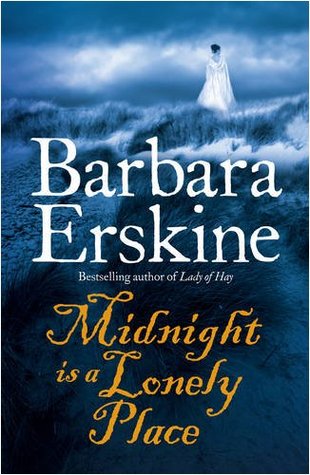
Midnight is a Lonely Place by Barbara Erskine

Midnight is a Lonely Place My first introduction to Barbara Erskine’s work last year, River of Destiny, left me unimpressed but I was assured by Erskine fans that her earlier books were better, so when I found this one at the library I decided to give her another chance. I also thought it sounded like an ideal book to read for the RIP challenge, even though it wasn’t on my original list.

When author Kate Kennedy’s relationship with her boyfriend, Jon, comes to an end and she is forced to move out of their London home, she decides to rent a cottage on the Essex coast where she can spend the winter working on her new biography of Byron. The owners of the cottage, Diana and Roger Lindsey, live in a farmhouse nearby and do their best to make Kate feel welcome, but unfortunately not all the members of the Lindsey family are happy to see her. The eldest son, Greg, an aspiring artist, had been using the cottage for his painting and resents Kate for pushing him out. His fifteen-year-old sister, Alison, is an amateur archaeologist and is furious when she discovers that Kate has been interfering with her dig at what she believes is an ancient Roman grave.

When strange things start to happen at Redall Cottage, Kate suspects Greg and Alison of trying to frighten her away, but after several encounters with ghostly figures she begins to accept that she is being haunted by the ghosts of the Roman soldier Marcus Severus Secundus, his wife Claudia, and the Druid prince, Nion. It seems that Kate has stumbled upon a two thousand-year-old love triangle that ended in a murder and a curse – and secrets that have been buried under the earth for centuries are about to be revealed at last.

Midnight is a Lonely Place was much better than River of Destiny, but still not a book that I can say I loved. I was right about it being a perfect RIP choice, though. It has all the elements of a classic ghost story: a lonely, isolated cottage, an ancient burial site, ghostly apparitions, strange smells and unexplained noises, relentless snow, sleet and blizzards. It’s quite scary in places and you might not want to read it late at night if you’re on your own (while I was finishing the book on Friday evening the real-life weather outside obliged with heavy rain and strong winds which made it even more atmospheric).

While Marcus Severus Secundus, Claudia and Nion do have a strong presence in this novel, the story is set entirely in the early 1990s (which actually feels surprisingly dated from a 2013 perspective) and we only learn about the Roman characters’ lives in brief flashbacks at the start of the chapters. I would have liked their storyline to have been more fully developed as I felt I didn’t get to know them well enough to really care about them or their secrets and this meant that, for me, the novel wasn’t as effective as it would have been with a stronger historical element.

The second half of the book is suspenseful and action packed, as the level of paranormal activity increases and more and more of Kate’s friends and neighbours become involved (at one point it felt as if the whole population of Essex were wandering about getting lost in the snow) but I found the ending disappointingly abrupt. I’m not sure I correctly interpreted the final page and after reading what was quite a long book (more than 400 pages) I had expected a more satisfying conclusion. I certainly enjoyed this book a lot more than River of Destiny but I’m not sure I’ll be looking for any more of Barbara Erskine’s books – though I might still be interested in reading Lady of Hay, her first and best known book.

The Sea Change by Joanna Rossiter

The Sea Change The Sea Change is a novel about many things: love and grief, friendship and betrayal, the devastation caused by war and natural disasters, but perhaps most importantly, the relationships between mothers and daughters.

Violet Fielding lives with her parents and her sister, Freda, in a small Wiltshire village called Imber. In the middle of the Second World War the residents of Imber are forced to evacuate, leaving the village to be requisitioned by army troops and used for military training exercises. As Violet tries to settle into a new life in a new home, she is unable to forget Imber, her childhood friends and Pete, the boy she fell in love with.

Many years later in 1971, Violet’s daughter, Alice, is travelling to India with her boyfriend, James. Alice was not on good terms with Violet when they parted; her mother disapproves of James and isn’t very happy about Alice going so far away. When they reach India, Alice and James get married, but the day after their wedding the coast of India is hit by a tsunami and Alice is separated from her new husband, who had gone out to get breakfast. As she begins to search for him – an almost impossible task, given the scale of the disaster and the number of people who are missing – Alice reflects on her life with James and thinks about what went wrong in her relationship with her mother.

The Sea Change is one of those dual time period novels I’ve complained about so much in the past, but I thought the structure worked quite well in this case. Although the two stories are set in different times and places, I could see parallels between them – in both there is a sense of loss and grief for things and people that are gone forever. I never managed to become as interested in Alice’s story as I was in Violet’s, but I did love the way the two storylines began to merge together towards the end.

I’ve read a lot of books about the war but none that have dealt with this particular aspect: the idea of an entire village that has been abandoned and the effects of this on the people who once lived there. It was so sad to read about a whole community being broken up and forced into a different way of life. The fact that Imber is a real place, still uninhabited today, makes the story even more moving. Alice’s story was also something new for me; I’ve seen images on the news, of course, showing the destruction a tidal wave can cause, but it’s not something I’ve ever read about in fiction.

There are some books that grab me from the first page and don’t let go until the end; other books are gentler and draw me in more slowly. This was one of the second type but that doesn’t mean I liked it any less. The Sea Change is a beautifully written book, filled with emotion and poignancy and a real understanding of complex relationships. There are some beautiful descriptions too, of both England and India. I would never have guessed this was Joanna Rossiter’s first novel as it feels like the work of a much more experienced author! I’m looking forward to seeing what she writes next.

Thanks to Penguin for providing a review copy of this book.

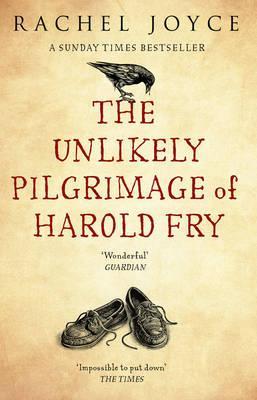
The Unlikely Pilgrimage of Harold Fry by Rachel Joyce

The Unlikely Pilgrimage of Harold Fry When I started reading The Unlikely Pilgrimage of Harold Fry it occurred to me how few contemporary novels I read these days. Most of the books I’ve read so far this year have been historical fiction, classics or ‘older’ books, so it was actually a refreshing change to read something written and set in the 21st century for once!

As the title suggests, this is the story of a man who embarks on an unlikely journey from one end of England to the other. His name is Harold Fry and his pilgrimage begins when he receives a letter from an old friend, Queenie Hennessey, who is writing to say goodbye because she has been diagnosed with terminal cancer. Harold writes a letter in reply but on his way to post it he becomes aware of the complete inadequacy of his words. And so Harold just keeps on walking…all the way to the hospice in Berwick-upon-Tweed, over five hundred miles away from his home in Devon.

Because it was such a spur of the moment decision, Harold is badly prepared for the walk. He’s wearing the wrong clothes and shoes, he doesn’t have a map and he has left his phone at home. With blistered feet and only a vague idea of the route he needs to take, Harold’s progress is slow but still he continues to put one foot in front of the other, convinced that his pilgrimage will help keep Queenie alive.

As Harold walks, he reflects on the things that have happened in his life, the choices – both good and bad – that he has made, and his relationships with his friends and family. In particular he thinks about what has gone wrong in his marriage to his wife, Maureen, and why he has always found it so difficult to connect with their son, David.

The plot may seem simple but there’s so much emotion and poignancy packed into every page. There’s a sense of mystery too, with lots of questions to be answered. We don’t know at first what exactly happened between Harold and Queenie. What did she do to help him all those years ago? Did they have a romantic relationship or were they just friends? We also don’t know what the problem is with David and why Harold has hardly spoken to him for years. And what was it that caused the rift in Harold and Maureen’s marriage? There are clues to all of these mysteries scattered throughout the story and we learn a little bit more in each chapter, with the truth slowly unfolding as Harold progresses on his journey.

As well as learning about Harold we also spend some time with Maureen, left at home on her own, and it was good to have some of the story told from a different perspective. It was interesting to see how Maureen reacted to her husband’s decision to walk to Berwick and how she tried to come to terms with it, torn between worry, frustration and an understanding that this was something Harold felt he had to do.

During his journey, Harold meets and talks to a variety of people from all walks of life – including a girl who makes him a burger, a Slovakian woman who gives him a room for the night, an American oncologist who explains cancer to him – and most of these are very supportive when they hear about Harold’s mission. Not all of them really understand what he is trying to do, but there’s always the feeling that their lives have been altered in some way by their encounter with Harold. Later his walk starts to attract publicity and Harold finds that he has become a celebrity. He is joined en route by a number of other people, some who have good intentions but others who are walking for the wrong reasons. When the other walkers began to join Harold it felt as if the original purpose of the pilgrimage had been lost, along with the simply beauty of Harold’s walk, and around this point in the book I started to lose interest. But I kept reading because I cared about Harold and Maureen and wanted to know how things would resolve for each of them. And I was rewarded with some wonderful chapters at the end of the book, filled with revelations about Harold, Maureen, Queenie and David.

I didn’t love this book as much as so many other people seem to have done, but I did still enjoy getting to know Harold Fry!

I received a copy of this book from the publisher via Netgalley

Turn of the Century Salon: A Room with a View by E.M. Forster

Turn of the Century Salon - February
This year I am participating in a Turn of the Century Salon hosted by Katherine of November’s Autumn. The idea of this is to read books published around the turn of the century – between the late 1880s and the early 1930s. While I do seem to have read more books from this period than I initially thought, there are still a huge number of turn of the century authors whose work I haven’t explored yet and E.M. Forster was one of those that I was most looking forward to trying for the first time.

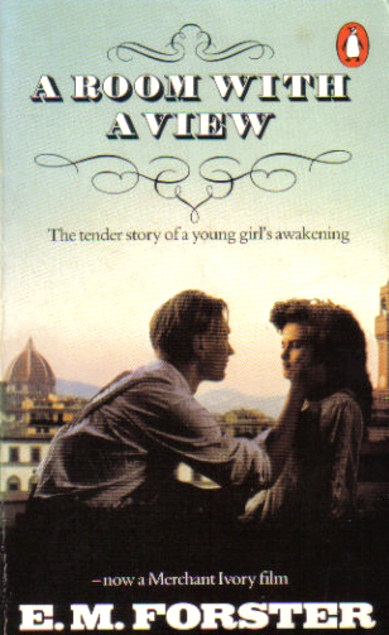
A Room with a View is the story of Lucy Honeychurch who we first meet on a trip to Italy with her cousin, Charlotte Bartlett. Lucy and Charlotte have just arrived at the Pension Bertolini in Florence and are disappointed to find that they have been given rooms with no view of the River Arno. Two of the other English guests – a Mr Emerson and his son, George – hear them complaining and immediately offer to exchange rooms, but instead of accepting their generous offer, the rules of Edwardian society mean that Charlotte is shocked and offended by what she considers their inappropriate behaviour. During the rest of their time in Florence, Charlotte and the other middle-class English tourists dismiss the Emersons as bad-mannered and socially unacceptable but Lucy has several more encounters with them and is intrigued by their different outlook on life.

A Room with a View Back in England, their paths cross again when the Emersons move into a cottage in Lucy’s village not far from the Honeychurch home, Windy Corner. Lucy is now engaged to Cecil Vyse, a cold, pretentious man she doesn’t really love, but who is considered to be a suitable husband for her. But with George Emerson living nearby Lucy must decide whether to be true to her heart even if it means breaking the social conventions of the time.

As this is the first E.M. Forster book I’ve read, I didn’t know what to expect so I was pleased to find it was much easier to read than I had been afraid it might be. I loved the wit and warmth of Forster’s writing and I enjoyed watching Lucy’s slow development from a young woman who allows other people and society in general to dictate how she should think and behave to one who finds the courage to be herself and live her life the way she wants to live it.

The beginning of the book with the portrayal of the English in Italy made me think of The Enchanted April by Elizabeth von Arnim and as for the descriptions of Italy itself, they were beautiful and vivid:

At the same moment the ground gave way, and with a cry she fell out of the wood. Light and beauty enveloped her. She had fallen on to a little open terrace, which was covered with violets from end to end.

“Courage!” cried her companion, now standing some six feet above. “Courage and love.”

She did not answer. From her feet the ground sloped sharply into view, and violets ran down in rivulets and streams and cataracts, irrigating the hillside with blue, eddying round the tree stems collecting into pools in the hollows, covering the grass with spots of azure foam. But never again were they in such profusion; this terrace was the well-head, the primal source whence beauty gushed out to water the earth.

Forster has a sense of humour as well; the dialogue is often quite funny and he puts his characters into some amusing situations. I also loved the character names and the chapter titles (especially Chapter Six – “The Reverend Arthur Beebe, the Reverend Cuthbert Eager, Mr. Emerson, Mr. George Emerson, Miss Eleanor Lavish, Miss Charlotte Bartlett, and Miss Lucy Honeychurch Drive Out in Carriages to See a View; Italians Drive Them.”)

Published in 1908, A Room with a View was a perfect book to choose for the salon as it really does epitomise turn of the century society and a gradual move away from Victorian values into a freer, less socially constrained twentieth century.

Which of E.M. Forster’s other books should I read next?

The Small House at Allington by Anthony Trollope

The Small House at Allington This is the fifth of Anthony Trollope’s Chronicles of Barsetshire, a series of six novels set in the fictitious county of Barsetshire. I’ve read the first four and enjoyed them all, so I knew what to expect when I picked up The Small House at Allington. I have discussed Trollope’s writing style in my posts on the previous books in this series but will repeat that if you like Victorian authors who talk directly to the reader, who create well-rounded and nuanced characters and who fill the pages of their novels with gentle humour and insightful observations on human nature, then I would highly recommend trying the Barsetshire series.

The Small House at Allington (not to be confused with the adjacent Great House, home of the Squire of Allington, Christopher Dale) is where the Squire’s widowed sister-in-law, Mary Dale, lives with her two daughters, Bell and Lily. When Lily falls in love with Adolphus Crosbie, a friend of her cousin Bernard’s, he proposes and she accepts. After discovering that the Squire is not planning to give his niece a dowry, Crosbie begins to reconsider their engagement and during a visit to Courcy Castle he becomes engaged to another woman – Lady Alexandrina de Courcy, whose family, he hopes, will help him to rise in the world. Even after learning how she has been betrayed, Lily swears that she still loves Crosbie and will never marry anyone else, but will she change her mind when she discovers that she has another admirer?

The other man in love with Lily is Johnny Eames, a junior clerk who works at the Income Tax Office in London. At the beginning of the story, Eames is a shy, awkward young man described as a ‘hobbledehoy’ (isn’t that a great word?) and is apparently based on the young Trollope himself. As Johnny begins to gain more experience of the world and grows in confidence, will he ever find the courage to escape the clutches of his landlady’s daughter Amelia and propose to Lily?

Trollope devotes such a lot of time to introducing us to his characters – giving us every detail of their appearance and personality, describing their emotions and taking us through every step of their thought processes as they struggle to deal with the various dilemmas they find themselves facing. This has the effect of making his novels very long, but it also means that his characters feel like real, believable human beings. You won’t necessarily like all of them, but there will always be a few you can understand and identify with. Adolphus Crosbie, for example, could be seen as the ‘villain’ of the book, but he is also a complex and realistic character. He knows he’s doing the wrong thing but still can’t seem to stop himself from doing it and is punished by finding himself trapped in a loveless marriage to Lady Alexandrina.

One character I could not understand or identify with was Lily Dale! It was so frustrating that even after the way Crosbie treats her she insists that she loves him and forgives him and will think of herself as a widow for the rest of her life. I don’t know how her mother and sister managed to have so much patience with her (although being patient was maybe not the best way to deal with Lily – in Trollope’s day Lily might have seemed an admirable, romantic character but to me she came across as silly and irritating). There are some great female characters in the Chronicles of Barsetshire – Miss Dunstable, Mary Thorne, Eleanor Harding – but Lily is not one of them. I thought Bell, the other Dale sister, was a much more interesting heroine, although her storyline in which the Squire tries to convince her to marry her cousin Bernard, a man she likes but doesn’t love, is given less attention than Lily’s.

We also meet a variety of other interesting characters in this book; my favourites this time were the good-natured, well-meaning Earl de Guest, his sister Lady Julia, and the inhabitants of Mrs Roper’s boarding house in London. A few of our old friends from earlier in the series are here again too; Lady Dumbello (the former Griselda Grantly) appears in an amusing sub-plot involving Plantagenet Palliser, who I’m looking forward to reading more about in the Palliser series. There’s also a very brief appearance from Mr Harding, one of my favourite characters from The Warden and Barchester Towers, and I was disappointed that we didn’t see more of him.

It’s not often that Trollope surprises me (his plots are usually so predictable he sometimes even tells us in the first chapter what is going to happen in the rest of the book) but this time he did. While some of the characters got their happy ending – or unhappy ending in some cases – for others it felt that things had been left unresolved and so the story did not end in quite the way I would have expected at the beginning.

The Small House at Allington was apparently our former Prime Minister, John Major’s, favourite book. It isn’t mine, or even my favourite of the Barsetshire novels, but despite being irritated by Lily I did still love it and thought it was an improvement on the previous one, Framley Parsonage, which I had found slightly disappointing after the wonderful Barchester Towers and Doctor Thorne. I am now looking forward to reading The Last Chronicle of Barset and finishing the series!

To Defy a King by Elizabeth Chadwick

Why are some reviews so much easier to write than others? This one has been sitting half-finished in my drafts folder since the end of July, waiting for inspiration which has never really arrived. This is no reflection on the quality of the book, which I enjoyed as much as all the other Elizabeth Chadwick books I’ve read, but for some reason I’ve had trouble thinking of what I want to say about it.

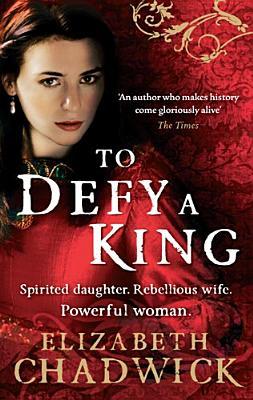
Anyway, To Defy a King is the story of Mahelt Marshal, the daughter of William Marshal, Earl of Pembroke and hero of two of Chadwick’s previous novels, The Greatest Knight and The Scarlet Lion. At the age of fourteen Mahelt is married to Hugh Bigod, the son of the Earl of Norfolk, and goes to live with her new family at Framlingham Castle. The Bigods have connections with King John through Hugh’s half-brother, William Longespée, who is also a half-brother of the King. As King John’s relationship with his noblemen slowly worsens and the country descends into war and political turmoil, the Bigod and Marshal families find themselves on opposite sides of the conflict. Mahelt must try to decide where her allegiances lie – with the family she was born into or with the Bigods and the husband she loves?

A few weeks before reading this book, I had read Here Be Dragons by Sharon Penman which covers much of the same period and this was useful as it meant I already had an understanding of some of the history. But where Here Be Dragons gives us a more balanced view of King John, seen through the eyes of his daughter Joanna as well as from the perspective of his many enemies, with this book we are given a very negative portrayal of the King. Anyone who tries to defy him, as Mahelt Marshal does, could be putting themselves and their family in serious danger.

Mahelt is a strong and independent person, who sometimes refuses to behave in the way a woman might be expected to behave during this period, yet she doesn’t feel too ‘modern’ or out of place in her medieval setting. Longespée is another great character and one of my favourites. He is in a difficult position, torn between his loyalty to the King and his relationship with his Bigod family. His rivalry with his half-brother Hugh leads him to do some cruel and insensitive things, but by the end of the book we see that he is not completely beyond redemption and I was happy with the way his character developed.

Although this book is set after The Greatest Knight (which I read last year and can recommend) I don’t think it’s necessary to have read that one first. I haven’t read the sequel to The Greatest Knight, The Scarlet Lion, yet but didn’t feel I had missed anything that was essential to my understanding of this book. There are also two other books I haven’t read, The Time of Singing, which tells the story of Roger Bigod, Hugh’s father, and A Place Beyond Courage, the story of William Marshal’s father, John. While reading the previous novels would help you become more familiar with the backgrounds of some of the characters, To Defy a King is easy enough to follow as a stand-alone novel and is one of my favourite Elizabeth Chadwick books so far.

Miss Buncle’s Book by D.E. Stevenson

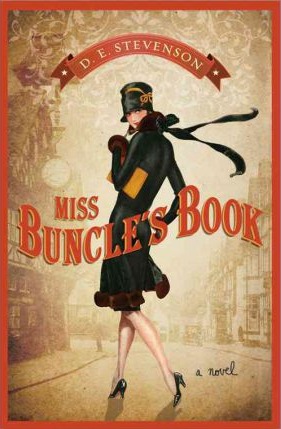
When Barbara Buncle finds herself short of money she dismisses the idea of keeping hens and decides to write a book instead. Not having much imagination she finds she can only write about people and places that she knows. Drawing her inspiration from her friends and neighbours in the village of Silverstream, she writes her first novel and has it published under the pseudonym of John Smith. When Disturber of the Peace turns out to be much more successful than Miss Buncle could ever have dreamed, it’s inevitable that the residents of Silverstream will eventually read it and recognise themselves within its pages. But how will they feel about the way they are represented in the book and what will happen if they discover who John Smith really is?

Delightful, charming, warm, cosy – those are the type of words I would use to describe Miss Buncle’s Book. Written in the 1930s, D.E. Stevenson captures perfectly the atmosphere of life in a small English village at that time – a place where everybody knows everybody else, where freshly baked breakfast rolls are delivered to the villagers every morning, where people meet for tea parties or musical evenings and gossip with the neighbours over the garden fence. The book is filled with a variety of interesting characters, all with their own quirks and eccentricities. Some of the most memorable include the formidable Mrs Featherstone Hogg, who is enraged by the unflattering way she is depicted in Miss Buncle’s book and leads the campaign against John Smith; Mr Hathaway the vicar and the scheming Vivian Greensleeves who has her eyes on his money; and the retired and lonely Colonel Weatherhead who faces a yearly battle with the Bishop.

Most of the inhabitants of Silverstream make an appearance in Disturber of the Peace and although Barbara Buncle takes the precaution of changing their names (Weatherhead becomes Waterfoot, for example, Miss King and Miss Pretty are renamed Miss Earle and Miss Darling, and Mr Fortnum becomes Mr Mason), she describes their personalities so accurately it’s not surprising that they were able to work out who the book was about! It was fun to see how they each reacted to discovering themselves in Miss Buncle’s story and having all their flaws exposed to the world.

I sent a copy of Miss Buncle’s Book to another blogger as a Secret Santa gift a couple of years ago because I thought it sounded wonderful, and when I saw that it was available through Netgalley I couldn’t wait to finally read it for myself. But although I did like it, I didn’t love it as much as I had hoped I would and as much as most other readers seem to have done. It was an enjoyable, relaxing read with lots of gentle humour and old-fashioned charm, but it lacked that special spark that would have lifted it from being a very good book to a great one. For me, this is a book that sounded better than it actually was, though I would still recommend it as a great way to escape from the stress of life for a while!

I received a review copy from Sourcebooks via Netgalley