Top Ten Tuesday: Classics Set in Italy

This week’s topic for Top Ten Tuesday (hosted by That Artsy Reader Girl) is “Books Set in/Take Place During X”. We can choose the time or place.

I have chosen ten books set in Italy and to narrow things down, they are all books that a) were published at least 60 years ago and b) have been reviewed on my blog.

1. Prince of Foxes by Samuel Shellabarger

From my review: “Andrea and Belli have a number of adventures involving battles, duels, clever disguises, last-minute escapes, sieges, miracles and all sorts of trickery and deception.”

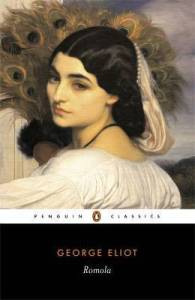
2. Romola by George Eliot

From my review: “I was gripped by the plot, fascinated by the characters and loved the portrayal of Florence, its buildings, its art and culture and its people.”

3. The Enchanted April by Elizabeth von Arnim

From my review: “The images of Italy in the spring were beautifully described, with the sun shining and the flowers bursting into bloom. I defy anybody to read this story and not want to immediately book a trip to Italy this April!”

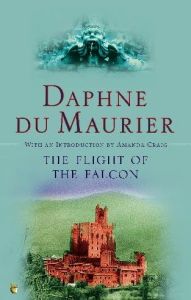
4. Flight of the Falcon by Daphne du Maurier

From my review: “In The Flight of the Falcon she succeeds in making Ruffano, with its medieval streets, historic churches and ducal palace, seem beautiful and picturesque but claustrophobic and forbidding at the same time.”

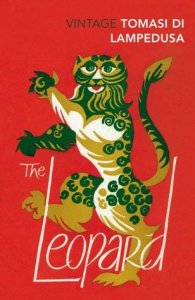
5. The Leopard by Giuseppe Tomasi di Lampedusa

From my review: “…a beautifully written book and although it’s surprisingly short, there’s so much packed into its pages I think a re-read would be necessary to be able to fully appreciate it.”

6. Bellarion by Rafael Sabatini

From my review: “…a world of warring city states, tyrannical dukes and beautiful princesses, of powerful condottieri and bands of mercenary soldiers, of sieges and battles, poisonings and conspiracies.”

7. Amours de Voyage by Arthur Hugh Clough

From my review: “Amours de Voyage follows a group of people who are visiting Italy during the political turmoil surrounding the fall of the short-lived Roman Republic in 1849. Their story is told in the form of letters written in hexameter verse and divided into five cantos.”

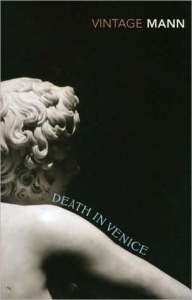
8. Death in Venice by Thomas Mann

From my review: “Mann’s descriptions of Venice are beautifully written, even though at the time of Gustav von Aschenbach’s arrival the weather is dark, gloomy and oppressive, matching the overall mood of the story.”

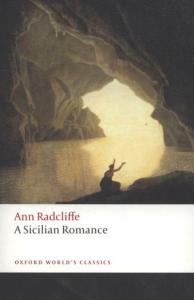
9. A Sicilian Romance by Ann Radcliffe

From my review: “…everything you would expect from a gothic novel: An old castle with crumbling staircases and dark, dusty chambers, locked doors, family secrets, lonely monasteries, bandits, shipwrecks, dungeons and underground tunnels, thunder and lightning, and almost anything else you can think of.”

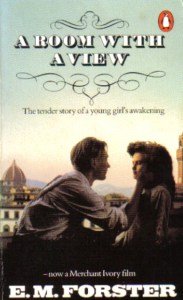
10. A Room with a View by E.M. Forster

From my review: “The beginning of the book with the portrayal of the English in Italy made me think of The Enchanted April by Elizabeth von Arnim and as for the descriptions of Italy itself, they were beautiful and vivid.”

~

Have you read any of these? Are there any other classic novels set in Italy you can recommend?
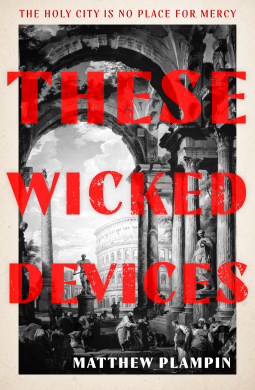
These Wicked Devices by Matthew Plampin

I’ve only read one Matthew Plampin book – Mrs Whistler, about the life of Maud Franklin, the model and muse of the artist James McNeill Whistler – so I was intrigued by the description of his new one, which is set in an entirely different time and place. These Wicked Devices takes us to Rome in the summer of 1650 and introduces us to three separate characters whose stories become entwined in various ways.

First, we meet Sister Orsola, a Benedictine nun who has fled to Rome after the city of Castro, including the convent that was her home, was razed to the ground on the Pope’s orders. Orsola is accompanied by Sister Serafina, a choir nun who goes into trance-like states where she endlessly recites the lives of the saints. In the final hours before Castro’s destruction, the Mother Abbess had asked Orsola to protect Serafina and help her find another convent where she could live in safety. Orsola agreed, hoping that performing this task would help her to atone for the sin of giving birth to a child who died unbaptised.

Another thread of the novel follows Donna Olimpia Maidalchini, the most important woman in Rome. As the sister-in-law of Pope Innocent X, she is regarded as the real power behind the papal throne, involving herself in politics and the appointment of positions within the church. At the beginning of the novel, Donna Olimpia is negotiating with France to help a French invasion force seize the Kingdom of Naples from Spain.

Finally, we meet Juan de Pareja , newly arrived in Rome from Spain. Juan is an assistant and slave of the Spanish artist, Diego Velázquez, who hopes to paint a portrait of the Pope. When Juan discovers some secret papers hidden inside a metal statue, however, he suspects that there’s also another reason for their presence in Rome.

These three storylines alternate throughout the book, clearly marked with the Latin headings Sorores (sisters), Domina (mistress) and Servus (servant), to indicate whose perspective we’ll be reading from next. The three do merge together a lot, but I did find myself preferring one over the others – the one about Sisters Orsola and Serafina. There’s a real sense of danger as they are suspected of being heretics due to their connection with Castro and Orsola isn’t sure who can and can’t be trusted as she tries to carry out her promise to the Abbess. There was a lot to interest me in Juan de Pareja’s story as well – his relationship with his master, Diego Velázquez, his own ambitions of becoming an artist and his desire to live his life as a free man – but I found Donna Olimpia’s sections less engaging, maybe because she herself is much less likeable as a person.

Plampin creates a strong sense of time and place, with vivid descriptions of the piazzas, fountains, palazzi and churches of Rome as the city bakes in a late spring heatwave. I found the writing style quite dry, though, so for me this was an interesting read rather than an entertaining one. Still, it was good to add to my knowledge of a period in Rome’s history that I knew very little about.

Thanks to The Borough Press for providing a copy of this book for review via NetGalley.

Book 7/20 for 20 Books of Summer 2025.

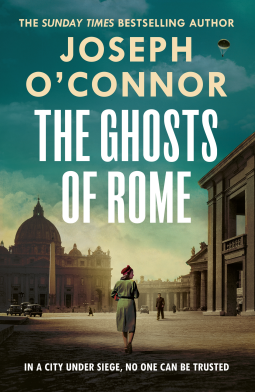
The Ghosts of Rome by Joseph O’Connor

The story of our Roman Escape Line has been characterised as a tale of courage. But it was always a story of friendship, first and last. The friends we knew and those we did not, some fleetingly encountered, others never at all. I am no sentimentalist, but I call it a love story.

This is the second book in Joseph O’Connor’s new trilogy inspired by the true story of the Rome Escape Line, a secret network that smuggled thousands of Jewish refugees and Allied soldiers out of Nazi-occupied Rome. The first novel, My Father’s House, introduces us to the work of the Escape Line who meet in the neutral Vatican under the guise of a choir to avoid the attentions of the Gestapo and focuses on one member in particular – Monsignor Hugh O’Flaherty, the Irish Catholic priest who is the leader of the network.

The Ghosts of Rome continues the story, beginning in February 1944, six months into the Nazi occupation. Although Hugh O’Flaherty is still part of the group, we see very little of him in this book as he steps into the background to let other characters’ stories be told. The main focus this time is the widowed Contessa Giovanna Landini, known as Jo, whose palazzo is commandeered by Gestapo officer Paul Hauptmann. Hitler isn’t satisfied with Hauptmann’s performance in Rome so far and he is under pressure to produce results. If he could obtain evidence of the Choir’s activities he’s sure that would help to improve his reputation with the Führer. Hauptmann hopes that the Contessa, whose house he is living in, will lead him to her fellow Escape Line members, but Jo is a resourceful woman and decides to take advantage of Hauptmann’s interest in her to try to protect herself and the Choir.

Another significant storyline revolves around a Polish airman who is shot down over Rome. Some members of the Escape Line want to help him, but others are more cautious. How can they be sure he is who he says he is? What if he betrays them? When it becomes obvious that he has life-threatening injuries and will die if not treated, they are faced with an important decision to make.

Of the two books, I think I preferred My Father’s House because it was more suspenseful, describing the countdown to a major mission on Christmas Eve, and because I found Hugh O’Flaherty such an interesting character. This is an excellent book as well, though, and I’m sure other readers will like it better than the first one. Although Jo Landini is at the forefront of the story, most of the characters we met in the previous book also reappear, including British Envoy Sir Francis D’Arcy Osborne, diplomat’s wife Delia Kiernan and escaped soldier Sam Derry. We also see a lot of Delia’s teenage daughter, Blon, who is angry when her mother leaves the Escape Line and insists on trying to take her place, which not everyone is happy about! These are all people who really existed, but O’Connor includes an author’s note to explain that the way they are portrayed in the book is just his interpretation and shouldn’t be relied on as fact.

If you haven’t read the previous novel, you’re probably wondering whether it’s necessary to have read it before starting this one. I would say it’s not really essential, but it would make it easier to follow what’s happening in this book. There are a lot of characters and O’Connor constantly switches between different perspectives throughout the novel, as well as inserting passages written in other styles – such as transcripts of (fictional) BBC interviews – which means you do need to pay attention otherwise it would be easy to lose track of things. As with My Father’s House, I was particularly interested in the insights we get into the mind of Paul Hauptmann – a very human villain, which just makes him all the more unsettling to read about. It’s the brave and tireless work of the Escape Line, however, that makes these novels so compelling; in this book, I loved the way they managed to hide hundreds of people inside a derelict old theatre right under the noses of the Gestapo.

This is a planned trilogy and although I can’t see any details of the third book yet, I know it will be something to look forward to!

Thanks to Harvill Secker for providing a copy of this book for review via NetGalley.

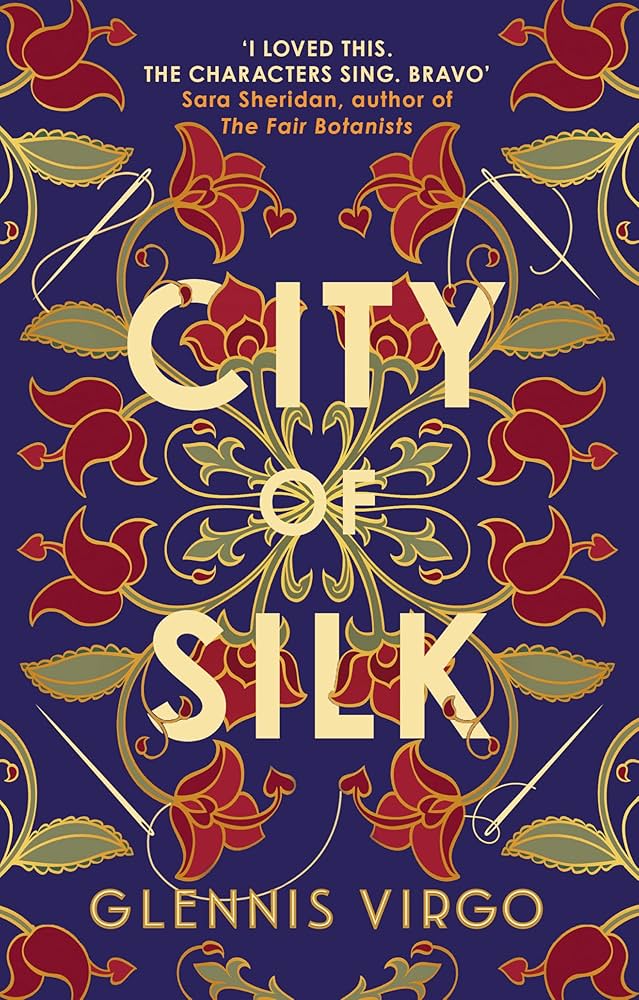
City of Silk by Glennis Virgo

I love reading about Renaissance Italy, but most novels focus on Rome, Florence or Venice, so this one, set in Bologna – famous for its silk industry in the 16th century – was something slightly different.

It’s 1575 and our narrator, Elena Morandi, is working as a seamstress in Signora Ruffo’s workshop. Although she was raised in an orphanage from the age of ten after the death of both parents, Elena remembers the skills she was taught by her father, a tailor, and has proved to have a real talent for needlework. However, she’s bored with sewing women’s gowns and capes and longs to work on men’s clothing and gain the title of tailor rather than seamstress. Sadly, this is not an option for a woman and Elena seems destined to stay with Signora Ruffo – until she flees to escape an arranged marriage.

In need of a new job, Elena decides to pursue her dreams and manages to obtain a lowly position in a tailor’s workshop, sweeping the floor and fetching fabrics and threads for the Maestro, Francesco Rondinelli, and his three tailors. Then, just as she’s settling into her new life, a figure from her past walks into Rondinelli’s workshop to ask for a fitting. This is Antonio della Fontana, benefactor of the orphanage Elena attended and one of the most powerful men in Bologna. He had abused his position of power at the orphanage and it seems that nothing has changed; when even Rondinelli and his friends begin to suffer at the hands of Fontana, Elena decides it’s time to take revenge.

City of Silk is one of several historical novels I’ve read recently that deal with women trying to forge a career for themselves in fields traditionally dominated by men. Tracy Chevalier’s The Glassmaker, Joanne Burn’s The Bone Hunters and Ambrose Parry’s The Spendthrift and the Swallow are three I’ve read just this year (featuring, respectively, a female glassmaker, a female would-be geologist and a woman desperate to become a doctor). This is obviously another and while I admired Elena’s determination and ambition, I would have liked more detail on why she felt it was so important to become a tailor instead of aspiring to be like Signora Ruffo, who was running her own successful business and was financially independent. I’m not sure I really understood why Elena seemed to look down on seamstresses so much or why she considered it so much more rewarding to make clothes for men rather than women.

As mentioned above, I did love the setting. I’ve never been to Bologna, but Virgo’s descriptions brought it to life for me. I also found it interesting to learn about the city’s role as a leading European centre of silk production and what it was like to work in a tailor’s or seamstress’s workshop during that period. Most of the characters are fictional, but Virgo explains in her author’s note at the end that a few of them really existed and another is inspired by a portrait in the National Gallery!

The scheme Elena and her friends come up with to take their revenge on Fontana seemed very unlikely to me – I couldn’t imagine anybody actually doing what they did, particularly not in the 16th century – but otherwise the plot was quite entertaining. This is Glennis Virgo’s first novel (for which she has won the Debut Writers Over 50 Award) and although I’m not sure if I’ll read her next one, I could be tempted depending on the subject.

Thanks to Allison & Busby for providing a copy of this book for review via NetGalley.

Book 50/50 for the Historical Fiction Reading Challenge 2024

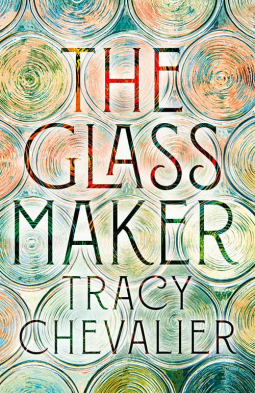
The Glassmaker by Tracy Chevalier

Having enjoyed some of Tracy Chevalier’s previous books I was particularly looking forward to this one because of the setting. It takes place on Murano, an island in the Venetian Lagoon which for centuries has been associated with glass making. It begins in the 15th century but doesn’t remain in that time period because, Chevalier tells us, time works differently there – more on that later!

1486 is when we first meet Orsola Rosso, the eldest daughter of a Murano glassmaking family. Working with glass is considered a man’s job, but Orsola feels that glassmaking is in her blood and longs to have the same opportunities as her brothers. When her father is killed in an accident in the workshop and the family begin to struggle both financially and creatively, Orsola comes up with a plan to earn some extra money by making glass beads. Despite bead making being looked down on by men as not ‘real’ glassmaking, it’s difficult, intricate work and takes Orsola a lot of time and effort to master, but eventually she learns the necessary skills and is helping to keep the family business afloat.

In 1574, the Rosso family experience more hardships when plague makes its way across the water from Venice to Murano – but this is where time begins to move strangely. Although many decades have gone by, the characters have barely aged at all and the story just continues within this new setting as if nothing unusual has happened. We jump forward in time several more times throughout the book until we are brought right up to date with the Covid pandemic – and still Orsola and the other central characters remain unaware that they should have been dead for hundreds of years! I don’t think I’ve read another novel that handles time in this exact way; Virginia Woolf’s Orlando has a similar concept, but it only involves one or two characters rather than the entire cast, and she plays with gender as well as age. John Boyne’s The Thief of Time also has a protagonist who doesn’t age, but he is at least aware that something odd is going on. What Chevalier does here is different and I think readers will either dislike it or just accept and enjoy it.

The device Chevalier uses to tell the story has two advantages. The first is that it allows her to give an overview of the history of Venice and Murano from the 1400s to the modern day and explore the ways in which things have changed over the centuries (plagues, two world wars, increasing tourism, competition affecting Venice’s position as a centre of trade). The second is that she can focus on developing one set of characters – including Orsola and her brothers and sisters, her lover Antonio, the German merchant Klingenberg and the African gondolier Domenego – instead of introducing new generations. Still, I think I would have been just as happy if the book had been set entirely in one of the earlier time periods, as they were the ones that interested me most.

A lot of Chevalier’s novels tend to deal with specific crafts or vocations: embroidery and bell ringing in A Single Thread; fossil collecting in Remarkable Creatures; or growing apple trees in At the Edge of the Orchard. Obviously in this book it’s the making of glass and beads and we learn a lot about the skills required, the methods used and the personal touches each individual glassmaker brings to their work. I’m fortunate enough to have visited both Venice and Murano and seen a glass blowing demonstration so I could easily picture some of the things and places Chevalier describes, but even if you haven’t she does an excellent job of bringing them to life. This is a fascinating book and I did enjoy it, even if I wasn’t completely convinced by the time travel element!

Thanks to The Borough Press for providing a copy of this book for review via NetGalley.

Book 46/50 for the Historical Fiction Reading Challenge 2024

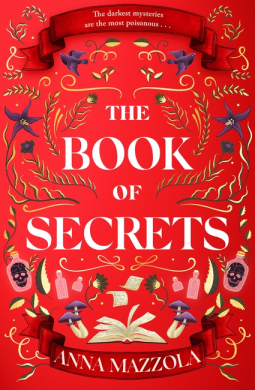
The Book of Secrets by Anna Mazzola

Anna Mazzola’s new novel – her fifth and the fourth that I’ve read – is set in Italy and takes as its inspiration the real life story of a group of women accused of selling poison in 17th century Rome.

It’s 1659 and Stefano Bracchi, a junior magistrate at the Papal Court, has been commissioned by the governor of Rome to investigate some unusual deaths that have taken place in the city. The plague that recently swept through Rome took many lives, but this is something different. These deaths are all men and for some unexplained reason, the bodies haven’t gone through the normal process of decay.

Meanwhile, Anna is trapped in an abusive marriage and searching for a way of escape. Her maid introduces her to a woman who says she can help, but the sort of help she provides is not quite what Anna was expecting! As Stefano begins to close in on the people responsible for the mysterious deaths, Anna finds herself caught in his net, but will he be able to prove that she has done anything wrong?

The Book of Secrets is written from the alternating perspectives of Stefano, Anna and a third character – Girolama, a Sicilian woman with a knowledge of herbs, potions and fortune telling, who is said to possess the ‘book of secrets’ of the title. Because we see the story unfold through all three of these characters, there’s very little mystery involved in the book; we know what Girolama and her friends are doing to help the women of Rome, we know how Anna deals with her violent husband and we know how Stefano’s investigation is progressing. However, what I found interesting about this book was not so much the plot as the characters and the way each of them reacts to the situation in which they find themselves.

Our sympathies are naturally with Anna, a desperate woman who takes the only way out she feels is open to her, while Girolama is a more morally ambiguous character – she has the best intentions and her work does a lot of good, but at the same time she seems largely unconcerned that her actions may occasionally cause harm to innocent people. The Rome of 1659 is a male-dominated society and many of the women in the book are victims of men, but Stefano Bracchi is another nuanced character; as he begins to round up Anna, Girolama and their associates for interrogation at the Tor di Nona prison, he becomes torn between compassion for their suffering and the desire to keep his superiors happy for the sake of his career.

Before starting this book, I knew nothing about Girolama Spana and the case this novel is based on. Although Anna Mazzola hasn’t stuck to the historical facts and has invented or expanded parts of the story, she does explain her choices in her author’s note at the end of the book. The Clockwork Girl is still my favourite of her novels, but this is another fascinating one.

Thanks to Orion for providing a copy of this book for review via NetGalley.

Book 12/50 for the Historical Fiction Reading Challenge 2024

Fair Rosaline by Natasha Solomons

Is Rosaline, whom thou didst love so dear,
So soon forsaken? young men’s love then lies
Not truly in their hearts, but in their eyes.

If you’ve read or seen Shakespeare’s Romeo and Juliet, you’ll remember Rosaline as the girl Romeo was infatuated with before meeting and falling in love with Juliet. We never actually meet Rosaline in the text of the play but her role is still important because she is the reason why Romeo attends the Capulet ball where he sees Juliet for the first time. In Natasha Solomons’ new novel, she gives Rosaline a voice of her own and tells the story of her relationship with Romeo Montague.

Rather than a simple retelling of Romeo and Juliet, Fair Rosaline is what the publisher has described as a ‘subversive, powerful untelling’. It wasn’t really what I had been expecting and I was quite surprised by the way Solomons chose to approach this novel.

First of all, as Shakespeare provides us with almost no information on Rosaline’s appearance and personality, Solomons has taken inspiration from some of his other characters with a similar name – Rosalind in As You Like It and Rosaline in Love’s Labour’s Lost – so that the woman we meet at the beginning of Fair Rosaline is a fully formed character. We join her just after the death of her mother, Emelia Capulet, when her father informs her that she is going to be sent to a nunnery. The horrified Rosaline suspects that he just wants to avoid having to pay a dowry if she marries, but he insists that it was actually her mother’s dying wish.

Granted a twelve day reprieve before being sent to join the nuns, Rosaline is determined to make the most of her last days of freedom. When she meets Romeo Montague and falls in love, she begins to hope that there’s still a chance of a happier future – until she makes a shocking discovery about him and breaks off their relationship. However, it seems that Romeo has turned his attentions to her younger, more vulnerable cousin Juliet. Can Rosaline save Juliet or will she be unable to prevent things from ending in tragedy?

I’ve always loved Romeo and Juliet – it contains some of the most beautiful language in all of Shakespeare’s work – and I’ve never questioned its position as one of the greatest tragic love stories of all time. Fair Rosaline, though, looks at the play through a completely different lens. Here, Romeo is not a romantic hero but a villain, a sexual predator who targets young girls and discards them when he loses interest in them. Solomons uses Juliet’s extreme youth (thirteen in the play) and the fact that Romeo’s exact age is not given, to suggest that he is an older man than we usually assume and to give their relationship a much darker tone than in the play. I think how much you’ll enjoy this book will depend on how much you can accept this new version of Romeo. Personally, I prefer characters in retellings to at least bear some resemblance to the originals and this Romeo didn’t, which was a big problem for me.

I’ve loved some of Natasha Solomons’ previous novels, particularly House of Gold and The Novel in the Viola, so I’m sorry I didn’t enjoy this one more. There were plenty of things I liked, such as the portrayal of Tybalt, who is also quite different from Shakespeare’s depiction – he is still the proud, impetuous and hot-tempered character we know, but seeing him through the eyes of his cousin Rosaline makes him much more sympathetic. I also found the setting interesting; as Solomons explains in her author’s note, there’s no evidence that Shakespeare ever visited Italy so she tried to capture the same feel, writing about Italy as though she had never been there and blending 14th century Verona with the Elizabethan England that would have been familiar to Shakespeare. I just wish she could have found a way to create a story for Rosaline and explore the difficulties facing medieval women without completely destroying Romeo’s character in the process.

Have you read any good retellings of Romeo and Juliet? O, Juliet by Robin Maxwell is another that left me slightly disappointed, so I would be interested in any other recommendations.

Thanks to Manilla Press for providing a copy of this book for review via NetGalley.

This is book 10/20 of my 20 Books of Summer 2023

This is book 32/50 for the 2023 Historical Fiction Reading Challenge.