Fair Rosaline by Natasha Solomons

Is Rosaline, whom thou didst love so dear,
So soon forsaken? young men’s love then lies
Not truly in their hearts, but in their eyes.

If you’ve read or seen Shakespeare’s Romeo and Juliet, you’ll remember Rosaline as the girl Romeo was infatuated with before meeting and falling in love with Juliet. We never actually meet Rosaline in the text of the play but her role is still important because she is the reason why Romeo attends the Capulet ball where he sees Juliet for the first time. In Natasha Solomons’ new novel, she gives Rosaline a voice of her own and tells the story of her relationship with Romeo Montague.

Rather than a simple retelling of Romeo and Juliet, Fair Rosaline is what the publisher has described as a ‘subversive, powerful untelling’. It wasn’t really what I had been expecting and I was quite surprised by the way Solomons chose to approach this novel.

First of all, as Shakespeare provides us with almost no information on Rosaline’s appearance and personality, Solomons has taken inspiration from some of his other characters with a similar name – Rosalind in As You Like It and Rosaline in Love’s Labour’s Lost – so that the woman we meet at the beginning of Fair Rosaline is a fully formed character. We join her just after the death of her mother, Emelia Capulet, when her father informs her that she is going to be sent to a nunnery. The horrified Rosaline suspects that he just wants to avoid having to pay a dowry if she marries, but he insists that it was actually her mother’s dying wish.

Granted a twelve day reprieve before being sent to join the nuns, Rosaline is determined to make the most of her last days of freedom. When she meets Romeo Montague and falls in love, she begins to hope that there’s still a chance of a happier future – until she makes a shocking discovery about him and breaks off their relationship. However, it seems that Romeo has turned his attentions to her younger, more vulnerable cousin Juliet. Can Rosaline save Juliet or will she be unable to prevent things from ending in tragedy?

I’ve always loved Romeo and Juliet – it contains some of the most beautiful language in all of Shakespeare’s work – and I’ve never questioned its position as one of the greatest tragic love stories of all time. Fair Rosaline, though, looks at the play through a completely different lens. Here, Romeo is not a romantic hero but a villain, a sexual predator who targets young girls and discards them when he loses interest in them. Solomons uses Juliet’s extreme youth (thirteen in the play) and the fact that Romeo’s exact age is not given, to suggest that he is an older man than we usually assume and to give their relationship a much darker tone than in the play. I think how much you’ll enjoy this book will depend on how much you can accept this new version of Romeo. Personally, I prefer characters in retellings to at least bear some resemblance to the originals and this Romeo didn’t, which was a big problem for me.

I’ve loved some of Natasha Solomons’ previous novels, particularly House of Gold and The Novel in the Viola, so I’m sorry I didn’t enjoy this one more. There were plenty of things I liked, such as the portrayal of Tybalt, who is also quite different from Shakespeare’s depiction – he is still the proud, impetuous and hot-tempered character we know, but seeing him through the eyes of his cousin Rosaline makes him much more sympathetic. I also found the setting interesting; as Solomons explains in her author’s note, there’s no evidence that Shakespeare ever visited Italy so she tried to capture the same feel, writing about Italy as though she had never been there and blending 14th century Verona with the Elizabethan England that would have been familiar to Shakespeare. I just wish she could have found a way to create a story for Rosaline and explore the difficulties facing medieval women without completely destroying Romeo’s character in the process.

Have you read any good retellings of Romeo and Juliet? O, Juliet by Robin Maxwell is another that left me slightly disappointed, so I would be interested in any other recommendations.

Thanks to Manilla Press for providing a copy of this book for review via NetGalley.

This is book 10/20 of my 20 Books of Summer 2023
This is book 32/50 for the 2023 Historical Fiction Reading Challenge.
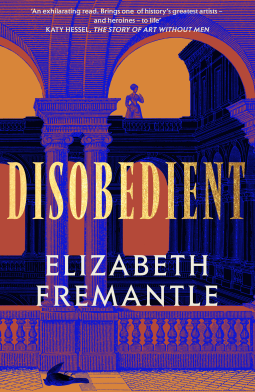
Disobedient by Elizabeth Fremantle

Elizabeth Fremantle is an author I always look forward to reading and I have enjoyed all six of her previous novels, including her two historical thrillers published under the name E.C. Fremantle. This seventh novel takes us to 17th century Italy and tells the story of Artemisia Gentileschi, one of the most important and accomplished female painters of her time.

Artemisia grows up in Rome, the daughter of the painter Orazio Gentileschi. Having lost her mother while still a child, Artemisia is raised by her father, spending time in his workshop learning to draw and paint. Orazio is a talented artist, heavily influenced by the more famous Caravaggio, but it quickly becomes obvious even to him that his daughter’s work is better than his own.

In 1611, the painter Agostino Tassi enters Artemisia’s life, first as her tutor and then as her intended husband. However, Tassi’s arrival leads to a terrible experience for Artemisia – something I won’t go into here because I think any reader who has come to this book with little or no knowledge of Artemisia’s life will probably prefer to discover her story for themselves. The second half of the book becomes quite dramatic as the repercussions of this incident become clear, so if you don’t already know all the details in advance, which I didn’t, it’s interesting just to watch it all unfold.

Artemisia is a great subject for historical fiction, being a strong, ambitious, determined woman whose work has left a lasting impact. Although we can’t know her true thoughts and feelings, Fremantle does a good job of getting inside Artemisia’s head and showing us what may have provided the inspiration for some of her paintings, such as Susanna and the Elders and Judith Slaying Holofernes. You’ll probably find yourself wanting to look up the paintings online as you read. As well as Artemisia, there are other characters in the novel who are equally well drawn; I’ve already mentioned Tassi and Artemisia’s father Orazio, but there’s also Zita, who becomes a model and chaperone for Artemisia, and Piero, Orazio’s assistant.

Disobedient covers only the earlier part of Artemisia’s life and the novel ends with a lot of her story still untold, but after reading Fremantle’s author’s note where she explains her personal reasons for wanting to write this book, I can see why she chose this period to focus on and I appreciate the courage it has taken for her to do so. I don’t think it’s my favourite of her novels, simply because some of the other settings and historical figures she has written about have interested me more, but I still enjoyed this book and am pleased to have had the opportunity to add to my knowledge of this fascinating artist.

Thanks to Penguin Random House/Michael Joseph for providing a copy of this book for review via NetGalley.

This is book 8/20 of my 20 Books of Summer 2023

This is book 29/50 for the 2023 Historical Fiction Reading Challenge.

I, Mona Lisa by Natasha Solomons

Many of us will, on a trip to Paris, have stood in the Louvre in front of Leonardo da Vinci’s Mona Lisa. We may also know some of the details of the painting’s history – its creation in Renaissance Italy, its theft from the Louvre in 1911. However, this new novel by Natasha Solomons adds a whole new dimension to the Mona Lisa story, taking us inside the mind of the painting itself and showing us the world through the eyes that look out from the portrait. Whether or not you enjoy this book will probably depend on whether you can accept that a painting is narrating the story. If you’re happy with that idea, then I think you’ll find I, Mona Lisa an interesting and entertaining read.

Most of the novel is set in 16th century Florence, during the period when Leonardo is working on his most famous masterpiece. From the painting’s own perspective, we get to know some real historical figures such as Lisa del Giocondo, the woman who sits for the portrait; Michelangelo and Raphael, da Vinci’s rivals; Niccolò Machiavelli, who approaches da Vinci with a scheme to divert the Arno River; and Salaì, a student in Leonardo’s workshop who is jealous of his master’s relationship with Mona Lisa. Although Mona is an inanimate object, she is portrayed in the novel as having the thoughts and feelings of a real woman, with an emotional attachment to her creator Leonardo.

When Leonardo eventually dies, leaving her vulnerable and unprotected, Mona embarks on the journey that will lead her to France. As the centuries go by, she spends time at the court of the Sun King in Fontainebleau and then at Versailles during the French Revolution, before finding her way to the Louvre where, as the 20th century dawns, she forms a new friendship with another great artist.

I, Mona Lisa is an unusual novel and a unique way of exploring some key moments in history. However, because so much time is spent in Renaissance Italy, the parts of the novel set in France feel more rushed and the characters less well developed. This was maybe the author’s intention, as Mona finds it difficult to bond with the people she meets after Leonardo’s death and makes it clear that her heart will always be in Florence, but it also meant that I felt less engaged with these sections of the book.

I do think that if you’re going to write a book about a painting with human emotions, the Mona Lisa is a perfect choice as it’s such a realistic and iconic portrait. The Mona of the novel is obviously very limited in what she can see and experience (and with whom she can communicate – just Leonardo and a handful of other painters and paintings), but Natasha Solomons does a great job of bringing Mona and her world to life. This is the third of her books I’ve read – the others are The Novel in the Viola and House of Gold. Three very different books, but I would recommend any or all of them.

Thanks to Hutchinson Heinemann for providing a copy of this book for review via NetGalley.

This is book 4/50 read for the Historical Fiction Reading Challenge 2022.

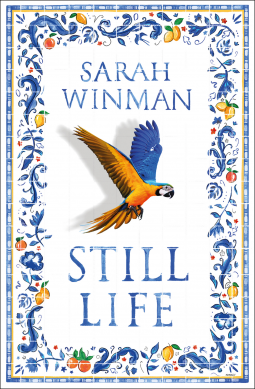
Still Life by Sarah Winman

I picked up Sarah Winman’s new novel, Still Life, with vague memories of enjoying one of her earlier books, When God Was a Rabbit. That was ten years ago and although she has had two other books published since then, I never got round to reading either of them. The pretty cover of Still Life caught my eye and the Italian setting sounded appealing, so I thought I would give this one a try.

The novel opens in wartime Tuscany in 1944 with a chance meeting between two very different people: Evelyn Skinner, almost sixty-four years old, is an art historian who has come to Italy to try to salvage important works of art; Ulysses Temper is a young British soldier, formerly a globe-maker from London. As the Allies advance across Italy, a brief friendship forms between Evelyn and Ulysses before they are parted and return to their separate lives.

For most of the novel, we follow Ulysses and his friends, first back at home in London and later in Florence, where some of them decide to relocate after the war. There’s Ulysses’ ex-wife, the talented but troubled Peg and her young daughter, Alys; Col who runs the Stoat and Parrot pub and Pete the pianist; Old Cress, who talks to trees and has visions which have a habit of coming true; and a Shakespeare-quoting blue parrot called Claude. It took me a while to warm to these characters, but eventually I became quite fond of some of them, particularly Cress and Alys. None of them are perfect – they all have their flaws and all make mistakes – but they feel like real and believable human beings.

Evelyn, though, appears only occasionally after that opening scene and we have to wait almost until the end of the novel to hear her story – by which time I found I’d lost interest in her and would have preferred to continue reading about Ulysses and the others. Evelyn’s story, which should have been fascinating as it involved a meeting with EM Forster and a pre-war romance with an Italian maid, felt as if it had been squeezed into the end of the book as an afterthought and in my opinion would have worked better if it had unfolded gradually alongside the other storylines.

The novel is beautifully written, there are some lovely descriptions of Florence and the influence of Forster’s A Room With a View can be seen in several different ways throughout the story. With a timespan of several decades, Winman also writes about various historical events that take place during that period; for example, there’s a memorable section set during the devastating flood of the Arno river in 1966. Unfortunately, there was one thing I really disliked about Winman’s writing in this book – and that was the lack of speech marks. I’m never sure what authors are trying to achieve in leaving out basic punctuation. A more ‘literary’ style? A stream of consciousness feel? Whatever it is, it never works for me and I end up just finding it distracting and annoying.

Still Life wasn’t completely successful with me, then, but I did enjoy getting to know the characters and spending some time in Italy in virtual form, which is the closest I will get to a holiday abroad this year!

Thanks to 4th Estate for providing a copy of this book for review via NetGalley.

Book 28/50 read for the 2021 Historical Fiction Reading Challenge.
Book 1/20 of my 20 Books of Summer 2021

The Woman in the Painting by Kerry Postle

Of the major Renaissance artists, I think Raphael is probably slightly less well known than Leonardo da Vinci and Michelangelo. In Kerry Postle’s novel The Woman in the Painting she explores not only the life and work of the man himself but the story of his mistress and model, Margarita Luti. It is thought that Margarita, known as La Fornarina, may have been the subject of Raphael’s painting of the same name and although we don’t know this for certain, Postle takes this theory as the basis for the novel.

We see the relationship between Raphael and Margarita develop through the eyes of Pietro, a young man who, at the beginning of the novel, has just become an apprentice to the artist Sebastiano Luciani (later known as Sebastiano del Piombo). Although Pietro’s duties are limited to cleaning brushes and grinding pigments, he works hard and learns from his master and the more experienced apprentices, but despite knowing that he has been given a wonderful opportunity, he can’t help feeling that Sebastiano’s paintings lack true greatness. Following an accident in the workshop, Pietro is dismissed from his position and thrown out into the street, where he is rescued by Margarita, one of Sebastiano’s models. It is when Pietro is offered a new apprenticeship with Raphael, who is newly arrived in Rome, that Margarita is introduced to Raphael for the first time.

It’s not long before Margarita is sitting for Raphael’s paintings and beginning to fall in love with the artist, but as a woman from a humble background – she’s the daughter of a baker – she is not seen as a suitable wife for Raphael. Meanwhile Pietro is also finding himself attracted to Raphael and the affection he had first felt for Margarita soon turns to jealousy.

I enjoyed The Woman in the Painting, although I think I might have preferred it to have been narrated by Margarita. I felt that the choice of Pietro as narrator held me at a distance from Raphael and Margarita and stopped me from fully understanding their relationship and the emotions involved. The focus instead was more on Pietro’s feelings of envy and resentment and the ways in which he acted on these feelings to try to cause trouble for Margarita and get closer to Raphael himself. Still, Pietro was a complex and very human character and although I didn’t feel a lot of sympathy for him, I couldn’t actually dislike him either.

I didn’t really know a lot about Raphael before I started to read this book, so I found that I was learning a lot from it. The descriptions of the day to day work of the artist and his apprentices in the studio particularly interested me. As recently as 2001, X-ray analysis showed that the woman depicted in La Fornarina had originally worn a ruby ring on her finger which was painted over at some point. There is no historical proof for the explanation Postle gives for this in the novel, but it works in the context of the story. We also see, from Pietro’s perspective, the political situation in Rome at that time and get to know some of the historical figures of the period, including not only Raphael, Michelangelo and Sebastiano, but also Agostino Chigi, Raphael’s patron, and Cardinal Bibbiena, to whose niece Raphael was engaged.

This is the first Kerry Postle novel I’ve read, but I see she has written a few others including The Artist’s Muse, about Gustav Klimt and his model Wally Neuzil. Has anyone read that one and what did you think?

Thanks to HQ Digital for providing a copy of this book for review via NetGalley.

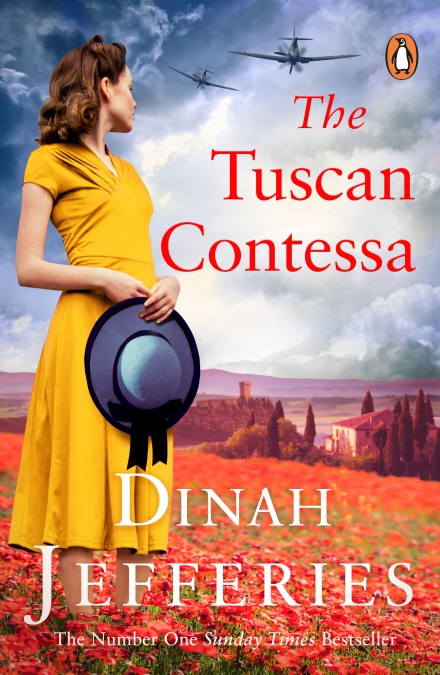
The Tuscan Contessa by Dinah Jefferies

This is the first of Dinah Jefferies’ novels not to be set in Asia. After being whisked off by her previous six books to Sri Lanka, Myanmar, French Indochina and other fascinating settings, it was a surprise to find that her latest one takes place in Italy. I do love reading about Italy, though, and this setting – Rome and Tuscany during World War II – was just as interesting as the others.

The Contessa of the title is Sofia de’ Corsi, who lives with her husband Lorenzo in their Tuscan villa in the Val d’Orcia. Lorenzo works for the Ministry of Agriculture but Sofia knows very little about what his work actually involves, other than that it takes him away from home for long periods of time. The war is in its final years – the story begins in November 1943 – yet life in Italy is becoming more dangerous and more complicated than ever. Much of the country is still under German martial law and although the Allies are advancing and driving the German army back, their progress is very slow. Not only do Italians have the Nazis to worry about, however, but they are also fighting each other, with anti-Fascist partisans locked in civil war with supporters of Mussolini and his Fascist forces.

When James, a British radio engineer, is found wounded near Sofia’s home she offers to give him shelter, but knowing that Lorenzo would be worried for her safety, she decides to keep his presence a secret from her husband. Meanwhile, Maxine, an Italian-American spy, has arrived from Rome to stay with Sofia, having been given the job of gathering information about the Germans to pass on to the resistance and the Allies. But with the Nazi officers stationed in the village beginning to grow suspicious about Sofia’s household, the two women and their loved ones could be in danger.

I have to confess that before I read The Tuscan Contessa I knew very little about Italy during the war, so I was pleased to find that a timeline is included at the front of the book, outlining the key events from the Italian perspective. This helped me to understand what had been happening in the months prior to the beginning of the novel and how there were so many different groups all working with or against each other: the German occupiers, Mussolini’s Blackshirts, the Partisans and communists, Allied soldiers and SOE spies. It’s not surprising that Sofia and her friends are never quite sure who can and cannot be trusted and who might be about to betray them. One thing I really liked about the novel is the way Jefferies shows that there are good and bad people on all sides of any conflict and that both friends and enemies can be found where they are least expected.

Although there are plenty of male characters, all with significant roles to play in the novel, the focus is mainly on the women and the decisions they have to make to keep themselves and their families safe. I liked Sofia but the other characters felt less well drawn and I even found myself confusing some of them with each other. I didn’t feel that I ever truly got to know and understand Maxine, which was a shame because her storyline should have been the most exciting and compelling, as her work took her into some very dangerous situations. It seemed that the characters sometimes took second place to the history unfolding around them, which made the story less emotionally gripping than it could have been.

This is not one of my favourite Dinah Jefferies novels, but I’m still glad I read it even if just for the knowledge I’ve gained of 1940s Italy!

Thanks to Penguin for providing a copy of this book for review via NetGalley.

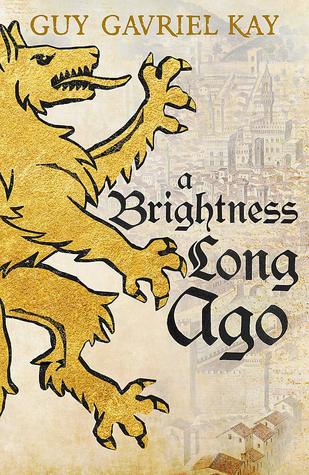
A Brightness Long Ago by Guy Gavriel Kay

Guy Gavriel Kay’s newest novel, A Brightness Long Ago, is a prequel to 2016’s Children of Earth and Sky but although they are set in the same world and share one or two characters, each book also works as a standalone. I think this is probably my favourite of the two, although I enjoyed both.

Like most of Kay’s novels, A Brightness Long Ago takes place in a land which closely resembles a real historical setting – in this case, Renaissance Italy. Our narrator is Guidanio Cerra of Seressa, a city which, with its lagoon and canals, clearly corresponds to Venice. Guidanio is looking back at events from his past, beginning with his time at the court of Uberto of Mylasia, a cruel tyrant who once ‘sealed an enemy in a cask to see if he might observe the soul escaping when his prisoner died’ and who has become known as the Beast due to his treatment of the young girls and boys he summons to his chamber at night. As the son of a humble Seressan tailor, Guidanio knows it is a great honour to have been given a position at Uberto’s court but he quickly discovers what sort of man he is serving and so he is not at all sorry when the Beast is assassinated one night by the latest young woman who has been brought to his rooms.

Her name is Adria Ripoli, the Duke of Macera’s daughter, and she is acting on the orders of her uncle, Folco Cino, a leader of mercenaries. Having witnessed Adria enter Uberto’s chamber to carry out the assassination, Guidanio helps her to escape before she can be captured. He expects never to see her again, but as chance would have it their paths do soon cross again and Guidanio finds himself drawn into the conflict between Folco Cino and his rival mercenary commander, Teobaldo Monticola, two powerful men whose actions could determine the fate of Batiara (Italy).

A Brightness Long Ago explores some of Kay’s favourite themes, such as chance encounters, the spinning of Fortune’s Wheel, and the idea that the small decisions each of us make every day of our lives could have wider repercussions, affecting not only our own future but the future of others too – in other words, that everything we do matters. These are topics that Kay returns to again and again in his novels but they seemed particularly dominant in this one and that was my only slight criticism of the book – not the ideas themselves, but the way the authorial voice is constantly reminding us that ‘things matter’. I would have preferred a more subtle approach, I think! Anyway, the writing was still as beautiful as I’ve come to expect; as some of you will know, I choose a quotation from every book I read for my end-of-month Commonplace Book posts – I will have a difficult choice when I come to put this month’s post together as almost every sentence in this book was worthy of being quoted!

The 15th century Italian (or Batiaran) setting was already familiar to me from Children of Earth and Sky, but even if you haven’t read that book, if you have any knowledge of Renaissance Italy you will probably be able to draw parallels between some of Kay’s characters and members of the Medici, Borgia and Sforza families, among others. There’s a dramatic horse race – one of the most memorable set pieces in the book – inspired by the real life Palio race which has taken place in Siena for centuries, and the fall of Sarantium (Constantinople) is also covered. The different names Kay uses for these people, places and events, along with the two moons in the sky – one blue and one white – mean this book can be classed as ‘historical fantasy’, but there aren’t really any other fantasy elements in the story at all. That’s not a problem for me, but if you’re new to Guy Gavriel Kay and hoping for something with magic and wizards, I would recommend starting with Tigana instead.

Thanks to Hodder & Stoughton for providing a copy of this book for review via NetGalley.