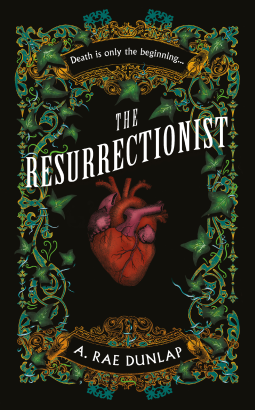
The Resurrectionist by A. Rae Dunlap

It’s 1828 and James Willoughby has just arrived in Edinburgh to begin his medical studies at the university. Having found himself completely unsuited to the career in the church that his parents had planned for him, James has decided that medicine is his true vocation. After speaking to some of his fellow students, he discovers that due to the large class sizes the university can only offer very limited opportunities for practical experience. In order to gain the surgical knowledge he desires, it will also be necessary to attend one of the city’s private anatomy schools where he’ll be able to dissect and study the human body for himself.

Although James comes from a wealthy family, they have fallen on hard times since his father’s death. There’s enough money to pay for his lodgings at the Hope and Anchor Inn, but not much else. If he wants to go to anatomy school, he’ll have to find a way to pay the fees himself. Signing up for Dr Malstrom’s prestigious school, James confides in the doctor’s apprentice, Aneurin MacKinnon, explaining his financial difficulties. Aneurin – or Nye, as he prefers to be called – tells him he may have a solution to the problem. And with that, James finds himself drawn into the secretive, macabre world of body snatching – taking corpses from graves under cover of darkness and selling them to anatomists for study and research purposes.

I loved this book! As a debut novel it’s very impressive and I’ll certainly be looking out for more by A. Rae Dunlap. From the very first page she captures the formal feel of the 19th century novel and manages to avoid using the sort of inappropriately modern language that could have so easily pulled me out of the historical setting. As with Ambrose Parry’s Raven and Fisher series, there are lots of insights into the medical world of 19th century Edinburgh, with the focus here being on the study of anatomy and surgery and how progress was hampered by the lack of human cadavers for students to work with. Edinburgh itself provides an atmospheric setting for the novel, especially as most of the action, for obvious reasons, takes place at night. There are lots of suitably Gothic descriptions of lonely cemeteries, dark alleys and disreputable inns, all forming the backdrop to the trade of body snatching.

The Resurrectionist is narrated by James Willoughby, whom I really liked and believed in as a character. He begins the novel as an innocent, well-meaning young man who has led a somewhat sheltered life and who gradually grows as a person as he has his eyes opened to things and experiences he had never imagined. Over the course of the novel, we see a friendship form between James and the more worldly Nye, which eventually develops into something more. I thought the story was already interesting enough without adding a romance, but it does seem to arise naturally from the characters’ interactions rather than being forced in for the sake of it. It also provides an extra sense of danger, as both men are under no illusions as to the importance of keeping their relationship secret and what could happen to them if they are found out.

Although James and Nye and their friends are fictional, several other characters in the book really existed, most notably the infamous Burke and Hare, probably the best known body snatchers – or ‘resurrectionists’ – in history. As competition amongst the city’s anatomists increases and tasked with providing a steady supply of corpses for their employer Dr Knox, Burke and Hare decide that in addition to grave robbing, there could be another way to meet the demand for bodies. I knew very little about Burke and Hare before reading this book, so I enjoyed seeing how things played out for them and how Dunlap seamlessly worked them into James and Nye’s fictional story while also staying true to the historical facts.

The end of the novel wraps things up enough to make this a satisfactory standalone, but also sets up a potential sequel. This one felt very much like a coming of age novel for James, so I would be interested to see what the future has in store for him. If Dunlap has decided to move on and write something different, though, I will be equally interested to read whatever it is!

Thanks to HarperNorth for providing a copy of this book for review via NetGalley.
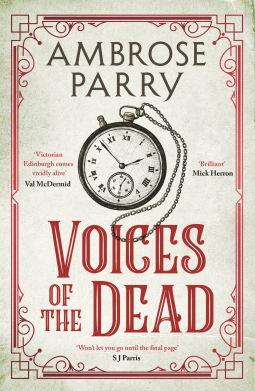
Voices of the Dead by Ambrose Parry

This is the fourth book in Ambrose Parry’s series of crime novels set in the medical world of 19th century Edinburgh – and it’s my favourite so far. Ambrose Parry is a pseudonym of Dr Marisa Haetzman, a consultant anaesthetist, and her husband, the crime author Chris Brookmyre, and they each bring their own set of skills and knowledge to the writing of these books. The series follows Dr Will Raven, assistant to the great Scottish obstetrician James Simpson (a real historical figure), and Sarah Fisher, who dreams of one day becoming a doctor herself, so each book includes a wealth of medical detail as well as a murder mystery to be solved.

In Voices of the Dead, set in 1854, Will is now married with a child and another on the way, but he doesn’t have much time to enjoy being a husband and father – not only is he struggling to move out from under the wing of Dr Simpson and establish his own reputation, he has also become mixed up in yet another murder case. Parts of a dismembered body have been turning up in random places around Edinburgh and Will’s friend, Dr Henry Littlejohn, has asked for his help in identifying the victim.

Meanwhile, Sarah Fisher’s plans to study medicine and follow in the footsteps of Dr Elizabeth Blackwell have had to be put on hold. Disappointed and frustrated, she turns instead to the emerging science of mesmerism, which is beginning to grow in popularity. An American mesmerist has just arrived in Edinburgh and Sarah is keen to learn more about the possible uses of mesmerism in healing patients. Will Raven, however, has a low opinion of such things and, not for the first time, he and Sarah find themselves in conflict. Eventually, however, Sarah is also drawn into the murder investigation and she and Will must work together again to find the culprit.

If you’re new to this series you may be wondering whether you could start here without having read the previous three books. Well, this one does work as a standalone mystery, but I would recommend reading all four in order if you can, starting with The Way of All Flesh. Will and Sarah have a complex relationship – made even more complex by the addition of Will’s wife, Eugenie – and it would be best to get to know them both from the beginning. There are also lots of recurring characters who develop throughout the series; in this book, I particularly enjoyed being reacquainted with Gregor the giant. Like the real life Irishman Charles Byrne (whom I read about recently in Hilary Mantel’s The Giant, O’Brien), Gregor’s size has made him the target of unscrupulous men who hope to acquire his body for exhibition after his death.

As well as the usual details of Will’s work as an obstetrician, I found it fascinating to read about the public displays of mesmerism, hypnotism and spiritualism being staged across Edinburgh and the differing views people held towards them. Were the mesmerists and spiritualists really just frauds preying on gullible victims, as Will believed, or were they acting with the best intentions, trying to provide comfort to people who needed it? This storyline introduces some colourful new characters, including a magician of whom I became quite fond and am hoping we’ll meet again.

Every book in this series has been very enjoyable, but I think this one is the best yet. I’m looking forward to the next one and hope we won’t have to wait too long for it!

Thanks to Canongate for providing a copy of this book for review via NetGalley.
This is book 23/50 read for the 2023 Historical Fiction Reading Challenge.

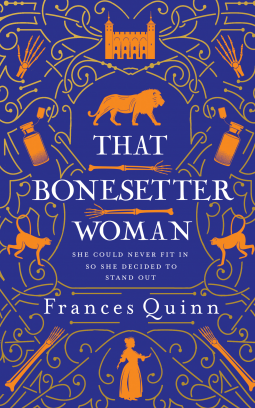
That Bonesetter Woman by Frances Quinn

I loved this! I’ll admit that when I first saw that this was a novel about a female bonesetter in the 18th century, I had my doubts. Was this really something a woman would be able to do at that time or was this going to be another book, like one or two others I’ve read recently, based around a completely anachronistic idea that could never have happened in reality? Then I discovered that there really was a female bonesetter working in London in the 1700s: her name was Sally Mapp and her story has provided Frances Quinn with the inspiration for her latest novel.

That Bonesetter Woman begins with Endurance Proudfoot – known as Durie – arriving in London in 1757 with her sister, Lucinda. The unmarried Lucinda has found herself pregnant and, with Durie accompanying her, has been hastily packed off to stay with an aunt so that she can give birth away from prying eyes at home. Durie is not at all happy to be sent away; she had been on the verge of persuading her father, a bonesetter, to allow her to work with him as his assistant. Now it looks as though the position will go to her younger brother instead. This is devastating for Durie – with her large hands and feet, social awkwardness and tendency to always say and do the wrong thing, bonesetting is the one thing she’s discovered she’s good at.

Watching with a mixture of admiration and resentment as Lucinda overcomes her own personal crisis and launches a new career for herself on the London stage, Durie decides it’s time to take matters into her own hands. She’s determined to find a way to do the work she loves and nothing is going to stop her.

This is a fascinating novel, particularly as it’s loosely based on the lives of real people (like Durie, Sally Mapp was believed to have a sister, Lavinia Fenton, who became a famous London actress). I enjoyed reading about Durie’s work as a bonesetter – similar to a modern-day chiropractor or osteopath, I think – but what particularly interested me was seeing the obstacles she had to overcome to be allowed to carry out her work at all, the mistrust from patients on discovering that they were going to be treated by a woman, and the hostility she faces from the existing, exclusively male, medical community. Poor Durie experiences one setback after another, but her passion for bonesetting and helping those in pain really shines through.

Although Durie is not considered a great beauty like her sister, she does have love interests throughout the novel but her lack of self-confidence leads to her making mistakes and poor decisions. Nothing ever seems to go her way, but while things often look bleak for Durie I never stopped hoping that she would find happiness and success in the end.

As I come to the end of this review I realise there are a lot of things I haven’t mentioned – the vivid portrayal of 18th century London, the menagerie in the Tower of London, the subplot involving the Foundling Hospital – but there’s so much going on in this novel, I can’t include all of it! It’s a great book and I will have to find time to read Frances Quinn’s previous novel, The Smallest Man.

Thanks to Simon & Schuster UK for providing a copy of this book for review via NetGalley.
This is book 36/50 read for the Historical Fiction Reading Challenge 2022.

A Corruption of Blood by Ambrose Parry

This is the third book in Ambrose Parry’s historical mystery series featuring Dr Will Raven and Sarah Fisher. The first two are The Way of All Flesh and The Art of Dying, but if you haven’t read either of those it shouldn’t be a problem – although I would still recommend reading them in order if possible so that you can understand the background of the relationship between Will and Sarah.

Ambrose Parry is a pseudonym used by husband and wife team Chris Brookmyre and Marisa Haetzman; Brookmyre is an experienced crime novelist while Haetzman is an anaesthetist and medical historian, which explains why the 19th century world of murder and medicine portrayed in the books feels so real and convincing.

At the beginning of A Corruption of Blood, Sarah travels to Paris and Gräfenberg hoping for a meeting with Elizabeth Blackwell, the first woman to obtain a medical degree in America and become a doctor. Sarah has an interest in medicine herself and is sure that she could achieve the same as Dr Blackwell if given the chance, but things don’t go as planned and Sarah goes back to Edinburgh feeling disillusioned and frustrated. On returning home, she receives more bad news when she learns that Dr Will Raven has just become engaged to another woman, Eugenie Todd. Sarah has always resented Will for being able to take advantage of the opportunities that have been denied to her because of her gender, but recently they have been on friendlier terms and she is disappointed to hear of his engagement.

Meanwhile, Will is having problems of his own. Through his work with the famous Scottish obstetrician Dr James Simpson, he has become used to witnessing the trauma of childbirth and, sadly, the deaths of children – however, even he is not prepared for the sight of a dead baby wrapped in a parcel being fished out of the river. Soon after this, Will’s new fiancée asks for his help; her friend Gideon has been accused of murdering his father, Sir Ainsley Douglas, and she wants to prove that he is innocent. Will knows and dislikes Gideon from his student days, but agrees to investigate. Could both deaths somehow be connected?

This is such an interesting series, not so much because of the murder mystery aspect (which I don’t think is particularly strong) but because of the Victorian Edinburgh setting and all of the information we are given on the medical science of the period, as well as the challenges faced by women like Sarah and Dr Blackwell who wanted to make a career for themselves in a field dominated by men. This particular novel also includes a storyline involving the unpleasant, distressing but sadly quite common practice of baby farming, where unwanted or illegitimate children were sold to a ‘baby farmer’, who in theory would look after the child in return for a payment, although it was often more profitable for the baby farmer if the child conveniently died while in her care.

It took me a while to get into this book; the pace is very slow at the beginning and it takes a while for the plot to take shape and the different threads of the story to start coming together. Things improve in the second half, though, and there are a few surprises and plot twists that I hadn’t really expected. The relationship between Sarah and Will continues to develop, with the way each of them feels about Eugenie adding some extra interest, and I will look forward to seeing how this progresses in the next book. I hope there is going to be a next book and I hope we don’t have to wait too long for it!

Thanks to Canongate Books for providing a copy of this book for review via NetGalley.

Book 11/20 of my 20 Books of Summer.

Book 39/50 read for the 2021 Historical Fiction Reading Challenge.

The Art of Dying by Ambrose Parry

This is the second book in a new series of historical mysteries written by Ambrose Parry, a pseudonym used by husband and wife team Chris Brookmyre and Marisa Haetzman. The books are set in 19th century Edinburgh, where great advances are taking place in the world of medicine, and with Brookmyre being an experienced crime writer and Haetzman a consultant anaesthetist, they each bring different strengths to their collaborations.

The Art of Dying opens with a brief and dramatic section set in Berlin in 1849, before the action switches back to Edinburgh, where Will Raven has just returned from studying medicine in Europe to take up a position as assistant to the renowned obstetrician Dr James Simpson. Will had previously served as Simpson’s apprentice (as described in the previous novel, The Way of All Flesh), but he is now a qualified doctor himself and is eager to start building his own career and reputation.

Working with Simpson again brings Will back into contact with Sarah Fisher, Simpson’s former housemaid who is now assisting him at his clinic, having displayed a passion and aptitude for medicine. Sarah is deeply frustrated by the lack of equality for women, as she is sure she has the ability to become a doctor herself if only she could be given the same opportunities as men. This had been a source of conflict between Will and Sarah when we met them in the first book, but he has still been looking forward to seeing her again and is disappointed to find that during his absence she has married another man. When one of Dr Simpson’s patients dies under suspicious circumstances, however, and his rivals start to point the finger of blame, Will and Sarah must work together to try to clear Simpson’s name.

The crime element of the novel comes in the form of a number of unusual, unexplained deaths taking place around the city. At first Will is excited, thinking he has discovered a new disease to which he’ll be able to give his name, but Sarah is convinced that something more sinister is happening. My main criticism of The Way of All Flesh was the weakness of the murder mystery, but I found this one much stronger. It was easy enough to guess who or what was causing the deaths, because we are given plenty of hints right from the start, but what I didn’t know was why or exactly how it was being done and I enjoyed watching Will and Sarah (mainly Sarah at first) putting the clues together to find the culprit.

As with the first book, though, it was the medical aspect of the story that I found most interesting. In The Way of All Flesh, we learned that James Simpson had been carrying out experiments into the use of chloroform to ease the pain of childbirth. This book continues to explore the development of anaesthetics, showing not only the potential benefits for surgery and obstetrics, but also the dangers of administering too much of a substance which was still not fully understood.

I enjoyed this book more than the first one and I think it does work as a standalone, but I would still recommend starting with The Way of All Flesh so you will understand the background to Will and Sarah’s relationship. Both characters have changed and grown since the beginning of the series and I’m sure there’s lots of scope for more development ahead; I’m hoping we won’t have to wait too long to find out!

Historical Musings #52: Medicine through time

Welcome to my monthly post on all things historical fiction!

The history of medicine is something I’ve always found fascinating and clearly there are many historical fiction authors who find it fascinating too, given the number of historical novels which feature doctors, nurses and healers from times gone by, doing their best for their patients despite the limited equipment, medicines and knowledge available to them. I thought I would mention some of them here, and then, if you can think of any others, I would love to hear your recommendations.

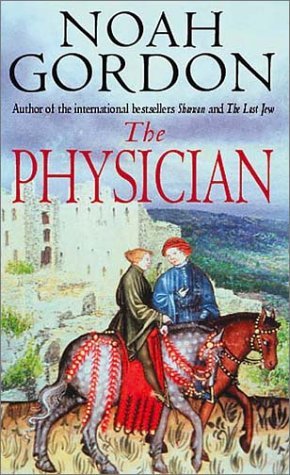
The first books that come to mind are three novels by Noah Gordon which I read before blogging and loved (or two of them, anyway – the third was slightly weaker). The Physician is set in the 11th century and follows the story of Rob Cole, a Christian boy from England who disguises himself as a Jew so that he can travel to Persia and study medicine with the great Ibn Sina. In the second book, Shaman, which is set in 19th century America, we meet one of Cole’s descendants, another Rob J. Cole and his son, a deaf boy known as Shaman who is determined not to let his deafness prevent him from carrying on the family tradition and becoming a doctor. The final book in the trilogy, Matters of Choice, has a contemporary setting and a female protagonist (Roberta J. Cole), but I remember feeling disappointed by it. The first two books are on my list for a re-read so I can see what I think of them now.

Thinking about books which aren’t specifically about medicine but have characters who are doctors, there’s Patrick O’Brian’s Aubrey and Maturin series. Stephen Maturin, one of the two main characters, is a physician and ship’s surgeon during the time of the Napoleonic Wars. One of the things I love about O’Brian’s portrayal of Stephen is the way he only allows him the knowledge that would have been available to him in that period and avoids any irritating anachronisms. There’s also Diana Gabaldon’s Outlander series. The books are narrated by Claire, a 1940s nurse who travels back in time to the 18th century, which provides an interesting perspective as Claire’s more advanced medical knowledge and skills mean that she is able to save people who would otherwise have died – but at the same time arouse suspicions that she is a witch.

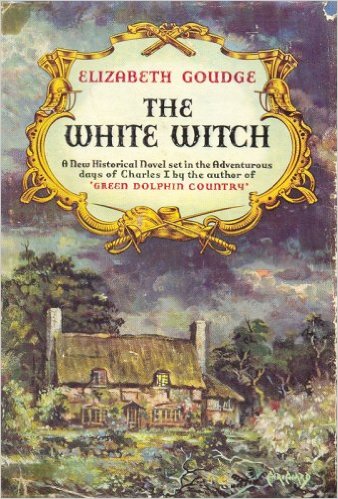
It didn’t take much for a woman to be described as a witch in less enlightened times. A reputation as a healer and an interest in herbs and remedies was usually all that was needed. Some examples are Froniga in The White Witch by Elizabeth Goudge, Frances Gorges in The King’s Witch by Tracy Borman or the title character in Corrag by Susan Fletcher. Ariana Franklin, in Mistress of the Art of Death and its sequels (set in the 12th century), tells us that her protagonist Adelia Aguilar studied at the medical school in Salerno which accepted female students, and in Margaret Skea’s 16th century novel By Sword and Storm, Maggie Munro is given an opportunity to study medicine in France, although not quite in the way she would have liked. But they are exceptions and usually, in historical fiction set in those early periods, if women had a gift for healing and wanted to use it, it was difficult for them to do so without leaving themselves open to accusations of witchcraft.

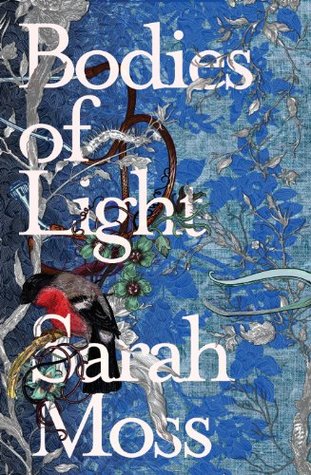
By the 19th century, things have improved, although still not enough. Bodies of Light by Sarah Moss is the story of Ally, a girl from Victorian Manchester who is among the first group of women to attend the first medical school in London to take female students. This book made me appreciate how challenging it must have been for these early female medical pioneers to enter a field dominated by men.

This post is starting to get very long and I still have a few more books I want to highlight, so I will just give them a brief mention:

Cutting for Stone by Abraham Verghese – the story of twins, Marion and Shiva, who grow up in and around a hospital in 1950s Ethiopia after the disappearance of their father, a British surgeon.

Restoration and Merivel – Robert Merivel is an aspiring physician in Restoration London, but not a very successful one, as he discovers when he is made ‘Surgeon to the King’s Spaniels’.

The Nightingale Girls by Donna Douglas – a fictional look at the lives of three trainee nurses at a teaching hospital in 1930s London.

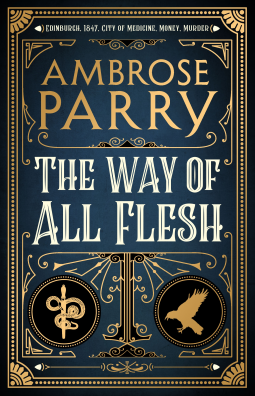
The Way of All Flesh by Ambrose Parry – the first in a new series of historical mysteries set in 19th century Edinburgh. The protagonist, Will Raven, is a student apprenticed to the famous Scottish obstetrician Dr James Simpson. I have the second book, The Art of Dying, on the TBR.

~

Have you read any of the books I’ve mentioned here? Do you have any other novels about medicine through time to recommend?

Bodies of Light by Sarah Moss

This is the first book I’ve read by Sarah Moss, an author I had never really thought about trying until I saw so much praise for her latest novel, Ghost Wall, last year. Bodies of Light is apparently loosely linked to an earlier book, Night Waking, but I didn’t feel that I’d missed anything by reading this one first.

The setting for Bodies of Light is Victorian Manchester where, as the novel opens, a newly married couple – Elizabeth and Alfred Moberley – are moving into their new home. Even this early in their marriage, there are clues that suggest they might not be very happy together; Alfred is a painter who appreciates the finer things in life while Elizabeth is passionate about social reform and women’s rights. Their two daughters, Alethea (Ally) and May, grow up trying to please both parents, being asked to model for their father’s latest portrait one day and accompanying their mother on one of her missions to help women in Manchester’s poorest areas the next.

I really enjoyed the first half of this book; after a slow start I found that I had become completely drawn into the lives of the Moberley family. Each chapter starts with a description of a portrait painted by Alfred or one of his circle, giving an idea of what will follow in the pages to come, and I thought that was a nice touch. As the novel progresses and the children grow older, we see that Elizabeth, despite her good deeds in public, can be a harsh and unloving mother; to explain this, Sarah Moss spends some time at the beginning of the book showing us what made her the way she is, focusing on Elizabeth’s relationship with her own mother and the depression she suffered after Ally’s birth.

The second half of the novel is devoted mainly to Ally, as she goes to London to study medicine at the first medical school to accept female students. She is pushed into this career path by her mother, who believes very strongly that women – particularly ‘fallen women’ – should be entitled to request treatment from a female doctor and who likes the idea of her own daughter becoming one of these doctors. Ally is an intelligent young woman who loves learning, so she throws herself into her studies, but there is always a sense that she is doing this mainly to make her mother happy – and yet, whatever she does, it seems that Elizabeth is never happy.

I felt so sorry for Ally, who self-harms and suffers from nightmares as she is growing up, longing for some comfort and compassion from her mother but receiving only criticism and impatience instead, told that she has no right to complain about anything ‘because there is always someone else worse off.’ Interestingly, her younger sister May, who has the same upbringing, doesn’t seem to suffer from Ally’s anxiety-related problems, possibly due to the fact that Ally, as the eldest, has always felt under more pressure.

Once Ally had left home to begin her medical studies, I found the story a bit less compelling but still interesting. It certainly made me appreciate the educational opportunities that are open to women today and how difficult it must have been for those who were among the first to try to enter a field dominated by men. This is a fascinating book and I do like Sarah Moss’s writing, so I now want to read the sequel, Signs for Lost Children, as well as the earlier Night Waking, which I think tells some more of May’s story.