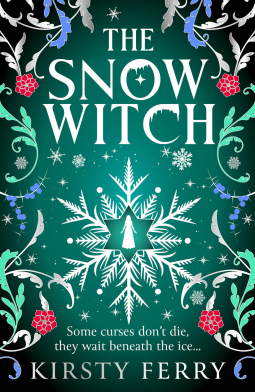
The Witch’s Stone by Kirsty Ferry

Jess Morgan is a genealogist and historical researcher who has returned to the area of Northumberland where she grew up to work on a new project looking into the history of a ruined chapel. There are plans to make it part of a Heritage Trail for tourists, so some interesting facts about the site are needed. Reacquainted with an old school friend, Nate, who is managing the project for the heritage group, Jess begins investigating the chapel’s past and discovers links with an ancient stone known as Isabel’s Stone – or the Witch’s Stone – and a woman called Eliza who is buried in the chapel graveyard.

A second thread of the novel is set in 1888 and follows Eliza, the twenty-two-year-old daughter of Lord and Lady Stratford of Stratford Chase. Eliza is recovering from an accident she suffered several months earlier which left her with damage to her spine and unable to remember what happened. All she knows is that Lucian Ashcombe, the man she loves, was somehow involved and was sent away, forbidden to see her again. But now Lucian has returned – and so has another man, Benedict Rochford, her intended husband. Can she trust either of them? If only her memories would come back!

Jess and Eliza are linked by a third woman: Isabel, the witch, whom it’s said can be summoned by running three times around her stone. I was interested to read at the end of the book that Kirsty Ferry was inspired by a brief record in an old book of a witch with an evil eye and a sinister cat who lived in a cottage near Brinkburn Abbey. Ferry’s portrayal of Isabel, the Brinkburn Witch, is much more sympathetic; she appears to the protagonists in times of need, tying the two storylines together. The two narratives merge further when Jess, who is staying in a room at Eliza’s old home, Stratford Chase, now converted into a hotel, begins to slip between past and present, and when Nate discovers an old hunting knife which seems to wield a strange power over him.

There are some supernatural elements, then, but they never completely dominate the novel; the focus is on the personal stories of the characters with Jess researching the history of the chapel and trying to rebuild her life after her recent divorce and Eliza struggling with her amnesia and looking for a way out of the marriage her parents and brother have planned for her. I was much more interested in Eliza’s story at first as it was where all the drama was taking place, but later in the book the two threads come together so well that it’s hard to separate one from the other. Not everyone in the story gets a happy ending, but that’s reality and I still found the final chapter very satisfying. I also loved the setting – not enough books are set in Northumberland! The fictional Stratford Chase and the ruined chapel are located in the Simonside Hills near Rothbury and the author describes the landscape beautifully.

This is the first Kirsty Ferry book I’ve read; she has written a large number of others and I’m not sure if any of them appeal to me, but I’ll certainly be looking out for The Snow Witch, due to be published later this year!

Thanks to Boldwood Books for providing a copy of this book for review via NetGalley.
The Secrets of the Rose by Nicola Cornick – #ReadIndies

I like Nicola Cornick’s books because you always know what to expect from them, but at the same time each one is different and has something new to offer. With The Secrets of the Rose, her latest novel published this month, I got exactly what I knew I would get: a dual timeline narrative, strong female protagonists, a search for an historic relic that has found its way into the present, cameo appearances by characters from other Cornick novels, and hints of the supernatural. However, I also had the opportunity to learn about a woman I’ve never read about before – Dorothy Forster of Bamburgh Hall.

In the present day, we meet Hannah Armstrong, an author working on a new book about Grace Darling, the lighthouse keeper’s daughter who became a 19th century celebrity after helping her father to rescue the survivors of a shipwreck. In order to research the biography, Hannah has returned to Bamburgh, the village on the Northumberland coast where she grew up and which she can use as a base for visiting the Darlings’ lighthouse in the nearby Farne Islands. Unfortunately, Hannah is finding that she has very little interest in Grace and her life – the woman she really wants to write about is another local heroine, Dorothy Forster.

Dorothy’s story unfolds in 1715, the year of the Jacobite Rising when supporters of the exiled James Edward Stuart attempted to restore him to the throne. Dorothy, who is living at Bamburgh Hall with her ailing father, is alarmed when she learns that her two brothers, Thomas and Nicholas, have been persuaded by one of the Jacobite leaders, the Earl of Derwentwater to join the rebellion. As the nephews of Lord Crewe of Bamburgh Castle, not only will their involvement put their own lives at risk, it could also leave the whole family in danger. Then Dorothy discovers that the Forsters are the keepers of the Rose, a legendary talisman that both sides in the conflict believe could be the key to victory. Can Dorothy hide the Rose from their enemies and keep her brothers safe?

These two storylines start to come together when Hannah goes to stay at Bamburgh Hall, her stepmother Diana’s home, while researching her Grace Darling book. Here she finds a portrait of Dorothy Forster which appears to be full of Jacobite symbolism. As Hannah digs into Dorothy’s past, she learns about the Rose and its powers and begins to suspect that it may have survived into the 21st century. However, she’s not the only one who has come to that conclusion – it seems that someone else is also on the trail of the Rose and is prepared to go to any lengths to get their hands on it.

As is often the case with dual narrative books, I found that one storyline interested me more than the other and this time it was the Dorothy Forster one. There were a lot of things I liked about Hannah’s story as well – her relationship with her stepmother, a mystery surrounding her brother who seems to have fallen out with everyone in the village, a romance that begins to form with an old friend – but Dorothy’s was more exciting. Legend states that Dorothy rode to London on horseback to rescue her brother Thomas from Newgate Prison after the failed rebellion and Cornick does incorporate this episode into the novel, but also shows that there’s a lot more to Dorothy’s story than that. The Jacobite aspect of the novel plays out mainly in the background, far away from Bamburgh (although I did enjoy the brief appearances of the Earl of Derwentwater whom I first met in Anya Seton’s Devil Water) so the focus is more on Dorothy’s personal life and her relationships with family and friends.

I thought the novel was interesting enough without the magic talisman element and I’m not sure if it really added much to the plot. Still, Nicola Cornick’s books do usually have some supernatural touches and they’re not as strong here as in some of her others. I did love the setting – although I wouldn’t say I know Bamburgh well, I’ve been there a few times and enjoyed seeing it through the eyes of Hannah and Dorothy in two different centuries. And I was intrigued to find when I read the author’s note that Dorothy’s uncle, Guy Forster, and his wife also appear in Cornick’s previous book, The Other Gwyn Girl, which I haven’t read yet. The relationship between them is fictional, although they share the Forster name, but I do want to read that book anyway.

I really enjoyed The Secrets of the Rose, then, and would probably rank it in my top three Nicola Cornick novels so far, along with The Last Daughter and The Phantom Tree.

Thanks to Boldwood Books for providing a copy of this book for review via NetGalley.

As Boldwood is an independent publisher, I am counting this book towards this year’s #ReadIndies event hosted by Kaggsy’s Bookish Ramblings and Lizzy’s Literary Life.

Cuddy by Benjamin Myers

Cuddy is a nickname given to St Cuthbert, the Anglo-Saxon monk, bishop, hermit and saint who lived during the 7th century. He is associated with the island of Lindisfarne (Holy Island), where he spent many years of his life, and with Durham Cathedral, where he is buried, and these are both places I have visited several times, which is what drew me to this novel by Benjamin Myers. The publisher’s description of it as “a bold and experimental retelling of the story of the hermit St. Cuthbert” made me reconsider, as I’ve discovered over the years that experimental books usually aren’t for me, but I decided to give it a chance anyway.

The first section of the book is set in 995, more than three hundred years after the death of St Cuthbert, and is told from the perspective of Ediva, a young woman who accompanies a group of monks as they transport Cuddy’s remains to his new resting place in Durham. We then move forward several centuries in time and join the masons who are repairing the cathedral stonework in 1346. The third section is a ghost story set in 1827 when an Oxford professor, Forbes Fawcett-Black, is invited to attend the opening of Cuthbert’s tomb. Finally, the last part of the book introduces us to Michael Cuthbert, a young man living in a village near Durham in 2019 who is offered a job as a labourer during restoration work at the cathedral.

Each of the four parts could work as a standalone story, but there are also several links between the four, some of which are easy to spot and some that are more obscure. There’s always an ‘Ediva’-type character – one who fills the role of cook or healer, who sees visions and hears the voice of Cuddy – and there’s always a young man with owl-like eyes:

He has brilliant wide eyes that peer into your very
centre
Eyes that seem not to blink. Eyes that one day are
blue
and the next jade, then anthracite and once, red.

The quote above, describing the ‘Owl Boy’, is an example of the writing in the first section of the book, which takes the style of a narrative poem. I don’t think I could have read a whole book written like this, but could cope with it for a few chapters and I thought it was quite effective in creating a mystical, dreamlike atmosphere that suited the time period and the story being told. Myers also finds an appropriate voice and style for each of the other parts of the novel – for example, the 19th century ghost story, The Corpse in the Cathedral, is told through the diary entries of the Professor and is written in a very formal style which suits his character.

My favourite part of the book was actually the modern day story at the end. I loved Michael Cuthbert, who is struggling to care for his dying mother at home while trying to support them both by taking whatever work he can get, and I enjoyed watching him form a friendship with Evie, a kindhearted young woman who works in the cathedral restaurant. I found Michael and Evie’s story very moving and would have been happy to have read a whole book about them!

As for St Cuthbert himself, his own story is related to us through brief excerpts from a wide range of sources including books, essays and articles which are all acknowledged at the end of the book. It’s a lot to take in and digest and I think to really understand who Cuthbert was and why he is significant you would probably need to read some of those sources in full. However, this is a good introduction!

Thanks to Bloomsbury Publishing Plc for providing a copy of this book for review via NetGalley.

Book 4/50 for the Historical Fiction Reading Challenge 2024

Dead Woman Walking by Sharon Bolton

I don’t read a lot of contemporary crime fiction, but I do love Sharon Bolton’s books! Her latest, Dead Woman Walking, is another great one featuring the usual combination of mystery, suspense, atmospheric settings, stunning plot twists and even humour that I have come to expect from her work.

It begins with a group of people enjoying an early morning flight over the Northumberland National Park in a hot air balloon. Among them are Jessica Lane and her sister Isabel. Now a nun known as Sister Maria Magdalena, Isabel is celebrating her fortieth birthday and Jessica has booked the trip as a special treat. As they drift across the peaceful countryside, Jessica spots a man on the ground below attacking a young woman. He looks up to see her watching him just as she picks up her phone to take a photograph. With all of the other passengers now aware of what is happening, the man is left with no choice other than to bring down the balloon and ensure that everyone in it dies.

When the emergency services arrive on the scene, they begin the unpleasant task of locating and identifying the bodies. It’s not long before the pilot and eleven of his twelve passengers are accounted for, but one woman is missing. Has she managed to escape alive? If so, where is she? And who will find her first – the police or the killer?

This is a wonderful book – one of Sharon Bolton’s best, I think – but now that I’ve started to write about it, I’ve found that there is actually very little I can say that won’t be a spoiler! Part of the fun of reading this book (or anything else by this author) is in being surprised by the many clever plot twists which come one after another throughout the second half of the novel and I would hate to take away any of that enjoyment, even inadvertently, for anyone else. You could guess the twists anyway, of course – I think Sharon Bolton is very fair with her readers and the clues are there from the start, if you’re able to put them together – but I did not and as each one was revealed, I found myself turning back to reread earlier passages in the hope of spotting things that I’d missed the first time.

I mentioned the humour, and I’m aware that from what I’ve said so far this probably doesn’t sound like a very amusing story at all – but although some of the themes at the heart of the novel are undoubtedly very dark, there is also a lot of lightness mixed in with the darkness. Believe it or not, most of the touches of comedy are provided by the nuns of Wynding Priory who are following the balloon story with interest, keen to use some of the mystery-solving skills they’ve picked up from watching repeats of old crime dramas on the convent television.

I loved this book and am already looking forward to her next one, The Craftsman, which it seems we can expect in 2018. In the meantime, I still need to read Blood Harvest, the only one of Sharon Bolton’s novels I haven’t read yet.

This is book 10/20 for my 20 Books of Summer challenge.

Seaton Delaval Hall (and more new books)

Another nice, sunny weekend (sadly now just a distant memory as the rain appears to be back again today) meant another visit to a National Trust property, this time Seaton Delaval Hall, a country house near the Northumberland coast. Only a small part of the Hall is open to the public as the central section is currently being restored – you can see the scaffolding in my first picture – but the gardens are beautiful.

SD15

SD10

SD11

SD7

SD13

SD1

SD5

SD4

I was excited to discover that there’s also a second-hand book shop at Seaton Delaval Hall. Just a tiny one with only a few shelves, but I managed to find two books I wanted to read:

SD12

I haven’t read anything by Helen Hollick but have often thought that she sounded like an author I might enjoy and after recently reading my first Jane Aiken Hodge book, Watch the Wall, My Darling, I’ve been looking out for more of her work too.

How was your weekend?

Cragside

Have you remembered it’s Mary Stewart Reading Week this week? I hope to have a review of Stormy Petrel for you later in the week, but today I wanted to share some pictures I took on Saturday.

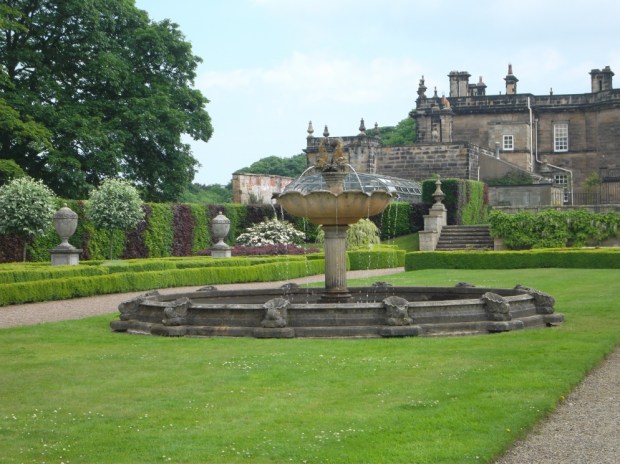
We drove up to Cragside near Rothbury in Northumberland as they were offering free admission as part of this year’s Heritage Open Days. We had been before but not for a long time and as there’s so much to see there we thought it would be worth going again. Cragside was built in 1863 and was the home of the Victorian engineer Lord William George Armstrong. It was the first house in the world to be lit by hydroelectricity, generated by water from the lakes on the estate.

This is the view of the house from the Iron Bridge at the bottom of the rock garden:

Cragside 1

Another view of the house surrounded by trees:

Cragside 2

A carving inspired by the mythical Green Man:

Cragside 3

The kitchen:

Cragside kitchen

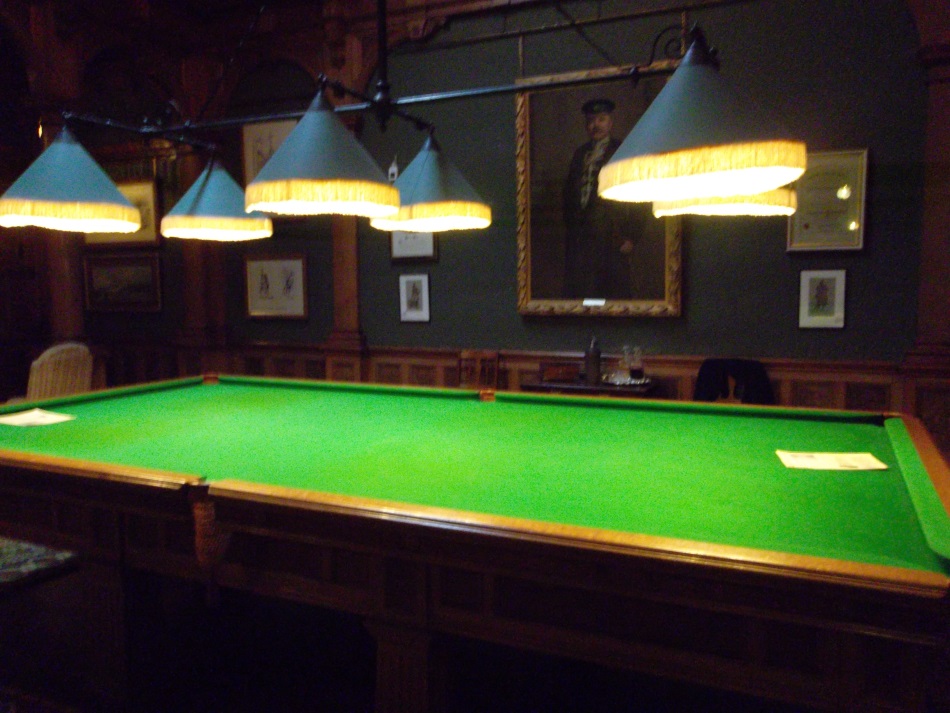
Lord Armstrong’s Billiard Room:

Cragside billiard room

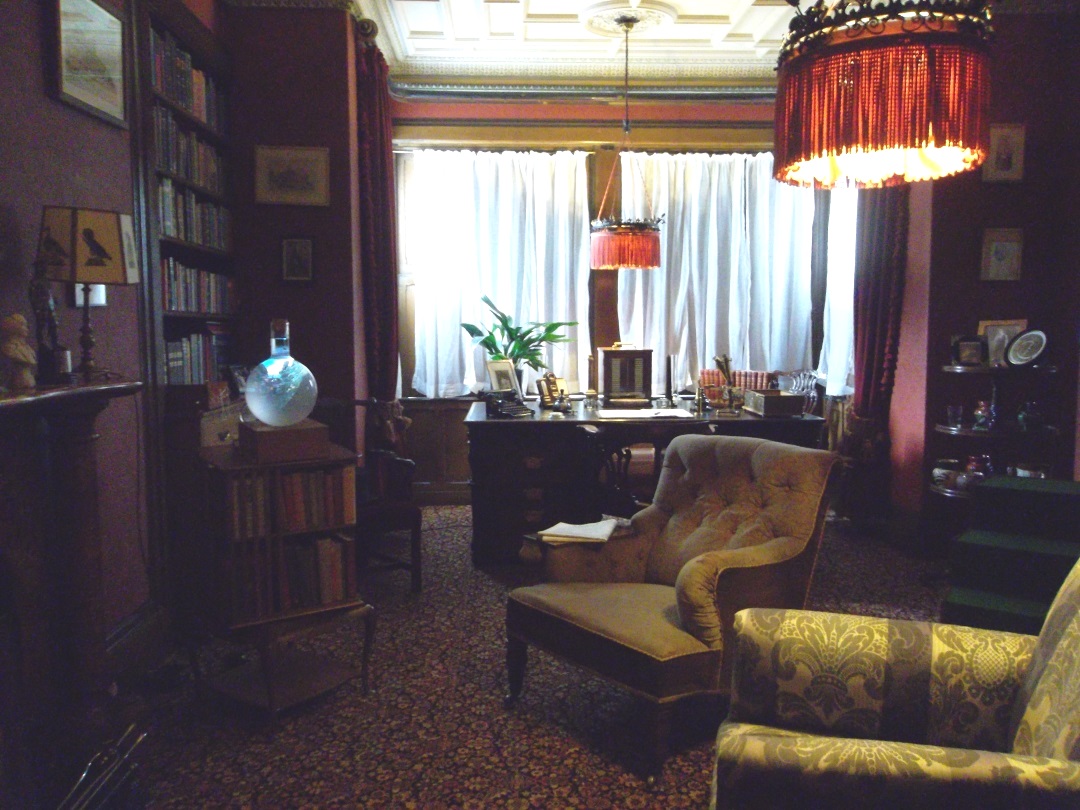
The study (the globe on the left is an art installation forming part of an exhibition):

Cragside 5

Sorry about the quality of the interior pictures; the rooms aren’t very brightly lit and I haven’t mastered the settings on my new camera yet.

Did you do anything interesting at the weekend?

The Queen’s Promise by Lyn Andrews

The Queens Promise Everyone knows that Anne Boleyn was one of the six wives of Henry VIII, but did you know that before her marriage to the King, Anne was secretly betrothed to another Henry – Henry Percy, son and heir of the 5th Earl of Northumberland? The Queen’s Promise is the story of Anne and Henry’s relationship.

When you try a new author for the first time you can never be quite sure what to expect. Until I read The Queen’s Promise I was unfamiliar with Lyn Andrews’ work, but after doing some research I discovered that she has written many bestselling family sagas which, although they have obviously been very successful, don’t look like books that would appeal to me. The Queen’s Promise seems to be a new genre for Andrews; I think this is her first historical fiction novel and based on this one, I hope she writes more. I’ll admit that when I first started to read it I thought it would be just another Tudor court romance – an impression not helped by the title and cover of the novel which do absolutely nothing to set the book apart from others of this type – but I was pleased to find that although there was certainly a romantic aspect to the story, it also had a detailed and well-researched historical background with almost as much attention given to the history and politics of the period as to the romance between Anne and Henry Percy.

Anne’s marriage to Henry VIII and the events leading to her death have been well documented in both fiction and non-fiction. However, in this novel there is actually more focus on Henry Percy than there is on Anne, which was the right choice in my opinion. Anne is such a popular subject for historical fiction and there’s not much that can be said about her that hasn’t been said before, but Henry Percy, on the other hand, is a historical figure who is less well known and Andrews does go into quite a lot of depth on not just his relationship with Anne, but also his life before and after Anne.

As so much of Henry’s life was spent in Northumberland, we are given a lot of information about the Border Reivers, who raided both sides of the English/Scottish border, and Henry’s role as Lord Warden of the Marches. Life in the borders was wild and dangerous in those days and it was not easy to maintain law and order there. We see how difficult it was to keep the peace between Northumberland’s feuding families and protect the people from outlaws while always being aware that there could be an attack from the Scottish side of the border at any time. I’m always looking out for books set in Northumberland as I’m from the North East myself and it was interesting to read about so many places I know – Alnwick, Hexham, Prudhoe, Warkworth – and to have the chance to add to my knowledge of the region’s history.

I really liked the way Henry Percy is portrayed as being refreshingly different to most of the other young men at the Tudor court – loyal, sincere and honest, but also quiet, cultured and sensitive, qualities which sadly make him a disappointment to his father, the Earl. It’s not a happy story for Henry – he also has to fight a recurring illness and to come to terms with being forced into a loveless marriage to Mary Talbot, the Earl of Shrewsbury’s daughter – and of course it isn’t a happy story for Anne either. I did like the young Anne we meet in the earlier chapters of the book, though after she begins her rise to becoming Queen she becomes much harder and a less sympathetic character.

Much of Henry’s and Anne’s story is seen through the eyes of Henry’s friend and squire, Will Chatton, who joins Henry’s household as a boy of eleven and later becomes a successful merchant. Will and his family are purely fictitious characters but they add another interesting angle to the story. As well as allowing us to observe Henry and Anne from a third perspective, the inclusion of the Chatton family gives us the chance to explore another side of Tudor society, away from life at court.

I enjoyed this book, after my initial concerns had proved to be unfounded. It was interesting, very readable and the focus on Henry Percy makes it slightly different from other Anne Boleyn-based historical fiction. It also raises the intriguing question of whether, if Anne and Henry had been allowed to be together as they wished, what impact would this have had on the future of the royal family and the whole course of history?