Six Degrees of Separation: From The Loving Spirit to Endless Night

It’s the first Saturday of the month which means it’s time for another Six Degrees of Separation, hosted by Kate of Books are my Favourite and Best. The idea is that Kate chooses a book to use as a starting point and then we have to link it to six other books of our choice to form a chain. A book doesn’t have to be connected to all of the others on the list – only to the one next to it in the chain.

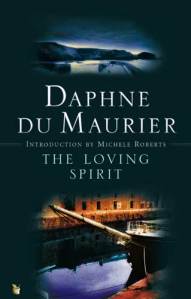
This month we are each starting with either the book with which we finished last month’s chain or the last book we read. My January chain finished with The Loving Spirit by Daphne du Maurier, so I’m going to use that as my starting point. The novel was published in 1931 and was du Maurier’s first. Here’s what I said in my review:

The Loving Spirit is a family saga spanning four generations of the Coombe family. It begins in 1830 with the story of Janet Coombe, a passionate young woman who is forced to abandon her dreams of going to sea when she marries and settles down to start a family with her husband, a boat builder. We then move forward through the decades, ending one hundred years later in the 1930s. Along the way we meet Janet’s son, Joseph, her grandson, Christopher, and finally her great-granddaughter, Jennifer. The book is divided into four parts, one devoted to each of the main characters, but I won’t go into any plot details here as each story has its own set of dramas and surprises which I’ll leave you to discover for yourself.

The Loving Spirit takes its title from an Emily Brontë poem, Self-Interrogation:

“Alas! The countless links are strong,
That bind us to our clay;
The loving spirit lingers long,
And would not pass away!”
.

Another book with a title taken from a poem (in this case Rudyard Kipling’s A Smuggler’s Song) is Watch the Wall, My Darling by Jane Aiken Hodge (1), a Gothic suspense novel set during the Napoleonic Wars. I described it in my review as a tale of “smugglers, soldiers and spies, a crumbling abbey believed to be haunted, family secrets and an inheritance to be decided”.

The plot of Alex Preston’s Winchelsea (2) also features smuggling. Our heroine’s adoptive father is murdered by a gang of smugglers in the East Sussex town of Winchelsea and she and her brother set out to take revenge. The book is set in the 1740s and includes a subplot involving the Jacobites and Bonnie Prince Charlie.

The Masqueraders by Georgette Heyer (3) also takes place just after the Jacobite Rising of 1745. This was one of the first Heyer novels I read and although I’ve read better ones since, it still holds a special place in my heart. I loved the Georgian setting, the characters and the entertaining plot.

The idea of ‘masqueraders’ leads logically to The Man in the Iron Mask by Alexandre Dumas (4). This is the final volume in Dumas’ d’Artagnan series, which began with The Three Musketeers, and revolves around a plot involving a man imprisoned in the Bastille who bears a striking resemblance to the King of France. I always enjoy Dumas and this is one of the stronger novels in the series.

A book which shares a word in the title is The Iron King by Maurice Druon (5), the first book in Druon’s series Les Rois maudits (The Accursed Kings). The series tells the story of Philip IV of France and his descendants, a line of kings “cursed to the thirteenth generation” by the Grand Master of the Knights Templar, whom Philip sent to burn at the stake. I still have the last two books in the series to read – hopefully this year!

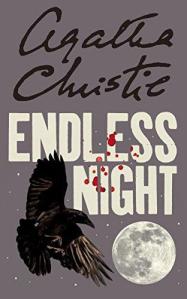
Another book which features a curse as part of the plot is Agatha Christie’s Endless Night (6). And the title of the book is also taken from a poem, bringing the chain full circle! The poem this time is William Blake’s Auguries of Innocence:

“Every Night and every Morn
Some to Misery are born.
Every Morn and every Night
Some are born to Sweet Delight.
Some are born to Sweet Delight,
Some are born to Endless Night.”

~

And that’s my chain for this month! My links have included: titles taken from poems, smugglers, Jacobites, masked men, the word ‘iron’ and curses.

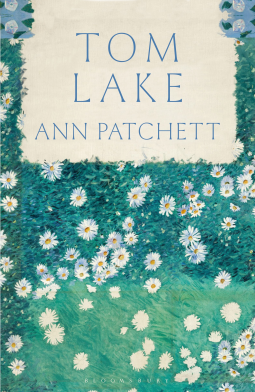
In March we’ll be starting with Tom Lake by Ann Patchett.

Six Degrees of Separation: From Tomorrow and Tomorrow and Tomorrow to The Loving Spirit

It’s the first Saturday of the month – and of 2024 – which means it’s time for another Six Degrees of Separation, hosted by Kate of Books are my Favourite and Best. The idea is that Kate chooses a book to use as a starting point and then we have to link it to six other books of our choice to form a chain. A book doesn’t have to be connected to all of the others on the list – only to the one next to it in the chain.

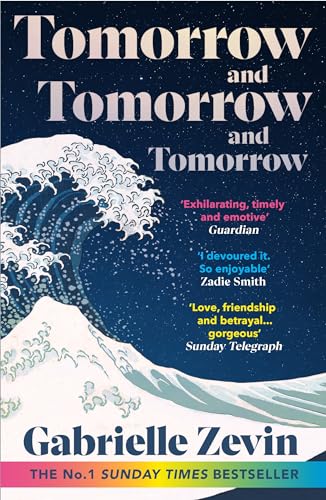
This month we’re starting with Tomorrow and Tomorrow and Tomorrow by Gabrielle Zevin. I haven’t read it, but here’s what it’s about:

When Sam catches sight of Sadie at a crowded train station one morning he is catapulted straight back to childhood, and the hours they spent immersed in playing games.

Their spark is instantly reignited and sets off a creative collaboration that will make them superstars. It is the 90s, and anything is possible.

What comes next is a decades-long tale of friendship and rivalry, fame and art, betrayal and tragedy, perfect worlds and imperfect ones. And, above all, our need to connect: to be loved and to love.

The title of the Zevin novel is a line from one of the most famous soliloquies in Shakespeare’s Macbeth: “Tomorrow, and tomorrow, and tomorrow, Creeps in this petty pace from day to day, To the last syllable of recorded time.” In Elizabeth Bailey’s For One More Tomorrow (1), Sadie Grey is directing a production of Macbeth when she discovers that she has somehow conjured up the ghost of Macbeth himself…and he is not at all happy with the way he is being portrayed.

I didn’t immediately notice that as well as the Macbeth and ‘Tomorrow’ connections, both the Zevin and Bailey novels feature a character whose name is Sadie! So does At the Edge of the Orchard by Tracy Chevalier (2), although this is a completely different kind of novel, set in the 1830s and following the story of a family who are trying to establish an orchard in the Black Swamp region of Ohio.

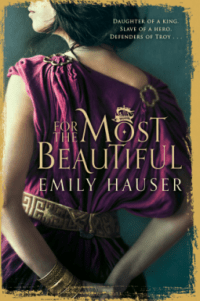
I learned a lot about trees and apples from the Chevalier book – more than I knew I needed to know! Another book that features apples, but in a very different way, is For the Most Beautiful by Emily Hauser (3). This novel, the first in a trilogy inspired by the ‘golden apples’ from Greek mythology, is a retelling of the Trojan War from the perspectives of two female characters, Krisayis and Briseis. The other two books in the trilogy focus on Atalanta (For the Winner) and Hippolyta (For the Immortal).

The word ‘beautiful’ also appears in the title of Your Beautiful Lies by Louise Douglas (4), a novel set in a small mining town in Yorkshire during the miners’ strike of 1984. A crime takes place – a woman is murdered on the moors – but although the book does have a strong mystery element, I described it in my review as “difficult to classify as belonging to a particular genre, being a mixture of crime, romance, suspense and domestic drama”.

Mining also features heavily in the plot of Ross Poldark (5), the first book in Winston Graham’s Poldark series. Set in 18th century Cornwall, it begins with Ross returning home after a long absence to find that his father has died and the woman he loves is marrying his cousin. The rest of the book follows Ross as he tries to restore the family estate and open a new copper mine. I read this book in 2015 when a new adaptation was being shown on the BBC, but although I enjoyed it and intended to continue with the rest of the series, I still haven’t picked up the second book.

An author who is closely associated with Cornwall is Daphne du Maurier. Many of her novels are set there, but the one I’ve chosen to finish my chain is The Loving Spirit (6). Published in 1931 when she was just twenty-four years old, this was du Maurier’s first novel and tells the story of four generations of the Coombe family, who live in a fictional shipbuilding town on the Cornish coast. Although it’s not as strong as her later novels, I still enjoyed it. The title is taken from an Emily Brontë poem, Self-Interrogation, which provides a link back to the beginning of this chain – books with titles inspired by another author’s work.

~

And that’s my chain for this month! My links have included: The word ‘tomorrow’, Macbeth, the name Sadie, apples, the word ‘beautiful’, mining and Cornwall.

In February we’ll be starting with the book we finished with this month – which for me is The Loving Spirit.

Six Degrees of Separation: From Kitchen Confidential to The Thirteenth Tale

It’s the first Saturday of the month, which means it’s time for another Six Degrees of Separation, hosted by Kate of Books are my Favourite and Best. The idea is that Kate chooses a book to use as a starting point and then we have to link it to six other books of our choice to form a chain. A book doesn’t have to be connected to all of the others on the list – only to the one next to it in the chain.

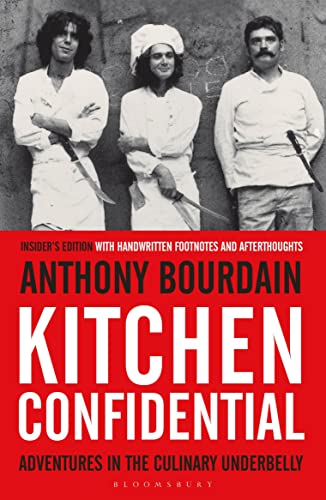
This month we’re starting with Kitchen Confidential by Anthony Bourdain. I haven’t read it and I’m not likely to, but here’s what it’s about:

After twenty-five years of ‘sex, drugs, bad behaviour and haute cuisine’, chef and novelist Anthony Bourdain has decided to tell all. From his first oyster in the Gironde to his lowly position as a dishwasher in a honky-tonk fish restaurant in Provincetown; from the kitchen of the Rainbow Room atop the Rockefeller Center to drug dealers in the East Village, from Tokyo to Paris and back to New York again, Bourdain’s tales of the kitchen are as passionate as they are unpredictable, as shocking as they are funny.

Using food and kitchens as my first link, John Saturnall’s Feast by Lawrence Norfolk (1) is set in the 17th century and tells the story of John Sandall, an orphan who is taken into the household of a wealthy nobleman, Sir William Fremantle. With his knowledge of food and ancient recipes, John is given the task of creating a meal to tempt Sir William’s daughter, who is refusing to eat as a protest against an arranged marriage. This is a complex, multi-layered novel with an unusual plot and a vivid portrayal of life in the kitchen!

The Feast by Margaret Kennedy (2) shares a word in the title, but is a very different book. Published in 1950, it follows a week in the lives of a group of guests who are staying in a hotel on the coast of Cornwall. We know from the beginning that by the end of the week the hotel will have been destroyed by a cliff collapsing on top of it, but we don’t know who will survive and who won’t. I really enjoyed this one; it’s one of my favourites so far by Margaret Kennedy.

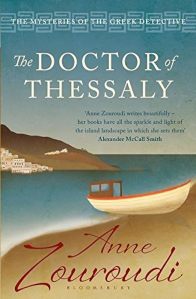
Although it doesn’t form a big part of the plot, some of the characters in The Feast have traits that represent one of the seven deadly sins, which I thought was a clever touch. Anne Zouroudi’s Greek Detective series, which follows the investigations of the mysterious Hermes Diaktoros, also uses one of the seven sins as a theme for each novel. The Doctor of Thessaly (3) is the third book in the series, although they can be read in any order, and this one has ‘envy’ as its theme.

I haven’t read many authors whose surname begins with the letter Z, but one of them is Émile Zola. I’ve read three of his books so far and my favourite is Thérèse Raquin (4), the first one I read and a standalone novel which is not part of his longer Rougon-Macquart cycle. This is a very dark novel about two people who commit a terrible crime and the psychological effect this has on the rest of their lives.

I’m going to use a word in the title again for my next link, which leads me to 13, rue Thérèse by Elena Mauli Shapiro (5). This unusual and imaginative novel begins with a man discovering a box full of photographs, letters, postcards and other items that once belonged to Louise Brunet, a Frenchwoman who lived through both world wars. We are given a picture of each item, followed by a few pages of story describing the item’s significance and background, and gradually Louise’s history begins to unfold.

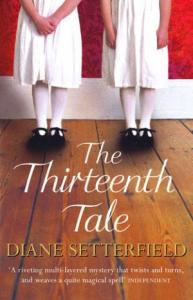
My final link uses the number 13. The Thirteenth Tale by Diane Setterfield (6) is the story of a young woman who agrees to write the biography of a reclusive author. It’s an entertaining read, clearly inspired by several classic Gothic novels, and I described it in my review as a tale of ‘Yorkshire moors, twins, mistaken identities, ghosts and governesses’.

~

And that’s my chain for this month! My links have included: Kitchens, the word ‘Feast’, the seven deadly sins, author names beginning with Z, the name Thérèse and the number thirteen.

In January we’ll be starting with Tomorrow and Tomorrow and Tomorrow by Gabrielle Zevin.

Six Degrees of Separation: From Western Lane to Death in Berlin

It’s the first Saturday of the month, which means it’s time for another Six Degrees of Separation, hosted by Kate of Books are my Favourite and Best. The idea is that Kate chooses a book to use as a starting point and then we have to link it to six other books of our choice to form a chain. A book doesn’t have to be connected to all of the others on the list – only to the one next to it in the chain.

This month we’re starting with Western Lane by Chetna Maroo.

Eleven-year-old Gopi has been playing squash since she was old enough to hold a racket. When her mother dies, her father enlists her in a quietly brutal training regimen, and the game becomes her world. Slowly, she grows apart from her sisters. Her life is reduced to the sport, guided by its the serve, the volley, the drive, the shot and its echo.

But on the court, she is not alone. She is with her pa. She is with Ged, a thirteen-year-old boy with his own formidable talent. She is with the players who have come before her. She is in awe.

An indelible coming-of-age story, Chetna Maroo’s first novel captures the ordinary and annihilates it with beauty. Western Lane is a valentine to innocence, to the closeness of sisterhood, to the strange ways we come to know ourselves and each other.

~

I struggled to get started with this month’s chain; I don’t read many books about sports and couldn’t find any inspiration in the book’s description. Eventually, I decided to use the word ‘lane’ as my first link – another word for lane can be street, which leads me to The Crowded Street by Winifred Holtby (1). I loved this 1924 novel about a young woman searching for independence and happiness in a small Yorkshire village as World War I approaches.

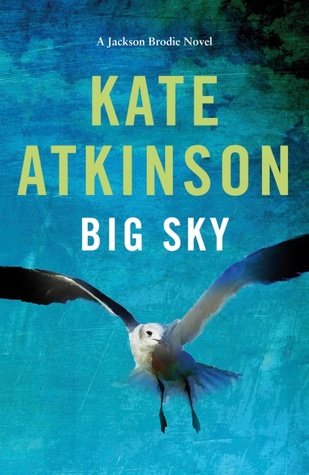
The Holtby novel is set partly in Scarborough on the North Yorkshire coast. So is Big Sky by Kate Atkinson (2), the fifth and most recent novel in the Jackson Brodie crime series. It begins with a recreation of a naval battle on the lake in Scarborough’s Peasholm Park then moves on to other coastal towns such as Whitby and Bridlington where private investigator Jackson is on the trail of a client’s cheating husband. Like the other books in the series, this one is more about the characters than the crimes being committed, but I think that’s why I enjoy them so much.

From Kate Atkinson to a different author with the same first name: Kate Summerscale. I’ve read several of her books, but the one I’m going to link to here is The Haunting of Alma Fielding (3). This is a nonfiction book based on the true story of Alma Fielding who claims to be the victim of paranormal activity in 1930s London. Nandor Fodor of the International Institute for Psychical Research begins to investigate, but are there really poltergeists at work in the Fielding household or is it an elaborate fraud? I enjoyed this one but felt that Alma’s story wasn’t really substantial enough to fill a whole book.

Poltergeists also feature in The Little Stranger by Sarah Waters (4), which is set in an old country house in post-war Britain. This book is a work of fiction but, like the Summerscale one, the story is ambiguous – is Hundreds Hall really haunted or is there another explanation? We are given some answers, but the ending leaves a lot open to interpretation and I was still trying to make sense of it days later. Genuinely spooky and one of my favourites by Sarah Waters.

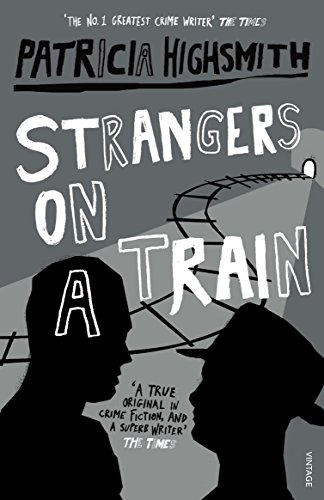
Another book with a shared word in the title is Strangers on a Train by Patricia Highsmith (5), in which two men meet on a train and find themselves plotting two perfect murders. I read this classic psychological thriller earlier this year and enjoyed it, despite both main characters being very unlikeable, particularly the psychopathic Bruno! This was my first Patricia Highsmith book and I do plan to read more eventually.

Miranda, the heroine of M.M. Kaye’s Death in Berlin (6), is on a train journey at the beginning of the novel when one of the passengers is murdered. The mystery continues to deepen when Miranda arrives at her destination, Berlin, a city trying to recover in the aftermath of World War II. This is one of a series of Death In… suspense novels by Kaye, all set in different locations around the world. Death in Kashmir is my favourite, but I did love the portrayal of an eerie postwar Berlin in this one.

~

And that’s my chain for November! My links have included: lanes and streets, Scarborough, authors with the name Kate, poltergeists, the word ‘Stranger’ and books set on trains.

In December we’ll be starting with Kitchen Confidential by Anthony Bourdain.

Six Degrees of Separation: From I Capture the Castle to The Woman in White

It’s the first Saturday of the month, which means it’s time for another Six Degrees of Separation, hosted by Kate of Books are my Favourite and Best. The idea is that Kate chooses a book to use as a starting point and then we have to link it to six other books of our choice to form a chain. A book doesn’t have to be connected to all of the others on the list – only to the one next to it in the chain.

This month we’re starting with I Capture the Castle by Dodie Smith. Usually I haven’t read the first book in these chains (and have often never even heard of them), but this is one I have read and enjoyed! Here’s what it’s about:

‘I write this sitting in the kitchen sink’ is the first line of this timeless, witty and enchanting novel about growing up.

Cassandra Mortmain lives with her bohemian and impoverished family in a crumbling castle in the middle of nowhere. Her journal records her life with her beautiful, bored sister, Rose, her fading glamorous stepmother, Topaz, her little brother Thomas and her eccentric novelist father who suffers from a financially crippling writer’s block. However, all their lives are turned upside down when the American heirs to the castle arrive and Cassandra finds herself falling in love for the first time.

The title of the Dodie Smith novel is metaphorical, but my first link is to a book about people really trying to capture a castle! Winter Siege by Ariana Franklin and Samantha Norman (1) is set in the 12th century during the Anarchy, the period of civil war when King Stephen and his cousin, the Empress Matilda, battled for the English throne. The castle being besieged in the novel is the fictional Kenniford Castle where the Empress seeks sanctuary during the war. Ariana Franklin sadly died leaving the book unfinished, so it was completed by her daughter Samantha.

I recently finished reading another book completed by the author’s child after their mother’s death: Atlas: The Story of Pa Salt by Lucinda Riley and Harry Whittaker (2). This is the last of eight books in Riley’s Seven Sisters series and Whittaker wrote it using his mother’s notes. The previous seven books tell the stories of the seven adopted daughters of Pa Salt, each named after a star in the Seven Sisters star cluster, and this final novel delves into the history of Pa Salt himself, answering some of the mysteries raised throughout the series. I haven’t posted my review yet, but it should be up soon.

Atlas is the name of a character from mythology – a Titan condemned to hold up the sky for eternity. Another book with the name of a mythological character in the title is The Labours of Hercules by Agatha Christie (3). This is a collection of short stories featuring Christie’s famous detective Hercule Poirot. He investigates twelve different cases in this collection, each one loosely inspired by one of the twelve Labours of Hercules.

The Christie book was published in 1947 and so was Prince of Foxes (4), Samuel Shellabarger’s classic historical adventure novel. Set in Renaissance Italy, it’s the story of Andrea Orsini, who is given the task of negotiating a marriage between Alfonso d’Este and Lucrezia Borgia. I described it in my review as a book involving “battles, duels, clever disguises, last-minute escapes, sieges, miracles and all sorts of trickery and deception”. I loved it, but still haven’t read any of Shellabarger’s other books.

Now from a book with ‘foxes’ in the title to an author with the same animal in her name! The Somnambulist by Essie Fox (5) is an atmospheric Gothic novel set in Victorian England, featuring a large country house, family secrets and intrigue, ghostly occurrences and, as the title suggests, a theme of sleepwalking, both literal and metaphorical. The title is a reference to the 1871 painting The Somnambulist by John Everett Millais.

The Millais painting, which depicts a woman in a long white nightgown, is thought to have been inspired by The Woman in White by Wilkie Collins (6), which was published more than ten years earlier. I love Collins’ books and this classic Victorian sensation novel is one of my favourites (tied with Armadale). Who can forget his wonderful heroine Marian Halcombe, the sinister Count Fosco, and that eerie meeting between Walter Hartright and the mysterious ‘woman in white’ on a lonely London road?

~

And that’s my chain for October! My links have included: capturing castles, parent and child writing teams, titles featuring mythological characters, books published in 1947, the word ‘fox’ and Millais’ The Somnambulist.

In November we’ll be starting with Western Lane by Chetna Maroo.

Six Degrees of Separation: From Wifedom to The So Blue Marble

It’s the first Saturday of the month, which means it’s time for another Six Degrees of Separation, hosted by Kate of Books are my Favourite and Best. The idea is that Kate chooses a book to use as a starting point and then we have to link it to six other books of our choice to form a chain. A book doesn’t have to be connected to all of the others on the list – only to the one next to it in the chain.

This month we’re starting with Wifedom by Anna Funder. I haven’t read this book, but here’s what it’s about:

Looking for wonder and some reprieve from the everyday, Anna Funder slips into the pages of her hero George Orwell. As she watches him create his writing self, she tries to remember her own…

When she uncovers his forgotten wife, it’s a revelation. Eileen O’Shaughnessy’s literary brilliance shaped Orwell’s work and her practical nous saved his life. But why – and how – was she written out of the story? Using newly discovered letters from Eileen to her best friend, Funder recreates the Orwells’ marriage, through the Spanish Civil War and WWII in London. As she rolls up the screen concealing Orwell’s private life, she is led to question what it takes to be a writer – and what it is to be a wife.

~

First, I’m linking to another book about the ‘forgotten’ wife of a famous person. Mrs Engels by Gavin McCrea (1) is a fictional portrayal of Lizzie Burns, the lover and eventual wife of the German philosopher Friedrich Engels. There’s not a lot of information available on the real Lizzie, but we know that she was probably illiterate, which makes it all the more important that books like this are written to give a voice to people who were unable to tell their own story. The novel describes Lizzie’s early life in 19th century Manchester where she worked at a cotton mill, before moving on to her relationships with Engels and his friend, Karl Marx.

The setting provides the link to my next book. North and South by Elizabeth Gaskell (2) is also set in a mill town in the north of England – the fictional Milton, thought to be based on Manchester. It’s the story of Margaret Hale, who moves from the south of England to the north after her father leaves his job as parson to take up a new position as a tutor in Milton. Here Margaret is exposed to new people and new ideas. This isn’t a favourite classic of mine, but I did find it interesting and have since gone on to read more of Gaskell’s books.

North and south are directions of the compass and so are east and west. The next book in my chain is The Western Wind by Samantha Harvey (3), a mystery set in a small English village in 1491. The novel is narrated by a priest, John Reve, who listens to the confessions of his parishioners and tries to piece together the truth about the disappearance of the wealthy Thomas Newman, who has been swept away by the river. Was it murder, suicide or a terrible accident? This is an unusual book, structured so that the story moves back in time rather than forwards, but it’s not one that I particularly liked due to feeling a lack of connection with the characters.

Another author who shares a surname with Samantha is W.F. Harvey, author of The Mysterious Mr Badman (4). This is a book from the excellent British Library Crime Classics series and one that I really enjoyed. Published in 1934, it’s described as a ‘bibliomystery’ and begins with Athelstan Digby helping out in his nephew’s village bookshop when three different people arrive one after the other, all asking for a copy of the same rare book. Although I found it more of a thriller than a traditional mystery, it’s very entertaining and a lot of fun to read.

Digby is not a common name, but it also appears in Beau Geste by P.C. Wren (5). Digby Geste, his twin brother Michael (nicknamed Beau) and their younger brother John are orphans living with a rich aunt when her valuable sapphire, the ‘Blue Water’, disappears. Each of them, for various reasons, decides to confess to the theft before running away to join the French Foreign Legion. Part adventure novel set in North Africa and part whodunnit with two separate mysteries to solve, I loved this book and still need to finish the trilogy.

With two of the Geste brothers being twins, I started to think about other books featuring twins. There are a few I could have chosen, but I decided on a novel I read earlier this year, The So Blue Marble by Dorothy B. Hughes (6). Although this isn’t the strongest of the Hughes novels I’ve read so far, it’s still very enjoyable. The twin characters, Danny and David Montefierrow, are a sinister pair who are searching for a mysterious blue marble and will stop at nothing to find it!

~

And that’s my chain for September! My links have included: Forgotten wives, Manchester cotton mills, compass points, authors with the name Harvey, fictional Digbys and books featuring twins.

In October we’ll be starting with I Capture the Castle by Dodie Smith – finally, a book I’ve actually read!

Six Degrees of Separation: From Romantic Comedy to The Streets

It’s the first Saturday of the month, which means it’s time for another Six Degrees of Separation, hosted by Kate of Books are my Favourite and Best. The idea is that Kate chooses a book to use as a starting point and then we have to link it to six other books of our choice to form a chain. A book doesn’t have to be connected to all of the others on the list – only to the one next to it in the chain.

This month we’re starting with Romantic Comedy by Curtis Sittenfeld. This is not a book I’ve read, but here’s what it’s about:

With a series of heartbreaks under her belt, Sally Milz – successful script writer for a legendary late-night TV comedy show – has long abandoned the search for love.

But when her friend and fellow writer begins to date a glamorous actress, he joins the growing club of interesting but average-looking men who get romantically involved with accomplished, beautiful women.

Sally channels her annoyance into a sketch, poking fun at this ‘social rule’. The reverse never happens for a woman.

Then Sally meets Noah, a pop idol with a reputation for dating models. But this isn’t a romantic comedy – it’s real life.

Would someone like him ever date someone like her?

Skewering all our certainties about why we fall in love, ROMANTIC COMEDY is a witty and probing tale of how the heart will follow itself, no matter what anyone says. It is Curtis Sittenfeld at her most sharp, daring and compassionate best.

Romantic Comedy doesn’t sound like my sort of book, although I did enjoy one of Curtis Sittenfeld’s earlier novels, Prep. I nearly used that for my first link but remembered that I’d already used Prep in a previous Six Degrees post, so instead I’ve gone with another book with Romantic in the title: The Romantic by William Boyd (1). This is the first – and still the only – book I’ve read by William Boyd, although I’m definitely planning to read more. It tells the story of Cashel Greville Ross, following him through his life from birth to death as he befriends the Romantic Poets in Italy, searches for the source of the Nile, joins the army in Sri Lanka and uncovers family secrets in Ireland.

The Romantic was longlisted for this year’s Walter Scott Prize for Historical Fiction but didn’t make the shortlist – a big mistake, in my opinion! Another book I had read from the longlist that didn’t get shortlisted was The Second Sight of Zachary Cloudesley by Sean Lusk (2). The novel follows Zachary Cloudesley, son of an 18th century clockmaker and inventor of automata, as he travels to Constantinople in search of his missing father.

Automata is the link to my next book, The Clockwork Girl by Anna Mazzola (3). Inspired by the real life scandal of ‘The Vanishing Children of Paris’ in 1750 and the technological advances in the creation of clockwork dolls and automata at that time, this is a fascinating novel set in Paris just a few decades before the French Revolution. It has a wonderful atmosphere, a beautiful cover and was one of my favourite books that I read last year.

Another book set in Paris is It Walks by Night by John Dickson Carr (4), part of the British Library Crime Classics series. This is one of five novels Carr wrote featuring the French detective and juge d’instruction (examining magistrate), Henri Bencolin. It’s a clever locked room mystery which I did find interesting – and couldn’t solve! – but I didn’t much like Bencolin as a character. I preferred The Black Spectacles, one of his Gideon Fell mysteries which I read earlier this year.

It Walks by Night was published in 1930 and so was The Mysterious Mr Quin by Agatha Christie (5). I really enjoyed this collection of short stories featuring Mr Satterthwaite, an elderly English gentleman, and his mysterious friend, Harley Quin, who comes and goes without warning and stays just long enough to help Satterthwaite solve the mystery. Much as I love Christie’s Poirot and Miss Marple novels, it’s always interesting to venture beyond those books and see what else she wrote.

The author of the final book in my chain shares a name with Harley Quin (although he spells it with two ‘n’s). The book is The Streets by Anthony Quinn (6), in which a young newspaper reporter in 1882 visits some of London’s poorest slums to report on the living conditions. The book is fictional but based on real nineteenth century sources. I found it fascinating from a social history perspective, but the plot and characters didn’t interest me much and I struggled to finish it.

~

And that’s my chain for this month! My links have included the word ‘Romantic’, books longlisted but not shortlisted, automata, Paris, books published in 1930 and the name Quin or Quinn.

In September we’ll be starting with Wifedom by Anna Funder.