Here Comes the King by Philip Lindsay

Here Comes the King Philip Lindsay (1906-1958) was an Australian author of historical fiction. His books have been out of print in recent years but are now being made available to a modern audience in ebook form by one of my favourite independent publishers, Endeavour Press. Here Comes the King, a 1933 novel about Katherine Howard and Thomas Culpeper, is the first of his books that I’ve read.

Katherine (or Catherine, but I’m sticking to the spelling used in the novel) is a young woman of seventeen or eighteen when she marries Henry VIII at Oatlands Palace and becomes his fifth wife. Her predecessor, Anne of Cleves, has recently been set aside by the king, who believes he was misled as to her appearance. The new queen’s beauty and youthful spirit are much more pleasing to Henry, who calls her his ‘rose without a thorn’. Katherine, though, is less enamoured with her fat, gluttonous, fifty-year-old husband who is suffering from painful leg ulcers and whose moods are becoming increasingly volatile. Although Henry is not generally unkind to her, she is tempted into an affair with the handsome young courtier, Thomas Culpeper – an affair which will lead to both their downfalls.

Here Comes the King is written in the third person from the perspective of several different characters including Culpeper, Henry and Katherine herself, as well as Will Sommers, the king’s fool, Francis Dereham, another man once romantically involved with Katherine, and Jane Boleyn, Lady Rochford, who helps to arrange Katherine’s secret meetings with Culpeper. Jane and Sommers were both in a difficult position, knowing or suspecting what was going on and unsure of what to do with that knowledge, and this made them interesting characters to read about.

However, I felt that I didn’t get to know Katherine very well. She is portrayed as a pretty, flirtatious, immature young girl, and while this does seem to be a widely held view of what the real Katherine was like, I would still have preferred her character to be given a little more depth. Even when she was the viewpoint character, I never felt that I really knew what she was thinking. Culpeper’s character is better written; he is shown in a negative light, being irresponsible, impulsive and a heavy drinker (and allegedly guilty of both rape and murder, although these things are only briefly mentioned as they happen outside the scope of the novel), but his thoughts and feelings come through strongly.

I am far from being an expert on Katherine’s life and her time as Henry’s queen, so I can’t really comment on Lindsay’s accuracy, but the story did seem to follow quite faithfully the general outlines of Katherine’s and Culpeper’s lives. He incorporates things which are known to be historical fact, such as the text of Katherine’s incriminating letter to Culpeper (complete with grammatical mistakes; she is thought to be the least well educated of Henry’s wives) as well as things which may or may not be true but which have become part of the legends surrounding Katherine: practising laying her head on the block the night before her execution, for example, and declaring that “I die a Queen, but I would rather have died the wife of Culpeper”.

I had no problems with Lindsay’s writing (it’s slightly flowery and over-descriptive in places but otherwise feels surprisingly contemporary for a 1930s book) and I would read more of his work, but I didn’t find this particular novel very compelling, maybe because it’s so romance-centred. Admittedly, it would be difficult to write a book about Katherine Howard and not focus on her love affairs; as she spent such a short period as queen and died so young, she left less of a legacy than some of Henry’s other wives, and I think this is why her story has never appealed to me very much. Maybe one of Lindsay’s other novels would interest me more than this one did.

I received a copy of this book for review via NetGalley.

Who would be a queen?

I certainly wouldn’t, based on the stories of the two 16th century queens I’ve been reading about recently!

The Last Queen The first of our two queens is Juana of Castile, also known as Juana la Loca (‘the mad’), whose life is retold in fictional form in The Last Queen by C.W. Gortner. I think most of us will have heard of Juana’s younger sister, Katherine of Aragon, the first wife of Henry VIII who was divorced so that the King could marry Anne Boleyn, breaking away from Rome in the process. Juana’s story is less well known (outside Spain, at least) and less often covered in historical fiction, but just as interesting and tragic.

Juana is the third of five children born to Queen Isabella and King Ferdinand of Spain, whose joint rule has brought together the two Spanish kingdoms of Castile and Aragon. The King and Queen have arranged marriages for all of their children, in the hope of forming political alliances, and Juana finds herself married against her will to Philip, Duke of Burgundy, son of the Holy Roman Emperor. Despite her initial feelings, Juana quickly falls in love with her new husband – but her happiness doesn’t last long. The deaths of her elder brother and sister leave Juana as her parents’ heir and her relationship with Philip changes as a result.

Influenced by the scheming Archbishop Besançon, Philip sets his sights on taking the throne of Spain for himself and Juana finds herself betrayed and accused of insanity. Even as she discovers that the very people she should be able to trust want only to bully and manipulate her, she remains determined to fight for her throne and her country.

This is the first of C.W. Gortner’s books I’ve read and I will definitely consider reading more. I thoroughly enjoyed this moving and dramatic novel which took me through a period of Spanish history of which I previously knew almost nothing. There’s some beautiful descriptive writing which brings each of the various settings to life, from Granada during the Conquest of 1492 to the extravagance of the French court.

Gortner is a male author, if you’re wondering, and he writes very convincingly from the perspective of a young woman in this novel. Whether or not Juana actually suffered from mental illness is debatable; the point of view taken in this book is that the ‘madness’ developed as a result of years of stress and suffering – and branding her mad was a convenient way for her enemies to prevent her from ruling. I don’t know enough about her to say whether this is likely or not, but I did love Gortner’s portrayal of Juana and wished she could have had a little more happiness in her life.

The Taming of the Queen Our second queen is Katherine Parr, sixth and final wife to Henry VIII, whose story is told in The Taming of the Queen by Philippa Gregory. I hadn’t really intended to read this book as I find Katherine one of the less interesting wives and, having read several other fictional accounts of her life (including Queen’s Gambit by Elizabeth Fremantle and The Secret Keeper by Sandra Byrd), I didn’t imagine this one would have anything new to add. When I saw it in the New Books section of the library, however, I couldn’t resist reading it – and I’m pleased I did as I found it to be one of Gregory’s better Tudor court novels.

Katherine Parr (or Kateryn as her name is spelled in this book) could be seen as one of Henry’s luckier wives, outliving the King and managing to avoid both divorce and beheading, but this doesn’t mean that she was happy or that she didn’t fear for her life at times. By this stage of his life Henry is, shall we say, past his prime: Gregory describes (sometimes in too much detail!) his gluttony at banquets, his bodily functions and the smell of his ulcerated leg. Add to this his temper, unpredictable behaviour and obsession with his third wife, Jane Seymour, and you can see how difficult things are for poor Kateryn, especially as she has been forced to give up her secret love for Thomas Seymour.

Kateryn finds some comfort in getting to know her new stepchildren – Mary, Elizabeth and Edward – and restoring them to their places at court, and also in religious study. She welcomes preachers to her rooms (including Anne Askew, who was later burned at the stake) and as a result of this narrowly escapes death herself; she debates religious reform with her ladies and sometimes with the King himself; and she writes several books, becoming the first Queen of England to publish under her own name.

Kateryn is an intelligent and mature woman who has already been widowed twice before her marriage to Henry and she is able to tolerate her situation and handle the King’s whims in a way that a younger, less experienced girl may not have done. I liked her, but I felt that there were times when Gregory attributed words and actions to her that didn’t feel consistent with the way her character was being portrayed. This made me think that maybe she is more comfortable writing from the perspective of younger, livelier narrators.

This is an entertaining read and if you’ve never read about Katherine Parr before, it provides a good overview of her life and of the final years of Henry’s reign (events such as the sinking of the Mary Rose are covered in dramatic detail). I did prefer Elizabeth Fremantle’s Queen’s Gambit, though, and would recommend that book ahead of this one.

Have you read any other novels about Juana of Castile or Katherine Parr? Which are your favourites?

The Lady of Misrule by Suzannah Dunn

The Lady of Misrule Lady Jane Grey, Queen of England for just nine days in 1553, has been replaced on the throne by Mary Tudor, the eldest daughter of Henry VIII. As Mary establishes herself as Queen and returns the country to Catholic rule, Jane is taken to the Tower of London to await the trial which will determine her fate. Joining her in her imprisonment is Elizabeth Tilney, a ‘good Catholic girl’ who has volunteered to be Jane’s companion, and it is through Elizabeth’s eyes that the story is told.

Elizabeth and Jane are the same age, but that’s all they have in common. Jane is a quiet, serious girl, devoted to her books and her Protestant faith, while Elizabeth has a livelier, more rebellious personality and has had experiences of life that are very different from Jane’s. Being such incompatible people, living together in the confines of the Tower is not always easy, but gradually a bond starts to form between the two girls. History tells us what will eventually happen to Jane but The Lady of Misrule is a fictional account of the time she and Elizabeth spend in captivity wondering what the future holds.

I came away from The Lady of Misrule with a mixture of feelings, some negative and some positive. The negative feelings are mainly due to my own personal taste in historical fiction. Suzannah Dunn writes in a very contemporary style, using modern slang and exploring emotions, motives and relationships in a way that she thinks modern readers will identify with. I thought this style worked quite well in The May Bride, a domestic family story about the early life of Jane Seymour, but it irritated me this time. I do understand that the author writes in this way intentionally (she explains why in the Q&A on her website) and it’s not a result of carelessness or poor research, but I do prefer historical novels to feel more ‘historical’. As I’ve said, this is definitely just something that will depend on each individual reader’s own taste.

There were plenty of positive things I can say about this book, though. I have read other novels about Lady Jane Grey, but I liked the fact that Dunn’s approach is quite different, writing about just a short period of her life and from the perspective of someone who is meeting her for the first time. Although the girls spend most of the novel in captivity, they do still have some contact with the outside world and Elizabeth is able to relate to us some of the events that are unfolding beyond the walls of the Tower, but the focus is always on Elizabeth’s and Jane’s personal lives. Jane keeps herself at a distance which means that Elizabeth, who can be quite naive when it comes to politics and religion, often finds her difficult to understand and maybe because of this Jane is not an easy character to like. But this is as much Elizabeth’s story as it is Jane’s and as the novel progresses we learn more about Elizabeth’s past, her relationship with a much older man and the secrets she is trying to hide.

I also liked the portrayal of Jane’s husband, the seventeen-year-old Guildford Dudley, who is also imprisoned elsewhere in the Tower awaiting his own fate. It seems that the one bright spot in Guildford’s life is having the chance to speak to his wife when they take their daily walks in the Tower gardens, but Jane has little time for her husband and instead he and Elizabeth become friends. Guildford has been shown in a very negative light in other books I’ve read and it’s easy to forget that he was just a young man who, like Jane, had been used and manipulated by people more powerful than himself. It was good to see such a different side of him in this novel!

While I can’t say that I loved The Lady of Misrule, it was still an interesting read at times and I would recommend it to fans of Tudor fiction who are happy with a more contemporary approach.

I received a copy of this book for review via NetGalley.
Dark Fire by C.J. Sansom

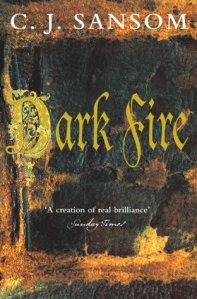
Dark Fire This is the second in CJ Sansom’s Shardlake series set in Tudor England and following the investigations of hunchbacked lawyer Matthew Shardlake. The action in Dark Fire takes place a year or two after the events of the first book, Dissolution, which I loved, but although I would recommend reading the books in order it’s not essential and this is a complete story in itself.

Dark Fire is set during the summer heatwave of 1540 as Henry VIII prepares to cast aside his fourth wife, Anne of Cleves, and marry Catherine Howard. Thomas Cromwell, the man who was instrumental in arranging the marriage to Anne, has fallen out of favour with the King and needs to regain Henry’s trust as quickly as possible. When he witnesses a demonstration of Greek Fire (sometimes called Dark Fire), a legendary Byzantine weapon capable of destroying a ship in minutes, Cromwell thinks he has found the perfect way to impress Henry. The problem is, only a tiny amount of Greek Fire remains and the secret formula to produce more has gone missing.

Meanwhile, Shardlake has been approached by a client, Joseph Wentworth, whose niece, Elizabeth has been arrested for murder. Shardlake is convinced she is innocent, but as the girl refuses to say a word in her own defence it seems that even our hero’s skills as a lawyer will not be enough to save her. At the last minute Cromwell intervenes; Shardlake can have more time to investigate and to attempt to clear Elizabeth’s name – but in return he must help to discover the ancient secrets of Greek Fire, which Cromwell has promised to present to the King in twelve days’ time.

I enjoyed Dark Fire; everything I remembered from the previous book was here again – the thorough research, the atmospheric descriptions and the insights into 16th century society. Where this book is even better than Dissolution, in my opinion, is in the characterisation of Jack Barak, the rough, outspoken young man whom Cromwell chooses to assist Shardlake in his task. Barak and Shardlake are such different personalities, with such different strengths and weaknesses, that they form the perfect partnership. Watching their relationship develop was one of my favourite things about this novel.

The first Shardlake novel, Dissolution, was a murder mystery set almost entirely within the confines of a monastery. Dark Fire has a wider scope, with Shardlake and his new assistant, Barak, embarking on a race around London as they try to locate the ancient formula and prove Elizabeth’s innocence before their time runs out. Their journey takes them from prison cells and taverns to law courts and churches, and along the way they experience the best and the worst Tudor London has to offer: one day Shardlake is attending a ‘sugar banquet’ at the elegant home of the aristocratic Lady Honor, the next Barak is climbing down a well in the middle of the night to look for evidence.

Both of the novel’s central mysteries were intriguing, particularly the Greek Fire one – and both present their own set of difficulties and dangers to Shardlake and Barak. It appears that the Wentworth family (with the exception of Joseph) are more than happy for Elizabeth to take the blame and don’t want outsiders trying to interfere, while the Greek Fire mystery seems to result in death for anyone who gets too close to the truth. The appeal of this book for me, though, was not so much the plot as the wonderful portrayal of Tudor life. I’m pleased that I still have another four Shardlake novels to read, beginning with the third in the series, Sovereign.

The Tapestry by Nancy Bilyeau (with giveaway)

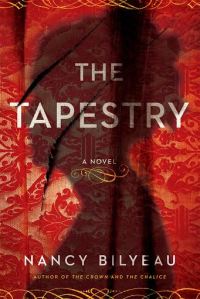
The Tapestry The Tapestry is the third book in Nancy Bilyeau’s wonderful Joanna Stafford trilogy, which is set in Tudor England and follows the adventures of a former Dominican novice whose life has been torn apart with the dissolution of the monasteries. I loved both of the previous books in the series – The Crown and The Chalice – and had been looking forward to reading this one for more than two years. I’m pleased to be able to say that it was worth the wait!

When we first met Joanna Stafford in The Crown, she was Sister Joanna, a novice nun at Dartford Priory. With the priory under threat of closure by Henry VIII and Thomas Cromwell, Joanna became embroiled in a quest to find the legendary crown of Athelstan. Then, in The Chalice, she learned of her role in a mysterious prophecy and found herself caught up in another dangerous plot. As The Tapestry begins, Joanna is hoping to avoid any more involvement in quests and conspiracies. All she wants to do is settle down to a peaceful life in Dartford, weaving her tapestries and caring for her cousin’s little boy, Arthur. Unfortunately, people more powerful than herself have other plans for Joanna…

It seems that Joanna’s tapestries have come to the attention of King Henry VIII, who summons her to Whitehall Palace with a special commission. Almost as soon as she arrives at court, however, she discovers that her life is still in danger. Someone in the palace is spying on her – but who and why? Meanwhile, Joanna’s close friend Catherine Howard has also come to court and it is thought that the King is about to make her his fifth wife. Remembering the fates of Henry’s previous wives, Joanna is determined to do whatever she can to protect her friend as well as herself.

Like the first two Joanna Stafford novels, this is an exciting and compelling story. There are so many books set in the Tudor period that it must be difficult to find a new way to approach the subject, but this is exactly what Nancy Bilyeau has done here. I would describe these books as historical thrillers, as they are not exactly mysteries in the traditional sense – although they do all have an element of mystery in them, in this case the question of who is trying to harm Joanna. What really makes them stand out for me is Joanna herself; she’s such an interesting character, being both a former nun and also a member of the Stafford family – a niece of the late Duke of Buckingham and therefore related to the King himself.

As usual, the historical background has been well researched and some of the important events of the period are incorporated into the story, including Henry VIII’s fourth and fifth marriages to Anne of Cleves and Catherine Howard, and the downfall of Thomas Cromwell. We get some insights into what is going on elsewhere in Europe too, first through the character of the artist Hans Holbein who befriends Joanna at Whitehall, and later when Joanna embarks on a journey across Germany, a land badly affected by famine and unrest.

The Tapestry is not a romance, but there are two men who have been possible love interests for Joanna since book one – the former Dominican friar and apothecary Edmund Sommerville and constable Geoffrey Scovill. I have enjoyed watching Joanna’s relationships with both Edmund and Geoffrey develop throughout the three novels and in this final book Joanna has an important choice to make which will bring this thread of the series to a conclusion.

If you’re new to these books I would recommend reading The Crown and then The Chalice before you pick up The Tapestry; that way you’ll be able to follow Joanna’s story from the beginning. I have loved the whole trilogy and am sorry to have reached the end of Joanna’s adventures now, but I’ll look forward to reading whatever Nancy Bilyeau writes next!

The Tapestry: US Publication Date: March 24 2015; UK Publication Date: April 24 2015

The Tapestry blog tour

I read The Tapestry as part of the Historical Fiction Virtual Book Tour. Please see the tour schedule for details of more reviews, interviews and guest posts.

Giveaway

Now here’s your chance to win one of three signed hardcover copies of The Tapestry.

You can enter the giveaway here: https://gleam.io/iyF4a/the-tapestry

Rules:
Giveaway starts on March 16th at 12:01am EST and ends at 11:59pm EST on April 3rd.
Giveaway is open to residents in North America and the UK.
You must be 18 or older to enter.
Winners will be chosen via GLEAM on April 4th and notified via email.
Winners have 48 hours to claim prize or new winner is chosen.

The King’s Curse by Philippa Gregory

The Kings Curse This is the sixth and final volume in Philippa Gregory’s Cousins’ War series which explores the Wars of the Roses from a female perspective. The books can be read in any order, although I would recommend reading them in the order of publication. Previous novels in the series have introduced us to Elizabeth Woodville, Margaret Beaufort, Jacquetta of Luxembourg, Anne Neville and Elizabeth of York; this one, The King’s Curse, tells the story of Margaret Pole, another woman with an important part to play in the history of the period.

Margaret is the daughter of George, Duke of Clarence, brother of the last two Plantagenet kings, Edward IV and Richard III. With a new dynasty – the Tudors – now on the throne of England, Margaret’s Plantagenet blood means that she and her family are seen as a threat. At the point when the novel opens, her brother has already been executed on the order of Henry VII and Margaret herself has been married off to a minor knight, Richard Pole – a man she respects but does not love.

When the King and his wife, Margaret’s cousin Elizabeth of York, send their son and heir, Prince Arthur, into Margaret’s care at Ludlow Castle, she becomes a friend and confidante of the Prince’s Spanish bride, Katherine of Aragon. Arthur dies following a sudden illness and Katherine is left a widow – but not for long, as his younger brother, the newly crowned Henry VIII, decides to marry the Princess himself.

Margaret is by Katherine’s side as she tries and fails to give Henry a male heir, losing one baby after another. But when Henry finally tires of Katherine and turns his attention to Anne Boleyn, Margaret discovers that her loyalty to the Queen has cast suspicion on the Plantagenets once again. Can Margaret convince the King that she and her family can be trusted, while still continuing to offer friendship to Katherine and her only surviving child, Princess Mary?

After the disappointment of the previous novel, The White Princess, I was pleased to find that I enjoyed this one much more. I thought the writing was better, the story was more interesting and Margaret was a much stronger character than Elizabeth of York. I got the impression that Gregory herself had enjoyed writing this novel, perhaps more than some of the others in the series.

I’ve read the story of Henry VIII, his marriage to Katherine of Aragon and subsequent divorce many times before, but it was interesting to see familiar events retold from a different point of view. Margaret is perfectly placed to know what is going on, being a cousin to the King’s mother, friend to Katherine and governess to Princess Mary. Through Margaret’s eyes we watch Henry’s transformation into a cruel tyrant unable to tolerate anyone disagreeing with him, we see how the people of England respond to Thomas Cromwell’s dissolution of the monasteries, we witness the public reaction to Anne Boleyn, and we learn how Mary feels about being cast aside and disinherited.

As well as being an observer of the royal court, however, Margaret has her own problems to deal with away from court as she works to keep herself and her children safe. Two of her sons – Lord Montague and Arthur – have positions at court and another, Reginald, is sent to Padua to study and is given the job of researching the theological argument behind the King’s divorce. It’s difficult for Margaret and her children to regain the power and influence they believe is due to them as Plantagenets without making themselves appear a direct threat to the Tudor throne. But unlike her cousin Elizabeth in The White Princess, Margaret is portrayed here as a very capable woman with strength, dignity and spirit. I did sometimes find her annoying, though, especially every time she showed such blatant favouritism to her youngest son, Geoffrey, who did nothing to deserve it as far as I could tell.

I still had a few problems with the book – one of them being Gregory’s insistence on referring to every character by his or her full name, title and relationship to the narrator almost every time they appear in the text. Would a mother having a private conversation with her son really address him as “Son Montague”? Is this really necessary when Montague (Henry Pole) is one of the main characters in the story? We’re not likely to forget that he is Margaret’s son, after all. I also thought the book felt much longer than it really needed to be; some of the scenes started to feel quite repetitive.

I haven’t mentioned the ‘curse’ of the title yet, but I can tell you that it refers to the curse Elizabeth of York and her mother, Elizabeth Woodville, supposedly placed on the Tudor line in the previous novel. The subject of the curse is raised every time a child or heir to the throne dies, but I was pleased to see that it never becomes a major part of the plot. In her author’s note at the end of the book, Gregory offers a scientific alternative to the curse, which I found interesting.

On the whole, then, I found this to be one of the better Cousins’ War novels. It was also the perfect way to end the series, tying in with her previous series of Tudor novels. Now I’m wondering which period of history Philippa Gregory will turn to next.

Dissolution by C J Sansom

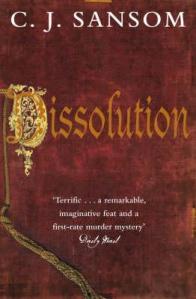
Dissolution Reading C J Sansom’s alternate history novel Dominion a few months ago reminded me that I still hadn’t read any of his Shardlake books, despite meaning to for years. I noticed last week that my library had the whole series available as ebooks, so it seemed as good a time as any to get started with the first one, Dissolution.

Dissolution is set in the winter of 1537, just after the death of Henry VIII’s third wife, Jane Seymour. Having broken away from the Catholic church and declared himself Supreme Head of the Church of England, the King, with the help of Thomas Cromwell, has begun the process of dissolution of the country’s monasteries. After the closure of some of the smaller religious houses in the north led to rebellion, Cromwell is now taking a different approach and is sending commissioners to the larger monasteries to offer pensions to the monks in the hope that they will voluntarily surrender – or if not, to search for signs of fraud, corruption or other legal reasons to close them down.

At the monastery of Scarnsea, on the coast of Sussex, disaster strikes when one of Cromwell’s commissioners, Robin Singleton, is found brutally murdered in the monastery kitchen. Cromwell sends another of his men, the lawyer Matthew Shardlake, to investigate the mystery of Singleton’s death and discover what has been happening at the monastery. Accompanied by his assistant Mark Poer, Shardlake sets out for Scarnsea but what he learns when he arrives there convinces him that the commissioner had been about to make an important discovery before he was killed.

As a murder mystery, there’s everything here that you would expect: the detective and his sidekick, the isolated house (monastery in this case) cut off from the rest of the world, the small group of suspects each with their own secrets and motives, and the usual string of clues and red herrings. But what made this book stand out for me among other historical mysteries was the fascinating setting and detailed portrayal of monastic life. There are some obvious similarities with Umberto Eco’s The Name of the Rose, although this is an easier read – and set in a completely different time period, of course.

I have read other novels that focus on the dissolution of the monasteries (books such as The Crown by Nancy Bilyeau, for example) but usually from the point of view of the monks and nuns whose way of life has been destroyed. This book is narrated by Shardlake himself and it’s interesting to see dissolution from his perspective, as a dedicated reformer. Shardlake gradually becomes disillusioned with Henry and Cromwell, but for a long time he tries to justify what they are doing and it is only towards the end of the book that he allows himself to have doubts. Something I haven’t mentioned yet is that Shardlake is a hunchback and has spent his life trying to overcome prejudice and rejection. The fact that he has had to deal with a disability in a time much more unenlightened than our own adds another dimension to his personality.

Having taken so long to get round to reading this book, I’m pleased that I did enjoy it! I correctly named the murderer quite early in the story, but while I would like to pretend that I had cleverly managed to solve the mystery I have to admit it was really just a guess. This didn’t spoil the rest of the story at all, though – I had to wait until almost the end of the book to find out if I was right and even after Singleton’s killer was eventually revealed, there were still one or two other developments that took me by surprise! I will definitely be continuing the series with the second book, Dark Fire – but probably not immediately.